

Every month I talk to distributors who just lost money on a vanity order. The factory did not cheat them. They chose the wrong product for their market. A PVC vanity that sells fast in Miami sits in a Toronto warehouse for six months. A solid oak unit that moves well in the UK gets returned in Florida because the finish warped in humidity. Choosing bathroom vanities for wholesale comes down to matching the right product to the right buyer in the right market. The cheapest FOB price does not fix a product-market mismatch.
This guide covers every decision you make before placing a vanity order: material selection, sizing, quality checks, supplier vetting. If you distribute bathroom vanities, or you are thinking about adding them to your catalog, this is the framework I use with our partners at MFBATH.
Why Vanity Selection Matters More Than You Think
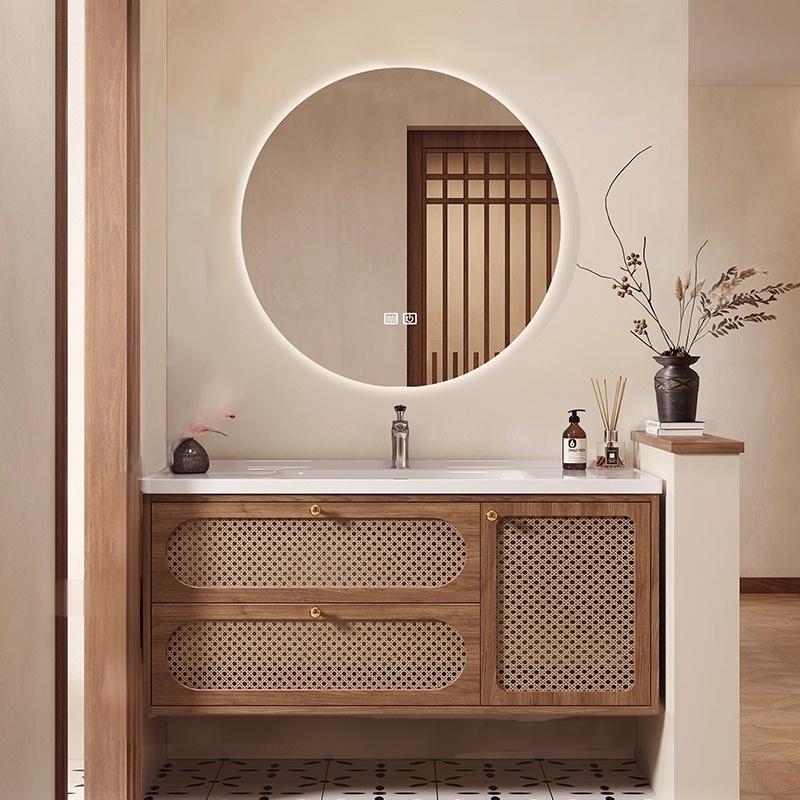
The bathroom vanity market is worth over USD 12 billion globally and growing at 5.3% annually through 2030. The mistake most distributors make is stocking what looks good in a showroom instead of what sells in their region. A floating walnut vanity photographs beautifully. If your customer base is contractors building affordable housing, they need cost-effective PVC or plywood units at a price point that works for 200-unit projects.
The wrong selection creates three problems at once. First, dead inventory ties up your capital. A single container of slow-moving vanities can lock USD 40,000 to 80,000 for months. Second, returns and warranty claims eat your margin, especially when materials fail in local climate conditions. Third, your reputation takes a hit. Contractors and retailers remember which distributor sent them vanities with swollen panels last year.
Getting the selection right means answering four questions: your market’s material preferences, the dimensional standards your region requires, the quality level your customers expect, and the price structure that leaves room for your margin and theirs.
Step 1: Choose the Right Cabinet Material
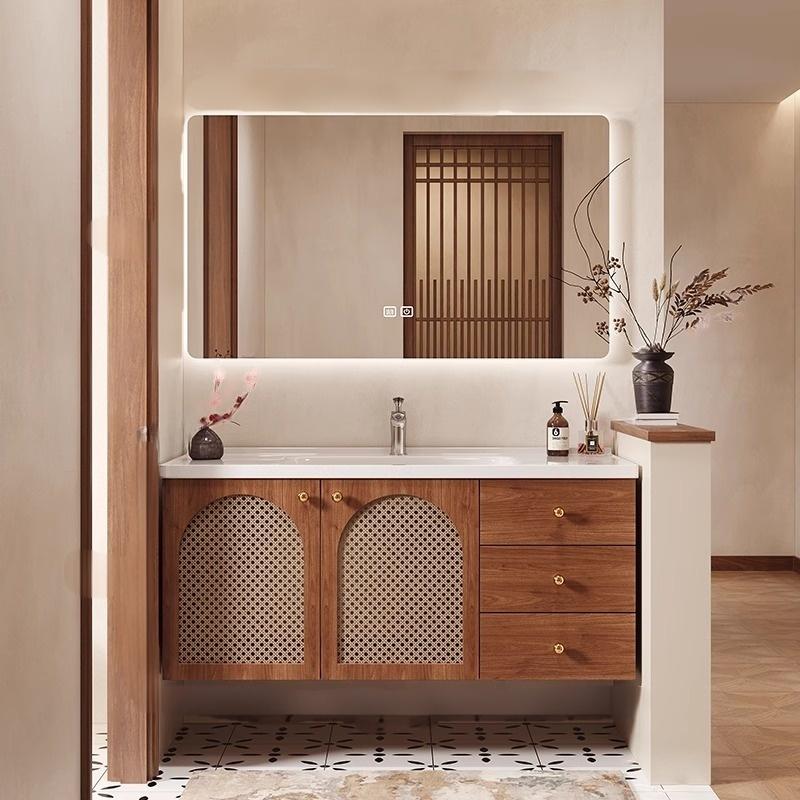
Material choice is the single biggest factor in cost, durability, and customer satisfaction. Four main materials make up most bathroom vanity cabinets, and each performs best in a specific market.
Solid Wood
Solid wood vanities, oak, walnut, birch, or rubberwood, sit at the premium end. Retailers and designers buy them for residential renovations and boutique hospitality work. Rubberwood has become a popular pick because it delivers hardwood density and quality at a lower cost than oak or walnut. The catch is humidity. In markets with extreme seasonal changes, panels expand and contract, and finish cracks appear over time.
For a detailed breakdown, read our comparison of solid wood vs MDF bathroom vanities, or explore our guide on rubberwood as a vanity material.comparison of solid wood vs MDF bathroom vanitiesrubberwood as a vanity material
Plywood
Plywood vanities sit in the middle of the market. Marine-grade plywood handles moisture better than MDF and costs less than solid wood, which makes it the cost-effective pick for mid-market distributors supplying both residential contractors and small hospitality projects. The layered construction keeps panels stable, meaning fewer warping complaints from your customers.
PVC
PVC vanities are the workhorse for high-volume, price-sensitive markets. The material is waterproof by nature, light for shipping, and resistant to the humidity problems that destroy wood-based cabinets. In tropical and subtropical markets, Southeast Asia, the Middle East, parts of South America, PVC outsells wood-based options by a wide margin. The tradeoff is perception. Some end-users read PVC as cheap, even though its wet-environment durability often beats wood.
Our PVC vs plywood comparison breaks down the cost and performance differences in detail.PVC vs plywood comparison
MDF (Medium-Density Fiberboard)
MDF vanities are the budget option. The boards machine cleanly, take paint smoothly, and cost the least to produce. The weak point is edge sealing. If the seal fails, MDF absorbs water, which makes it a poor fit for high-humidity markets or commercial projects with heavy daily use. MDF works best in dry-climate residential projects or as an entry-level option in your product range.
For a complete side-by-side, see our bathroom vanity materials comparison guide.
Material Selection Quick Reference
| Material | Best Market | Price Tier | Moisture Resistance | Typical Margin Range |
|---|---|---|---|---|
| Solid Wood | Premium residential, boutique hotels | High | Moderate | 25-35% |
| Plywood | Mid-market residential, small commercial | Mid | Good | 30-40% |
| PVC | High-volume, tropical/subtropical markets | Low-Mid | Excellent | 35-45% |
| MDF | Budget residential, dry climates | Low | Poor | 25-35% |
If your market runs hot and humid, moisture is the real threat to vanity longevity. Before you commit to a lineup, read our guide on waterproof vanity materials and moisture resistance strategies. That is where durability starts.waterproof vanity materialsmoisture resistance strategies

Step 2: Get the Sizing Right for Your Market
Vanity dimensions vary by region, and picking the wrong sizes is one of the fastest ways to undermine a cost-effective inventory plan. North American bathrooms typically accommodate 30-60 inch vanities, with 36 and 48 inch units the most popular for single-family homes. European markets lean toward narrower units, often 60-120 cm, because bathroom footprints are smaller.
Height matters too. Standard vanity height in North America is 32-34 inches, but 36-inch comfort height is gaining ground in residential renovations. If ADA compliance requirements apply, the vanities need to meet specific clearance and height standards. Our ADA compliant vanity guide covers the full specification.ADA compliant vanity guide
Single vs Double Sink
Double sink vanities, typically 48-72 inches, sell well in master bathroom renovations and hotel projects. Single sink vanities, 24-48 inches, move faster in apartments, guest bathrooms, and affordable housing. Your product mix should match the projects your customers handle. A distributor focused on hotel renovations might carry 70% double-sink units, while one serving apartment developers might stock 80% single-sink. Get that split wrong, and quality stock sits in the warehouse.
For detailed specs and current market data, read our single vs double sink vanity comparison.single vs double sink vanity comparison
Floating vs Floor-Standing
Floating vanities have picked up real momentum in the past three years, especially in modern residential and boutique hotel segments. They open up small bathrooms and make floor cleaning easier. But floating units need solid wall mounting, so installers have to understand the wall structure before hanging anything. Floor-standing vanities remain the default for most commercial projects. Installation is simpler, and you are not betting on wall strength.
Our floating vs floor-standing vanity guide breaks down the installation requirements and market demand for both types.floating vs floor-standing vanity guide
See our standard bathroom vanity dimensions guide for complete dimensional specs, including the region-specific measurements for 2026.standard bathroom vanity dimensions guide
Step 3: Assess Quality Before You Commit
Quality problems in bathroom vanities rarely show up in the showroom. They surface six to twelve months after installation: swollen panels, peeling thermofoil, drawer slides that stick, hinges that sag. As a distributor, those turn into your warranty claims, customer complaints, and reputation risk.
What to Check in the Cabinet Box
Start with panel thickness. Budget vanities use 12mm panels; quality units use 15-18mm. Thinner panels flex under weight and are more prone to water damage at the edges. Check the edge banding: it should be seamless, with no visible gaps where moisture can enter. For wood-based vanities, ask the factory for the CARB or FSC certification of the board stock. That tells you the formaldehyde emission level and the timber sourcing standard.
We cover the full certification picture in our CARB and FSC certification guide and our overview of bathroom certification standards.CARB and FSC certification guidebathroom certification standards
Hardware and Moving Parts
Drawer slides and hinges are where cheap vanities fail first. Soft-close slides from DTC or Blum cost the factory an extra USD 3 to 8 per drawer, but they eliminate the number-one customer complaint: drawers that slam or come off the track. Hinge durability follows the same pattern. The gap between a 30,000-cycle hinge and a 10,000-cycle hinge is about USD 0.50 per piece. At that price, the 30,000-cycle hinge is the cost-effective choice: it decides whether a cabinet door sags after two years or stays aligned for ten.
Our DTC vs Blum hinge comparison breaks down performance differences, durability, and cost implications.DTC vs Blum hinge comparison
Factory Audits and Quality Control
Most wholesale vanity buyers source directly from a factory in China. A factory audit is not optional. Skip it, and the risk is real: containers full of vanities with mismatched drill holes, inconsistent paint finishes, or back panels with no moisture seal. Any one of those defects kills durability in a bathroom environment. A proper audit checks production equipment, quality checkpoints at each stage, storage conditions, and packing standards. Humidity-controlled warehousing matters more than most buyers assume.
Our factory audit guide and audit checklist walk through exactly what to look for. For ongoing orders, our vanity quality inspection guide covers the checkpoints your QC team should run before shipment.factory audit guideaudit checklistvanity quality inspection guide
One important note: make sure you are dealing with an actual manufacturer, not a trading company posing as one. Our guide on trading companies vs manufacturers explains how to tell the difference.trading companies vs manufacturers
Step 4: Understand Pricing and Total Cost
The FOB price on a quotation is not the number that matters. Landed cost is. That is the total you pay to get the vanity from the factory floor to your warehouse, ready to sell. Only that number tells you whether the purchase is cost-effective. It covers product cost, packaging, shipping, insurance, import duties, customs clearance, and domestic freight.
Pricing Tiers by Material
Here is a rough guide to FOB pricing for standard bathroom vanities from Chinese manufacturers in 2026.
| Material | Budget Tier (FOB) | Mid Tier (FOB) | Premium Tier (FOB) |
|---|---|---|---|
| MDF | USD 60-90 | USD 90-140 | USD 140-200 |
| PVC | USD 70-110 | USD 110-180 | USD 180-280 |
| Plywood | USD 100-150 | USD 150-250 | USD 250-400 |
| Solid Wood | USD 180-280 | USD 280-450 | USD 450-800+ |
The ranges above cover a 36–48 inch cabinet only. No basin, no mirror. A sintered stone basin adds USD 40–120. An LED mirror runs USD 25–80, depending on the features.
See the bathroom vanity pricing tiers breakdown and the cost comparison guide for a deeper pricing analysis.bathroom vanity pricing tiers breakdowncost comparison guide
The Total Cost of Ownership
Smart distributors don’t just compare invoice prices. They run the total cost of ownership. A USD 150 FOB vanity with an 8% warranty claim rate costs more than a USD 180 unit with a 2% claim rate. Add replacement shipping, field repair labor, and the goodwill you lose. The total cost of ownership analysis gives you the framework.total cost of ownership analysis
Shipping Terms Matter
Know FOB from DDP before you sign anything. With FOB, the factory delivers to the port, and you take over from there. With DDP, the supplier delivers to your door. FOB gives you control over shipping costs, but you manage the logistics. DDP is simpler, yet the supplier folds their shipping margin into the price. The FOB vs DDP comparison explains which terms fit different buyer profiles.FOB vs DDP comparison
Account for import duties and tariffs too. Depending on your country, vanities from China can face anti-dumping duties or standard tariffs that add 10–25% to landed cost. The tariffs and bathroom vanities guide covers the current trade landscape.tariffs and bathroom vanities
Step 5: Vet Your Supplier Properly
Your supplier relationship decides whether you get consistent quality, on-time delivery, and responsive service, or constant headaches. Here’s what to look for when evaluating a bathroom vanity manufacturer.
Production Capacity and Lead Times
Ask about monthly output in container equivalents. A mid-size vanity factory typically produces 40-80 containers per month. If you order 5-10 containers monthly, look for a factory where your volume sits at 10-20% of capacity. That gives you priority treatment without making the factory dependent on your orders. Production lead time runs 35-50 days after sample approval, plus 25-40 days of ocean freight, depending on destination.
MOQ and Flexibility
Minimum order quantities for bathroom vanities usually range from 30 to 100 pieces per model. Some factories accept a lower minimum on the first order if they see long-term potential, so settle this number before anything else. Testing a new market requires a supplier willing to run small trial batches before you commit to full containers. Trial orders are the cost-effective way to validate demand without overstocking.
Our MOQ guide for bathroom vanities explains what is negotiable and what is not.
Samples and Custom Capability
Always order samples before placing a production order. A quality factory will produce a sample in 10-15 days and ship it to you for evaluation. Use the sample to check construction methods, finish, hardware, and packaging. If you need custom sizes, colors, or finishes, confirm capability during the sampling stage. Never assume flexibility from a catalog. The sample is the only honest preview of what a full container will look like.
Our guide to ordering custom vanity samples from China covers the process from request to approval. Our sample evaluation checklist gives you the inspection criteria to use.guide to ordering custom vanity samples from Chinasample evaluation checklist
OEM vs ODM: Which Model Fits You
OEM means you hand over the design and the factory builds it to your specifications, down to the durability and construction details. ODM means you take an existing factory design and brand it as your own. Most distributors start with ODM to test a market quickly, then move to OEM once they know what sells. Some run a hybrid approach: ODM for standard lines, OEM for their premium or differentiated range.
Our OEM vs ODM bathroom vanity guide breaks down the cost, timeline, and IP implications of each model.OEM vs ODM bathroom vanity guide
Step 6: Avoid These Common Sourcing Mistakes
After years of working with distributors across 30+ markets, the same sourcing mistakes keep showing up. These are the ones that cost the most money:
Ordering without a physical sample. Photos and videos do not reveal panel thickness, edge banding quality, or how the drawer feels when you open it. Those details determine durability in daily use. Evaluate a physical sample before committing to production.
Ignoring regional compliance. California requires CARB Phase 2 compliant board stock. Europe may apply REACH compliance and CE marking. Australia demands WaterMark certification for any basin connections. Check your destination market requirements before ordering.
Underestimating packaging costs. Bathroom vanities are heavy and fragile. Standard carton packaging saves about USD 5 per unit at the factory, but if 10% of units arrive damaged, the loss outweighs the saving. Reinforced packaging with honeycomb cardboard, corner protectors, and foam inserts is the cost-effective choice for long ocean freight routes.
Our packaging cost guide and the article on common ordering mistakes go deeper on these points.packaging cost guidecommon ordering mistakes article
Skipping the pre-shipment inspection. Run one on every order, even from a factory you trust. Check 10-15% of units against your quality checklist: panel alignment, finish consistency, hardware function, basin fit, and packaging integrity. Catching problems at the factory costs a fraction of fixing them in your warehouse.
Most distributors don’t budget for lead time variability. Then they get burned. Chinese New Year shuts down factories for 3-4 weeks. Typhoon season delays port operations. Raw material shortages push production schedules back by 2-3 weeks. You need to add at least 2-3 weeks beyond the supplier’s quoted lead time.
Two guides cover the costliest import and sourcing mistakes: our import mistakes guide and our piece on sourcing mistakes that cost distributors money.top import mistakes guidesourcing mistakes that cost distributors money
Step 7: Match Products to Market Trends
The bathroom vanity market never stands still. Distributors who see trends unfolding get higher margins. These three trends will drive wholesale demand in 2026.
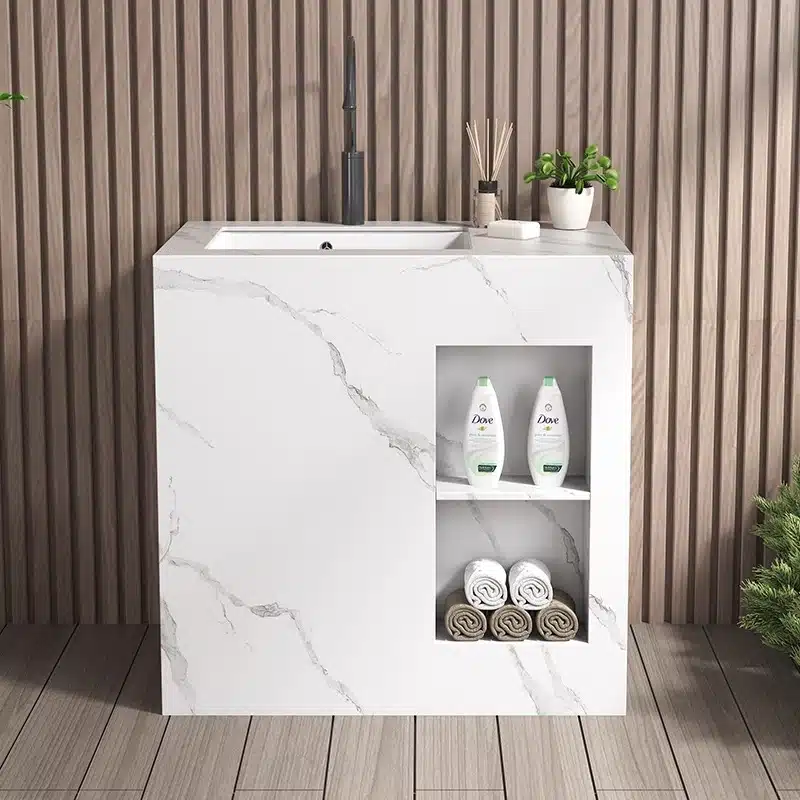
Sintered stone basins are pushing ceramic and porcelain out of mid- to premium-range vanities. The material resists staining, scratching, and heat far better, and the seamless look matches what designers and homeowners want right now. If your inventory still lacks sintered stone options, you’re leaving margin on the table. Read our sintered stone vanity guide for specs and sourcing tips.sintered stone vanity guide
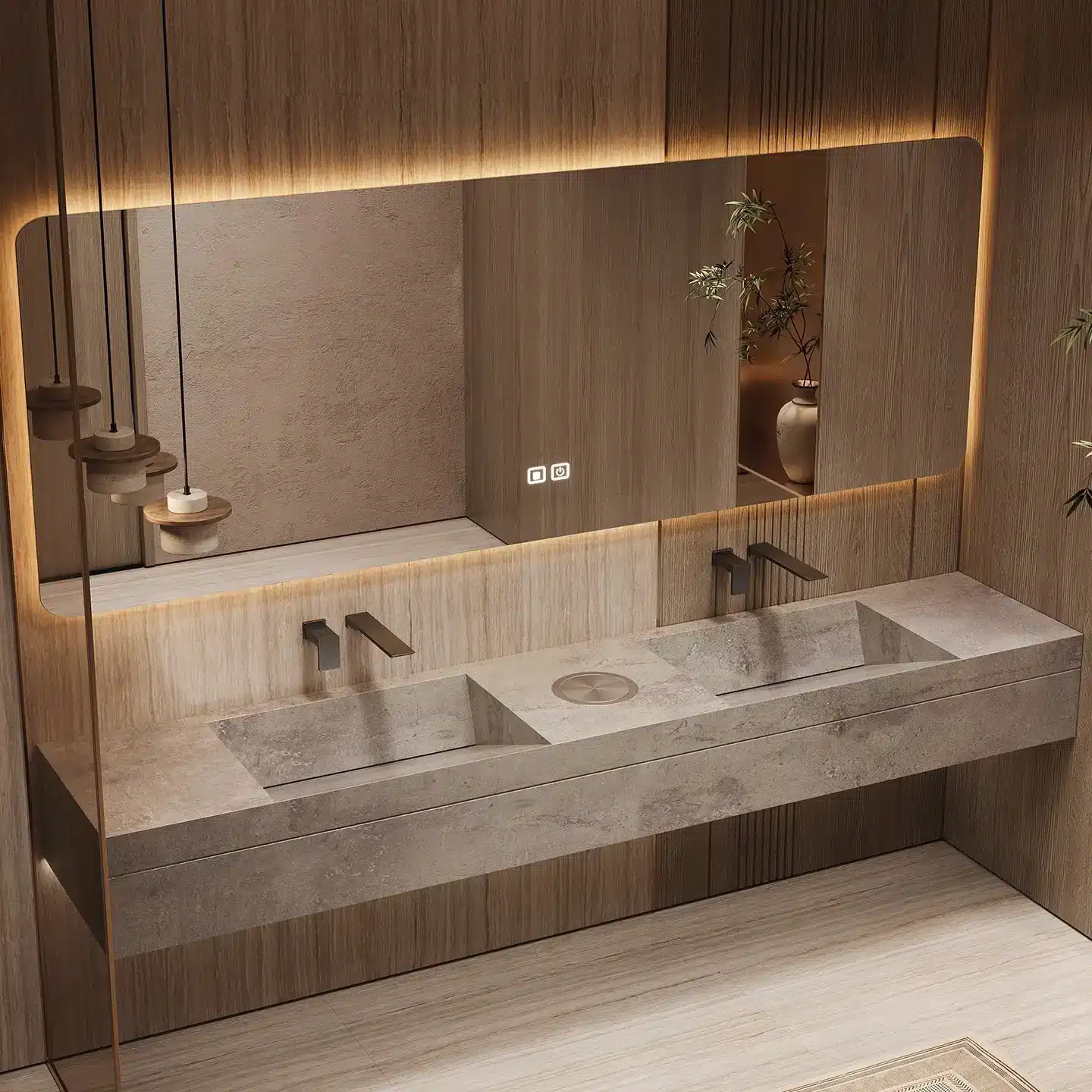
Smart mirrors with LED integration are the easiest way to increase each sale. Anti-fog, dimming, and color temperature control add $25–80 to the ticket—at healthy margins. Bundle a mirror with the vanity and average order values climb. Our guides break down the comparison and sourcing: smart vs standard LED mirror comparison and LED mirror sourcing guide.smart vs standard LED mirror comparisonLED mirror sourcing guide
Matte finishes and muted earth tones are pushing glossy white off the shelf. Warm greys, sage greens, and natural wood grains are the finishes winning residential renovations across North America and Europe. If your catalog still leans heavily on white gloss, it’s time to add matte options. Your competition already has.
Sustainability certifications are no longer just nice to have. Projects that skip FSC-certified timber, low-VOC finishes, or an ISO 14001 environmental management system get flagged early, especially on commercial specs and government tenders. Read our ISO 14001 guide for a clear breakdown of what the standard actually means for your sourcing decisions.
ISO 14001 guideIf you need a wider view of where the market is moving, our 2026 bathroom vanity trends report covers design shifts, material direction, and technology changes worth tracking.
2026 bathroom vanity trends reportYour Vanity Selection Checklist
Before you place your next order, run this checklist:
| Decision Point | Key Question | Action |
|---|---|---|
| Material | Does this material suit my market’s climate and price expectations? | Review materials comparison |
| Size & Configuration | Am I stocking the widths and sink configurations my customers actually buy? | Check regional dimension standards |
| Quality Level | Have I verified the factory’s QC process and certifications? | Run a factory audit |
| Hardware | Are the slides and hinges rated for the expected lifespan? | Specify brand-name hardware |
| Pricing | Have I calculated total landed cost, not just FOB price? | Build a TCO model |
| Compliance | Do the vanities meet my destination market’s regulations? | Verify certifications |
| Supplier | Is this a real manufacturer with proven capacity? | Conduct supplier verification |
| Sample | Have I physically inspected a production sample? | Order and evaluate samples |
| Packaging | Will the packaging survive ocean freight and last-mile delivery? | Specify packaging standards |
| Lead Time | Have I built in buffer time for delays? | Add 2-3 weeks to quoted lead time |
Frequently Asked Questions
What is the best material for wholesale bathroom vanities?
No single material wins across every market. PVC handles high-volume, price-sensitive buyers and humid climates without breaking. Plywood is the workhorse for mid-market distributors. Solid wood stays in premium segments. Your customer base, their climate, and the price points they accept decide which direction you go.
How much should I expect to pay for wholesale bathroom vanities?
FOB pricing from Chinese manufacturers starts around USD 60 for a basic MDF vanity and climbs past USD 800 for a solid wood unit with a sintered stone basin. Most mid-market distributors work in the USD 120–300 range (vanity only, no basin or mirror). Landed costs add 20–40% on top of FOB, covering freight, duties, and clearance.
What is the minimum order quantity for bathroom vanities?
Standard products usually need 30–100 pieces per model from most Chinese factories. Custom orders push that higher, often 50–200 pieces. Some factories will accept smaller trial runs if they see a long-term relationship. That flexibility is worth asking about early.
How do I verify a bathroom vanity factory in China?
Ask for a business license, factory photos with specific markers (to prove it’s their facility), and references from current international clients. Whenever possible, visit the factory or hire a third-party inspector. Verify ISO 9001 certification with the issuing body. Look for consistent production equipment, organized warehousing, and documented quality control at each stage.
What certifications do I need to import bathroom vanities?
Destination requirements differ. The US demands CARB Phase 2 for wood-based products and often UPC for plumbing components. Europe requires CE marking and REACH compliance. Australia mandates WaterMark for basin connections. Check your specific market rules before placing an order.
Final Thoughts
Choosing bathroom vanities for wholesale isn’t a one-time decision. It’s a process. You have to grasp your market’s material preferences, sizing standards, quality expectations, and price sensitivity, then find a supplier who can deliver consistently on all four. The distributors who succeed are the ones who invest time in sampling, supplier audits, and quality control before scaling up.
Need a manufacturing partner that truly gets wholesale distribution? Reach out to our team at MFBATH. We work with distributors across North America, Europe, Oceania, and the Middle East. We’ll help you build a product range that sells.reach out to our team at MFBATH



0 Comments