

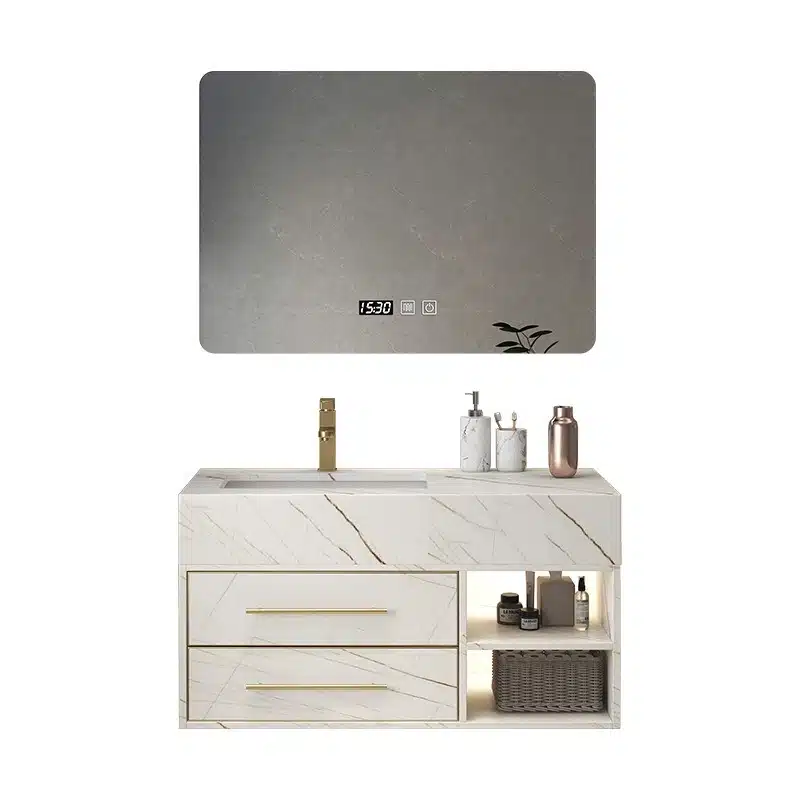
custom bathroom vanity sample china is the first checkpoint buyers should lock before they approve a supplier, budget, or production slot. A buyer I know lost a $50,000 order because the pre-production sample looked perfect but the mass production run came in with a different finish. The spec sheet said 0.8mm PVC wall thickness. The container held 0.6mm. That kind of gap doesn’t show up in a photo. It shows up when you’re unpacking the first 50 units and the hinge screws don’t seat right. Getting a custom bathroom vanity sample china is the single most important gate before you commit to a container load, but most brand owners treat it like a checkbox rather than a diagnostic tool.
The real conversation starts with timeline and quality tolerance. A reliable factory like Focuscabinet, with its 10,000㎡ facility and five-stage QC, can cut the sample lead time for a sintered stone basin from the industry average of 18 days down to 10. That matters when you’re planning a product launch and every week of delay hits your cash flow. But speed means nothing if the sample approval process doesn’t catch the variables that derail production: FOB pricing that changes after the first article, finish consistency across different material batches, or a quality tolerance that drifted between the pre-production and the bulk run. The next sections walk through exactly what that timeline looks like and where the common pitfalls hide.
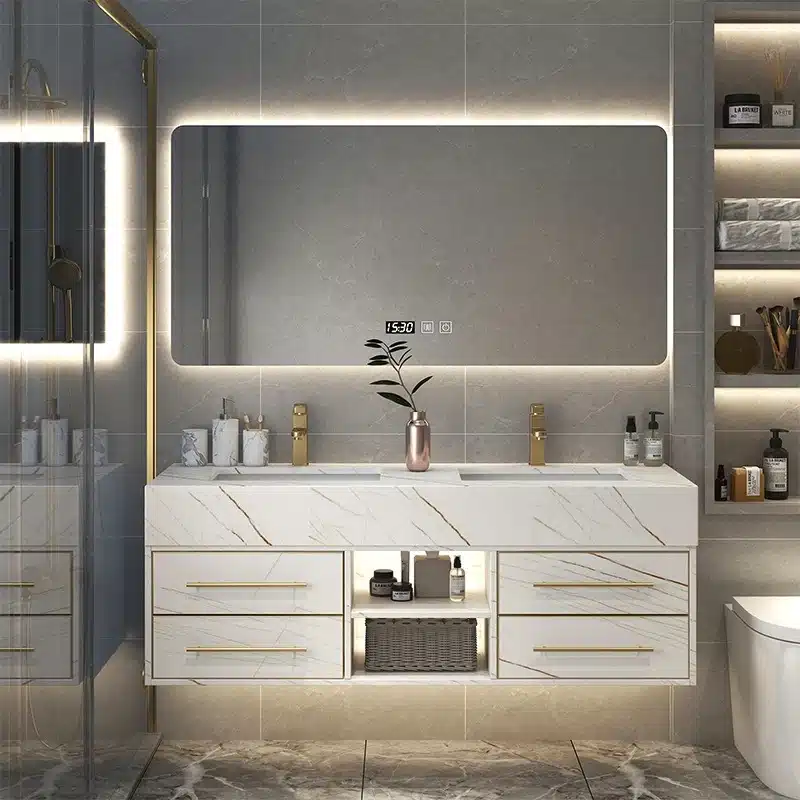
Define Your Specifications
A 0.5mm tolerance error can kill a $50K order — get specs right upfront.
I’ve watched buyers lose an entire container because they approved a sample that looked right but didn’t match the material grade they assumed. When you define specs for a custom bathroom vanity sample from China, clarity isn’t optional — it’s the difference between a smooth bulk run and a 6-week delay. Here’s what you need to lock down before you send a single drawing.
-
- Material Requirements: Don’t just say ‘plywood’. Specify the grade (e.g., E1 for Europe, CARB II for North America), thickness (e.g., 18mm for side panels), and waterproof treatment (e.g., 24-hour water soak resistance). For PVC, ask for density (e.g., 0.8 g/cm³ minimum) and UV stability rating. Sintered stone for basins needs a minimum Mohs hardness of 6 and a stain test with coffee and red wine — most factories only test on ceramic.
- Dimensions & Tolerances: Standard vanity depth is 450mm, but your site may require 400mm or 500mm. Write the nominal dimension and the acceptable deviation: ±1mm for cabinetry, ±0.5mm for countertop cutouts. If your basin must drop into a pre-cut hole, specify the cutout tolerance to avoid 10mm gaps that require filler strips. Always include a diagram with critical dimensions highlighted.
- Functional Parameters: List every moving part and electronic spec: soft-close hinges (test cycle count, e.g., 50,000), drawer slide load rating (e.g., 30kg), LED mirror voltage (12V DC is safer for bathrooms), IP rating (IP44 minimum for zones near water). For smart mirrors, specify color temperature range (e.g., 3000K–6000K) and CRI (>90 if the buyer is a hotel). Sintered stone basins should list impact resistance (e.g., 6J drop test) and maximum load (e.g., 30kg).
- Quality Standards: Define the inspection protocol upfront. Require that the pre-production sample is checked against your spec sheet with measurements recorded and photos taken. Insist on a 5-stage QC process: incoming material check, first article inspection, in-line inspection, final random inspection, and pre-shipment quality check. Factories like Focuscabinet that run a five-stage QC catch 99% of defects before shipping. If your supplier can’t describe their stages in detail, that’s a red flag.
The most expensive spec mistake is assuming ‘standard’ means the same thing across factories. It doesn’t. A PVC vanity from one supplier might be 3mm thick; from another, 5mm. You must put the number on paper. Your sample approval process should not move forward until every spec is signed off in writing — including tolerance ranges. That one page of paper can save you weeks of back-and-forth and a container full of non-compliant goods.
| Specification Category | Standard Options | Customizability | Why It Matters |
|---|---|---|---|
| Cabinet Body Material | PVC, Plywood, MDF | Choice of thickness, waterproof rating, and surface treatment | Determines durability, moisture resistance, and shipping weight for your e-commerce model |
| Countertop & Basin | Sintered Stone, Ceramic, Quartz | Custom dimensions, color, edge profile, and integrated basin design | Sintered stone offers superior stain and scratch resistance—key for high-end product images |
| Mirror & Lighting | Standard mirror, LED smart mirror (anti-fog, adjustable color temp, Bluetooth) | Shape, size, LED color temperature, mirror defogger, touch switch | Smart mirrors increase perceived value and allow upselling on your storefront |
| Hardware & Accessories | Soft-close hinges, drawer slides, brushed nickel or matte black handles | Finish color, handle style, and pivot vs. full-overlay hinges | Consistent hardware finish builds brand premium feel and reduces returns |
| Dimensions & Configuration | Width 24″/30″/36″/48″/60″, height 32-36″, depth 18-22″ | Any custom width, height, depth, and drawer vs. door split | Exact-fit dimensions are critical for hotel projects and detailed product listings |
| Color & Finish | Solid white, gray, black, wood grain (oak, walnut) | Pantone color matching, high-gloss/matte, or real wood veneer | Trendy finishes drive online conversion; custom colors strengthen brand identity |
| Certifications & Compliance | CE, cUPC, WaterMark, ADA (upon request) | Region-specific certifications (e.g., UKCA for UK, ETL for North America) | Missing certifications block entry into Europe and North America—pre-verify with Focuscabinet |
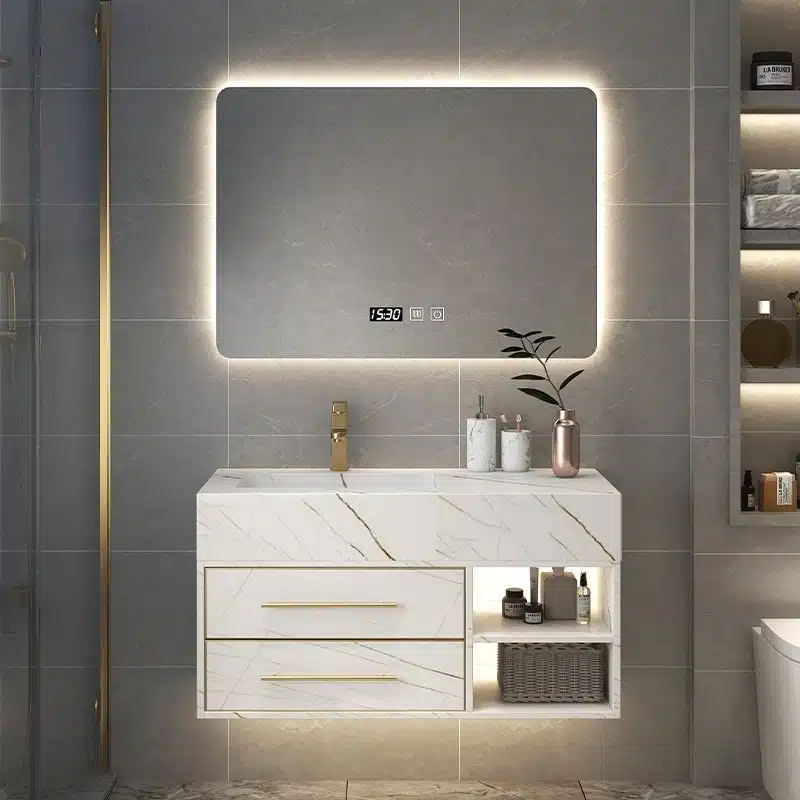
Request Quotation from Multiple Factories
Most buyers skip the multi-factory comparison — then pay 30% more for rework.
Start by building a shortlist of three to five China bathroom vanity manufacturers who specialize in your product type — PVC, plywood, or sintered stone. Don’t just Google; cross-reference trade show records and Alibaba verified suppliers. A factory that excels at mass-produced vanities may struggle with custom LED mirror integration or small-batch color matching. For an e-commerce brand owner, the ability to request a custom bathroom vanity sample approval process that aligns with your SKU velocity is worth more than a rock-bottom quote.
Send each supplier a structured sample request for bathroom vanity factory that specifies material grade (e.g., 304 stainless steel hinges, E1-grade plywood), dimensions, surface finish (Pantone or RAL code), and mirror electronics specs. Ask for a detailed cost breakdown that separates FOB pricing, mold/tooling fees, sample shipping, and certification surcharges. A factory that lumps everything into a single line item is hiding margin or inexperienced with export documentation.
-
- Lead time estimates: Industry fastest for custom sintered stone vanity sample lead time is 10 days (Focuscabinet averaged from 120+ orders); typical competitors quote 18–22 days. For PVC or plywood cabinets, expect 12–15 days for sample production. Verify whether the quoted timeline includes weekends and holiday shutdowns.
- Minimum order quantities: Custom PVC vanity sample MOQ China for non-stock designs typically starts at 20 units for cabinets and 10 for mirrors. If a supplier demands 50+ units for a sample run, they lack flexible tooling. Request MOQ reductions by agreeing to standard hardware or leaving out special finishes on the first order.
- Cost breakdown red flags: If the factory’s sample fee is more than 5x the unit price of a bulk order, they’re using sample profit to subsidize inefficiency. A transparent supplier will provide a line-by-line quote showing material cost, labor, tooling amortization, and packaging. Demand FOB pricing in USD with Incoterms explicitly stated.
One insider warning: If a factory quotes 40% below the other shortlisted suppliers, ask for caliper verification photos of wall thickness and density test reports. Focuscabinet’s five-stage QC includes a pre-shipment sample check that catches 99% of defects — that level of consistency is what protects your brand from returns, not a low initial price. Cross-check the sample cost and lead time against your launch calendar. Paying $200 more for a 10-day sample can save eight weeks of corrections.
Evaluate Sample Cost and Timeline (2–4 weeks)
Sintered stone samples ship in 10 days, not the industry 18.
Sample cost for a custom bathroom vanity from China typically ranges from $100 to $500, depending on complexity. A simple PVC vanity cabinet without electrical integration lands on the lower end. A sintered stone basin with a smart LED mirror pushes toward the upper range. The factory absorbs the tooling cost for standard sizes; only nonstandard dimensions or proprietary molds trigger an additional one-time fee of $50 to $200.
The production timeline separates serious suppliers from the rest. A 10-day lead for a custom sintered stone basin sample is aggressive — most factories quote 18 days. Focuscabinet hits that 10-day window because the 10,000㎡ plant runs dedicated sample lines that don’t compete with bulk orders. For a full vanity cabinet with mirror and basin, add 7 to 10 days for assembly and the pre-shipment quality check that catches 99% of cosmetic defects before packing.
-
- Sample development cost: $100–$500 per unit depending on materials and features. Nonstandard sizes add a $50–$200 mold fee.
- Production timeline: Sintered stone basin: 10 days (industry average 18). Full vanity: 17–20 days. Always request a dated production schedule in the PI.
- Shipping time: Express (DHL/FedEx): 5–7 days door-to-door. Sea freight sample: 25–35 days but rarely used for single samples.
- Payment terms for sample: Expect 50% deposit before production, 50% before shipment. Never pay 100% upfront — a supplier that demands it is hedging against their own poor first-pass yield.
One insider check: when a supplier quotes a sample timeline under two weeks, ask for their current order load. A factory running at 80% capacity is better than one at 100% that will rush your sample. Focuscabinet runs a separate sample line precisely to avoid the rush — that’s why their lead time stays consistent even during peak seasons.
| Product Type | Sample Cost Range | Lead Time (Days) | MOQ for Sample | Quality Assurance Note |
|---|---|---|---|---|
| Custom PVC Bathroom Vanity | $150 – $400 | 12–18 days | 1 unit | 5-stage QC includes waterproof & dimensional checks; defect catch rate >99% |
| Custom LED Mirror | $80 – $250 | 10–15 days | 1 unit | Pre-shipment electrical safety & color temp validation |
| Custom Sintered Stone Basin | $200 – $500 | 10 days (industry avg 18) | 1 unit | Rigorous sintering process QC; pre-shipment sample check ensures zero cracks |
| Full Vanity Set (Cabinet+Mirror+Basin) | $350 – $800 | 15–20 days | 1 set | Integrated 5-stage QC; region-ready adaptations (e.g., NA/EU plumbing compliance) |
Approve Design and Submit Deposit
Design approval isn’t a formality — it’s the last chance to catch a mismatch before your $50K order ships wrong.
Once the factory sends you the final design drawing — usually a 2D CAD with cut dimensions, material callouts, and finish codes — your job is to verify every detail against your spec sheet. Common misses: hinge bore placement (off by 3mm means doors don’t close), basin overflow height (wrong and it won’t drain), or LED mirror color temperature (3000K vs 4000K is a visual brand mismatch). Sign off only after you’ve checked these against your market’s building codes — e.g., ADA compliance for US projects requires toe-kick clearance of at least 9 inches.
Deposit terms differ by factory and material cost. For a custom PVC vanity sample, the standard deposit is 30% of the sample fee. For sintered stone basins — where the mold cost alone can run $800–$1,200 — expect a 50% deposit. Focuscabinet’s policy for e-commerce brand owners is 30% on standard custom samples, with the balance due before shipment. Payment method is always T/T wire transfer; avoid PayPal or credit card for factory deposits because the fees eat into your sample budget and suppliers rarely offer refunds on custom work.
-
- Lead time guarantee: Your contract should state the sample delivery date in calendar days, not ‘working days’. Focuscabinet commits 10 days for sintered stone basin samples — industry average is 18 days — and includes a penalty clause if delayed beyond 14 days.
- Revision limit: Most factories allow one free revision on the design drawing; subsequent changes cost $50–$150 per round. Put this in writing so you aren’t surprised by a $300 ‘re-draw fee’ after two minor tweaks.
- Quality tolerance: Specify acceptable variance: e.g., ±1mm on cabinet width, ±50K on LED color temp, and 0 visible scratches under normal lighting. Without these numbers, the factory’s ‘acceptable’ may be your ‘reject’.
The contract must also state who owns the mold or tooling after the sample. Custom sintered stone or LED mirror tooling is typically owned by the buyer after 100% payment — if the factory claims ownership, you lose the ability to switch suppliers without paying for a second set of molds. Ask for a line item that reads ‘Tooling ownership transfers to buyer upon final payment.’ If they push back, walk.
Production of First Article
A pre-production sample that matches spec is the only guarantee you get before bulk production.
The first article — often called the pre-production sample or PP sample — is the single most critical validation point in your entire order timeline. This isn’t the prototype you approved for aesthetics. This is the unit built using the exact production mold, the same material batch, and the same assembly line that will run your container. If this piece passes, you have a data-backed green light. If it doesn’t, you just saved yourself from a 50,000-dollar headache. The process at a factory like Focuscabinet breaks down into three non-negotiable layers: dimensional conformance, material conformance, and functional conformance.
-
- Dimensional conformance: Every critical measurement is verified against the approved technical drawing. For a vanity, that includes cabinet width and depth within ±1.5 mm, door gap tolerance of 2–3 mm, and basin rim flatness under 0.5 mm over 1 m span. Hole spacing for faucets and drains is checked with a go/no-go gauge. A caliper verification photo is uploaded to the production log for your review.
- Material conformance: For sintered stone basins, the factory verifies stain resistance via a 2-hour Kool-Aid test and checks for consistent thickness across the rim (minimum 12 mm for structural integrity). For PVC panels, cross-sections are photographed to confirm virgin material — no regrind. Any color deviation beyond the agreed tolerance triggers a 100% inspection of the raw material batch before proceeding.
- Functional conformance: Smart LED mirrors are run through a 72-hour burn-in to catch driver or strip failures. The color temperature shift is measured at three points on the mirror surface and must stay within 100 K of the target. Moisture ingress checks on the backplate confirm the IP44 seal is intact. Cabinet drawers are cycled 20 times to verify slide alignment — any binding means the drawer side or slide is replaced on the spot.
- Production documentation: Each first article generates a traceable packet: a signed measurement log, raw material batch numbers from the supplier, digital photos with time stamps at every critical dimension, and a sample approval certificate. That packet becomes the benchmark for the entire bulk run. If your supplier can’t provide this documentation within 24 hours of the sample being ready, they’re not running a controlled process.
At Focuscabinet, the pre-shipment sample check is one of five QC gates, and internal data shows it catches 99% of defects before packaging. For example, the standard lead time for a custom sintered stone basin first article is 10 days from design lock — well under the industry average of 18 days — because the inspection is integrated into the production cycle, not tacked on at the end. That’s the difference between a factory that treats the first article as a formality and one that treats it as the contract’s anchor.
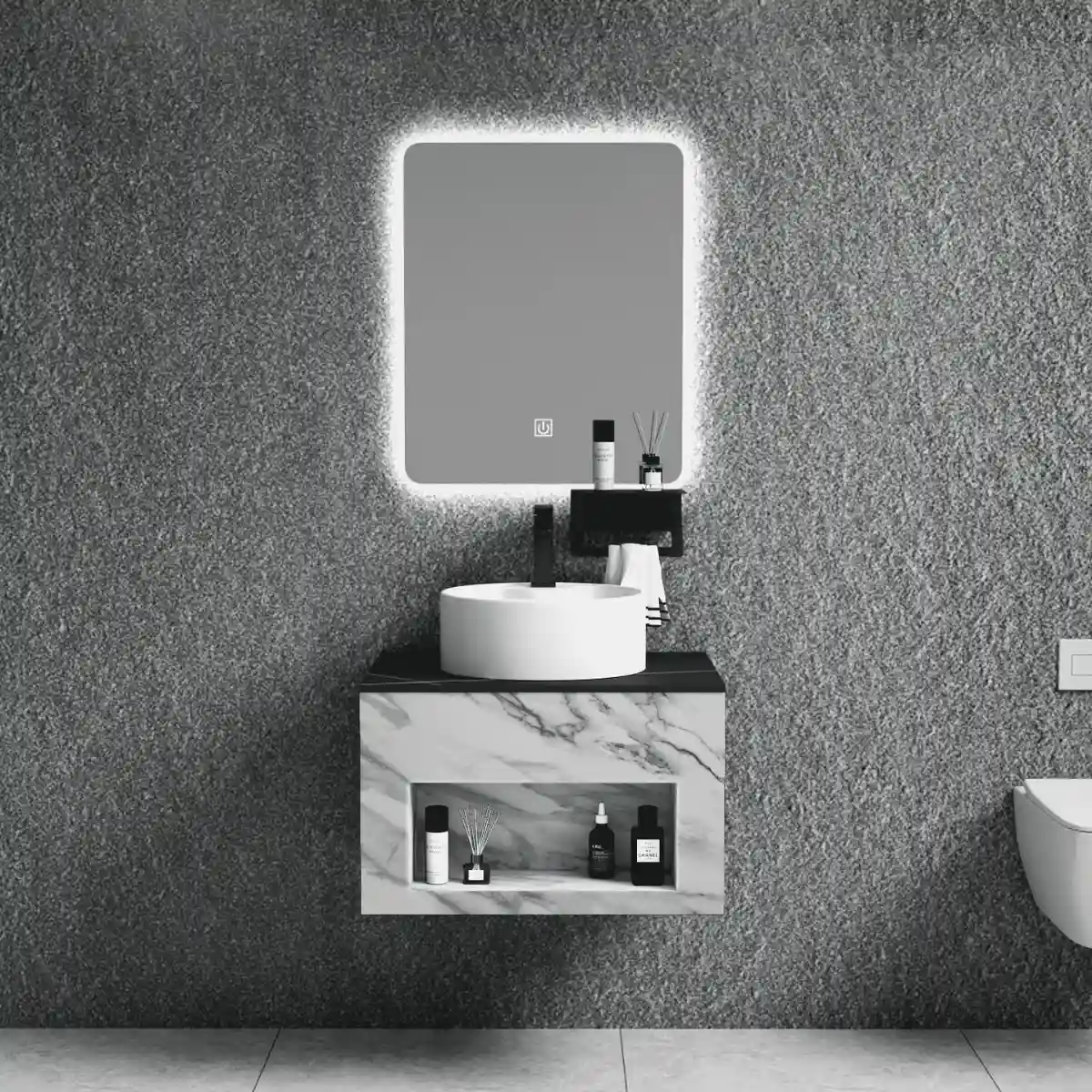
Inspection and Shipping of Sample
A pre-shipment sample check that catches 99% of defects prevents a costly mismatch weeks later.
Inspection starts before the sample is packed. For a custom bathroom vanity, the factory should run a final quality gate that checks dimensional tolerance (typically ±2mm for cabinetry), color match against the approved digital proof using a ΔE < 2.0 standard, and functional tests for any integrated LED mirror (color temperature, anti-fog performance). Focuscabinet’s five-stage QC includes this pre-shipment sample review, which catches 99% of defects – including millwork inconsistencies or wiring faults that would only surface after installation.
-
- Shipping method: For samples, manufacturers typically use express couriers like DHL, FedEx, or UPS. Transit time is 3–7 business days to most destinations. Always confirm whether the cost includes door-to-door delivery and any fuel surcharges.
- Tracking information: Once the sample ships, the supplier provides a tracking number. Verify it within 24 hours – a delayed update often means the package is stuck at customs. Request real-time alerts to avoid missed deliveries and to schedule your in-house review.
Customs documentation must be correct to avoid clearance delays. The commercial invoice should list the sample’s value (marked as ‘sample – no commercial value’ if allowed), HS code (9403.40 for wooden bathroom cabinets, 7020.00 for glass mirrors), and country of origin. If the sample uses wooden packaging, a fumigation certificate (ISPM-15 compliant) is mandatory for most countries. A factory that handles this paperwork automatically – like Focuscabinet does for its 1,000+ distributors – saves you days of back-and-forth and potential demurrage fees.
Testing and Approval
A vanity sample that looks good in photos but fails a 72-hour humidity cycle will destroy your brand’s return rate.
Most e‑commerce brand owners obsess over surface finish and color match during sample approval. They skip the part that actually predicts long‑term returns: systematic functional and durability testing. A pre‑production sample that sits on a showroom desk for two weeks tells you nothing about how the cabinet will perform after six months of steam, cleaning chemicals, and daily door slams. The factories that pass this test reliably are the ones that run a documented battery of checks before they ever ship a sample.
At Focuscabinet, the sample stage triggers the full five‑stage QC protocol. That means the same hinge‑cycle test, edge‑seal inspection, and LED mirror humidity stress that a bulk order would get. For sintered stone vanity basins, the cabinet is loaded to 60 kg for 24 hours to verify no deflection — a spec most suppliers skip on samples because it adds two days. The result is that their pre‑shipment sample check catches 99% of cosmetic and structural defects before the unit leaves the factory. Compare that to the industry norm where 15–20% of first samples need rework because durability wasn’t checked.
-
- Functional testing: Drawer slides are cycled 50,000 times (equivalent to 10+ years of home use). Smart mirror electronics are tested for 48 hours continuous operation under rated voltage. Water drainage for the basin is verified at 5 L/min flow without pooling.
- Durability testing: Cabinet surface is exposed to 80% humidity at 40°C for 72 hours to simulate coastal bathroom conditions. Metal hardware must pass 96‑hour neutral salt spray (ASTM B117) with no red rust. A 1 kg steel ball dropped from 30 cm onto the sintered stone basin surface — acceptable result: no cracks, only a minor sound.
- Compliance certification: Every sample destined for Europe includes a check for CE marking compliance on the LED mirror (EMC and LVD directives). For North America, the cabinet’s particleboard must meet CARB Phase 2 formaldehyde limits, and the electrical components must carry ETL or cUL listing. These are not optional — a container flagged at customs for missing documentation can cost you $2,000–$5,000 in storage and penalties per week.
- Final approval sign‑off: Your sample should come with a signed inspection report listing all measurements (within ±2 mm of spec), photos of each functional test, and the color/LAB value of the painted surface. Demand a photo of the sample on the production line showing its serial number against a calibrated ruler. Without that paper trail, the sample you approve will not match the bulk run.
The real cost of skipping this step? A $50,000 bulk order that passes initial visual checks but fails within 90 days of installation because the cabinet doors sagged in a humid climate. The sample period is the cheapest insurance you will ever buy. If a supplier balks at running durability tests on a single unit, that is a red flag that their bulk QC is built on hope, not process.
Conclusion
Before you approve any custom bathroom vanity sample from China, run it through three yes/no checks. Did the factory commit to a sample timeline under 14 days — and hit it? (Focuscabinet delivers sintered stone basin samples in 10 days; the industry average is 18.) Did the sample approval document specify FOB pricing and quality tolerance for both material and finish? Did a pre-shipment inspection — one that catches 99% of defects — clear the piece before it shipped? A “no” on any of these means you haven’t de-risked the sample stage. You’re still gambling on the bulk run matching the prototype.
Use that checklist when you review quotes from suppliers. Compare lead times, inspection protocols, and tolerance sheets side by side. If a factory can’t answer those three questions in writing, move on. Browse the Focuscabinet product page to see how a five-stage QC process and region-ready samples are documented upfront.
Frequently Asked Questions
How long does it take to get a custom bathroom vanity sample from China?
A custom bathroom vanity sample typically takes 2 to 4 weeks from spec approval to delivery. Focuscabinet can ship sintered stone samples in as little as 10 days, faster than the. Always confirm the timeline with your factory before paying the deposit.
What is the typical cost for a custom bathroom vanity sample?
Sample costs vary widely by material and complexity, usually between $100 and $500 for a standard vanity, plus shipping. Customization like smart LED mirrors or sintered stone basins will push the. Request a detailed quote including mold fees and shipping before ordering.
What information do I need to provide for a custom vanity sample?
You need precise specs: dimensions, material type (PVC, plywood, sintered stone), color Pantone codes, and any smart mirror features. A 0.5mm tolerance error can cause a rejected batch, so. Provide a signed spec sheet to lock in every detail before production starts.
Will the sample match the final mass production quality?
Not automatically—sample and bulk run can differ in material thickness or finish if QC isn’t locked. Focuscabinet uses five-stage quality control to minimize that gap, but you must request a pre-shipment inspection. Always approve a production sample before the container is loaded.


0 Comments