
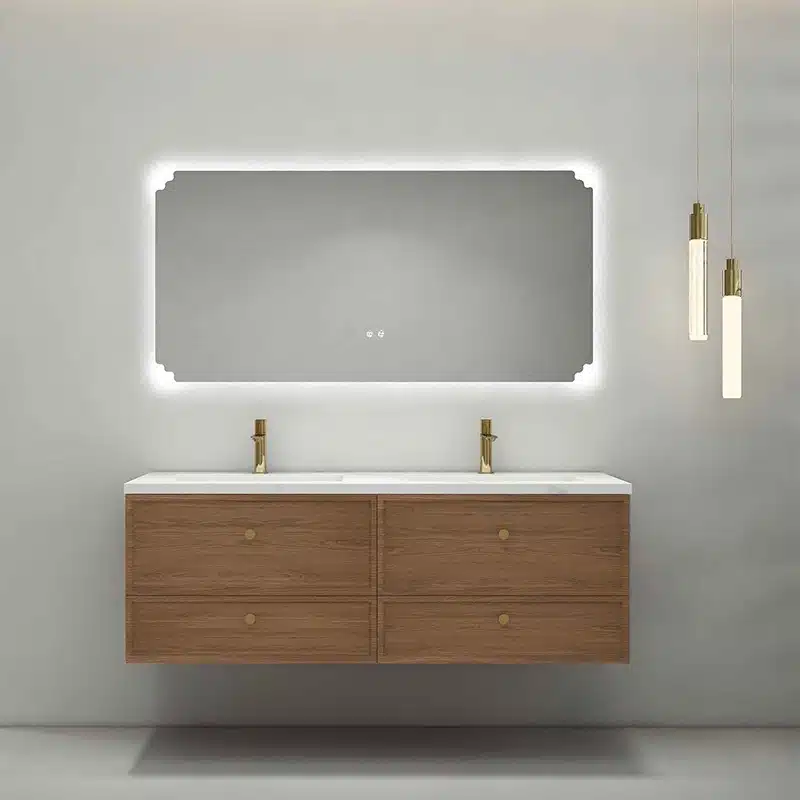
Specifying a sintered stone vanity for a high-end hotel project requires balancing design ambition against the brutal reality of commercial maintenance. Most interior designers default to quartz for its predictable patterns, but that standard choice introduces a structural vulnerability that often surfaces only after the first year of guest turnover. The 7-10% polymer resin binders in quartz countertops are chemically inert to water but highly susceptible to thermal shock from hot styling tools and degradation from harsh hotel cleaning protocols. This isn’t a theoretical risk; it is a daily operational headache for facility managers dealing with yellowed surfaces and micro-cracks in high-traffic bathrooms.
Sintered stone eliminates this liability by fusing 100% natural minerals at temperatures exceeding 1,200°C, creating a fully inorganic slab that withstands extreme heat and UV exposure without fading or warping. While the initial unit cost may be 15-20% higher than quartz, the lifecycle savings from zero sealing requirements and the elimination of premature replacement costs make it the superior engineering choice for commercial durability. For specifiers, the decision ultimately comes down to whether you are prioritizing short-term budget adherence or long-term asset protection.
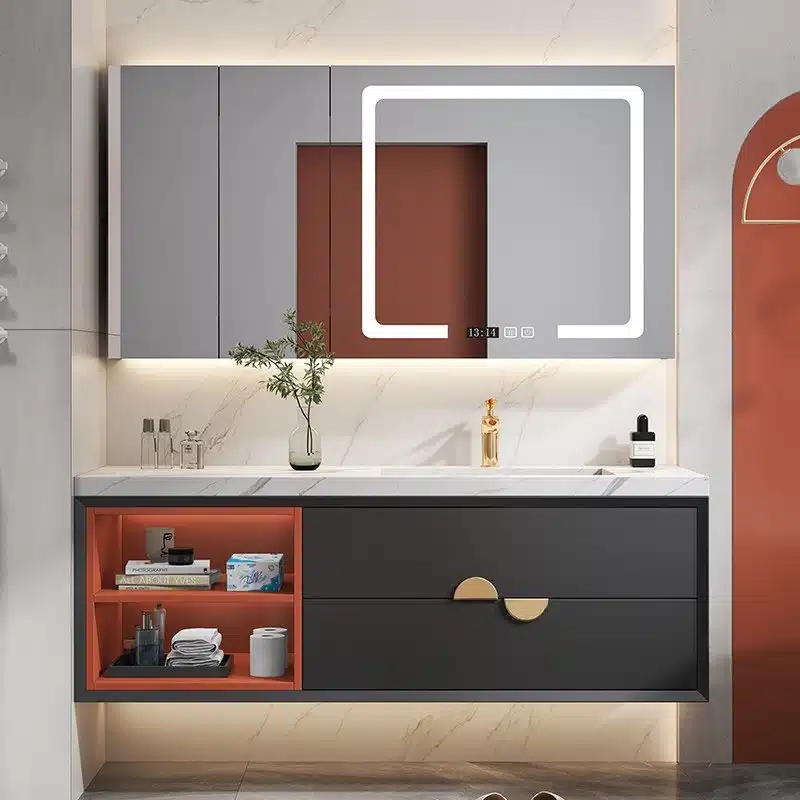
Why Quartz Fails Commercial Hotels: The Heat Risk
Quartz’s 7-10% resin binder creates a fatal thermal weak point in high-turnover hotel bathrooms.
Specifiers often select quartz for its consistent, uniform patterns and cost-effectiveness. However, this material is fundamentally an engineered composite containing 90-93% natural quartz crystals bound together by 7-10% polymer resins. While this works for residential kitchen counters, it is a structural liability in commercial hospitality environments.
In a hotel bathroom, vanity tops are subjected to extreme thermal shock from hot styling tools like curling irons and straighteners. Unlike natural stone or sintered stone, the polymer resins in quartz cannot withstand direct high heat. Placing a 200°C (392°F) tool directly on the surface causes immediate discoloration, yellowing, or structural micro-cracks.
For hotel operators, these thermal failures translate directly into high replacement costs, guest complaints, and brand damage. The resin binder also traps harsh commercial cleaning chemicals, leading to slow degradation of the surface finish. This is why sintered stone, which is fused at 1,200°C with zero resins, is the only safe engineering choice for longevity.
-
- Thermal Shock Risk: Quartz resins melt or crack under direct contact with hot styling tools, unlike 100% mineral sintered stone.
- Chemical Degradation: Harsh hotel disinfectants penetrate quartz’s microscopic resin gaps, causing dullness and yellowing over time.
- Lifecycle Cost: While quartz has a lower initial unit cost, its vulnerability to heat damage increases long-term replacement frequency.
Sintered Stone Durability: Heat, UV, and Scratch Resistance
Sintered stone’s 1,200°C fusion creates a zero-resin surface that survives hotel thermal shock and UV exposure.
The fundamental engineering gap between sintered stone and quartz lies in their composition. Quartz is an engineered stone composed of roughly 90-93% natural quartz crystals bound together by 7-10% polymer resins. This resin content creates a structural weak point. When exposed to direct high heat, such as a curling iron or straightener left on a vanity top, the resin can discolor, yellow, or crack. In a commercial hotel environment where styling tools are used daily, this thermal shock risk is a significant liability for specifiers.
Sintered stone is manufactured by fusing natural minerals at temperatures exceeding 1,200°C (2,100°F). This process eliminates the need for any polymer binders, resulting in a 100% inorganic material. Because there is no resin to degrade, the material remains chemically inert and structurally stable even under extreme temperature fluctuations. For projects in hot climates or sun-drenched bathrooms, this thermal stability ensures the vanity top will not warp or discolor over time.
-
- Thermal Stability: Withstands temperatures up to 50°C (122°F) without damage. Ideal for arid regions like the Middle East or sun-exposed North American bathrooms where quartz would risk thermal shock.
- UV Resistance: Completely UV-stable and will not yellow. Unlike quartz, which degrades under prolonged sun exposure, sintered stone is suitable for spa bathrooms with large windows or outdoor wet bars.
- Scratch & Stain Proof: Features a Mohs hardness rating that often exceeds quartz. It resists scratching from metal tools and stains from harsh commercial cleaning agents, such as bleach or acidic disinfectants, which can degrade quartz resins.
Sintered Stone vs Quartz: Commercial Procurement Comparison
Sintered stone eliminates resin-based thermal shock risks, making it the only viable choice for high-turnover hotel bathrooms.
Procurement decisions for commercial vanities have shifted from superficial aesthetics to rigorous lifecycle management. For interior designers specifying hotel bathrooms, the primary failure mode is no longer color fading, but structural degradation from daily thermal shock and harsh chemical cleaning protocols.
Quartz vanity tops rely on 7-10% polymer resins to bind quartz crystals. While aesthetically pleasing, these resins create a critical vulnerability. When guests use hot styling tools like curling irons directly on the countertop, the localized heat causes thermal shock, leading to yellowing or micro-cracks that compromise the surface integrity.
Sintered stone is manufactured by fusing 100% natural minerals at temperatures exceeding 1,200°C (2,120°F). This process eliminates all organic binders, resulting in a fully inorganic, non-porous surface. This material offers absolute resistance to thermal shock, safely withstanding temperatures up to 50°C (122°F) without degradation.
Beyond heat, sintered stone provides superior UV stability. Unlike quartz, which can yellow under prolonged sun exposure, sintered stone remains colorfast. This makes it the optimal choice for spa bathrooms with large windows or outdoor wet bars where sunlight exposure is unavoidable.
-
- Composition: Sintered stone uses 100% natural minerals; quartz contains 7-10% polymer resins that degrade under heat.
- Heat Tolerance: Sintered stone withstands direct heat (up to 50°C); quartz suffers thermal shock from hot styling tools.
- UV Resistance: Sintered stone is UV-stable and non-yellowing; quartz degrades and discolors in direct sunlight.
- Maintenance: Sintered stone requires zero sealing and resists harsh commercial chemicals; quartz needs acid avoidance.
- MOQ Flexibility: Sintered stone supports low MOQs (10-20 units) for prototyping; quartz typically demands high-volume runs.
| Feature | Specification | Advantage |
|---|---|---|
| Composition | 100% Natural Minerals | Zero porosity, chemically inert |
| Heat Resistance | >1,200°C Sintered | Resists thermal shock from styling tools |
| UV Stability | UV-Inert Surface | No yellowing in sunlit spas |
| Chemical Safety | Acid/Bleach Resistant | Withstands harsh hotel cleaning protocols |
| Procurement Flexibility | 10-20 Unit MOQ | Low-risk prototyping for designers |
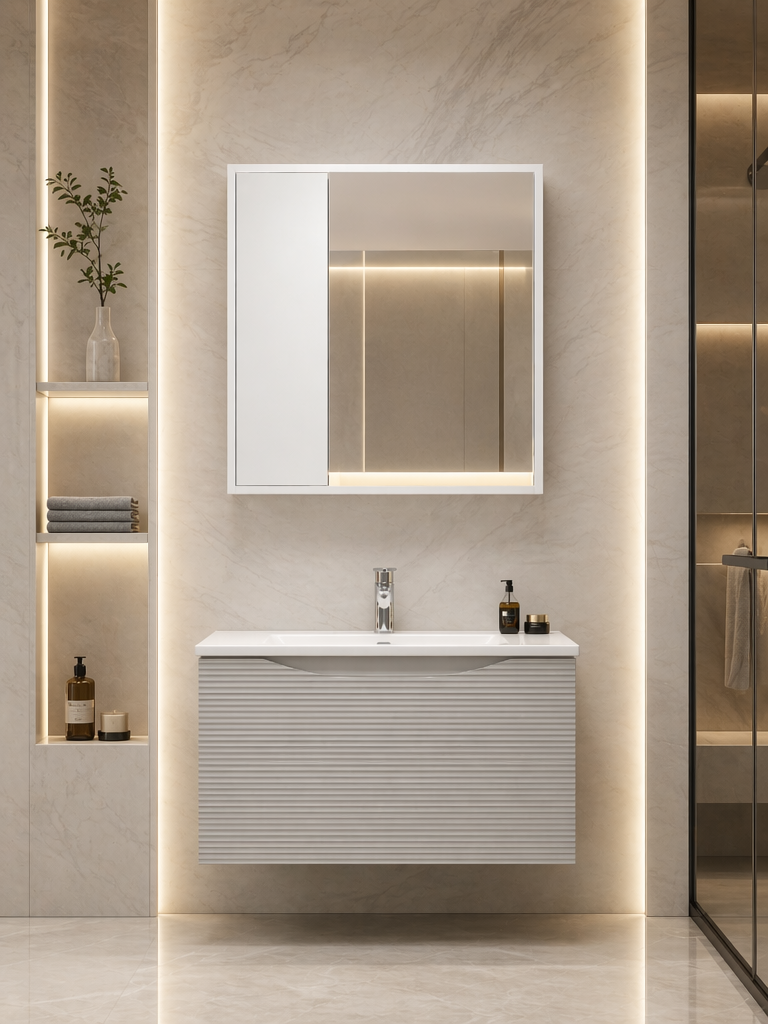
How to Specify Custom Vanities Without Delaying Projects
Select manufacturers supporting low MOQs (10-20 units) for custom prototypes to avoid high MOQ bottlenecks.
The primary bottleneck in custom vanity procurement is the gap between design intent and factory execution. Standard suppliers often demand high Minimum Order Quantities (MOQs) of 500+ units, locking in capital for untested designs. To mitigate this risk, specify a manufacturer that supports low MOQs of 10-20 units for custom sintered stone vanities. This allows you to order prototypes for client approval before committing to mass production.
Quality assurance is critical when specifying custom materials. Look for suppliers with ISO 9001 certification and a rigorous five-stage quality control process. This must include pre-production sample approvals and in-line CNC precision cutting. This approach ensures that specific Pantone colors, hardware branding, and sink cutouts match your renderings exactly, preventing costly rework during installation.
-
- Low MOQ Flexibility: Supports 10-20 unit orders for prototypes, reducing client risk and allowing market testing without large capital commitments.
- ISO 9001 Certification: Ensures standardized quality management systems are in place, providing a baseline for consistency across custom batches.
- Five-Stage QC: Rigorous inspections at every production stage, from raw material intake to final packaging, ensuring durability and aesthetic perfection.
- Pre-Production Samples: Mandatory sample approval before mass production begins, guaranteeing that the final product matches the approved design intent.
- CNC Precision Cutting: High-precision CNC machinery ensures exact dimensions for sink cutouts and component assembly, minimizing on-site installation errors.
Conclusion
Specifying sintered stone eliminates the thermal shock and chemical degradation risks inherent in resin-bound quartz, ensuring your hotel vanities survive high-turnover commercial stress. The 15-20% premium over quartz pays for itself through zero sealing requirements and immunity to thermal damage from styling tools.
Frequently Asked Questions
Which is more durable, sintered stone or quartz?
Sintered stone is more durable for commercial use because it contains no resin, making it immune to thermal shock from hot styling tools. Quartz’s polymer binder can crack or yellow under high heat. Choose sintered stone for heat resistance in high-turnover environments.
What is the most durable countertop for a bathroom vanity?
Sintered stone is the most durable option due to its 100% mineral composition and non-porous surface. It offers superior scratch, stain, and heat resistance compared to quartz or natural stone. Select sintered stone for maximum longevity and low maintenance.
What are the disadvantages of sintered stone?
The main disadvantages are higher initial costs and potential brittleness during fabrication. It requires specialized tools and experienced installers to prevent chipping on sharp edges. Budget for professional installation to avoid edge damage.
What is the disadvantage of sintered stone?
The primary disadvantage is the higher upfront cost compared to quartz or laminate. Additionally, its hardness makes it prone to chipping if not handled or installed correctly. Ensure experienced handling to mitigate chipping risks.
Do Clorox wipes damage quartz countertops?
Clorox wipes can damage quartz over time by degrading the resin binder. This leads to dullness, discoloration, and reduced structural integrity in the surface. Use pH-neutral cleaners to preserve quartz surfaces.




0 Comments