

Specifying the right led mirror specs is less about matching a color swatch and more about navigating a minefield of regional electrical codes and aesthetic fidelity. A mirror that looks stunning in a showroom catalog often fails in a commercial bathroom because the installer overlooked the Critical Rendering Index or the IP rating for the specific shower zone. MFBATH addresses this gap by engineering region-ready smart mirrors that meet strict local compliance standards while maintaining the high-end finish your design demands.
Budget mirrors frequently use low-grade LED strips that cast a green or magenta tint, ruining the appearance of expensive matte black fixtures and warm wood tones. True luxury requires a CRI of 90 or higher to render skin tones and materials accurately. We prioritize these technical details because a failed installation costs far more than a premium unit. The factory upgrades its mirror production with automotive-grade machinery to ensure these specifications hold up under the rigorous five-stage quality control process.
Why Most Led Mirrors Fail Aesthetics
Budget mirrors with CRI 70-80 distort skin tones and ruin luxury finishes; always demand CRI 90+.
Most designers treat the Critical Rendering Index (CRI) as a secondary spec, but it is the primary determinant of whether a bathroom looks expensive or cheap. Standard budget mirrors utilize LED strips with a CRI of 70-80, which inherently filters out red and yellow wavelengths. This spectral gap creates a sickly green or magenta cast that completely distorts the visual integrity of warm wood vanities, matte black fixtures, and natural skin tones.
For any luxury residential or commercial hospitality project, a mandatory CRI of 90+ is non-negotiable. High-CRI strips mimic the full spectrum of natural daylight, ensuring that tile grout colors, fabric selections, and makeup application look identical under the mirror’s illumination as they do in the lobby. Using lower-tier LEDs in a high-end spec is a direct liability that leads to client rejection during the final walkthrough.
-
- Verification Protocol: Do not rely on marketing brochures. Require the supplier to provide a recent photometric report from an accredited third-party lab (such as TUV or SGS). Verify the exact CCT (Color Temperature) range, typically 2700K-6500K, is included in the test data.
- Installation Height: To maintain aesthetic cohesion and ADA compliance, the center of the mirror should be mounted at 60 inches from the floor. Proper height ensures the lighting falls evenly on the face without casting harsh downward shadows from the LED strips.
- Driver Compatibility: Ensure the high-CRI LEDs are paired with a 0-10V dimming driver. Standard Triac dimmers often cause visible flickering or buzzing in high-output commercial setups, which ruins the perceived quality of the fixture.
Real Cost Breakdown of Commercial Led Mirrors
Commercial LED mirrors fail when hidden costs like UL certification delays, driver mismatches, and unverified compliance inflate project budgets.
The unit price of a commercial LED mirror is merely the entry fee. The actual cost of failure lies in the engineering gaps that surface during installation. Budget mirrors often cut corners on driver quality and certification verification, leading to expensive re-specs, failed building inspections, and client dissatisfaction in high-end hospitality projects.
In North America, securing UL or ETL certification for a new mirror model costs between $1,500 and $4,000 per SKU and takes 6 to 10 weeks. Relying on unverified factory certificates or generic CE marks for US projects risks rejected building permits and voided insurance claims. Always demand original test reports from accredited third-party labs like TUV Rheinland or SGS before finalizing the order.
-
- Driver Mismatches: Standard Triac dimmers frequently cause flickering in commercial settings. Specify 0-10V dimming compatibility to ensure smooth operation, though this requires additional low-voltage wiring and higher upfront labor costs.
- Master Spec Sheets: Create a detailed master specification sheet for each SKU, including exact dimensions, LED wattage, and certification numbers. This ensures your electrical sub-contractor and mirror installer coordinate on J-Box placement to avoid wiring conflicts.
- Compliance Verification: Verify IP44 minimum ratings for general areas and IP65 for shower zones. For North America, insist on UL/CSA listings for the LED driver and anti-fog circuits, not just generic manufacturer claims.
| Feature | Specification | Advantage |
|---|---|---|
| Base Material | Marine-Grade Plywood, Solid Oak/Walnut, 100% Waterproof PVC, Sintered Stone | Tailored for regional humidity; eliminates warping in tropical zones while offering premium luxury finishes. |
| Smart Mirror Tech | CRI 90+ LED Strips, Anti-Fog Heating, Bluetooth 5.0, Voice Activation | Ensures true color rendering for high-end aesthetics; reduces guest complaints in hotel installations. |
| Regional Compliance | UL/CSA (NA), CE/ISO 14001 (EU), AS/NZS (Oceania), Heat-Resistant (Middle East) | Guarantees smooth customs clearance and building permit approval without costly re-certification. |
| Production Capacity | 10,000㎡ Factory, 5,000 Units/Month, 5-Stage QC Inspection | Ensures consistent supply for large-scale commercial projects with zero aesthetic defects. |
| Customization & MOQ | 40,000+ Configurations, Low MOQ 10-20 Units, Pantone Color Matching | Allows distributors to test niche markets risk-free and maintain exclusive brand identity. |
Led Mirrors Vs Alternatives: Which Is Better?
LED mirrors eliminate vanity shadows and offer superior color accuracy compared to standard backlit or sconce-lit alternatives.
Standard backlit mirrors are a common budget alternative, but they rely on light reflecting off the wall. This indirect method creates uneven illumination and fails to provide the shadow-free clarity required for precise grooming tasks like makeup application or shaving. For commercial projects, the lack of adjustable color temperature in standard backlit units often clashes with the architectural lighting scheme, resulting in a disjointed aesthetic.
Integrated vanity lights (sconces) are frequently specified for their traditional appeal, yet they present significant optical flaws. Because sconces are positioned to the side of the mirror, they cast harsh downward shadows on the face, particularly under the eyes and nose. This directional lighting distorts facial features and makes it nearly impossible for users to see their true skin tone, leading to dissatisfaction in high-end hospitality and residential settings.
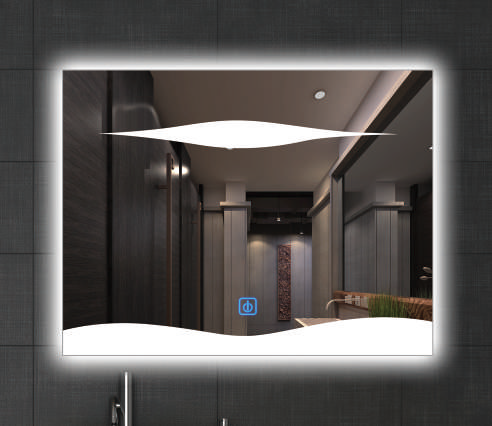
LED mirrors solve these issues by placing light-emitting diodes directly around the glass perimeter or behind a diffuser. This front-lit or edge-lit configuration eliminates facial shadows entirely, ensuring uniform illumination across the entire reflection. Furthermore, modern LED strips offer a Critical Rendering Index (CRI) of 90+, which accurately renders reds and yellows. This fidelity is critical for ensuring that tile finishes, fabric selections, and skin tones appear consistent and true to life.
Smart LED mirrors introduce advanced functionalities such as voice activation, Bluetooth connectivity, and adjustable ambient lighting. These features allow guests in hotel suites or spa bathrooms to customize their environment, significantly enhancing the user experience. However, this added value introduces complexity regarding wireless interference and electronic maintenance. Specifiers must ensure that these smart features are backed by robust warranties and that the manufacturer provides clear technical support for troubleshooting connectivity issues in shielded building environments.
The maintenance of smart mirrors requires a proactive approach due to the presence of active electronic components like anti-fog heating pads and digital displays. While high-quality LED strips can last up to 50,000 hours, the drivers and heating elements are more susceptible to failure over time. To mitigate long-term maintenance costs, commercial projects should specify mirrors with replaceable drivers and ensure the supplier maintains a local inventory of spare parts for quick repairs.
-
- Lighting Quality: LED mirrors provide shadow-free, uniform illumination with CRI 90+ accuracy, whereas backlit mirrors rely on uneven wall reflection and sconces cast harsh facial shadows.
- Aesthetic Control: LED strips allow for adjustable color temperatures (2700K-6500K) to match architectural schemes, while standard alternatives offer fixed, often mismatched, lighting tones.
- Smart Integration: Smart mirrors offer Bluetooth and anti-fog features for enhanced guest comfort, but require careful planning for FCC/CE compliance and spare parts inventory.
- Maintenance Risk: Smart mirrors have higher electronic failure rates than passive mirrors; ensure drivers and heating pads are replaceable and covered by a minimum 2-year warranty.
How to Source Led Mirrors Without Compliance Risks
Verify UL/ETL and CE certifications via third-party test reports to avoid building code failures and insurance voids.
Sourcing LED mirrors without verifying electrical safety and regional compliance exposes your firm to severe liability. Generic CE marks on Chinese packaging are frequently self-declared and legally insufficient for commercial building permits or insurance claims. You must demand original, traceable test reports from accredited third-party laboratories like TUV Rheinland or SGS to validate the manufacturer’s claims.
In North America, the UL or ETL listing is the absolute baseline for passing electrical inspections. This certification specifically covers the LED driver and the anti-fog heating circuits. Do not accept a factory’s internal quality control log as proof of safety; the listing number must be verifiable on the UL database to ensure the unit meets strict fire and shock resistance standards.
-
- North American Compliance: Mandatory UL or ETL listing for the LED driver and anti-fog circuits. Internal factory certificates are legally insufficient for commercial building permits.
- European Compliance: Verify CE compliance paired with ISO 14001-certified materials. This ensures low formaldehyde emissions (E1 grade) and meets strict sustainability goals.
- Third-Party Verification: Request original test reports from accredited labs like TUV Rheinland or SGS. These documents detail the exact water volume and pressure used for IP44/IP65 testing.
- Wall Backing Specs: Ensure the mirror’s mounting hardware is rated for metal stud walls. Large-format glass mirrors require 2×6 fire-rated wood backing for secure installation.
The physical mounting hardware and wall backing are critical failure points often overlooked during specification. Large-format LED mirrors place significant stress on drywall anchors. Always specify 2×6 fire-rated wood backing behind the drywall to provide a solid anchor point for the mounting hardware. This prevents the mirror from detaching during seismic activity or due to vibration, protecting both the fixture and the occupants.
Conclusion
Selecting the right led mirror specs requires balancing aesthetic precision with strict regional compliance. Prioritizing CRI 90+ for accurate color rendering and verifying UL/ETL or CE certifications prevents costly re-specs and ensures your commercial projects meet safety standards. MFBATH’s five-stage quality control and region-ready manufacturing strategy eliminate the guesswork, delivering smart LED mirrors that integrate seamlessly with your bathroom vanity designs.
Review the bathroom vanity mirror bundle guide to explore technical specifications and customization options for your next project.
Frequently Asked Questions
What should buyers look for when sourcing led mirror specs?
Prioritize IP ratings for moisture resistance, CRI 90+ for accurate color rendering, and regional electrical certifications like UL or CE. These specs ensure the mirror survives local humidity and meets safety codes for commercial. Verify IP, CRI, and certifications before finalizing orders.
How to verify factory certifications for led mirror specs?
Request valid certificates for target markets, such as UL/CSA for North America or CE for Europe, and cross-check them with the issuing body. MFBATH provides these regional compliances alongside ISO 14001 sustainability standards. Validate certificates directly with the issuing authority.
What are typical MOQ requirements for wholesale orders?
Standard wholesale orders often have higher thresholds, but many manufacturers support low MOQs of 10 to 20 units for custom runs. This flexibility allows distributors to test markets without significant inventory risk. Negotiate MOQ based on customization scope.
How to handle international shipping and customs clearance?
Ensure products are packed in export-standard materials to withstand global logistics and comply with destination country import regulations. Work with a freight forwarder experienced in bathroom fixtures to manage documentation and duties efficiently. Use specialized freight forwarders for complex customs.
What quality inspection standards apply before shipment?
Reputable manufacturers implement multi-stage inspections, such as a five-point quality control process, covering materials, assembly, and functionality. This ensures durability and aesthetic perfection before the goods leave the factory. Request detailed inspection reports prior to shipment.


0 Comments