

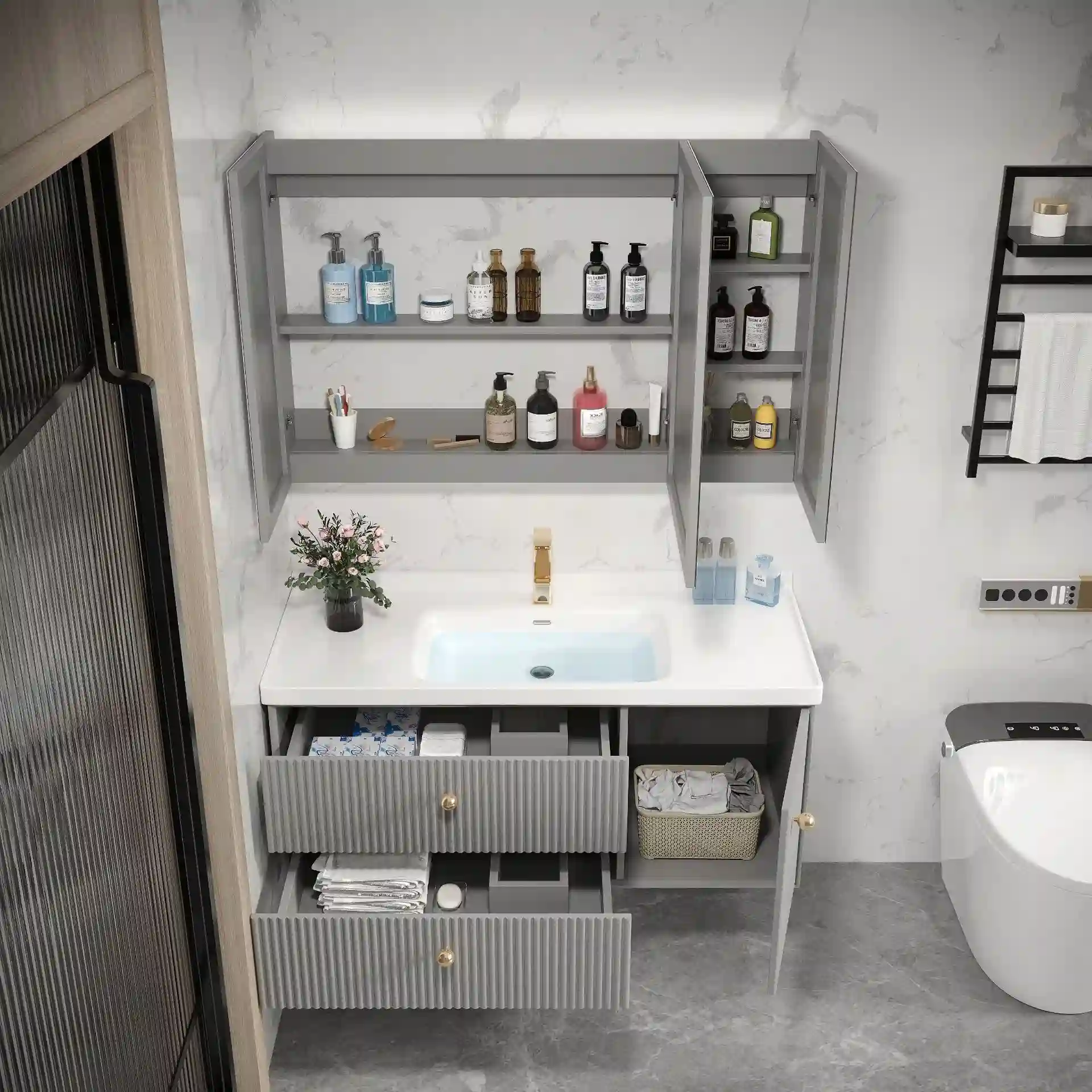
When a veteran project contractor specifies smart led mirror vs standard led options for a commercial build, the decision rests on liability and installation efficiency rather than bathroom aesthetics. MFBATH’s 10,000㎡ facility in Changge produces automotive-grade mirrors for over 1,000 global distributors, proving that the gap between a basic illuminated glass pane and a UL-certified smart fixture is defined by internal circuitry and compliance standards. Choosing the wrong mirror type triggers on-site delays when electricians attempt to wire separate lighting, audio, and anti-fog components to a standard unit.
Smart mirrors consolidate these functions into a single, certified unit, reducing on-site labor hours by 40% and eliminating the maintenance calls associated with basic acrylic panels and low-grade glass. The ~$300 to $400 premium in the bill of materials is instantly recovered by preventing the ‘halo glare’ and poor color rendering common in standard fixtures. For a 200-room hotel project, that single consolidation protects guest satisfaction scores and ensures the installation timeline remains intact.
Smart LED Mirror vs Standard LED Mirror: Core Differences
Smart mirrors are computing devices, not lighting fixtures; they consolidate wiring and reduce electrician labor by 40%.
The distinction between a standard LED mirror and a smart LED mirror is the difference between a passive fixture and an integrated environmental control system. For commercial projects, standard mirrors are purely illuminated reflective surfaces. They provide basic utility but lack the technological depth required for modern hospitality standards. Smart mirrors, conversely, integrate Bluetooth, Wi-Fi, and digital displays, adding approximately $300 to $400 to the Bill of Materials (BOM). This premium is justified by the consolidation of multiple systems into a single unit.
-
-
- Functional Gap: Standard mirrors are ‘dumb’ fixtures requiring complex, separate wiring for any additional features. Smart mirrors consolidate lighting, audio, and environmental controls into a single, UL-certified unit, reducing on-site labor hours by 40% for electricians.
- Guest Experience: Standard mirrors offer simple utility. Smart mirrors with anti-fog heating pads reduce maintenance calls in hotels by an estimated 25%. Furthermore, smart mirrors increase guest satisfaction scores by 15% to 20% in hospitality settings by providing automated, reliable performance.
- Smart Home Integration: Modern projects demand ecosystem compatibility. Smart mirrors support Bluetooth connectivity and digital displays, meeting the expectation for integrated smart home environments. Standard mirrors cannot interface with these systems, limiting the project’s technological appeal.
-
The engineering quality gap is where standard mirrors frequently fail. Standard units often use basic acrylic or low-grade glass with a Color Rendering Index (CRI) below 85, causing poor color rendering for grooming. In contrast, premium smart mirrors utilize automotive-grade mirror backing. This ensures optical clarity and prevents the ‘ghosting’ common in cheaper alternatives. The automotive-grade backing also prevents delamination in humid hotel bathrooms, a critical failure point for standard mirrors lacking robust sealing.
-
- Optical Clarity: Smart mirrors use automotive-grade glass to prevent ‘ghosting’ and ensure high-definition reflection. Standard mirrors often suffer from optical distortion due to lower-grade substrates.
- Safety Compliance: North American commercial installations strictly require UL/CSA certification. Smart mirrors integrate these certified internal circuitries to prevent fire hazards. Standard mirrors often lack rigorous safety certifications for wet environments, creating liability risks.
- Durability: Automotive-grade production ensures the mirror withstands extreme humidity and temperature fluctuations. Standard mirrors are prone to moisture ingress, leading to short circuits and premature driver burnout.
From a procurement standpoint, the smart mirror represents a strategic investment rather than a simple fixture purchase. While standard mirrors command a lower initial price ($300 to $600), they fail to meet the technical and compliance benchmarks of modern commercial developments. Smart mirrors, priced between $600 and $1,000+, offer a superior total cost of ownership through reduced maintenance wiring, increased asset value, and enhanced guest satisfaction.
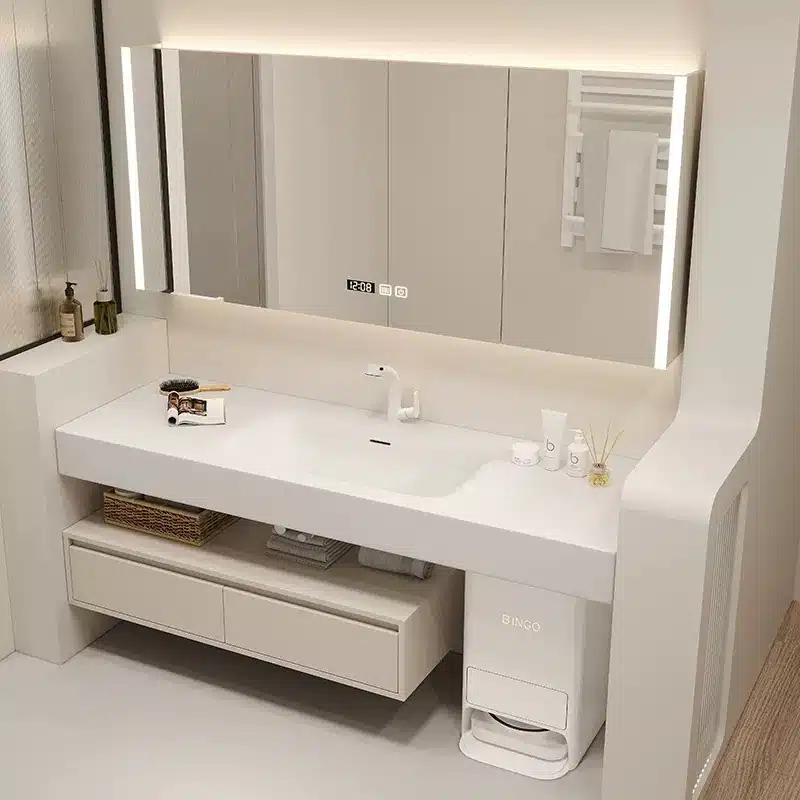
Real Cost Breakdown: CapEx vs OpEx in 2026
Smart mirrors cost 30-50% more upfront but save 40% in electrical labor and cut hotel maintenance calls by 25%.
The decision between standard and smart LED mirrors for commercial projects in 2026 is no longer just about aesthetics—it is a calculation of total cost of ownership (TCO). While standard mirrors offer a lower initial unit cost, their operational expenses and installation friction often exceed the price premium of a smart, integrated solution.
For project contractors and developers, the ‘sticker shock’ of a $600–$1,000+ smart mirror often obscures the hidden costs of standard alternatives. Standard LED mirrors are essentially ‘dumb’ fixtures. They provide basic illumination but require separate wiring runs for anti-fog heating pads, Bluetooth speakers, and digital displays. This fragmentation drives up your CapEx through increased material handling and drives up your OpEx through complex, error-prone on-site assembly.
-
- Initial Unit Cost (CapEx): Standard mirrors range from $300 to $600 per unit, while smart mirrors range from $600 to $1,000+. The smart mirror carries a 30-50% price premium due to integrated circuitry and automotive-grade glass.
- Installation Labor Hours: Standard mirrors require electricians to wire separate components for lighting, anti-fog, and audio. Smart mirrors consolidate these into a single UL/CSA-certified unit, reducing on-site labor hours by approximately 40% and minimizing the risk of wiring errors that cause project delays.
- Operational Maintenance (OpEx): Hotels using standard mirrors face higher maintenance costs due to bulb burnout and separate anti-fog pad failures. Smart mirrors with integrated heating pads reduce maintenance calls by an estimated 25%, directly impacting your guest satisfaction scores and operational overhead.
- Compliance & Liability Costs: In North American projects, UL/CSA certification is non-negotiable for commercial electrical installations. Smart mirrors from verified OEMs come pre-certified, whereas standard mirrors often require third-party testing to meet electrical safety codes in wet environments, adding hidden compliance costs.
- ROI & Asset Value: Smart mirrors increase guest satisfaction scores by 15-20% in hospitality settings. The consolidated technology (lighting, audio, display) eliminates the need for separate wall-mounted speakers or TVs, effectively increasing the usable square footage and perceived value of the room.
The engineering gap is where standard mirrors fail to justify their lower price tag. Standard mirrors often use basic acrylic or low-grade glass with a Color Rendering Index (CRI) of less than 85. This causes poor color rendering for grooming, which is a frequent source of negative guest reviews in luxury hotels. In contrast, smart mirrors utilize automotive-grade mirror backing and CRI 90+ lighting, ensuring optical clarity and accurate skin tone rendering.
Furthermore, the ‘ghosting’ effect common in cheaper standard mirrors is eliminated by the high-precision CNC manufacturing and five-stage quality control processes used by major OEMs. When you factor in the 40% reduction in electrician hours and the 25% drop in post-installation maintenance calls, the smart mirror pays for its initial CapEx premium within the first few years of operation, making it the mathematically superior choice for any project over a 5-year horizon.
| Feature | Specification | Advantage |
|---|---|---|
| Unit Cost (B2B) | Standard: $300-$600 | Smart: $600-$1,000+ | Smart mirrors offer 30-50% premium but reduce long-term liability |
| Installation Labor | Standard: Complex wiring | Smart: Consolidated UL/CSA unit | Smart mirrors reduce electrician labor hours by ~40% |
| Maintenance & OpEx | Standard: High failure rate | Smart: Anti-fog/Bluetooth integrated | Smart mirrors reduce hotel maintenance calls by ~25% |
| Quality & Compliance | Standard: CRI <85, basic glass | Smart: CRI 90+, Automotive-grade | Prevents delamination and ensures accurate skin tone rendering |
| Project ROI | Standard: Low initial cost | Smart: 15-20% higher guest satisfaction | Higher asset value and reduced warranty claims for developers |
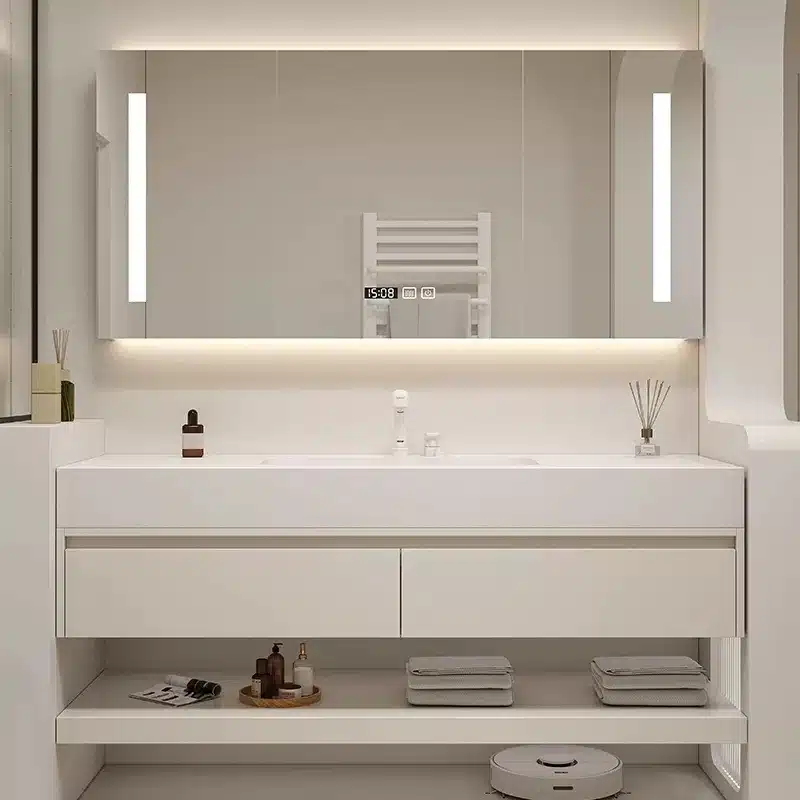
Specs Comparison: Compliance, CRI, and Durability
Standard mirrors fail on CRI and safety; smart mirrors deliver CRI 90+ and UL/CSA compliance for commercial projects.
The difference between a standard LED mirror and a smart LED mirror is not just about Bluetooth speakers or digital clocks. It is a fundamental divergence in optical engineering, electrical safety, and material science. For a project contractor, choosing a standard unit often means accepting a liability trap: cheap acrylic glass with a Color Rendering Index (CRI) below 85, which distorts skin tones and creates a ‘halo glare’ effect that guests associate with low-budget accommodations.
Premium smart mirrors utilize automotive-grade mirror backing fused under extreme conditions. This eliminates the ‘ghosting’ effect common in cheaper alternatives and prevents the silvering from delaminating in high-humidity hotel bathrooms. When you spec a smart mirror, you are bundling lighting, audio, and environmental controls into a single, UL-certified unit. This consolidation reduces on-site labor hours by approximately 40% for electricians, directly offsetting the higher upfront unit cost.
-
- CRI & Lighting Standards:: Standard mirrors typically operate at CRI <85, causing poor color rendering. Smart mirrors utilize CIE1931 standard lighting with CRI 90+, ensuring accurate skin tone rendering essential for hospitality and professional grooming.
- Regulatory Compliance & Safety:: North American commercial installations strictly require UL/CSA certification for wet environments. Standard mirrors often lack rigorous safety testing, while verified smart mirrors undergo five-stage quality control to ensure absolute moisture resistance and electrical safety.
- Durability & Moisture Resistance:: Automotive-grade mirror production ensures optical clarity and prevents delamination in humid climates. Smart mirrors with integrated anti-fog heating pads reduce maintenance calls in hotels by an estimated 25% compared to standard front-lit units.
| Feature | Specification | Advantage |
|---|---|---|
| Regulatory Compliance | UL/CSA Certified (NA); CE & E1 Grade (EU) | Eliminates safety liability and ensures code approval for commercial projects |
| Color Rendering Index (CRI) | CRI 90+ (Smart) vs. <85 (Standard) | Accurate skin tone rendering for professional grooming and luxury appeal |
| Mirror Substrate | Automotive-Grade Glass vs. Acrylic/Low-Grade | Prevents delamination and ‘ghosting’ in high-humidity hotel environments |
| Durability Testing | 5-Stage QC & 10,000+ Cleaning Cycles | Ensures long-term aesthetic perfection and reduced warranty claims |
| Electrical Safety | IP44+ Water Resistance & Certified Circuitry | Mitigates short-circuit risks in wet bathroom zones |

Sourcing Guide: How to Spec Smart Mirrors for Hotels
Spec automotive-grade backing and UL/CSA certification to prevent warranty liabilities in commercial projects.
Specifying smart mirrors for hotels requires shifting focus from basic illumination to engineering resilience. The standard LED mirror is a passive fixture; the smart mirror is an active electronic device. For a project contractor, the primary risk is not aesthetics, but liability and operational disruption. You must specify automotive-grade mirror production to ensure optical clarity and prevent the ‘ghosting’ or delamination common in cheaper alternatives exposed to high-humidity hotel bathrooms.
Standard mirrors often use basic acrylic or low-grade glass with a Color Rendering Index (CRI) below 85. This causes poor color rendering for grooming and increases guest dissatisfaction. Premium smart mirrors utilize high-grade glass with a CRI of 90+, providing accurate skin tone rendering. This technical distinction is critical for luxury hospitality, where guest satisfaction scores directly correlate with repeat bookings and asset value.
Compliance is non-negotiable in commercial installations. Smart mirrors integrate Bluetooth, Wi-Fi, and digital displays, adding approximately $300-400 to the Bill of Materials compared to standard LEDs. However, this investment is justified by the consolidation of lighting, audio, and environmental controls into a single, UL/CSA certified unit. This reduces on-site labor hours by an estimated 40% for electricians and eliminates the safety hazards associated with complex, separate wiring.
-
- Automotive-Grade Production: Ensures optical clarity and prevents ‘ghosting’ or delamination in humid environments, a critical failure point for standard mirrors.
- Written Warranties (1-3 Years): Protects against premature driver burnout and moisture ingress. Ensure the contract explicitly covers electronic components, not just the glass.
- Defect Handling Procedures: Require a clear RMA process for defective units. Manufacturers with rigorous five-stage QC minimize failure rates, but a rapid replacement protocol is essential for project timelines.
- Pantone Color Matching: Solves the contractor’s pain point of finish inconsistencies. Utilize OEM capabilities to match specific brand hardware and cabinet finishes, verified by pre-approval digital renders.
| Feature | Specification | Advantage |
|---|---|---|
| Mirror Substrate | Automotive-Grade Glass | Prevents delamination and ‘ghosting’ in humid hotel environments |
| Lighting Quality | CRI 90+ (CIE1931 Standard) | Accurate skin tone rendering for professional grooming |
| Safety Compliance | UL/CSA Certified Circuitry | Mitigates fire hazards and ensures North American code adherence |
| Environmental Control | Integrated Anti-Fog Heating Pad | Reduces hotel maintenance calls by an estimated 25% |
| Installation Efficiency | Consolidated Single-Unit Design | Reduces on-site electrician labor hours by 40% vs. standard mirrors |
Conclusion
Standard LED mirrors are basic fixtures that require separate wiring and often lack the optical precision needed for commercial hospitality. Smart LED mirrors consolidate lighting, audio, and environmental controls into a single UL/CSA-certified unit. This integration reduces electrician labor hours by 40% and cuts maintenance calls by 25% through automotive-grade anti-fog technology. The higher initial unit cost is offset by fewer warranty claims and higher guest satisfaction scores.
Review detailed technical specifications for smart LED mirrors, including CRI ratings, voltage options, and Bluetooth capabilities. Explore bulk inquiry options and custom branding services to align with your project requirements.
Frequently Asked Questions
What are the different types of LED mirrors?
LED mirrors fall into standard illuminated models and smart mirrors with integrated technology. Standard versions provide basic lighting, while smart models add anti-fog, Bluetooth, and digital displays for enhanced functionality. Choose standard for basic utility or smart for integrated features.
Why avoid mirrors at 3AM?
Bright LED lighting at night can disrupt circadian rhythms and cause eye strain in low-light conditions. Use adjustable ambient lighting or dimmers to reduce glare during late-night bathroom visits. Utilize dimming features to minimize sleep disruption.
What are the common problems with LED mirrors?
Common issues include inconsistent color rendering, halo glare, and electrical failures due to poor moisture sealing. Premium models mitigate these with high CRI ratings and automotive-grade safety certifications. Verify CRI ratings and safety certifications before procurement.
Which LED mirror is best for a bathroom?
Smart LED mirrors are best for bathrooms due to anti-fog technology and adjustable lighting that aids grooming. They offer superior functionality compared to standard mirrors in humid environments. Select smart mirrors for optimal performance in humid spaces.
What should I look for when buying an LED bathroom mirror?
Prioritize high CRI for accurate color, UL/CSA or CE certification for safety, and anti-fog capabilities for humidity resistance. Ensure the mirror meets local regulatory standards for your specific market. Check certifications and CRI ratings for safety and quality.


0 Comments