

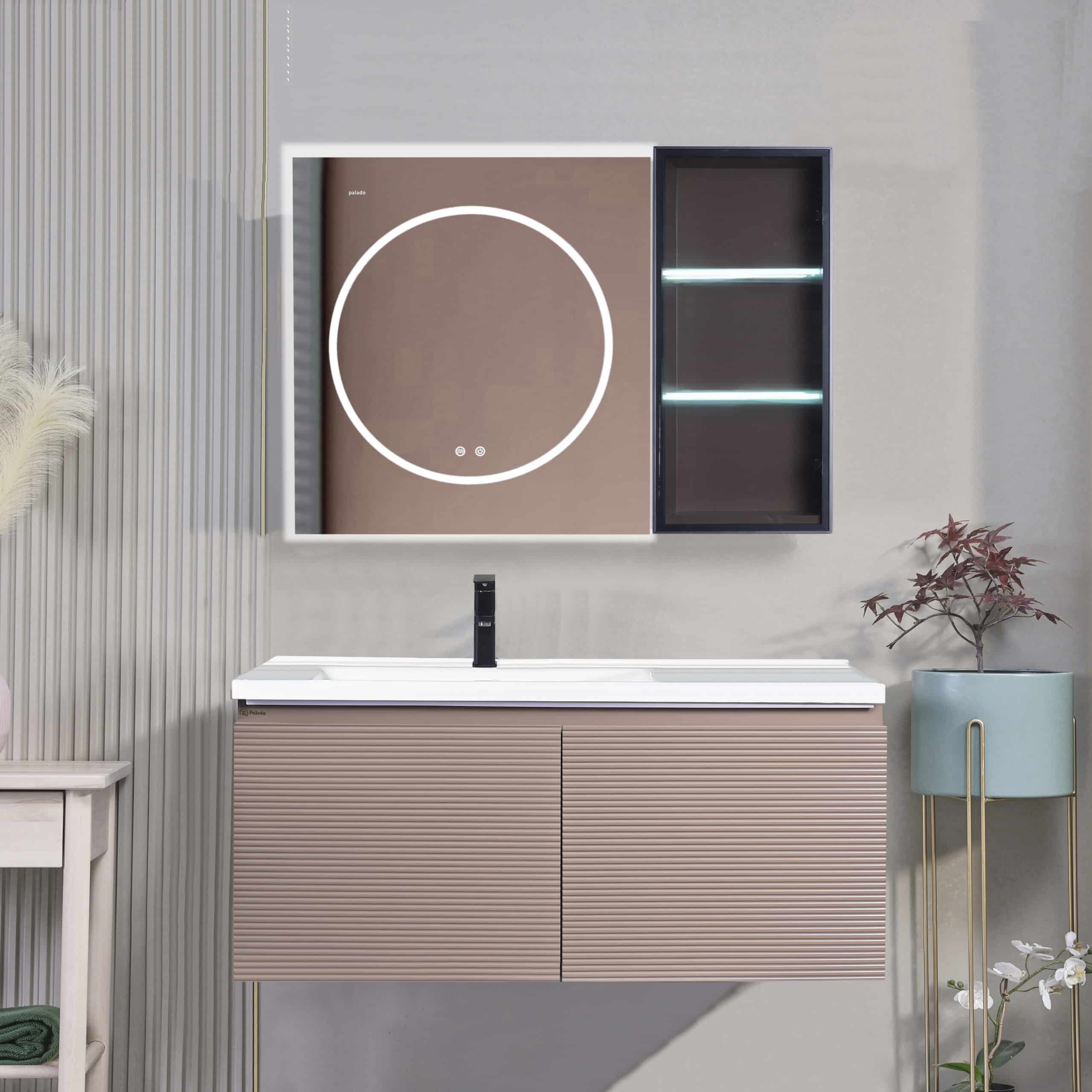
When you conduct a bathroom vanity cost comparison, the sticker price on the quotation sheet is only the beginning of the math. MFBATH has spent over a decade shipping to 20+ countries, and the data shows that material selection dictates your actual profit margin long before the first unit reaches the consumer. PVC, solid wood, and MDF each carry different lifecycle costs, maintenance requirements, and hidden failure risks that directly impact your return rate and warranty expenses.
A $200 MDF vanity might look like a steal on paper, but in high-humidity markets, it often triggers a 30% replacement rate within three years due to internal swelling. Conversely, a $1,200 solid wood unit can command premium retail margins, provided it was kiln-dried to 8-10% moisture content to survive the shipping environment. Understanding these technical gaps is the only way to protect your gross margin and avoid being stuck with defective inventory that destroys supplier relationships.
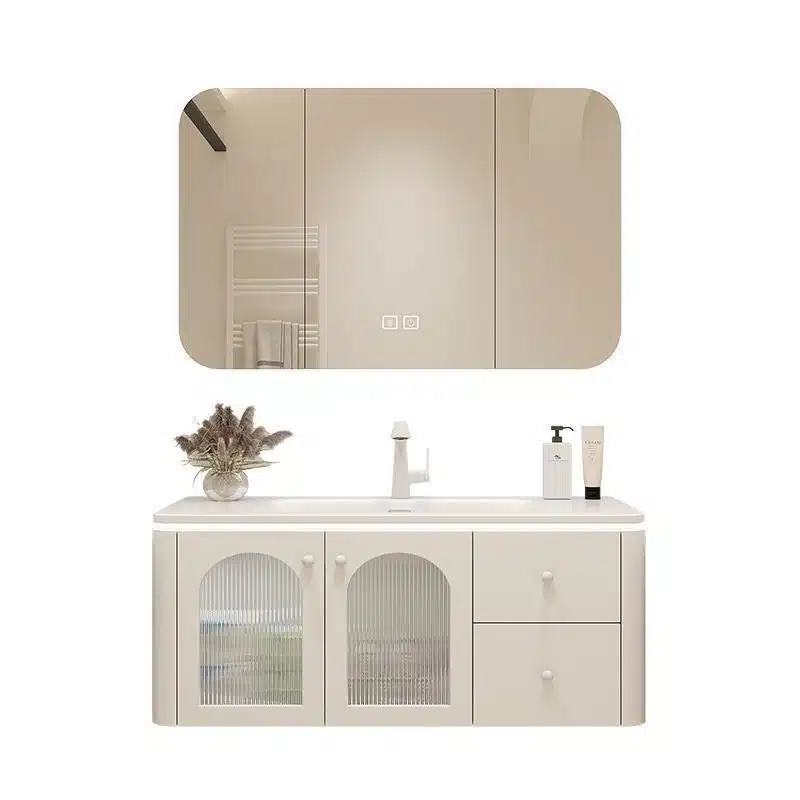
PVC vs Wood vs MDF: True Cost per Unit
MDF looks cheap ($200-$600) but carries a 30% replacement risk in wet zones within 3 years.
For veteran importers, the unit price is a trap. The real metric is Total Cost of Ownership (TCO), factoring in logistics, warranty claims, and shelf-life. MDF vanities appear cheapest upfront at $200-$600/unit, but their structural integrity collapses in high humidity. Solid wood commands a premium at $500-$1,500/unit but delivers unmatched longevity if the kiln-drying process is strictly controlled.
Material selection dictates your FOB pricing and container loading density. PVC offers a balanced middle ground—lightweight enough to maximize container payload while being 100% waterproof, eliminating the heavy shipping costs associated with dense hardwoods. Understanding these material indices prevents costly missteps during bulk procurement.
-
- Material Cost Index:: Established baseline ratios show MDF at 100, Plywood at 120, and Solid Wood at 150. This index directly correlates to raw timber and composite board fluctuations impacting your final landed cost.
- Upfront Purchase Price:: MDF ranges from $200 to $600 per unit. Solid wood ranges from $500 to $1,500 per unit. PVC sits between these extremes, offering premium-grade waterproofing at a mid-tier price point.
- Impact on FOB Pricing:: PVC’s lower density allows for higher container loading density compared to solid wood. This reduces per-unit ocean freight costs, significantly improving gross margin for bulky vanity shipments.
- Moisture Resistance Failure Rate:: MDF absorbs ambient moisture and swells from the inside out. Once the veneer cracks, the unit is unsalvageable. This creates a near 100% warranty claim rate in poorly ventilated or tropical climates.
- Shipping Warping Risks:: Solid wood warps if not kiln-dried to an 8-10% moisture content. Skipping this step guarantees immediate damage upon arrival in high-humidity regions, destroying profit margins before the first sale.
- Lifespan and Replacement Cycle:: Standard PVC lasts 5-8 years (up to 10 for high-quality grades). Solid wood exceeds 10+ years with proper maintenance. MDF typically requires full replacement within 3 years in wet environments.
| Feature | Specification | Advantage |
|---|---|---|
| Upfront Unit Cost | MDF: $200-$600 | PVC: Mid-Range | Solid Wood: $500-$1,500 | MDF offers lowest initial entry; Solid Wood commands highest luxury margins. |
| Moisture Resistance | PVC: 100% Waterproof | MDF: High Swelling Risk | Wood: Requires Kiln-Drying (8-10% MC) | PVC eliminates warranty claims in humid climates; Wood requires strict QC to prevent warping. |
| Lifecycle Durability | PVC: 5-10 Years | MDF: 3-5 Years (High Failure Rate) | Wood: 10+ Years | PVC ensures consistent ROI for rentals; Wood provides long-term asset value for luxury projects. |
| Hidden Replacement Risk | MDF: 30% Defect Rate in Wet Zones | Wood: Warping if MC >10% | PVC: Near Zero | PVC protects gross margin by minimizing return rates and logistics costs for defective units. |
| Customization & MOQ | 40,000+ Combinations | MOQ: 10-20 Units | Pantone Matching Available | Low MOQ allows risk-free market testing; Full OEM branding builds distributor asset value. |
Moisture Risks: The Hidden Warranty Trap
MDF failure rates exceed 30% in humid zones; PVC offers zero-warranty risk for importers.
Moisture is the primary driver of warranty claims in the bathroom vanity sector. For veteran importers, the unit price is irrelevant if the product fails within three years. MDF vanities present a hidden liability: they absorb ambient humidity, causing internal swelling that cracks the veneer. Once the surface breaches, the unit is unsalvageable, triggering a 100% replacement cost for the distributor. This failure mode is accelerated in environments exceeding 60% relative humidity, common in tropical and coastal markets.
Solid wood introduces different technical risks. Warping is rarely caused by the timber itself, but by improper kiln-drying. If a supplier skips the 8-10% moisture content threshold before manufacturing, the cabinet will distort immediately upon encountering temperature shifts during ocean freight. Importers often discover this defect only when containers arrive at the destination port, resulting in rejected shipments and massive logistics losses.
-
- Humidity Threshold: Above 60% RH, MDF begins absorbing water vapor, leading to irreversible structural swelling and veneer delamination.
- Solid Wood Failure: Warping occurs when timber moisture content exceeds 10% prior to assembly, causing expansion/contraction cycles during transit.
- PVC Advantage: Being 100% waterproof, PVC eliminates moisture-related warranty claims entirely, offering the lowest Total Cost of Ownership in humid climates.
- QC Verification: MFBATH enforces a five-stage inspection protocol, specifically targeting moisture levels and structural integrity to prevent shipping damage.
Durability & Lifespan: 5-Year ROI Analysis
MDF fails in 3 years in wet zones; PVC offers zero maintenance ROI while solid wood demands strict kiln-drying QC.
The ‘bathroom vanity cost comparison’ fails when importers only look at FOB unit price. MDF vanities ($200-$600/unit) appear cheapest upfront, but carry a 30% replacement risk in wet areas within 3 years. This erodes gross margins through warranty claims and destroys supplier relationships. PVC offers the lowest lifecycle cost in humid regions due to zero maintenance, lasting 5-8 years standard, up to 10 years high-quality.
For luxury hotel projects in 2026, solid wood commands premium margins ($500-$1,500/unit). However, the hidden cost of solid wood vanity shipping warping is real if the supplier skips the 8-10% moisture content check. Standard solid wood fails in -30°C or 90% humidity if not kiln-dried properly. Aesthetic longevity justifies the higher initial cost, but only if the manufacturing process includes rigorous moisture control.
-
- Replacement Cycle Cost: MDF requires replacement every 3-5 years in wet environments due to swelling. This 100% warranty claim rate upon veneer failure makes it unsuitable for high-turnover budget rentals or humid climates.
- Aesthetic Longevity: Solid wood (oak/walnut) maintains its premium value for 10+ years with proper maintenance. It is the only material that justifies the high price point in dry, luxury markets without looking dated.
- Best Material for Humid Climates: PVC is the best bathroom vanity material for humid climates importers. It is 100% waterproof, rot-resistant, and requires zero sealants. It eliminates the moisture resistance failure rate associated with MDF and plywood.
- High-Turnover Budget Rentals: PVC or marine-grade plywood is best for high-traffic, budget-conscious projects. The upfront cost is low, and the total cost of ownership is minimized by eliminating maintenance and replacement expenses.
Customization & Compliance: Sourcing Smartly
Customization drives margin, but compliance dictates market access.
Selecting the correct material is not merely an aesthetic choice; it is a regulatory prerequisite. In North America, solid wood and PVC vanities must withstand extreme cold (-30°C) without fracturing, while simultaneously meeting ADA accessibility dimensions for hotel projects. Failure to specify materials rated for these thermal shifts results in immediate structural failure upon arrival.
European buyers face stricter environmental mandates. CE certification is mandatory, requiring all materials—especially MDF and plywood—to strictly adhere to E1 formaldehyde emission grades. Ignoring ISO 14001-certified material sourcing exposes importers to customs seizures and heavy penalties under EU green protocols.
Customization directly impacts your supply chain velocity. While standard PVC vanities utilize high-speed automated extrusion for rapid turnaround, bespoke solid wood orders require Pantone color matching and branded hardware integration. These custom steps inherently extend lead times, necessitating earlier procurement windows to protect your on-time delivery KPIs.
Despite the complexity of customization, a low MOQ of 10 to 20 units allows distributors to test these specific regional adaptations risk-free. This flexibility enables you to validate local regulatory acceptance and aesthetic reception before committing to massive container loads of finished goods.
-
- Thermal Stress Testing: Materials must endure -30°C to 50°C fluctuations without warping or delamination, verified via internal lab cycles.
- Five-Stage QC Protocol: Inspections occur at raw material intake, CNC cutting, assembly, finishing, and final packing to catch defects before shipment.
- Regulatory Verification: UL/CSA certificates for NA electrical components and CE documentation for EU chemical compliance are mandatory for clearance.
Conclusion
Choosing the right bathroom vanity material requires looking past unit price to total cost of ownership. PVC offers the lowest lifecycle risk in humid climates, while solid wood delivers premium margins for luxury markets if kiln-dried to 8-10% moisture content. MDF remains a high-risk liability for wet environments due to internal swelling and veneer failure.
Frequently Asked Questions
Is MDF or wood better for bathroom vanity?
Solid wood is superior for luxury aesthetics and longevity, whereas MDF is a budget option that swells rapidly in humid environments. Choose solid wood for dry, high-end markets and avoid MDF. Select solid wood for durability and avoid MDF in humid climates.
Is PVC or MDF better for bathrooms?
PVC is significantly better because it is 100% waterproof and immune to mold, unlike MDF which degrades quickly when exposed to moisture. PVC eliminates replacement risks in high-humidity regions where. Opt for PVC in humid areas to ensure zero maintenance and durability.
Are PVC bathroom vanities good?
Yes, PVC vanities are excellent for durability and cost-efficiency, offering complete waterproof protection ideal for tropical or coastal markets. They provide a lower total cost of ownership by eliminating the warping and. Use PVC for maximum waterproof performance and reduced warranty liabilities.
What is the best material for a bathroom vanity?
The best material depends on your target climate and budget, with PVC being optimal for humid regions and solid wood for luxury dry markets. Sintered stone also serves as a premium. Match material choice to local climate conditions and customer price points.
Who makes the highest quality bathroom vanities?
High-quality vanities are manufactured by specialized factories like MFBATH that utilize rigorous five-stage quality control and advanced CNC precision. These manufacturers ensure consistent durability through strict moisture content management and region-specific compliance testing. Partner with certified manufacturers implementing multi-stage quality assurance protocols.


0 Comments