
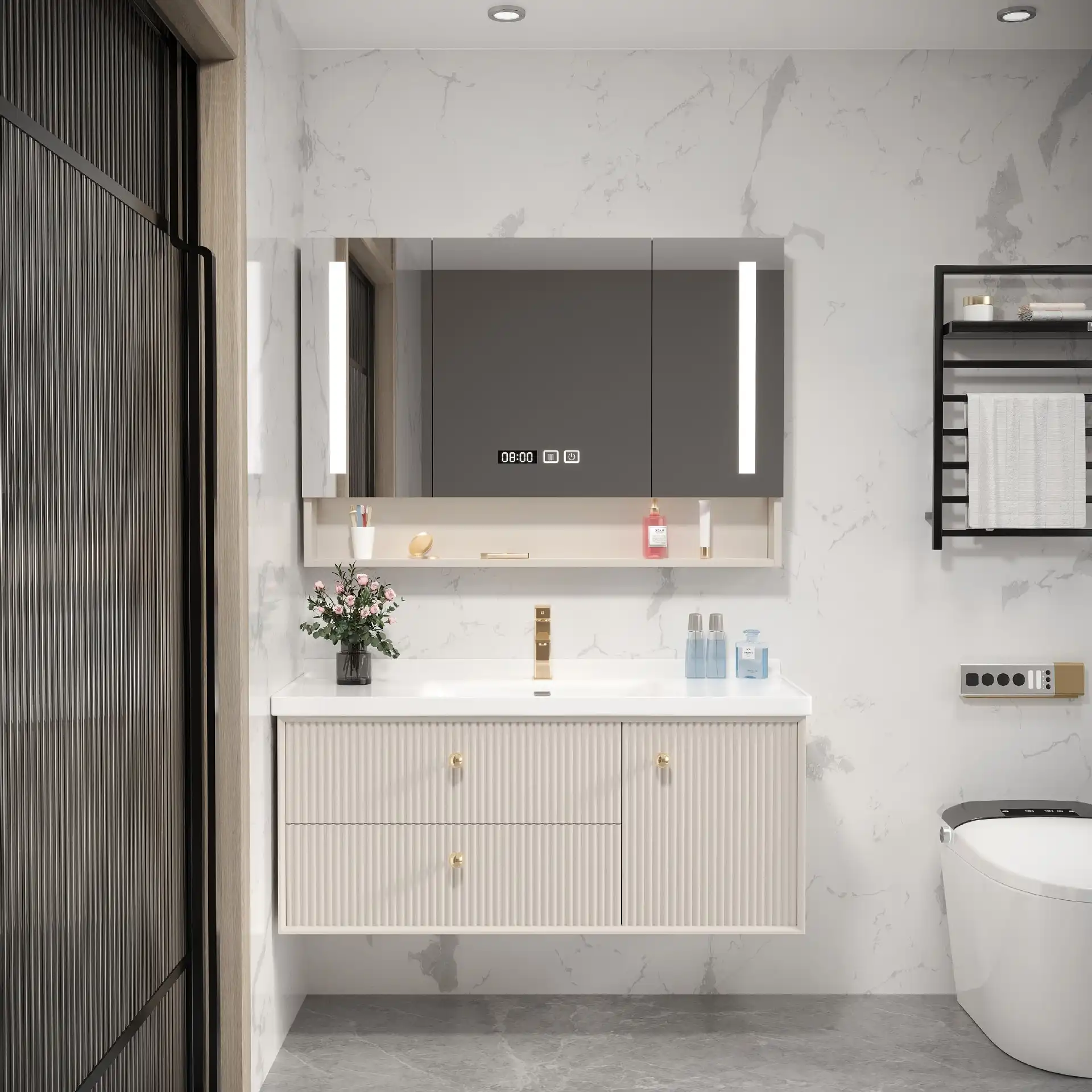
Commercial pvc vanity sourcing often feels like a gamble between budget and durability, especially when managing tight project timelines and strict compliance requirements. At MFBATH, contractors are seen navigating the gap between cheap retail fixtures and over-engineered luxury pieces, settling on a middle ground that actually protects their bottom line.
PVC isn’t just a cheap alternative; it is a strategic tool for high-traffic environments where moisture ruins traditional wood faster than wear and tear does. By choosing a direct manufacturer with a 10,000㎡ facility and five-stage quality control, you gain access to region-specific compliance—like UL certification for North America or CE standards for Europe—without the markup of a trading company.
The real advantage lies in the logistics of installation and maintenance. PVC units are lighter than SPC or solid wood, which cuts labor time by roughly 20% on site. When you combine that speed with a low MOQ of 10 to 20 units for custom runs, you eliminate the risk of dead inventory while ensuring every unit meets the exact specifications your project demands.
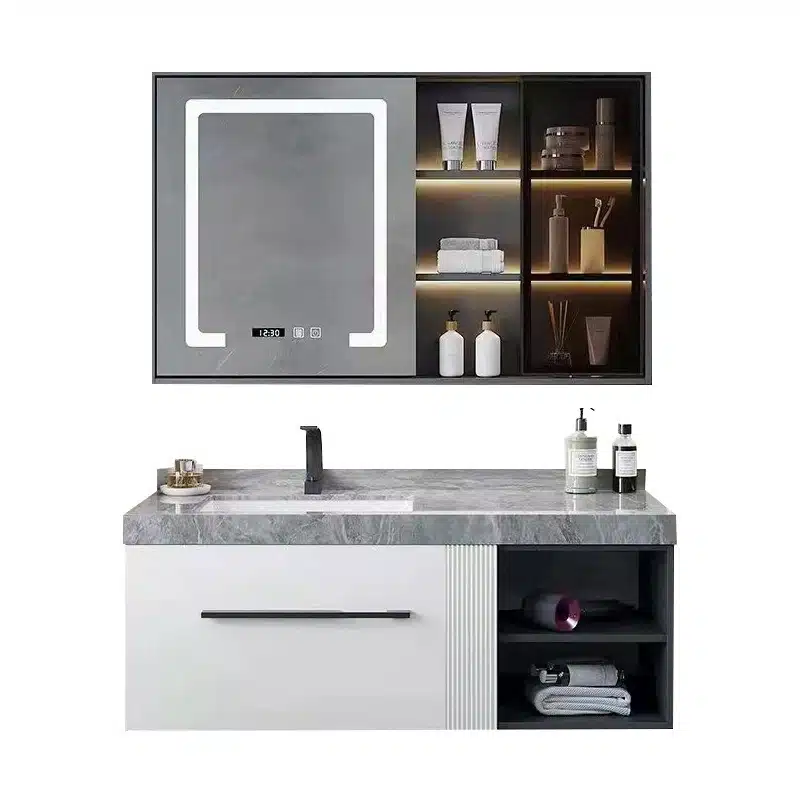
PVC vs SPC Vanities for Projects
PVC wins on budget and speed; SPC wins on premium durability.
Project developers often face a binary choice: budget-friendly PVC or premium SPC (Stone Plastic Composite) vanities. While generic suppliers push SPC for its stone-like finish, relying exclusively on it inflates material costs and complicates logistics for high-volume projects. The industry reality is that PVC remains the most efficient solution for budget-conscious and high-turnover environments, provided it is engineered correctly.
The critical differentiator is not just the material, but the internal framing. Many budget PVC vanities fail in commercial settings because they use thin cardboard or hollow cores that degrade under heavy daily use. True commercial-grade sourcing requires solid framing to ensure secure installation and prevent structural failure during high-traffic operation.
-
- Cost Efficiency: PVC reduces long-term maintenance costs by up to 40% compared to wood in high-humidity environments, offering a lower initial unit cost than SPC.
- Installation Speed: The lightweight nature of PVC reduces labor time by 20% compared to solid wood or SPC, directly accelerating project completion and milestone adherence.
- Hybrid Strategy: Top developers use SPC for premium/coastal zones and PVC for budget/interior zones to balance cost and longevity across a single property.
- Durability Specs: Commercial PVC vanities offer a service life of 7-15 years in commercial environments, backed by zero-sealing maintenance requirements.
For contractors sourcing ADA compliant PVC vanities for hotels or bulk PVC vanity wholesale for apartment complexes, the key is verifying the internal structure. Demand solid framing and 5-stage quality control from your OEM bathroom cabinet manufacturer China supplier to ensure consistency across batches. Low MOQs of 10-20 units allow for risk-free market testing before committing to large-scale production.
Cost and Lifecycle Value of PVC
PVC vanities slash long-term maintenance costs by 40% in high-humidity commercial zones compared to traditional wood.
When evaluating the lifecycle value of PVC for hotel or apartment complex projects, the financial advantage extends far beyond the initial purchase price. While the unit cost of PVC is slightly higher than basic MDF, it eliminates the recurring expenses of annual sealing and moisture repairs. In high-traffic commercial environments, PVC vanities typically deliver a service life of 7 to 15 years, making them the most financially sound choice for budget-conscious developers.
The most significant hidden cost in bathroom sourcing is often installation labor. PVC is remarkably lightweight compared to solid wood or SPC (Stone Plastic Composite) alternatives. This density difference reduces labor time by approximately 20% during installation, allowing project contractors to meet tight milestones without inflating overhead. Faster installation directly translates to quicker room turnover and earlier revenue generation.
Procurement teams must distinguish between cheap, thin PVC and true commercial-grade units. Low-quality competitors often utilize thin cardboard or hollow plastic backs that fail under heavy use. MFBATH employs solid framing and a rigorous five-stage quality control process to ensure every unit withstands the physical demands of high-traffic hospitality settings. This engineering gap prevents premature failures that would otherwise require costly warranty replacements.
-
- Service Life: 7-15 years in commercial settings, outlasting standard MDF which swells rapidly upon water exposure.
- Maintenance Overhead: Zero sealing required. Unlike wood, PVC requires no annual waterproofing treatments, saving significant facility management hours.
- Installation Speed: Lightweight composition reduces physical labor by 20% compared to heavier SPC or solid wood equivalents.
- Moisture Resistance: 100% waterproof core eliminates mold and rot risks, critical for sourcing ADA compliant PVC vanities for hotels.
- Scalability: With a 5,000-unit monthly capacity, MFBATH ensures consistent batch production, preventing color or texture variances across large orders.
| Feature | Specification | Advantage |
|---|---|---|
| Initial Unit Cost | Low (15-20% below SPC/Wood) | Optimizes upfront project budget and improves margin margins for wholesalers. |
| Lifecycle Durability | 7-15 Years (Commercial Grade) | Balances cost with sufficient lifespan for high-turnover hospitality and apartment projects. |
| Maintenance Requirements | Zero Sealing Required | Eliminates annual sealing costs and labor, reducing Total Cost of Ownership (TCO) by up to 40%. |
| Installation Efficiency | Lightweight & Pre-Assembled | Reduces on-site labor time by 20%, ensuring faster project completion and milestone adherence. |
| Compliance & Risk | UL/CE Certified & 5-Stage QC | Mitigates regulatory rejection risks and ensures consistent batch quality for global distribution. |
Material Selection: Moisture Resistance
PVC eliminates moisture-related failure modes, but only if sourced with solid internal framing.
In commercial bathroom sourcing, moisture resistance is the primary driver of long-term asset value. While standard wood cabinets require annual sealing to prevent delamination, PVC vanities offer 100% waterproof protection. This material choice is critical for high-traffic environments like hotels and apartment complexes where humidity levels remain consistently elevated.
A common failure point in the industry is the use of thin, hollow PVC skins over cheap particle board cores. These units absorb water at the seams and fail within months. MFBATH avoids this by using solid framing for true commercial-grade PVC units. This engineering ensures secure installation and prevents structural collapse during high-traffic use.
Contractors must evaluate Total Cost of Ownership (TCO) rather than just the initial unit price. PVC vanities reduce long-term maintenance costs by up to 40% compared to wood in high-humidity environments. This efficiency stems from zero sealing requirements and resistance to mold or pest damage.
-
- Service Life:: PVC vanities offer a reliable service life of 7-15 years in commercial settings.
- Compliance:: Available with UL/CSA certification for North America and CE certification for Europe.
- Maintenance:: Zero sealing required, contrasting sharply with the annual sealing needed for wood.
- Installation:: Lightweight nature reduces labor time by 20%, accelerating project completion.
| Feature | Specification | Advantage |
|---|---|---|
| Material Composition | 100% Solid PVC / HMR MDF | Zero water absorption; immune to rot, mold, and warping in high-humidity zones. |
| Structural Integrity | Solid Internal Framing | Prevents cabinet collapse under heavy loads; superior to competitor cardboard-back designs. |
| Maintenance Protocol | Zero Sealing Required | Eliminates annual maintenance costs; reduces Total Cost of Ownership (TCO) by up to 40% vs. wood. |
| Service Lifecycle | 7–15 Years (Commercial Grade) | Extended durability for high-traffic hotels and apartments; minimizes replacement frequency. |
| Regional Compliance | UL/CSA (NA) & CE (EU) Certified | Meets strict North American and European safety standards for electrical and material safety. |
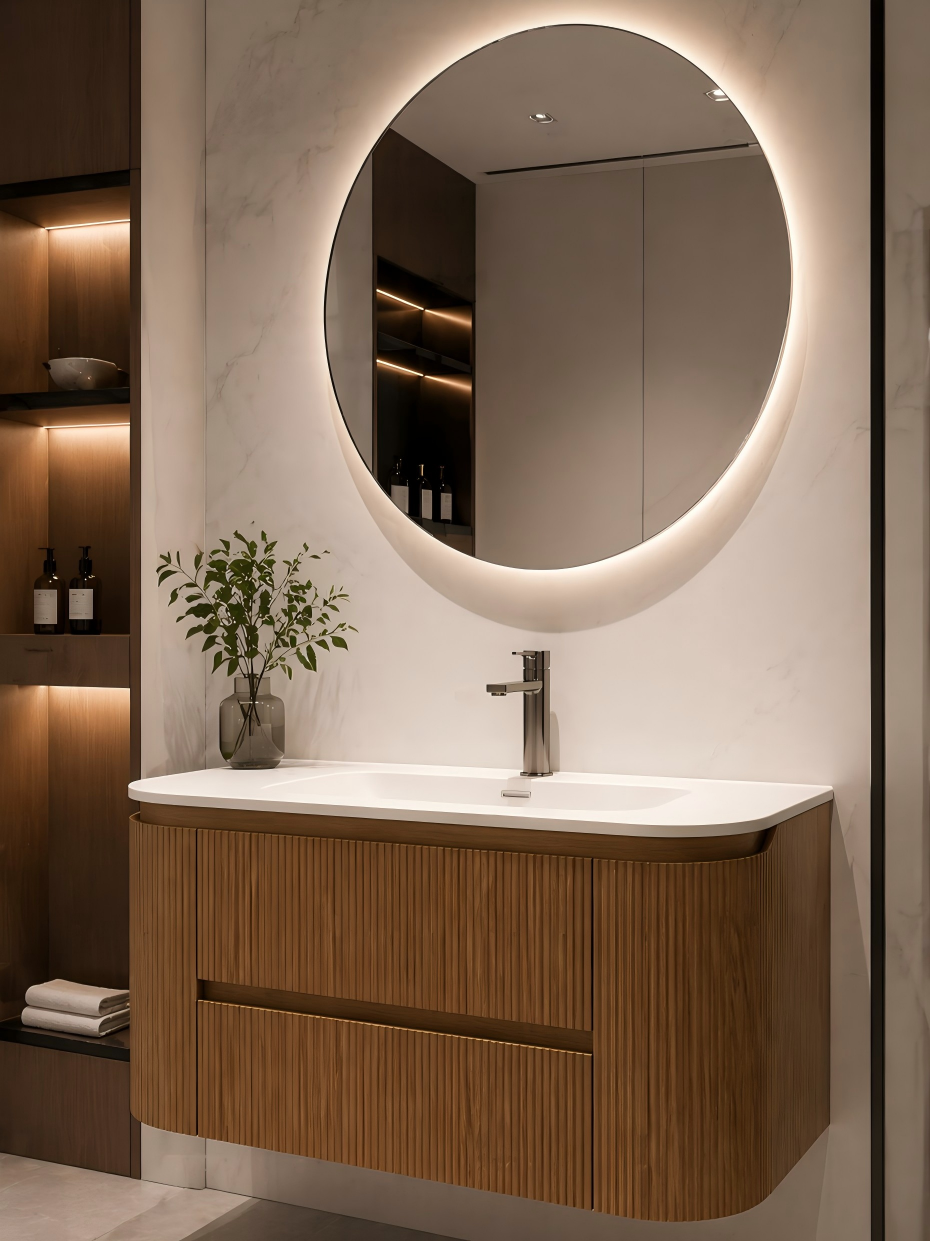
Sourcing Reliable Commercial Suppliers
Reliable sourcing requires verified ISO certification, region-specific compliance (UL/CE), and consistent 5-stage quality control.
For project contractors, the biggest risk in sourcing is not the unit price, but the inconsistency between samples and bulk production. A reliable commercial supplier must operate a dedicated manufacturing facility with strict quality gates, not just a trading desk.
MFBATH mitigates this risk by operating a 10,000㎡ factory in Changge, Henan, equipped with high-precision CNC machinery. This direct manufacturer model eliminates middleman markups and ensures that the product you receive matches the approved sample exactly.
To ensure batch consistency, every product undergoes five rigorous inspections throughout the production stages. This 5-stage quality control protocol prevents defects from reaching the shipping dock, protecting your project timeline from costly delays or replacements.
When vetting suppliers, look for region-ready compliance rather than generic certifications. Reliable manufacturers adapt their output to local regulations, providing UL/CSA certification for North America, CE compliance for Europe, and AS/NZS standards for Oceania.
-
- Production Capacity: The facility produces up to 5,000 units monthly (and up to 50,000 mirrors), ensuring reliable delivery for large-scale developments.
- Compliance Verification: Products are UL/CSA and ADA-compliant for North America, and CE-compliant with E1 grade low formaldehyde emissions for Europe.
- MOQ Flexibility: While catering to large-scale projects, the company supports a low MOQ of 10 to 20 units for custom orders to help partners test markets risk-free.
- Customization Depth: Distributors can choose from over 40,000 customization combinations, including Pantone color matching and branded hardware.
Conclusion
PVC remains the most efficient waterproof solution for budget commercial projects, provided you specify solid framing to prevent structural failure. Sourcing from a direct manufacturer with UL/CE compliance and 5-stage QC ensures you avoid the hidden costs of inconsistent batches and delayed milestones.
Review current pricing and material options on our dedicated page to compare stock and custom routes for your upcoming developments.
Frequently Asked Questions
Who is the best supplier for bathroom vanities?
The best supplier depends on your project’s specific regional compliance and customization needs. MFBATH offers region-ready solutions with ISO certifications and low MOQs for global distributors. Select a supplier based on your target market’s regulatory requirements.
Is it cheaper to build your own vanity or buy one?
Buying a commercial-grade vanity is generally cheaper due to economies of scale in factory production. Custom manufacturing avoids the high labor costs and material waste associated with on-site construction. Factory-direct sourcing typically offers better cost efficiency than custom builds.
What are the pros and cons of PVC vanity?
PVC vanities are 100% waterproof and low-maintenance, making them ideal for high-humidity commercial spaces. However, they may lack the premium aesthetic depth of solid wood or sintered stone. Choose PVC for durability in wet areas, but consider aesthetics for luxury projects.
How much does a handyman charge to install a vanity?
Installation costs vary significantly by region and project scope, typically ranging from $150 to $500 per unit. Commercial projects often negotiate bulk installation rates with licensed contractors. Budget for installation separately based on local labor rates and project size.
What is the 135 rule in plumbing?
The 135 rule specifies that the distance from the finished floor to the center of the drain outlet should be 13.5 inches. This ensures proper alignment for standard vanity installations. Verify drain height during planning to ensure vanity compatibility.


0 Comments