
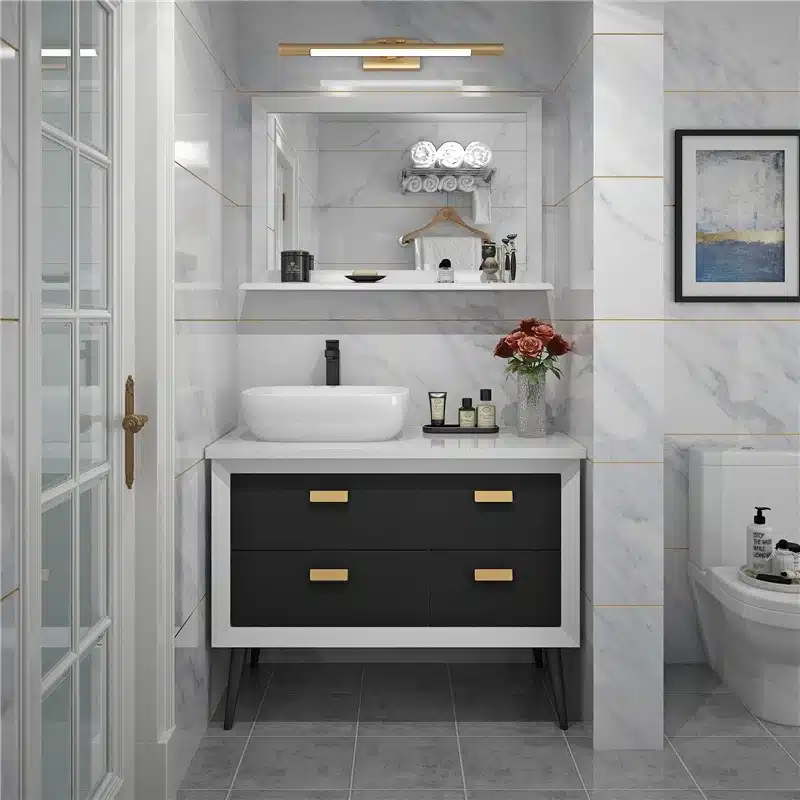
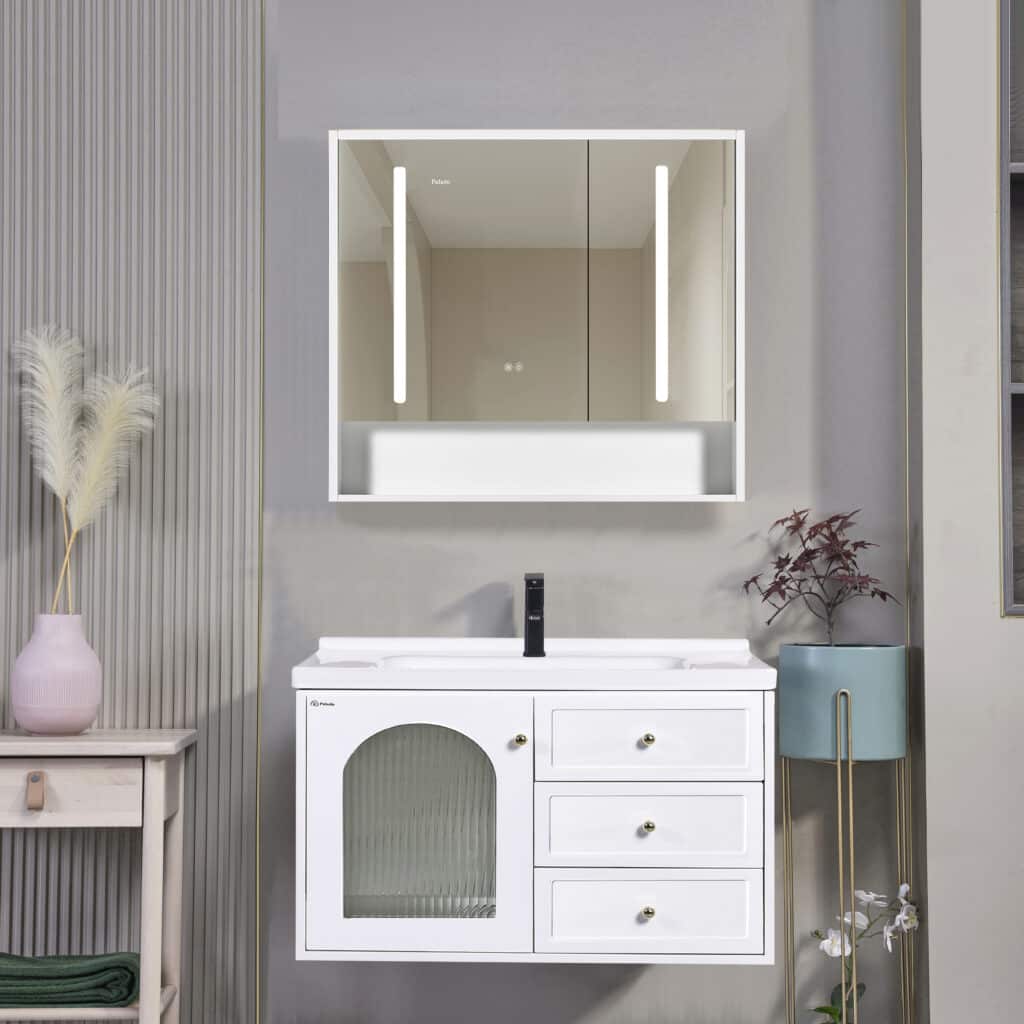
 The debate over a frameless vs framed vanity often determines whether a multi-unit project hits its budget or suffers from costly installation rework. A seemingly simple aesthetic choice on a spec sheet directly impacts hardware requirements, assembly time, and long-term structural integrity. Specifying the wrong construction type can lead to misaligned doors, compromised rigidity, and client callbacks that erode profit margins.
This guide serves as a technical breakdown of cabinet construction for commercial and residential projects. We will compare the core differences between frameless and framed cabinets, from the function of a face frame to the structural benefits of each style. We will also analyze critical manufacturing specs, including the cost impact of inset versus overlay doors, the durability of 1/2″ versus 3/4″ plywood, and the on-site efficiency of cam-lock versus pocket screw assembly.
Anatomy of a Vanity: What Exactly Is a Face Frame?
A face frame is the defining structural component in American-style vanities, providing the rigidity needed to prevent cabinet box distortion and ensure long-term durability.
Defining the Face Frame: A Structural Overview
A face frame is the traditional American method for cabinet construction. It involves fixing a solid wood frame, typically 1.5 to 2 inches wide, to the front edges of the vanity box. This frame is built from vertical pieces (stiles) and horizontal pieces (rails), creating a sturdy foundation for attaching doors and hardware. It acts as the primary structural reinforcement for the entire cabinet, ensuring the box remains square and preventing it from twisting under load—a common failure known as “racking.”
Core Functions and Design Flexibility
Beyond raw strength, the face frame is a key design element that dictates how the doors sit on the cabinet. It offers far greater stylistic versatility than frameless alternatives, accommodating aesthetic preferences from classic to transitional. The presence of the frame creates multiple door mounting options, including inset, partial overlay, and full overlay designs. Its robust construction makes it the ideal choice for larger or more complex vanity installations where superior rigidity is non-negotiable.
Face Frame vs. Frameless Construction
The fundamental difference is the cabinet’s front opening. A face frame cabinet has a solid wood frame around this opening, which slightly reduces access width. A frameless (or Euro-style) cabinet has no such frame; the doors attach directly to the side panels of the cabinet box. While frameless designs offer marginally more interior access and a seamless modern look, face frames provide unmatched structural integrity and are valued for their durability and traditional aesthetics.
Frameless (Euro-Style): What Are the Pros, Cons, and Current Trends?
Frameless, or Euro-style, vanities maximize interior storage and deliver a clean, modern aesthetic, but the market is now shifting from high-maintenance glass to durable, textured materials like microcement and terrazzo to meet demands for longevity and reduced upkeep.
A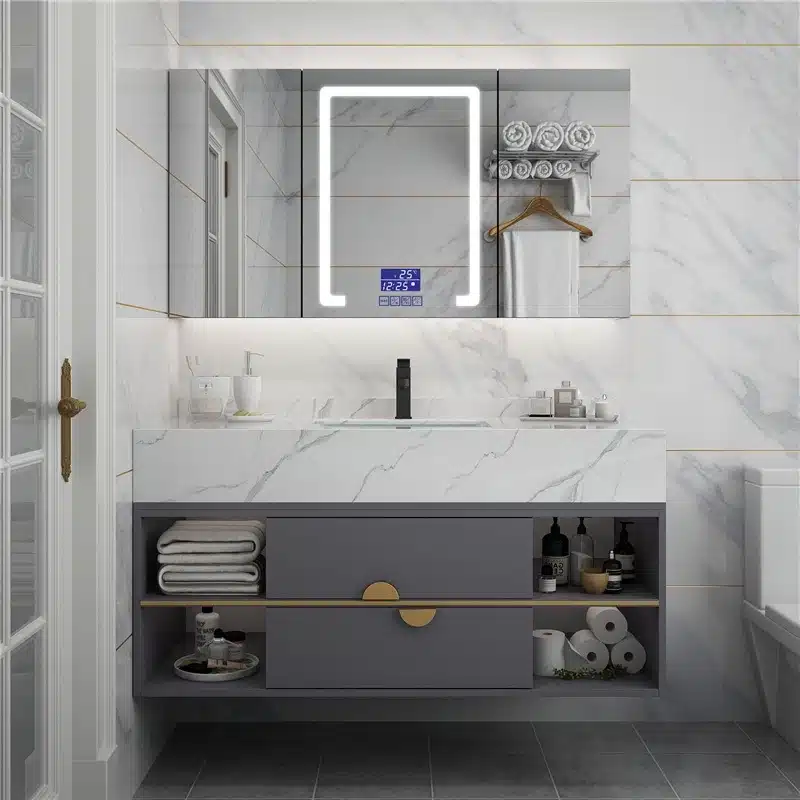 esthetic and Spatial Advantages
Frameless construction provides a seamless, full-access design that is foundational to modern bathroom aesthetics. By eliminating the face frame, doors and drawers mount directly to the cabinet box, creating clean, uninterrupted lines. This minimalist approach makes bathrooms feel larger and more open, an effect that is especially valuable in smaller spaces. The style also improves accessibility by removing physical barriers, pairing well with features like zero-threshold shower entries for a cohesive, functional layout.
- Provides an uninterrupted, clean visual line that enhances minimalist decor.
- Maximizes the sense of space, which is ideal for smaller bathrooms.
- Facilitates accessible designs by removing physical barriers.
Material and Maintenance Trends for 2026
The market in 2026 shows a clear trend away from materials that create a heavy maintenance burden. While large glass panels were once a staple of frameless design, end-users now favor durable alternatives that offer a sleek look without constant cleaning. Finishes like microcement, luxury stone, and terrazzo are gaining significant traction. These materials provide a sophisticated, modern appearance while being highly practical and water-resistant, reducing the time spent on upkeep.
| Material Category | Key Characteristics | Primary Application |
|---|---|---|
| Traditional Glass | Seamless and transparent; high maintenance, prone to water spots. | Shower enclosures and partitions. |
| High-Density PVC | Completely waterproof, durable, ideal for smooth lacquer finishes. | Vanity carcasses in high-humidity regions. |
| Microcement / Terrazzo | Low maintenance, highly durable, offers unique texture and personality. | Wall finishes, countertops, and integrated sinks. |
- Growing preference for microcement and terrazzo finishes to minimize upkeep.
- Emphasis on integrating durable, water-resistant materials for longevity.
- Movement away from pure transparency toward materials with more texture and personality.
Core Design Principles
The philosophy behind frameless design now prioritizes durability and function just as much as aesthetics. Production has shifted to support greater customization, allowing for personalized layouts that fit specific user needs and wellness goals. This means focusing on long-term performance through smart material selection and building layouts that enhance user comfort and convenience, reflecting a mature market that demands both style and substance.
- Production is centered on customization to match specific user needs.
- Durability and reduced maintenance are key drivers in material selection.
- Layouts are increasingly designed to support wellness and user comfort.
Scale Your Brand with Custom Vanities

Framed (American Standard): How Does It Improve Rigidity?
The solid hardwood face frame on American-style vanities acts as a structural skeleton, preventing the cabinet box from racking or twisting during shipping, installation, and under the weight of a heavy countertop.
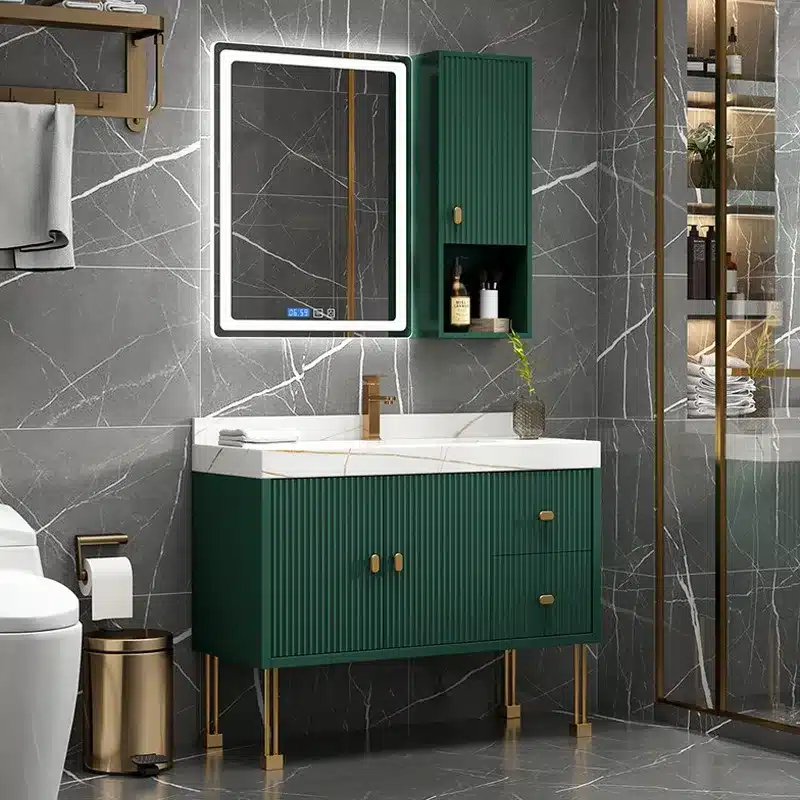
Structural Reinforcement from the Face Frame
Framed cabinets get their strength from solid hardwood trim boards fixed to the front of the cabinet box. This face frame creates a rigid perimeter that reinforces the entire structure, stopping it from flexing. It adds an extra layer of material—typically solid hardwood like rubber wood or oak—that is stronger than the engineered wood of the cabinet box itself. This skeleton helps the cabinet maintain its square shape during transit and installation, and it distributes the load from countertops and sink basins across the whole assembly for better long-term stability.
| Attribute | Framed (American Standard) | Frameless (Euro-Style) |
|---|---|---|
| Structural Core | Solid hardwood face frame provides perimeter strength. | Relies on thicker cabinet box panels (e.g., 3/4″ plywood) for rigidity. |
| Joint Strength | Reinforced joints where the frame meets the cabinet box. | Panel joints depend entirely on fasteners (dowels, screws, cams). |
| Installation Tolerance | More forgiving; frame can hide minor wall imperfections. | Requires high precision; walls must be plumb and square for proper alignment. |
| Hardware Mounting | Solid wood provides a superior anchor point for hinge screws. | Hinges mount directly into the side of the plywood or MDF box. |
A Solid Foundation for Doors and Hardware
The face frame offers a robust and stable surface for mounting door hinges and drawer slides. This solid anchor point is critical for long-term performance, as it ensures hardware screws won’t strip out from repeated use. With a frame, doors and drawers stay properly aligned, reducing the need for constant adjustments over the vanity’s lifespan. This construction simplifies the initial installation and contributes directly to the durability of all moving parts by giving them a sturdy foundation to operate from.
Inset vs. Overlay Doors: Why Is the Inset Style a Cost Multiplier?
The significant cost increase for inset doors comes from two main factors: the razor-thin manufacturing tolerances required for a flush fit and its market position as a premium, furniture-grade feature.
The primary difference between door styles comes down to where the door sits. An overlay door sits on top of the cabinet’s face frame, covering the opening and hiding the frame’s edges. An inset door, by contrast, is built to sit perfectly flush *inside* the frame. This simple design choice creates a massive manufacturing challenge, as there are no forgiving overlaps to hide minor inaccuracies in cutting or assembly.
The Role of Precision in Manufacturing
Achieving the consistent, paper-thin gap required around an inset door demands extremely tight production tolerances. This directly translates to higher costs through several operational realities:
- Manufacturing inset doors requires exacting measurements to ensure the door fits perfectly inside the frame with a consistent, minimal gap.
- The process often involves more manual adjustments and finishing work, increasing labor time per cabinet.
- Any minor imperfection in the frame or door can prevent a proper fit, leading to higher rates of material rejection and rework.
Market Positioning and Material Demands
By 2026, the market clearly positions inset cabinetry as a luxury feature, not a mass-market product. It’s associated with custom, furniture-grade construction, allowing manufacturers to command a price premium of 35-45% over standard overlay doors. This valuation is supported by the need for superior materials and hardware.
The tight tolerances mean you cannot use unstable wood or lower-grade plywood that might warp with humidity changes; doing so would ruin the flush alignment. This design also requires higher-grade hardware, like specialized hinges that allow the door to open without hitting the frame, adding another layer of cost. Consumers in the premium market understand these requirements and prioritize the clean lines and traditional look of inset doors, supporting its higher price point.
Plywood Thickness: Should You Specify 1/2″ or 3/4″ Specs?
For structural integrity, 3/4-inch plywood is non-negotiable for the vanity box. You can specify 1/2-inch material for non-load-bearing parts like back panels and drawer boxes to optimize cost and weight without sacrificing performance.
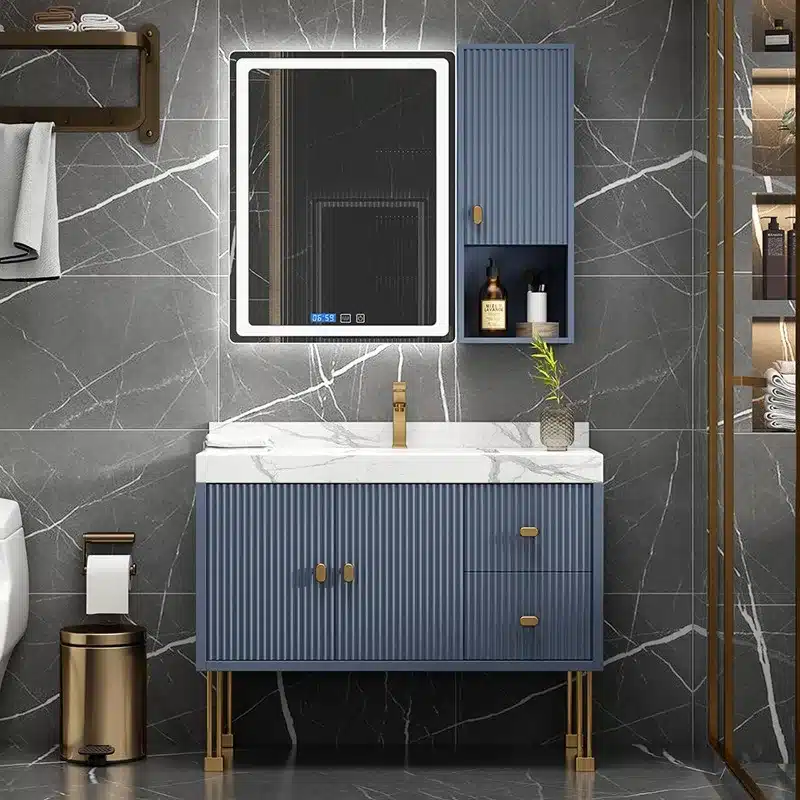
The 3/4-Inch Standard for Structural Integrity
In cabinet manufacturing, 3/4-inch plywood is the established benchmark for any component that bears a load. This thickness provides the necessary rigidity to support heavy stone countertops, sinks, and daily use without warping or failing over time. It’s the default spec for any high-quality, durable vanity intended for commercial or luxury residential projects.
- Offers superior screw-holding strength, which is critical for securing hinges, drawer slides, and other hardware permanently.
- Ensures long-term stability for the cabinet box, preventing sagging shelves and misaligned doors that plague thinner materials.
- At FocusCabinet, we use 3/4-inch plywood for all structural components to meet the demanding durability requirements of our B2B clients.
| Specification | Optimal Use Case | FocusCabinet Standard |
|---|---|---|
| 3/4-Inch (18mm) | Main cabinet box, shelves, and structural supports. Essential for load-bearing and screw-holding strength. | Used for all structural components to ensure premium durability and performance. |
| 1/2-Inch (12mm) | Non-structural parts like cabinet backs, drawer boxes, and internal dividers where weight and cost reduction are priorities. | A strategic option for non-load-bearing components to manage project costs without compromising core integrity. |
When to Use 1/2-Inch for Non-Structural Components
While completely unsuitable for the main cabinet frame, 1/2-inch plywood is a practical material for non-load-bearing applications. Using it for cabinet backs or drawer boxes helps manage material costs and reduces the unit’s overall weight. This simplifies shipping logistics and makes installation easier, especially for wall-hung models.
- Commonly specified for cabinet backing, where its primary role is to brace the structure without carrying a direct vertical load.
- A smart choice for drawer bottoms and some internal dividers where structural thickness is less critical than in the main frame.
- This strategic use allows for significant cost-efficiency without compromising the vanity’s core strength and functional performance.
Assembly Methods: How Do Cam-Locks Compare to Pocket Screws?
The choice between assembly methods directly impacts a vanity’s long-term stability; pocket screws provide durable, tight joints suitable for professional construction, while cam-locks are a hallmark of budget-friendly, ready-to-assemble furniture prone to loosening.
Cam-Locks: The Standard for Ready-to-Assemble Furniture
Cam-locks are the dominant fastener system in ready-to-assemble (RTA) and budget-tier furniture. Comprising a plastic or metal cam and a tension screw, this system is designed for quick, tool-light assembly by consumers. The trade-off is durability. Joints secured with cam-locks often fail to tighten completely due to poor threading and can progressively loosen over time, leading to instability and wobbling that requires periodic maintenance.
- Commonly found in flat-pack furniture from large big-box retailers.
- Assemblies can feel unstable or shaky due to inconsistent threading.
- Joints frequently require re-tightening to maintain structural integrity.
Pocket Screws: The Professional Choice for Strength and Durability
Pocket screws create fast, strong, and permanently tight joints, making them a preferred method in professional cabinet making. This technique is especially effective for building sturdy plywood cabinet carcasses and attaching face frames. The screws are engineered with features like washer heads and unthreaded shafts that pull mating pieces together tightly, ensuring superior long-term stability compared to consumer-grade fasteners.
- Creates reliably tight joints and is forgiving even with slightly imprecise cuts.
- Engineered with washer heads, unthreaded shafts, and sharp tips for better performance than standard screws.
- Should not be used to attach components perpendicular to the grain of wide boards, as seasonal wood movement can cause joint failure.
Market Preference: How Do East Coast and West Coast Tastes Differ?
Regional aesthetic preferences are sharply divided between East Coast traditionalism and West Coast modernism, yet both markets converge on the functional demand for double-sink vanities in primary bathrooms.
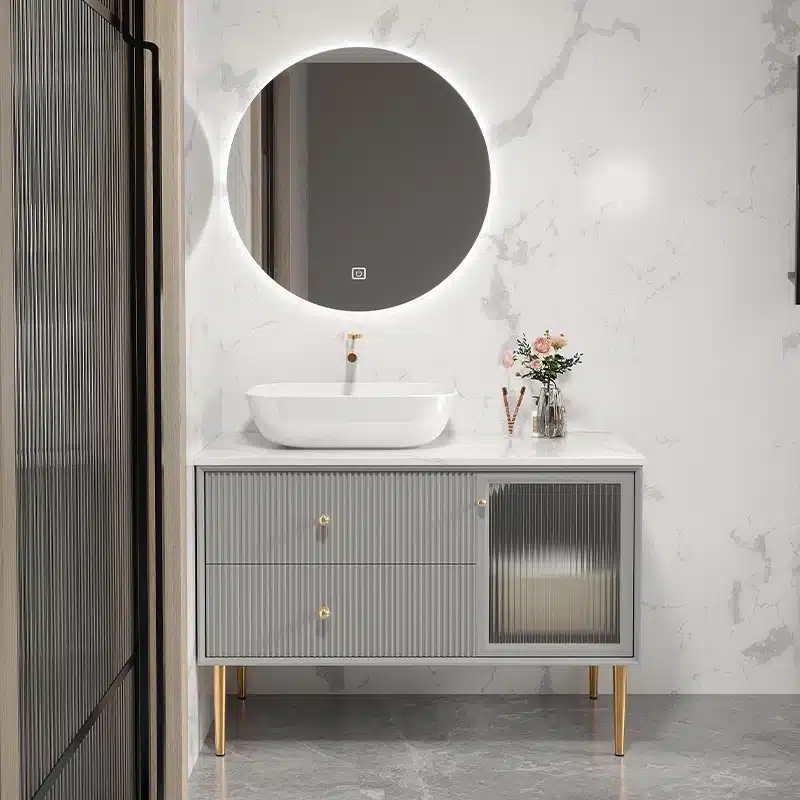
East Coast: A Preference for Traditional and Coastal Styles
East Coast design leans heavily into heritage and maritime influences. States from New England down through the Mid-Atlantic show a consistent preference for traditional and transitional bathroom styles. In coastal regions like Rhode Island and Delaware, beach-inspired aesthetics are dominant. This translates to material choices with rich, classic textures that create a timeless feel.
- Beach and coastal styles are the top choice in states like Rhode Island and Delaware.
- Traditional and transitional designs are popular across New England and the Mid-Atlantic.
- Material choices often include rich textures like brass, glass, and florals to create a classic feel.
West Coast: A Focus on Modern and Natural Aesthetics
The West Coast embraces a more diverse range of styles, with a clear preference for contemporary and modern designs. The aesthetic is often minimalist and nature-inspired, utilizing materials that reflect the surrounding environment. This approach is popular in states like California, Oregon, and Utah, where design emphasizes clean lines and a connection to the outdoors.
- Contemporary and modern styles are the leading choices in many western states.
- Design emphasizes natural, woven textures and bleached wood finishes.
- The overall aesthetic aligns with minimalism and a connection to nature.
Nationwide Trends: The Dominance of Double-Sink Vanities
While stylistic preferences differ by coast, the demand for double-sink vanities is a unifying trend across the country. Over 65% of all bathroom renovations now feature this option, with particularly high adoption rates on the East Coast. This data reflects a shared national priority for functionality and personal space in primary bathrooms, regardless of regional aesthetic tastes.
- Double-sink vanities are the top choice in 65% of bathroom renovations nationwide.
- Adoption is especially high in East Coast states like West Virginia (88%) and South Carolina (83%).
- This trend indicates a national preference for practicality and shared bathroom efficiency.
Conclusion
Choosing between frameless and framed construction defines a vanity’s storage access, structural profile, and production cost. Details like plywood thickness and assembly methods directly impact durability and alignment with regional market tastes. Understanding these specifications allows you to source products that meet your customers’ expectations and your target price point.
Our team can help you navigate these options to build a vanity line for your specific market. Contact us to discuss your project requirements or request a refundable sample to evaluate our material quality firsthand.
Frequently Asked Questions
Difference between framed and frameless vanity?
A framed vanity, common in traditional American cabinetry, features a solid wood frame (typically 1.5-2 inches wide) attached to the front of the cabinet box. Doors and drawers are mounted onto this frame. A frameless vanity, also known as Euro-style, eliminates the face frame entirely. The doors mount directly to the sides of the cabinet box, creating a seamless, modern look with tighter gaps and providing full, unobstructed access to the interior.
Is frameless vanity better?
Neither style is universally better; the best choice depends on your priorities. Frameless vanities excel in modern aesthetics and space efficiency, offering maximized interior storage and easier access. Framed vanities provide superior structural rigidity, which prevents “racking” (twisting of the cabinet box), and offer more design versatility with different door styles like inset or full overlay, making them ideal for traditional and transitional designs.
What is an inset bathroom vanity?
An inset vanity is a high-end style of framed cabinetry where the doors and drawer fronts sit perfectly flush *inside* the face frame, rather than on top of it. This construction method creates a clean, furniture-like appearance with very precise, tight margins around each door and drawer. It requires meticulous craftsmanship and specialized hardware to ensure proper alignment and function.
Standard plywood thickness for cabinets?
The industry standard for high-quality vanity and kitchen cabinet construction is 3/4-inch thick plywood for the cabinet box (sides, top, and bottom). This thickness provides the structural integrity needed for durability and screw-holding power, especially in frameless designs where the box itself is the entire support structure. Shelves are also typically 3/4-inch to prevent sagging, while back panels may be a thinner 1/4-inch or 1/2-inch plywood.
Frameless vs framed cost difference?
The cost difference between standard frameless and framed cabinets is often minimal and depends more on the chosen materials, finish, and hardware than the construction style. While frameless construction uses slightly less material (no face frame), it requires high precision manufacturing. Ultimately, a premium frameless vanity can be more expensive than a basic framed one, and vice-versa. The notable exception is inset framed cabinetry, which is consistently a premium, more expensive option due to the high labor cost.
Do frameless cabinets need special hinges?
Yes, frameless cabinets require a specific type of hinge known as a concealed “Euro-style” hinge. These hinges mount directly to the interior side panel of the cabinet box and are engineered for full overlay doors—where the door completely covers the front edge of the cabinet. Their essential 3-way adjustability (height, depth, and side-to-side) is critical for achieving the tight, consistent gaps that define the clean aesthetic of frameless cabinetry.




0 Comments