
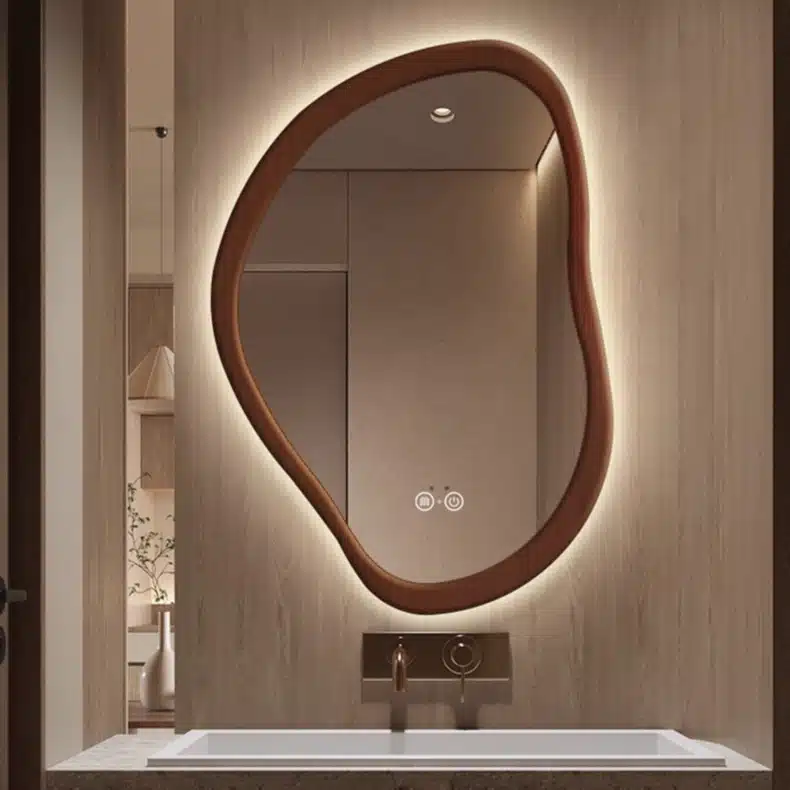
Sourcing the right bathroom vanity mirrors is the only way to prevent costly freight damage, warranty claims, and project delays that erode profit margins. While often treated as a simple fixture, a mirror can introduce significant operational risk, from inconsistent LED color temperatures across a large order to receiving a pallet of shattered glass. A single damaged shipment or failed electrical inspection can halt progress on a multi-unit development, creating expensive callbacks and damaging your relationship with the client.
This guide serves as a technical standard operating procedure for procuring vanity mirrors reliably. We cover the core specifications that matter, including the durability differences between copper-free and standard silver glass, what lumens and kelvins mean for lighting quality, and the installation trade-offs between recessed and surface-mount medicine cabinets. We also explain the requirements for UL/ETL certification and detail packaging strategies to ensure your mirrors arrive intact and ready for installation.
The “Vanity + Mirror” Bundle Strategy?
Offering vanities and mirrors as a single, pre-matched package is a proven strategy to boost average order value and protect profit margins from single-item price competition.
Boosting Average Order Value and Margin
Pairing vanities with complementary LED mirrors and faucets is a core tactic for increasing the total value of each sale. This approach helps protect profit margins in a competitive market by creating a premium, all-in-one solution instead of competing on individual item prices. The focus of the sale shifts from the cost of a single product to the complete value of a cohesive bathroom set.
- This strategy enables tiered pricing models for different market segments, from standard to premium.
- Bundles strengthen brand differentiation, making it harder for competitors to match the exact offering.
- At FocusCabinet, our “Material Flexibility” allows us to create bundles that hit specific price points for wholesalers and project managers.
Simplifying the Purchase for Trade Professionals
For contractors and designers, bundled packages simplify the entire sourcing and specification process. A pre-matched vanity and mirror set guarantees aesthetic and functional compatibility, saving valuable time and reducing the risk of measurement or finish-matching errors during project planning and execution.
- A single SKU for a complete set streamlines quoting, ordering, and inventory management for large projects.
- Distributors can present clients with a cohesive design package, which accelerates decision-making and project approval.
- Guaranteed fit and finish between the vanity and mirror eliminates installation guesswork on the job site.
Capitalizing on Smart Home Demand
The demand for integrated technology in homes is no longer a niche trend. Smart mirrors now appear in an estimated 40% of new luxury builds, a massive increase from just a few years ago. Bundling a smart LED mirror with a vanity positions the product as a modern, high-value feature that aligns directly with current consumer expectations for connected living spaces.
- This strategy directly meets the growing demand for smart-home integration in bathrooms.
- Offering a vanity with an included smart mirror appeals to tech-savvy homeowners, developers, and hospitality projects.
- The perceived value of an integrated smart bundle is often significantly higher than the combined cost of the individual components.
Glass Quality: Copper-Free vs. Standard Silver?
The primary failure point for bathroom mirrors is “black edge” corrosion caused by humidity attacking the copper backing of standard silver mirrors; copper-free technology directly solves this by using advanced protective layers, which radically extends the product’s functional lifespan.
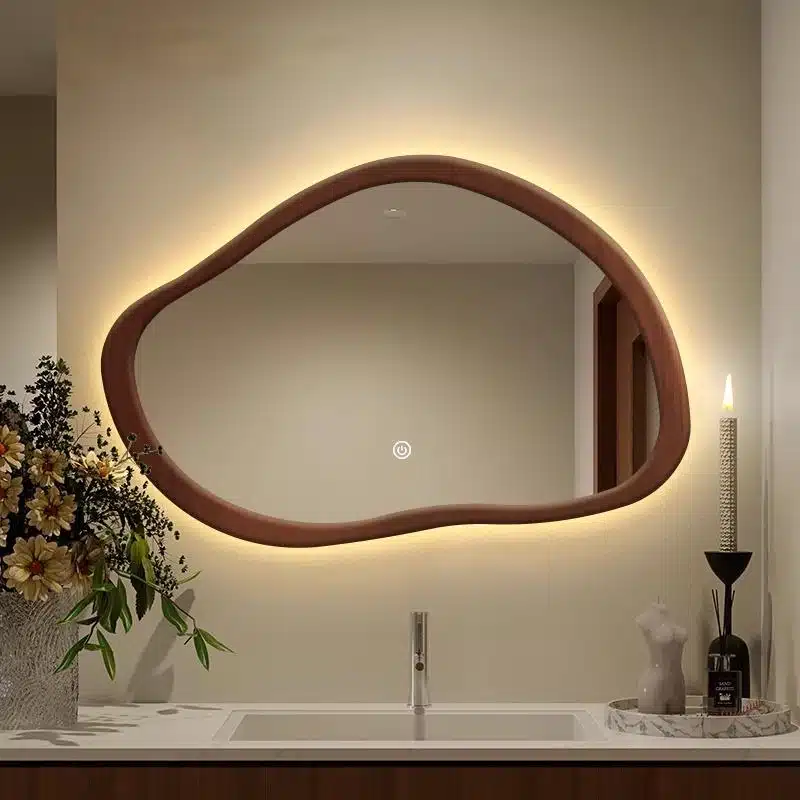
When sourcing mirrors, the distinction between copper-free and standard silver glass is not a minor detail—it’s a critical decision that impacts long-term durability and client satisfaction. Standard silver mirrors have a known vulnerability in high-humidity environments. The copper layer used to protect the silver reflective coating eventually oxidizes when exposed to moisture, creating the black spots and creeping edge corrosion that ruin the mirror’s appearance. This is a common and expensive failure, especially in commercial projects like hotels or residential developments in coastal regions.
Copper-free mirrors represent the modern engineering standard, built specifically to perform in the harsh conditions of a bathroom. By replacing the outdated copper layer with more robust, advanced passivation coatings, these mirrors effectively seal the reflective silver layer from moisture and chemicals. This technical shift translates directly into a longer-lasting, blemish-free product that withstands the daily steam and humidity of a bathroom without degradation.
| Specification | Copper-Free Mirror (Modern Standard) | Standard Silver Mirror (Legacy Tech) |
|---|---|---|
| Corrosion Resistance | Excellent; engineered to prevent black-edge oxidation. | Poor; highly susceptible to corrosion in humid environments. |
| Reflectivity & Clarity | 93–95% (Brighter, sharper image with no color distortion). | ~90% (Can have a slight yellowish tint). |
| Environmental Impact | Manufactured without toxic copper and lead. | Manufacturing process involves heavy metals. |
| Expected Lifespan | Significantly longer functional life, maintaining appearance. | Shorter lifespan due to inevitable oxidation. |
Superior Corrosion Resistance in Humid Climates
The core advantage of copper-free mirrors is their ability to resist degradation. They are specifically engineered to stop the chemical reaction that causes black-edge corrosion on standard mirrors. This durability is not a luxury feature; it’s a critical performance metric for any installation in a bathroom, spa, or coastal property where humidity is a constant factor.
- Eliminates the risk of oxidation and black spots forming around the mirror’s edges.
- Provides a much longer-lasting, blemish-free appearance that reduces replacement costs and warranty claims.
- Offers superior performance in poorly ventilated bathrooms or humid climates where standard mirrors fail prematurely.
Enhanced Reflectivity and Optical Clarity
By removing the copper layer, manufacturers achieve a higher level of reflectivity. A copper-free mirror delivers a reflectivity of 93–95%, while many standard silver mirrors top out around 90%. This results in a brighter, sharper, and more accurate reflection with better color fidelity. The subtle yellowish tint common in older mirror technologies is gone, which is essential for applications requiring precise color matching, such as makeup application or interior design evaluations.
Eco-Friendly Manufacturing (No Toxic Metals)
The production of copper-free mirrors aligns with modern environmental standards. The manufacturing process avoids the use of toxic heavy metals like copper and lead, reducing the environmental footprint and resulting in a safer product. This is an increasingly important compliance factor in international markets, where demand for sustainable and non-toxic building materials is growing. Specifying copper-free mirrors ensures your products meet these evolving regulatory requirements.
Stock Durable Vanities That Boost Sales

LED Tech: Lumens, Kelvins & Defoggers?
Selecting the right LED mirror is a technical decision that balances lumens for task clarity, Kelvins for accurate color rendering, and the reliability of integrated defoggers and long-lifespan chips.
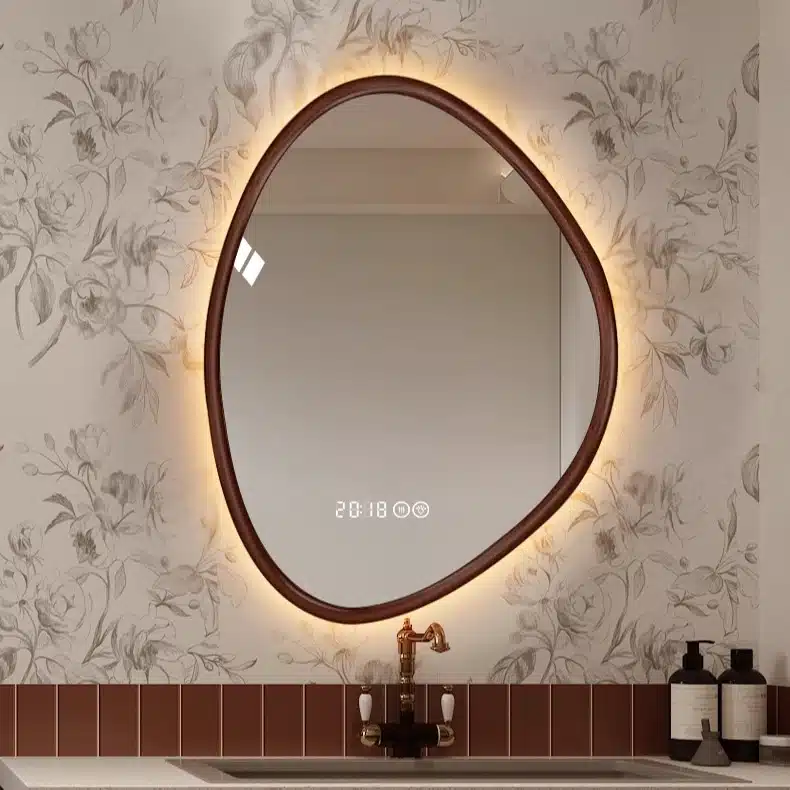
Understanding Lumens for Brightness Control
Lumens measure the total light output from a mirror, directly impacting its effectiveness for tasks like shaving or applying makeup. A higher lumen count delivers brighter, clearer illumination, which is essential for detailed grooming without shadows. At FocusCabinet, we engineer our mirrors to provide powerful, shadow-free light while optimizing for lumens-per-watt. This approach ensures high brightness and high energy efficiency. We also integrate dimming features, allowing users to adjust the light from intense task lighting down to a soft, ambient glow.
Choosing the Right Kelvin for Ambiance
Kelvins measure the color temperature of the light, which defines the visual feel of the bathroom. The scale ranges from warm, cozy tones (2700K-3000K) to crisp, cool tones that mimic natural daylight (5000K-6500K). FocusCabinet mirrors feature adjustable Kelvin settings, giving users control over the lighting environment. This flexibility is critical for accurate skin-tone representation and allows the mirror’s light to match any bathroom design or even support natural circadian rhythms by changing throughout the day.
| Technical Specification | Impact on User Experience | FocusCabinet Standard Offering |
|---|---|---|
| Luminous Output (Lumens) | Defines raw brightness. Higher lumens provide shadow-free light for detailed tasks like shaving and makeup application. | Engineered for optimal task lighting with integrated dimming controls for ambiance. |
| Color Temperature (Kelvins) | Determines the light’s color (warm yellow to cool white). Affects skin tone accuracy and bathroom atmosphere. | Adjustable color temperature (e.g., 2700K-6500K) to match natural daylight or create a relaxing mood. |
| Anti-Fog System | An embedded heating pad keeps the mirror clear after hot showers, eliminating the need to wipe away condensation. | Energy-efficient, quick-activation defogger with a dedicated switch for immediate clarity. |
| LED Lifespan (Hours) | Indicates long-term reliability and reduces maintenance. A longer life means no bulb replacements for decades. | Rated for over 50,000 hours, ensuring decades of consistent, maintenance-free performance. |
The Practicality of Anti-Fog Defoggers
An anti-fog system is a non-negotiable feature for modern bathroom mirrors. It uses a gentle, embedded heating pad to keep a section of the mirror free from condensation, even right after a hot shower. This technology adds significant convenience by ensuring a clear reflection is always available, eliminating the need to wipe the mirror down. Wiping often leaves streaks and wastes time, but an integrated defogger preserves a perfect finish. We build our mirrors with energy-efficient defoggers that activate quickly via a dedicated, touch-sensitive switch.
LED Lifespan and Energy Efficiency
Modern LED technology offers exceptional longevity and consumes far less energy than outdated lighting sources. Our mirrors are built with high-quality LED chips rated for over 50,000 hours of operation. This translates to decades of consistent performance without ever needing to replace a bulb. LEDs also use up to 80% less energy than conventional lighting, which directly lowers electricity costs for the end user. For commercial and hospitality projects, this long-term reliability is critical, as it drastically reduces maintenance calls and operational overhead.
Medicine Cabinets: Recessed vs. Surface Mount?
The choice between recessed and surface-mount medicine cabinets comes down to project scope: recessed offers a seamless, space-saving look ideal for new builds, while surface-mount provides a flexible, cost-effective solution for retrofits.
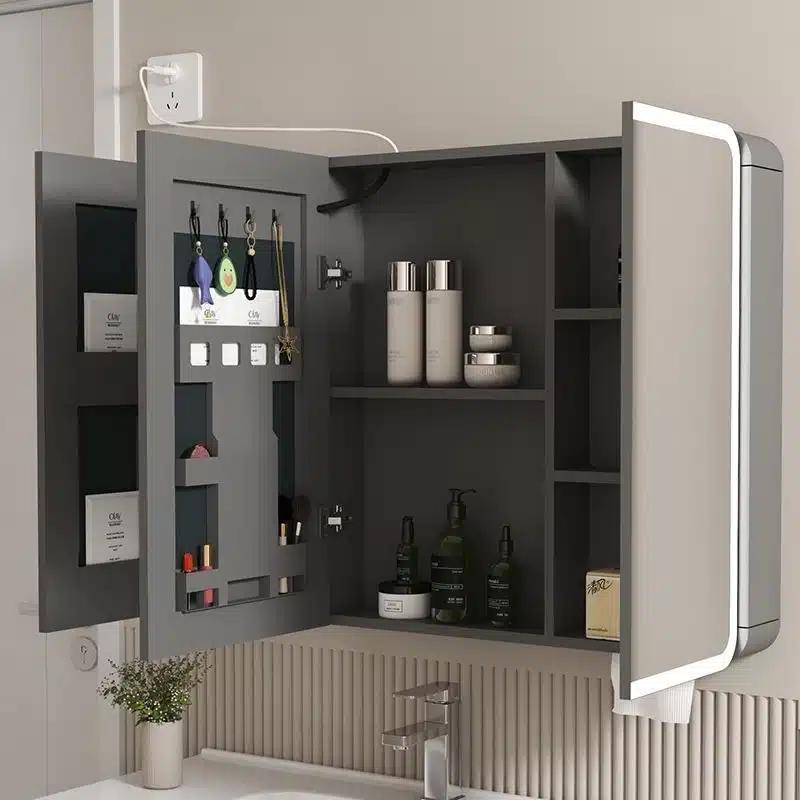
Recessed Cabinets: The Integrated Look
Recessed cabinets are installed directly into the wall cavity between studs, creating a flush, built-in appearance. This method saves space and delivers the clean, minimalist aesthetic that designers prefer, with data showing it’s the choice for 68% of high-end projects. The trade-off is installation complexity. Setting up a recessed cabinet requires modifying the wall framing and can uncover unexpected plumbing or wiring, pushing installation costs between $200 and $600. It’s best suited for new construction or significant remodels where the walls are already open.
Surface-Mount Cabinets: The Flexible Solution
Surface-mounted cabinets attach directly to the face of the wall, making installation fast and straightforward. This approach eliminates the need for any structural changes, making it the practical choice for simple upgrades, rental properties, or bathrooms with potential wall obstructions. Because it avoids complex labor, the surface-mount option is more affordable and accessible for a wider range of projects, particularly renovations where cutting into walls is not feasible or desired.
Key Design and Feature Trends for 2026
The market is evolving beyond simple installation choices, with both recessed and surface-mount models incorporating advanced features. The focus has shifted toward enhancing functionality and aesthetics, blurring the lines between the two types.
- Frameless designs are gaining significant traction for their modern, lightweight appearance that complements contemporary bathroom styles.
- Features once considered premium, like integrated LED lighting, soft-close hinges, and adjustable shelving, are now becoming standard expectations across all price points.
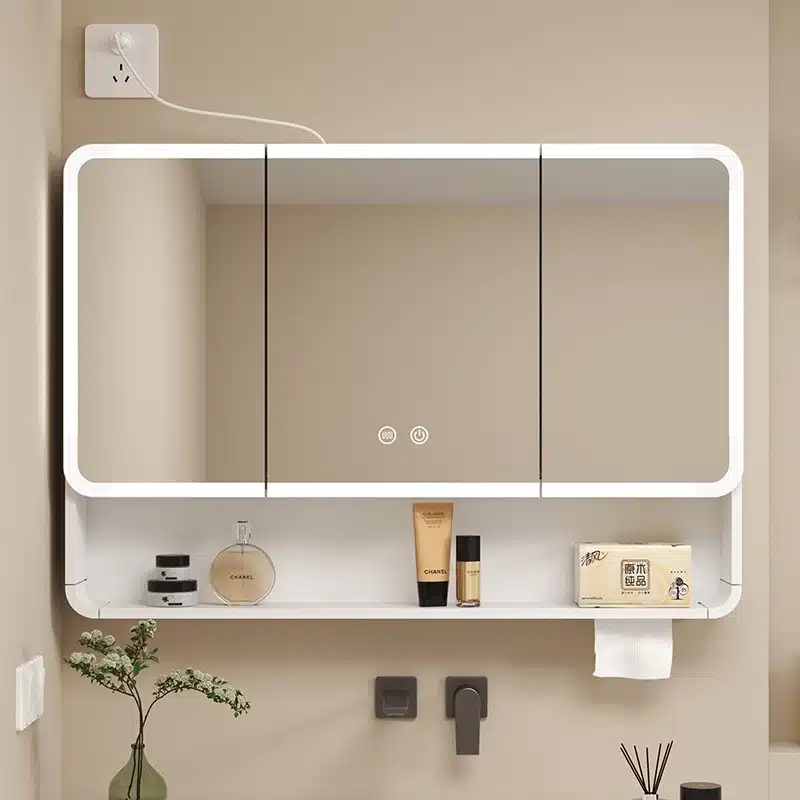
- Dual-mount cabinets are emerging as a key product category, offering the flexibility to be installed as either recessed or surface-mount, which de-risks purchasing decisions for contractors.
Matching Frame Finishes (Color Consistency)?
Finish coordination is no longer just aesthetic; it’s a strategic choice between minimalist cohesion and a sophisticated focal point, where consistent aging across materials is the primary technical challenge.
Unified Finishes for a Cohesive Look
The objective of a unified finish strategy is to make the mirror and vanity appear as a single, integrated fixture. This method creates a clean, uncluttered space ideal for minimalist bathroom designs. Achieving this requires precise control over color and gloss levels so light reflects uniformly across both surfaces, eliminating any visual break between the two pieces.
- Top-tier manufacturing relies on systems like Pantone color matching to align frame and vanity finishes exactly. Suppliers like MFBATH can accommodate over 40,000 customization combinations to meet specific project demands.
- This approach is engineered for cohesion, where the mirror seamlessly blends with the vanity rather than competing for attention.
- Materials and coatings are carefully selected to maintain gloss-level consistency, a critical factor for how the combined unit interacts with bathroom lighting.
Contrasting Finishes for a Strategic Focal Point
Using intentionally different finishes for the mirror frame and vanity creates a sophisticated focal point and adds visual depth to the room. This approach allows for greater personalization but requires careful design to ensure the final look is balanced, not disjointed. Here, the mirror is treated as a distinct decorative element.
- Distributors can pair complementary finishes, such as a matte black mirror frame with a natural oak vanity, to introduce visual interest and texture.
- Even with mixed materials, the underlying color undertones must be aligned to avoid a clashing, unprofessional aesthetic. Good suppliers provide design support to guarantee compatibility.
- This trend is particularly popular in designs that aim to highlight the mirror as a statement piece in its own right.
Durability and Consistent Aging Across Materials
The most significant technical challenge in finish coordination is ensuring consistent aging. A design fails if the mirror frame’s finish chips, fades, or yellows at a different rate than the vanity’s surface. This discrepancy quickly undermines the original design intent, whether it was for a unified or contrasted look.
To solve this, all finishes must pass rigorous quality control tests for durability. These tests simulate long-term exposure to humidity, common cleaning agents, and UV light to verify color stability and resistance to wear. This focus on material longevity ensures that both design strategies remain visually effective for years, protecting the project’s integrity.
Packaging Glass for Freight (The Biggest Pain)
Shipping glass is a battle against breakage, high freight costs, and logistical bottlenecks, making robust packaging a core business requirement, not an optional upgrade.
Inherent Fragility and Breakage Risks
Glass is fundamentally difficult to transport. It cannot be compressed or stacked, and its weight reduces freight efficiency—fewer items fit per shipment compared to lighter materials like plastic. Despite protective measures, the risk of breakage during handling and transit is a constant challenge for logistics. This leads to direct product loss and requires costly, reinforced packaging solutions to mitigate damage before it happens.
High Costs from Freight and Specialized Handling
The primary challenge in shipping glass is the financial burden. Rising global freight rates, ocean freight surcharges, and the need for special equipment inflate transportation expenses. These costs are often passed down through the distribution channel. The weight and fragility of glass directly increase the cost-per-unit for transport, while specialized handling requirements, such as dedicated racks and trained staff, add significant expenses beyond standard freight charges.
| Packaging Feature | Standard (Wholesale/Projects) | E-commerce Upgrade (ISTA 3A) |
|---|---|---|
| Outer Carton | 5-Layer Corrugated Carton | 5-Layer Corrugated + Hard Cardboard Reinforcement |
| Internal Protection | Corner Protection | 6-Sides Molded Foam + Corner Protection |
| Performance Standard | Standard Bulk Transit | Passes ISTA 3A Drop Test |
Supply Chain Disruptions and Port Congestion
Global supply chain issues severely impact the reliability of glass shipments. Port congestion, container shortages, and unpredictable vessel schedules can extend delivery times from days to weeks, creating backorders and service delays. These unreliable delivery timelines make it difficult for distributors to manage inventory and meet customer demand, leading to service interruptions and lost sales opportunities.
UL/ETL Certification for Lighted Mirrors?
Navigating lighted mirror compliance has evolved from a simple UL check to a multi-layered process involving electrical safety, radio frequency emissions, and moisture resistance, with the burden of verification now falling on buyers to combat counterfeit marks.
Sourcing lighted mirrors for the North American market requires a firm grasp of certification. It’s no longer a single checkbox. The standards are layered, and failure to meet any one of them can halt a project or expose a distributor to significant liability. Understanding these distinct requirements is essential for sourcing compliant, safe, and marketable products.
Core Electrical Safety Standards
For any luminaire sold in North America, UL 1598 is the foundational standard for electrical safety. This certification ensures that all electrical components—from the power supply to the wiring and LED strips—are designed and constructed to prevent fire and shock hazards. This is complemented by NEC (National Electrical Code) guidelines, which dictate how these products must be installed, especially in damp or wet locations like bathrooms. A UL or ETL mark indicates the product’s components and construction meet these baseline safety benchmarks.
Compliance for Smart and High-Tech Features
Modern lighted mirrors often include features that go beyond simple illumination. Any mirror with integrated Bluetooth speakers, Wi-Fi connectivity, or other smart functions must also carry FCC certification. This confirms the device’s radio frequency emissions fall within legal limits and won’t interfere with other wireless devices. Separately, the IP (Ingress Protection) rating has become a standard specification. An IP44 rating, for example, is now a common baseline, verifying the enclosure protects against water splashes from any direction, a critical feature for bathroom durability.
The Challenge of Counterfeit Certifications
The market has seen a troubling rise in counterfeit UL and ETL marks printed on non-compliant products. This practice creates severe safety and liability risks for importers, distributors, and contractors. A fake certification can void insurance claims and lead to legal action if a product fails. Because of this, experienced project managers and distributors have adopted stricter verification protocols. They no longer trust the mark on the product alone, instead requiring suppliers to provide official documentation and directly verifying certificate authenticity with the issuing bodies like UL or Intertek (ETL).
Conclusion
Choosing the right vanity mirror is about managing long-term value, not just initial cost. Key specifications like copper-free glass, certified electronics, and robust packaging directly influence product lifespan and customer satisfaction. Getting these details right protects your brand reputation and reduces costly returns or damage claims.
Review your current mirror offerings against these quality benchmarks. When you are ready to explore options with guaranteed material specs and transit-tested packaging, contact our team for a full catalog or to arrange a sample.
Frequently Asked Questions
What is a copper-free vanity mirror?
A copper-free mirror is a modern, high-durability mirror manufactured without the traditional copper layer used to protect the silver backing. Instead, it uses advanced, eco-friendly protective films. This process makes the mirror significantly more resistant to corrosion and “black edge” (edge rot), which is common in the high-humidity environment of a bathroom. They offer superior longevity and clarity compared to conventional mirrors.
Do LED mirrors provide enough light for makeup?
Yes, high-quality LED mirrors provide excellent, shadow-free light for makeup application. For optimal results, look for mirrors with front-facing task lighting, a high lumen output for brightness, and a Color Rendering Index (CRI) of 90+ to ensure colors appear natural and accurate. Many modern LED mirrors also feature adjustable color temperature to simulate different lighting conditions, from daylight to indoor settings.
How high to hang a mirror above vanity?
The standard industry guideline is to hang the mirror so its bottom edge is 4 to 7 inches above the vanity countertop. This prevents backsplash from splashing onto the mirror while maintaining a visually pleasing gap. For best results, the center of the mirror should be positioned at the average eye level of its users, which is typically 66 to 69 inches from the floor. Always consider the height of your faucet to ensure adequate clearance.
Recessed vs surface mount medicine cabinets?
Recessed medicine cabinets are installed into the wall for a seamless, built-in look that saves space, making them ideal for smaller bathrooms. However, installation is more complex and depends on wall stud placement. Surface-mount cabinets are installed directly onto the wall, which is much simpler and offers more flexibility in placement and potential storage depth. The tradeoff is that they protrude from the wall, which may be a consideration in tight spaces.
What is the standard Kelvin for bathroom mirrors?
The most common and functional range for bathroom mirrors is between 3000K (soft white) and 4000K (neutral white). A 4000K temperature is widely considered ideal for task lighting like makeup application and shaving as it closely mimics natural daylight. Premium mirrors often feature adjustable Correlated Color Temperature (CCT), allowing users to switch between warm, neutral, and cool light (e.g., 2700K, 4000K, 5000K) to suit their preference.
How to prevent shipping breakage for mirrors?
Preventing shipping breakage requires a multi-layered packaging strategy. Key components include high-density foam corner protectors, a scratch-proof film on the glass surface, and custom-molded expanded polystyrene (EPS) foam to float the mirror within a reinforced, double-wall corrugated outer box. This system absorbs shock and impact from all directions. Leading manufacturers certify their packaging through rigorous ISTA (International Safe Transit Association) drop and vibration tests.




0 Comments