
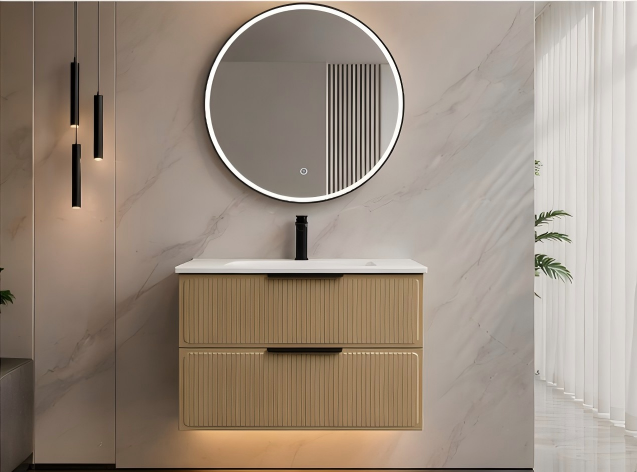
Integrating the right features into a smart bathroom mirror is the critical engineering decision that separates a market-leading product from one plagued by costly warranty claims. Many brands fall into the trap of over-engineering, adding gimmicky features like Android operating systems or low-quality TV screens that increase failure points and frustrate users. This approach not only inflates production costs but also leads to negative reviews and erodes customer trust, directly impacting your bottom line.
This guide provides the technical breakdown needed to make informed design choices. We will analyze the essential technologies like touch dimmers and defoggers, explaining why they are non-negotiable for a premium user experience. We’ll also dissect the common pitfalls of gimmicky additions, explore the engineering challenges of integrating Bluetooth speakers without causing mirror vibration, and detail the importance of sourcing reliable electronic components to ensure long-term product stability.
How Is the “Connected Bathroom” Evolving in Modern Vanity Design?
The “connected bathroom” is moving beyond standalone gadgets, embedding technology directly into vanity furniture to create a clean, functional space where smart features are felt but not seen.
Seamless Integration of Technology into Furniture
The evolution of connected bathrooms centers on embedding smart features directly into vanity furniture. This approach integrates technology like USB-C charging drawers, motion-activated lighting, and voice-controlled mirrors to improve daily routines without compromising a clean, minimalist aesthetic. By building these functions into the cabinet itself, manufacturers eliminate countertop clutter and exposed wiring, making the technology a natural extension of the furniture.
- In-drawer USB-C charging ports keep countertops clear while ensuring devices are always accessible and ready to use.
- Motion-activated LED lighting in or under the vanity provides safe, hands-free illumination for nighttime use without causing harsh glare.
- Voice-controlled anti-fog mirrors and integrated task lighting are shifting from luxury add-ons to expected features in mid-to-high-end projects.
The Rise of ‘Quiet Luxury’ in Smart Bathroom Design
Modern design philosophy now emphasizes “quiet luxury,” where technology is present and highly functional but visually unobtrusive. This trend is about delivering practical amenities for diverse household needs—from busy professionals to aging-in-place applications—while maintaining a simple and elegant appearance. The growing market adoption of tech-enabled vanities confirms this is a long-term shift from novelty to a new standard of convenience.
- The market for tech-enabled vanities shows steady growth, reflecting a clear demand for built-in convenience.
- Hidden technology supports a minimalist aesthetic while delivering the functionality expected in a high-end space.
- Smart features are designed to assist multi-schedule households and improve accessibility for all users, making the bathroom more efficient and safer.
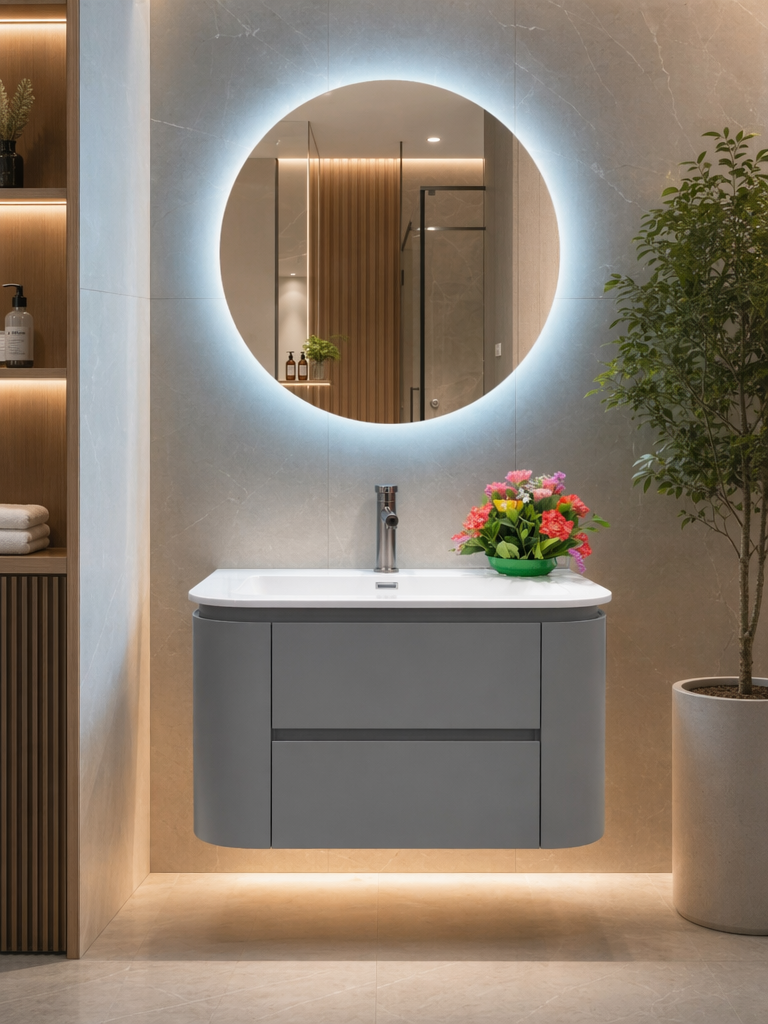
Why Are Touch Dimmers and Defoggers Considered Essential Tech for Smart Mirrors?
These features have shifted from optional novelties to non-negotiable standards because they solve the two most common bathroom annoyances—inconsistent lighting and post-shower condensation—with a single touch.
Touch dimmers and defoggers are no longer luxury add-ons; they are core functionalities that define a modern smart mirror’s value. Users expect their bathroom fixtures to solve practical problems, and these two technologies directly address the most persistent issues in grooming routines. The market has moved past basic reflection to demand integrated tools that enhance daily efficiency and comfort, making these features the baseline for any competitive product in 2026.
The Role of Touch Dimmers in User Experience
Touch controls provide a clean, intuitive interface that aligns with modern user expectations shaped by smartphones. By embedding sensors directly into the mirror surface, designers eliminate the need for physical buttons or external switches, preserving a minimalist aesthetic. This integration allows users to instantly adapt the lighting to their specific needs. A simple tap can adjust LED brightness for general use, while a press-and-hold can shift the color temperature from a cool, bright white (around 6000K) for precision tasks like makeup application to a warm, ambient glow (around 3000K) for a relaxing evening routine.
| Feature | Component Specification | User Benefit |
|---|---|---|
| Touch Dimmer & CCT Control | Integrated Touch Sensor for 3-Color Dimmable LEDs, paired with a UL/ETL/CE certified wide-voltage driver (110V-240V). | Instant adjustment for task-specific lighting (cool white for makeup) or ambient warmth. Maintains a clean, button-free surface. |
| Anti-Fog System | PET (Polyethylene Terephthalate) heating pad with a dedicated one-touch control, operating independently from the lighting system. | Guarantees a clear, condensation-free reflection immediately after a hot shower, eliminating the need to wipe and preventing streaks. |
| Environmental Protection | Standard IPX4 (Splash-proof) rating. Can be upgraded to IPX6 for high-pressure water jet resistance in wet zones. | Ensures long-term reliability and safety of all electronic components in a high-humidity bathroom environment. |
How Defoggers Solve a Core Bathroom Annoyance
The anti-fog function directly solves the universal problem of a steam-covered mirror after a hot shower. This technology uses a thin, embedded heating pad (typically PET film) adhered to the back of the mirror. When activated, it gently warms the glass surface, preventing the temperature difference that causes condensation to form. This provides instant clarity for post-shower tasks like shaving or skincare, eliminating the wait time or the need to manually wipe the surface. Wiping a mirror not only leaves streaks but can also spread residue, while a defogger maintains a pristine, untouched reflection.
High-Tech Mirrors for Higher Profit Margins
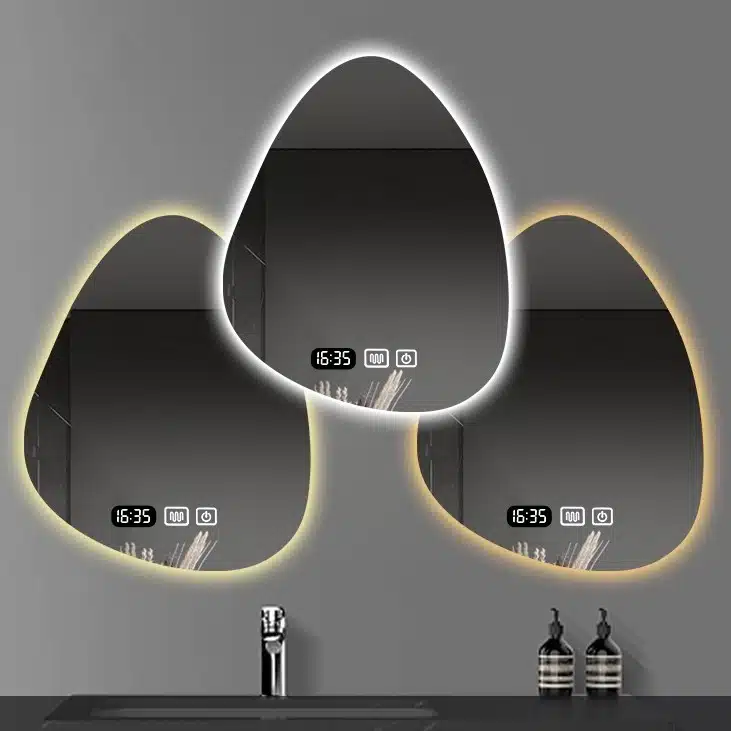
Are Digital Clocks and Temperature Displays Nice-to-Have Features or Necessities?
What was once a luxury add-on is now a baseline expectation; a smart mirror without an integrated time and temperature display is perceived as functionally incomplete in the 2026 market.
Digital clocks and temperature displays have decisively moved from being novelty upgrades to expected components in modern smart mirrors. Consumer demand no longer views these as optional. Instead, the market treats these integrated displays as a standard for functionality, making any mirror without them seem outdated or incomplete. This shift solidifies their position as a necessity for any competitive product.
The Shift from Optional Add-On to Standard Feature
In today’s market, these displays are almost always bundled with core smart functions like one-touch defogging and adjustable LED lighting. This packaging strategy reinforces their status as a standard feature rather than an expensive upgrade. The transition was driven by two key factors:
- Market Expectations: Consumers now expect a baseline level of connectivity and information from any “smart” device, and the bathroom mirror is no exception.
- Cost-Effective Technology: The widespread availability of energy-efficient LED modules and simple, reliable touch sensors has made it inexpensive for manufacturers to include these features without significantly impacting the final price.
Integrating Time Management into Morning Routines
These displays provide real, practical value by integrating time management and environmental awareness directly into a user’s daily habits. This fusion of information and grooming enhances personal efficiency, especially during busy mornings when every minute counts. Having the time and temperature clearly visible helps users stay on schedule and select appropriate clothing without reaching for a phone or another device.
More advanced models take this a step further by incorporating real-time humidity levels and brief weather forecasts. This transforms the mirror from a simple reflective surface into a central information hub for starting the day, delivering critical data precisely when and where it’s needed most.
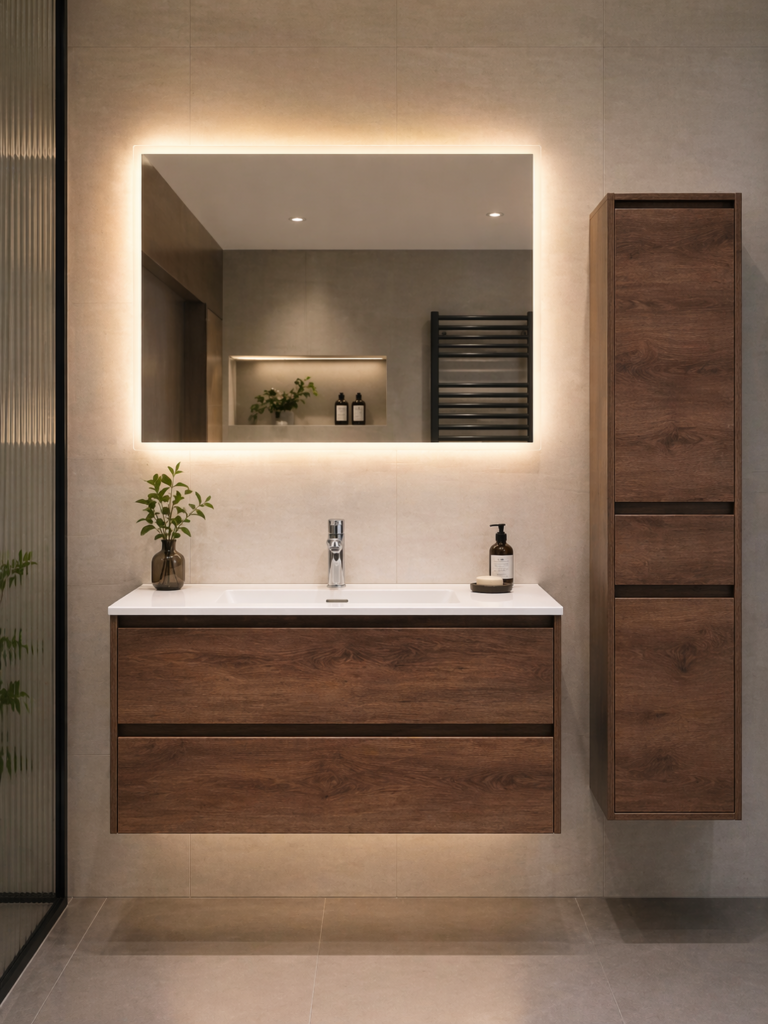
Why Do Gimmicks Like TV Screens and Android OS Frequently Fail in Smart Mirrors?
Most perceived “failures” of advanced features like screen mirroring are not hardware defects but solvable user-side issues related to network configuration, device settings, or environmental interference.
Features like integrated TV screens or full Android operating systems often get a reputation for being unreliable. In reality, the underlying technology is sound, but its performance is highly dependent on factors outside the mirror itself. The problems users encounter almost always trace back to simple setup errors or environmental constraints, not faulty components. When properly configured, these systems perform as expected. The challenge isn’t the technology’s capability but the user’s technical environment.
Software and Network Configuration Issues
The most common source of failure is a basic network mismatch. Screen casting protocols require both the smart mirror and the source device, like a smartphone, to be on the exact same Wi-Fi network to discover each other and communicate. If one device is on a 2.4 GHz band and the other is on a 5 GHz band from the same router, or if one is on a guest network, the connection will fail. Outdated software or firmware on either the mirror or the casting device can also create compatibility conflicts that prevent a stable connection.
| Symptom | Common Root Cause | Actionable Solution |
|---|---|---|
| Screen mirroring won’t connect or discover the mirror. | Mirror and phone are on different Wi-Fi networks or bands. | Confirm both devices are connected to the identical Wi-Fi SSID. Restart both devices and the router. |
| Video stream is choppy, lags, or frequently drops. | Poor Wi-Fi signal strength or physical interference. | Move the router closer to the bathroom or install a Wi-Fi mesh node/extender. Avoid placing the mirror behind thick concrete walls. |
| Casting is blocked or immediately disconnects. | Battery-saver mode is active on the phone, or casting permissions are disabled. | Disable any power-saving modes on the source device. Check the phone’s OS settings to ensure media casting is permitted. |
Signal Interference and Physical Environment
The bathroom is often a challenging environment for wireless signals. Wi-Fi and Bluetooth performance degrades significantly with distance and physical obstructions. These signals are generally reliable only within a 10-meter range without major barriers. Thick tile, concrete walls, metal plumbing, and interference from other electronic devices can weaken the signal, leading to intermittent connections that users mistake for a faulty mirror. A weak signal results in poor streaming quality, connection drops, and a frustrating user experience.
Incorrect Device Settings and User Permissions
Many connection problems originate from a simple setting on the user’s phone or tablet. For instance, aggressive battery-saver modes often restrict background data and wireless functions needed for screen mirroring to conserve power. In other cases, casting permissions may be disabled by default within the device’s operating system or a specific app. Users must sometimes manually enable settings like “Let others control your cast media” for the connection to be established and maintained correctly.
How Do You Balance Sound Quality and Vibration in Mirror Bluetooth Speakers?
Integrating audio into a smart mirror is a materials science problem focused on isolating vibration through strategic frame engineering, specialized dampening, and digital signal processing to manage bass frequencies.
Adding Bluetooth speakers to a mirror seems simple, but getting good sound without rattling the glass requires careful engineering. A mirror is a large, flat, resonant surface—the exact opposite of an ideal speaker cabinet. The challenge is to produce clear audio, particularly bass, without turning the entire mirror into a vibrating mess that distorts the sound and the reflection. This is solved through a combination of physical design and electronic calibration.
Optimizing Speaker Placement and Frame Design
The physical location of speakers within a mirror’s frame is the first step in managing vibration. By strategically positioning audio drivers, manufacturers can direct sound waves away from the mirror surface. The frame itself is engineered to provide a stable, non-resonant housing that contains the audio energy.
- Speakers are often placed at the edges or in reinforced sections of the frame to minimize direct contact with the glass.
- Creating isolated speaker chambers within the mirror structure prevents vibrations from transferring to the main body.
Using Dampening Materials to Isolate Resonance
Even with ideal placement, sound waves can cause the mirror to resonate. Specialized dampening materials, like silicone or foam gaskets, are integrated between the speaker module and the mirror chassis. These materials act as shock absorbers, absorbing and dissipating vibrational energy before it can distort the sound or shake the mirror. The type and thickness of the dampening material are selected based on the speaker’s power output and the mirror’s overall size, effectively decoupling the audio from the reflective surface.
Calibrating Audio Output for Surface Acoustics
The final piece of the puzzle is fine-tuning the audio signal itself. Since bass frequencies are the primary cause of vibration, digital signal processing (DSP) helps optimize the bass output for the mirror’s specific surface properties. Software adjustments can limit low-frequency outputs that are most likely to cause physical vibration. This ensures a rich sound without creating excessive resonance, while user-facing controls like a touchscreen volume slider allow for final adjustments based on the audio source.
Why Is Touch Button Sensitivity Crucial for the User Interface of Smart Mirrors?
Responsive touch sensitivity is a non-negotiable component that defines a smart mirror’s reliability, longevity, and perceived value in a competitive market.
Ensuring Seamless User Interaction
A smart mirror’s user interface must feel effortless. Sensitive touch controls are essential for delivering an intuitive experience, allowing users to make precise adjustments to lighting or defogging without fumbling with physical switches. When the technology responds instantly to a light touch, daily grooming routines become more efficient and the product feels reliable. Poor sensitivity creates friction and undermines user satisfaction, making the device feel cheap or defective.
- Provides precise, ergonomic control over lighting levels, color temperatures, and other integrated settings.
- Supports hands-free functionality during grooming routines, which improves convenience and hygiene.
- Directly influences user satisfaction by making the technology feel responsive and reliable.
Maintaining Durability in Humid Environments
Bathrooms are hostile environments for electronics. Touch interfaces remove the single biggest point of failure in this setting: mechanical switches. By creating a fully sealed glass surface, sensitive touch controls protect internal components from moisture, steam, and splashes. This design eliminates the risk of corrosion, sticking buttons, and electrical shorts that plague traditional switches, directly extending the operational life of the mirror and ensuring long-term reliability.
- Creates a completely sealed, water-resistant surface that protects internal electronics from steam and splashes.
- Eliminates exposed mechanical components that can corrode, stick, or fail due to moisture damage.
- Increases the operational reliability and long-term durability of the smart mirror in its intended environment.
Enhancing Modern Aesthetics and Design
The look of a smart mirror is just as important as its function. Touch-sensitive buttons allow for a clean, uninterrupted glass surface that aligns with minimalist design trends. Removing physical buttons or switches creates a sleek, high-tech appearance that reinforces the product’s status as a premium smart home device. This design choice is not just about looks; it communicates a modern engineering philosophy and positions the mirror as an integrated, sophisticated upgrade for any contemporary bathroom.
- Supports a clean, minimalist design by removing physical switches or buttons from the mirror’s surface.
- Aligns with contemporary interior design trends that prioritize sleek, integrated technology.
- Positions the device as a premium upgrade that combines practical function with modern style.
How Do You Source Reliable Electronic Components for Smart Bathroom Mirrors?
Sourcing reliable electronics isn’t about spot-buying components; it’s about building partnerships with specialized suppliers who have a proven track record in high-humidity applications.
Establishing Partnerships with Vetted Component Suppliers
Securing a dependable supply chain for smart mirror electronics hinges on strategic partnerships. Instead of sourcing individual parts ad-hoc, experienced manufacturers like MFBATH build direct relationships with suppliers who specialize in durable electronics for demanding environments. This approach ensures a consistent supply of components engineered to withstand moisture and daily use.
- Supplier selection starts with verifying key certifications that confirm components meet international safety and quality standards. This includes UL/ETL for North America, CE for Europe, and SAA for Australia.
- We prioritize suppliers with a demonstrated history in bathroom or marine-grade applications, as they understand the unique challenges of humidity and corrosion.
- A multi-stage quality control process is non-negotiable. All incoming components—from LED drivers to touch sensors—are tested against strict specifications before they ever enter the production line.
Specifying Technical Requirements for Humid Environments
The primary engineering challenge for smart mirror electronics is constant exposure to moisture, humidity, and temperature swings. Simply buying “off-the-shelf” parts leads to premature failure. Reliable sourcing demands strict, pre-defined technical specifications for every single component.
- All electronics must carry an appropriate waterproof rating, typically IPX4 (splash-proof) at a minimum, to protect against condensation and direct water splashes.
- Materials for critical parts like LED strips and power supplies are selected for anti-corrosion and thermal resistance properties, ensuring consistent performance and a long operational life.
- Key functional components, such as the PET anti-fog heating pads and touch sensors, undergo rigorous cycle testing in high-humidity chambers to guarantee they perform flawlessly for years.
Conclusion
Choosing the right smart mirror technology is a balancing act between lasting function and short-lived gimmicks. Core features like reliable defoggers and sensitive touch controls solve real user problems and are built on proven components. Gimmicks such as integrated TVs or complex operating systems frequently fail in humid conditions, leading to customer complaints and high replacement costs.
Review your product catalog to ensure your mirrors are built with durable, market-tested electronics. If you need a manufacturing partner focused on certified components and long-term reliability, contact our team to discuss your project needs or request a sample.
Frequently Asked Questions
Best smart bathroom mirror?
The best smart mirror is one that seamlessly integrates into your home’s ecosystem and daily routine. Top-tier models in 2026 feature high-CRI (90+) tunable LED lighting for accurate makeup application, responsive voice control via major platforms like Google Assistant or Alexa, and an ultra-thin profile. Look for models with reliable, fast-acting defoggers and customizable display widgets for time, weather, and calendar syncing. Leading brands focus on “quiet luxury,” where the technology enhances functionality without cluttering the design.
Mirror with bluetooth speaker?
Yes, many smart mirrors come equipped with integrated Bluetooth speakers. This feature allows you to stream music, podcasts, or news directly in your bathroom without extra devices. Higher-end models feature stereo speakers, often engineered by recognized audio brands for clear, rich sound. When choosing, consider speaker wattage and placement, as these factors significantly impact audio quality and volume in a room with high acoustic reflection.
Bathroom mirror with weather display?
A bathroom mirror with a weather display is a common and practical feature. These mirrors connect to your home’s Wi-Fi network to pull and display real-time weather forecasts, including temperature and conditions. The display is typically a discreet, backlit segment integrated directly into the mirror surface. Most models allow you to customize the display’s location, brightness, or turn it off completely for a minimalist look.
Are smart mirrors worth it?
Smart mirrors are increasingly considered a valuable investment rather than a luxury. Their primary benefit is convenience, streamlining daily routines by integrating task lighting, anti-fog technology, and at-a-glance information like weather and schedules. With a 15-20% year-over-year growth in adoption, they are becoming a standard feature in modern bathrooms. They add significant functionality for multi-schedule households and support aging-in-place design by improving visibility and accessibility.
How to install smart mirror?
Installing a smart mirror typically involves hardwiring it to your home’s electrical system for a clean, wire-free look. The process includes: 1) Turning off power at the breaker. 2) Securely mounting the support bracket to the wall. 3) Connecting the mirror’s wiring to a recessed junction box, which is a task best left to a qualified electrician. 4) Hanging the mirror on the bracket. 5) Restoring power and following the manufacturer’s instructions to connect the mirror to your Wi-Fi network.
Defogger mirror electricity cost?
The electricity cost for a mirror defogger is minimal. The anti-fog function uses a low-wattage heating pad (typically 50-100 watts) that only runs when activated, often for 15-30 minutes at a time. For a 75-watt defogger used 30 minutes daily, the monthly energy consumption is just over 1 kWh. This translates to an operating cost of less than 50 cents per month in most regions, making it a highly efficient and affordable convenience.




0 Comments