
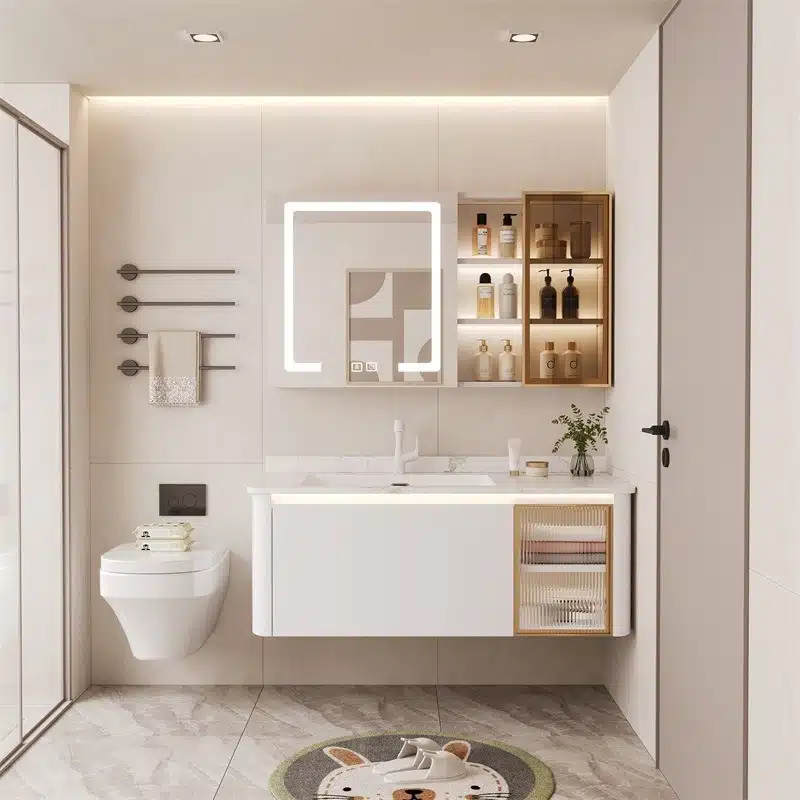
Specifying the correct hotel led mirror color temp is often the difference between a bathroom that feels like a spa and one that feels like a clinic. MFBATH manufactures smart LED mirrors across a 10,000㎡ facility in Changge, Henan, and the same mistake is seen to repeat in projects worldwide: designers pick a Kelvin rating based on a digital render, only to find the lighting clashes with the wall paint or vanity materials in person. The industry standard for relaxation is 3000K, while 4000K serves functional grooming tasks, but relying on a single fixed temperature forces a compromise that guests will notice.
The real issue isn’t just the color temperature; it is how that light interacts with the skin and the surrounding materials. Most standard mirrors use low-CRI LEDs that distort skin tones, making guests look tired or washed out. High-end hospitality specs require a CRI of 90 or higher to ensure accurate makeup application and a luxurious perception of the space. We solve this by utilizing automotive-grade LED modules with uniform diffusion, eliminating the visible ‘hot spots’ that plague lower-tier competitors, and offering adjustable CCT units that allow a single SKU to switch between warmth and clarity.
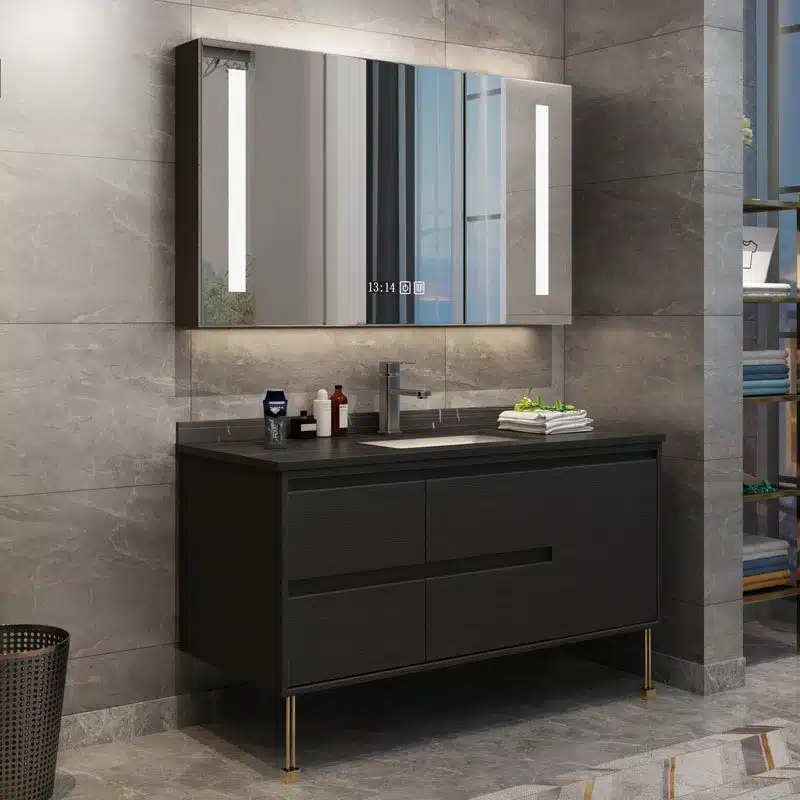
Why Most Hotel LED Mirrors Fail Guests
Standard mirrors fail guests due to low CRI and harsh Kelvin temps; spec high-CRI adjustable units to prevent negative reviews.
Hospitality lighting failures rarely stem from broken hardware; they originate from poor photometric specification. According to the Hilton Global Hospitality Report, approximately 70% of negative hotel reviews cite bathroom lighting quality. This metric directly correlates with how guests perceive their physical appearance during grooming, dictating the perceived luxury of the suite.
The primary culprit is the widespread use of low-CRI (Color Rendering Index) LEDs. Many budget hotel mirrors utilize CRI 80 sources, which strip away the subtle red and green spectrums essential for accurate skin tone rendering. Moving to CRI 90+ reduces perceived color distortion by up to 40%, transforming a sterile vanity into a flattering grooming station.
Kelvin selection dictates the psychological atmosphere of the bathroom. While 3000K (Warm White) is the industry standard for spa-like relaxation, 4000K (Neutral White) remains the necessary threshold for functional tasks like shaving or applying makeup. Specifying a single fixed Kelvin temperature forces a compromise between guest comfort and utility.
-
- CRI 90+ Requirement: Mandatory for luxury hospitality to prevent washed-out skin tones and ensure accurate makeup application.
- Fixed 3000K Limitation: Creates a relaxing environment but fails to provide sufficient clarity for detailed grooming tasks.
- Fixed 4000K Limitation: Provides excellent functional clarity but introduces a clinical, fluorescent stress factor during evening relaxation.
- Visible LED Dotting: Low-tier manufacturing leaves individual LED beads visible through the glass, creating harsh ‘hot spots’ that ruin aesthetic cohesion.
The engineering solution to these optical failures lies in Correlated Color Temperature (CCT) adjustment and uniform diffusion. By integrating adjustable CCT modules, a single mirror SKU can transition from 3000K to 4000K, allowing the same fixture to serve both relaxation and grooming functions without replacing inventory.
Uniformity is equally critical. High-end hospitality requires automotive-grade LED modules paired with specialized frosted glass and lens technology. This setup eliminates the ‘dotting’ effect, creating a seamless, continuous light field that wraps around the face evenly, preventing the shadows and glare that trigger guest complaints.
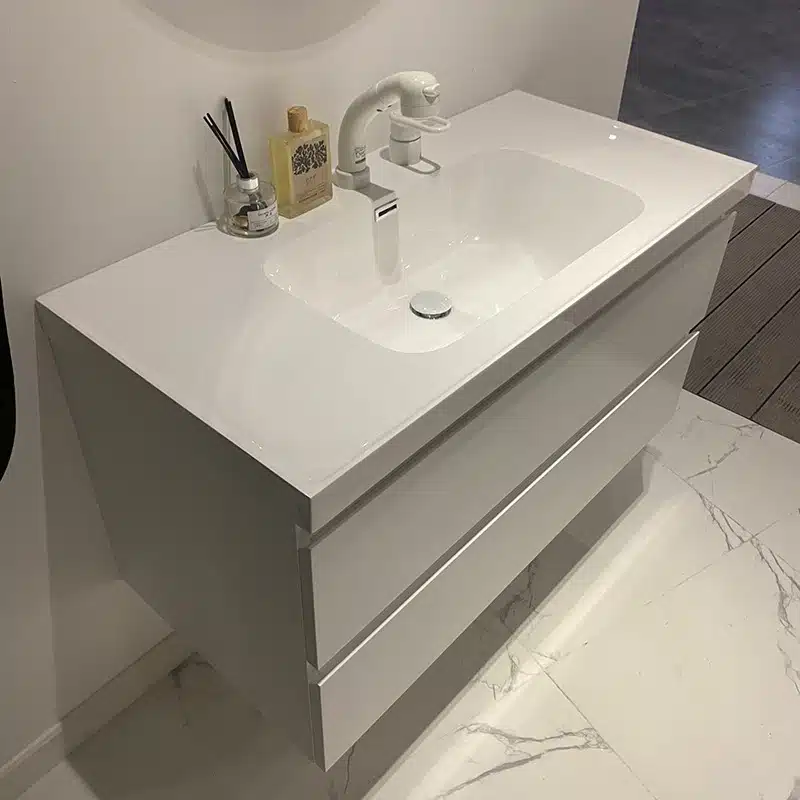
Real Cost Breakdown of CCT vs Fixed LED Mirrors
Adjustable CCT mirrors cost 5-8% more but eliminate the need to stock separate 3000K and 4000K units.
The financial decision between fixed Kelvin and Adjustable CCT (Correlated Color Temperature) mirrors is rarely about the upfront unit price; it is about operational flexibility and inventory risk. While fixed 3000K or 4000K units are cheaper per piece, they force hoteliers to choose a single lighting profile for every room. If a guest prefers a warm spa-like atmosphere but needs to apply makeup, a fixed mirror fails them. Adjustable CCT mirrors solve this by allowing a switch between 3000K and 4000K in a single SKU, effectively doubling the utility of the fixture without doubling the inventory complexity.
From a Bill of Materials (BOM) perspective, the premium for high-performance lighting is non-negotiable for luxury hospitality. Moving from a standard CRI 80 LED to a CRI 90+ LED module increases the lighting BOM by approximately 10%. This 10% cost increase is critical because CRI 80 distorts skin tones, making guests look washed out or tired—a primary driver of negative bathroom reviews. According to the Hilton Global Hospitality Report, 70% of negative hotel reviews mention bathroom lighting quality. Investing in CRI 90+ reduces perceived color distortion by up to 40% compared to lower-tier sources, directly protecting the property’s reputation and guest satisfaction scores.
A hidden financial drain in LED mirror procurement is the cost of rework due to optical defects. Lower-tier manufacturers often use poor diffusion layers, resulting in visible ‘hot spots’ or individual LED dots. This ‘dotting’ effect is unacceptable in high-end hotel design and requires expensive on-site replacement or total unit rejection. MFBATH utilizes automotive-grade LED modules with specialized frosted glass and lens technology to create a seamless, uniform light field. This eliminates visible hot spots, ensuring that the aesthetic cohesion required by architects is maintained across the entire batch, preventing costly logistical delays and project overruns.
-
- Unit Cost: Fixed Kelvin units are cheaper upfront, but Adjustable CCT commands a 5-10% premium that is offset by reduced inventory management costs.
- BOM Impact: Upgrading to CRI 90+ adds ~10% to the LED module cost but is essential for accurate skin tone representation in luxury reviews.
- Rework Risk: Visible ‘hot spots’ from low-quality diffusion require expensive replacements; uniform diffusion is a non-negotiable spec for high-end finishes.
| Feature | Specification | Advantage |
|---|---|---|
| Unit Cost Premium | Fixed 3000K/4000K: Base Price | Adjustable CCT: +5-8% Premium | CCT eliminates need for separate SKUs for relaxation vs. grooming rooms, reducing inventory complexity. |
| Color Rendering Index (CRI) | Standard: CRI <80 | MFBATH Spec: CRI 90+ | Reduces perceived color distortion by 40%, ensuring accurate skin tones for luxury guest experiences. |
| Light Diffusion Technology | Generic: Visible LED ‘Dotting’ | MFBATH: Automotive-Grade Uniform Diffusion | Eliminates eye-straining hot spots, preventing costly rework and maintaining high-end aesthetic cohesion. |
| Operational Flexibility | Fixed Temp: Single Use Case | Adjustable CCT: Dual Mode (3000K/4000K) | Allows re-specification for different room types (e.g., Suites vs. Standard) without replacing hardware. |
| Compliance & Safety | IP44+ Rating Required for Wet Zones | Ensures safety against moisture and meets strict hospitality codes, avoiding liability and guest complaints. |
Hotel LED Mirror Specs: Kelvin, CRI, and Dimming
Fix 3000K for spa vibes, 4000K for grooming, or spec adjustable CCT to unify inventory across room types.
Hotel bathroom lighting fails most often because specifiers prioritize aesthetics over functional photometry. A mirror that looks balanced in a digital render frequently washes out skin tones or casts shadows during actual use. According to the Hilton Global Hospitality Report, 70% of negative hotel reviews explicitly mention bathroom lighting quality. This metric is not subjective; it is dictated by Correlated Color Temperature (CCT) and Color Rendering Index (CRI).
Standard LED mirrors often utilize low-cost modules with a CRI below 80. These units distort skin tones, making guests appear fatigued or unhealthy, which directly impacts guest satisfaction scores. High-end hospitality specifications mandate a CRI of 90 or higher. Moving from CRI 80 to CRI 90 reduces perceived color distortion by approximately 40%, ensuring accurate makeup application and a luxurious visual experience.
Many competitors sell ‘warm white’ as a rigid, fixed 3000K. This forces hotel operators to choose between relaxation in standard rooms and functional clarity in suites. MFBATH utilizes automotive-grade LED modules with adjustable CCT capabilities. This allows a single SKU to switch between 3000K for spa-like ambiance and 4000K for functional grooming. This flexibility reduces inventory complexity and eliminates the need for separate SKUs across different room categories.
The physical construction of the light source is equally critical. Lower-tier mirrors suffer from ‘dotting,’ where individual LED beads are visible, creating harsh hot spots that cause eye strain. MFBATH employs specialized frosted glass and lens technology to achieve uniform diffusion. This creates a seamless light field that mimics natural daylight, a requirement for high-end interior finishes.
-
- Color Temperature (CCT): 3000K delivers warm relaxation; 4000K provides neutral clarity for grooming. Adjustable CCT units bridge this gap for versatile hospitality specs.
- Color Rendering Index (CRI): Must be 90+ for luxury hospitality. CRI 80 is substandard and distorts skin tones, negatively affecting guest perception.
- Diffusion Technology: Automotive-grade modules with specialized lenses prevent visible LED ‘dotting’ and hot spots, ensuring uniform light distribution.
- Dimming Curves: Logarithmic dimming is required for smooth intensity adjustment without flickering. Linear dimming often results in uneven brightness drops.
- IP Ratings: Hospitality projects require IP44 or higher for bathroom zones to ensure safety against moisture and condensation.
Adjustable CCT mirrors typically command a 5-10% price premium over fixed Kelvin units. However, this cost is offset by reduced replacement costs and streamlined procurement. Specifiers should verify that sample kits include real LED modules rather than digital renders. Color temperature interacts dynamically with wall paint and vanity materials, and physical samples are the only way to validate the true Kelvin effect on specific surfaces.
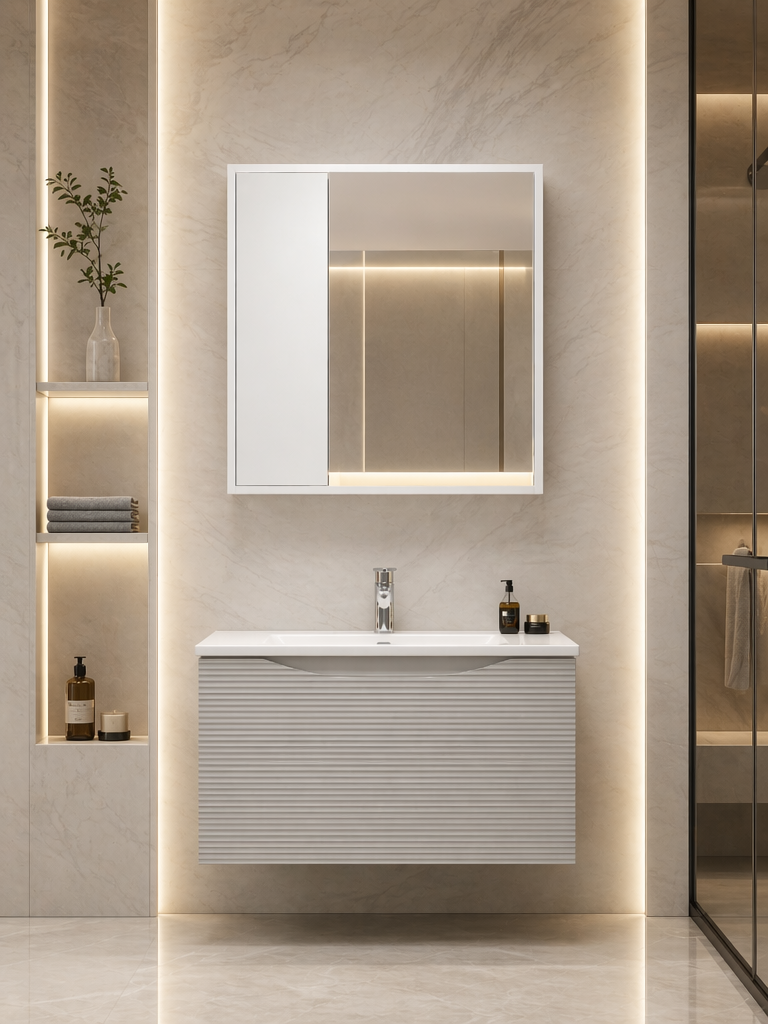
How to Specify Custom LED Mirrors Without Errors
Spec CRI 90+ and uniform diffusion to prevent visible LED dots and skin tone distortion.
Most hotel bathroom failures stem from lighting mismatches rather than structural defects. A standard 3000K mirror creates a spa-like atmosphere but fails at grooming tasks, while 4000K provides clarity but can feel clinically harsh if not balanced correctly. Adjustable CCT (Correlated Color Temperature) mirrors solve this by allowing a switch between 3000K and 4000K in a single SKU, reducing inventory complexity for specifiers managing mixed-use rooms.
Beyond color temperature, the visual quality of the light is dictated by the Color Rendering Index (CRI). Standard mirrors often utilize low-CRI LEDs (<80), which distort skin tones and make guests appear washed out or fatigued. High-end hospitality specs require CRI 90+ to ensure accurate makeup application and luxurious skin perception, reducing perceived color distortion by up to 40% compared to standard sources.
Uniform diffusion is the engineering differentiator between a luxury finish and a cheap fixture. Lower-tier competitors often suffer from “dotting,” where individual LED beads are visible through the glass, creating distracting hot spots. Automotive-grade LED modules paired with specialized frosted glass and lens technology create a seamless, uniform light field that eliminates eye strain and maintains a clean aesthetic.
-
- CRI Threshold: Specify CRI 90+ to guarantee accurate color representation for guest vanity tasks; CRI 80 is substandard for luxury hospitality.
- Diffusion Quality: Require automotive-grade LED modules with frosted glass lenses to eliminate visible LED dots and hot spots.
- IP Ratings: Verify IP44 or higher for bathroom zones to ensure safety against moisture and comply with hospitality building codes.
- Sample Validation: Approve physical samples under actual on-site lighting conditions to verify the true Kelvin effect on wall paint and vanity materials.
- Color Matching: Utilize Pantone color matching for hardware and finishes, backed by high-resolution renders for final pre-production approval.
Conclusion
Specifying the correct hotel led mirror color temp requires moving beyond standard 3000K or 4000K choices. Adjustable CCT technology paired with CRI 90+ modules resolves the conflict between relaxation and grooming, preventing the visual fatigue that drives negative guest reviews. This approach eliminates the need for separate SKUs while ensuring accurate skin tone representation in every room type.
Review the full technical specifications and dimming options on the product catalog page to verify uniform diffusion and IP44 compliance for your specific project requirements.
Frequently Asked Questions
Is 3000K or 4000K better for bathrooms?
Choose 3000K for relaxation-focused bathrooms to create a spa-like atmosphere, but select 4000K for functional grooming and makeup application. The optimal choice depends on whether the primary use is unwinding or detailed personal. Match the Kelvin rating to the room’s primary function.
What is the best color temperature for a bathroom vanity light?
A soft white light between 3,000K and 4,000K is generally best for bathroom vanity lighting. This range provides sufficient clarity for tasks while maintaining a comfortable, non-clinical ambiance. Stick to the 3000K-4000K range for balanced utility and comfort.
What is the best color temperature for LED lights?
Use 3000K for warmer, more relaxed spaces and 4000K for areas requiring higher visibility and focus. The best temperature is determined by the specific activity and desired mood of the room. Select 3000K for relaxation and 4000K for task-oriented clarity.
What color LED light is best for a bathroom?
Look for light sources with a color temperature between 2700K and 3000K, which offers a warm-white illumination ideal for most bathrooms. This range minimizes harsh shadows and creates a welcoming environment. Opt for 2700K-3000K for a warm, inviting bathroom atmosphere.
Is 3000K too yellow?
No, 3000K is not overly yellow; it appears crisper and whiter than 2700K while still providing warmth. It offers a balanced neutral-white tone that avoids the clinical feel of higher Kelvin temperatures. 3000K provides a crisp, warm-white balance without excessive yellowing.



0 Comments