

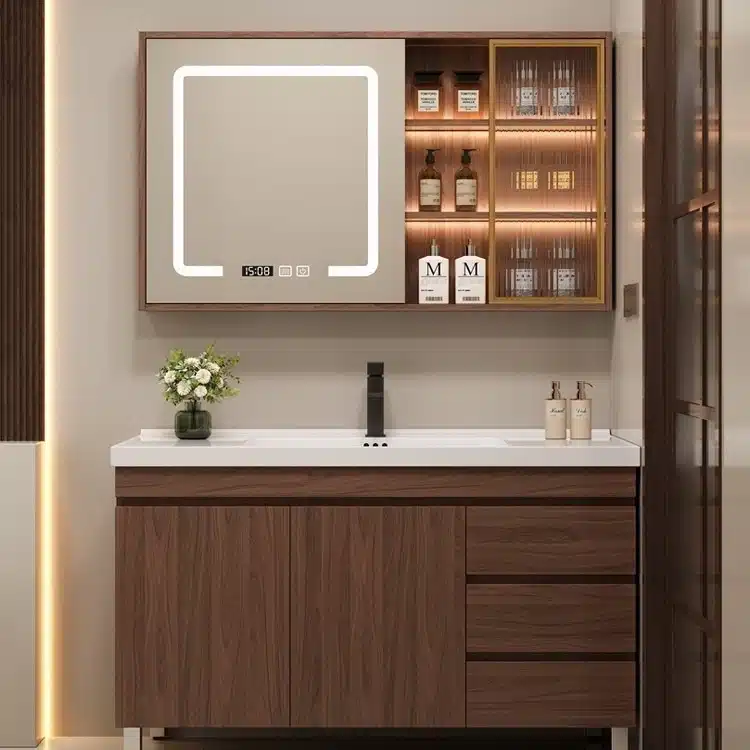
 Choosing the wrong open shelf bathroom vanity can directly impact guest satisfaction scores and inflate long-term maintenance budgets. While the minimalist, deconstructed look is popular in hotel design, its simplicity is deceptive. A poor choice in metal finish can lead to premature corrosion in high-humidity environments, and inadequate storage planning creates clutter that complicates housekeeping and undermines the clean aesthetic. These seemingly small details quickly translate into negative reviews and costly fixture replacements across hundreds of rooms.
This guide serves as a technical specification framework for getting it right. We analyze the practical differences between brass, black, and chrome finishes for commercial use and explain when a decorative p-trap is a functional necessity. We also compare the structural and aesthetic trade-offs of chunky versus slim frames, detail critical wall anchoring procedures for safety compliance, and provide effective storage strategies to maintain the intended minimalist design.
What Is the “Deconstructed” Trend?
The deconstructed trend rejects coordinated bathroom sets, prioritizing raw materials, salvaged fixtures, and exposed structural elements to create a unique, utilitarian space.
Core Principles: Raw and Unfinished Aesthetics
This design philosophy is a direct move away from the polished, mass-produced bathroom suites that dominated the market for decades. It focuses on authenticity and character by celebrating raw, utilitarian materials and revealing a room’s structural components instead of hiding them. The goal is to build a space with genuine architectural integrity, not just follow a coordinated commercial catalog.
- It prioritizes salvaged materials, vintage fixtures, and industrial components.
- The design emphasizes the history and texture of each element.
- This approach creates a personalized space that feels authentic and unique.
Common Elements in Deconstructed Design
The style is defined by a mix of elements that appear stripped-down yet highly intentional. Components are often left in their natural state to showcase their history and texture, creating a look that is both simple and visually complex. The functional becomes the aesthetic focal point.
- Exposed plumbing, like copper or brass pipes, is treated as a key visual feature.
- Reclaimed wood, unfinished concrete, and exposed brick are common for walls and surfaces.
- Fixtures often include antique pieces or industrial items that reinforce the utilitarian feel.
Brass vs. Black vs. Chrome: Which Is Best?
Finish selection is now a strategic choice that balances durability, maintenance, and design impact, moving far beyond simple color preference.
The market has shifted toward mixed-metal design strategies, where designers and project managers combine finishes for a more personalized look. While chrome remains the workhorse for its cost and reliability, brass and black offer distinct aesthetic advantages that cater to specific trends. The choice isn’t about which is definitively “best,” but which is best for a particular project’s goals, budget, and style.
Brass Finishes: Classic Character and Modern Appeal
Brass is seeing a major resurgence because it adds warmth and character. Valued for its natural antimicrobial properties, it often develops a unique patina over time, creating a “living finish” that evolves with the space. This makes it an excellent choice for designs that need to feel both timeless and personal.
- Offers a warm, classic aesthetic suitable for both traditional and contemporary designs.
- Naturally antimicrobial, which helps maintain a cleaner surface.
- Available in various textures, including satin and brushed, to complement mixed-metal design strategies.
| Finish Comparison | Primary Strength | Best Use Case |
|---|---|---|
| Brass (Satin/Brushed) | Warmth & Character | Designs requiring a “living finish” with unique patina development. |
| Black (Matte/Satin) | Bold Visual Contrast | Modern and minimalist spaces that need a strong visual anchor. Hides fingerprints well. |
| Chrome | Durability & Affordability | High-traffic commercial projects or budget-focused installations where reliability is key. |
Black Finishes: Bold Statements and Contemporary Style
Matte and satin black finishes are a dominant trend for 2026, acting as a powerful accent in minimalist and modern bathrooms. They establish a strong visual contrast, especially against lighter tiles or countertops, without the reflective glare of polished finishes. This makes black a sophisticated choice for creating a focal point with hardware and fixtures.
- Creates a striking visual anchor in light-colored or neutral bathrooms.
- Matte textures are excellent at hiding fingerprints and water spots compared to glossy finishes.
- Versatile enough to pair with natural materials like wood and stone for a balanced look.
Chrome Finishes: Timeless Durability and Affordability
Chrome maintains its market leadership for a simple reason: an unbeatable combination of durability, low maintenance, and cost-effectiveness. Its bright, clean appearance is universally compatible with nearly any design scheme, from commercial to residential. Its resistance to corrosion makes it a highly practical and reliable choice for high-moisture bathroom environments.
- The most cost-effective option, widely available from most manufacturers.
- Highly durable and resistant to corrosion, making it a practical choice for high-moisture environments.
- Easy to clean and maintain its shine, providing a consistently polished appearance.
Create Standout Bathroom Cabinets For Your Market

Do You Need Decorative P-Traps?
For open-concept vanities where plumbing is visible, a decorative P-trap is not a luxury—it’s a critical component that transforms a functional necessity into a deliberate design element.
When Exposed Plumbing Is Part of the Design
In bathroom layouts featuring open-shelf, wall-mounted, or console vanities, the plumbing is part of the visual landscape. A standard-issue plastic P-trap immediately undermines the aesthetic, creating a cheap, unfinished look. These designs demand a decorative P-trap to maintain a high-end, intentional appearance that complements the fixtures. It turns the drain plumbing from an eyesore into a coordinated piece of hardware, matching the finish of the faucet, shower controls, and cabinet pulls for a cohesive result.
Aesthetic Coordination vs. Functional Basics
A standard P-trap is entirely sufficient for meeting building codes; its purpose is purely functional. A decorative P-trap performs the exact same function but is manufactured with superior materials and finishes—like chrome, brass, or matte black—to elevate the bathroom’s style. The choice is driven entirely by whether the plumbing will be seen. If the P-trap is concealed within a traditional cabinet vanity, a standard plastic unit is the more practical and cost-effective choice. Investing in a decorative model only yields a return when it’s exposed and contributes directly to the room’s overall design integrity.
How to Store Items?
Effective storage in modern bathrooms is a calculated balance between aesthetic display and practical organization, moving beyond simple concealment to integrate function directly into the design.
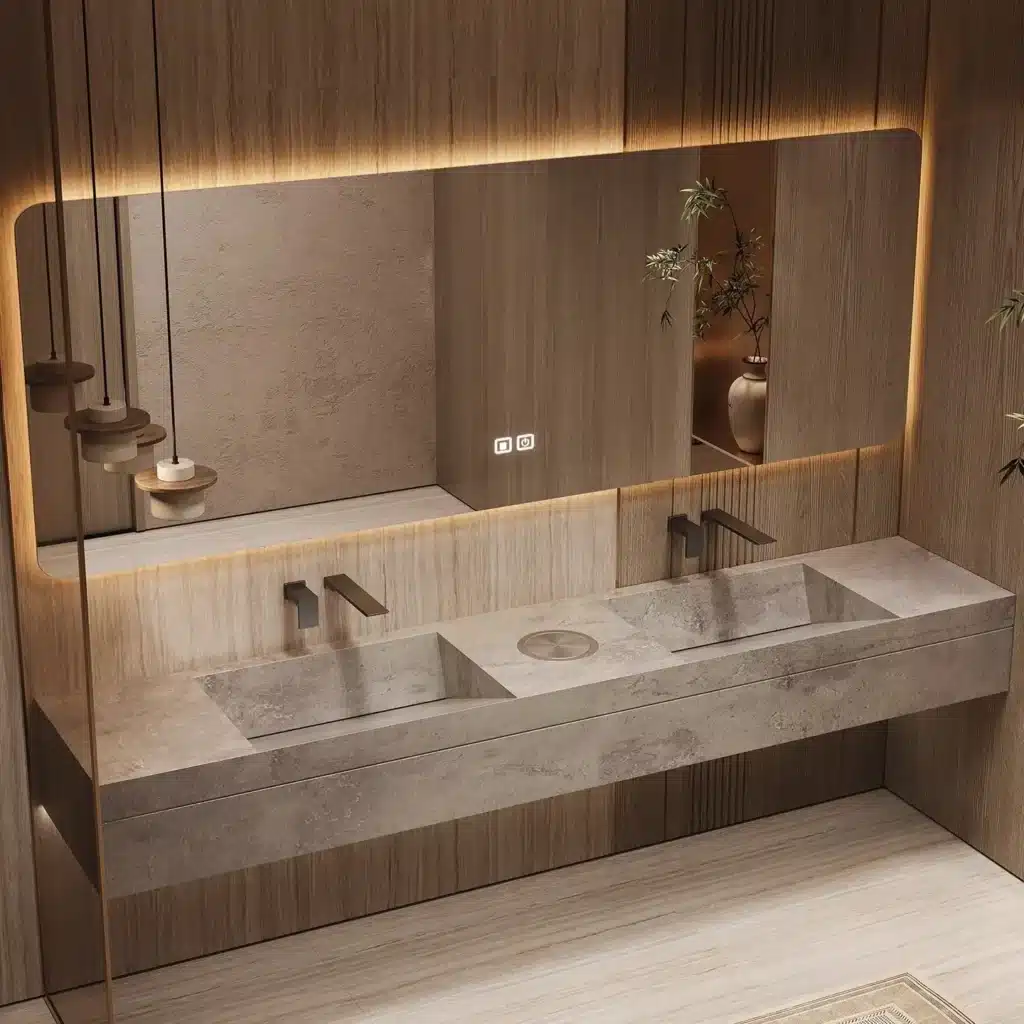
Open Shelving for a Spacious Aesthetic
Open shelf vanities are a direct response to the market’s demand for designs that maximize limited space. By removing the visual bulk of traditional cabinetry, this approach creates a lighter, more open feel. It’s a common strategy in floating vanities and wall-recessed niches, often used to replicate the clean, minimalist appearance of luxury hotel bathrooms.
- Creates a visually larger and less cluttered space.
- Ideal for both small bathrooms and high-end renovations.
- Supports minimalist and contemporary design styles.
| Storage Method | Key Advantage | Ideal Use Case |
|---|---|---|
| Fully Open Shelving | Maximizes visual space and accessibility. | Small bathrooms, guest rooms, and minimalist projects. |
| Hybrid (Open + Closed) | Balances aesthetic display with private storage. | Primary bathrooms requiring both function and style. |
| Fully Closed Cabinet | Offers maximum concealment and organization. | High-clutter environments; storing cleaning supplies. |
Hybrid Designs: Combining Open and Closed Storage
A growing number of vanity designs combine traditional doored cabinets with open shelves. This hybrid model offers a practical compromise, providing dedicated space for decorative items like rolled towels or plants while keeping less appealing items like cleaning supplies or extra toiletries concealed. The result is a functional solution that doesn’t sacrifice aesthetic control.
- Blends aesthetic appeal with functional privacy.
- Allows for flexible organization based on item type.
- Suitable for a wide range of bathroom sizes and layouts.
Organizational Tools for Open Vanities
Maintaining an uncluttered look on open shelves depends entirely on disciplined organization. Using uniform baskets, trays, and containers is essential. These tools categorize items like cosmetics, soaps, and accessories, transforming daily essentials into intentional decorative elements. Materials such as woven water hyacinth or seagrass are popular because they add texture while being durable enough for a bathroom environment.
- Employs basket and container systems for categorized storage.
- Balances functional necessity with decorative styling.
- Prevents a cluttered appearance on exposed surfaces.
Chunky vs. Slim: Which Is Better?
The choice between a chunky or slim vanity profile is a strategic decision based on target market, room scale, and desired aesthetic, not just a matter of taste.
The ‘Chunky’ Look: Durability and Presence
Vanities with thick profiles and substantial countertops create a strong visual anchor in a bathroom. This style conveys a sense of luxury and permanence, making it a reliable choice for high-end residential and hospitality projects where durability is as important as aesthetics. The added mass provides a premium feel that can balance a large, open space.
- Thicker profiles work best with robust materials like solid wood (oak or walnut) and sintered stone, reinforcing their premium positioning.
- The substantial presence is ideal for larger bathrooms, preventing the vanity from looking undersized or out of place.
- We build our luxury lines with this style, where the vanity’s visual weight complements premium fixtures and high-end finishes.
| Attribute | Chunky Profile | Slim Profile |
|---|---|---|
| Target Market | Luxury residential, hospitality, large master bathrooms. | Urban apartments, compact homes, modern commercial spaces. |
| Common Materials | Solid wood, sintered stone, thick quartz countertops. | Moisture-resistant plywood, high-density PVC. |
| Primary Benefit | Creates a strong visual anchor and sense of permanence. | Maximizes the perception of space; feels open and airy. |
The ‘Slim’ Profile: Modern and Space-Saving
Sleek, slim-profile vanities, especially floating models, are engineered to make a bathroom feel more open, airy, and modern. By minimizing visual bulk, they create an illusion of spaciousness. This is a critical requirement in compact urban homes and contemporary designs where every square foot counts.
- Floating or minimalist designs enhance the sense of space, making them a practical solution for smaller bathrooms and powder rooms.
- This aesthetic is central to modern design and is achieved with materials like moisture-resistant plywood or PVC, which can be crafted into clean, sharp lines.
- We specifically engineer slim, floating vanities for markets in Europe and Asia, where compact living spaces drive demand for space-efficient fixtures.
Matching Vanity Style to Market Needs
Distributors must evaluate which profile aligns with their customers’ architectural styles, room sizes, and lifestyles. The choice between chunky and slim is a direct reflection of market demand and functional priorities.
- A chunky style typically offers more counter space and integrated storage options, appealing to families or buyers in the luxury market.
- A slim profile serves a minimalist aesthetic and is often the preferred choice in modern apartments and boutique hotels where style and space are paramount.
- With our OEM/ODM services, you can customize the profile thickness, material, and configuration to meet specific regional trends and functional requirements.
Why Is Wall Anchoring Critical?
Wall anchoring is no longer an optional step; it’s a mandatory protocol for modern installations to support heavier materials and protect plumbing integrity.
Ensuring Structural Stability for Heavy Fixtures
Modern bathroom designs frequently use heavy materials like quartz or sintered stone countertops paired with solid vessel sinks. This combined weight places immense stress on the vanity cabinet. Anchoring the fixture directly to the wall’s structural studs is the only way to prevent it from sagging, shifting, or pulling away from the wall over time. This process correctly distributes the load and maintains the installation’s structural integrity.
- Distributes the weight of the vanity, countertop, and sink across the wall’s framing, reducing stress on the cabinet itself.
- Prevents the formation of gaps between the vanity and the wall, which can lead to moisture intrusion and aesthetic issues.
- It is a non-negotiable step for floating vanities, where the entire load is supported exclusively by wall fasteners.
Protecting Plumbing Connections from Strain
Even subtle movements from an unanchored vanity can exert significant strain on rigid water supply lines and drainpipes. Over time, this constant mechanical stress can compromise seals and joints, leading to leaks, water damage, and expensive repairs. Anchoring locks the cabinet in a fixed position, completely safeguarding these critical connections from any movement or vibration.
- Keeps the cabinet perfectly aligned, ensuring that drainpipes and water lines are not subjected to mechanical stress.
- Protects the seals and joints in the plumbing system, which can fail over time if the vanity is allowed to shift.
- Prevents slow, hidden leaks behind the wall that can result from compromised plumbing connections.
Meeting Professional Safety and Longevity Standards
What was once a recommendation is now a standard industry practice for any professional installation. Wall anchoring is a foundational element that ensures the long-term safety, durability, and code compliance of the entire bathroom setup. Skipping this step is a sign of an amateur job and puts the entire investment at risk.
- Adheres to installation best practices that are often required for warranty validation and code compliance.
- Enhances bathroom safety by eliminating the risk of the vanity tipping, particularly important in households with children.
- Guarantees the installation’s longevity by creating a stable base that protects the investment in the vanity, countertop, and fixtures.
What Are the Pros & Cons?
Open shelf vanities trade concealed storage and low maintenance for superior aesthetics and a feeling of spaciousness, a choice driven entirely by the end-user’s lifestyle and tolerance for upkeep.
The Pros: Aesthetic & Space-Saving Benefits
Open shelf vanities fundamentally alter a bathroom’s perceived size. By removing the visual weight of traditional, bulky cabinetry, they create an airy, spacious environment. This design is particularly effective in small or unconventionally shaped bathrooms where every square inch matters. The open structure also doubles as a display area, allowing for curated styling with towels, plants, or decorative objects that can be easily updated to refresh the room’s look.
- Generates an illusion of space, making it a strategic choice for compact bathrooms.
- Enables direct aesthetic control through styled, visible storage.
- Provides immediate access to frequently used items without opening doors or drawers.
- Often proves more budget-friendly and simpler to install than fully enclosed vanities.
The Cons: Maintenance & Storage Limitations
The primary drawbacks are practical. Exposed shelves are magnets for dust and are susceptible to water splashes, demanding a disciplined and frequent cleaning routine. Since there is no concealed storage, any clutter is immediately visible, which can undermine a clean, minimalist aesthetic. This design is not suitable for storing personal items, medications, or cleaning supplies that require privacy or need to be kept out of sight.
- Requires consistent cleaning to manage dust accumulation and water marks on open surfaces.
- Offers no hidden storage, making it difficult to conceal personal toiletries or cleaning products.
- Exposes all plumbing and any organizational imperfections, detracting from a tidy look.
- Leaves stored items vulnerable to damage from the bathroom’s high humidity and temperature changes over time.
Conclusion
The open console vanity succeeds when its minimalist aesthetic is balanced with practical function. Choosing the right hardware finish, frame thickness, and storage solutions transforms it from a simple sink stand into a deliberate design statement. These details ensure the final look is cohesive and meets the needs of either a guest powder room or a well-organized master bath.
If you’re looking to add this modern, hotel-inspired style to your product line, our team can help you customize a design that fits your market’s needs and price point. Contact us to discuss material options or to request a sample and see our manufacturing quality up close.
Frequently Asked Questions
How to hide plumbing open vanity?
While the deconstructed trend often embraces exposed pipes, you can conceal them effectively with several methods. A fabric skirt attached with hook-and-loop fasteners offers a classic, removable solution. For a more structured approach, place large, decorative baskets or a custom-built, three-sided wood box painted to match the walls in front of the pipes. Strategically positioning a tall, leafy plant can also provide stylish and natural-looking coverage.
Storage ideas for console vanity?
Maximize storage for a console vanity by using a combination of open and concealed solutions. Place large woven baskets or solid-sided bins on the bottom shelf to hide toiletries and cleaning supplies. Use decorative trays or tiered stands on the countertop for daily-use items like soaps and lotions. For additional space, consider adding a narrow rolling cart that can be tucked underneath or installing floating shelves or a slim, wall-mounted cabinet above the vanity to utilize vertical space effectively.
Is open shelf vanity practical?
Yes, an open-shelf vanity is practical for users who prioritize an airy aesthetic and are committed to organization. Its main advantages are making small bathrooms feel larger and providing immediate access to items like towels and daily essentials. However, its practicality depends on your lifestyle. It requires consistent tidiness to avoid a cluttered look and exposes items to dust more readily than a closed cabinet. For those who can maintain organization, it’s a highly functional and stylish choice.
Best baskets for bathroom vanity?
The best baskets depend on function and style. For storing towels and adding texture, choose natural fiber baskets like water hyacinth or seagrass due to their breathability. For an industrial or modern farmhouse look, use metal wire baskets, but ensure they are powder-coated or stainless steel to prevent rust. For concealing small, miscellaneous items, fabric-lined or solid canvas bins are ideal. In areas prone to moisture, durable and easy-to-clean plastic or resin baskets are the most practical choice.
Metal frame vanity diy?
A DIY metal frame vanity is an achievable project that aligns with industrial aesthetics. The process involves designing the frame, cutting square steel tubing to size, and joining the pieces. For a professional finish, welding is the standard method, followed by grinding the welds smooth. Alternatively, for a no-weld approach, use structural pipe fittings and connectors. The crucial final step is surface preparation: clean the metal with a degreaser, apply a self-etching primer, and finish with multiple coats of rust-resistant paint before installing your chosen countertop and sink.
Decorative p-trap for console sink?
A decorative p-trap is an essential finishing component for any console sink or open-shelf vanity where plumbing is visible. Unlike standard white PVC traps, these are manufactured from high-quality metals like solid brass and are available in finishes—such as matte black, brushed gold, or polished chrome—designed to match your faucet. Common styles include the traditional J-bend or the sleeker, more contemporary bottle trap. Choosing a decorative p-trap elevates the exposed plumbing from a utility item to a deliberate design feature.





0 Comments