
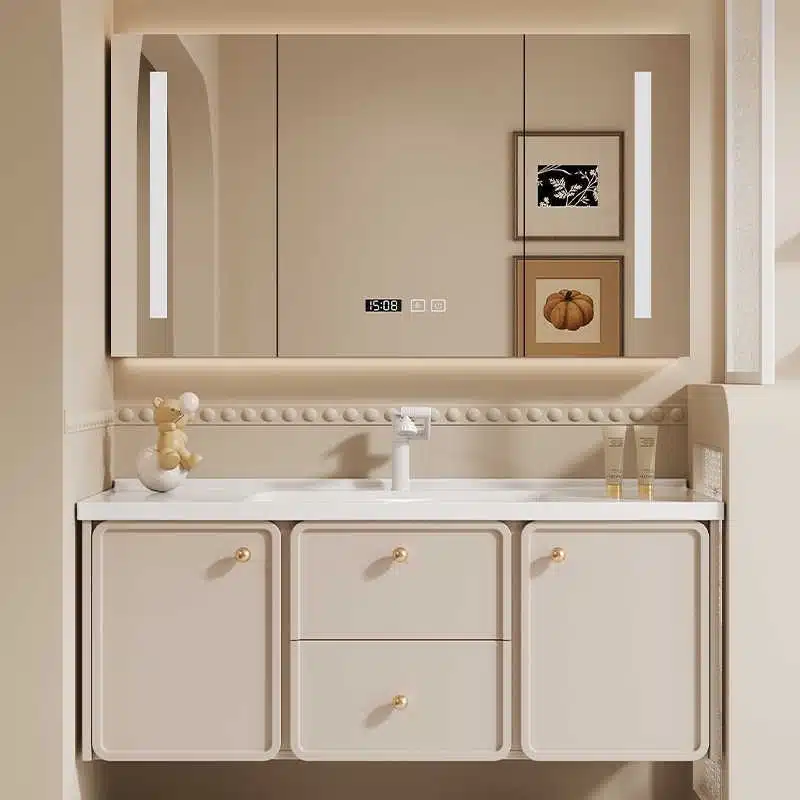
 Specifying vessel sink vanities without precise measurements is a direct path to costly project rework and potential ADA compliance violations. While these fixtures offer a modern, spa-like aesthetic sought after in hospitality and multi-family projects, a single miscalculation in cabinet height or faucet placement can derail an entire bathroom installation. This isn’t just a design choice; it’s an operational risk that can lead to expensive plumbing change orders, budget overruns, and failed inspections.
This guide serves as a technical standard operating procedure, moving beyond style inspiration to focus on the critical specifications for a successful installation. We cover the core calculations for cabinet height to achieve a compliant and ergonomic rim height, the compatibility rules for tall versus wall-mount faucets, and the precise drilling requirements for the central drain. Use these specs to eliminate guesswork, prevent common installation errors, and ensure every project meets both design intent and functional requirements.
The Vessel Sink Aesthetic (Zen/Spa)?
Vessel sinks designed for the Zen/Spa aesthetic function as sculptural centerpieces, using natural stone and artisanal craftsmanship to transform a functional bathroom into a tranquil, high-end retreat.
Defining the Zen and Spa Style
The Zen and Spa aesthetic transforms a standard bathroom into a private, tranquil space by focusing on minimalist design and natural elements. This approach positions the vessel sink as a sculptural focal point, emphasizing balance and serenity over simple utility. It’s a design language that speaks directly to the luxury and contemporary market segments looking for a unique, high-end experience.
- Designs feature soft contours and free-flowing lines inspired by natural forms like water-worn stones.
- Finishes often contrast polished interiors with raw, textured exteriors to create visual depth and a tactile feel.
- The ultimate goal is to build a serene, spa-like sanctuary within the home, making the bathroom a destination for relaxation.
Material Focus: Natural and Engineered Stone
The choice of material is fundamental to the vessel sink’s market appeal. Basins are frequently carved from single, solid blocks of natural stone, which makes each sink a one-of-a-kind piece with unique veining and character. For projects requiring greater consistency or targeting different price points, modern engineered stone alternatives provide a reliable aesthetic without sacrificing durability.
- Key natural materials include marble, river stone, volcanic rock, and onyx.
- Artisanal craftsmanship is a defining feature, with many sinks being hand-carved and hand-finished.
- Engineered stone alternatives offer marble-like patterns and consistent durability for broader project application.
Global Sourcing and Artisanal Production
The manufacturing of these specialized sinks is concentrated in global hubs known for exceptional stone craftsmanship. Skilled artisans, particularly in regions like Indonesia, transform raw blocks of stone into functional art. This production model reinforces the sink’s premium market position and separates it from mass-produced ceramic fixtures.
- Specialized factories and artisans focus exclusively on creating these high-impact statement pieces.
- The process emphasizes handcrafted quality, blending traditional techniques with modern design standards.
- This sourcing strategy ensures each basin has an authentic, artistic quality that appeals to discerning clients.
The “Height Problem”: Lowering the Cabinet (30″ vs 36″)?
Choosing a vanity height for a vessel sink is a critical ergonomic calculation; a standard 36-inch ‘comfort height’ cabinet often results in an uncomfortably tall sink, making a lower 30-inch cabinet the practical default for most installations to achieve a final rim height of 34-36 inches.

The Case for 30-Inch Standard Height
The traditional 30-inch vanity height remains a highly practical solution when planning a vessel sink installation. Because a vessel sink adds 4 to 6 inches of height on top of the counter, starting with a lower cabinet is essential for maintaining an ergonomic final rim height. This lower profile is particularly functional in family bathrooms where accessibility for children is a factor.
- Provides superior accessibility for children and users of shorter stature.
- Functions as a direct replacement standard in older homes, simplifying retrofit projects.
- Fits well within limited vertical spaces, like powder rooms or bathrooms with low-set windows.
The Rise of 36-Inch Comfort Height
While the 36-inch “comfort height” is the modern standard for conventional undermount sinks, it presents a significant challenge for vessel sinks. This height, which aligns with kitchen counters, provides excellent ergonomics for average-to-taller adults by minimizing bending. However, pairing it with a typical 5-inch vessel sink pushes the final rim height to over 40 inches, which is impractical for daily use. A 36-inch vanity is only viable with very shallow, semi-recessed vessels.
| Specification | 30-Inch Vanity Base | 36-Inch Vanity Base |
|---|---|---|
| Typical Final Rim Height (with Vessel) | 34″ – 36″ (Ergonomically Correct) | 40″ – 42″ (Too High for Most Users) |
| Primary Use Case for Vessel Sinks | Standard for most vessel sink projects, retrofits, and family bathrooms. | Only suitable for very shallow vessel sinks or custom installations for tall users. |
| User Ergonomics | Accommodates a wide range of users, including children. | Uncomfortable for average adults and inaccessible for children. |
| Storage Volume | Standard internal storage. | Offers more internal storage volume. |
Regional Adoption and Design Considerations
Market adoption for specific vanity heights reflects both target use and regional trends. In 2026, new mid-to-upper-market construction almost exclusively specifies 36-inch comfort height vanities for standard undermount sinks. When vessel sinks enter the design, the cabinet height is adjusted downward accordingly. The 30-inch vanity remains a fixture in multi-family housing, budget-focused developments, and compact bathroom renovations where space and user accessibility are primary concerns.
- New luxury constructions feature 36-inch vanities as the default, but switch to lower cabinets for vessel sink layouts.
- 30-inch vanities are still prevalent in multi-family units and value-engineered projects.
- The vanity choice directly impacts the final aesthetic; a tall vessel sink almost always demands a 30-inch base to avoid looking disproportionate.
Boost Sales with Durable, Customizable Vanities

Faucet Compatibility: Tall vs. Wall-Mount?
Faucet selection for vessel sinks is a trade-off between the straightforward installation of tall deck-mounted models and the complex, in-wall plumbing required for wall-mounted fixtures.
Choosing the right faucet is not just an aesthetic decision; it’s a functional one that directly impacts user experience and installation complexity. The sink’s shape and depth are the primary factors that determine whether a tall, deck-mounted faucet or a wall-mounted fixture is the correct choice. While both can work, one is often a much better fit for a specific basin design.

MF PVC Bathroom Vanity
Sink Type and Configuration
The sink’s design dictates the faucet pairing. Deep vessel basins benefit from tall, high-arc faucets (typically over 12 inches) that provide ample clearance for hand washing. This setup is the most common and flexible. Wall-mount faucets offer a clean, minimalist look but are not universally compatible; they require specific sink shapes and precise placement to function correctly. Pairing a very tall faucet with a shallow basin is a common mistake that increases water splashing onto the countertop.
| Faucet Type | Installation Profile | Key Specification |
|---|---|---|
| Tall (Deck-Mount) | Lower complexity. Mounts directly to the countertop through a single drilled hole. Uses standard under-cabinet plumbing. | Ideal spout height >12 inches. Must provide 1-2 inches of clearance above the sink rim to prevent splash. |
| Wall-Mount | Higher complexity. Requires plumbing rough-in inside the wall before finishing. Best for new builds or major renovations. | Optimal spout height is 6-8 inches above the countertop. Requires precise alignment with the sink’s drain. |
Installation Height and Clearance
Correct faucet placement is critical for function. For a wall-mount faucet, the spout should sit 6 to 8 inches above the countertop surface to be comfortable for a typical vessel sink. For any faucet type, a minimum clearance of 1 to 2 inches between the bottom of the faucet spout and the top rim of the sink bowl is non-negotiable. This space is essential to prevent water from hitting the sink edge and splashing out. The risk is highest with rounded vessel sinks, where water hitting the basin’s steep curve generates the most splashback.
Installation Requirements and Complexity
From a project management standpoint, the two faucet types are worlds apart. Tall, deck-mounted faucets are far simpler to install, requiring only a single hole in the countertop and standard plumbing connections inside the cabinet. Wall-mount faucets demand significant upfront planning. The plumbing supply lines and valve must be installed within the wall structure before any tile or drywall is finished. This complexity often necessitates a professional plumber and makes it a less viable option for simple retrofits.
Drawer Configuration: No False Top Drawer Needed
Vessel sink vanities are engineered around the central drain plumbing, a design choice that eliminates the useless false top drawer and creates more functional, accessible storage.

Plumbing-First Cabinet Design
The internal structure of a vessel sink vanity is fundamentally different from a standard cabinet. Because the sink sits on the countertop, the drain pipe runs directly through the center of the cabinet’s upper section. This requires a cabinet design where the plumbing layout is the primary consideration, forcing an intelligent approach to drawer construction.
- Drawers are often split into two sections or feature a U-shaped cutout to wrap neatly around the central plumbing.
- This method completely avoids any conflict between storage space and the sink’s drain hardware, a common issue in retrofitted vanities.
Eliminating the False Top Drawer
A significant advantage of this plumbing-centric design is the complete removal of the false top drawer. Traditional vanities use this non-functional panel to hide the bulky underside of an integrated or undermount sink basin. With a vessel sink, that basin is on full display, making the false front obsolete and inefficient.
- The absence of a false front results in a cleaner, more streamlined and honest cabinet facade.
- It also allows the first fully functional drawer to be placed higher up in the cabinet, making it easier to access everyday items.
Maximizing Functional Storage
Modern vessel sink vanities deliver purposeful storage instead of simply maximizing drawer count. The goal is to make every cubic inch of space around the plumbing accessible and organized. By working with the plumbing instead of against it, the cabinet’s storage capacity becomes far more practical.
- The design prioritizes deep, unobstructed drawers directly below the sink’s plumbing line.
- This makes the vanity demonstrably more space-efficient than conventional models that sacrifice the top drawer’s functionality.
Drilling Standards: Center Drain Hole Size?
Standardizing the vessel sink drain hole to 1.75 inches and the countertop opening to 1.5–2 inches ensures broad compatibility with common drain assemblies and prevents installation errors.

Standard Diameter for Sink Drain Holes
The accepted industry standard for a vessel sink’s central drain hole is 1.75 inches (44.5 mm) in diameter. This precise measurement is used across both designer and mid-range vanities to guarantee compatibility with the vast majority of modern drain assemblies. This specification allows standard drain pipes to fit securely while maintaining the structural integrity of the sink base.
Countertop Drilling Requirements
For the installation to work, the hole drilled into the countertop must be sized correctly, typically falling between 1.5 and 2 inches. This range provides the necessary clearance for the drain pipe and its mounting hardware to pass through the countertop material without issue. Precise centering is critical for proper alignment with both the sink above and the plumbing below.
| Component | Standard Diameter | Purpose |
|---|---|---|
| Vessel Sink Drain Hole | 1.75 inches (44.5 mm) | Matches standard drain assemblies for a secure, universal fit. |
| Countertop Opening | 1.5–2.0 inches (38–51 mm) | Provides clearance for drain hardware and allows for minor adjustments. |
Installation and Sealing Practices
A successful installation depends on using the correct tools and sealing methods. Fabricators use hole saws specifically designed for the countertop material—whether wood, quartz, or natural stone—to achieve a clean, precise cut. To create a durable, waterproof seal, installers apply a bead of high-quality silicone or plumber’s putty around the drain assembly before tightening it, preventing leaks for the life of the vanity.
Material Focus: Stone vs. Glass Sinks
Both stone and glass vessel sinks cater to niche, design-driven markets, prioritizing aesthetic impact over the durability and low maintenance of traditional ceramic.
Stone Sinks: The Artisanal, High-End Choice
Stone sinks are a leading option for luxury homes and boutique hospitality projects where a unique, natural centerpiece is required. Handcrafted from materials like marble, river stone, or onyx, they provide a sense of exclusivity that mass-produced fixtures cannot match. This artisanal appeal makes them a significant investment, not just in initial cost but in the consistent upkeep needed to protect the porous material and maintain its appearance. These are not high-traffic fixtures; they are functional sculptures for specific, controlled environments.
Glass Sinks: Modern Aesthetics and Visual Impact
Glass sinks capture the market for modern commercial interiors and contemporary residences. Their minimalist aesthetic creates a strong visual focal point, making a space feel larger and more open. The primary trade-off is maintenance. The transparency and clean lines that define their appeal also mean that water spots, soap scum, and fingerprints are highly visible. This demands a rigorous and frequent cleaning schedule to preserve clarity, making them best suited for spaces where pristine presentation is prioritized over practicality.
Market Positioning and Ideal Use Cases
The rise of stone and glass sinks signals a clear market shift toward treating bathroom fixtures as statement pieces. Their function is primarily to define a room’s style rather than to serve purely utilitarian needs. Neither material competes with ceramic in settings that demand high durability and minimal upkeep, such as public restrooms, family bathrooms, or rental properties. Ceramic remains the practical standard for high-traffic environments, while stone and glass serve the premium, personalized, and experiential design segments.
Cleaning & Maintenance Realities
Effective vessel sink maintenance isn’t about harsh chemicals; it’s about material-specific daily habits and avoiding abrasive tools that cause permanent damage.
Daily Care vs. Deep Cleaning Protocols
Maintaining a vessel sink depends on consistent daily habits. The primary goal is to prevent mineral deposits and water spots from forming in the first place. For daily care, simply rinse and wipe the sink dry with a soft cloth after each use. Deeper cleaning, performed weekly, addresses any buildup using solutions appropriate for the sink’s specific material.
- Immediately drying the basin and exterior prevents the formation of hard water spots.
- Use mild, non-abrasive cleaners and soft sponges to avoid scratching the finish.
- A baking soda paste can be used for tough stains on many materials without causing damage.
Material-Specific Needs: Stone, Glass, and Steel
The sink’s material dictates the best cleaning approach. Porous stone is sensitive to acidic or harsh chemicals, while glass is prone to spotting if not dried properly. Each material has unique properties that require a specific maintenance routine to preserve its look and integrity.
- Stone Sinks: Require pH-neutral cleaners because the porous material can absorb detergents and stain easily.
- Glass Sinks: Clean with a simple soap and water or a diluted vinegar solution, then dry thoroughly to maintain clarity.
- Stainless Steel Sinks: Benefit from commercial polishes or vinegar solutions applied in the direction of the grain.
Common Mistakes to Avoid
Improper cleaning techniques can cause permanent damage to a vessel sink. The most common errors include using abrasive tools or harsh chemicals that can strip finishes, create scratches, or cause discoloration. Understanding what not to do is as important as knowing the correct methods.
- Never use steel wool, scouring pads, or rough sponges, as they will scratch most surfaces.
- Avoid letting cleaners or chemicals sit in the sink for extended periods.
- Check that cleaning solutions are safe for your specific sink material before application.
Conclusion
Specifying a vanity for a vessel sink goes beyond style, requiring careful attention to technical details. Correctly adjusting cabinet height, faucet compatibility, and drain placement ensures the final installation is comfortable and functions without issue. These considerations directly impact user satisfaction and prevent common post-installation problems like splashing or awkward access.
Our team can help you engineer the ideal vessel sink vanity configurations for your market, with material flexibility to meet your target price. Contact us to discuss your project needs or to order a refundable sample and verify our manufacturing quality.
Frequently Asked Questions
How tall should a vanity be for a vessel sink?
The ideal vanity height is determined by subtracting the vessel sink’s height from your desired final counter-rim height, which is typically 34 to 36 inches. For example, if your vessel sink is 6 inches tall, you should choose a vanity that is 28 to 30 inches high. This ensures the top of the sink is at a comfortable, ergonomic level for use.
Do vessel sinks splash more?
Vessel sinks do not inherently splash more than undermount sinks; splashing is usually caused by an improper pairing of the faucet and sink. Key factors to prevent splashing include choosing a sink with sufficient depth, a faucet with an aerator, and ensuring the water stream is directed towards the drain, not the basin’s flat bottom or curved walls. Proper installation and water pressure adjustment are crucial.
What kind of faucet do I need for a vessel sink?
You need a faucet specifically designed for the height of a vessel sink. The two primary options are a tall, single-hole, deck-mounted faucet (often called a vessel filler) or a wall-mounted faucet. The spout must be high enough to comfortably clear the sink’s rim and long enough to direct water into the center of the basin to minimize splashing.
Are vessel sinks ADA compliant?
Vessel sinks are typically not ADA compliant for public or commercial use. ADA guidelines require a maximum counter height of 34 inches and 27 inches of knee clearance underneath. A vessel sink placed on a 34-inch vanity makes the sink rim too high. Lowering the vanity to accommodate the sink often obstructs the required knee and toe clearance, failing to meet accessibility standards.
How to cut a hole for a vessel sink drain?
To cut a drain hole, first, position the sink and mark the drain’s center on the countertop. Use a hole saw bit that is slightly larger than the drain assembly diameter (a 1.75-inch bit is common for standard 1.5-inch drains). For wood or laminate, a standard hole saw is sufficient. For stone or quartz countertops, a diamond-grit hole saw is required, used with water to cool the bit and prevent dust. Always drill a pilot hole first for accuracy.
Do vessel sinks add resale value?
Yes, high-quality vessel sinks can add resale value, particularly in luxury and contemporary homes. Artisanal basins made from natural stone or unique materials act as a “statement piece,” elevating the bathroom’s aesthetic to a spa-like retreat. This unique feature can be a strong selling point for buyers seeking differentiated, high-end design, contributing positively to the home’s overall perceived value.




0 Comments