
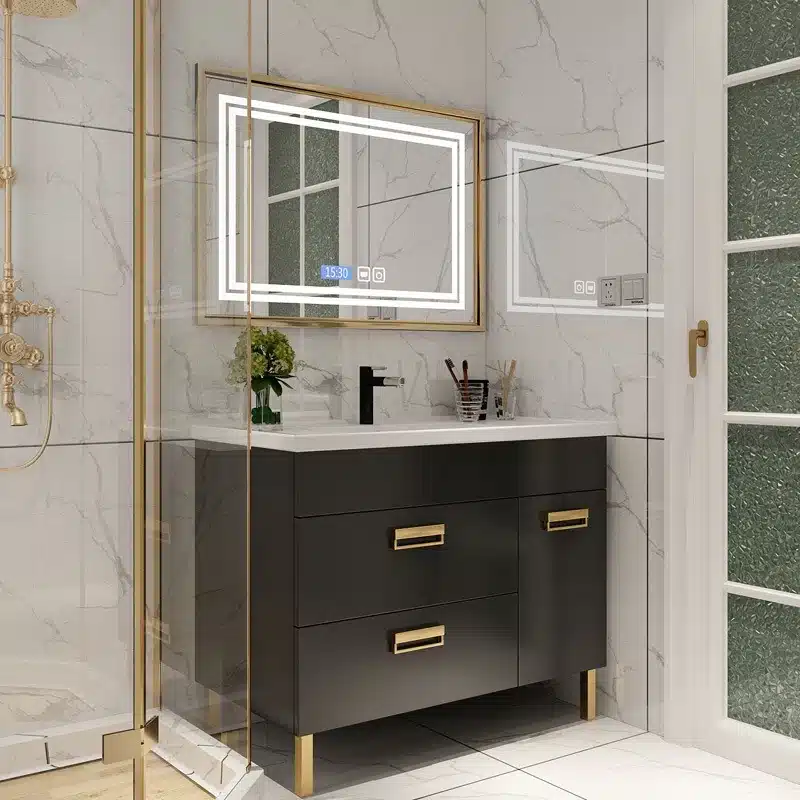
 Specifying the right mid century modern vanity is often the deciding factor between a timeless project and a costly client callback over a design that misses the mark. The clean lines and organic materials of MCM design leave no room for error; a poorly chosen wood grain, mismatched hardware, or incorrect proportions can instantly undermine the bathroom’s entire aesthetic. For designers and builders, this risk of misinterpretation means a finished project that feels dated on arrival, damaging professional credibility.
This guide serves as a technical breakdown for executing the MCM look correctly. We focus on the key material and construction decisions you’ll need to make, starting with why American Black Walnut is the superior wood choice. We’ll compare the functional and visual impact of finger pulls versus traditional knobs, analyze the trade-offs between undermount and vessel sinks, and detail the techniques required to achieve the signature MCM floating furniture look.
Why MCM is the “Forever Trend”
Mid-century modern endures because its core principles of functional, human-centered design and clean aesthetics allow it to adapt rather than become obsolete.
Functional, Human-Centered Design
Mid-century modern’s longevity comes from its focus on functional versatility. The style avoids passing trends because its core philosophy is to support a lifestyle rather than dominate a room. This human-centered approach results in practical, livable spaces that remain relevant for decades.
- Designs are built around human use, creating comfortable and intuitive environments.
- The emphasis on functionality over excessive ornamentation prevents it from becoming dated.
Timeless Aesthetics
The style is defined by elements that don’t go out of fashion. Its use of balanced proportions, clean lines, and honest materials creates a look that stays appealing across different design eras. This visual simplicity allows individual pieces to stand on their own merit without relying on temporary trends.
- Clean, simple lines give pieces a classic look that integrates easily into various interiors.
- A focus on natural materials and quality craftsmanship provides an authentic, high-value feel.
Modern Adaptability
MCM is not a rigid, historical style; it easily mixes with other design movements. Its ability to blend with contemporary pieces, bold colors, and vintage items ensures it stays fresh and relevant. This flexibility allows designers and homeowners to reinterpret the style for modern living without losing its core identity.
- The style works well alongside other designs, from minimalist to eclectic, without clashing.
- In 2026, the trend is moving toward more unique and personal vintage pieces over common replicas, showing its capacity for evolution.
What Defines MCM Design?
Mid-Century Modern design is defined by a strict adherence to functionalism, where clean lines, organic forms, and honest materials replace purely decorative elements.
Core Design Principles
Mid-Century Modern (MCM) design is built on clean lines, functional forms, and minimal ornamentation. The style favors low, horizontal silhouettes and simple geometric shapes that reject fussy details. This approach creates a strong visual connection between indoor and outdoor spaces, often amplified by open floor plans and large windows.
- Form Follows Function: The aesthetic is guided by practicality. Signature elements like tapered legs and subtle organic curves serve a structural purpose while creating visual lightness.
- Material Honesty: MCM celebrates both natural woods like walnut and teak and industrial materials like glass, steel, and plastic. Finishes are typically light, allowing the natural grain and texture of the material to show through.
- Distinct Color Palette: The look pairs warm, earthy wood tones with a specific set of bold accent colors. Mustard yellow, olive green, burnt orange, and teal are commonly used to add character without overwhelming the clean forms.
Design Heritage
The MCM movement grew out of earlier European styles like Bauhaus and the International Style, inheriting a deep respect for quality craftsmanship. This is why many original pieces from the era remain fully functional and highly valued today. The design philosophy was less about trends and more about creating durable, useful objects that would last for generations.
- Architectural Roots: Influential architects such as Walter Gropius and Richard Neutra were instrumental in shaping the movement’s principles of spatial efficiency and material integrity.
- Built to Last: The focus on well-made, durable items means authentic vintage furniture often requires little to no restoration to remain in use.
- Authentic Materials: The style emphasizes showing a material’s true nature. Wood grain is a design element, not something to be hidden under heavy paint or ornate finishes.
Custom Bathroom Vanities That Dominate Your Market

Why Use American Black Walnut?
American Black Walnut is the definitive material for high-end mid-century modern vanities, prized for its deep chocolate tones, structural stability, and inherent moisture resistance.
Distinctive Visual Appeal
American Black Walnut is defined by its deep, chocolate-brown color and fine, uniform grain patterns. This combination creates a sophisticated and elegant appearance that aligns perfectly with luxury mid-century aesthetics. Because each slab of wood has unique grain variations, every vanity becomes a one-of-a-kind furniture piece, adding an exclusive character to the bathroom.
Durability and Stability
With a Janka hardness rating of 1,010, black walnut provides excellent resistance to the scratches, dents, and daily wear common in a bathroom environment. More importantly, it exhibits outstanding dimensional stability. This means it resists warping, shrinking, or expanding when exposed to the fluctuating humidity and temperature levels found in bathrooms, ensuring the vanity maintains its structural integrity for years.
| Feature | American Black Walnut | Teak (Common Alternative) |
|---|---|---|
| Visual Character | Deep chocolate-brown with varied, flowing grain. | Golden-brown with straight, consistent grain. |
| Hardness & Wear | Janka Score: 1,010. Excellent scratch and dent resistance. | Highly durable due to dense structure and natural oils. |
| Moisture Resistance | Naturally resistant to rot and decay. | Superior water resistance due to high natural oil content. |
Natural Resistance to Moisture and Rot
The wood itself is inherently resistant to decay, water damage, mold, and even insect infestation. This natural defense mechanism makes it a prime material for bathroom furniture, where moisture is a constant challenge. Choosing walnut reduces concerns about long-term damage from humidity, ensuring the vanity remains a lasting investment.
Finger Pulls vs. Knobs: Which Is Better?
The debate between finger pulls and knobs has shifted from a purely aesthetic choice to one driven by functionality, with pulls dominating contemporary layouts and hybrid approaches becoming the new standard for usability.
Choosing hardware is a critical decision that balances visual style with daily interaction. The market has moved beyond a simple one-size-fits-all approach, now favoring hardware selected for its specific application within the bathroom.
Comparing Functionality and Aesthetics
The right hardware depends entirely on the design and the user. Finger pulls provide a larger surface area, making them easier to grip and better suited for the heavy, wide drawers common in contemporary vanities. Their linear form complements a minimalist aesthetic. Knobs, on the other hand, offer a classic, subtle touch that works well on smaller cabinet doors found in traditional or farmhouse designs. They act as a focal point without overwhelming the cabinetry.
| Feature | Finger Pulls | Knobs |
|---|---|---|
| Primary Use Case | Wide, heavy drawers in modern and transitional designs. | Smaller cabinet doors in traditional and farmhouse styles. |
| Ergonomics | Easy to grip with the whole hand; superior leverage. | Requires a precise pinch grip; less effective on heavy loads. |
| Visual Impact | Creates a streamlined, linear look that reinforces horizontal lines. | Acts as a subtle, classic accent point with a minimalist footprint. |
The Hybrid Approach: Mixing Hardware
Modern design no longer requires uniform hardware. A strategic mix of pulls and knobs can create a more functional and visually interesting bathroom. A common and effective strategy is to use finger pulls on all drawers and knobs on all doors. This approach creates a practical visual hierarchy, matching the hardware to the action required to open the cabinet. As a manufacturer, we support this trend by offering hardware sets with consistent finishes, ensuring that a mixed-style approach appears intentional and professionally coordinated, not like an afterthought.
Undermount vs. Vessel: Which Is Better?
The bathroom sink market is split: undermount sinks dominate premium projects due to their resale value and seamless design, while vessel sinks are chosen for aesthetic impact in budget-conscious renovations.
Undermount Sinks for Seamless Integration and Value
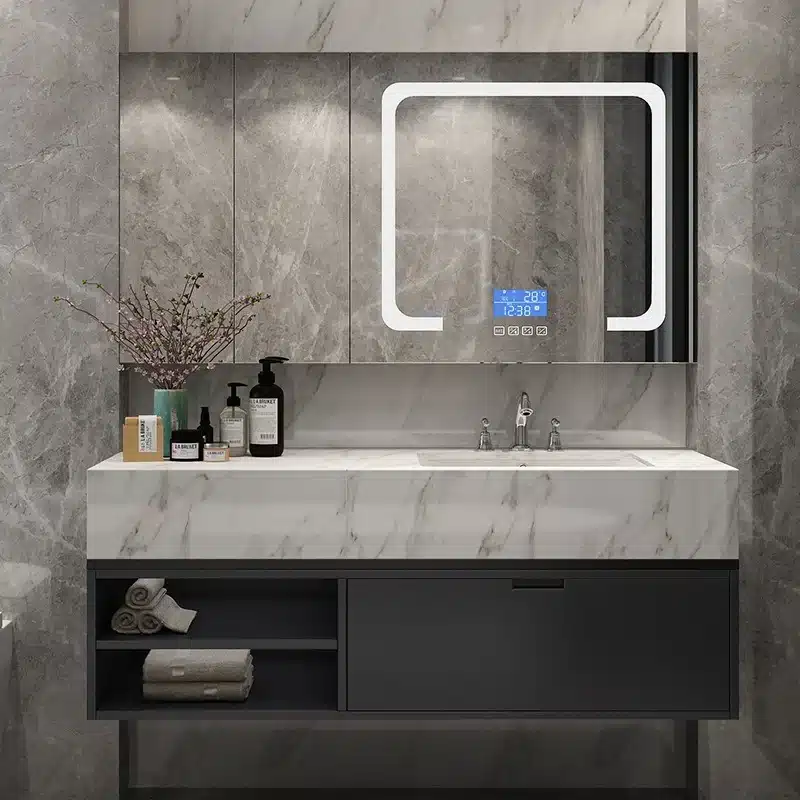
Undermount sinks are the standard for high-value residential and commercial properties. Their popularity is driven by durability and a clean, integrated design that creates an uninterrupted countertop. This seamless surface not only simplifies cleaning by allowing water and debris to be wiped directly into the basin, but it is also perceived as a premium feature that boosts property resale value.
- Offers a sleek, integrated look popular in modern bathroom design.
- Improves property resale value due to its perception as a high-end feature.
- The seamless design prevents debris buildup and makes cleaning countertops easy.
Vessel Sinks for Aesthetic Customization and Impact
Vessel sinks function as a sculptural statement piece, making them a popular choice where visual impact is the primary goal. They offer significant design flexibility, with a wide range of materials, shapes, and colors available. Because they sit on top of the counter, installation can be more straightforward than undermount options, making them a practical choice for renovations focused on aesthetic customization without a complete overhaul.
- Provides a strong aesthetic focal point, available in many materials and shapes.
- Allows for greater creativity and customization in bathroom renovations.
- Installation is often straightforward, making it a good choice for updates.
How to Achieve the “Furniture Look”?
Achieving the “furniture look” requires treating the vanity as a standalone piece of craftsmanship, defined by clean lines, authentic materials, and elevated details that separate it from standard built-in cabinetry.
Prioritize Clean Lines and Natural Materials
The foundation of the “furniture look” is treating the vanity as an intentional, standalone piece rather than a generic built-in utility. This begins with minimalist designs that emphasize clean, geometric lines and a strong focus on natural wood finishes. The objective is to highlight the material’s inherent beauty, like the seamless grain alignment in a walnut slab, to create a sense of timeless craftsmanship that stands on its own.
- Select vanities with simple, uncluttered silhouettes that showcase the wood.
- Focus on authentic wood finishes to bring warmth and an organic feel to the space.
- Ensure design elements like uninterrupted wood patterns flow across doors and drawers.
Incorporate Elevated Design Details
Small details distinguish a generic cabinet from a piece of furniture. A floating vanity, for example, creates a sense of lightness and opens up floor space, making the piece feel less like a permanent fixture. Hardware choices are also critical. Modern metals can add a contemporary edge, but integrated finger pulls or custom cutouts provide the seamless, high-end look most associated with bespoke furniture design.
| Component | Standard Built-In Approach | Furniture-Style Approach |
|---|---|---|
| Design Philosophy | Utilitarian fixture, often floor-standing with a toe-kick to hide the base. | Standalone statement piece, often wall-hung (floating) or on visible legs. |
| Hardware | Basic knobs or pulls, often chrome, and applied uniformly. | Integrated finger pulls, custom cutouts, or premium metals like matte black. |
| Material Focus | Focus on the surface finish (e.g., laminate, basic paint) over the core material. | Emphasis on authentic wood grain (Walnut, Oak) and seamless patterns. |
Balance Form with Functional Surfaces
A furniture-style vanity must still perform in a high-moisture environment. The countertop choice is critical for both durability and aesthetics. Materials like engineered quartz or natural marble provide a resilient, non-porous surface that complements the wood base. This completes the look while ensuring the piece can withstand daily use without compromising its design integrity. Functionality extends to storage, which should be ample enough to keep the surface clear and maintain the clean, uncluttered look.
- Pair the wood base with a durable, high-quality countertop like quartz or marble.
- Ensure the design provides ample storage to maintain a clean, uncluttered look.
- Customize the depth and size to fit the space perfectly, reinforcing its status as a bespoke piece of furniture.
How to Mix Vintage & Modern?
Successfully blending vintage and modern isn’t about forcing two styles together; it’s about leveraging Mid-Century Modern’s inherent design DNA as the natural bridge between eras.
Mid-century modern design already contains the core elements of both vintage warmth and modern minimalism, making it the perfect foundation for a blended aesthetic. The key is to create intentional contrast and balance rather than a random assortment of pieces. By focusing on materials, form, and functional accents, you can build a cohesive look that feels both classic and current.
Pair Warm Woods with Contemporary Hardware
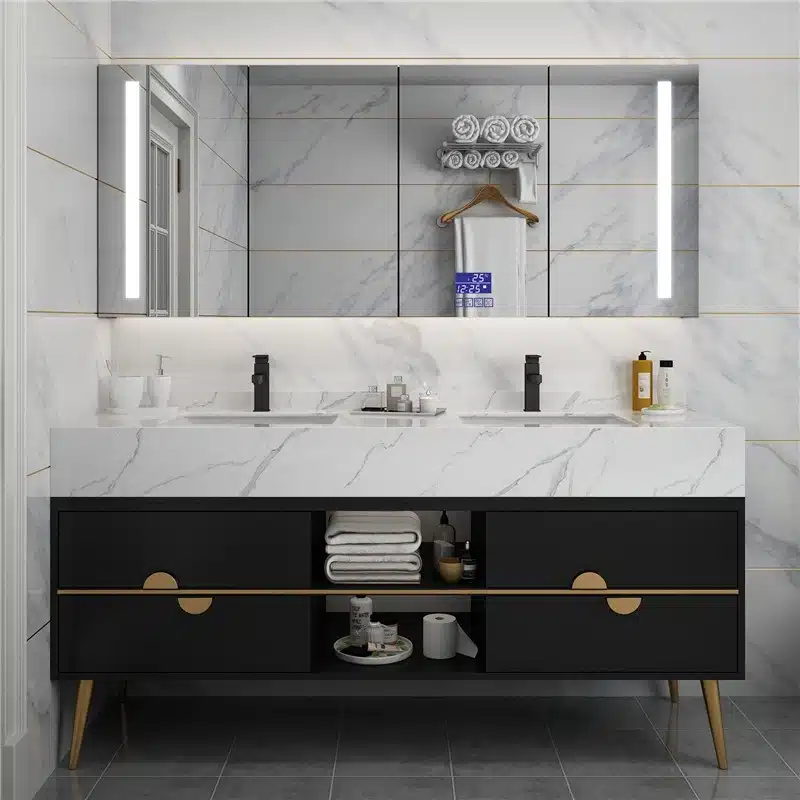
The most effective starting point for mixing styles is at the material level. Mid-century design’s signature warm woods, like walnut and teak, establish a clear vintage foundation. Pairing these organic textures with sleek, modern hardware creates a sharp, deliberate contrast. This simple strategy anchors the piece in its historical context while signaling a contemporary sensibility.
- Use natural wood finishes to establish an authentic, organic feel.
- Select minimalist, geometric hardware in finishes like matte black or brushed nickel to add a clean, modern touch.
- This contrast creates a visual bridge connecting the two eras.
Prioritize Clean Forms Over Ornamentation
A shared appreciation for simplicity defines both vintage mid-century and modern design. Focus on vanities with uncluttered geometric shapes and clean lines. This minimalist approach allows the natural wood grain and the modern hardware to stand out on their own merits without competing with unnecessary decorative elements. The form itself becomes the primary design statement.
- Choose simple rectangular shapes and functional designs.
- Consider a floating vanity to honor mid-century minimalism while providing a modern, space-enhancing look.
- Avoid ornate details to maintain a clean, blended aesthetic.
Integrate Modern Lighting and Fixtures
Lighting and plumbing fixtures offer a practical way to fuse different time periods. You can frame a classic, simple mirror with distinctly modern sconces or a contemporary pendant light. This move enhances the room’s functionality with better lighting technology and solidifies the mixed-era design language. The same principle applies to faucets and shower fixtures, where modern finishes can complement the vintage-inspired cabinetry.
- Place modern sconces on either side of a traditional vanity mirror.
- Choose faucets and other fixtures with a contemporary finish to match the cabinet hardware.
- This ensures the space benefits from modern technology and lighting quality.
Conclusion
The lasting appeal of Mid-Century Modern design is built on specific, authentic details. Key elements like American Black Walnut, clean hardware choices, and the signature “furniture look” create a product that connects with a wide audience. Mastering these features ensures your vanity collection remains relevant and desirable.
We provide the material flexibility to produce your ideal MCM vanity, from premium solid wood to cost-effective laminates. Contact our team to discuss your project specifications or request a refundable sample to experience our manufacturing quality.
Frequently Asked Questions
What defines mid century modern vanity?
A mid-century modern (MCM) vanity is defined by its functional simplicity, clean lines, and use of honest materials. Key features include a floating appearance or iconic tapered, splayed legs that create a sense of lightness. They are typically crafted from warm woods like walnut or teak, featuring flat-panel doors and drawers with minimal, integrated, or simple brass hardware. The design prioritizes balanced proportions and organic shapes, creating a timeless piece that is both functional and sculptural.
Best tile for mid century bathroom?
The best tile for a mid-century bathroom emphasizes geometric patterns and clean aesthetics. Classic choices include small hexagonal or penny round mosaic tiles for floors, which add texture and period-correct detail. For walls, 4×4 inch square tiles in a simple stacked (grid) pattern are ideal, avoiding the more contemporary offset or brick layout. Color palettes often feature soft pastels like mint green or pink, earthy tones, or a bold, high-contrast black and white combination.
Walnut vs teak for mcm vanity?
Choosing between walnut and teak depends on prioritizing authentic aesthetics versus maximum durability. Walnut is the quintessential MCM wood, prized for its rich, dark grain that delivers a classic, high-end look. However, it requires a high-quality marine-grade finish to protect it from moisture. Teak is naturally rich in oils, making it exceptionally water-resistant and a superior choice for humid bathroom environments. Its color is a warmer, golden-honey tone. While teak offers better performance, walnut provides the most iconic MCM appearance.
Where to buy mid century vanity?
You can find mid-century modern vanities from several sources. For new, MCM-inspired pieces, retailers like Room & Board, Rejuvenation, and West Elm are excellent options. For authentic vintage vanities, browse online marketplaces such as 1stDibs and Chairish, or local antique stores. For unique, handcrafted pieces that align with the current trend toward authenticity, explore artisan platforms like Etsy or commission a custom piece from a local cabinet maker.
DIY mid century vanity?
Yes, a DIY mid-century vanity is a popular and achievable project. The most common method is to acquire a vintage MCM dresser or credenza and convert it. This process involves reinforcing the top surface to support a sink, precisely cutting holes for the faucet and drain plumbing, and sealing the entire piece with multiple coats of a durable, waterproof finish like a marine-grade varnish to protect the wood from moisture damage. Building from scratch is also an option for those with advanced woodworking skills.
Is mcm style out of date?
No, mid-century modern style is not out of date; it is an enduring design trend valued for its timeless appeal. Its longevity comes from a human-centered design philosophy that emphasizes functional versatility, balanced proportions, and clean lines. The style’s honest use of materials and adaptable aesthetic allows it to integrate seamlessly with contemporary decor. In 2026, the trend continues to evolve, with a focus on sourcing unique, authentic vintage pieces rather than mass-produced replicas, ensuring its continued relevance.




0 Comments