
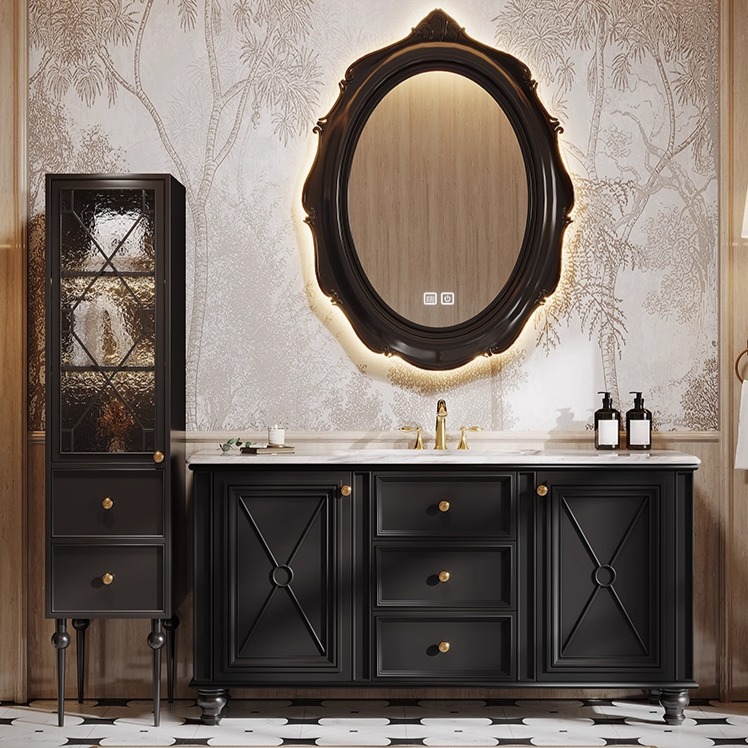
The HDF vs MDF decision for painted vanities is what separates a premium, lasting finish from a costly remake due to swelling or fuzzy, chipped edges. Specifying standard MDF for doors that require precise routing often leads to poor paint adhesion and surface imperfections that result in customer complaints and warranty claims. This material choice directly impacts your factory’s reputation and profitability.
This guide provides the technical data you need to specify the correct material. We will compare the core density differences between HDF and MDF, explaining how a higher density (900kg/m³) improves machinability and moisture resistance. Use this as a practical standard operating procedure for deciding when the cost premium for High Density Fiberboard is a necessary investment for your cabinet projects.
What Are the Density Differences Between MDF (700kg/m³) and HDF (900kg/m³)?
The fundamental difference isn’t just a number—it’s a manufacturing process where greater pressure and resin content create a denser board, leading to entirely different performance classes and applications.
Standard Density Ranges and Classification
The primary distinction between Medium-Density Fiberboard (MDF) and High-Density Fiberboard (HDF) is their specified density range, which directly classifies their end-use. This isn’t an arbitrary label; it reflects the manufacturing inputs. HDF is engineered for higher density by applying greater pressure and using more resin during production, creating a more compressed and robust panel. This process establishes the performance gap between the two materials from the start.
| Specification | Standard MDF | High-Density Fiberboard (HDF) |
|---|---|---|
| Typical Density Range | 680–730 kg/m³ | 800–1000+ kg/m³ |
| Internal Bond Strength | ~0.60 N/mm² | ~1.80 N/mm² (Approx. 3x stronger) |
| Resin Content | ~10-15% | Up to 20% |
How Density Dictates Material Application
This density gap directly influences physical performance and separates the materials into different market segments. HDF’s tightly compressed fibers create a hard, durable panel with superior impact resistance and screw-holding power. This makes it the preferred material for high-stress applications like premium laminate flooring substrates, structural components, and high-quality cabinet doors that need to withstand daily use. MDF, with its lower density, offers a practical balance of workability and cost. It is the go-to material for general-purpose use cases like decorative furniture, standard cabinetry carcasses, and interior molding, where intricate shaping and cost-efficiency are more critical than extreme resilience.
Why Is HDF Better for Machinability and Routing Crisp Edges?
HDF’s highly compressed fiber structure allows routing tools to shear cleanly through the material, producing crisp edges that resist the fuzziness and chipping common in lower-density boards.
The primary reason HDF excels in machining applications comes down to its internal structure. At densities of 800 kg/m³ and higher, the wood fibers are so tightly compacted with resin that they form a solid, homogenous core. When a CNC router or shaper cuts into the panel, the tool can create a sharp, clean line because the material doesn’t have the voids or looser fibers that cause tear-out in standard MDF. This results in a smooth finish directly off the machine, significantly reducing the need for subsequent sanding and edge filling.
Dense Fiber Structure Prevents Fuzziness and Chipping
HDF’s dense and compact internal structure allows cutting tools to create sharp, defined edges. Its tightly packed fibers resist fraying or chipping during routing, a common issue with standard MDF. This produces a smooth finish that needs less manual prep work before painting or laminating.
- The condensed fiber composition produces minimal fuzziness during cutting.
- This structure provides a clean edge that contrasts with the chipping and fraying common in lower-density materials.
- The dense fibers compress uniformly under the cutting tool rather than splintering apart.
| Machining Characteristic | Standard MDF (600-800 kg/m³) | High-Density Fiberboard (HDF) (800-1040 kg/m³) |
|---|---|---|
| Edge Quality | Prone to “fuzzy edges” and chipping; requires more sanding and sealing. | Produces crisp, clean edges with minimal fuzz, ready for finishing. |
| Fiber Response to Cutting | Fibers tend to fray or splinter under tool pressure, causing rough surfaces. | Fibers compress uniformly and shear cleanly, allowing for precise cuts. |
| Suitability for Detail | Less suitable for intricate profiles as fine details can easily chip away. | Ideal for complex shapes, shaker-style doors, and tight-tolerance joinery. |
Uniform Composition Allows for Precise Shaping
The consistent and uniform makeup of HDF ensures it can be cut, drilled, and shaped with high precision. There are no knots, grain patterns, or internal voids to deflect the cutting tool. This reliability makes it the superior choice for creating intricate designs, such as shaker-style doors or interlocking tongue-and-groove profiles, without worrying about material defects compromising the final product.
- HDF can be machined into complex profiles and irregular edges with superior modeling effects.
- Its composition supports the tight tolerances required for high-quality cabinetry and decorative panels.
- Despite its hardness, the material allows for precise drilling and shaping without compromising structural integrity.
Smooth Surface Creates a Superior Base for Finishes
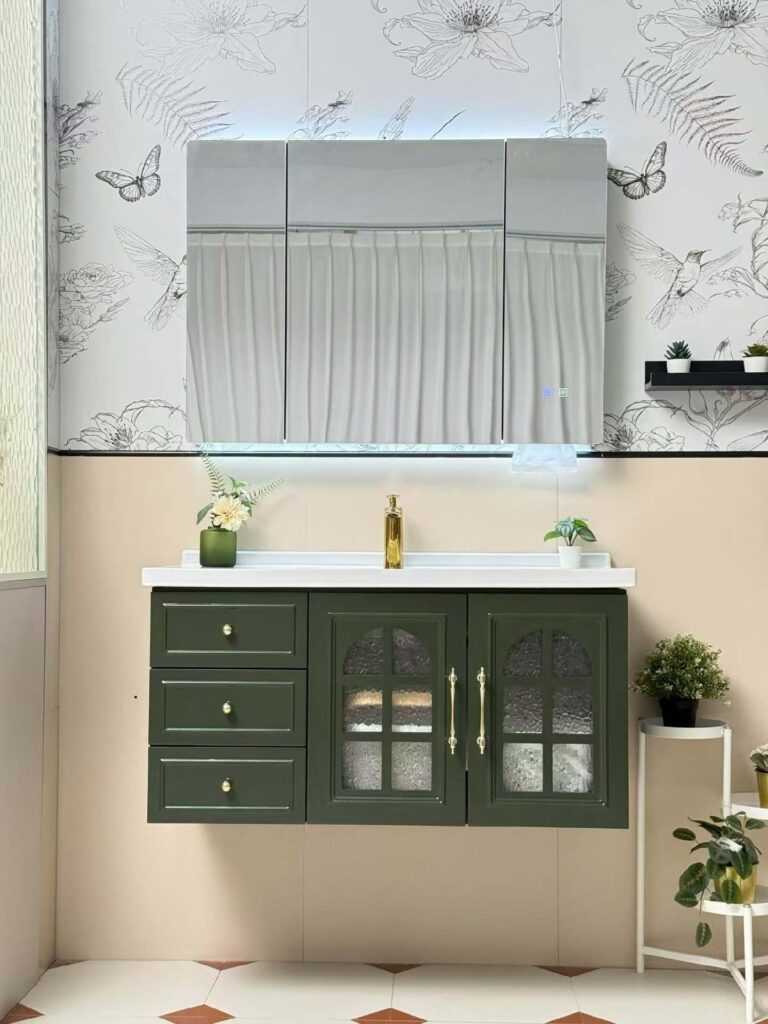
Because HDF machines so cleanly, it leaves behind a very smooth, non-porous surface that is ready for finishing. This dense surface accepts paints, laminates, and veneers evenly with minimal preparation. You avoid the extra labor costs associated with priming, sanding, and sealing the porous, fuzzy edges common to standard MDF. For a high-gloss lacquer finish, HDF provides an almost perfectly flat and stable substrate.
- The fine grain structure provides an ideal substrate for paints and laminates.
- Its dimensional stability is well-suited for processes involving heat and pressure, like applying veneers.
- The need for post-processing work like sanding and priming is significantly reduced.
Unlock Your Market with Custom Vanities

Why Does HDF Swell Less and Offer Better Water Resistance?
HDF’s superior water resistance isn’t from a single feature but a combination of its highly compressed core, which physically blocks moisture, and specialized water-repellent resins added during production.
The difference in moisture performance between HDF and standard MDF comes down to two engineering factors: physical structure and chemical treatment. HDF is fundamentally designed to resist moisture ingress, making it a more stable substrate in environments with fluctuating humidity, like bathrooms and kitchens.
Higher Density Creates a Tighter Core
HDF’s primary defense against water is its sheer density. The manufacturing process uses extreme pressure to compress wood fibers into a solid, less porous panel. This compact structure physically minimizes the internal voids and pathways available for water absorption. By reducing the space between fibers, it effectively limits capillary action, the natural process where moisture wicks into the material. Standard MDF has a more open structure, giving humidity and direct moisture an easier path to penetrate the core.
Specialized Resins and Water-Repellent Additives
Beyond its physical density, HDF is engineered with chemical barriers. During production, manufacturers mix specialized resins and water-repellent additives like paraffin wax directly with the wood fibers. This creates an internal, distributed resistance to moisture throughout the panel, not just on the surface. These treatments actively repel water and are crucial for preventing edge swelling when the material is exposed to humidity or incidental spills, protecting the integrity of the board from the inside out.
Lower Thickness Swelling Under Exposure
The most practical measure of water resistance in wood panels is thickness swelling. When subjected to 24-hour water immersion tests, HDF consistently outperforms MDF. Its combination of high density and chemical additives ensures minimal dimensional change. Remember, neither HDF nor MDF is truly waterproof; both require proper sealing with paint or laminate for long-term protection. HDF simply offers a much more resilient core substrate that provides a larger margin of safety against moisture damage.
- Standard MDF: Can exhibit thickness swelling of 10-15% in immersion tests.
- Moisture-Resistant (MR) MDF: Performs better, typically in the 7-12% swelling range.
- HDF: Shows substantially lower swelling, proving its superior stability and resistance to water ingress.
Why Does Standard MDF Suffer from the “Fuzzy Edge” Problem?
Fuzzy edges on standard MDF are a two-stage failure: first, cutting tools tear the loosely-packed wood fibers, and second, moisture from the air or paint causes these damaged fibers to swell and stand up.
Fiber Exposure During Machining
The root cause of fuzzy edges is the physical tearing of wood fibers when the panel is cut or routed. Standard MDF’s lower density means its internal fibers are not as tightly compressed as those in HDF. When a blade passes through this less-compact structure, it tends to lift and pull fibers apart rather than shearing them cleanly. This action creates an immediately rough and uneven surface right off the machine.
- Cutting tools easily tear the less-compacted fibers common in standard-density panels.
- This mechanical damage results in a rough, uneven texture immediately after machining.
- The problem gets worse with dull blades or overly aggressive cutting speeds.
Moisture Infiltration into the Exposed Core
After the initial cut, the porous inner core of the MDF is exposed to the environment. This unsealed core acts like a sponge, readily absorbing ambient humidity, primers, or paints. As the wood fibers soak up this moisture, they swell and stand on end. This transforms the initial mechanical roughness into the distinct “fuzzy” texture that makes achieving a smooth, professional finish so difficult and labor-intensive.
- The machined edge exposes the panel’s most absorbent and least sealed section.
- Moisture absorbed from the air or finishing products causes the individual wood fibers to swell.
- This swelling forces fibers to stand on end, demanding extensive sanding and sealing to get a flat surface.
What Is the Cost Premium of HDF Compared to Standard MDF?
The 15–35% price premium for HDF over standard MDF is a direct result of the manufacturing process needed to achieve its higher density, which provides measurable gains in durability and impact resistance.
Analyzing the Price Difference per Sheet
HDF consistently costs more than standard MDF. Expect to pay a premium of $10 to $20 for each 4×8 foot sheet. This translates to a raw material cost increase between 15% and 35%, a significant variable that must be factored into the budget for any large-scale cabinetry or furniture project.
Justifying the Investment with Performance Benefits
The price difference isn’t arbitrary; it directly funds the manufacturing process required to produce a much denser board. This higher density (often 800 kg/m³ or more) provides tangible improvements in strength, durability, and impact resistance. For applications that see heavy use, like cabinet doors, flooring, or commercial furniture, the extended lifespan and superior wear resistance of HDF make the upfront material expense a practical, long-term investment.
When Should You Ask Your Factory to Use HDF for Cabinet Doors?
Specifying HDF is a strategic manufacturing decision for cabinet doors where a flawless painted finish, superior moisture resistance, and crisp machined details are non-negotiable.
For Painted Doors Requiring a Flawless Finish
If your project involves painted cabinet doors, HDF provides the ideal substrate. Its extremely dense and smooth surface prevents paint from soaking in unevenly. This ensures a uniform, glass-like finish that is free of any wood grain telegraphing through to the surface.
- Eliminates the risk of cracking at joints, a common issue with solid wood or lesser materials as they expand and contract.
- Provides a superior canvas for high-gloss and satin paints, which are unforgiving and highlight any surface imperfections.
- The stability of HDF ensures the finish remains pristine for years, supporting long-term performance warranties.
| Application Scenario | Common Problem with Standard MDF | HDF Advantage |
|---|---|---|
| High-Gloss Painted Doors | Uneven paint absorption, “fuzzy edges,” and potential for joint cracks over time. | Provides a uniform, non-porous surface for a perfectly smooth, glass-like finish. |
| Humid Environments (Bathrooms) | High thickness swelling (up to 15%), leading to warping and compromised paint integrity. | Superior dimensional stability and lower moisture absorption due to its dense core. |
| Intricate CNC Routing (e.g., Shaker) | Chipping and fiber “fuzz” on routed edges, requiring costly additional sanding and sealing. | Holds crisp, clean edges without splintering, perfect for detailed profiles and patterns. |
In Environments with High Humidity and Temperature Swings
For cabinetry installed in bathrooms, coastal regions, or kitchens with significant temperature fluctuations, HDF offers much better dimensional stability. It is engineered to resist swelling, warping, and shrinking more effectively than standard MDF or even some solid woods. This reliability makes it a safer specification for demanding projects.
- Its resistance to moisture absorption protects the integrity of both the door structure and its paint finish.
- Maintains tight tolerances and consistent gaps between doors and frames, even as seasons change.
- This durability is a key selling point for high-end residential and commercial projects where longevity is critical.
When the Design Demands Intricate Routing and Sharp Details
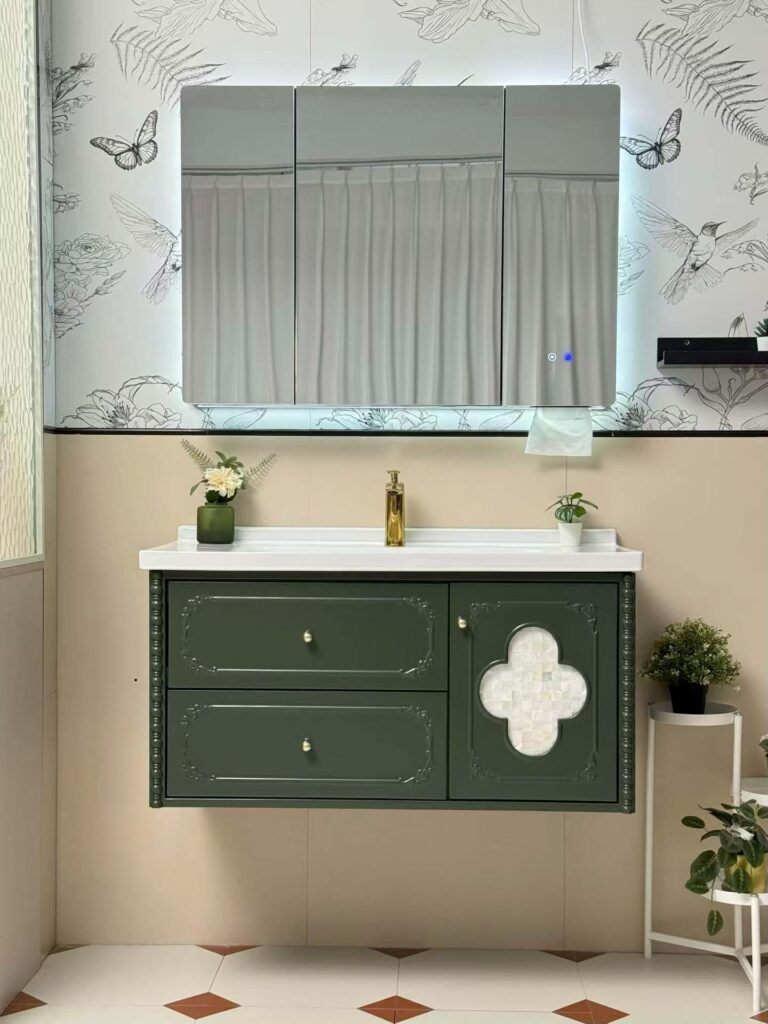
The high density of HDF makes it perfect for doors with detailed profiles, like shaker styles or custom-routed patterns. It allows CNC machines to cut crisp, clean edges without the chipping or fuzziness that often occurs with lower-density materials. The result is a higher-quality product that requires less post-production finishing.
- Enables precise and sharp detailing that enhances the aesthetic quality of the cabinetry.
- The dense composition means the material holds screws and hardware more securely than standard MDF.
- Ideal for modern, minimalist designs that rely on perfect lines and tight joinery for visual impact.
How Can You Market “High Density” Cabinetry to End Customers?
Effective marketing for high-density cabinetry hinges on translating technical superiority—like higher density and moisture resistance—into tangible customer benefits such as long-term durability, a flawless paint finish, and protection against common household damage.
Emphasize Longevity and Scratch Resistance
Position high-density cabinetry as a long-term investment in durability. The marketing focus should be on how the dense core resists the dents, dings, and daily wear common in high-traffic kitchens and bathrooms. This appeals directly to customers who are tired of fragile materials and want a product that maintains its appearance over years of use.
- Use direct messaging like “Built for real life” to connect with families and active households.
- Highlight its ability to withstand impacts from cookware, children’s toys, or cleaning equipment.
- Showcase its superior screw-holding power. This technical benefit translates into a simple promise: hinges and hardware stay tight and secure for years, preventing sagging doors.
Highlight Superior Moisture Resistance
Address the common customer pain point of water damage head-on. Explain that high-density fiberboard swells significantly less than standard materials when exposed to moisture. This makes it an ideal solution for humid environments, preventing the warping and paint bubbling that can ruin cabinets near sinks, dishwashers, and showers. It provides a real buffer against moisture exposure that standard MDF lacks.
- Market it as the superior material for bathrooms and kitchens, where splashes and steam are unavoidable.
- Use simple visuals or short videos showing a water bead sitting on an HDF surface versus soaking into a standard MDF edge.
- Translate this feature into a core financial benefit: protection against costly repairs and replacements caused by water damage.
Showcase the Flawless Finish and Crisp Design
Translate the technical advantage of density into a clear visual one. The ultra-smooth, non-porous surface of HDF allows for a perfect, glass-like paint or lacquer finish without the imperfections or grain telegraphing common with other materials. Its density also enables sharper, more detailed edges and routed designs—a clear indicator of high-end craftsmanship that customers can see and feel.
- Avoid technical jargon like “kg/m³.” Instead, use consumer-friendly terms like “solid-core construction” or “premium smooth surface.”
- Use high-quality photography to showcase intricate door profiles and clean, sharp lines that can only be achieved with a dense substrate like HDF.
- Explain that this perfectly smooth surface is also easier to clean and more hygienic, as it gives grime and bacteria fewer places to settle.
Conclusion
The higher density of HDF gives it a clear advantage for painted vanities. It allows for cleaner machining, crisper edge profiles, and better moisture resistance than standard MDF. Choosing HDF is a key decision for manufacturing durable, high-end cabinetry that avoids common finish defects.
If you’re developing a premium vanity line, specifying HDF for painted doors can elevate your product quality. Talk with our team about your project’s price point and performance goals, and we can provide material samples to help you decide.
Frequently Asked Questions
Difference between HDF and MDF?
The primary difference is density. High-Density Fiberboard (HDF) has a density of 800-1000+ kg/m³, making it stronger, harder, and more durable than Medium-Density Fiberboard (MDF), which has a density of 680-730 kg/m³. This higher density in HDF is achieved through increased pressing pressures and optimized resins during manufacturing, making it ideal for high-impact applications like flooring, while MDF is valued for its workability in furniture and decorative panels.
Is HDF waterproof?
Standard High-Density Fiberboard (HDF) is highly water-resistant due to its dense composition, but it is not inherently waterproof. To achieve waterproof capabilities, HDF must be manufactured with specialized moisture-repellent resins and have its surfaces and edges thoroughly sealed. This treated HDF is often used in moisture-prone areas like bathrooms, kitchens, and marine applications.
HDF vs solid wood for cabinets?
The choice depends on the desired finish. For painted cabinets, HDF is often the superior material as its high density and dimensional stability prevent warping and cracking from temperature and humidity changes. It also provides a perfectly smooth, monolithic surface ideal for flawless paint application. Solid wood is preferred for stained finishes where the natural grain is desired, but it is more susceptible to movement and can be more expensive.
Best material for painted doors?
High-Density Fiberboard (HDF) is widely considered the best material for painted doors, particularly for interior and cabinet applications. Its exceptional density creates a perfectly smooth and stable surface that accepts paint flawlessly, resulting in a uniform, high-quality finish. Unlike solid wood, HDF does not expand or contract, which prevents hairline cracks from appearing in the paint at joints or on panels over time.
High density fiberboard uses?
Due to its exceptional durability and impact resistance, High-Density Fiberboard (HDF) is primarily used in premium applications. Common uses include laminate flooring core, high-end cabinet doors, door skins, furniture back panels, commercial fixtures, and structural components where strength is critical. Its use in marine applications highlights its superior performance in demanding environments.
Density of MDF board?
The typical density of Medium-Density Fiberboard (MDF) ranges from 680 to 730 kilograms per cubic meter (kg/m³). This density specification positions it as a versatile material for furniture, cabinetry, and various decorative applications where workability and a smooth finish are key priorities.




0 Comments