
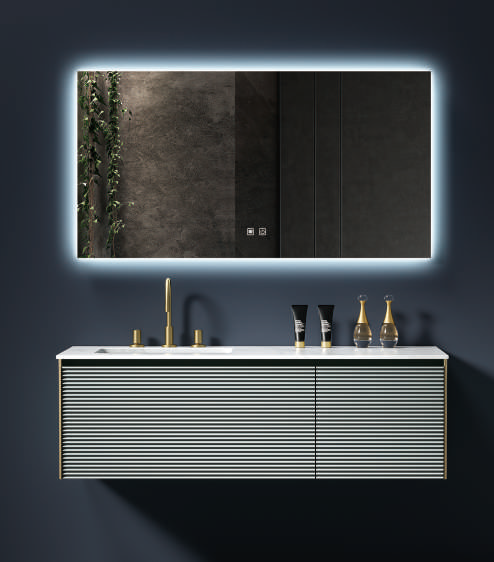
Finding a reliable solid wood vanity supplier china is the only barrier between a successful product line and a flood of costly warranty claims from cracked cabinets. When a vanity built in a humid Chinese factory is installed in a dry American home, mismatched moisture content can lead to warping, splitting, and permanent damage to your brand’s reputation. One bad container of vanities can erase a year’s worth of profit and customer trust.
This guide skips the marketing fluff and focuses on the technical specifications that prevent these failures. We will compare the performance of White Oak and Walnut, explain the kiln-drying process required for export, and detail the differences between long-lasting dovetail joints and standard cabinet assembly. Use this analysis to vet potential suppliers and protect your investment.
Is the Premium Solid Wood Vanity Market Worth the Investment?
The solid wood vanity market is not just a design choice but a financial one, driven by strong consumer demand for durable, natural aesthetics that directly increase home resale values.
Key Market Drivers and Growth Projections for 2026
In 2026, the demand for solid wood vanities is fueled by a strong preference for durability and natural aesthetics. The global market is positioned for significant expansion, with wood becoming the leading material choice among homeowners seeking long-term performance over short-term savings.
- The global bathroom vanities market is projected to grow at a 7.81% CAGR through 2035.
- Wood has become the top material for vanity cabinets, chosen by 26% of homeowners and surpassing traditional white finishes.
- Increased demand is linked to a consumer desire for long-term value, durability, and the natural warmth wood provides in a bathroom environment.
Impact on Home Resale Value
Investing in a premium solid wood vanity directly increases a property’s market value. Designs that emphasize natural wood elements are commanding significant price premiums in the current real estate market, making it a tangible asset upgrade.
- Homes featuring ‘Organic Modern’ designs with a focus on wood can see resale values increase by an average of $12,500.
- The superior longevity and timeless appeal of solid wood justify the initial cost for homeowners focused on quality and long-term financial returns.
Dominant Design Trends and Consumer Preferences
Current trends in the luxury segment are moving toward textured surfaces and sustainable materials. Warm wood stains and eco-friendly sourcing are now key purchasing criteria for discerning buyers who want both high-end aesthetics and environmental responsibility.
- Fluted fronts and warm wood stains are prominent features in high-end bathroom designs, adding visual depth and character.
- There is a growing consumer preference for sustainable options, such as FSC-certified wood, reflecting a broader market interest in environmentally conscious products.
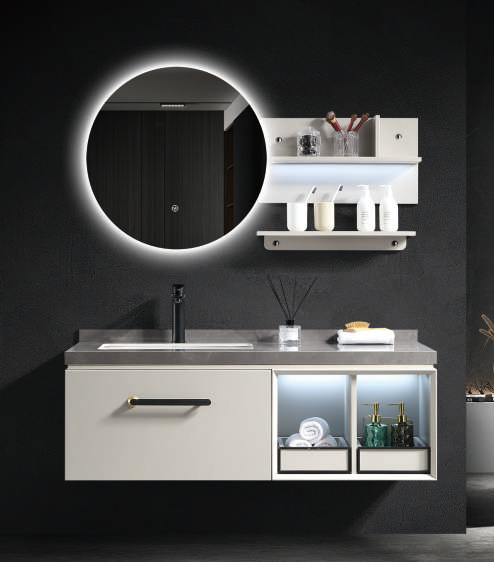
White Oak, Walnut, or Rubberwood: Which Wood Species Should You Choose?
Selecting the right wood species is a strategic decision that balances market positioning, from the premium aesthetics of walnut to the sustainable, cost-effective appeal of rubberwood.
The choice of wood for a bathroom vanity isn’t just about looks—it directly impacts durability, cost, and the target market. As of 2026, natural wood is the leading material choice for vanities, selected by 26% of homeowners. Understanding the distinct properties of each species is critical for aligning your product line with specific consumer demands, whether they prioritize luxury, performance, or sustainability.
| Wood Species | Market Position | Key Attributes |
|---|---|---|
| White Oak | Mid-to-Premium Standard | Excellent durability, classic grain, and a balanced cost-to-performance ratio. A reliable choice for quality furniture. |
| Walnut | High-End / Luxury | Rich, dark color and distinctive grain patterns. Limited supply drives premium pricing and exclusivity. |
| Rubberwood | Cost-Effective & Sustainable | Eco-friendly (by-product), dimensionally stable, excellent for painted finishes, and offers highly competitive pricing. |
White Oak: The Durable Mid-Range Standard
White oak consistently serves the mid-to-premium market segments. Its robust performance and classic aesthetic make it a popular choice that balances durability and premium appeal. The wood offers excellent resistance to wear and moisture, positioning it as a reliable standard for high-quality furniture that needs to withstand daily use. For businesses targeting consumers who seek a solid balance between long-term value and reasonable cost, white oak is a dependable and proven material.
Walnut: The Premium Choice for Luxury Aesthetics
Walnut is recognized as a high-end material used in luxury furniture where aesthetics are the primary consideration. Its rich, deep color and distinctive grain patterns command attention and justify its higher price point. The wood’s limited supply contributes to its exclusive status, making it the top choice for premium market segments. Vanities made from walnut appeal to clients who are investing in a statement piece and prioritize visual impact over budget constraints.
Rubberwood: The Sustainable and Cost-Effective Option
Rubberwood has gained significant traction as an eco-friendly and budget-conscious alternative to traditional hardwoods. As a by-product of the rubber industry, it repurposes wood that would otherwise be discarded, meeting the growing demand for sustainable materials. It provides a cost-effective solution without a major sacrifice in quality, making it an excellent choice for large-scale projects or product lines targeting environmentally aware consumers. Its stability and receptiveness to finishes also make it a versatile manufacturing material.
Unlock Your Market with Custom Vanities

Who Are the Top 10 Solid Wood Vanity Manufacturers?
The global solid wood vanity market is split between high-end domestic brands focused on traditional joinery and large-scale international manufacturers who engineer products for specific regional climates and compliance standards.
Why MF FOCUS CABINET Masters Climate-Calibrated Moisture Control
As a direct manufacturer, we engineer bathroom solutions for the specific regulatory, climatic, and design needs of global markets. We don’t use a one-size-fits-all approach. Instead, we develop region-ready vanities and mirrors that ensure compliance and durability from North America to Oceania. This strategy of material flexibility and climate-specific engineering allows our B2B clients to source products that perform reliably in their target environments, reducing returns and warranty claims.
| Manufacturing Approach | Standard Premium Manufacturer | FocusCabinet (Direct Factory) |
|---|---|---|
| Material Philosophy | Focuses on a limited range of premium woods like Oak and Walnut with fixed specifications. | Offers “Budget-to-Premium” material flexibility; clients specify the material, density, and core to meet target price points. |
| Target Market Adaptation | Typically designs for a single domestic market, requiring importers to manage compliance. | Engineers region-ready products with built-in compliance for North America (UL/CSA), Europe (CE), and Oceania (WELS). |
| Minimum Order Quantity (MOQ) | Often requires large volume orders per model, creating high inventory risk for buyers. | Provides a flexible “Stock Mix Strategy,” allowing trial orders of just 20 mixed sets to test the market with low risk. |
Our climate-calibration process ensures product stability and longevity across vastly different environments:
- For North America: Products meet UL/CSA and ADA standards, using materials tested to withstand cold-climate temperatures as low as -30°C.
- For Europe: We focus on CE compliance and sustainability, using E1 grade materials with low formaldehyde emissions to meet strict health regulations.
- For Oceania: Vanities adhere to AS/NZS and WELS water efficiency standards and are built with materials resistant to high coastal humidity and UV exposure.
- For Asia & the Middle East: Our solutions include compact floating vanities for dense urban areas and heat-resistant designs tested up to 50°C for arid climates.
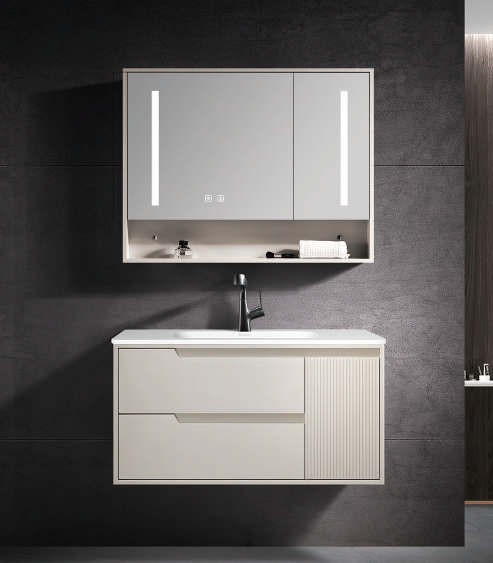
What Is the Kiln Drying Secret to Preventing Cracks in the US Market?
The only reliable method to prevent solid wood vanities from cracking is to use controlled kiln drying to achieve a stable 6-8% moisture content, directly counteracting the internal stress caused by wood’s natural, uneven shrinkage.
The Science of Differential Shrinkage
The primary cause of cracks in solid wood is a physical process called differential shrinkage. Wood is not a uniform material; it shrinks significantly more along its growth rings (tangentially) than it does across them (radially). This uneven movement creates powerful internal stresses within the wood. When the tension builds beyond the wood’s structural capacity, fibers tear apart, resulting in visible cracks and splits. Managing this inherent stress is the central challenge in producing stable, long-lasting wood furniture.
Controlled Kiln Drying to Achieve a 6-8% Moisture Content
The industry-standard solution is controlled kiln drying. This industrial process carefully reduces the wood’s moisture content to an optimal equilibrium of 6-8%, the accepted target for most interior environments in the United States. By precisely managing temperature and humidity inside a kiln, manufacturers force the wood to dry uniformly from its core to its surface. This controlled environment minimizes the internal stresses that would otherwise develop during natural air drying.
- The process reduces drying time from several months to just a few weeks.
- It ensures uniform moisture reduction across the entire piece of lumber, preventing case hardening where the outside dries faster than the inside.
- Stabilizing the wood at this specific moisture level provides the dimensional stability needed to resist future warping and cracking once installed in a home.
How Do You Stain and Seal Solid Wood for Humid Bathrooms?
Protecting a solid wood vanity requires a two-step process: a stain to enhance color and grain, followed by a separate, waterproof topcoat. Relying on stain alone provides no defense against bathroom humidity.
Stain Selection for Color and Grain
Choosing the right stain is the first step in treating solid wood. Stains absorb into the wood to enhance its natural grain and provide color, but they do not offer waterproofing on their own. Water-based stains are a common choice and can be applied with a brush, sponge, or spray gun. A stain is insufficient for protection in a humid bathroom environment and must be used with a protective topcoat. Some all-in-one products, like Fiddes Hard Wax Oil Tints, combine stain and a durable finish in a single application, which simplifies the process for manufacturers.
Protective Topcoats for Moisture Defense
A topcoat or sealer is essential for creating a waterproof barrier that protects the wood from moisture, spills, and wear. Several options provide excellent protection for bathroom vanities, each with different application properties and final feel.
- Hard Wax Oils penetrate the wood to protect against spills and scratches while maintaining a natural, tactile feel. They offer robust protection without creating a thick plastic-like film on the surface.
- Polycrylic is a water-based, clear topcoat that offers good protection after multiple coats are applied. Its water-based formula allows for easy cleanup with soap and water and it dries non-yellowing.
- Polyurethane, available in both water-based and oil-based formulas, creates a highly durable, wear-resistant finish. It forms a hard protective shell, making it ideal for high-moisture and high-traffic areas like a primary bathroom.
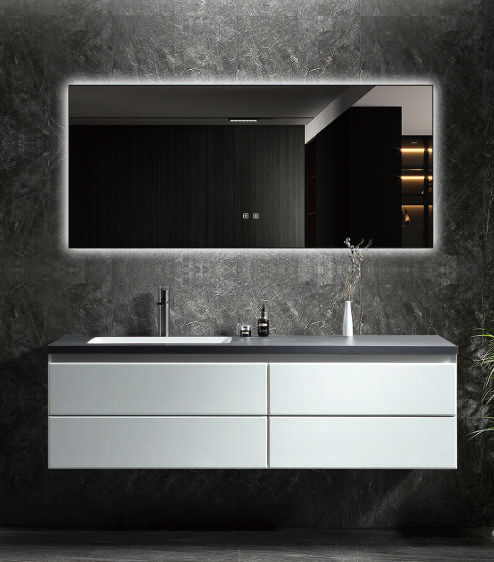
Dovetail Joints vs. Standard Assembly: Which Box Construction Lasts Longer?
Cabinet longevity is decided at the joints, where premium dovetail construction offers a clear mechanical advantage over the adhesive-based bonds of standard assembly.
The Structural Integrity of Dovetail Joints
Dovetail joints are the established benchmark for high-end cabinet and furniture manufacturing. Their interlocking design creates a powerful mechanical lock that is exceptionally resistant to being pulled apart, making it the superior choice for drawer boxes that endure constant use. This method isn’t just about strength; it’s a mark of quality craftsmanship. The precision required to cut the pins and tails adds to the production cost, but it directly translates to the vanity’s long-term value and structural stability. At FocusCabinet, we use this technique in our premium solid wood lines to ensure the construction withstands decades of daily service.
| Feature | Dovetail Joints (Premium Standard) | Standard Assembly (Butt/Dowel Joints) |
|---|---|---|
| Structural Strength | Superior mechanical lock; highly resistant to pull-apart forces. | Relies on adhesives and fasteners; lower inherent mechanical strength. |
| Manufacturing Cost | Higher cost due to precision cutting, longer production time, and skilled labor. | Lower cost, faster assembly, optimized for large-scale production. |
| Ideal Application | High-end furniture, solid wood drawer boxes, and products built for longevity. | Budget-friendly lines, lighter-duty applications, and engineered wood cabinets. |
Modern Assembly: When Standard Joints Are Sufficient
Standard joinery, like butt and dowel joints, is the practical choice for cost-sensitive market segments. These methods are faster and less expensive, which makes them ideal for large-scale manufacturing and entry-level product lines. While they lack the mechanical lock of a dovetail, recent advances in industrial adhesives and fasteners have significantly improved their bond strength. For vanity boxes made from stable, moisture-resistant plywood, the difference in everyday performance is less pronounced. Modern glues create a reliable and durable bond that is perfectly adequate for many lighter-duty residential applications.
Conclusion
Choosing the right solid wood vanity supplier requires looking beyond aesthetics. Technical details like climate-specific kiln drying, multi-layer sealing, and durable joinery are what separate a premium product from a potential liability. Sourcing from a manufacturer who masters these processes protects your brand’s reputation and ensures customer satisfaction.
If our approach to material science and quality construction aligns with your sourcing needs, we invite you to order a sample. You can validate our craftsmanship firsthand with zero risk before placing a full production order.
Frequently Asked Questions
Solid wood vanity supplier china?
Leading solid wood vanity suppliers are concentrated in manufacturing hubs like Guangdong and Zhejiang. To identify a quality partner, look for factories with international certifications such as ISO 9001 for quality management and FSC for sustainable wood sourcing. It is standard practice to request product samples and conduct factory audits to verify craftsmanship, finishing processes, and production capacity before committing to a large order.
Oak bathroom cabinet manufacturer?
Reputable oak bathroom cabinet manufacturers specialize in processing hardwoods and utilize advanced kiln-drying techniques to ensure wood stability. When sourcing, specify the type of oak (e.g., White Oak for its superior moisture resistance) and construction (solid oak vs. oak veneers). Top-tier manufacturers use multi-layer, catalyzed conversion varnish finishes to protect the wood from humidity and ensure long-term durability in a bathroom environment.
Why do wood vanities crack?
Wood vanities crack primarily due to fluctuations in ambient humidity, which causes the natural wood fibers to expand and contract. This movement can stress joints and lead to cracks, especially in improperly dried or sealed wood. Other causes include direct exposure to heat or HVAC vents and the use of low-quality finishes that fail to create an effective moisture barrier. Properly kiln-dried hardwood with a high-quality, multi-coat finish is essential for preventing this issue.
High end bathroom furniture china?
China is a significant producer of high-end bathroom furniture, distinguished by the use of premium materials like solid oak and walnut, and superior construction techniques such as dovetail joinery. Luxury models often feature trending designs like fluted fronts, sophisticated warm wood stains, and high-quality hardware like soft-close mechanisms. These premium products command higher prices but offer superior durability, aesthetic value, and contribute to higher property resale values.
Walnut vanity factory wholesale?
To source walnut vanities at wholesale, engage directly with factories that specialize in premium hardwoods. Be prepared to discuss detailed specifications, including wood grade, finish type (e.g., matte vs. satin), and hardware selections. Wholesale partnerships require meeting minimum order quantities (MOQs), which vary by factory. Establishing a clear quality control protocol and logistics plan is critical for a successful wholesale relationship.




0 Comments