


The Great Debatemdf vs wood vanity is a constant source of friction that directly impacts warranty claims, product returns, and brand reputation for cabinet manufacturers. The market’s deep-seated bias for “solid wood” often clashes with the physical reality of how the material behaves in a bathroom, a high-humidity environment. This disconnect leads to predictable failures like cracked paint joints and warped doors, turning a perceived premium feature into a costly operational headache.
This article provides a technical breakdown for manufacturers and specifiers, moving beyond simple marketing claims. We will examine the cellular mechanics that cause solid wood to expand and contract while MDF remains dimensionally stable. We will also explain why painted finishes on solid wood are prone to hairline fractures, the crucial role of a factory seal in preventing moisture damage, and how to make the correct material decision based on the intended finish—paint or stain.

Why Is There a “Solid Wood” Bias in the Market?
The market’s preference for solid wood is driven by its perceived value as a durable, refinishable, and aesthetically unique natural material, which often outweighs the practical benefits of engineered alternatives.
Perception of Value and Natural Aesthetics
Consumers equate solid wood with a premium, long-lasting investment. This perception of luxury and natural craftsmanship often justifies a higher initial cost. The unique, non-repeating grain patterns create a distinct visual appeal that manufactured materials can only mimic, not replicate. This authenticity is a major factor in purchasing decisions, and many buyers believe that solid wood furniture adds to a home’s resale value.
Durability and Long-Term Refinishing Options
Solid wood also offers clear practical advantages for longevity. When properly sealed, it stands up to moisture better than standard MDF, making it a reliable choice for humid environments like bathrooms. A key benefit is its ability to be repaired over time. Owners can sand, refinish, or repair solid wood to fix wear and tear or simply update its look, which extends its functional life far beyond that of most engineered products.
Why Does Solid Wood Expand While MDF Remains Stable?
Solid wood expands and contracts because its natural fibers absorb and release atmospheric moisture, while MDF remains dimensionally stable due to its engineered composition of compressed wood fibers and resin, which eliminates this hygroscopic behavior.
The Hygroscopic Nature of Solid Wood
Solid wood is a natural, hygroscopic material, meaning its cellular structure actively absorbs and releases moisture to stay in equilibrium with the surrounding air. When humidity levels rise, the wood fibers take in moisture and swell. When the air becomes drier, the wood releases that moisture and shrinks. This constant, seasonal cycle of expansion and contraction puts significant stress on cabinet joints, frames, and finishes.
| Attribute | Solid Wood | Engineered Wood (HMR MDF) |
|---|---|---|
| Composition | Natural timber with a directional grain structure. | Compressed wood fibers bonded with moisture-resistant resin. |
| Response to Humidity | Hygroscopic: Expands in high humidity, contracts in low humidity. | Dimensionally stable with minimal to no reaction. |
| Impact on Paint Finish | Prone to developing hairline cracks at joints due to movement. | Provides a stable substrate that prevents cracking. |
| Core Vulnerability | Warping and joint stress from environmental changes. | Swelling from direct water exposure on unsealed edges. |
The Engineered Stability of MDF
MDF (Medium Density Fiberboard) is an engineered material created by compressing fine wood fibers with resin under high heat and pressure. This process produces a dense, consistent panel without the grain structure or pores found in natural wood. By eliminating the natural pathways for moisture absorption, the manufacturing process makes MDF dimensionally stable. It does not “breathe” like solid wood, so it won’t expand or contract when subjected to typical fluctuations in temperature and humidity.
This stability is the primary reason MDF is the preferred material for painted cabinetry. It creates a smooth, uniform substrate that prevents the hairline cracks that commonly appear at the joints of painted solid wood doors. The material’s only significant vulnerability is direct and prolonged water exposure. If the protective finish is compromised and water penetrates the core, especially at cut edges, the fibers can absorb the moisture and swell permanently. This is why using High Moisture Resistant (HMR) grade MDF and ensuring a complete factory seal is critical for bathroom applications.
Unlock Your Market with Custom Vanities

Why Does Painted Solid Wood Develop Hairline Fractures and Cracks?
Hairline cracks on painted solid wood are not a defect, but an inevitable outcome of a rigid finish applied to a natural material that constantly moves.
The Clash Between Natural Wood and Rigid Paint
Hairline cracks appear because solid wood naturally moves with its environment, while the paint layer on top of it cannot. This fundamental conflict causes stress fractures, especially at the joints where different pieces of wood meet. Wood expands and contracts as a normal response to changes in humidity and temperature. The paint, however, cures into a hard, inflexible shell that cannot stretch or shrink at the same rate. When the wood underneath inevitably moves, the static paint layer cracks under the tension, revealing small fractures that confirm the material is behaving exactly as expected.
| Material | Response to Humidity | Result When Painted |
|---|---|---|
| Solid Wood | Hygroscopic; absorbs and releases moisture, causing expansion and contraction. | Places constant stress on the paint layer, leading to hairline cracks at joints. |
| Paint Finish (Lacquer, PU) | Forms a rigid, inflexible shell that does not meaningfully stretch or shrink. | Cracks under the tension created by the wood’s movement beneath it. |
| HMR MDF (The Alternative) | Dimensionally stable; engineered composition minimizes expansion and contraction. | Provides a stable, monolithic surface that prevents paint from cracking. |
How Climate Triggers Cabinet Cracking
A home’s internal climate is the primary driver of this wood movement. Fluctuations in humidity and temperature force the wood to swell and shrink, placing constant stress on the paint finish. During humid seasons, wood fibers absorb moisture and swell, pushing against the paint film until it gives way. In dry conditions, such as those caused by indoor heating during winter, the wood loses moisture and shrinks, pulling the paint tight until it fractures. Maintaining a consistent indoor humidity level between 40-50% can help reduce the frequency and severity of this cracking, but it won’t eliminate it entirely.
Understanding the Cosmetic Nature of the Cracks
These fractures are purely cosmetic and do not impact the cabinet’s structural strength or durability. The cracks are a surface-level issue related only to the finish and do not indicate a problem with the cabinet’s integrity. Their visibility can be managed. For example, paint finishes with a lower sheen, like matte or eggshell, do a better job of hiding these small lines compared to high-gloss finishes, which tend to highlight every imperfection. Because solid wood will always move, these cracks are an inherent and expected trait over time. Materials like High Moisture Resistant (HMR) MDF offer a superior, crack-free alternative specifically for painted cabinets.
What Are the Differences Between Standard MDF and HDF (High Density Fiberboard)?
HDF is essentially a supercharged version of MDF, packing more wood fiber into the same space for significantly greater density, strength, and moisture resistance, making it the superior choice for high-wear applications like flooring and premium cabinetry.
Density, Strength, and Durability
The main distinction between these materials is density. HDF packs about 30% more wood fiber into the same panel compared to MDF. This increased density translates directly into superior strength and durability, making it a better fit for high-wear or structural applications where load-bearing capacity is critical.
- MDF has a density of 600–800 kg/m³, while HDF ranges from 800–1,100 kg/m³.
- HDF has roughly three times the screw-holding capacity of MDF and is less likely to sag under heavy weight.
- The higher density gives HDF superior structural integrity and load-bearing capacity.
Moisture Resistance
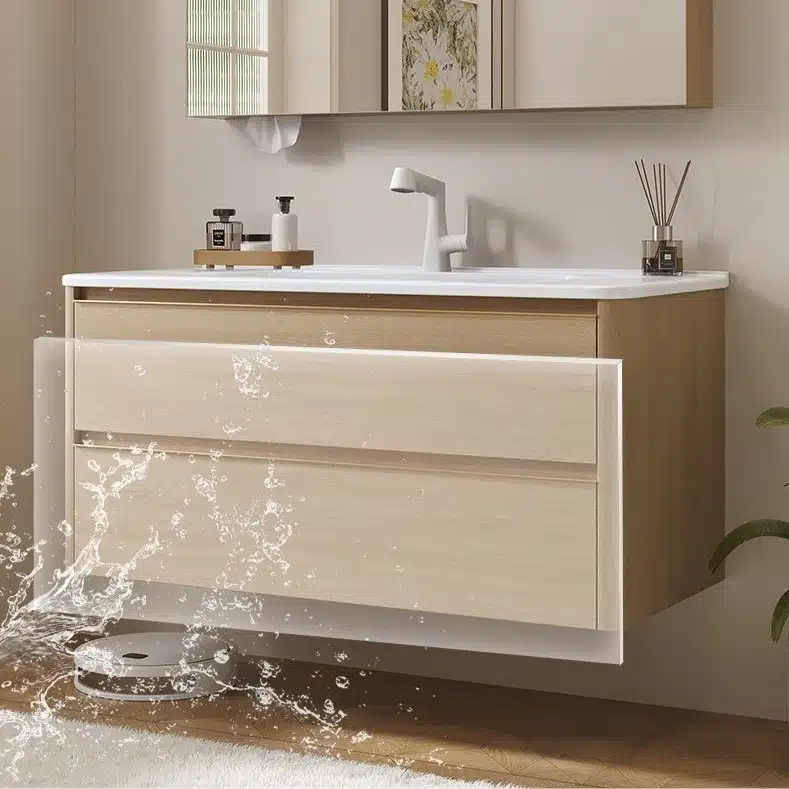
HDF performs better in humid environments because its dense composition makes it less prone to swelling and warping when exposed to moisture. Standard MDF can absorb water like a sponge if its protective seal is broken, but HDF’s tightly compressed structure offers a higher degree of resistance.
- Standard MDF can swell significantly when wet, whereas HDF maintains better dimensional stability.
- While neither material is fully waterproof, HDF’s composition offers a higher degree of protection against moisture damage.
Workability, Applications, and Cost
MDF is softer, more affordable, and easier to machine, making it ideal for painted furniture and decorative moldings. HDF is harder, more expensive, and better suited for flooring or high-end cabinetry where durability is key. It requires more robust tooling for clean cuts but rewards the effort with an exceptionally smooth surface finish.
- MDF’s softer core allows for easy cutting and shaping without special tools, and it takes paint beautifully.
- HDF’s hardness requires precision tools for machining but results in an even smoother surface finish.
- MDF is more widely available and generally costs less than HDF.
Why Is the Seal Critical for Moisture Resistance in Cabinetry?
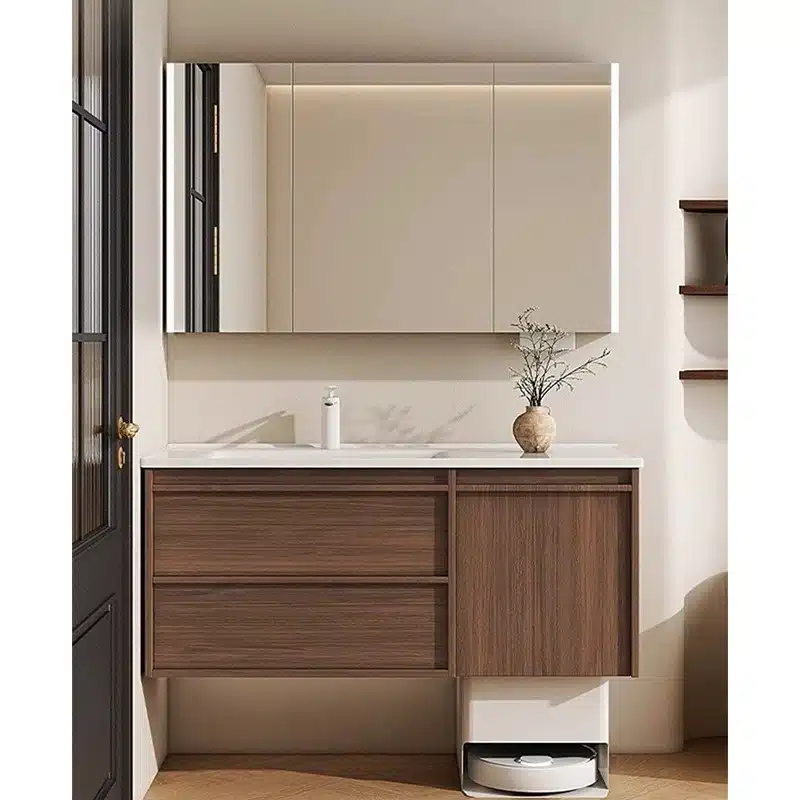
A cabinet’s real-world moisture resistance depends less on the core material itself and more on the integrity of its external seal, especially at vulnerable edges and seams where water ingress occurs.
The Seal as the Primary Barrier Against Water Ingress
A cabinet’s painted surface is its first line of defense, but the seal is what prevents water from bypassing that surface and reaching the core material. Modern manufacturing uses advanced silicone formulations for this purpose, which offer far greater flexibility and long-term water resistance than the older acrylic caulks they replaced. This industry shift acknowledges that material flexibility is essential for maintaining a durable barrier against moisture.
- A continuous, unbroken seal around all joints, sinks, and hardware is the only way to effectively block initial moisture entry.
- The use of silicone over acrylic reflects a technical understanding that flexibility prevents cracks and gaps from forming as the cabinet settles or responds to minor temperature changes.
Protection of Vulnerable Edges and Seams
Moisture rarely penetrates the flat, factory-finished surfaces of a cabinet door or panel. Instead, it attacks the cut edges and seams where the core material is most exposed. These weak points are where swelling and delamination begin. Specialized edge banding and thorough sealing of any cuts made during installation are crucial for protecting the entire structure.
- Water damage almost always starts at unsealed or poorly sealed edges, making edge protection more critical than the surface finish itself.
- An effective moisture defense system combines a water-resistant core material with comprehensive edge and seam protection. One without the other is an incomplete solution.
The Importance of Ongoing Maintenance for Longevity
Seals degrade over time and require maintenance to remain effective. Industry best practices recommend regular visual inspections to identify and repair any compromised caulk or gaps before they lead to water damage. This simple upkeep is the difference between a cabinet that lasts five years and one that lasts fifteen in a humid environment like a bathroom.
- Inspection cycles every 6 to 12 months are standard procedure for maintaining cabinetry in bathrooms or other high-humidity areas.
- Relying only on the initial factory seal is insufficient. Proactive maintenance is necessary to ensure long-term performance and prevent costly damage to the substrate.
How Do Costs Compare Between Solid Wood and MDF?
MDF offers substantial initial cost savings, often two to five times less than solid wood, but solid wood is positioned as a long-term asset that can enhance a home’s resale value.
Initial Investment: A Direct Comparison
MDF cabinets are significantly more affordable than their solid wood counterparts. For a full kitchen renovation, MDF cabinetry typically falls between $2,000 and $7,000. The same project using solid wood starts around $5,000 and can easily exceed $25,000 depending on the wood species and finish.
- On a per-square-foot basis, MDF costs approximately $50 to $150.
- Solid wood costs between $150 and $500 per square foot, making it two to five times more expensive than MDF.
- This lower price point makes MDF a practical choice for large-scale projects, commercial developments, or homeowners working within tight budget constraints.
Factors Driving the Price Difference
The cost gap is a direct result of the materials and manufacturing processes. MDF is an engineered product, created by compressing wood fibers with resin into uniform, stable panels. This production method is highly efficient and cost-effective.
- Solid wood’s premium price reflects its origin as natural lumber. The availability of high-grade species like black oak, ash, or cedar is limited, which increases its value.
- The supply chain for solid wood—from harvesting and milling to kiln-drying and finishing—is more labor-intensive and expensive than producing engineered MDF panels.
Long-Term Value and Resale Implications
Choosing between MDF and solid wood is a trade-off between immediate savings and long-term investment. While MDF reduces the upfront project cost, solid wood can directly contribute to a home’s resale value, as it is often perceived as a premium feature by potential buyers.
- Properly maintained solid wood cabinetry can last for generations, positioning it as a durable asset that can be refinished multiple times.
- MDF, particularly High Moisture Resistant (HMR) grades, provides superior stability in humid environments like bathrooms. This can translate to long-term savings by avoiding costly repairs or replacements due to warping or paint cracking.
When Should You Choose Solid Wood (Stains) vs. MDF (Paint)?
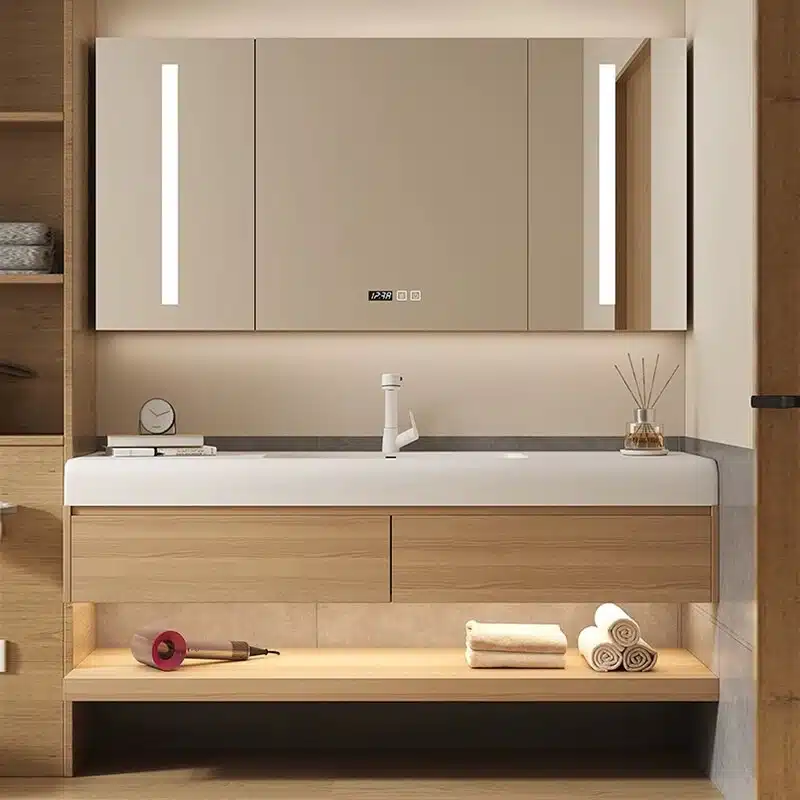
The choice is simple: use solid wood when you want to see the natural grain with a stain, and use MDF when you need a perfectly smooth, stable, and durable painted surface.
Choose Solid Wood with Stain for Natural Aesthetics
Solid wood with a stain finish is the only option when the primary goal is to showcase the natural character of the wood. The stain penetrates the wood’s pores, which enhances the grain and creates an organic, high-end appearance. This approach is non-negotiable for traditional or rustic designs where the unique texture of the wood itself is the main feature. Trying to paint over a high-quality wood like Oak or Ash is a waste of the material’s inherent value.
- Stain accentuates the unique grain patterns and textures inherent in the wood.
- It provides a timeless look that consumers perceive as a premium investment.
- This method is most effective for quality woods where the natural aesthetic justifies the higher cost.
Choose MDF with Paint for Durability and Color Customization
Painted MDF is the superior technical choice for almost any application requiring a solid color finish. Its engineered stability prevents the expansion and contraction that causes hairline cracks in painted solid wood joints. This makes it the standard for modern, minimalist designs. The perfectly uniform surface of High Moisture Resistant (HMR) MDF is the ideal substrate for a flawless lacquer finish, providing a durable, easy-to-clean protective shell with unlimited color options.
- Paint creates a robust, non-porous coating that resists damage and is easy to maintain.
- It allows for unlimited color customization to match any design palette.
- MDF delivers a consistent, clean look at a better price point, making it ideal for large-scale projects.
| Factor | Solid Wood (with Stain) | MDF (with Paint) |
|---|---|---|
| Aesthetic Goal | Showcase natural wood grain, texture, and character. | Achieve a smooth, uniform, and flawless colored surface. |
| Finish Durability | Susceptible to hairline cracks in painted finishes at joints due to natural movement. | Dimensionally stable; prevents paint from cracking at joints. |
| Best Use Case | Traditional, rustic, or premium designs where the wood itself is the centerpiece. | Modern or contemporary styles requiring a specific color or a perfect, clean look. |
| Cost | Premium price, reflecting the cost of natural lumber. | Cost-effective, offering excellent value and performance for the price. |
Conclusion
Choosing between MDF and solid wood is about matching the material to the finish for optimal performance. Solid wood is the clear choice for stained vanities that celebrate natural grain, while MDF’s stability makes it the superior substrate for a flawless, durable painted finish. Selecting the right material for the job ensures long-term product quality and minimizes field issues like cracking or warping.
Review your product specifications to align your materials with your intended finishes. When you need a manufacturing partner who can deliver both with precision, contact us to request a sample or discuss your next production run.
Frequently Asked Questions
Is MDF good for bathroom vanities?
MDF is a popular and practical choice for bathroom vanities, prized for its cost-effectiveness and design consistency. Its key strength is its dimensional stability, which provides a perfect, smooth surface for flawless paint and lacquer finishes that won’t crack. However, its performance is entirely dependent on a high-quality, factory-applied waterproof sealant to protect its core from any moisture exposure.
Will MDF swell in bathroom?
Yes, MDF will swell significantly and suffer irreversible damage if its protective finish is compromised. The core is made of compressed wood fibers that act like a sponge when exposed to water. A deep scratch, chip, or unsealed edge can allow moisture to penetrate, causing the material to bubble and expand. This is the primary vulnerability of MDF in high-humidity environments like bathrooms.
Solid wood vs MDF cost?
Solid wood is significantly more expensive than MDF. MDF’s primary market advantage is its cost-efficiency, which stems from its manufacturing process using recycled wood fibers and resin. Solid wood, being a natural raw material that requires harvesting, milling, and more intensive labor, commands a premium price point reflecting its durability and perceived luxury.
Why do expensive vanities use MDF?
Expensive vanities use MDF for its superior technical properties in specific applications. MDF is dimensionally stable, meaning it does not expand or contract with humidity changes like solid wood does. This makes it the ideal substrate for painted or lacquered finishes, as it prevents hairline cracks from forming at the joints. High-end manufacturers often use a hybrid approach: MDF for large, flat panels and doors to achieve a flawless finish, and solid wood for the structural frame and legs for strength.
How to waterproof MDF vanity?
Waterproofing an MDF vanity relies on creating an impermeable surface barrier. The process involves sealing all surfaces, especially cut edges, with a high-quality oil-based or shellac-based primer. Following the primer, multiple coats of a durable, water-resistant finish, like an alkyd urethane enamel or catalyzed lacquer, are applied. For maximum durability, all seams and installation points—where the vanity meets the wall, floor, or countertop—must be sealed with 100% silicone caulk to block any potential water intrusion paths.
Does solid wood warp in bathroom?
Yes, solid wood is susceptible to warping, cupping, and cracking in a bathroom’s high-humidity environment. As a natural material, wood expands and contracts with fluctuations in moisture and temperature. While a high-quality sealant and finish can significantly slow this process, it cannot eliminate it entirely. This natural movement is why materials like MDF are often preferred for painted cabinet doors, as they offer greater dimensional stability and resistance to finish cracking.





0 Comments