

Keeping up with modern & trends is the only barrier between a profitable product catalog and a warehouse full of unsold inventory. Guessing wrong on key design elements like vanity finishes or countertop styles leads to slow sales cycles and deep discounts, directly eroding your profit margins. Stocking last year’s look means competitors who dialed in the current aesthetic will capture your market share.
This guide serves as a technical brief for your 2026 inventory planning. We will analyze the core design specifications gaining traction, from natural oak and matte black finishes to the dominant fluted and slatted wood textures. We will also cover the shift in countertop profiles, the integration of smart features like in-drawer outlets, and the structural requirements for mail-order packaging.
The Shift to “Spa-Like” Aesthetics
In 2026, the bathroom vanity market is driven by a fundamental shift from pure utility to creating personal wellness sanctuaries, where material choices and integrated technology directly support a spa-like, therapeutic experience.
Creating a Personal Wellness Sanctuary
The bathroom is no longer just a functional room; it’s a personal wellness hub. The design philosophy for 2026 prioritizes calm, natural aesthetics over overtly lavish or purely utilitarian styles. Every element is now engineered to support mindfulness, transforming daily routines like washing your face into restorative rituals. The goal is to create a holistic environment that improves both the user’s physical space and their mental well-being, focusing on serene, natural-looking results.
Integration of Technology for Mindful Experiences
Technology is being seamlessly integrated to deepen this wellness experience, not just for convenience. Smart systems and AI-powered features allow for highly personalized environments. Users can create custom protocols for ambient lighting, soundscapes, and even water temperature, tailoring their routines for maximum therapeutic benefit. This integrated tech is less about novelty and more about supporting preventative care and skin longevity, making advanced treatments an accessible part of a daily regimen.
Emphasis on Sustainable and Ethical Materials
Consumer demand for sustainability is a major force shaping product development. This preference affects the entire supply chain, from ethically sourced raw materials for vanities and countertops to the final packaging. Product choices are increasingly scrutinized for their environmental impact. This drives a high valuation for natural materials, which not only meet ethical standards but also contribute directly to the clean, organic aesthetic that defines the modern wellness space.
Trending Finishes: Natural Oak & Matte Black
The dominant aesthetic for 2026 pairs the organic warmth of natural oak with the sharp, modern contrast of matte black hardware, creating a balanced and commercially proven look.
The Resurgence of Natural Oak
In 2026, natural oak has officially returned from a two-decade hiatus. The market has shifted away from the cold, stark minimalism of previous years, now demanding warmer, more tactile materials like honey and white oak. This trend is rooted in biophilic design—the desire to connect interior spaces with natural elements for a more comfortable, lived-in feel. The finish offers significant design flexibility, pairing well with a wide range of colors and textures.
To meet this demand, we manufacture vanities using solid oak, ash, or timber-look plywood with high-pressure laminate finishes. This gives our B2B clients the material flexibility to offer authentic, durable wood aesthetics that resonate with current buyers.
Matte Black as a Modern Counterpoint
Matte black acts as the perfect modern counterbalance to the organic warmth of oak. Its non-reflective surface provides a clean, understated look that effectively resists smudges and fingerprints—a key functional benefit. Used for hardware, faucets, and mirror frames, it creates a sharp visual contrast that defines the space and adds a contemporary, almost industrial edge without feeling cold or sterile.
| Finish | Key Attribute | Manufacturing Capability |
|---|---|---|
| Natural Oak (White/Honey) | Warmth, organic texture, biophilic appeal. Moves away from stark minimalism. | Available in Solid Oak or Ash wood. For budget-driven projects, we offer timber-look Plywood with durable melamine finishes. |
| Matte Black (Hardware/Accents) | Sharp modern contrast, smudge-resistant, architectural definition. | Our standard soft-close hardware is available in matte black. We can also source specific styles or brands (DTC, Blum) upon request. |
A Balanced Aesthetic: Pairing Wood and Black
The commercial success of this trend lies in the balance between the two finishes. The warmth of the natural oak prevents the matte black accents from making the bathroom feel too severe or clinical. In turn, the black hardware and fixtures ground the design, giving the wood a modern, architectural feel. This combination creates a sophisticated, layered interior that is consistently in demand because it delivers a refined, spa-like environment that doesn’t feel temporary or dated.
Factory-Direct Vanities That Boost Your Sales.

Fluted / Slatted Wood Designs (The Big Trend)
Fluted and slatted wood designs have become the dominant vanity texture for 2026, driven by a market shift from stark, flat surfaces to organic materials that offer visual depth and a sense of craftsmanship.

The Core Appeal: Texture and Natural Warmth
For 2026, the demand for fluted and slatted designs is part of a larger move toward biophilic principles in interior design. End-users are steering clear of cold minimalism. Instead, they seek materials that add warmth, depth, and a tangible sense of quality to the bathroom environment.
- These designs directly meet strong consumer preferences for organic materials and textured finishes.
- They introduce visual interest and a tactile quality that plain, flat surfaces simply cannot provide.
Key Styles: Slatted vs. Fluted Panels
While often grouped together, the two primary styles serve distinct aesthetic goals. Slatted panels are defined by clean vertical lines and offer acoustic benefits, making them functional as well as decorative. Fluted panels provide a more sculptural appearance, using grooves to create pronounced light and shadow effects.
| Feature | Slatted Panels (Akupanel Style) | Fluted Panels (Grooved Style) |
|---|---|---|
| Visual Style | Clean, parallel vertical lines. | Sculptural, concave or convex grooves. |
| Key Benefit | Acoustic sound absorption and strong architectural feel. | Dynamic light & shadow play, adds high-end texture. |
| Common Application | Accent walls behind mirrors, larger surface coverage. | Vanity cabinet fronts, kitchen islands, statement furniture. |
- Vertical slat panels, known commercially as Akupanels, are popular for their dual role in design and sound absorption.
- Fluted panels feature concave grooves that create a dynamic, premium visual effect on cabinetry and accent walls.
Application in Bathroom Vanities and Walls
In bathroom design, these textures are applied most effectively on vanity cabinet fronts and as accent walls. This application transforms a standard piece of furniture into a statement piece, elevating the entire room’s aesthetic from purely functional to spa-like and intentional.
- Fluted wood is a leading choice for vanity doors and drawers, providing a sophisticated focal point.
- Slatted panels are frequently used to create feature walls behind mirrors or toilets, enhancing the room’s architectural character.
Countertop Trends: Ultra-Thin vs. Thick Edge
The vanity countertop market is split between two distinct aesthetics: the substantial, high-end feel of traditional thick profiles and the sleek, cost-effective look of modern thin slabs.
Countertop selection directly impacts a vanity’s final look, weight, and cost. While the wider kitchen market has long defaulted to thicker slabs, bathroom design is seeing a divergence. The choice between a thick, thin, or laminated edge profile reflects a project’s budget, style goals, and even installation logistics.
The Standard Thick Profile (3cm)
The 3cm (1.25″) countertop remains the established industry standard, carrying an association of durability and substance borrowed from kitchen design. This thickness projects a high-end, permanent feel and provides a substantial canvas for various decorative edge profiles. Its mass makes it a robust choice for high-traffic commercial or family bathrooms.
- Offers a sense of luxury and permanence in design.
- Provides robust durability suitable for high-traffic areas.
- Allows for more intricate edge profiling options compared to thinner slabs.
The Rise of Thin and Ultra-Thin Profiles
A clear shift toward modern, minimalist aesthetics has driven the popularity of thinner 2cm (0.75″) countertops. These profiles deliver a sleek, European-inspired look while reducing material costs and slab weight, simplifying installation. Pushing this trend further, ultra-thin slabs (6mm-12mm) are emerging in design-forward projects, often used for both the countertop and matching wall cladding or backsplashes to create a seamless, monolithic look.
| Profile Thickness | Primary Application | Key Advantage |
|---|---|---|
| 3cm (1.25″) | Standard Vanities, High-Traffic Areas | Perceived Luxury & Durability |
| 2cm (0.75″) | Modern & Minimalist Vanities | Cost-Efficiency & Sleek Look |
| 6mm–12mm | Wall Cladding, Backsplashes, Integrated Sinks | Cohesive Design & Lightweight |
- Aligns with contemporary and European design sensibilities.
- Can reduce material costs and overall weight for easier installation.
- Ultra-thin options are being used for wall cladding and backsplashes to create a cohesive look.
Laminated Edges for Illusory Thickness
Fabricators are blending both trends by using lamination. This technique builds up the edge of a thinner slab (like a 2cm) to create the visual illusion of a much thicker, more substantial countertop. It’s a pragmatic solution that achieves a high-end appearance without the full material weight and associated cost of a solid 3cm+ slab.
- Combines the cost-efficiency of a thin slab with the visual impact of a thick one.
- Requires precise fabrication to create a seamless, invisible joint.
- This approach reshapes both manufacturing processes and installation logistics.
Smart Features: In-Drawer Outlets & Lighting
Functionality is no longer an add-on; it’s an integrated expectation. Vanities that hide clutter and simplify routines by incorporating power and lighting directly into the cabinet are becoming the new standard.
Integrated Power for a Clutter-Free Countertop
By 2026, the demand for clean, minimalist aesthetics is driving power sources directly inside vanity drawers. This isn’t just a feature; it’s a direct response to the market’s intolerance for visual noise. Eliminating charging cords from the countertop creates a more organized and serene bathroom space, aligning with the broader “spa-like” trend.
- In-drawer outlets provide a dedicated spot to charge electric toothbrushes, shavers, and styling tools, keeping them hidden and ready for use.
- Designs increasingly include high-power USB-C ports (up to 65W), allowing for fast charging of phones and other personal electronics inside the drawer.
- This approach frees up valuable surface area and directly supports a streamlined design philosophy.
Automatic In-Drawer Illumination
Smart lighting now extends beyond the mirror to the vanity’s interior. Low-voltage LED strips installed inside drawers offer practical illumination that enhances user convenience and adds a subtle touch of luxury. This feature is becoming a key differentiator in mid- to high-end vanity lines.
- Lighting activates automatically when a drawer is opened, making it easy to find items without turning on bright overhead lights.
- The soft glow improves organization, helping users locate small cosmetics or accessories quickly.
- This feature is especially useful in the early morning or late at night, providing just enough light without disturbing others.
Safety as a Core Component
Placing electrical components inside a cabinet, particularly in a bathroom, requires strict, non-negotiable safety measures. Modern in-drawer power solutions are engineered with multiple safety layers to ensure reliable and secure operation. Selling a product without these protections is a significant liability.
- Units must feature an automatic thermal shutoff to prevent devices from overheating within the enclosed drawer space.
- Integrated interlocking circuit breakers cut power instantly if a fault is detected, a critical safeguard in a potentially wet environment.
- All wiring and components must be built to comply with regional electrical standards, such as UL in North America or CE in Europe.
The “Console” Look (Open Shelf)
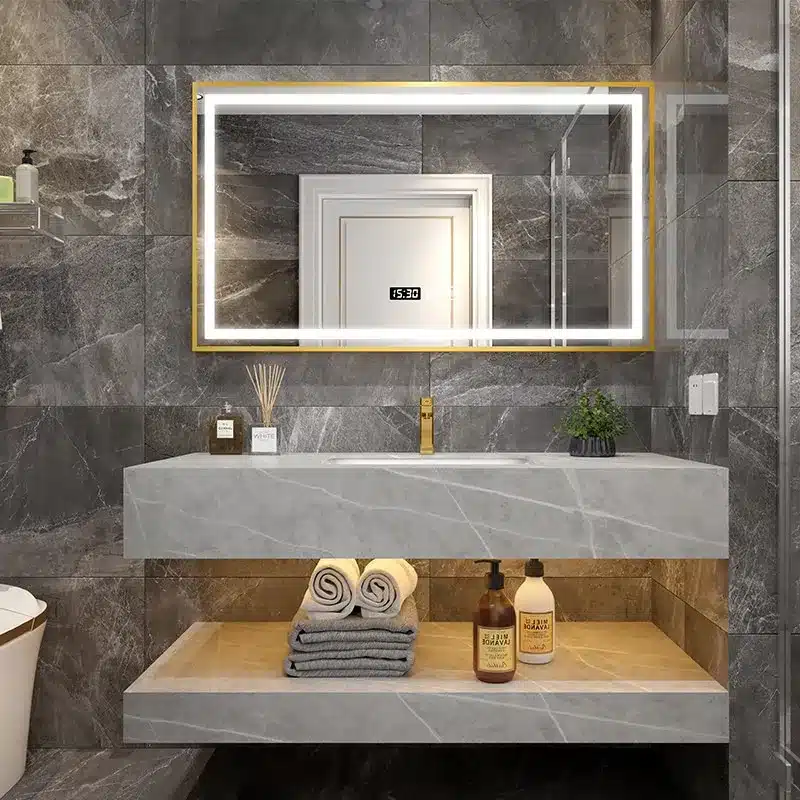
The open-shelf vanity is no longer a simple storage unit; it’s a curated display canvas where visual balance and intentional styling take precedence over maximizing capacity.
Aesthetics Over Pure Function
In 2026, the console look treats open shelves as a display stage, not just a storage deck. The focus is on creating visually appealing vignettes with carefully chosen objects. This approach prioritizes style and intentional arrangement over cramming the maximum number of items onto a surface. The shelf itself becomes a designed focal point within the bathroom.
- Emphasizes curated displays instead of uniform, repetitive arrangements.
- Objects are selected for their form, texture, and contribution to the overall design.
- The goal is to create a designed focal point, shifting the vanity from purely functional to decorative.
Key Styling Principles
This style is built on deliberate composition. It requires layering items of different heights and mixing materials like wood, metal, and ceramics. Grouping objects into small, cohesive collections creates a dynamic look that tells a story, rather than just storing supplies.
- Layering objects with varied heights and depths adds critical dimension.
- Mixing textures and materials—such as smooth glass, warm wood, and cool stone—creates visual interest.
- Arranging items in intentional groups or vignettes makes the space feel personalized and thoughtfully designed.
Creating Balance with Negative Space
A core element of the console aesthetic is the intentional use of empty space. This “negative space” is what prevents the open shelf from feeling cluttered. It allows each displayed object to stand out, contributing to a balanced and sophisticated composition that feels calm and uncluttered.
- Avoids filling every inch of the shelf, which maintains an open, airy feel.
- Gives individual items visual breathing room so they can be appreciated.
- Achieves a balanced, uncluttered look that is essential for modern and spa-like bathroom designs.
E-commerce Packaging (Mail Order Approved)
In 2026, packaging is no longer a branding afterthought; it’s a critical operational component engineered for survival in automated logistics networks and designed to meet strict environmental regulations.
The shift to online sales channels has forced a complete re-evaluation of how bathroom vanities are packaged. The primary goal is now damage prevention during transit, especially for sellers on platforms like Amazon or Wayfair where returns due to shipping damage directly impact profitability. Standard wholesale packaging is insufficient. Today’s “mail order approved” standard, like the ISTA 3A drop test, requires robust internal and external protection to withstand the harsh realities of the small parcel shipping environment. This isn’t just about adding more foam; it’s an engineered system designed to protect the product from every angle.

Sustainable and Fibre-Based Materials
Consumer and regulatory pressure has made sustainability a non-negotiable requirement. The market has moved away from plastics and complex mixed materials toward simpler, recyclable solutions. This is driven by global regulations and end-user demand for eco-friendly products. The focus is on mono-materials that don’t require the customer to separate different components before recycling, simplifying disposal and improving compliance rates.
- Packaging relies on 5-layer corrugated cardboard, molded fibre-based inserts, and reinforced cardboard corner protectors.
- The design follows mono-material principles, using primarily paper and cardboard to streamline the recycling process for the consumer.
- We have eliminated unnecessary plastic films, wraps, and foam inserts that complicate disposal and harm the environment.
Smart Integration with QR Codes and NFC
Smart features are now standard. Integrating QR codes and NFC tags directly onto the packaging provides immediate value for both the supply chain and the end customer. This digital layer offers a direct line to critical product information, enhances security, and improves the post-purchase experience without adding clutter to the physical product.
- QR codes on the box link directly to digital installation manuals, warranty registration forms, and customer support channels.
- NFC tags can be used for secure product authentication, giving distributors and retailers a tool to combat counterfeiting.
- These technologies enable precise unit-level tracking throughout the shipping journey, reducing the risk of lost or mishandled inventory.
Minimalist Design and Digital Personalization
Packaging aesthetics have shifted to a clean, minimalist approach. Simple, bold graphics on natural cardboard not only reduce ink consumption but also project a modern, high-quality brand image. For B2B clients, digital printing technology opens up new possibilities for personalization, allowing for custom branding on packaging without the high costs of traditional printing methods.
- Clean designs with essential branding strengthen brand identity and create a professional first impression.
- Digital printing allows us to add custom logos, text, and specific graphics for OEM/ODM partners, even on smaller order volumes.
- The entire process is designed to create a positive “unboxing experience” that reinforces the quality of the product inside.
Conclusion
The 2026 bathroom vanity trends point toward a clear consumer preference for natural textures, smart features, and minimalist aesthetics. Stocking designs like fluted oak or vanities with integrated outlets positions your catalog to meet this modern demand. Aligning your inventory with these styles helps you capture market share and satisfy customer expectations for both function and design.
Review your current vanity collection against these emerging trends to identify opportunities for growth. We can help you manufacture these designs with the right materials and packaging for your specific market and price point.
Frequently Asked Questions
What are the trending vanity colors for 2026?
In 2026, the trend is moving toward nature-inspired, calming colors that create a spa-like atmosphere. Top colors include warm earth tones like terracotta and beige, deep greens such as sage and forest green, and sophisticated dark blues. Natural wood finishes, especially in light oak and rich walnut, also remain exceptionally popular for their organic, grounding feel.
Are white vanities going out of style?
No, white vanities are not going out of style. They are a timeless classic that offers a clean, bright, and versatile foundation for any bathroom design. While more saturated colors are trending, white remains a top choice for its ability to make spaces feel larger and its compatibility with any hardware or tile. The focus has shifted to textured white finishes and pairing them with natural materials to add warmth.
What is a “fluted” bathroom vanity?
A fluted bathroom vanity features a decorative surface treatment of vertical, semi-circular grooves. This design adds texture, depth, and a sense of sophisticated, architectural detail to the cabinet doors and drawer fronts. It’s a popular technique used to elevate minimalist designs by creating subtle visual interest and a play of light and shadow.
Are gold or black handles more popular?
Both are extremely popular, but serve different design aesthetics. Matte black hardware remains a staple for modern, industrial, and high-contrast looks. However, brushed gold and other warm-toned metals (like satin brass) are surging in popularity. They align with the trend toward creating warm, luxurious, and wellness-focused spaces, pairing beautifully with the trending green, blue, and natural wood vanities.
Do backlit mirrors sell better with vanities?
Yes, vanity packages that include backlit mirrors consistently sell better. The integrated lighting is a key feature for creating a modern, spa-like experience. Backlit mirrors provide excellent, shadow-free task lighting for grooming while also offering soft, ambient light that enhances the room’s atmosphere. They are increasingly seen as a standard, technology-enhanced feature rather than a luxury upgrade.
Is “farmhouse” style still popular?
The traditional “farmhouse” style is evolving into a more refined aesthetic often called “modern organic” or “modern farmhouse.” While the core principles of warmth, comfort, and natural materials remain, the look is cleaner and more sophisticated. It now features less rustic distressing and more natural wood tones, clean lines, and a focus on authentic, high-quality materials, aligning with the broader 2026 trend toward wellness and holistic design.




0 Comments