
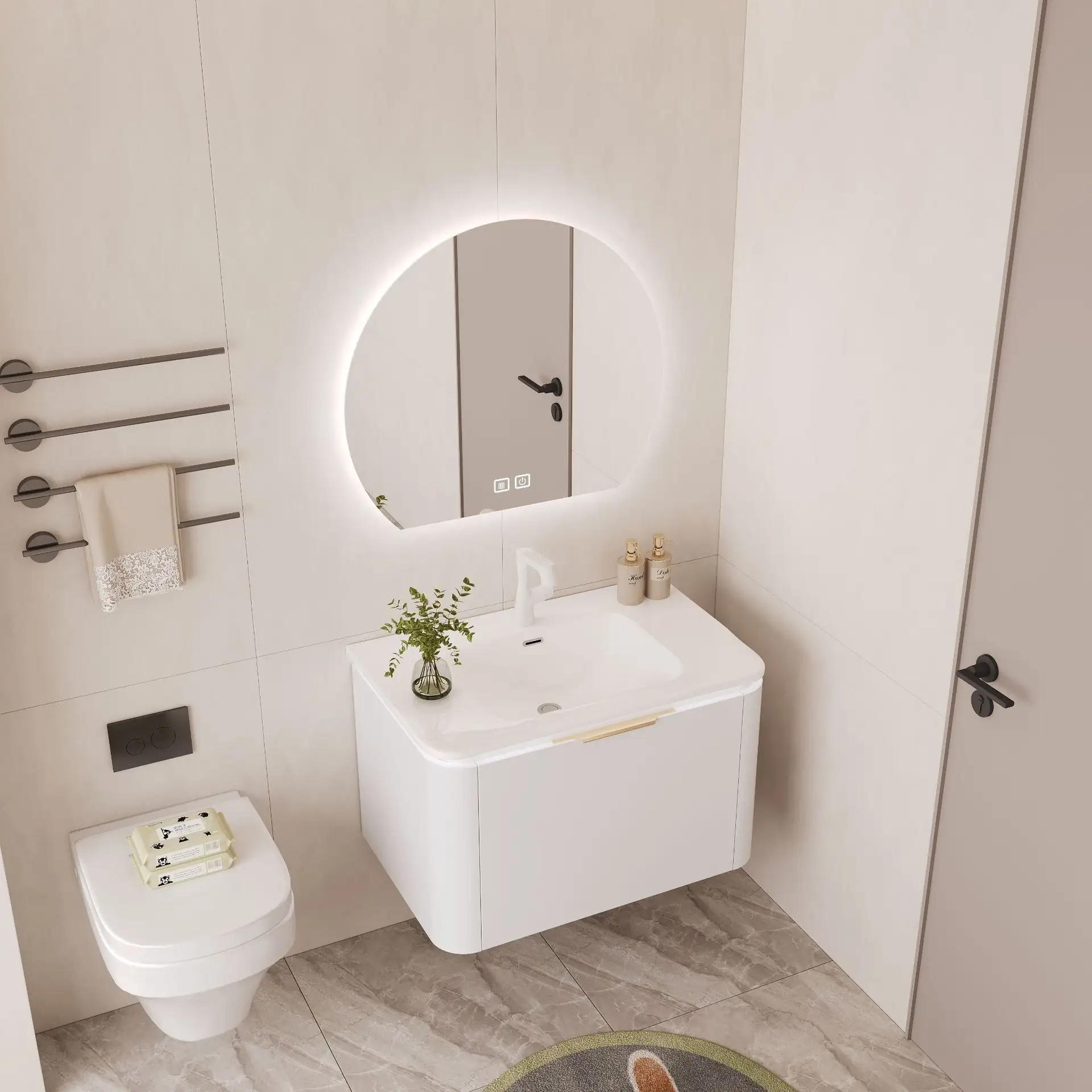
A hotel maintenance manager runs a hand across a drawer front and stops at the bottom corner. The edge feels spongy. The banding has lifted, and the exposed panel edge has been drinking water from every splash and mop-up since the seal broke. That failure did not start at the face of the panel. It started at the edge.
Buyers who need panel edge sealing waterproof systems for bathroom cabinets rarely see the edge work until it fails, because it is the last thing photographed and the first thing inspected in a warranty claim. This guide explains how factories actually apply protective edges — PVC and ABS edge banding, polyurethane coatings, and laser-activated sealing — and gives you a concrete checklist for judging the quality of that work before you commit a container to it.
Main Focus Cabinet (MFBATH) has manufactured bathroom cabinets in Changge, Henan since 2015. The plant covers 10,000 m², employs 95 people, and holds about 5,000 sets of monthly capacity for more than 1,000 dealers across 20+ countries. Every product passes 5 inspection steps, and third-party inspectors such as SGS and TÜV are welcome with advance scheduling. What follows is the edge-sealing logic we run on the factory floor, and the questions we expect serious buyers to ask any supplier.
Key takeaways before you read on:
- Water enters wood-based panels at the cut edge long before the face fails; edge protection is the first line of defense.
- PVC banding handles volume, ABS adds impact resistance, and PU coating seals end grain that banding cannot reach.
- Every MFBATH product passes 5 inspection steps, with edge adhesion and corner checks inside those steps.
- Confirm the substrate grade (BWR or marine), the E1 report at or below 0.1 ppm, and a QC photo set per shipment.
- Custom edge and finish matching starts at a 15-set MOQ per model, color, and size, with mixed containers allowed.
Why Panel Edges Fail First in a Wet Room
Look at a plywood panel in cross section and the weakness is obvious. The face veneers carry the finish; the edge exposes the core layers and the end grain of every veneer. End grain wicks water far faster than a finished face, so swelling, banding lift, and microbial growth appear at edges first.
The failure sequence is consistent across projects. Moisture moves into the exposed core, the wood fibers swell, and the edge banding — glued to a surface that is changing shape — starts to separate. Once a gap opens, water sits inside a dark, damp cavity. In a bathroom, that cavity is also where mold and bacteria find a home. Hardware follows the same path: a door that no longer sits flush strains its hinges, a drawer that rubs wears its slides, and the unit moves from cosmetic issue to replacement candidate.
That is why our plywood cabinet line is built around waterproof edge sealing on multi-layer, anti-warp panels, and why the PVC cabinet line goes further with 100% waterproof, non-absorbent panels that do not warp, in widths from 24 to 60 inches and depths from 18 to 24 inches. None of this is exotic engineering. It is a question of whether the factory treats edge sealing as a deliberate system or as decoration. For the material-level picture, our moisture damage prevention guide walks through how each substrate behaves in a wet room.
Put edge sealing on the spec sheet, not just on the drawing. When we quote a project, the answers a buyer should demand are simple: which substrate grade, which banding material, how many coating layers, and where each is applied. A factory that answers from a process sheet — not from memory — treats edge sealing as a system. One that hesitates on any of the four questions will hesitate on the warranty claim later.
The Four Edge Sealing Systems Factories Actually Use
Four systems cover the vast majority of cabinet edge protection. Hot-melt PVC banding is the volume workhorse. ABS banding is its tougher sibling. Polyurethane coating seals edges that banding cannot cover. Laser-activated sealing is the premium option that replaces a visible glue line with a melt bond.
| System | What it does | Where it applies | Water behavior | What to ask the factory |
|---|---|---|---|---|
| PVC edge banding | Flexible PVC strip bonded with hot-melt adhesive | Door edges, drawer fronts, carcass ends | Blocks moisture at the edge face | Adhesive brand and application temperature |
| ABS edge banding | Stiffer ABS strip bonded with hot-melt | Same positions, high-traffic edges | Blocks moisture; better impact resistance | Corner milling and shrinkage tolerance |
| PU waterproof coating | Multi-layer polyurethane spray or roll coat | Solid wood end grain, routed profiles | Seals end grain; water beads on the surface | Layer count and curing schedule |
| Laser edge sealing | Banding with an integrated layer, activated by laser | Premium straight edges | Melt bond with no visible glue line | Which panels run on the laser line |
The right system depends on the substrate and the profile. A flat panel edge takes banding cleanly. A routed shaker profile or a solid wood end grain needs coating. Good factories match the system to the part instead of forcing one line to do everything. The most common fault we see in third-party inspections is a mismatch: banding specified for a part that should have been coated, or a coating applied so thin it reads as a stain.
One definitional point: waterproof means the edge resists standing water and routine wetting over years of bathroom use, not that a submerged panel is unaffected. No edge system replaces a correctly chosen substrate — it extends the life of one.
PVC vs ABS Edge Banding: What Changes for a Bathroom
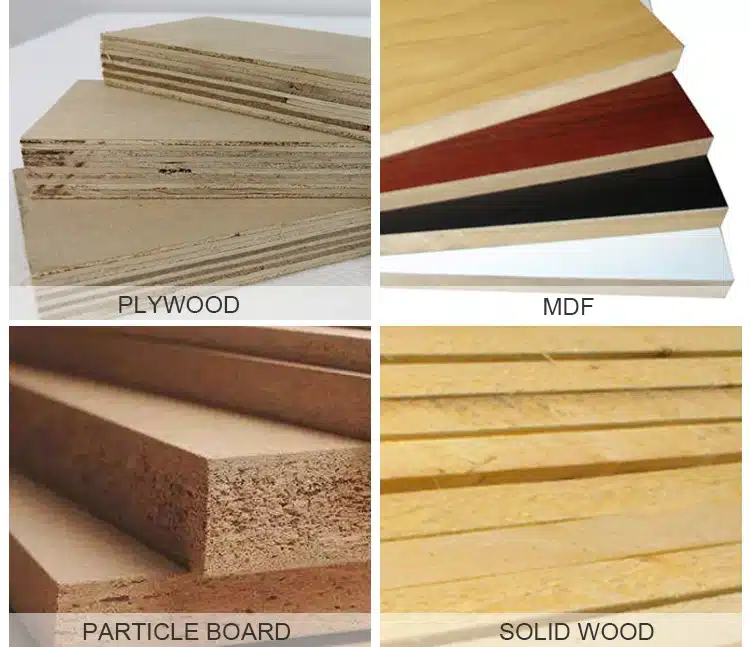
PVC and ABS are both thermoplastics, but they behave differently on a cabinet edge. PVC is softer and more flexible, which makes it easy to apply and easy to match across a wide color range — our PVC cabinet line offers more than 1,000 standard finishes. ABS is stiffer and tougher; it resists impacts and holds corners more firmly, at the price of less flexibility on curved profiles.
For a bathroom, the difference shows up at impact points. Housekeeping carts, luggage, and dropped bottles hit door edges regularly. An ABS edge shrugs off a knock that would dent or lift a PVC edge, and ABS whitens less when a strip is bent hard around tight radii.
Our position: on straight-edged vanities at volume, PVC banding is the pragmatic choice — it seals, it matches, and it keeps unit cost in line. For hospitality programs where edges take regular abuse, specify ABS; it costs a little more per linear meter and returns fewer service calls.
| Property | PVC banding | ABS banding |
|---|---|---|
| Flexibility | Bends easily around tight radii | Stiffer, limited on curves |
| Impact resistance | Adequate for residential duty | Higher, suited to hotels |
| Color matching | 1,000+ standard finishes | Good, fewer sourcing options |
| Corner behavior | Softens and compresses | Holds shape under impact |
The adhesive under the band matters as much as the strip itself. Standard hot-melt glues bond fast and trim clean; moisture-curing polyurethane adhesives react with humidity and hold longer under damp conditions. For a bathroom cabinet, we select adhesives that tolerate the wet side of the room, and we record the application temperature for every run. Cold glue does not wet out the band properly, and the seam fails months later.
If your program mixes both materials, make sure the factory keeps profiles consistent. A PVC drawer front sitting next to an ABS door looks different under raking light, and that difference reads as a defect to an end user.
PU Waterproof Coating: Sealing Solid Wood and Plywood Edges
Banding protects the edge face, but it cannot follow a routed profile or seal the end grain of solid wood. That is the job of polyurethane coating. Applied in multiple layers, PU builds a continuous film that water cannot penetrate, and it seals the open wood structure that drinks moisture fastest.
On solid wood cabinets — oak, walnut, maple, and ash — we apply a multi-layer PU waterproof coating as standard, with FSC-certified wood available on request. The same coating philosophy carries the 20 standard finishes in the solid wood line. Our guide to multi-layer PU coatings on solid wood vanities covers the application sequence in detail, layer by layer.
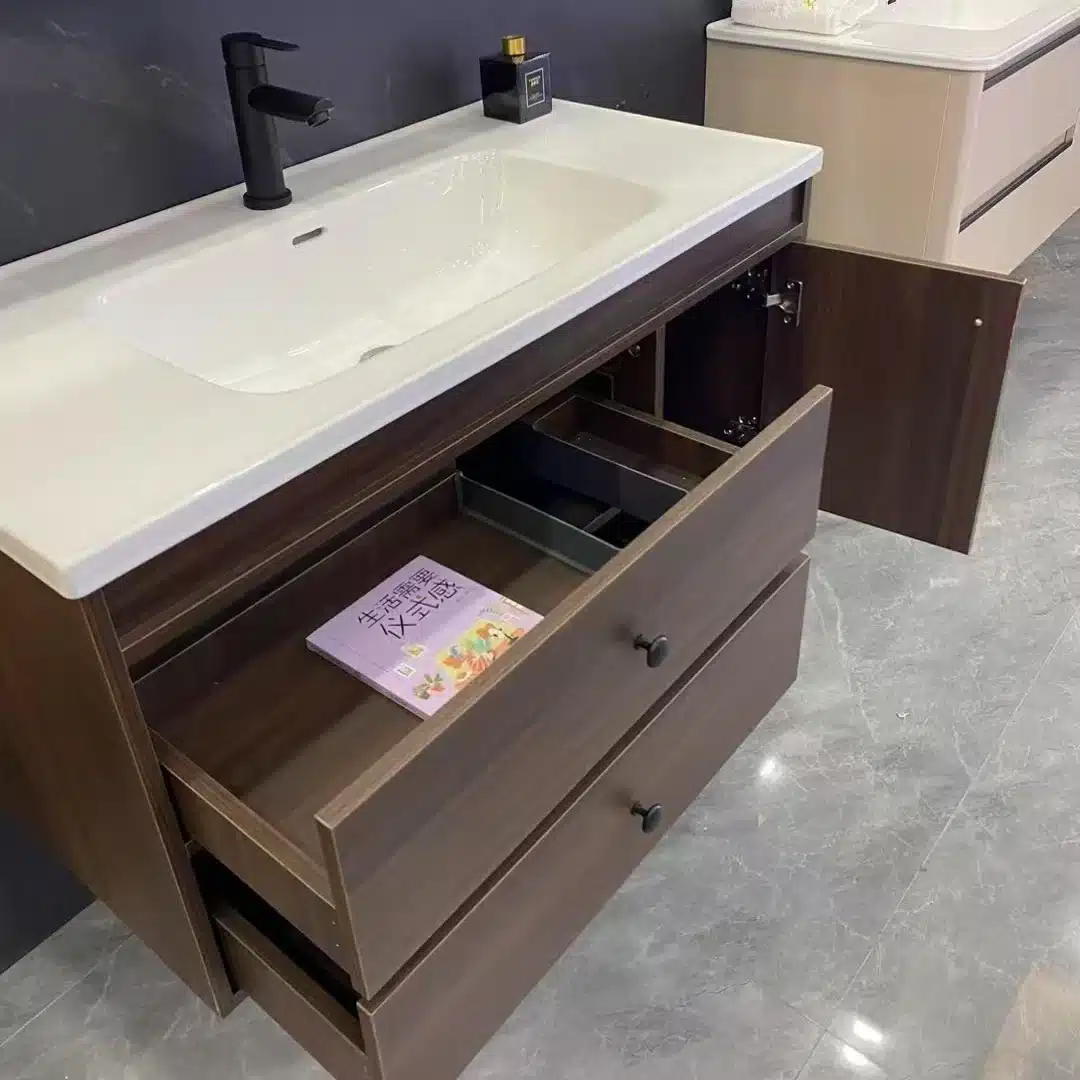
Plywood construction follows the same logic with different materials. The plywood cabinet line uses multi-layer, anti-warp panels with waterproof edge sealing in standard, BWR (boiling-water-resistant), and marine grades. Formaldehyde stays low: E1 boards test at or below 0.1 ppm, with CARB Phase 2 compliance as standard. The panel grade matters as much as the coating — a sealed edge over a weak core still fails. Compare the grades side by side in our breakdown of plywood for cabinet carcasses.
When a supplier shows you a coated edge, ask for the layer count and the curing time. A single wipe of sealer is not a waterproof system; a film that cures too fast traps solvent and bubbles at the seam.
Cutouts deserve the same attention as outer edges. A sink basin sits on a cutout, and the cut edge of that opening is the wettest surface in the cabinet. If the factory seals the perimeter but leaves cutout edges open, the most vulnerable seam in the room is unprotected. Ask specifically how sink cutouts, plumbing holes, and back panels are sealed — those are the surfaces nobody photographs.
Laser Edge Sealing: What the Concept Actually Changes
Laser edge sealing sounds like a different universe from hot-melt banding, and in one respect it is. Instead of applying a separate adhesive, the banding carries a functional layer that a laser activates inside the machine, melting it directly to the panel. The result is a bond with no visible glue line and, in principle, a tighter seal at the joint.
The honest version stops there. Laser sealing improves the bond on straight edges; it does not change the substrate. A laser-sealed edge on a poor board still fails from the inside, and laser lines handle straight profiles most reliably, so routed profiles still run coating or hot-melt.
For an importer, the practical questions are: which parts run on the laser line, what tolerance the factory holds on the melt zone, and whether the supplier can show you a cross-section of a sealed joint. If the answer is a brochure slide, treat it as marketing. If they walk you to the line and pull a sample, it is a process you can plan around.
Sealed-Edge Plywood and Solid Wood Vanities for Wet Zones
Browse this product, solution, or service page to explore relevant offerings.
Five QC Checkpoints for Edge Sealing
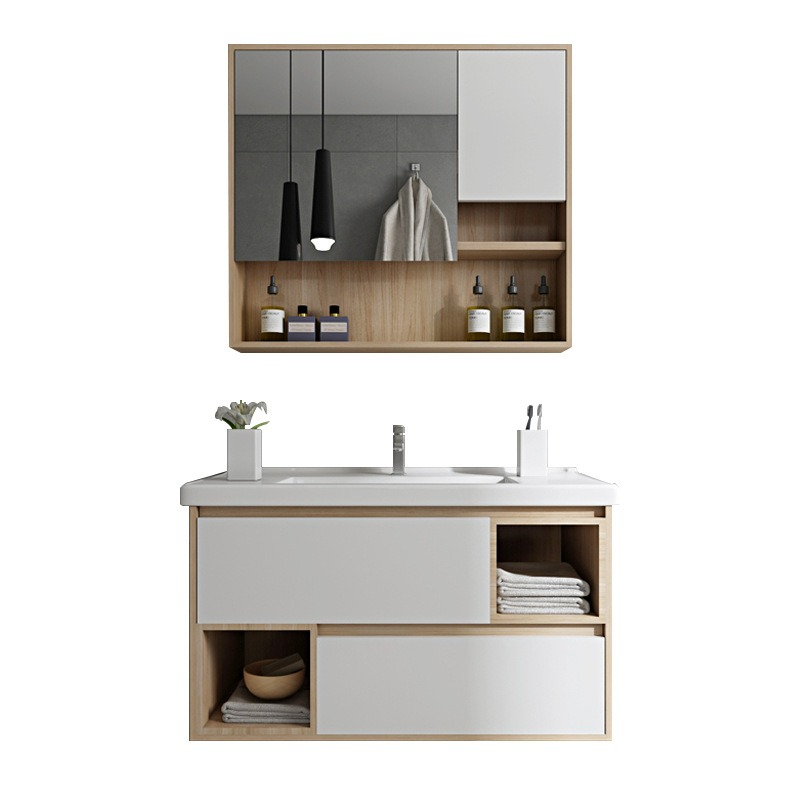
Edge sealing quality is not visible in a product photo. It is controlled in the process. At MFBATH, every product passes 5 inspection steps, and edge work is checked at three of them. The system itself is audited: ISO 9001 quality management and ISO 14001 environmental management have been certified since 2017 and were confirmed current in 2025. Internal QC reports include photos and video, and third-party inspectors such as SGS and TÜV are welcome with advance scheduling.
The checkpoints that matter for edges:
- Substrate intake. Moisture content and edge squareness are measured before sealing. E1 documentation at or below 0.1 ppm is verified at intake, not assumed from a label.
- Glue application. Adhesive temperature and coverage are monitored so joints get full, even coverage with no dry spots.
- Trimming. Banding is trimmed flush. Inspectors look for steps, scorch marks, and fiber tear-out along the cut.
- Adhesion probe. Edges and corners get a pull check, and a fingernail dragged across the joint should glide, not catch.
- Corner and color. Miters must close tight, radiuses must not lift, and the band must match the panel finish against the standard set.
The records matter as much as the checkpoints. For each production batch we keep adhesive temperature logs, banding batch numbers, and inspection photos from every step, and we share them on request. The same documentation trail covers the low-VOC finishes used on edges, inside an ISO 14001 environmental management scope that has been certified since 2017 and confirmed current in 2025. A buyer running a green-building program should ask for that paperwork, not just the product photo.
Ask any factory for the records, not the promises. Our article on what a factory QC report should include lists the data points worth demanding, and our comparison of in-line versus final inspection explains why third-party checks land differently in the process.
What Buyers Should Check on Samples and Shipments
You do not need a lab to judge edge sealing on a sample. You need eyes, a fingernail, and a few minutes per door.
Start visual. Band width should be identical along the full edge. Joints at corners should close without a step, and the band should sit flush with the panel face — no lip you can feel, no shadow line under raking light. Tight radii should show no whitening where the strip was bent.
Then the glue line. Look along the seam between band and panel. A thin, consistent line is normal. Gaps, bubbles, or dry patches are moisture paths, and they widen in service. Run a fingernail across the joint: it should glide over the seam. Try to lift the band at a corner with the same fingernail — a correctly bonded edge will not separate.
Then the substrate. Ask which grade the panel is: standard, BWR, or marine. Demand the E1 report at or below 0.1 ppm and the CARB Phase 2 documentation rather than accepting a sticker. For solid wood, confirm the PU layer count in writing.
Check the surfaces nobody photographs. Back panels, sink cutouts, and plumbing holes carry the same moisture risk as front edges, and they fail first because they are never seen. On a sample, flip the cabinet and run the same fingernail test along the bottom rear edge. On the shipment, ask your inspector to do the same on a unit chosen at random, not the one the factory staged for the visit.
Finally, ask for the production record: QC photos from the batch your container will ship from, not from a sample line. Samples are free and run 10 working days, and our sample approval checklist covers the checks to run before you approve the production sample. If your order justifies it, book third-party inspection early so there are eyes on the line, not just on the carton.
Custom Orders: Keeping Edge Sealing Consistent at 15-Set MOQ
Custom programs are where edge sealing consistency gets tested. The MOQ is 15 sets per model, color, and size, and mixed containers are allowed — combine models and sizes in one container as long as the total reaches the MOQ. Custom sizes, colors, and logo branding all start at that same 15-set threshold.
The specific risk on a custom color is banding drift. Edge banding is produced in batches, and a Pantone-matched finish from a first order can differ subtly from a re-order. Ask the factory how they control this: the same banding source for the full run, batch records kept per order, and color matching under standardized light. With 40,000+ custom combinations available — Pantone colors, material options, basin types, branded hardware — matching discipline matters more than the range.
White-label and private-brand programs add one more consistency layer. Logo printing or laser engraving sits close to edges on door fronts and drawer faces, and because custom branding starts at the same 15-set threshold, the edge finish and the brand mark are produced in the same batch. Custom packaging — gift boxes, outer cartons, instruction sheets — is part of the same program, and it doubles as edge protection in transit.
Material certifications belong in the same conversation. E1 at or below 0.1 ppm, CARB Phase 2, and TSCA Title VI govern formaldehyde on the boards; FSC-certified wood is available on request, and our FSC chain of custody guide explains what the certificate actually covers. CE and UL markings are held on relevant product lines, and CSA, NOM, and ADA requirements are designed to be met for those markets. When your compliance team digs in, EPA’s formaldehyde rule and CARB’s composite wood products program are the references they will check. The 15-unit MOQ math — and how it shapes your SKU plan — is laid out in our OEM MOQ strategy article.
Edge Sealing FAQ
Can edge banding alone make a cabinet waterproof?
Not alone. Banding seals the edge face, but the panel core and the construction determine water behavior. Our PVC line is 100% waterproof with non-absorbent panels; plywood relies on waterproof edge sealing plus a BWR or marine core. Ask for both, in writing.
Is ABS edge banding stronger than PVC?
For impact, yes. ABS is stiffer and holds corners under knocks from carts and luggage; PVC is more flexible and easier to match across colors. Specify ABS for high-traffic hospitality and PVC for volume residential programs.
How do I test edge sealing quality without lab equipment?
Drag a fingernail across the joint — it should glide, not catch. Try lifting the band at a corner; a bonded edge will not separate. Inspect the glue line for gaps or bubbles and confirm corners close without steps.
Does edge sealing affect formaldehyde compliance?
Compliance comes from the board, not the band. E1 panels test at or below 0.1 ppm, with CARB Phase 2 and TSCA Title VI documentation. Ask for the board test report and confirm the banding material introduces no new emissions.
What is the MOQ for custom edge or finish matching?
15 sets per model, color, and size, with mixed containers allowed once the total is met. Custom sizes, colors, and logo branding start at the same threshold. Pantone matching runs across 40,000+ combinations.
The Bottom Line
Edge sealing is the part of a bathroom cabinet nobody photographs and every warranty claim finds. Water enters at the edge first; swelling, banding lift, and microbial growth follow in that order. A factory that can show you the process — substrate grades, adhesive control, 5 inspection steps, QC photos per batch — is a factory you can plan a container around.
- Confirm the substrate: standard, BWR, or marine; E1 at or below 0.1 ppm; CARB Phase 2.
- Match the system to the part: banding for flat edges, PU coating for end grain and profiles, laser sealing only where it earns its cost.
- Run the fingernail test on every production sample, and book third-party inspection with advance notice.
- Start custom programs at a 15-set MOQ and lock the banding source before re-orders.
The 2025 product catalog is 100+ pages and free, and samples are free with a 10-working-day lead. Send your spec sheet and ask for the edge-sealing QC records from the line your order would run on — a serious answer is the first quality signal.




0 Comments