

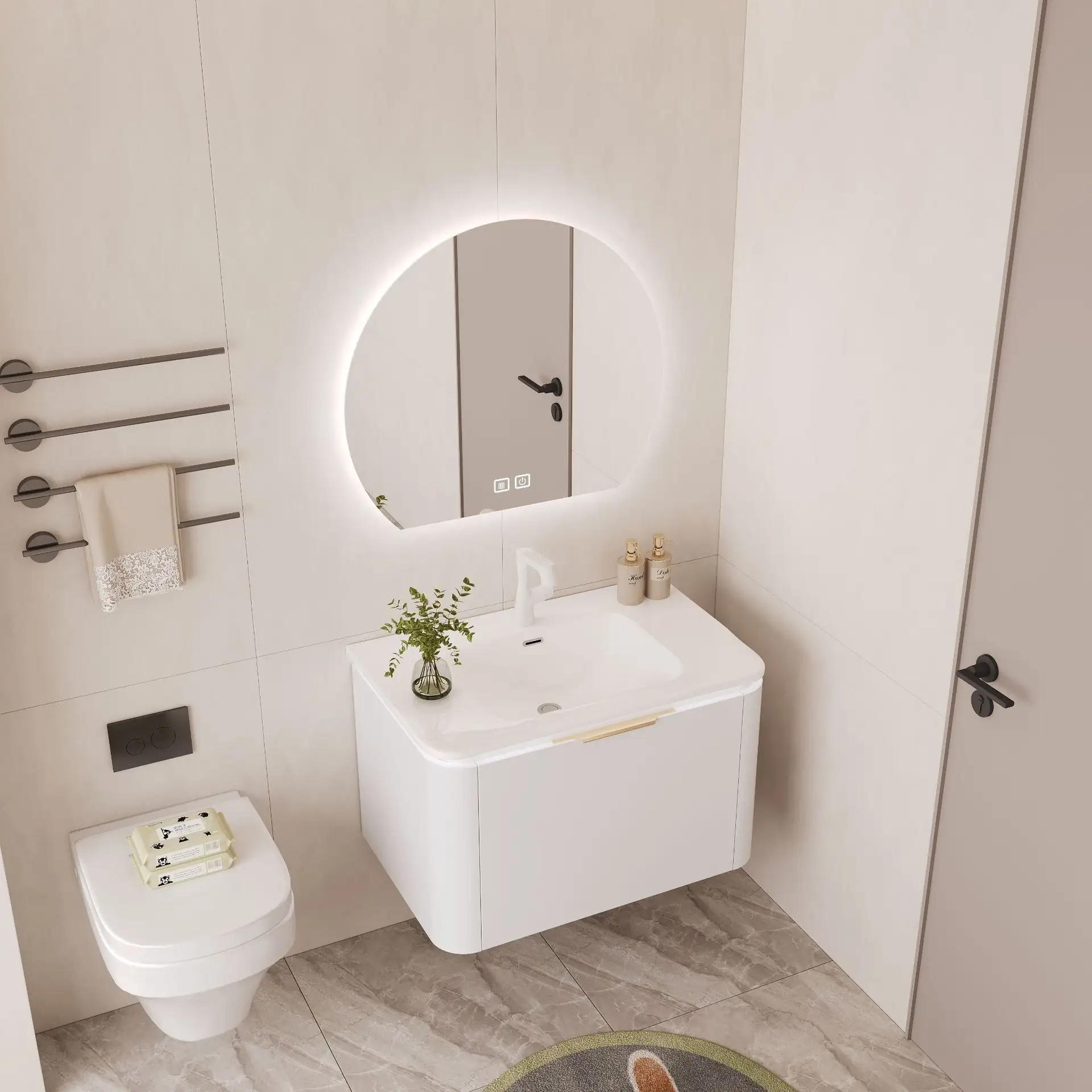
When a request for quotation (RFQ) compares a bwr vs marine grade plywood vanity, the price gap can be steep and the difference easy to miss unless you know what the grade names describe. BWR stands for boiling water resistant, and it refers to the glue that holds the panel together — the same glue family that marine-grade uses, with a different veneer selection on top.
For a distributor, a plywood grade that fails in a humid bathroom is not a cosmetic problem. Delamination at the glue line, swollen edges, and warped doors become return freight, replacement units, and a specifier who stops trusting your line. The grade printed on the quotation decides how often that happens, so reading the name correctly is a purchasing skill, not paperwork.
How Plywood Is Built (and Why Glue Defines the Grade)
Veneers, cross-lamination, and what the structure does
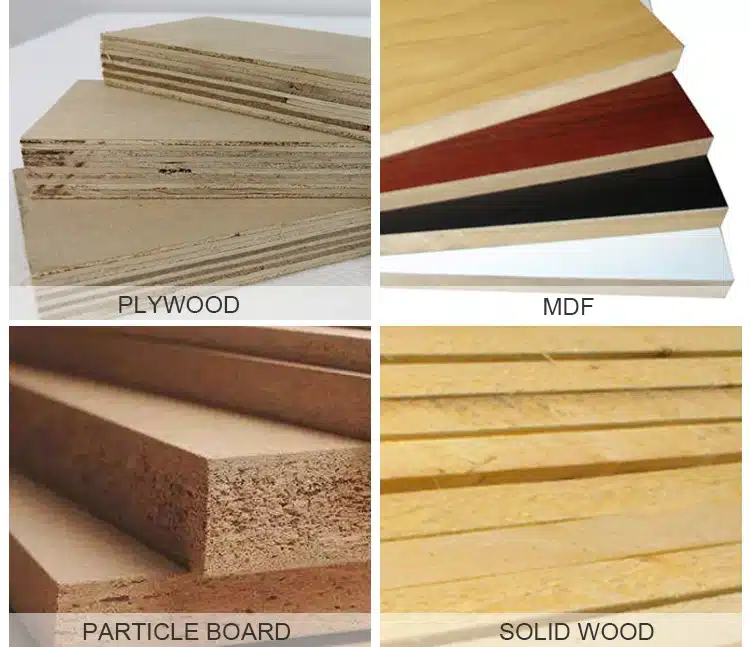
Plywood starts as thin veneers peeled from rotary-cut logs. The veneers are stacked so the grain of each layer runs perpendicular to the layer below it, then bonded with resin under heat and pressure. That cross-lamination is the reason a plywood panel resists warping in a way a solid board cannot: movement in one layer is checked mechanically by the layers on either side. Standard industry practice uses an odd number of plies so the panel stays balanced and flat. The Wikipedia entry on plywood covers the manufacturing process in more depth if you want the full picture.
The face veneer quality and the ply count set the panel’s appearance and its stiffness. What decides whether the panel survives a bathroom, though, is the adhesive between the plies. In the three grades MFBATH offers on its plywood vanity line, the wood core is comparable; the resin is where the products actually separate.
Urea-formaldehyde versus phenol-formaldehyde
Standard industry knowledge divides panel adhesives into two families. Urea-formaldehyde (UF) resin cures to a pale, hard glue line, bonds veneers reliably, and costs less. It also hydrolyzes — breaks down chemically — when it stays wet for long stretches. Panels made with UF are classed as interior or moisture-resistant (MR) material, and they are the reason “standard plywood in a bathroom” became a cautionary phrase among specifiers.
Phenol-formaldehyde (PF) resin cures dark and keeps its bond through boiling water. Panels built with PF glue are classed as exterior or boiling-water-resistant (BWR). Marine-grade plywood uses that same PF bond and adds stricter veneer selection and tighter core quality, so the shorthand “marine-grade is a better panel with the same glue” is close to true — and it is exactly why buyers overpay when they specify marine-grade for a job that only needed BWR.
That is the whole point of grade names on a quotation: they describe the glue line first. Wood species, thickness, and finish get listed separately. When a line reads “BWR” or “marine grade,” you are reading a statement about the bond and the veneer selection behind it.
You can see the difference at a cut edge. UF glue lines are light and thin; PF glue lines run dark, nearly black, which is why the machined edge of a BWR or marine-grade panel shows a distinctly darker stripe pattern. That visual cue is a useful first check at the loading dock, though it does not replace a test report. Panel thickness is listed on the quotation separately from grade: a thicker panel is stiffer and takes hardware better, but it does not change the bond class. Specify both, and treat them as independent decisions.
The Three Grades on a Vanity Quotation
| Grade | Resin/bond class | Moisture behavior | Typical vanity use |
|---|---|---|---|
| Standard (MR/interior) | Urea-formaldehyde bond | Stable in dry rooms; swells and delaminates under repeated wetting | Dry-climate residential bathrooms with good ventilation |
| BWR (boiling water resistant) | Phenolic bond | Passes boil-test cycles; glue line holds under sustained humidity | Residential and hospitality vanities, most commercial bathrooms |
| Marine-grade | Phenolic bond plus tighter veneer and core selection (BS 1088-class construction) | Built for continuous water exposure and high splash | Coastal resorts, pool-adjacent rooms, spa and wet facilities |
MFBATH’s plywood vanity line is offered in all three grades, with the same carcass design in each; only the panel specification changes. That keeps the cost comparison clean: you pay for the bond class, the veneer selection, and the test paperwork, not for a different cabinet.

Read each row as a bathroom scenario. The standard grade row is the honest option for a ventilated residential bathroom in a dry climate. It machines well and looks like any other plywood vanity, and it fails predictably if the room turns chronically wet: swollen edges first, delamination after. The BWR row is the workhorse — the same look, a glue line that survives what a bathroom actually throws at it, and a price that fits distributor margins. The marine-grade row is insurance for the rooms where water is a daily event rather than an accident. Veneer selection matters there, because face quality decides how well the panel takes the waterproof edge treatment and how presentable it stays after years of splash.
The three rows also answer the most common sourcing question: what am I actually paying for when the price climbs? With MFBATH, the answer sits in the panel spec — the bond class, the face veneer grade, and the test documentation — while carcass construction, joinery, and hardware stay constant.
When you line up quotes from different factories, compare the panel specification line by line instead of matching grade names. Two quotes that both say “BWR” can differ in face veneer quality, ply count, and the glue spread rate at the press; those differences show up in the test report, not in the one-line description. Ask for the panel spec sheet behind each grade name before you compare prices, and the table above will tell you which rows of that sheet matter.
For a fuller explanation of how the plywood carcass is built and finished, see our plywood carcass guide, which walks through panel layup, joinery, and the finishing sequence in detail.
Moisture Tests That Separate the Grades
What the boil test actually proves
Industry bond tests for exterior-type panels run on a simple premise: wet the panel repeatedly and see whether the glue line survives. A sample is boiled, dried, and boiled again over several cycles, which stresses the adhesive far harder than any bathroom will. A panel that holds through the cycles has demonstrated real margin; a panel that delaminates on cycle one tells you everything about its bond class. Standards such as BS 1088 and EN 314 define the exact cycles and pass criteria — treat those as the yardstick for “boiling water resistant,” not the factory’s word for it.
Soak tests work the same way at lower temperature for interior-type panels. The logic is what matters on a quotation: every grade label traces back to a defined wetting test, and the test results are the evidence you should hold the factory to.
A quicker screening method is the knife test. Lift a sliver of veneer at the panel edge and try to peel it back: on a well-bonded panel the wood tears before the glue lets go, while a starved glue line lets the veneer lift clean. It is a field check, not proof, but it catches the worst batches in minutes and costs nothing. Use it on the first carton of every shipment, and let the factory know you do.
Questions to put in front of the factory
A serious test report names the standard, the cycle count, the batch, and the result. When you request one, ask for:
- the bond class stated against a named standard, not a marketing term;
- the face veneer species and grade used in the batch;
- the formaldehyde class certificate that covers the same batch;
- batch numbers that match the panel marking on the cartons you receive.
A factory that cannot produce a test report for the exact panel on your quotation is selling you a description, not a tested product.
Edge sealing counts as much as the panel
Moisture enters a vanity through the exposed panel edges — the cut ends of doors, drawer fronts, and assembly cutouts — long before it penetrates the faces. An unsealed edge is a wick: even a BWR carcass fails where the saw cut through the veneers if the edge is left bare.
Waterproof edge sealing is standard on MFBATH plywood vanities. Every exposed edge is sealed at the factory, and cutouts made during assembly are sealed before the unit ships, so the finished carcass has no open wood end-grain pointing at the humidity.
Verification runs alongside the build. Each unit passes a five-stage inspection before packing, so the grade claim is checked per unit rather than by sampling. For larger orders, MFBATH supports third-party inspection by SGS or TÜV, which is the usual way a distributor verifies grade claims before the container leaves the port. The factory has held ISO 9001 and ISO 14001 certification since 2017, and CE and UL listings cover the markets that require them. The plywood and MDF inspection guide lists the checkpoints item by item.
Plywood Vanities in Three Grades, One 15-Unit MOQ
Browse this product, solution, or service page to explore relevant offerings.
Formaldehyde Classes Travel With the Grade
E1, CARB Phase 2, and TSCA Title VI
The same resin that defines the bond class also defines the emission class, because both UF and PF resins release formaldehyde as they cure. Formaldehyde is a naturally occurring compound, and wood itself emits some of it; the regulation question is how much a panel adds on top of that baseline.
E1 is the European emission class, capped at ≤0.1 ppm (parts per million). CARB Phase 2 is the limit set by the California Air Resources Board for composite wood products — the CARB entry on Wikipedia explains the regulatory background — and TSCA Title VI, named for the Toxic Substances Control Act, is the federal version that applies nationwide in the United States. For a distributor, these are not environmental niceties: customs clearance, retailer audits, and project specifications all reference one of the three.
MFBATH’s plywood line is built to a low-formaldehyde standard: E1 at ≤0.1 ppm as the baseline, with CARB Phase 2 and TSCA Title VI documentation available for the U.S. market. Our CARB Phase 2 guide explains what the certificate covers and how to read it on a quotation.
Documentation is the deliverable
Import markets enforce emission classes at the border, so the certificate travels with the shipment the way the grade does. A container without the paperwork can sit in customs while the distributor explains the delay to a contractor. That is why the formaldehyde class should be written into the purchase order alongside the bond class, with the certificate number on the packing list.
Two optional items complete the picture for green-tender projects. Forest Stewardship Council (FSC) certified wood is available on request, and low-VOC finishes — water-based topcoats with low volatile organic compound (VOC) content — keep the emissions story consistent from panel to paint.
The document requests come from three directions in practice: customs brokers at the port of entry, retail programs that audit vendor compliance, and architects who copy the emission class straight into the specification. A distributor that hands over the certificate folder at the first ask keeps the sale moving. One that needs to chase the factory for a week may watch the order go to a competitor with the paperwork ready. File the certificates before the container sails, and reorder them with every batch.
Which Grade Fits Which Market
The bwr vs marine grade plywood vanity decision comes down to one question: how often does water touch this cabinet, and for how long? Walk the installation before you answer.
Inland residential — standard or BWR
A ventilated bathroom in a dry climate is the one place where standard (MR) grade remains a defensible choice, as long as the edges are sealed properly and the buyer accepts the limitation. The savings over BWR are real and the risk is small when the room dries out between uses. For anything with a shower used daily, an unventilated bath, or a household that runs the exhaust fan rarely, move up to BWR and stop thinking about it.
Coastal and hospitality — BWR is the floor
Hotel bathrooms and coastal apartments run high humidity for hours at a time. BWR is the floor for that work: it handles the humidity, it survives housekeeping chemicals at the edges, and it prices into a renovation budget. Specifying standard grade here saves a small amount per unit and risks chargebacks that erase the savings several times over.
Pool-adjacent and spa — marine-grade earns its premium
Adjacent to pools, in spa changing areas, and in rooms where surfaces get hosed down, water is continuous. Marine-grade with its tighter veneer and core selection is the right call, and the premium is easier to justify when the alternative is a callback in year one. If the project brief uses words like “wet area” or “continuous moisture,” treat marine-grade as the starting point rather than an upgrade.
For the wettest corners, some buyers also run a PVC vs plywood comparison before deciding; PVC removes the wood entirely, which changes the cost and the look.
Sizing and finishes for every grade
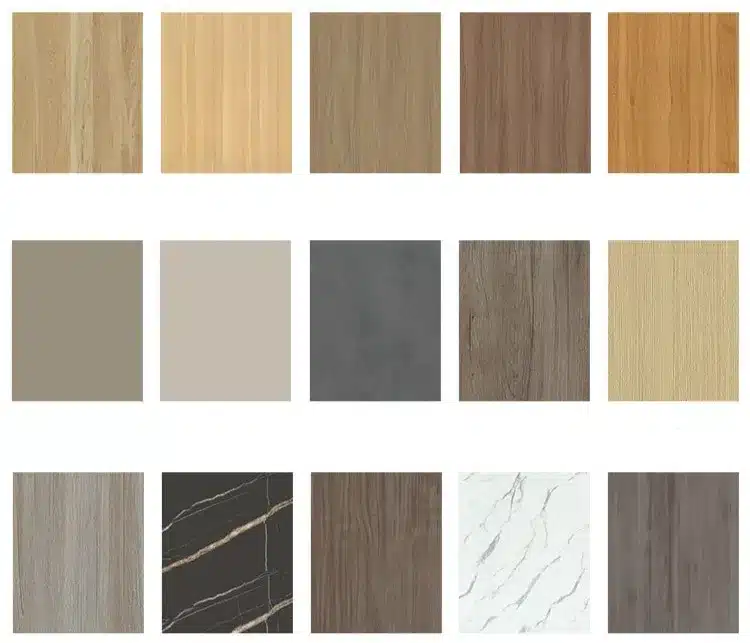
The grade choice does not restrict the product range. MFBATH builds plywood vanities in widths from 24 to 60 in (also listed as 45 cm to 200 cm) with depths of 18 to 24 in, in all three grades. Finishing runs from 15 standard finishes up through a library of more than 1,000 finishes, and custom colors start at 50 units per project on the plywood line.
Budget plays a role, and it is worth admitting that openly. The discipline is to choose the grade deliberately and price it into the quotation, rather than accepting whatever panel the factory happened to have in stock that week. State the grade on the purchase order, match it against the test report at delivery, and the rest of the sourcing process stays routine. The product page lists the current models, dimensions, and finish categories.
Frequently Asked Questions
Is marine-grade always worth the premium over BWR in bathrooms?
No. The bwr vs marine grade plywood vanity decision should follow the water exposure, not the name: BWR handles the standard bathroom cycle — daily humidity, occasional splash, cleaning chemicals at the edges — at a price that fits distributor margins, while marine-grade adds cost for tighter veneer selection and core quality that only pays off where water is continuous, such as pool-adjacent rooms and spa areas. For a normal hotel bathroom or a coastal apartment, BWR is the value point; for a wet-area brief, marine-grade is the defensible spec. MFBATH offers both on the same carcass design, so the upgrade cost is visible before you commit.
How can a buyer verify the grade on delivery?
Start with paperwork: request test reports that name the standard, the cycle count, and the batch, and check the batch numbers against the panel marking on the cartons. Visual checks come next — the dark glue line of a phenolic bond is visible at a cut edge, and the panel marking itself usually states the bond class. For real certainty, cut a sample from the delivered unit and run your own boil test; a kitchen stove and a pot of water will reproduce the logic of the factory test. For large or first orders, third-party inspection by SGS or TÜV before loading closes the loop, and MFBATH supports that process as a standard option.
What is the MOQ for plywood vanities?
The minimum order is 15 units per model, color, and size across the product line, and custom colors on the plywood line start from 50 units. Samples are free with a lead time of 10 working days, with the buyer covering shipping. Bulk production runs 20 to 30 days, the factory capacity is 5,000 sets per month, and quotations are FOB Qingdao with 30% deposit and the balance due within one week of the draft bill of lading; total lead time to the U.S., Canada, or Mexico runs 4 to 6 weeks. Every unit carries a 2-year whole-unit warranty, and the return rate on the line sits below 1%.
Spec the Grade, Then Verify It
Grade names describe the glue line first and the veneer selection second, and both are verifiable. For most B2B bathroom lines, BWR is the sweet spot; marine-grade earns its premium only in high-splash and coastal work, and standard grade still has a place in dry climates when the edges are sealed.
- Put the bond class and the formaldehyde class in writing on the purchase order.
- Confirm the edge-sealing process covers cutouts made during assembly.
- Ask for batch-matched test reports and panel marking before the container loads.
- Use third-party inspection on large or first orders.
Close the loop before you commit: request grade test reports with your quotation, and a free sample ships within 10 working days, with freight on your side. One sample unit is enough to run your own soak test and see the glue line behavior for yourself.





0 Comments