

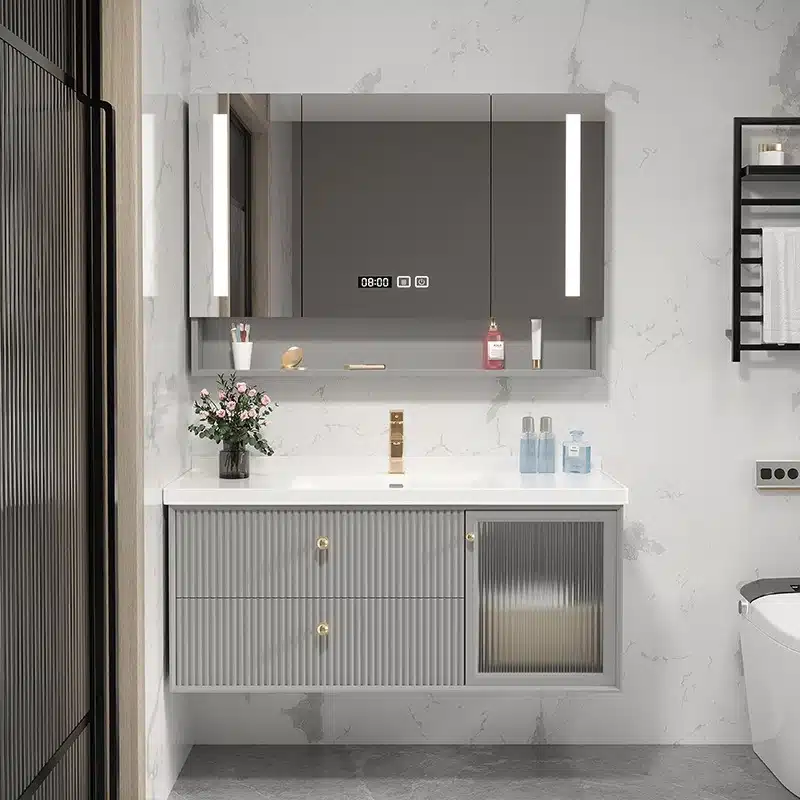
Selecting the wrong particle board vanity for a 200-unit apartment complex can completely erode your project’s profitability through premature replacements and maintenance calls. This single material decision, scaled across hundreds of kitchens and bathrooms, directly dictates long-term operational costs and capital expenditures. While Melamine Faced Chipboard (MFC) is known for its affordability, many specifiers are unaware of the critical manufacturing details that determine whether it lasts two years or ten.
This guide provides a technical breakdown for evaluating MFC as a core material for multi-family and student housing projects. We will analyze the crucial difference between laser and glue edge banding, explain MFC’s inherent durability and scratch resistance, and expose its primary weakness to water when the core is compromised. This is a standard operating procedure for specifying budget-friendly cabinetry that can withstand the demands of high-turnover properties.
What Is MFC (Melamine Faced Chipboard)?
MFC is an engineered wood panel where a decorative melamine resin layer is thermally fused to a particleboard core, creating a ready-to-use material for high-volume furniture production.
Core Composition and Manufacturing
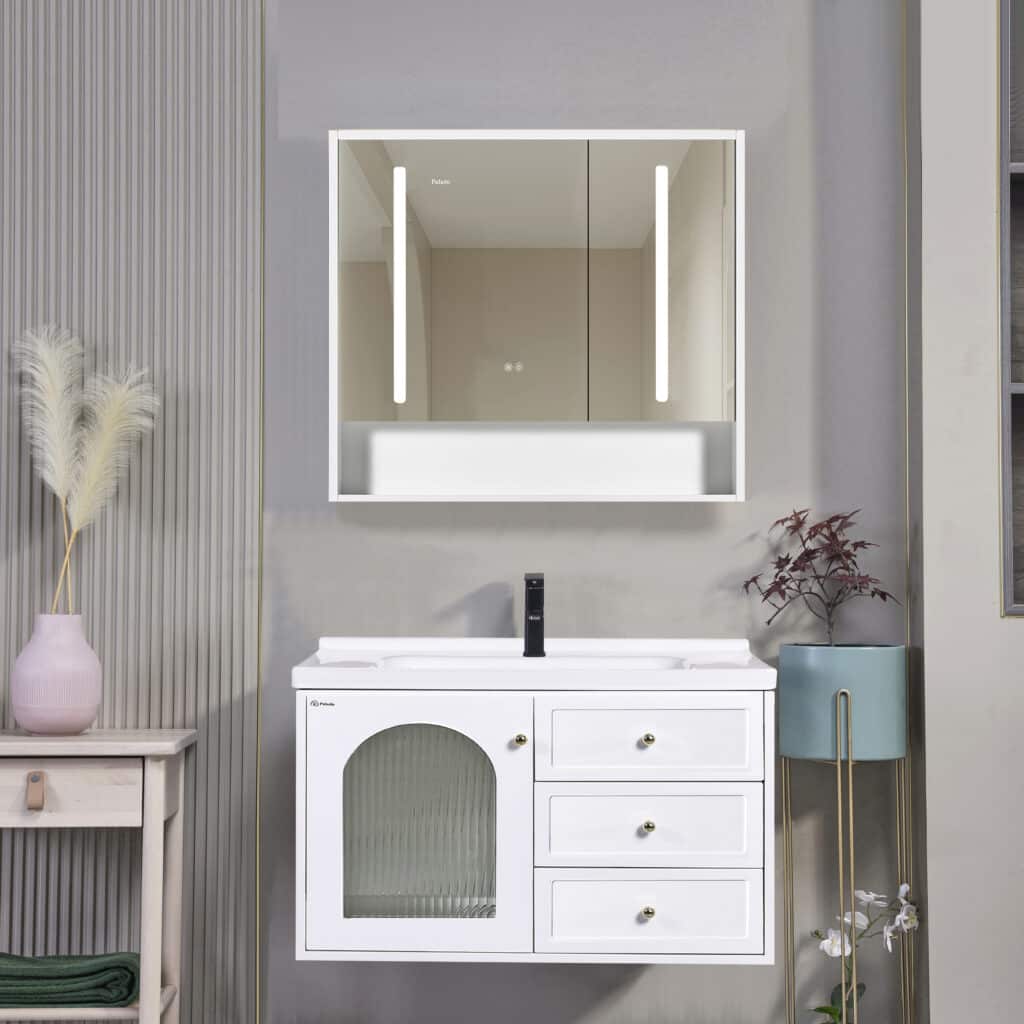
Melamine Faced Chipboard is an engineered wood panel manufactured by bonding a decorative, resin-impregnated paper layer directly onto a particleboard core. The process uses high heat and pressure to thermally fuse the layers, which creates a pre-finished, sealed panel ready for immediate assembly.
- The base is a particleboard core made from wood chips and resin.
- A decorative paper layer is saturated with melamine resin.
- The melamine layer is permanently bonded to the core using high heat and pressure, sealing the surface.
Key Material Properties
The fused melamine surface gives the panel its functional durability and aesthetic flexibility. This non-porous layer provides a hard-wearing finish that outperforms raw wood in many high-use environments, combining resilience with extensive design options.
- Highly resistant to scratches, stains, and abrasion from daily use.
- The non-porous surface is easy to clean and requires minimal maintenance.
- Available in an extensive variety of colors, patterns, and textures, including realistic wood grain finishes.
Application in Modern Furniture Production
MFC’s consistency and cost-effectiveness make it a cornerstone of modern, automated furniture production. Its reliable, machine-friendly properties are ideal for manufacturing modular systems like kitchen cabinets, office furniture, and wardrobes at scale for both residential and commercial sectors.
- Provides a cost-effective alternative to solid wood and plywood without sacrificing aesthetic quality.
- Its consistency and stability are ideal for high-volume, automated production lines.
- Widely used for kitchen cabinets, office furniture, shelving, and wardrobes.
Why Did the “IKEA Effect” Help MFC Dominate the Market?
The IKEA Effect created massive consumer demand for self-assembled furniture, a business model made profitable and scalable by the low cost and precise machine-ability of Melamine Faced Chipboard.
The Psychology of Self-Assembly and Perceived Value
The “IKEA Effect” is a cognitive bias where people place a disproportionately high value on products they partially assemble themselves. This investment of personal effort fosters a sense of ownership and pride. The act of building the furniture makes the finished item feel more valuable to the consumer than an identical pre-assembled one, justifying its cost and creating a stronger attachment to the product.
MFC as the Engine for the Flat-Pack Model
While the IKEA Effect explains consumer psychology, Melamine Faced Chipboard is the material that made the self-assembly business model physically and financially viable. The entire flat-pack revolution depended on a material that was cheap, consistent, and easy to machine at an enormous scale. MFC met these requirements perfectly.
- Affordability: MFC’s low production cost kept final product prices accessible to a mass market, which was fundamental to the model’s success.
- Precision Machining: The material can be precision-cut on an industrial scale, ensuring all components, holes, and fittings align correctly for successful home assembly.
- Scalability: The consistency of MFC provided a reliable, mass-producible alternative that disrupted the traditional, labor-intensive carpentry industry.
Boost Your Sales with Factory-Direct Customization

Why Is Edge Banding Crucial for MFC (Laser vs. Glue)?
Edge banding is not an optional finish; it’s a critical manufacturing step that seals the vulnerable particleboard core, protecting it from moisture and impact that would otherwise cause rapid failure.
Protecting the Particleboard Core from Moisture and Damage
Edge banding acts as an essential seal for the exposed, porous core of Melamine Faced Chipboard. Without this protective layer, the raw particleboard is highly susceptible to moisture absorption from spills, steam, or ambient humidity. This ingress of water causes the wood particles to swell, leading to delamination of the melamine face and irreversible structural damage, especially in high-moisture areas like kitchens and bathrooms.
- It seals the particleboard substrate, blocking moisture and spills from penetrating the core.
- This prevention of swelling and warping is essential for the long-term durability of any cabinet or furniture piece.
- It also provides a durable barrier against mechanical wear, protecting the edges from chips, dents, and daily impact.
Adhesive vs. Laser: The Current State of Edge Banding Technology
The industrial furniture market is dominated by adhesive-based systems, specifically hot melt (EVA) and polyurethane (PUR) glues. These methods offer a proven balance of cost-effectiveness, high bond strength, and manufacturing efficiency, making them the standard for high-volume production. Automated machinery applies the adhesive and banding with extreme precision, ensuring a consistent and strong seal. Laser edge banding is a premium alternative that offers a superior aesthetic, but adhesive remains the primary technology in the market.
| Attribute | Adhesive Systems (EVA/PUR) | Laser Systems |
|---|---|---|
| Bonding Method | A layer of hot-melt glue is applied to bond the edge band to the board. | A laser activates a functional polymer layer on the edge band, fusing it to the board. |
| Market Position | Proven industry standard, commands the market for most applications. | Emerging technology, used for high-end, design-led furniture. |
| Primary Advantage | Cost-effective, reliable, and efficient for high-volume manufacturing. | Superior, seamless ‘zero-glue-line’ aesthetic with no visible joint. |
While laser technology provides an impeccable finish, the capital investment and operational costs are significantly higher. For most B2B applications, including commercial, multi-family, and student housing projects, modern PUR adhesive systems deliver excellent durability and moisture resistance that meets project specifications without the premium cost of laser systems.
Why Is MFC Highly Durable, Scratch-Resistant, and Paint-Free?
The durability of MFC comes directly from its thermally fused melamine resin surface, not the particleboard core; this hard, non-porous layer provides scratch resistance and a factory-finished surface that needs no paint.
Data Mismatch Between MFC and MDF
It’s common to confuse Melamine Faced Chipboard (MFC) with Medium Density Fiberboard (MDF), but their performance characteristics are distinct. Any analysis of MDF’s homogeneous density or warp resistance doesn’t apply to MFC. MFC is a composite material built with a particleboard core and a separate, thermally fused melamine surface. Its durability attributes are a result of this specific construction, not the properties of a different engineered wood like MDF. You cannot substitute MDF data to explain MFC’s real-world performance.
Unaddressed Properties of the Melamine Surface
The primary reasons for MFC’s performance advantages are found in its outer layer. The manufacturing process fuses a resin-impregnated decorative paper to the particleboard core under heat and pressure. This creates a hard, durable, and non-porous finish with several key properties.
- Scratch and Stain Resistance: The cured melamine resin forms a tough outer shell that resists scratches, abrasions, and stains far better than raw particleboard or a painted surface.
- Paint-Free Finish: The decorative layer is integrated during production, which eliminates the need for painting. This provides a consistent color and texture from the factory and avoids the labor, cost, and potential inconsistencies of a secondary finishing process.
- Ease of Maintenance: An accurate assessment requires data on the manufacturing and technical specifications of this melamine facing, but its non-porous nature makes it easy to clean and suitable for high-use applications like furniture and cabinetry.
What Are the Water Weaknesses and Exposed Core Risks of MFC?
The primary failure point of MFC is its porous particle board core, which absorbs moisture like a sponge, leading to irreversible swelling and structural degradation once the protective melamine surface is compromised.
Moisture Absorption and Structural Swelling
The main weakness of MFC lies in its core. The internal chipboard is not inherently waterproof and readily absorbs ambient moisture, particularly in environments where humidity exceeds 50%. This absorption causes the wood particles to swell, warp, and permanently lose their structural integrity. Even without direct water contact, high ambient humidity is enough to trigger this degradation over time, compromising the board’s stability and strength from the inside out.
| Material Characteristic | MFC (Melamine Faced Chipboard) | Superior Alternatives (Plywood / PVC) |
|---|---|---|
| Core Composition | Porous wood chips and resin, highly absorbent. | Plywood: Cross-laminated wood veneers with water-resistant glue. PVC: Solid, non-porous polymer. |
| Water Resistance | Low. Swells irreversibly when the core is exposed to moisture. | Plywood: High resistance. PVC: 100% waterproof. |
| Primary Failure Point | Compromised edge banding or surface scratches that expose the core. | Plywood: Extreme, prolonged saturation. PVC: Not vulnerable to water damage. |
Vulnerability of Exposed Edges and Surface Damage
MFC’s durability is entirely dependent on its sealed melamine surface and intact edge banding. A deep scratch, chip, or poorly sealed edge creates a direct pathway for moisture to penetrate the core through capillary action. The edges are the most common points of failure, where water can easily seep in and begin degrading the material. Once moisture becomes trapped inside the particle board core, it accelerates delamination of the melamine surface and leads to complete structural failure.
What Are the Best Use Cases for MFC (Multi-Family and Student Housing)?
MFC’s primary value is in large-scale projects like multi-family and student housing, where its low cost and consistent finish provide a practical balance for high-turnover environments.
Cabinetry, Shelving, and Built-In Furniture
In multi-family and student housing, MFC is a standard for cabinetry and furniture because it balances cost, durability, and aesthetics. These environments face high turnover and heavy use, requiring materials that can withstand wear without the expense of solid wood or premium plywood. The machine-friendly nature of MFC makes it invaluable for large-scale modular production, where manufacturing consistency is critical.
| Specification | Melamine Faced Chipboard (MFC) | Plywood (Rental-Grade) |
|---|---|---|
| Typical Lifespan | 5-15 years, highly dependent on moisture control. | 25-50 years, offers better long-term value. |
| Moisture Performance | Surface is resistant, but exposed core swells irreversibly. | Superior resistance to warping and moisture damage. |
| Durability & Repair | Scratch-resistant surface, but core damage is difficult to repair. | More resilient to impact and can be repaired more easily. |
| Best Use Case | Budget-driven projects; dry areas like closets and bedrooms. | High-use areas like kitchens and bathrooms in rental properties. |
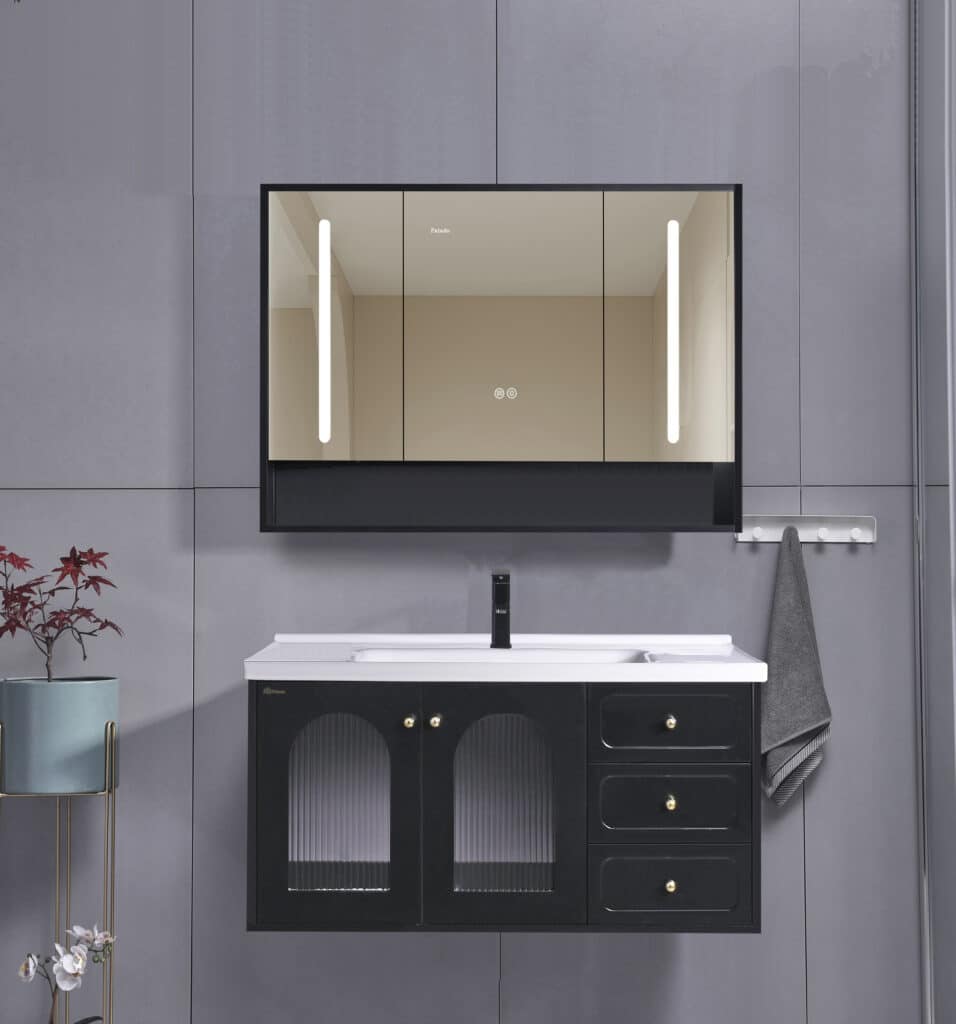
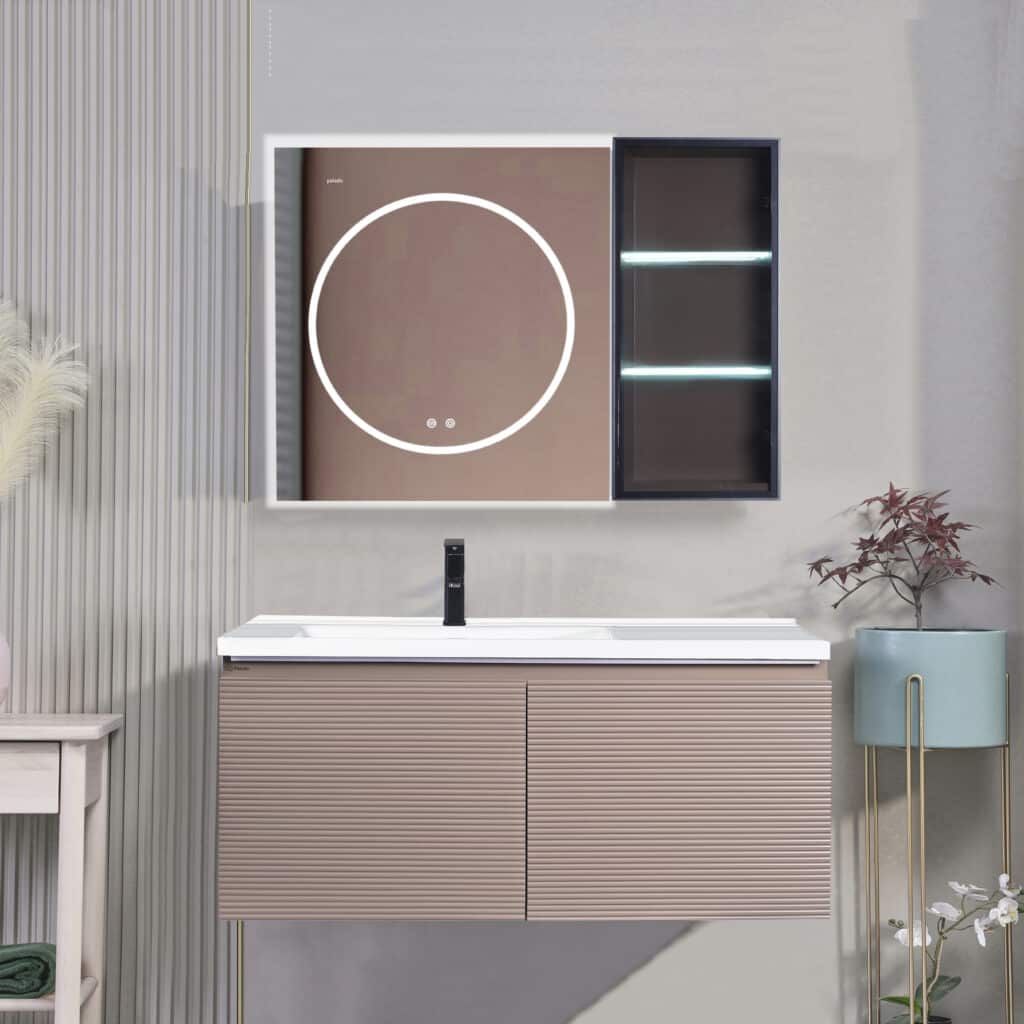
Its uniform, paint-free finish ensures consistency across hundreds of units in large projects, which simplifies both installation and ongoing maintenance. This makes MFC an efficient choice for kitchen cabinets, bathroom vanities, and closets where a clean, modern look is required on a tight budget.
- The scratch-resistant melamine surface is ideal for high-traffic rental units.
- A consistent, factory-applied finish removes the need for on-site painting, speeding up project timelines.
- The material is perfect for modular construction, allowing for rapid on-site assembly of pre-fabricated components.
Interior Paneling and Non-Load-Bearing Surfaces
For non-structural applications, MFC serves as a cost-effective solution for finishing interior spaces. It is frequently used where appearance and basic acoustic properties are more important than structural strength. This includes decorative wall paneling in common areas or as a functional substrate in other building systems.
- It is used for interior wall panels to provide a clean, modern look in lobbies, hallways, and individual rooms.
- MFC panels are suitable for false ceilings, offering some acoustic dampening in high-density housing.
- The material often functions as flooring under layment, creating a stable and level base for final floor coverings like carpet or vinyl.
Why Is MFC Ranked as the Cheapest Option on the Cost Index?
MFC’s cost leadership is a direct result of high-efficiency production and economical raw materials, but this advantage is under constant pressure from volatile adhesive and timber markets.
Streamlined Manufacturing and Material Economy
Melamine Faced Chipboard maintains its position as a cost-competitive material through highly efficient, streamlined production processes. Improvements in fabrication have reduced its production costs by approximately 20% compared to alternatives like MDF and plywood. The core material itself, chipboard, is inherently more economical to produce than the fiberboard used for MDF or the wood veneers required for plywood. This material economy, combined with its market dominance in the 18-25mm thickness range, allows MFC to provide a reliable balance of structural integrity and affordability for large-scale projects.
Impact of Raw Material and Adhesive Costs
While MFC is a budget-friendly option, its cost advantage is not static. Market forces directly influence its standing on the cost index. Over the last five years, raw material costs have climbed by around 20%, which directly impacts final production expenses. Price volatility in the chemical and adhesive markets presents an ongoing challenge to maintaining a stable, low price point. These external pressures require manufacturers to continuously optimize their supply chains and production lines to preserve MFC’s cost-competitive edge against other engineered woods.
Conclusion
For large-scale projects like dorms and apartments, MFC delivers unmatched value. The material’s durability comes from its melamine surface, yet its longevity depends entirely on sealing the particleboard core from moisture. This balance makes professional manufacturing and high-quality edge banding critical for success.
To see how our manufacturing process protects the core, request a refundable sample to check our edge banding quality. We can help you specify the right materials to meet your project’s budget and performance goals.
Frequently Asked Questions
Is particle board bad for bathrooms?
Standard particle board is a poor choice for high-humidity environments like bathrooms. It readily absorbs moisture, which causes it to swell, warp, and lose structural integrity. However, materials like Melamine Faced Chipboard (MFC) are specifically engineered with a durable, moisture-resistant surface. When the edges are properly sealed, MFC can be a cost-effective and reliable material for bathroom vanities and cabinets, provided it is not subjected to direct, prolonged water exposure.
Melamine vs particle board difference?
These are not two separate materials but rather a core and a finish. Particle board (also known as chipboard) is the substrate, an engineered wood core made from compressed wood particles and resin. Melamine is a durable, thermosetting resin that is thermally fused to the particle board core to create a decorative, scratch-resistant, and moisture-resistant surface. The final combined product is known as Melamine Faced Chipboard (MFC).
Waterproof particle board?
Particle board is not waterproof. There are moisture-resistant (MR) grades available, which use specialized resins to slow down moisture absorption, but they will still fail if submerged or exposed to standing water. A material’s resistance to water depends almost entirely on its surface finish. Melamine Faced Chipboard (MFC) provides a water-resistant surface, but its vulnerability lies in the seams and edges. If an edge seal is compromised, water can penetrate the core and cause damage.
How to repair swollen particle board?
Repairing swollen particle board is very difficult, as the water damage is largely irreversible. For minor swelling, you can attempt a cosmetic fix: first, ensure the board is completely dry. Next, sand down the raised area to be as level as possible. Fill any remaining depressions with a high-quality wood filler or epoxy, then sand it smooth once cured. Finally, prime and paint or apply a new laminate to seal it from future moisture. For significant swelling, replacement of the panel is the only reliable solution.
Best vanity for rental property?
The best vanity for a rental property is one made from Melamine Faced Chipboard (MFC). This material offers an optimal balance of durability, low cost, and ease of maintenance, which are critical factors for rental units. Its scratch-resistant and moisture-resistant surface can withstand tenant use and is easy to clean between occupancies. MFC’s low lifecycle cost makes it a preferred alternative to solid wood, which is more expensive and susceptible to water damage in a high-use setting.
Life expectancy of particle board cabinets?
The life expectancy of particle board cabinets depends heavily on the quality, finish, and environment. High-quality Melamine Faced Chipboard (MFC) cabinets in a dry environment like a kitchen can last 15-25 years with proper care. In a higher-humidity area like a bathroom, a lifespan of 10-15 years is a realistic expectation, assuming good ventilation and no direct water contact. Low-quality boards with thin, unsealed finishes may fail in as little as 5 years if exposed to moisture.





0 Comments