
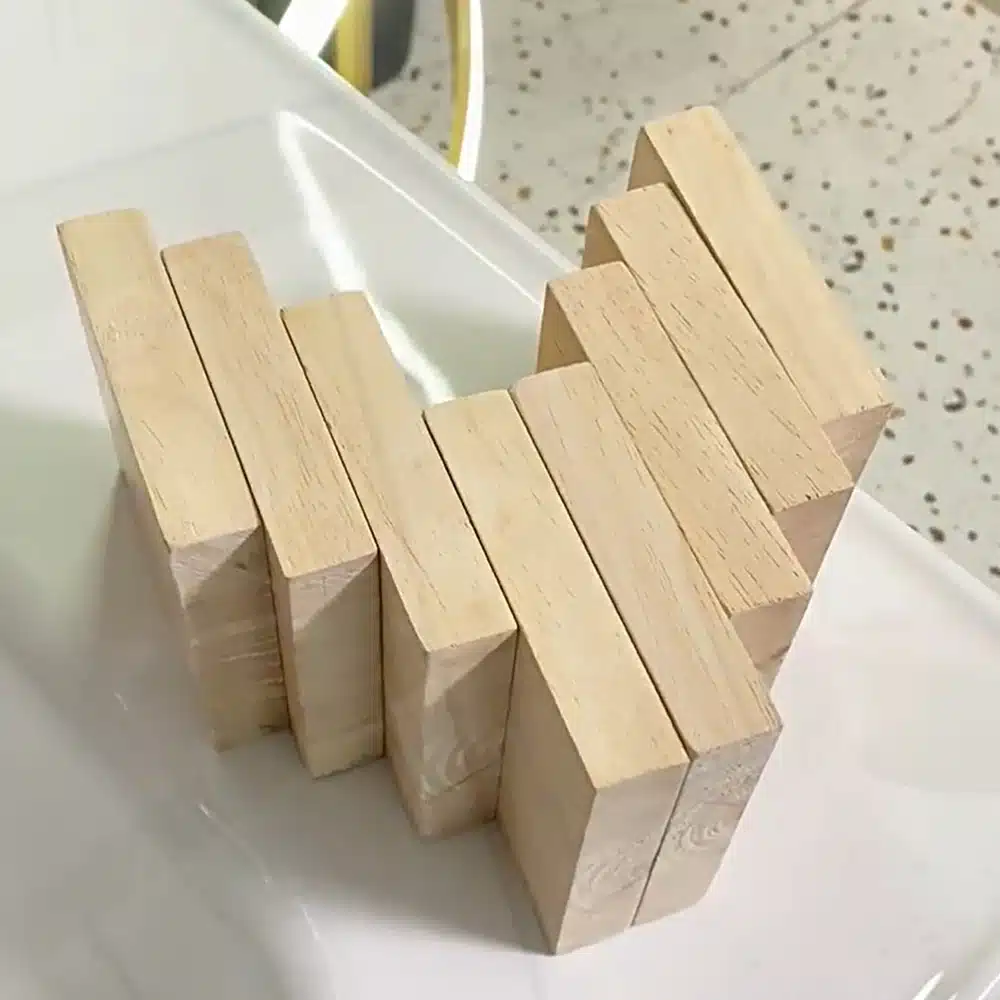
Sourcing a durable plywood RTA vanity is the main factor separating a successful multi-unit installation from a project plagued by costly water damage claims and client callbacks. The market is saturated with flat-pack cabinets built with particle board, a material known for swelling, warping, and failing in humid bathroom environments. For contractors and distributors, specifying this inferior material introduces a significant financial risk, leading to product failures that erode profit margins and damage brand reputation.
This guide provides a technical breakdown for material specification, moving beyond surface-level aesthetics. We will analyze the structural risks of particle board and explain why furniture-grade plywood is essential for long-term performance in wet areas. We will define the key differences in construction, compare the value propositions of each material, and establish clear standards for sourcing RTA products that last.
Why Are Flat Packs Stigmatized?
The negative perception of flat-pack furniture is a direct result of historical assembly frustrations, the structural limits of low-density materials like particle board, and the aesthetic uniformity inherent in mass production.
Assembly Complexity and Frustration
A primary driver of the flat-pack stigma is the assembly process itself. The initial user experience is often defined by frustration, which colors the perception of the final product. Data shows that a majority of buyers—around 67%—experience problems during assembly. Vague instructions, misaligned pre-drilled holes, or missing hardware create a poor first impression that suggests low quality, regardless of the item’s actual performance once built.
Durability and Material Concerns
The market widely associates flat-pack goods with a limited lifespan. This belief is tied directly to the common use of materials like Medium-Density Fiberboard (MDF) and particle board. These materials are highly susceptible to moisture damage, causing irreversible swelling and structural weakening at connection points. Quality control in mass production can also be inconsistent, leading to products that fail prematurely or pose potential safety risks over time.
Design Homogeneity
Flat-pack furniture is engineered for high-volume manufacturing and efficient shipping, which often results in generic, uninspired designs. Consumers perceive this lack of unique character as a sign of low value. The designs are frequently seen as temporary or disposable solutions rather than long-term investments that add personality to a space. This aesthetic uniformity reinforces the idea that the product is a commodity, not a durable good.
Why Is Particle Board Risky?
Particle board introduces severe long-term risks from irreversible moisture damage, poor structural integrity, and hazardous chemical off-gassing, making it fundamentally unsuitable for bathroom applications.
Vulnerability to Moisture Damage
Particle board’s greatest weakness is its inability to handle moisture. Unlike other engineered woods, even small amounts of water cause it to swell permanently, warping veneers and preventing cabinet doors from closing properly. In a humid space like a bathroom, this constant exposure also creates an ideal environment for mold and mildew to grow within the material itself.
- Swells irreversibly when exposed to water, with no way to restore its original shape.
- Warping damages attached veneers and causes cabinet doors to misalign.
- Promotes mold and mildew growth in humid environments.
Poor Structural Strength
Made from compressed wood particles and glue, particle board cannot effectively support heavy loads. It fractures easily under pressure and has very poor screw-holding capacity, meaning fasteners often loosen over time. This structural weakness complicates installations, leads to costly repairs, and makes the material a poor choice for any application requiring durability.
- Breaks easily under pressure and cannot bear heavy weight.
- Fails to hold screws and nails securely, causing them to loosen over time.
- Unsuitable for high-traffic areas, often leading to squeaky or unstable flooring.
Chemical Health Hazards
Most particle board contains urea-formaldehyde resins, which release formaldehyde gas into indoor air for years after installation. Exposure to this gas can cause breathing problems and irritate the eyes, nose, and throat. This poses a significant health risk, especially for people with asthma or other respiratory conditions.
- Contains urea-formaldehyde, which can off-gas for 5-10 years.
- Formaldehyde exposure, even at low levels, can cause respiratory issues and irritation.
- Worsens existing conditions like asthma and can weaken lung function.
Meet Local Demand with Custom Vanities

Why Is Plywood Essential?
Plywood’s cross-grained construction provides engineered strength and resource efficiency that solid wood cannot match, making it a foundational material for durable and cost-effective manufacturing.
Environmental and Sustainability Benefits
Plywood is a sustainable building material made from renewable wood. Its production process maximizes the use of each log by bonding thin layers together, which minimizes waste and stores carbon. As a biodegradable product, it offers a greener alternative to plastics or metals, especially when sourced from responsibly managed forests. Modern manufacturing has further reduced its environmental impact.
- Made from a renewable resource and is both recyclable and biodegradable.
- Wood products store carbon dioxide, contributing to greenhouse gas reduction.
- Manufacturing plywood requires less energy compared to metal or synthetic plastics.
- Modern production uses low-VOC adhesives, reducing toxic emissions.
Performance and Cost-Effectiveness
Plywood delivers excellent durability and a high strength-to-weight ratio from its layered construction. This engineered stability resists warping and cracking better than solid wood, reducing long-term maintenance and replacement costs. This combination of performance and economy makes it a reliable choice for everything from furniture to structural building components.
- Offers exceptional durability, reducing the need for frequent replacements.
- The cross-grained structure distributes strength, providing stability while remaining lightweight.
- Serves as a versatile and sustainable alternative for applications in packaging, construction, and furniture manufacturing.
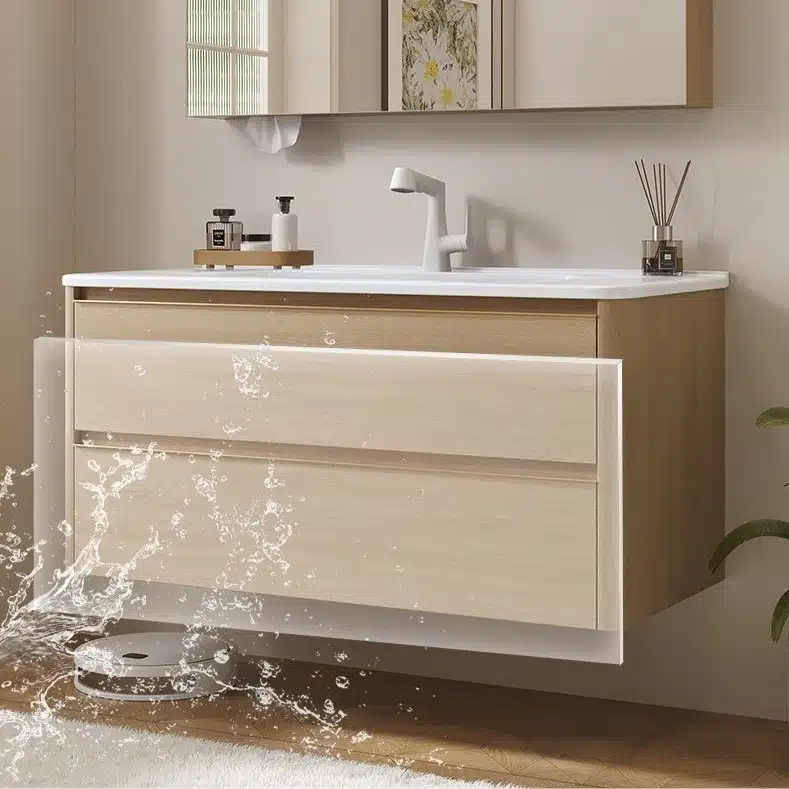
What Is “Furniture Grade” Plywood?
Furniture-grade plywood isn’t just a marketing term; it’s an engineering standard defined by defect-free hardwood veneers, cross-grain stability, and strict manufacturing tolerances for high-value applications.
Superior Appearance and Materials
Furniture-grade plywood is defined by its high-quality hardwood veneer faces. These outer layers are carefully selected for consistent grain patterns and are free from the natural defects you’d find in lower-grade materials. This makes it the only viable choice for visible applications where appearance is critical. The face veneers are sourced from hardwoods like birch, oak, maple, or walnut and are typically thin, ranging from 1/40th to 1/28th of an inch thick. Grading standards actively eliminate knots, splits, and distracting color variations to ensure a uniform, premium look.
Key Structural Characteristics
Beyond its appearance, this material is engineered for stability and precision. The core is built with a cross-grain construction, where each layer’s grain is oriented perpendicularly to the next. This design distributes stress evenly, resisting the warping and twisting common in solid wood. Manufacturers adhere to strict thickness tolerances, often within ±0.006 inches, to ensure components fit together perfectly in cabinet doors, drawers, and millwork. Premium grades also feature void-free edges, which improves structural integrity and allows stains and finishes to be applied uniformly without blotching.
| Characteristic | Construction-Grade Plywood | Furniture-Grade Plywood |
|---|---|---|
| Face Veneer | Allows knots, splits, and patches. Appearance is secondary. | Defect-free hardwood (e.g., birch, oak) with consistent grain. |
| Edge Quality | Often contains voids and gaps between core layers. | Void-free, solid core that finishes cleanly and adds strength. |
| Thickness Tolerance | Looser tolerances, leading to inconsistencies in thickness. | Strict tolerances (e.g., ±0.006 inches) for precise assembly. |
Understanding Surface Grades
The grade of the plywood’s surface dictates its best use and cost. This system allows for cost-effective construction by matching the right quality to the right component—visible surfaces get high grades, while hidden parts use lower grades.
- A-grade surfaces are the highest quality, offering a smooth, paintable veneer with virtually no defects. This is reserved for luxury furniture where a flawless finish is required.
- B/BB grade is the workhorse for high-quality furniture. It delivers a clean, consistent face suitable for most applications without the premium cost of A-grade.
- Lower grades like C2 are used for internal, hidden structural parts where appearance doesn’t matter, maximizing budget efficiency.
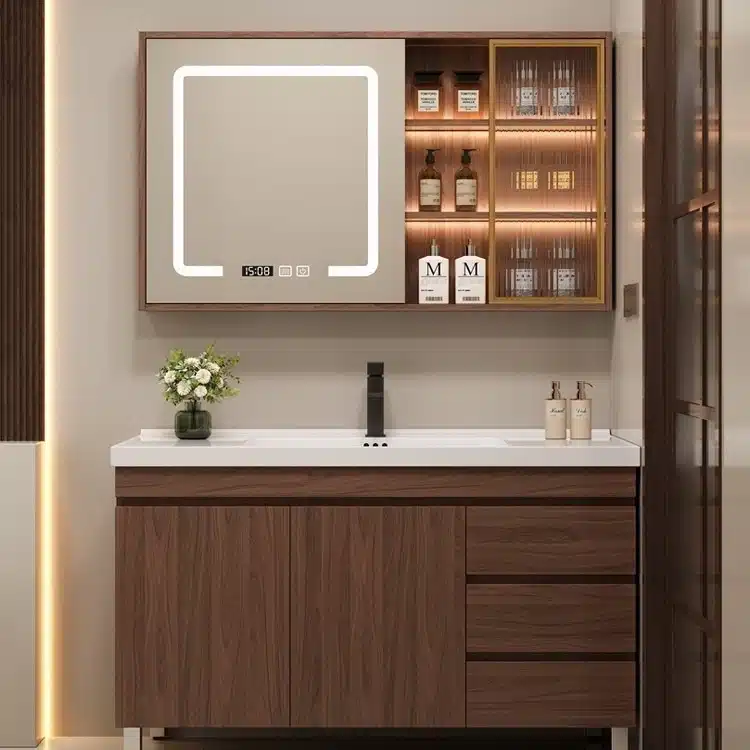
Plywood vs. Particle Board: Which Is Better?
Plywood consistently delivers a lower total cost of ownership through superior structural integrity and moisture resistance, making it the practical choice for any application where durability is a factor.
Upfront Cost vs. Total Cost of Ownership
Particle board offers an immediate cost saving, which is why it’s so common in budget-conscious, mass-market furniture. This initial affordability, however, often leads to higher replacement costs down the line. Plywood’s higher price reflects its complex manufacturing and superior raw materials, but it is a one-time investment that pays off in longevity. By 2026, industry analysis confirms that the total cost of ownership heavily favors plywood, as both commercial buyers and end-users prioritize long-term performance over short-term savings.
Durability and Moisture Resistance
The most critical functional difference is how each material handles moisture and stress. Plywood’s cross-laminated veneer construction provides excellent dimensional stability and strength, making it highly resistant to warping and damage in humid environments like bathrooms and kitchens. Particle board, which is essentially wood chips and resin, acts like a sponge. When exposed to moisture, it swells, permanently loses its structural integrity, and can promote mold growth. This single vulnerability makes it unsuitable for most functional cabinetry.
| Attribute | Plywood | Particle Board |
|---|---|---|
| Moisture Resistance | High. Resists warping and swelling due to cross-grain layers and waterproof adhesives. | Very Low. Absorbs moisture, swells permanently, and loses structural integrity. |
| Structural Strength | Excellent. Holds screws securely and supports heavy loads without sagging. | Low. Breaks easily under pressure and screws can strip out over time. |
| Total Cost of Ownership | Lower. Higher upfront cost is offset by exceptional longevity and low replacement frequency. | Higher. Low initial price is negated by frequent need for repair or replacement. |
| Primary Use Case | Cabinet boxes, bathroom vanities, structural furniture, high-traffic applications. | Budget flat-pack furniture, temporary fixtures, areas with zero moisture exposure. |
Does “All Wood” Increase Value?
The prestige of “all wood” doesn’t guarantee better performance in bathrooms; engineered materials like plywood often provide superior durability and stability for a lower cost.
Performance in Humid Environments
While solid wood has a traditional aesthetic appeal, plywood offers superior resilience in high-moisture settings. The data is clear: in humid conditions, solid wood vanities show a defect rate of 15%, compared to just 3% for vanities built with plywood. Plywood’s cross-grain construction provides greater dimensional stability, making it far more resistant to the warping and cracking that commonly affects solid wood over time in a bathroom.
Cost vs. Practical Value
The market increasingly favors plywood for its strong performance-to-price ratio. Solid wood materials typically range from $28–$42 per square foot, but furniture-grade plywood is significantly more affordable at $18–$26 per square foot. This practical value is reflected in market trends, where approximately 58% of all bathroom vanities are now built using plywood construction. For long-term use, it simply delivers better value without the premium cost of solid wood.
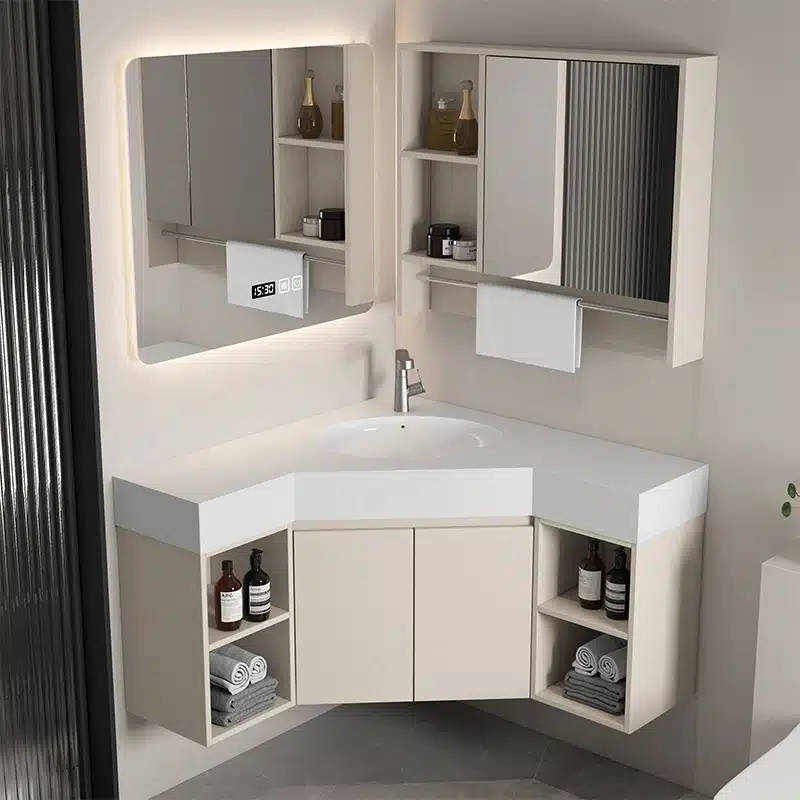
Why Source from Vietnam?
Vietnam has matured from a low-cost alternative into a reliable, top-tier global plywood exporter, offering a stable supply chain and a strategic focus on quality over pure price competition.
Stable Supply Chain and Cost-Effective Production
Vietnam secured its position as a top-five global plywood exporter by developing a complete, vertically integrated wood supply chain. This stability ensures a reliable flow of raw materials. Advanced automation in its manufacturing facilities delivers the precision and efficiency needed for large-scale production. This combination allows Vietnamese producers to offer highly competitive pricing while maintaining consistent, high-volume output for international buyers.
Focus on Quality and Value-Added Products
The market strategy is shifting decisively from competing on price to producing high-quality, value-added goods. Manufacturers are increasingly obtaining sustainability certifications to meet stringent global standards for clients in Europe and North America. This focus on quality also provides more predictable and stable pricing, which simplifies long-term budget planning for importers and contrasts sharply with the volatility seen from other Asian suppliers.
Proven Market Growth and Reliability
The Vietnamese plywood industry is seeing robust growth, with exports surging from around $980 million in 2023 to an expected $1.2 billion in 2024. This growth is driven by strong demand from key markets like the USA, Korea, and Japan. By diversifying exports to over 77 countries and investing in eco-friendly material alternatives, Vietnam is cementing its role as an innovative and dependable sourcing hub.
- Plywood exports show a strong growth trajectory that is expected to continue through 2026.
- The country is a proven and dependable supplier for major international markets requiring consistent quality.
- Strategic investments in sustainable materials position the industry to meet future demand for green building products.
Conclusion
The quality of RTA vanities is not defined by their assembly method but by their core materials. Choosing furniture-grade plywood over standard particle board ensures your products resist moisture and stand the test of time. This material choice directly protects your brand’s reputation and reduces costly customer complaints.
Evaluate if your current RTA vanity lineup meets the market’s demand for lasting quality. Our team is ready to discuss how our flexible material specifications can meet your business goals, or you can order a refundable sample to see the difference for yourself.
Frequently Asked Questions
Are RTA cabinets made of particle board?
RTA cabinets are available in various materials, not just particle board. While budget-friendly options frequently use Medium-Density Fiberboard (MDF) or particle board for cabinet boxes, higher-quality RTA lines are constructed from more durable materials like furniture-grade plywood. This allows consumers to choose a product that fits their budget and durability requirements.
Best material for RTA vanity?
For an RTA bathroom vanity, the best material is furniture-grade plywood. Its layered construction provides excellent structural stability and superior resistance to moisture, humidity, and temperature fluctuations common in bathrooms. While solid wood is a premium option, high-quality plywood offers better long-term durability in a damp environment by minimizing the risk of warping or cracking.
Plywood vs MDF for bathroom cabinets?
Plywood is superior to MDF for bathroom cabinets. Plywood’s layered wood construction makes it highly resistant to moisture and less prone to water damage. In contrast, MDF (Medium-Density Fiberboard) is essentially compressed wood fibers and resin; if its sealed surface is breached, it can absorb water like a sponge, leading to swelling and irreversible structural degradation. Plywood also offers better screw-holding strength, ensuring hinges and hardware remain secure over time.
High quality RTA bathroom vanities?
High-quality RTA bathroom vanities are identified by their materials and construction. Key features to look for include all-plywood box construction for moisture resistance, solid wood or HDF (High-Density Fiberboard) doors for a smooth finish, dovetailed drawer boxes for superior strength, and premium hardware like soft-close hinges and full-extension drawer glides. A durable, multi-layer paint or varnish finish is also crucial for protecting the vanity from humidity.
Solid wood RTA vanity?
Yes, solid wood RTA vanities are available, particularly in premium lines. Typically, this means the face frames, doors, and drawer fronts are made from solid hardwood for aesthetic appeal and durability. However, the cabinet box (sides, back, and floor) is often constructed from high-quality plywood. This hybrid construction is an industry best practice, as it leverages the stability of plywood to prevent warping in humid bathroom environments while showcasing the beauty of solid wood.
Does plywood warp in bathroom?
High-quality, furniture-grade plywood is highly resistant to warping, making it an ideal choice for bathroom cabinetry. Its cross-laminated construction creates a stable and strong panel that counteracts the tendency of wood to expand, contract, or twist with changes in humidity. While any wood product can be damaged by direct, prolonged water saturation, properly sealed plywood maintains its structural integrity exceptionally well in the typical high-humidity environment of a bathroom.




0 Comments