
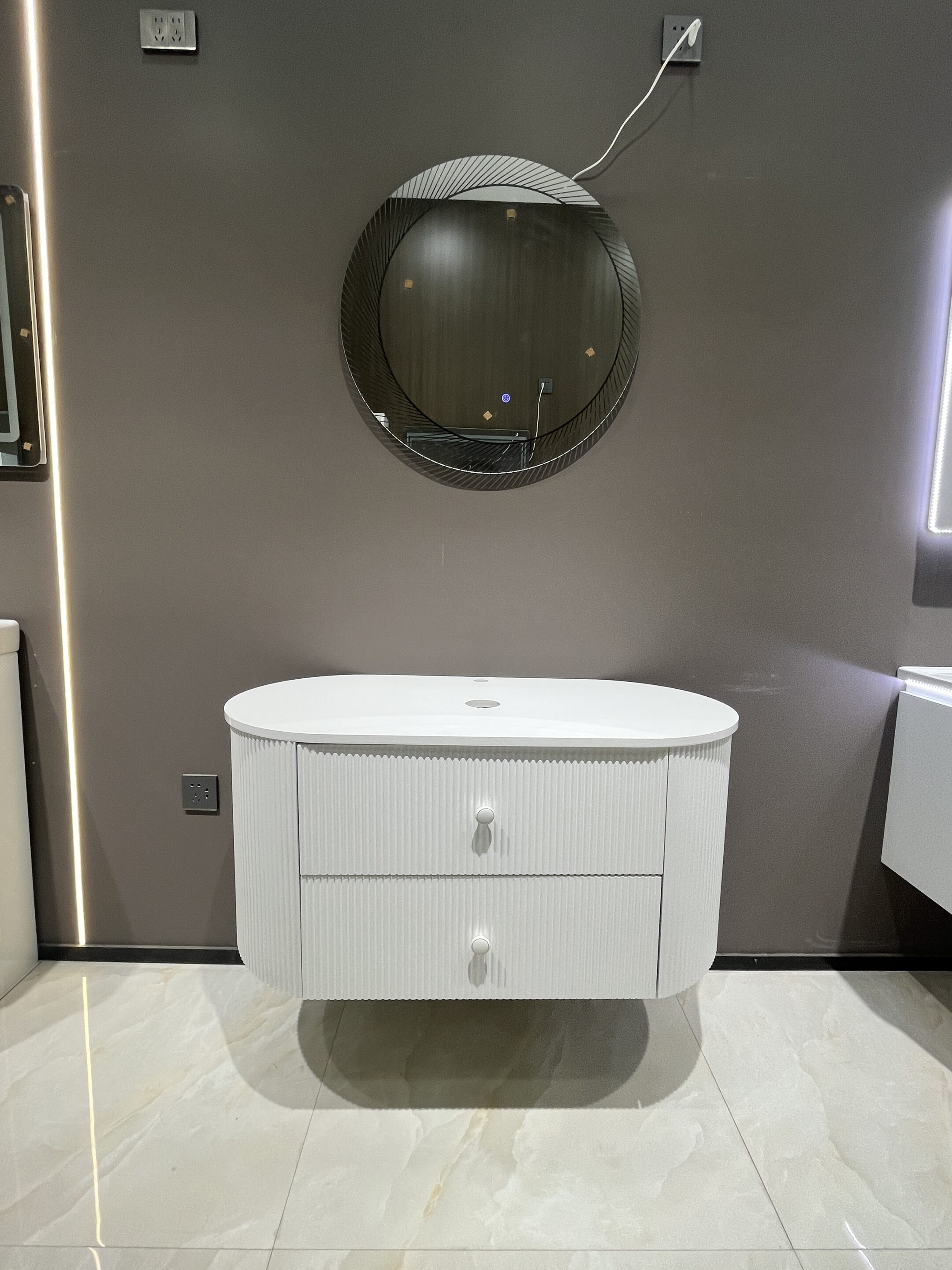
A poorly specified luxury resort bathroom vanity can quietly sabotage guest satisfaction scores and inflate long-term maintenance budgets. The initial appeal of a spa-like experience often overshadows the harsh reality of high-humidity environments, leading to material choices that warp, stain, and fail within a few years. Sourcing the wrong wood or an improperly sealed natural stone directly translates to operational downtime for repairs and damaging online reviews that tarnish a 5-star reputation.
This guide serves as a technical brief for procurement teams and designers, breaking down the critical material and design decisions. We compare the performance of teak versus walnut in tropical climates and detail the maintenance trade-offs between honed and polished stone finishes. We also cover the structural requirements for floating vanities and the best methods for preventing humidity damage, ensuring every specification aligns with both luxury aesthetics and operational longevity.
How to Create the “Spa Experience”?
A successful spa experience is engineered by integrating open layouts and biophilic design with personalized technology to create an immersive, restorative environment.
Foundational Design and Layout
Creating a spa-like atmosphere begins with the physical space. The layout must be open and airy to promote calm and allow for fluid movement between different zones. The objective is to establish a serene backdrop using a deliberate color and texture strategy, separating functional areas like wet and dry zones without creating visual disruption.
- Open Layouts: Plan for clear sightlines to peaceful views, such as gardens or water features. This ensures seamless traffic flow and enhances the sense of space.
- Color Palette: Use a foundation of neutral, earthy tones like soft beige or light gray. Minimal accents in gold, bronze, or deep jewel tones can add a touch of opulence without overwhelming the space.
- Textural Variety: Combine different textures to engage multiple senses. Pairing plush seating with cool stone floors or smooth wood vanities with rough-hewn stone walls adds depth and sensory interest.
Sensory and Biophilic Integration
A true spa environment engages all senses by merging natural elements with controlled sensory inputs. Integrating light, sound, and scent with features from the natural world is critical for enhancing relaxation and promoting mental well-being. This approach turns a well-designed room into an immersive experience.
- Biophilic Elements: Incorporate features like indoor gardens, living walls, and prominent water fixtures. Abundant natural light is essential to foster a direct connection with the outdoors.
- Controlled Atmospherics: Implement adjustable chromotherapy lighting to set different moods. Integrated aromatherapy systems, from diffusers to steam shower infusers, elevate daily rituals into rejuvenating sessions.
- Ambient Sound: Use the natural sound from water features or curated, soothing music playlists to mask unwanted noise and complete the restorative atmosphere.
Personalized Technology and Comfort
Modern luxury spas are moving away from a one-size-fits-all model by leveraging smart amenities to deliver tailored experiences. This focus on personalization makes each visit feel like a private retreat designed specifically for the individual, increasing perceived value and guest satisfaction.
- Smart Amenities: Install features such as temperature-controlled fixtures and robes, adaptive massage furniture, and smart mirrors with integrated displays for information or entertainment.
- Customizable Systems: Offer user-controlled aromatherapy and audio systems that allow guests to select their own preferences, giving them direct control over their environment.
- Exclusive Experience: The shift from generic treatments to personalized options is what defines modern luxury. It makes the experience feel exclusive and deeply relaxing, justifying a premium position in the market.
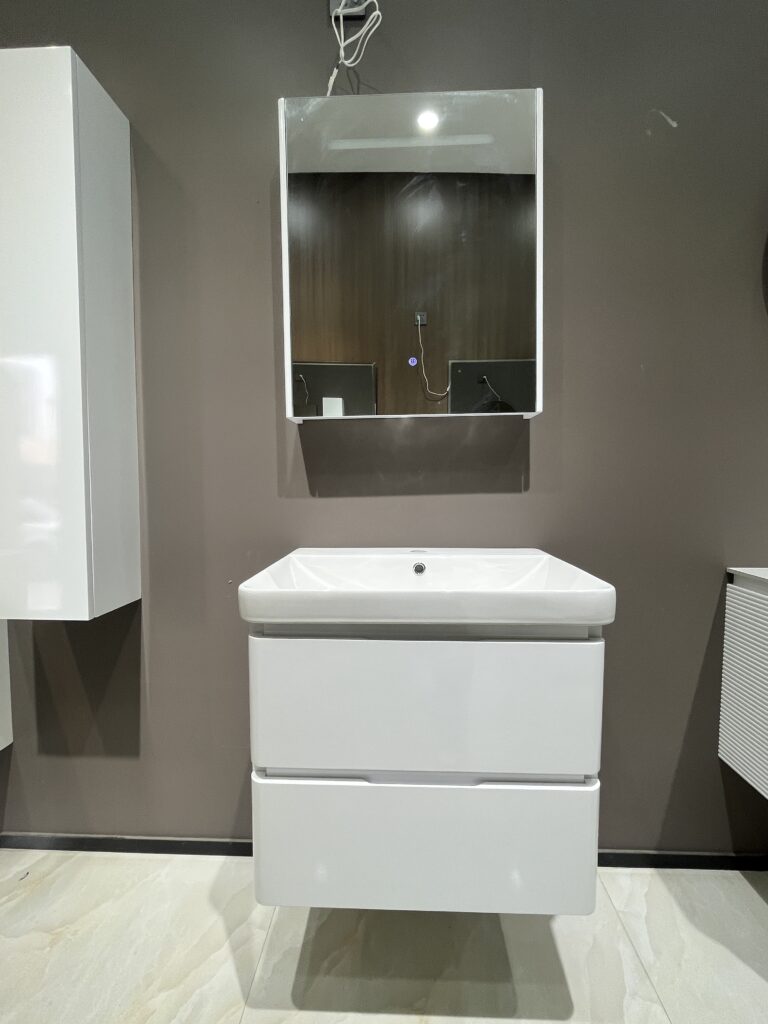
Teak vs. Walnut: Which Is Better?
Teak’s natural water resistance makes it a functionally superior choice for humid environments, but walnut’s rich aesthetic remains a top contender when paired with rigorous, high-performance sealing.
Water and Humidity Resistance
Teak’s primary advantage is its high natural oil content, making it inherently resistant to water, rot, and mold. This is why it’s the standard for moisture-critical applications like marine decking and high-end resort bathrooms. Walnut, while a durable hardwood, lacks this natural protection. Its viability in a bathroom depends entirely on a high-quality, meticulously applied finish to create a barrier against humidity.
- Teak is the superior choice for high-humidity areas due to its natural water-repellent properties.
- Walnut’s performance in a bathroom is contingent on a flawless, professionally applied protective seal.
- Market data shows developers in humid climates consistently specify teak to minimize long-term moisture risks and maintenance costs.
| Feature | Teak | Walnut |
|---|---|---|
| Natural Water Resistance | Excellent, due to high natural oil content that repels moisture. | Low; performance is entirely dependent on the applied finish. |
| Aesthetics | Classic golden-brown warmth, often associated with spa-like designs. | Rich, dark grains that provide a high-end, contemporary look. |
| Finishing Requirement | Minimal, but sealing enhances longevity and maintains color. | Critical; requires a flawless, multi-layer protective seal to prevent damage. |
| Primary Use Case | High-humidity, moisture-critical projects (e.g., tropical resorts, spas). | Luxury designs where aesthetic is prioritized over inherent moisture performance. |
Aesthetics and Physical Durability
Designers often select walnut for its aesthetic sophistication. The rich, dark grains create visual depth that fits perfectly within modern luxury interiors. Teak offers a classic, golden-brown warmth that evokes a timeless, spa-like feeling. Both are hard, dense woods suitable for vanity construction, but walnut’s appearance is more vulnerable to physical wear and moisture without a robust protective finish.
- Walnut provides a high-end, contemporary look favored by designers for its visual depth.
- Teak offers a timeless, spa-like appearance and is renowned for its long-term durability against wear.
- Both woods are resilient enough for vanity construction, but walnut requires more careful finishing to maintain its appearance over time.
Cost and Finishing Requirements
Teak generally has a higher material cost due to its natural properties and more constrained supply chain. While walnut’s raw material cost may be lower, the final price can be much closer once you factor in the necessary high-performance finishing. In today’s market, proper sealing for either wood is considered essential infrastructure for a bathroom vanity, not an optional upgrade. The decision is no longer about raw cost but about the total cost of ownership and performance in a specific environment.
- Teak’s higher upfront cost reflects its built-in, natural resistance to moisture.
- Walnut’s final installed cost must include the application of a robust, multi-layer sealant.
- Sophisticated buyers now prioritize wood performance based on specific humidity profiles rather than just initial material cost.
Stock Vanities Built to Last, Designed to Impress.
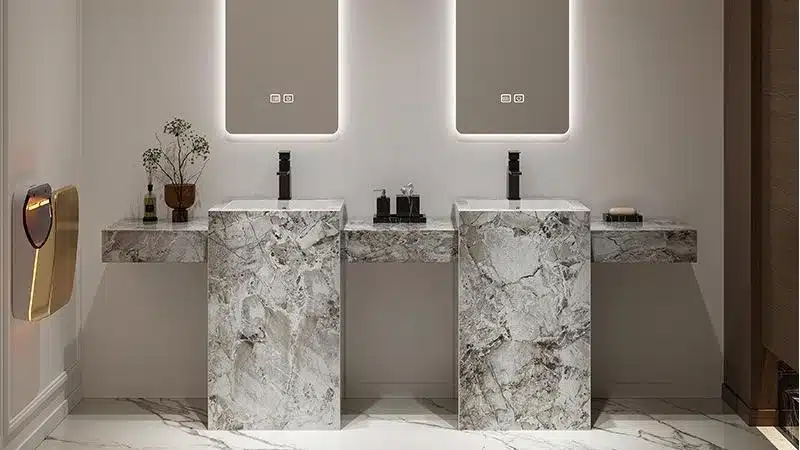
Honed vs. Polished: Which Is Better?
The decision between honed and polished finishes isn’t about which is superior overall, but which is right for the specific application—polished for high-impact visual areas like vanity tops and honed for high-traffic, wet-prone flooring where safety and durability are critical.
Polished Finishes for Luxury Aesthetics
Polished marble is the default choice for vanity countertops in luxury hospitality projects. Its highly reflective, glossy surface amplifies both natural and ambient light, making the bathroom feel brighter and more spacious. This finish delivers a clean, premium look that immediately signals high-end quality to guests. Designers use its light-enhancing properties to create a striking visual centerpiece, reinforcing the upscale experience expected in a resort setting.
| Characteristic | Honed Finish | Polished Finish |
|---|---|---|
| Primary Application | Flooring, high-traffic surfaces | Vanity tops, accent walls |
| Slip Resistance | High (Safer for wet floors) | Low (Hazardous when wet) |
| Maintenance Profile | More forgiving; hides minor scratches and water spots | Shows smudges and etching; requires regular buffing |
| Visual Effect | Matte or satin, soft, natural appearance | Glossy, highly reflective, amplifies light |
Honed Finishes for Safety and Durability
Honed marble’s matte finish is gaining ground in commercial applications, particularly for flooring. Its non-reflective surface provides superior traction, a critical safety feature that reduces slip-and-fall liability in wet environments. From an operational standpoint, a honed finish is far more durable and easier to maintain in high-traffic areas. It effectively conceals minor scratches, etching, and water spots, which simplifies daily cleaning protocols for housekeeping staff and lowers long-term maintenance costs.
A Hybrid Approach for Balanced Design
The most practical and effective designs utilize a hybrid approach, combining both finishes to leverage their respective strengths. A standard specification in modern resorts is a polished marble or quartz vanity top paired with honed stone flooring. This strategy delivers the high-impact visual luxury guests expect at eye-level surfaces while ensuring the floor is safe, durable, and easy for staff to maintain. It’s a balanced solution that meets aesthetic goals without compromising on operational efficiency or guest safety.
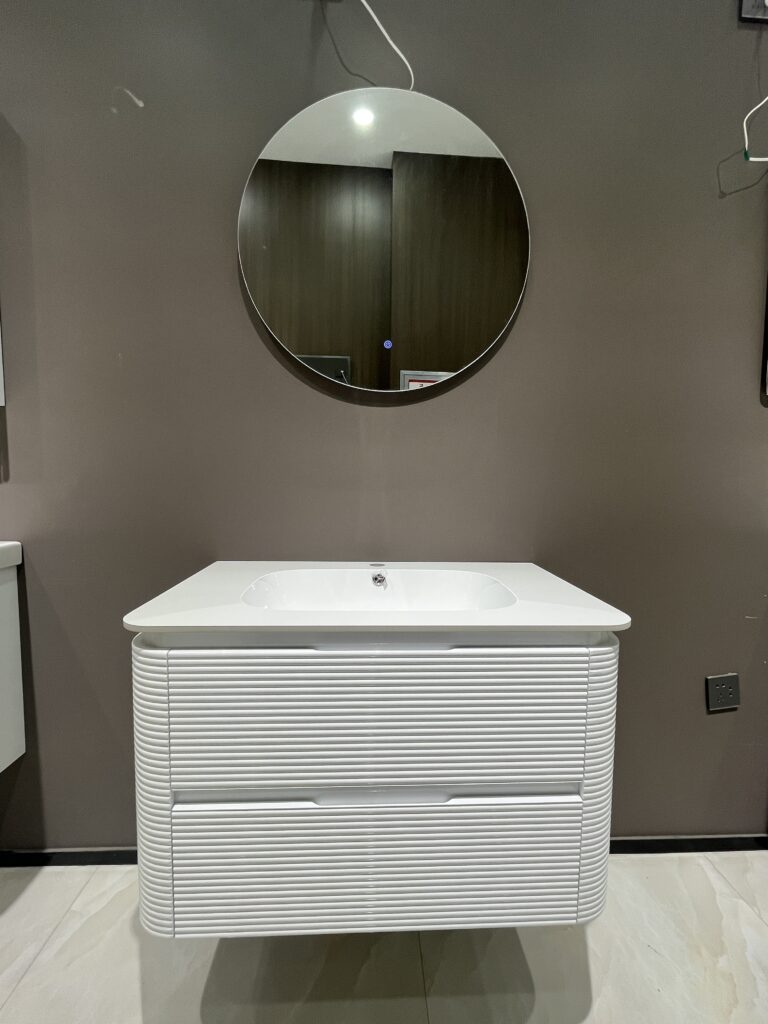
Why Use Floating Vanities?
Floating vanities have become a standard specification, moving beyond aesthetics to solve practical challenges in space optimization and maintenance for both residential and commercial projects.
Creates a More Open, Spacious Feel
By mounting the cabinet directly to the wall, floating vanities expose the flooring underneath. This creates an uninterrupted sightline that makes the entire bathroom feel larger and less cluttered. It’s a design strategy that’s particularly effective in compact urban bathrooms or smaller powder rooms where every square inch matters. The shift toward minimalist, space-conscious design has made this a primary driver for their adoption in modern renovations.
- Lifts the cabinet off the ground to produce an illusion of more floor space.
- Reflects a shift toward minimalist, space-conscious bathroom design.
- Ideal for smaller bathrooms or powder rooms to reduce visual weight.
Simplifies Cleaning and Maintenance
With no base, legs, or toe-kick touching the ground, cleaning the bathroom floor is much simpler. You can easily sweep or mop underneath the entire unit without navigating around awkward corners where dust, hair, and dirt typically accumulate. This design eliminates the hard-to-reach gap between a traditional vanity base and the floor, streamlining routine maintenance for homeowners and cleaning staff in hospitality settings.
- Allows for unobstructed access to the floor for mopping and sweeping.
- Eliminates the hard-to-clean gap between a traditional vanity base and the floor.
- Streamlines routine bathroom maintenance protocols.
Offers Modern Design Flexibility
The wall-mounted design is a staple of contemporary and Scandinavian aesthetics. It also provides key practical benefits for modern builds. For instance, it easily accommodates radiant floor heating systems that would be blocked by a traditional floor-standing cabinet. The open space underneath is also perfect for installing subtle, functional features like motion-activated LED lighting, which adds a high-end feel while serving as a practical nightlight.
- Aligns perfectly with modern and minimalist interior styles.
- Allows for the installation of features like under-vanity lighting.
- Ensures compatibility with modern radiant floor heating systems.
How to Prevent Humidity Damage?
Preventing humidity damage in bathroom vanities isn’t about a single fix; it requires an integrated strategy of moisture-resistant materials, engineered airflow, and climate-specific design to ensure long-term structural integrity.
Constant exposure to moisture, steam, and condensation can quickly degrade bathroom furniture, leading to warping, delamination, and mold growth. A proactive approach that starts at the manufacturing level is the only effective way to build products that last in high-moisture environments. This involves specifying the right materials, designing for adequate ventilation, and tailoring construction to specific climate challenges.
Material Selection for High-Moisture Areas
The first line of defense against humidity is choosing substrates that inherently resist moisture. At FocusCabinet, we build vanities with materials engineered specifically for damp environments. This selection is critical for ensuring longevity and preventing the structural failures common with standard furniture-grade materials.
| Material Substrate | Key Advantage | Optimal Use Case |
|---|---|---|
| PVC (Polyvinyl Chloride) | 100% waterproof and inert to moisture. Density can be specified (e.g., 0.6+ g/cm³) for premium durability. | Humid climates like the Middle East & Southeast Asia; projects where absolute water immunity is the priority. |
| Multi-Layer Plywood | Excellent structural stability and high moisture resistance. Can be upgraded to a Full Eucalyptus core for superior hardness. | European and Australian markets; projects requiring a balance of durability, water resistance, and natural aesthetics. |
| HMR MDF | High Moisture Resistant grade provides a perfectly smooth surface for flawless high-gloss lacquer finishes. | Projects where a premium painted finish is the primary goal and direct water pooling is minimal. |
- PVC Cabinets: This material offers a completely waterproof solution, making it ideal for bathrooms with constant steam from showers. It will not swell, delaminate, or warp from moisture exposure.
- Multi-Layer Plywood: Water-resistant plywood provides superior structural stability in fluctuating humidity. The layered construction resists warping far better than solid wood or standard particleboard.
- Sintered Stone Surfaces: Countertops and basins made from sintered stone are non-porous. They don’t absorb water, which inhibits the growth of bacteria, mold, and mildew and prevents staining.
Engineered Ventilation and Airflow
Proper air circulation is critical for removing moist air before it can cause damage. Good design incorporates both mechanical and passive ventilation strategies to keep the environment dry. This reduces the load on materials and extends the life of the entire installation.
- Mechanical Exhaust: High-capacity exhaust fans, sized correctly for the room’s cubic footage (CFM), actively pull damp air out of the space before it condenses on surfaces.
- Passive Airflow Design: Floating vanities are a key part of passive ventilation. By lifting the cabinet off the floor, they promote air circulation underneath, helping floors and walls dry more quickly and preventing moisture from getting trapped.
- Strategic Layouts: The overall bathroom layout can be planned to improve natural cross-ventilation, reducing the sole reliance on mechanical systems.
Climate-Specific Product Design
A one-size-fits-all manufacturing approach is not viable in a global market. We engineer our products to meet the unique challenges of different regional climates, ensuring performance whether the project is in a salty coastal region or a perpetually humid tropical zone.
- Coastal Regions (e.g., Australia): Products for these markets feature enhanced coatings and hardware with high resistance to salt air corrosion. Plywood with a durable timber-look melamine finish is a popular and effective choice here.
- Humid Climates (e.g., Southeast Asia): In regions with constant high humidity, PVC is the preferred material due to its waterproof nature. For any wood-based materials used, we apply multiple layers of moisture-repellent finishes to completely seal the substrate.
- Variable Climates (e.g., North America): Product designs are tested to withstand significant temperature fluctuations between seasons, which can cause expansion, contraction, and condensation inside cabinetry if not properly engineered.
Why Use “His & Hers” Layouts?
Dual-vanity layouts directly solve user conflict in shared bathrooms, increasing both daily functionality and the perceived value of a property.
Improved Functionality and Personal Space
A “His & Hers” layout provides dedicated vanity and sink areas for each person, which is a practical solution to common frustrations in shared bathrooms. This design reduces conflicts during busy morning routines and gives each individual ample personal space. The separation allows for better organization and a more efficient, streamlined environment for couples or families.
- Minimizes crowding and wait times during peak usage hours.
- Allows each person to organize their own toiletries and grooming tools without cluttering a shared countertop.
- Creates a more harmonious and stress-free daily routine.
Enhanced Luxury and Property Value
In both high-end homes and luxury hospitality, dual-vanity configurations are a clear signal of a premium master bathroom or suite. This feature elevates the user experience to a spa-like level, significantly increasing the property’s appeal and market value. It serves as a key differentiator that attracts buyers and travelers who expect high-end amenities and a sense of indulgence.
- Acts as a powerful differentiator in luxury hotels, resorts, and real estate listings.
- Appeals directly to clients seeking functional luxury and personal comfort.
- Often combined with other premium features like rainfall showers and heated floors to complete the luxury experience.
Are Custom Inserts Necessary?
Custom vanity inserts have moved beyond simple accessories to become essential operational assets in luxury hospitality, directly supporting brand consistency and improving the guest experience.
Aligning with Brand Identity and Aesthetics
In the luxury hospitality market, off-the-shelf solutions fail to deliver the required level of brand cohesion. Custom vanity inserts are a critical tool for creating a distinct and memorable environment. Bespoke designs ensure that every element in the bathroom, from material choice to color, aligns perfectly with the property’s unique identity. This creates a seamless aesthetic that reinforces the brand promise from the lobby to the private suite, a key differentiator in a competitive market.
- Manufacturing capabilities like logo engraving and precise Pantone color matching directly reinforce brand identity on guest-facing elements.
- Custom material selections, such as leather, acrylic, or specific wood finishes, help create a signature atmosphere that sets a property apart.
- Project-specific solutions guarantee visual consistency across hundreds of rooms and multiple property locations, protecting brand integrity at scale.
Optimizing Functionality for the Guest Experience
Beyond aesthetics, custom inserts serve a vital practical purpose. They optimize the bathroom layout and storage to meet the high expectations of modern travelers. By tailoring compartments and integrating technology, hotels can deliver a more intuitive and convenient experience. A well-designed organizer reduces clutter, makes amenities easy to access, and contributes to a sense of effortless luxury that guests remember.
- Personalized storage compartments can be engineered to perfectly hold a hotel’s specific set of branded amenities, from lotions to razors.
- Modern fixtures like integrated lighting, smart mirrors, and in-drawer charging ports can be seamlessly incorporated into the vanity design.
- Modular designs provide the flexibility to create optimized layouts that improve usability, even in rooms with non-standard or challenging configurations.
Conclusion
Creating a 5-star resort vanity is a careful balance of aesthetics, durability, and function. Choosing materials like teak for its humidity resistance and a honed finish for its understated luxury ensures long-term performance and guest satisfaction. These details define the space and protect your investment against the demanding hospitality environment.
If you are sourcing materials for an upcoming project, our team can help you navigate the options to meet your specific budget and design requirements. Contact us to discuss your project or request a refundable sample to see our quality firsthand.
Frequently Asked Questions
Best wood for tropical bathroom vanity?
For tropical climates with high humidity, Teak is the superior choice for bathroom vanities. Its high natural oil content makes it inherently resistant to water, rot, and mildew without requiring heavy chemical treatments. This ensures long-term durability and stability, preventing warping or decay. Other high-performance options include Ipe and Cumaru, which share similar dense, weather-resistant properties suitable for a luxury resort environment.
Luxury hotel bathroom design trends?
Current trends focus on creating a personalized spa sanctuary. This is achieved through biophilic design, which incorporates natural materials, light, and water features to connect guests with nature. Open, airy layouts with fluid traffic flow are essential. Technologically, smart amenities like adjustable chromotherapy lighting, integrated aromatherapy, and temperature-controlled surfaces are standard. The aesthetic uses a base of neutral, earthy tones accented with rich metallics or deep jewel tones, combined with varied textures like plush seating and cool stone floors to create a multisensory experience.
Teak bathroom vanity maintenance?
Teak vanity maintenance is minimal. For a natural, weathered silver-gray patina, simply clean the surface periodically with a soft-bristle brush and a mild solution of soap and water. To preserve its original honey-gold color, apply a high-quality teak sealer or oil once or twice per year. This replenishes the oils and protects the wood’s finish. Avoid using harsh, abrasive, or all-purpose chemical cleaners, as they can strip the wood’s protective natural oils.
Sourcing marble for resort project?
For a large-scale resort project, sourcing marble effectively requires a multi-pronged strategy. The best approach is to establish direct relationships with quarries in regions known for specific marble types, such as Italy for Carrara or Turkey for Marmara, to ensure lot consistency and cost efficiency. Alternatively, partner with a major international stone distributor who can manage logistics, quality control, and provide access to a wider selection. It is critical to inspect and approve the specific slabs or block lots before purchase and to specify bookmatched slabs for high-visibility areas to ensure continuous veining.
Floating vanity with led lighting?
A floating vanity with integrated LED lighting is a cornerstone of modern, high-end bathroom design. The wall-mounted installation creates an open and airy feel, making the space appear larger and easier to clean. The LED lighting serves multiple functions: it provides soft, indirect ambient light for a spa-like atmosphere, acts as a practical nightlight, and accentuates the vanity’s design and surrounding materials. For a fully personalized experience, the LEDs can be integrated with smart controls for adjustable brightness and color temperature (chromotherapy), aligning with modern wellness trends.
Custom amenities drawer organizer?
Custom drawer organizers are a critical detail in delivering a luxury, personalized guest experience. Rather than using generic plastic trays, high-end properties commission organizers made from materials like walnut, bamboo, or leather-lined composites. These are designed with specific compartments tailored to the hotel’s branded amenities, ensuring a perfect fit and an uncluttered presentation. This thoughtful organization elevates the daily routine, reinforces the brand’s attention to detail, and contributes significantly to the feeling of a private, well-appointed retreat.




0 Comments