
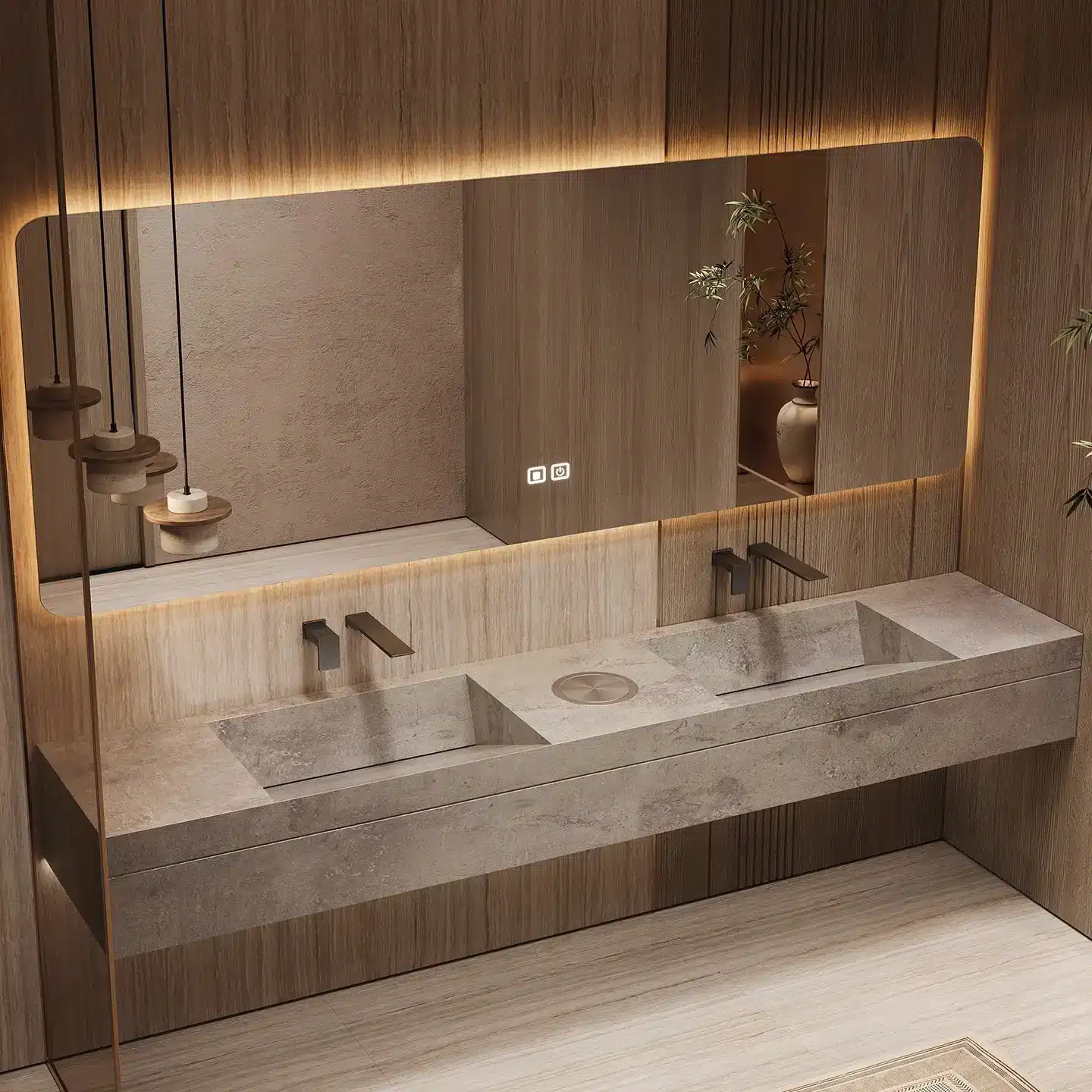
A premium sintered stone vanity project can fail without proper fabrication specs, leading to cracked slabs and costly project delays that damage your firm’s reputation. Sourcing this material requires more than a simple comparison to quartz. Misunderstanding its brittle nature during fabrication of integrated sinks and mitered joints often results in wasted material and installation errors that erode profit margins.
This guide serves as a technical brief for specifying high-end vanities. We cover the key material differences between sintered stone and quartz, explain the fabrication of seamless ramp sinks with 45-degree miter joints, and provide clear procedures for handling brittle stone to prevent fractures from the factory to the final installation site.
Sintered vs Quartz
The fundamental difference is composition: Sintered stone is 100% mineral fused by heat, making it nearly indestructible, while quartz uses polymer resins as a binder, creating a trade-off between cost and performance against heat and UV light.
Composition and Manufacturing Process
Sintered stone is produced from 100% natural minerals like quartz, feldspar, and clay. The manufacturing process uses extreme heat and pressure to fuse these materials into a solid, non-porous slab without any resins or binders. This method effectively mimics and accelerates the process that creates natural metamorphic rock, resulting in a pure mineral surface.
Quartz countertops are an engineered composite. They consist of approximately 90-95% crushed natural quartz crystals that are bound together with polymer resins and pigments. The resin is the critical component that holds the quartz aggregate together, but it also defines the material’s performance limitations, particularly concerning heat and UV exposure.
Performance and Durability Comparison
In demanding conditions, sintered stone holds a clear performance advantage. Its manufacturing process makes it virtually heat-proof, UV-stable, and exceptionally scratch-resistant. You can place hot pans directly on its surface without causing damage. Quartz is highly durable for typical indoor use and resists stains well, but the integrated polymer resins make it vulnerable to damage from high heat and can cause discoloration after prolonged sun exposure.
| Feature | Sintered Stone | Quartz |
|---|---|---|
| Heat Resistance | Virtually heat-proof; withstands direct contact from hot pans. | Susceptible to damage; resins can burn or discolor from high heat. |
| UV Resistance | Excellent; suitable for outdoor applications without fading. | Poor; not recommended for outdoor use as it can discolor. |
| Scratch Resistance | Extremely high; harder than quartz and highly resistant to scratches. | High, but can be scratched by sharp objects or abrasive materials. |
| Composition | 100% natural minerals (clays, feldspar, etc.). No resins. | Approx. 90-95% quartz crystals bonded with polymer resins. |
Market Position and Common Applications
Quartz currently leads in market volume for residential kitchens and bathrooms. Its appeal is driven by a lower price point and a massive variety of consistent colors and patterns, making it a reliable choice for projects where budget and specific aesthetics are the primary drivers. It has become the industry standard for indoor countertops.
Sintered stone occupies a premium market segment. It is specified for high-performance projects where maximum durability is non-negotiable. Common applications include outdoor kitchens, commercial building facades, high-traffic flooring, and architectural feature walls where its resistance to environmental factors justifies its higher cost.
Seamless Ramp Sinks
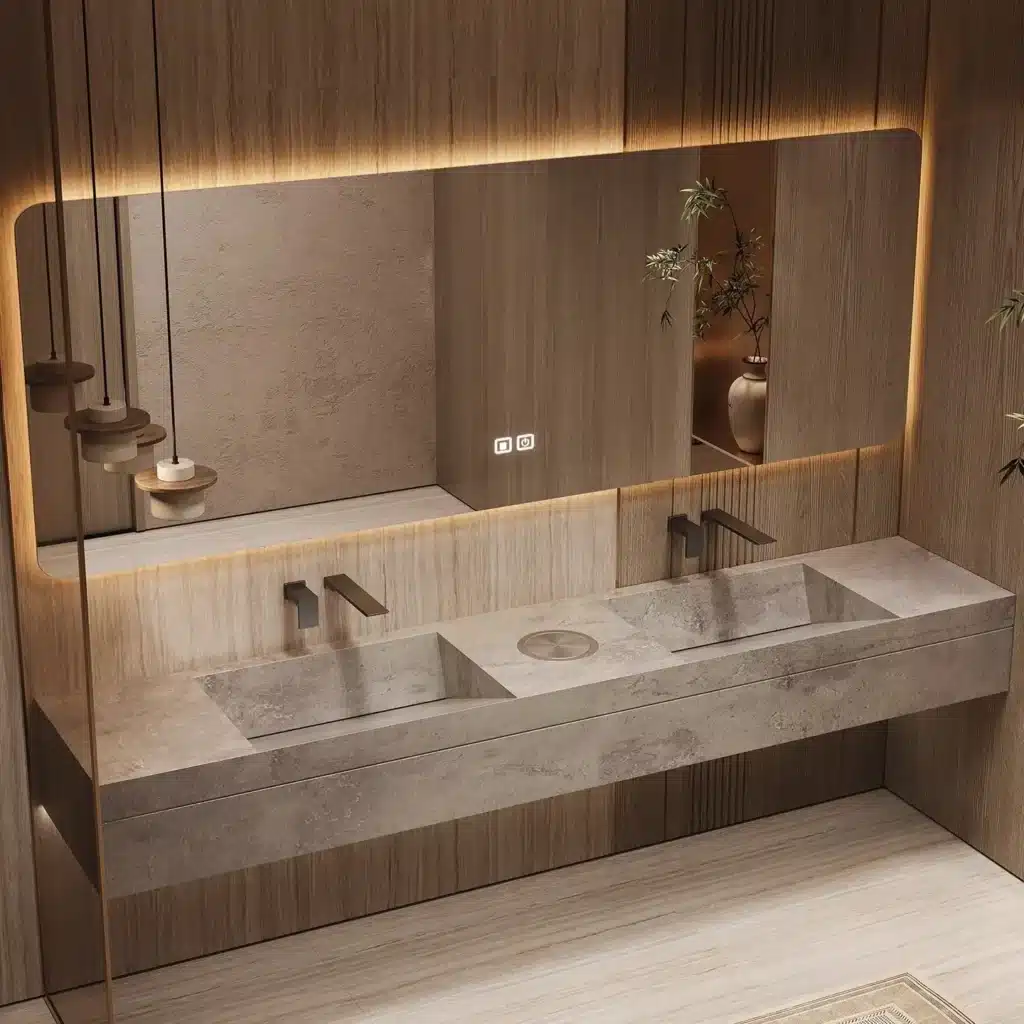
Seamless ramp sinks are gaining market traction by merging minimalist design with superior hygiene and drainage, eliminating the joints where grime typically accumulates.
Aesthetic and Functional Design
Seamless ramp sinks offer a single, continuous surface that is exceptionally easy to clean. This design is built for minimalist aesthetics and solves a practical problem: the sloped basin improves water drainage, preventing water from pooling. This simplifies maintenance, making it a functional upgrade for any modern bathroom environment.
- Delivers a clean, unbroken look that complements minimalist and contemporary styles.
- The integrated sloped drain ensures efficient water flow and reduces cleaning effort.
- Eliminates seams and crevices where grime and mold can accumulate.
Material and Construction Trends
The market for ramp sinks is shifting toward durable materials like solid surface composites and concrete, which provide longevity and a premium feel. There is also a growing focus on technical improvements, including the use of sustainable materials, antimicrobial surfaces, and features that reduce the noise of water flow.
- Increased adoption of solid surface composites for their durability and non-porous qualities.
- Emphasis on sustainable and hygienic materials, including those with antimicrobial properties.
- Development of noise-reduction technologies to minimize sounds from water flow.
Installation and Space Optimization
These sinks offer significant installation flexibility. Wall-mounted configurations have become popular for optimizing space, particularly in smaller bathrooms. While they are designed to integrate with standard vanity sizes for easy retrofits, custom fabrication is readily available for projects that require unique dimensions.
- Wall-mounted options are available to free up floor space and create a more open feel.
- Can be integrated into standard-sized vanities for straightforward retrofits.
- Custom fabrication allows for tailored dimensions and shapes to fit specific design requirements.
Boost Your Sales with Durable Vanities

45-Degree Miter Joints
The industry standard for miter joints has moved beyond pure craftsmanship, now relying on precision tooling and hybrid assembly to deliver flawless, durable connections.
Precision Cutting and Tooling
The industry has largely shifted toward powered cutting systems and specialized tooling for creating miter joints. This move away from manual techniques delivers greater consistency and accuracy, which is essential for high-end cabinetry where flawless fits are non-negotiable. The goal is a perfect 45-degree angle every time, minimizing gaps and reducing the need for fillers.
- Factories now adopt powered cutting systems over manual methods to guarantee precision.
- Specialized jigs and chamfer bits are used to achieve uniform angles and clean, chip-free edges.
- There is a clear focus on simplifying jig designs to reduce dependency on complex, dedicated workbenches.
Hybrid Assembly and Reinforcement
Modern assembly for miter joints relies on a hybrid of adhesives and mechanical support. This combined approach creates a much stronger and more durable bond than older methods that used only screws or nails. By reinforcing the glue joint, manufacturers ensure the corner can withstand stress and resist separation over its lifespan.
- Strong glue-based assemblies are combined with mechanical reinforcement for maximum structural integrity.
- Dowels, biscuits, or pocket holes are common additions that prevent joint separation under load.
- This method replaces fastener-only approaches that can weaken the material and compromise the joint’s long-term strength.
Aesthetic Quality and Grain Continuity
In premium furniture and decorative cabinetry, the visual appeal of a miter joint is as critical as its strength. The primary goal is to create a seamless corner where the wood grain appears to flow uninterrupted around the edge. This “waterfall” effect signals high-quality construction and is a key selling point in luxury designs.
- Production prioritizes continuous grain patterns for a clean, uninterrupted look.
- The joint must be visually perfect, especially in high-end cabinetry where every detail is scrutinized.
- Fabricators must constantly balance the structural needs of the joint with the aesthetic demands of the finished piece.
Handling Brittle Stone
Working with ultra-hard materials like sintered stone isn’t about brute force; it’s about precision tooling and disciplined technique to prevent material failure.
Specialized Fabrication Equipment
The extreme hardness of sintered stone, a result of fusing minerals under immense pressure and heat, requires equipment far beyond standard workshop tools. We invest in advanced fabrication technology specifically to cut and shape this dense material without causing micro-fractures, chips, or cracks. This commitment ensures the structural integrity of the final product.
- High-pressure water jets and specialized diamond blades execute precise, clean cuts that are impossible with conventional saws.
- Precision tooling minimizes material stress during drilling and shaping, protecting the slab from internal damage.
- This investment allows us to fabricate every countertop and basin to exact design specifications without compromising the material.
| Fabrication Requirement | Sintered Stone (Ultra-Hard) | Standard Quartz (Resin-Bound) |
|---|---|---|
| Cutting Tool | Requires water jets or specialized diamond blades to avoid thermal shock and chipping. | Can be cut with standard wet diamond saws; more tolerant of heat buildup. |
| Edge Work | Demands specific profiling tools and a multi-step grinding process to prevent chipping. | More forgiving; allows for standard router bits and a simpler polishing process. |
| Handling Risk | High risk of fracture from improper support or shock; material has low tensile strength. | Lower risk of fracture; polymer resins provide some flexibility and shock absorption. |
Advanced Handling and Cutting Protocols
Proper technique is just as critical as the machinery. To manage the dense, brittle nature of sintered stone, our technicians are trained on manufacturer-approved guidelines for handling these materials. Casual fabrication methods used for other stones will lead to failure here. We enforce strict protocols at every stage.
- Workers are skilled in specific edge detailing and cut-out methods designed to prevent stress concentrations and subsequent damage.
- A clear process guides the slab from the initial cut and CNC work to transport and final installation, ensuring proper support at all times.
- This focus on correct technique reduces material waste and guarantees the structural integrity of the finished vanity.
Durability and Sustainable Production
When fabricated correctly, the end product is exceptionally durable and resistant to wear. This inherent longevity reduces the need for replacements, which aligns directly with sustainable production models. A product that lasts longer creates less waste over its lifecycle.
- The long functional lifespan of a properly handled sintered stone vanity means a lower frequency of replacement and less material consumption over time.
- Its high resistance to scratches, heat, and UV damage contributes to a smaller environmental footprint compared to less durable materials.
- Our quality control during the handling and fabrication process ensures each piece is built to perform for decades, not just years.
Conclusion
Sintered stone provides superior performance for heat and stain resistance in demanding hospitality environments. Achieving a high-end, monolithic look depends on precise fabrication techniques, like seamless integrated basins and clean 45-degree miter joints. These manufacturing details ensure your final product delivers both sophisticated design and long-term durability.
If you are sourcing bathroom vanities for an upcoming project, contact our team to discuss your specifications. We can provide a quality sample to help you evaluate our manufacturing capabilities firsthand.
Frequently Asked Questions
Sintered stone vs quartz?
Sintered stone and quartz are both premium engineered surfaces, but they differ fundamentally in composition and performance. Sintered stone is made from 100% natural minerals fused under extreme heat and pressure, giving it superior resistance to UV rays, heat, and scratches. This makes it the ideal choice for demanding applications, including outdoor kitchens and high-traffic commercial spaces. Quartz, composed of 90-95% natural quartz crystals bound by polymer resins, is less heat and UV-resistant. However, it leads the residential indoor market due to its lower price point and a wider variety of consistent color options, making it a cost-effective choice for most kitchens and bathrooms.
Seamless integrated basin?
A seamless integrated basin is a sink constructed from the same slab material as the countertop, creating a single, continuous surface with no visible joints. This design delivers a sleek, monolithic aesthetic prized in modern and minimalist design. The primary benefit is hygiene; by eliminating the seam between the sink and the counter, it removes a common area for bacteria and grime to collect, making it exceptionally easy to clean. This premium feature is most commonly fabricated with materials like sintered stone and solid surface, which allow for durable, waterproof, and visually flawless integration.




0 Comments