
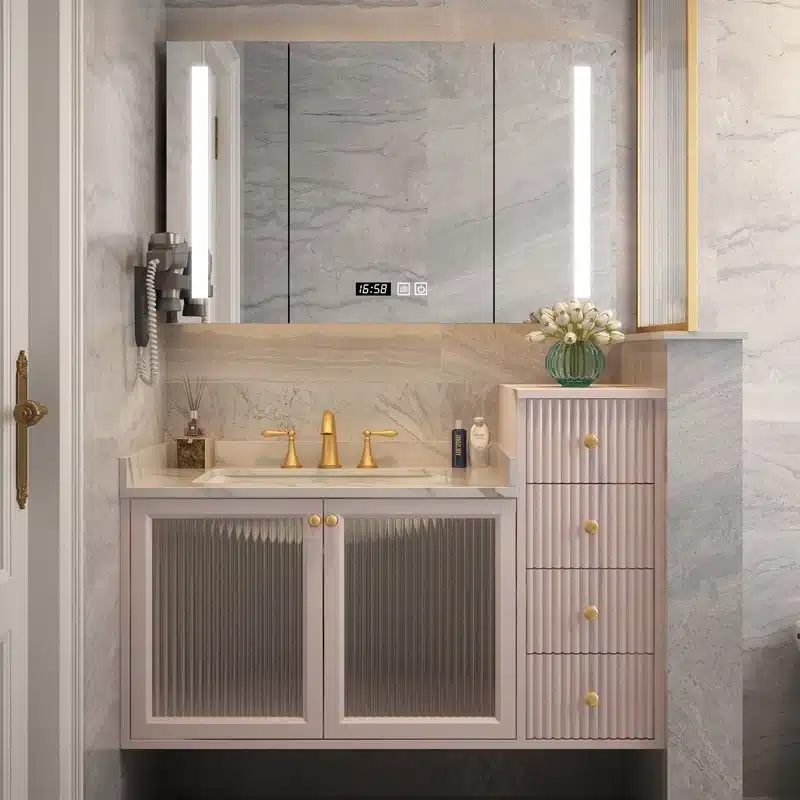
 The fluted vanity trend is quickly becoming a critical specification detail where a misunderstanding of material or manufacturing can lead to costly project callbacks and client dissatisfaction. While clients are asking for texture, they often use terms like fluted, reeded, and slatted interchangeably, placing the burden on designers and fabricators to deliver on an unclear vision. Choosing the wrong wood species or production method can compromise the final build’s durability and budget, turning a stylish feature into a significant liability.
This guide serves as a technical standard operating procedure for specifying textured millwork correctly. We will clarify the exact geometric differences between fluted, slatted, and reeded profiles to ensure accurate communication with your workshop. We will also compare CNC machining against molding for production, analyze which wood species perform best in humid bathroom environments, and address practical concerns about maintenance and countertop pairings to ensure a successful and durable installation.
Why Is Texture Trending?
By 2026, the market has shifted from sterile, visual-only aesthetics to tactile, emotionally resonant spaces that prioritize comfort, authenticity, and natural materials.
Shift Toward Tactile and Emotional Design
Interior design is moving beyond how a space looks to how it feels. This trend emphasizes creating warm, comfortable environments that resonate on an emotional level, marking a clear departure from the severity of minimalism. Designers now layer materials like bouclé, velvet, and linen to add physical depth and build a sense of comfort-driven luxury. The goal is to make a space feel grounded, personal, and connected to nature, not cold or impersonal.
Demand for Authenticity and Craftsmanship
Consumers increasingly prefer authentic craftsmanship over mass-produced uniformity. This shift favors organic finishes and celebrates the natural imperfections in materials like raw ceramics and wood. The market wants material honesty and finishes that tell a story. This move toward “livable luxury” combines high-end design with practical comfort, creating spaces that are both sophisticated and genuinely welcoming.
Creating Depth Through Layered Materials
Texture adds dimensional sophistication. By combining different materials at various levels—from flooring and furniture to textiles and wall treatments—designers build visual interest without sacrificing a cohesive look. Layering textures gives the space a sense of intentional, curated design and keeps it from feeling flat. This approach creates a rich, complex aesthetic that engages more than just the sense of sight.
Fluted vs. Slatted vs. Reeded: What’s the Difference?
The primary difference lies in their profile: reeded panels curve outward (convex), fluted panels curve inward (concave), and slatted panels are flat.
These terms are often used interchangeably, but each style creates a distinct visual effect. Understanding the profile of each panel type is critical for specifying the right texture for a project, as the interplay of light and shadow varies significantly between them. The choice dictates the final aesthetic, whether you’re aiming for soft elegance, bold architectural lines, or clean minimalism.
| Profile Type | Visual Characteristic | Common Aesthetic |
|---|---|---|
| Reeded (Convex) | Smooth, outward-curving ridges create a soft, wave-like effect. | Timeless, refined, and elegant. |
| Fluted (Concave) | Recessed grooves create dramatic shadows and strong vertical lines. | Bold, architectural, and statement-making. |
| Slatted (Flat) | Evenly spaced flat strips with visible gaps between them. | Clean, linear, and modern. |
Reeded Panels: Soft, Convex Curves
Reeded panels are defined by rounded, convex ridges that protrude outward. This design creates a gentle, wave-like effect, adding a subtle elegance and tactile quality to surfaces. The soft profile avoids harsh shadows, making it a versatile choice for refined interiors.
- Profile: Features smooth, outward-curving, parallel ridges.
- Aesthetic: Produces a soft, scalloped texture ideal for timeless interiors that need warmth without being overpowering.
- Common Use: Often applied to kitchen islands, feature walls, and furniture like bathroom vanities to add visual interest.
Fluted Panels: Bold, Concave Grooves
Fluted panels showcase concave channels or grooves that recede inward. This style, inspired by classical Greek and Roman architecture, creates dramatic shadows that give surfaces a strong sense of depth and a more striking visual statement. The play of light across the grooves makes it an effective focal point.
- Profile: Consists of recessed, parallel channels or grooves.
- Aesthetic: Offers a bold, architectural look that feels structured and sophisticated.
- Common Use: Works well for accent walls, behind home bars, or on cabinetry where a strong textural element is desired.
Slatted Panels: Clean, Flat Lines
Slatted panels are composed of flat, evenly spaced strips, distinguishing them from the curved profiles of reeded and fluted designs. This style provides a minimalist and modern alternative for adding texture, emphasizing clean lines and a sense of order.
- Profile: Made of flat, parallel boards or strips with consistent gaps in between.
- Aesthetic: Delivers a clean, linear appearance that suits contemporary, Scandinavian, and minimalist decor.
- Common Use: Frequently used for walls and ceilings to create simple texture and directional lines.
Boost Sales with Region-Specific Bathroom Cabinets.

CNC vs. Molding: Which Is Better?
The choice between CNC machining and injection molding hinges on a clear trade-off: CNC offers speed and flexibility for low-volume runs, while molding delivers the lowest per-unit cost for mass production.

When to Choose CNC Machining
CNC machining is the go-to method for rapid prototyping, low-to-medium volume production, and parts that demand extremely tight tolerances. Because it requires no upfront tooling investment, you can move from design to physical part quickly and make adjustments on the fly. This makes it the practical choice for getting new products to market fast or creating highly customized components.
- Optimal for prototyping and production runs of under a few hundred units.
- Allows for quick design iterations, with lead times often within one to two weeks.
- Processes a wide variety of materials, including metals, plastics, and composites, with excellent surface finishes.
When to Choose Injection Molding
Injection molding is built for scale. It excels in high-volume manufacturing where minimizing the cost per part is the primary goal. The significant initial investment in creating a mold pays off quickly once production starts, as parts can be produced in seconds with perfect repeatability. It’s the undisputed standard for mass-market products.
- Cost-effective for production volumes exceeding several hundred units.
- Delivers exceptional part-to-part consistency with production cycles measured in seconds.
- Capable of creating complex internal features that are difficult or impossible to machine.
| Manufacturing Factor | CNC Machining | Injection Molding |
|---|---|---|
| Optimal Volume | Low-to-medium (<500 units) | High volume (>500 units) |
| Upfront Cost | None (no tooling required) | High (mold fabrication) |
| Per-Unit Cost | High and consistent | Extremely low at scale |
| Lead Time | Fast (1-2 weeks) | Slow (weeks or months for tooling) |
| Design Flexibility | High (changes are easy) | Low (changes are expensive) |
A Hybrid Approach for Development and Scaling
A smart manufacturing strategy often uses both methods sequentially. CNC machining is used to create and refine prototypes, allowing for functional testing and rapid design validation without major capital outlay. Once the design is finalized and proven, production shifts to injection molding to meet high demand at a lower cost per unit.
- Use CNC for initial design validation and functional prototyping.
- Transition to injection molding for mass production to lower costs at scale.
- This approach balances quality, speed, and budget throughout the product lifecycle.
Is Fluting a Dust Trap?
Yes, fluted surfaces inherently collect more dust than flat panels, making the choice a direct trade-off between high-impact aesthetics and low-effort maintenance.
Aesthetics vs. Practical Upkeep
Fluted surfaces require more frequent cleaning than smooth alternatives. The concave grooves that create the desirable textured look are the same channels where dust, hair, and other airborne particles naturally settle. Unlike a simple wipe-down for a flat-panel door, cleaning fluted designs requires more attention to ensure each groove is cleared. This creates a practical decision point: accept the higher maintenance for a textured, visually dynamic design, or opt for a minimalist surface for faster cleaning.
Bathroom Moisture and Dust Adhesion
The bathroom environment makes the dust problem worse. High humidity from showers and baths causes airborne dust particles to become sticky, clinging to surfaces instead of wiping away easily. This effect is magnified within the narrow channels of a fluted vanity, where moisture can trap grime and make it difficult to remove. As a result, many specifications for commercial or high-traffic bathrooms favor smooth, non-porous materials specifically to simplify cleaning and sanitation.
What Is the Best Wood Species?
Selecting the right wood for a fluted vanity balances three critical factors: moisture resistance for bathroom humidity, hardness for long-term durability, and a straight grain to properly showcase the design.
Moisture Resistance for Humid Environments
For any bathroom fixture, the ability to withstand constant humidity without warping, swelling, or degrading is the primary concern. Woods with a naturally tight grain structure and high density are superior because they repel water, ensuring structural stability over years of use. Materials like White Oak and Mahogany have proven track records for remaining stable in damp conditions, making them a reliable choice for long-lasting bathroom furniture.
| Wood Species | Key Strengths | Best For |
|---|---|---|
| White Oak | Excellent moisture resistance (tight grain), high durability (Janka 1360), and straight grain for clean fluting. | Premium, high-use bathrooms where longevity and aesthetics are critical. |
| Maple | Extremely hard (Janka 1450), dense structure resists moisture, and features a uniform grain. | Heavy-duty applications requiring maximum dent and scratch resistance. |
| Mahogany | High stability (resists warping/shrinking), classic rich color, and good moisture resistance. | Classic, elegant designs in humid environments where stability is key. |
Durability and Hardness for Daily Use
A bathroom vanity must withstand daily use, from accidental impacts to routine cleaning. The wood’s hardness, measured by the Janka scale, is a reliable indicator of its ability to resist dents, scratches, and wear. Maple, with a Janka rating of 1450, is one of the hardest woods available and offers exceptional durability. White Oak is also a top performer at 1360. Both are known for their strength and resilience, making them ideal for high-traffic environments where maintaining a pristine appearance is essential.
Aesthetic Quality for Fluted Designs
The visual success of a fluted vanity depends heavily on the wood’s grain pattern. Woods with a straight, uniform grain are the best choice because they highlight the clean, vertical lines of the fluting. A complex or irregular grain can clash with the pattern, making the design appear busy or inconsistent. Maple and White Oak both feature straight grains that allow the fluted detail to be the main focus. Mahogany provides a richer, classic look with an elegant grain, while the light, neutral tone of White Oak offers versatility to complement a wide range of bathroom styles.
How to Pair with Stone?
Pairing a fluted vanity with stone requires a deliberate strategy that balances the wood’s texture against smooth surfaces, harmonizes hardware with the stone’s natural tones, and uses lighting to highlight key details.
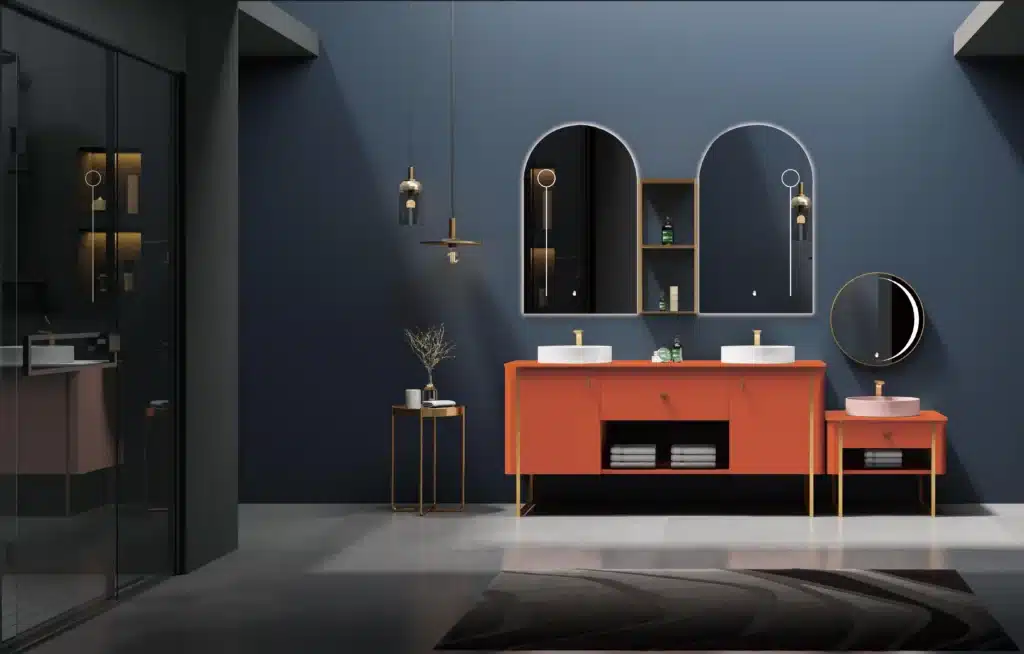
Harmonizing Hardware and Finishes
Selecting the right metallic finish for fixtures is critical for complementing the stone’s natural color and veining. The goal is a cohesive look, achieved either through subtle matching or intentional contrast. You need to connect the hardware, faucet, and mirror frames to the stone’s undertones for a curated and professional result.
- Pair warm-toned stones, like marbles with gold or brown veining, with brushed gold or bronze hardware to amplify their inherent warmth.
- Use matte black fixtures with white or grey stones to create a modern, high-contrast aesthetic that feels clean and grounded.
- Maintain consistency across all metallic elements—including mirror frames, lighting, and faucets—to build a unified design language.
Balancing Texture with Smooth Surfaces
A successful design balances the complex texture of fluted wood with simple, smooth surfaces. This approach prevents the space from becoming visually busy and allows the stone’s unique patterns to act as the primary focal point. Without this balance, competing textures will create visual noise and diminish the impact of both the vanity and the stone.
- Combine a textured fluted vanity with a sleek, polished stone countertop. This creates a clear visual hierarchy where the countertop is smooth and the vanity base is tactile.
- Use large-format, plain tiles for floors and surrounding walls. This provides a quiet, monolithic backdrop that makes the vanity and stone stand out.
- Avoid pairing a fluted vanity directly against a busy mosaic tile backsplash. Multiple small-scale, competing textures will clash and look chaotic.
Using Lighting to Enhance Natural Stone
Strategic lighting dramatically enhances the depth, color, and intricate details of natural stone. Proper illumination transforms the vanity from a functional object into a prominent design feature, highlighting the investment in high-quality materials. It’s not just about brightness; it’s about the angle and quality of the light.
- Install vertical sconces on both sides of the mirror. This casts an even, flattering light across the countertop, highlighting its patterns without creating harsh overhead shadows.
- Place LED strip lighting underneath a floating vanity. The soft upward glow accentuates the texture of both the vanity and the flooring while making the space feel larger.
- Specify smart mirrors with adjustable color temperature and brightness. This gives the end-user control over how light interacts with the stone’s veining at different times of day, from cool morning light to warm evening light.
Your sourcing strategy for fluted panels depends entirely on project scale. High-volume buyers work directly with manufacturers for cost control and customization, while smaller projects use B2B platforms or retail channels for accessibility and flexibility.
Choosing the right supplier is a critical decision that balances cost, volume, and customization. Each sourcing channel serves a different type of buyer, from large-scale importers and wholesalers to individual contractors and designers. Understanding these channels helps you align your procurement strategy with your business goals.
Sourcing Directly from Manufacturers
Going direct to the factory is the most cost-effective path for large commercial projects or businesses that maintain significant inventory. This approach unlocks the best unit pricing and offers deep customization, but it requires meeting substantial minimum order quantities (MOQs). For example, many primary manufacturers are based in China and set MOQs starting at 200 square meters.
- Direct sourcing enables full OEM/ODM services, allowing you to specify custom designs, materials like WPC (wood-plastic composite), and apply your own branding.
- Established suppliers have robust global logistics, shipping to dozens of countries and managing large-scale production.
- This channel is best for wholesalers, large construction firms, and e-commerce brands with established supply chains.
Using B2B Sourcing Platforms
Online B2B marketplaces like Alibaba and Global Sources connect buyers with a wide range of vetted international suppliers. These platforms streamline the discovery and negotiation process, making them a practical middle ground for businesses that need more flexibility than direct factory orders but more options than retail.
- Platforms often provide access to suppliers with verified certifications, such as ISO 9001 and CE, adding a layer of trust.
- They make it simple to find and compare manufacturers for different materials, including wood, composites, and metal panels.
- Buyers can manage communications and negotiations with multiple suppliers in one place, improving efficiency.
Purchasing from Retail and Specialty Suppliers
For smaller projects, residential use, or immediate needs, retail is the most accessible channel. Sources range from large hardware stores and local lumber yards to online marketplaces like Amazon or Wayfair. This option eliminates the barrier of large MOQs, offering maximum flexibility for small-quantity purchases.
- Ideal for designers, contractors, or DIYers who need panels for a single room or piece of furniture.
- The trade-off for this convenience is a significantly higher per-unit cost.
- Product selection is often limited to standard sizes and materials compared to the vast catalogs of direct manufacturers.
Conclusion
The fluted vanity trend offers a durable way to add texture and value to bathroom designs. Understanding the nuances between fluting, reeding, and slating—along with manufacturing methods like CNC versus molding—allows you to specify the right product for your market. Material choice, from waterproof PVC to solid oak, directly impacts both the final look and the long-term performance.
If you are considering adding fluted vanities to your collection, our team can help you navigate the material and design options to fit your price point. Request a refundable sample to evaluate our quality firsthand.
Frequently Asked Questions
Are fluted vanities hard to clean?
Fluted vanities require more detailed maintenance than flat-front cabinets but are not necessarily hard to clean. The grooves can collect dust, so regular wiping with a microfiber cloth is recommended. For deeper cleaning, a soft-bristled brush or a vacuum cleaner’s brush attachment can effectively remove buildup from the channels without damaging the finish.
What is a reeded bathroom vanity?
A reeded bathroom vanity features a decorative surface composed of small, convex (outward-curving) half-round profiles placed side-by-side. This design creates a textured, dimensional effect reminiscent of a bundle of reeds. While technically different from “fluted” (which has concave grooves), the terms are often used interchangeably in the industry to describe vertically textured cabinet fronts.
Trend: Fluted vs slatted wood?
Both fluted and slatted wood are key players in the 2026 texture trend, but they serve different aesthetic goals. Fluted (or reeded) designs offer a refined, soft, and sculptural look that aligns with the “livable luxury” movement, adding subtle elegance. Slatted wood provides a more linear, graphic, and architectural feel, often used in Japandi, Scandinavian, or modern rustic designs. Currently, fluted surfaces are leading in high-end and transitional spaces for their sophisticated, dimensional quality.
Best countertop for fluted vanity?
The best countertop for a fluted vanity is one that complements its texture without competing with it. Opt for materials with minimal pattern and a clean finish, such as honed quartz, solid-surface composites, or natural marble with subtle, soft veining. A simple, flat-polished or eased edge profile is recommended to maintain a modern and cohesive look. Avoid heavily patterned granite or dramatic, high-contrast veining, as it can clash with the vanity’s vertical lines.
DIY fluted vanity makeover?
Yes, a DIY fluted vanity makeover is a popular and achievable project. The most common method involves attaching half-round wood moulding or flexible pole wrap to existing flat-front cabinet doors and drawers. The process typically includes: measuring and cutting the moulding to size, securing it with wood glue and a pin nailer, filling any seams, and then priming and painting the entire vanity for a seamless, professional finish. Proper surface preparation is key to ensuring adhesion and durability.
Is the fluted trend going away?
The fluted trend is not going away; it’s evolving into a timeless design element. Its popularity is rooted in a fundamental shift toward creating emotionally resonant, tactile spaces, as consumers seek warmth and craftsmanship over minimalist severity. As a classic architectural detail, fluting adds dimension and sophistication that transcends fleeting fads. While its peak trend status may moderate, it will remain a go-to choice for adding refined texture and character to interiors for years to come.




0 Comments