
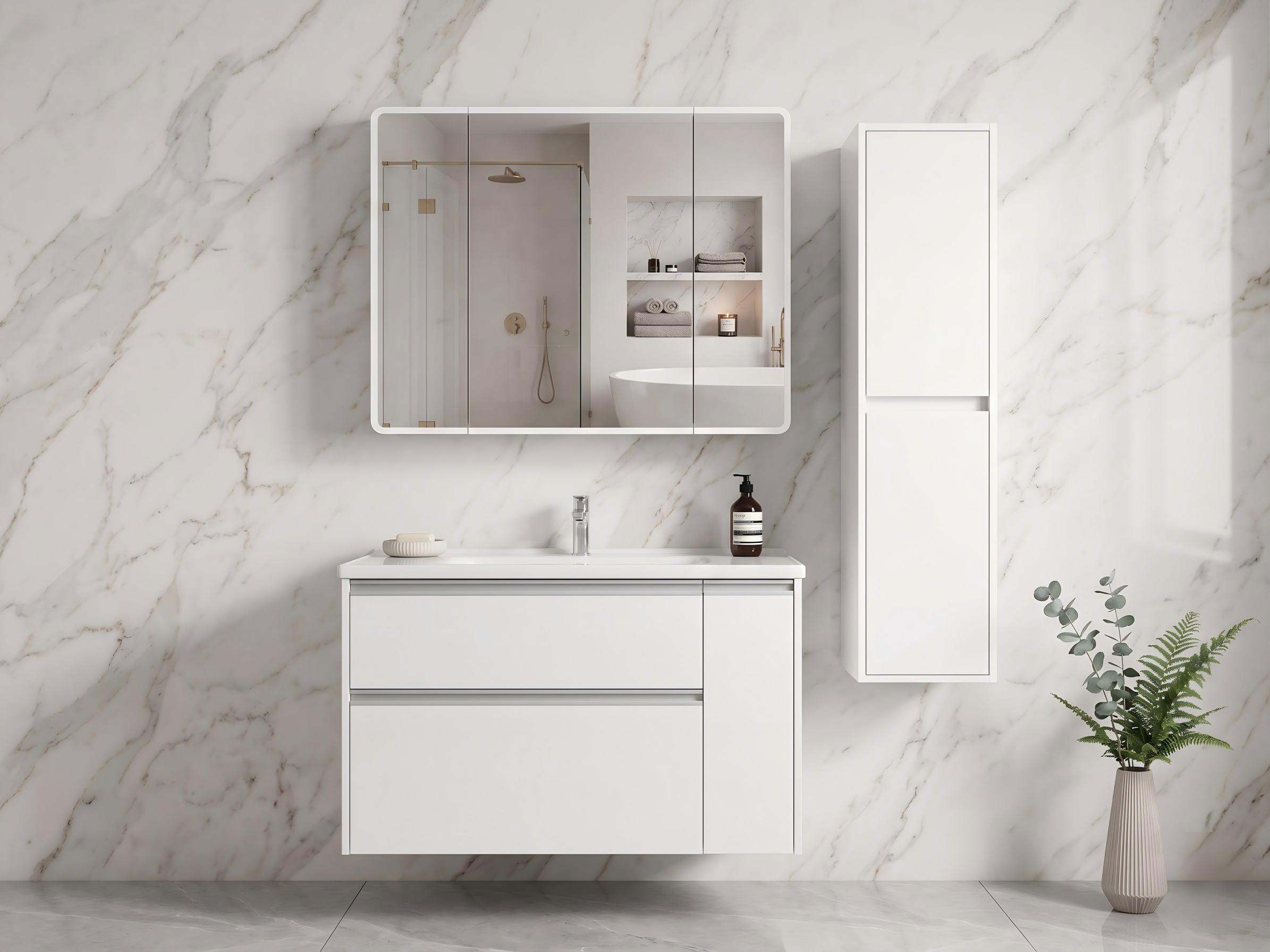
Specifying the correct recessed medicine cabinet is a technical decision that directly impacts project durability and avoids costly client callbacks. Choosing the wrong material, particularly wood in a high-humidity bathroom, can lead to warping and delamination. This failure undermines the installation’s integrity and can damage a contractor or designer’s reputation for quality workmanship.
This guide provides the technical criteria for selecting the right cabinet for any project. We will analyze the performance of anodized aluminum versus wood, explain the structural requirements for recessed and surface-mount installations, and cover key hardware details like 170-degree hinges and side kits. We also provide a framework for properly sizing a unit and determining the need for internal electrical outlets to meet modern building standards.
Medicine Cabinet vs. Mirror: Which Is Better?
The decision between a medicine cabinet and a mirror hinges on a primary trade-off: integrated, multifunctional storage versus a purely minimalist aesthetic.
The Case for Medicine Cabinets: Functionality and Integration
Medicine cabinets have evolved far beyond simple storage. They now act as consolidated functional hubs, especially in compact bathrooms where every square inch matters. By merging storage with technology, they eliminate vanity clutter and reduce the need for separate fixtures, offering a highly practical, integrated solution.
- Provides concealed storage for toiletries, freeing up valuable countertop space for a cleaner, more organized appearance.
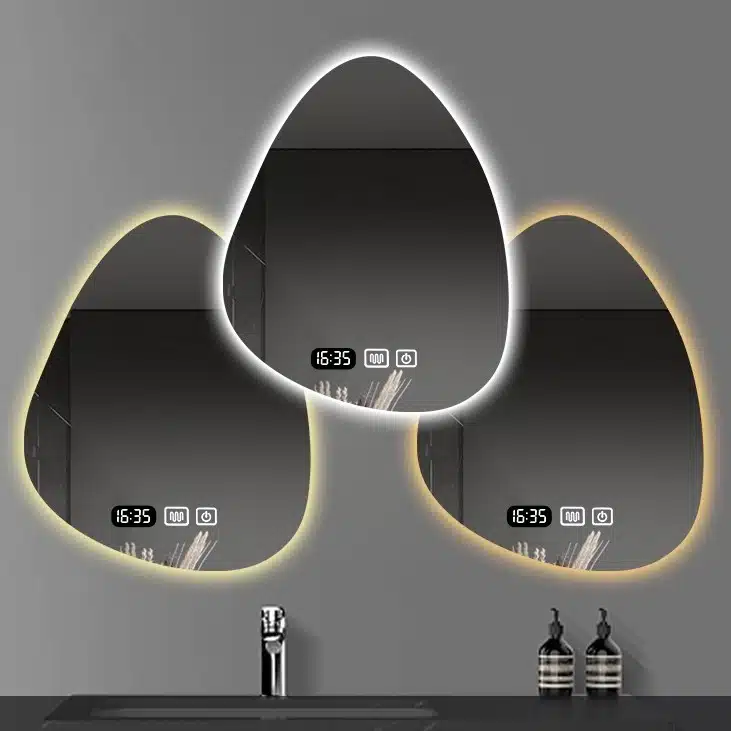
- Integrates modern features like LED lighting, anti-fog heating pads, and touch sensors, making separate vanity lights obsolete.
- Offers recessed installation options that sit flush with the wall, achieving a streamlined look without sacrificing storage depth.
The Case for Mirrors: Aesthetics and Minimalism
A standalone mirror delivers a clean, minimalist aesthetic that makes a bathroom feel larger and more open. It acts as a simple, elegant focal point, making it the superior choice for designs where storage is already handled by a vanity or other casework.
- Creates a sleek, unobtrusive profile. Frameless designs, in particular, enhance a modern, spacious atmosphere.
- Functions as a distinct decorative element, selected to complement hardware and tile choices within the room’s overall style.
- Lacks the physical depth of a cabinet, making it a better fit for tight layouts or narrow walls where a protruding box would be obstructive.
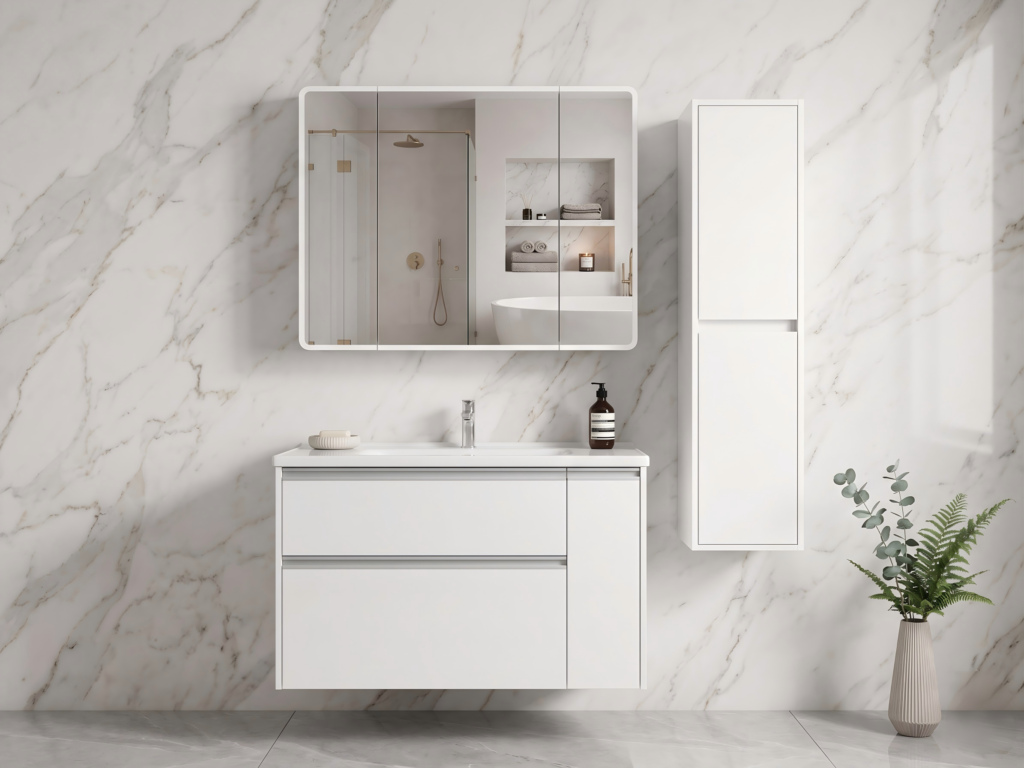
Why Use Anodized Aluminum?
Anodized aluminum is the industry standard for medicine cabinets, delivering an ideal balance of rust-proof durability for humid environments and a sleek, low-maintenance modern finish.
The material choice for a medicine cabinet directly impacts its longevity and performance, especially in a bathroom’s high-humidity environment. While options like wood or steel exist, anodized aluminum consistently outperforms them in the key areas that matter for bathroom fixtures: durability and maintenance.
Superior Durability and Corrosion Resistance
Anodized aluminum is engineered specifically to excel in wet conditions. The anodization process creates a hard, non-corrosive protective layer that is integral to the metal itself, not just a coating. This makes the surface completely rust-proof, preventing the water damage, bubbling, or peeling that plagues lesser materials. It ensures the cabinet’s structural integrity remains intact for years, even with daily exposure to steam and moisture.
| Material Property | Anodized Aluminum | Wood / MDF |
|---|---|---|
| Moisture Resistance | Excellent. Inherently rust-proof and does not warp or swell. | Poor. Susceptible to rot, swelling, and warping without consistent sealing. |
| Maintenance Level | Low. The non-porous surface is simple to wipe clean. | High. Requires regular refinishing or resealing to prevent water damage. |
| Longevity in Bathrooms | High. Maintains structural and aesthetic integrity for over a decade. | Variable. Longevity is entirely dependent on meticulous upkeep. |
Aesthetic Versatility and Low Maintenance
Beyond its robust performance, anodized aluminum offers significant design flexibility. It provides a clean, modern aesthetic that fits perfectly with contemporary bathroom designs. Manufacturers can produce finishes in various colors, such as matte black or brushed gold, without compromising the material’s protective qualities. The smooth, non-porous surface resists smudges and is exceptionally easy to clean, requiring only a simple wipe-down to maintain its appearance. This combination of elegant looks and practical, low-effort upkeep makes it the preferred choice for both residential and commercial projects.
Boost Profits with Factory-Direct Smart Mirrors
Recessed vs. Surface Mount: Which Is Better?
The choice between recessed and surface-mount cabinets hinges on a direct trade-off: installation cost and complexity versus a seamless, space-saving aesthetic.
Installation and Cost Factors
Budget and installation complexity are the primary drivers when choosing an installation type. Surface-mounted cabinets are the standard for budget-conscious projects and DIY renovations. They attach directly to the wall, avoiding any need for structural cuts. This makes them 15–30% cheaper and a practical choice for rental properties where wall modifications are not an option. A recessed cabinet requires cutting into the wall to create a cavity, a job that often requires a professional to safely navigate studs, plumbing, or wiring. The straightforward installation of surface-mounts makes them a much faster and more accessible upgrade.
| Attribute | Surface-Mounted | Recessed |
|---|---|---|
| Installation Complexity | Low (DIY-friendly); mounts directly to wall surface. | High; requires cutting a wall cavity and professional installation. |
| Total Cost | Lower unit price and minimal to no labor costs. | Higher unit price plus professional labor costs ($200+). |
| Space Impact | Protrudes 4-8 inches from the wall, consuming physical space. | Sits flush with the wall, creating a clean look and saving space. |
Aesthetics and Space Efficiency
The final decision often comes down to visual preference and the bathroom’s layout. Recessed cabinets sit perfectly flush with the wall, creating a clean, built-in look that integrates seamlessly into minimalist designs. This is especially valuable in smaller bathrooms where saving every inch of physical and visual space matters. Surface-mounted cabinets protrude from the wall, but this gives them greater flexibility in placement and sizing. We’re seeing a trend toward larger surface-mounted units, from 36 to 48 inches, for clients who need maximum storage capacity without major wall modifications.
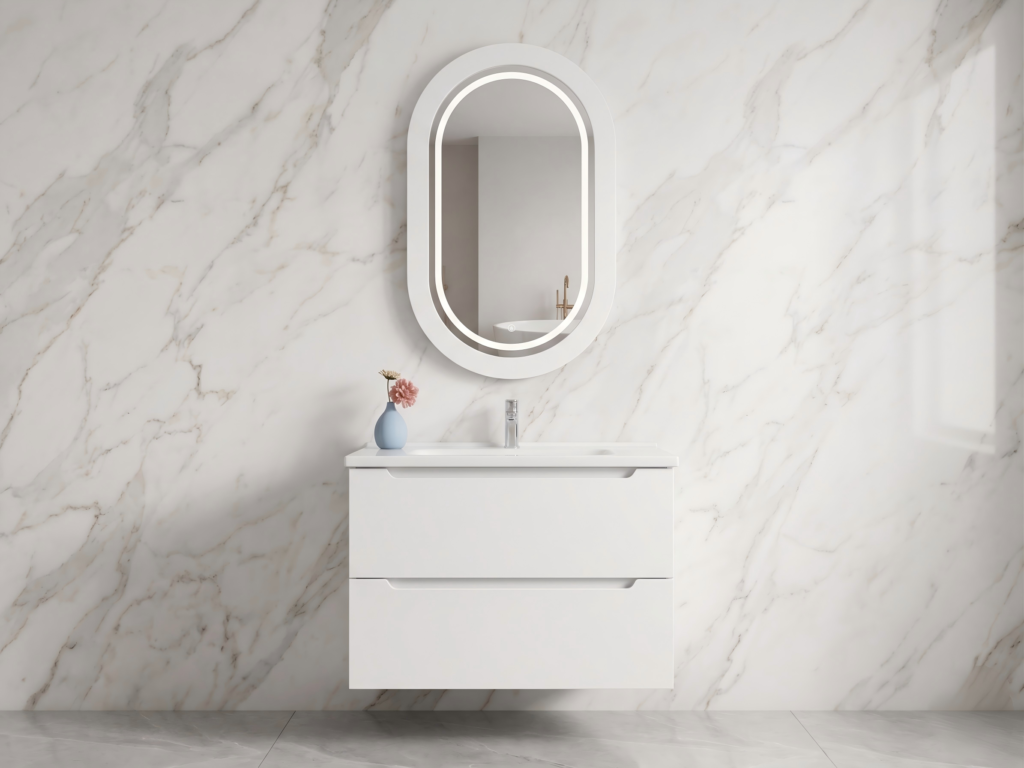
What Is a “Side Kit”?
A side kit is a simple accessory that converts a recessed cabinet for surface mounting, solving aesthetic challenges and streamlining inventory management for distributors and builders.
Adapting Cabinets for Surface Mounting
A side kit is an accessory pack used to transform a recessed medicine cabinet into a surface-mounted unit. It contains a set of finished panels that attach directly to the exposed exterior sides of the cabinet body. This conceals the unfinished metal housing, creating a complete and polished look that mimics a purpose-built surface-mount cabinet.
- These kits are typically included with dual-mount cabinets, providing installers with built-in flexibility.
- They enable project managers and builders to defer the final mounting decision until later in the construction phase.
- The side panels are engineered to integrate seamlessly with the cabinet’s frame for a clean, intentional fit.
Aesthetic and Logistical Benefits
Beyond the visual upgrade, a side kit offers significant logistical advantages. It ensures a surface-mounted cabinet looks intentional and fully finished rather than like an exposed, out-of-place component. For businesses, this versatility is a major asset for inventory control.
- The primary aesthetic goal is to give a surface-mounted cabinet a clean, built-in appearance.
- For distributors and large-scale builders, offering one dual-mount model with a side kit eliminates the need to stock separate SKUs for recessed and surface-mount cabinets.
- This approach simplifies procurement and guarantees the right product is on hand, irrespective of wall structure or last-minute design changes.
Do You Need Internal Outlets?
Internal outlets are a non-standard feature, primarily because integrating them into recessed cabinets is complex and requires navigating strict electrical codes, making surface-mount models the practical alternative for powered storage.
Installation and Code Compliance
Adding electrical outlets inside a recessed medicine cabinet is not a simple upgrade; it’s a minor construction project. The process involves significant planning around existing wall infrastructure and local electrical codes, which is why most standard cabinets don’t include this feature. Integrating power means dealing with what’s already behind the drywall.
- Wiring Challenges: Electrical wiring must be carefully routed through the wall cavity, avoiding existing studs, plumbing lines, and other obstructions. This often requires opening up more of the wall than just the cabinet cutout.
- Safety and Code: Bathroom electrical work is highly regulated. Any outlet near a sink or water source must use a GFCI (Ground Fault Circuit Interrupter) protected receptacle to prevent shock. All work must comply with national and local building codes.
- Retrofitting Difficulty: Trying to add an outlet to an existing recessed cabinet is significantly more difficult than installing a surface-mount model designed from the start with easier electrical access.
Market Availability and Alternatives
Recessed cabinets with factory-installed outlets are a niche product. You won’t find them in most big-box stores. This feature is typically reserved for high-end, custom-built units where the additional cost and installation complexity are expected. While the demand for smart bathroom features is pushing manufacturers to integrate power more often, it is far from a standard offering in 2026. For most projects, the practical solution is to use a surface-mount cabinet. Their design allows for much simpler electrical hookups, often without needing to modify the internal wall cavity at all. This makes them the go-to choice for homeowners and builders who need reliable power access without the expense and hassle of a custom recessed installation.
Why Use 170-Degree Hinges?
A 170-degree hinge provides complete, unobstructed cabinet access, enhancing both usability and safety—a critical feature in commercial, healthcare, or high-traffic residential bathrooms.
Maximizing Access and Usability
Standard hinges limit how far a cabinet door can open, often creating awkward blind spots. A 170-degree hinge solves this by allowing the door to swing almost fully open, sitting nearly parallel with the cabinet face. This wide angle gives you completely clear access to the entire interior, making it much easier to organize, find, and retrieve items, particularly those that are large or bulky.
- Gives you an unobstructed view and reach into the entire cabinet, which eliminates frustrating blind corners.
- Makes storing and accessing bulky items like large cleaning bottles or stacks of towels simple.
- Serves as a practical upgrade in commercial or healthcare settings where staff need quick, efficient access to supplies.
Improving Safety in Tight Spaces
In small bathrooms or narrow corridors, a partially open cabinet door becomes a hazard. By swinging completely out of the way, the 170-degree door becomes less of a physical obstacle and reduces the risk of someone bumping into it. The door lies flat against the adjacent wall or cabinet instead of protruding into the main walkway, clearing the path for movement.
- The door rests flat against the adjacent surface rather than jutting out into the walkway.
- Many 170-degree models incorporate soft-close technology to prevent the door from slamming shut, protecting fingers.
- Allows for safer movement around an open cabinet, which is a major benefit in high-traffic or multi-user bathrooms.
Simplifying Installation and Maintenance
The ability to fully open the door streamlines tasks related to the cabinet itself. Adjusting shelf placement, performing post-installation fine-tuning, and cleaning the interior are all much more straightforward when the door is not a constant impediment. This level of access is especially useful for installers and maintenance staff.
- Makes it easier to install or adjust internal shelves without having to work around a partially open door.
- Provides better access for thoroughly cleaning the cabinet interior and the inside face of the door.
- Most concealed European-style hinges offer three-way adjustability, which is far easier to fine-tune with the door swung wide open.
How to Size Your Cabinet?
Proper cabinet sizing balances standard industry dimensions with on-site constraints like wall stud spacing and vanity width to ensure both functional ergonomics and visual cohesion.
Standard Sizing Categories
Medicine cabinets are produced in standard width categories to fit common bathroom layouts. This ensures a proportional fit, whether for a small powder room or a large master bathroom. The market generally segments these into small, medium, and large models, with most heights falling between 20 and 35 inches to accommodate different mirror and storage needs.
| Sizing Category | Standard Width Range | Common Height Range |
|---|---|---|
| Small | 16 to 20 inches | 20 to 35 inches |
| Medium | 20 to 24 inches | 20 to 35 inches |
| Large | 24 to 30 inches | 20 to 35 inches |
Installation and Placement Considerations
Sizing decisions depend heavily on the installation plan. For recessed models, the cabinet’s width must fit between your wall studs, which dictates the maximum size without requiring structural framing changes. Ergonomics also play a key role; the industry standard is to mount the cabinet so its center is between 60 and 72 inches from the floor, providing comfortable eye-level access for most users. Surface-mounted and semi-recessed cabinets offer more placement freedom, as they don’t depend on stud locations, making them better suited for retrofits or walls with plumbing and electrical obstructions.
Coordinating with Your Vanity
A critical design rule is to match the medicine cabinet’s width to the vanity below it. The cabinet should be either the same width as or slightly narrower than the vanity. This creates a visually balanced, proportional look and prevents the cabinet from overpowering the space. Choosing a cabinet wider than the vanity results in an awkward, top-heavy appearance. Modular cabinets with adjustable shelves also allow you to align the unit’s internal storage capacity with the vanity’s function, creating a cohesive storage system.
Conclusion
A modern medicine cabinet is more than just storage; it’s a functional fixture where material and design choices matter. Anodized aluminum offers durability against moisture, while options like recessed mounting and integrated outlets maximize space and convenience.
If you’re planning a multi-unit project, we can help specify the right features for your needs. Contact our team to request a full catalog or a sample for evaluation.
Frequently Asked Questions
Recessed vs surface mount medicine cabinet?
Recessed cabinets are installed into the wall for a built-in, streamlined look that saves space, making them a preferred modern option. Surface-mount cabinets are installed directly onto the wall surface, which is a simpler installation process but causes the cabinet to protrude into the room. The best choice depends on your wall’s structure (checking for pipes or studs is crucial for recessed) and your desired aesthetic.
Are medicine cabinets outdated?
No, medicine cabinets are not outdated; they have evolved into advanced, multifunctional fixtures. Modern cabinets integrate features like LED lighting, anti-fog technology, and smart touch sensors, combining storage, lighting, and a mirror into one unit. This shift reflects a strong demand for space-optimized and high-functionality solutions in contemporary bathrooms.
Aluminum vs wood medicine cabinet?
Aluminum cabinets are highly recommended for bathrooms due to their durability, light weight, and natural resistance to rust and corrosion in humid environments. They offer a sleek, modern aesthetic. Wood cabinets provide a classic, warm look but can be susceptible to warping or damage from moisture over time unless constructed from high-quality, bathroom-rated engineered or solid wood.
Medicine cabinet with electrical outlet?
Yes, medicine cabinets with integrated electrical outlets are a popular and highly practical feature. They allow you to conveniently store and charge devices like electric toothbrushes and shavers inside the cabinet, keeping countertops clear and organized. For safety, it is essential that these outlets are GFCI (Ground Fault Circuit Interrupter) protected, which is standard for all bathroom installations.
Installing recessed cabinet in existing wall?
Yes, a recessed cabinet can be installed in an existing wall, but it requires careful planning. First, use a stud finder to ensure the desired wall cavity is free of studs, plumbing, or electrical wiring. The process involves cutting a precise opening in the drywall, potentially framing the opening if it interferes with studs, and then securing the cabinet box to the wall structure. If a load-bearing stud must be cut, professional installation is strongly recommended.
Best medicine cabinet for small bathroom?
For a small bathroom, a recessed medicine cabinet is the ideal choice. Because it sits inside the wall, it doesn’t protrude into the room, maximizing usable space and creating a clean, uncluttered look. Opting for a model with a frameless design and integrated LED lighting is even better, as it enhances the sense of space and consolidates lighting and storage into a single, efficient fixture.




0 Comments