

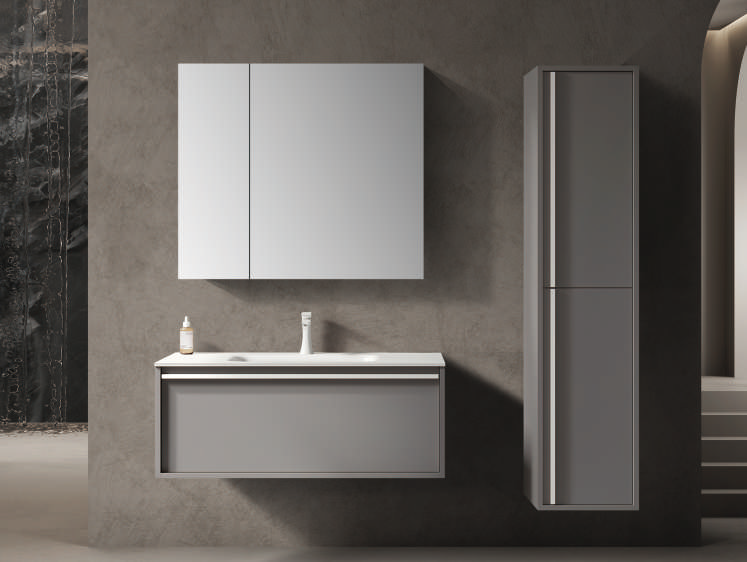
Offering a matching bathroom vanity medicine cabinet can either be a high-margin upsell or a source of costly returns and brand damage. While customers see a simple accessory, suppliers face the operational risks of mismatched color batches, high-rate shipping damage for mirrored glass, and installation issues that lead to callbacks. A failure to control these variables can quickly erase the profitability of what should be an easy add-on sale, turning it into a logistical and financial liability.
This guide provides a technical framework for successfully manufacturing and distributing medicine cabinets. We analyze the material science behind anodized aluminum versus wood construction and explain how side kits provide a universal solution for recessed and surface-mount installations. We also cover the processes for ensuring a perfect finish match with the vanity and the essential packaging strategies required to minimize transit damage, protecting both your product and your profit margin.
The Resurgence: Why Is the Medicine Cabinet Making a Comeback?
The medicine cabinet’s revival is fueled by a convergence of home wellness trends, the practical need for space-saving designs in urban living, and the integration of user-focused smart technology.
Increased Focus on Home Health and Wellness
A growing awareness of personal health and an aging population are transforming the home into a primary wellness space. This shift drives the need for organized, accessible storage for medications, supplements, and first-aid supplies. The medicine cabinet has become a functional necessity rather than a simple accessory. This trend is accelerating as more people manage chronic conditions from home, requiring dedicated and secure storage for medical supplies.
- The expansion of home healthcare services means more people require dedicated and secure storage to manage treatments.
- Consumers are more proactive about their health, increasing demand for organized spaces to store personal care and wellness products.
Demand for Space-Saving Urban Solutions
With growing urbanization and more compact living arrangements, multi-functional furniture is now a requirement. A medicine cabinet effectively combines a mirror and concealed storage, making it an ideal solution for optimizing space in smaller bathrooms. This design helps maintain a clutter-free countertop, aligning with modern preferences for minimalist and efficient interiors that maximize perceived space.
- By using vertical wall space, medicine cabinets provide valuable storage without consuming any floor area.
- This approach supports a clutter-free environment that matches the modern demand for clean and efficient interior design.
Integration of Smart Technology Features
The modern medicine cabinet is evolving with technological advancements that add real convenience. Features once reserved for high-tech gadgets are now built directly into bathroom fixtures, enhancing the daily user experience. These upgrades are no longer niche add-ons but are becoming standard expectations that reshape the market and drive growth.
- Smart functions like IoT-enabled inventory tracking for medications are emerging in new product designs.
- Integrated features such as anti-fog surfaces, adjustable LED lighting, and internal power outlets are now common consumer demands.
Material Selection: Why Is Anodized Aluminum Preferred Over Wood?
Anodized aluminum is the superior choice for high-humidity bathroom environments due to its inherent corrosion resistance and structural stability, whereas wood-based materials demand rigorous waterproofing and maintenance to prevent inevitable warping and rot.
Moisture Resistance and Durability
Anodized aluminum is an ideal material for humid bathroom environments because it does not absorb water, warp, or rot like wood. Its anodized surface provides strong corrosion resistance that often outperforms stainless steel, ensuring the cabinet’s longevity for decades. Unlike wood composites that can fail when their protective seals are compromised, aluminum’s integrity is inherent to the material itself.
- Resists water absorption, preventing the swelling and cracking that is common in wooden cabinets.
- The anodized coating creates a non-oxidizing surface that protects against corrosion from moisture and cleaning agents.
- Aluminum remains structurally stable in both extremely dry and humid climates without degrading over time.
| Feature | Anodized Aluminum | Wood & Wood Composites (MDF/Plywood) |
|---|---|---|
| Moisture Performance | Impervious to water. Will not swell, warp, or rot. Anodized layer prevents corrosion. | Porous and highly susceptible to water damage. Requires constant sealing to prevent swelling and delamination. |
| Long-Term Maintenance | Minimal. Requires only occasional cleaning with non-abrasive agents. | High. Requires periodic re-sealing or refinishing every 2-5 years to maintain its water barrier. |
| Structural Stability | Dimensionally stable across wide temperature and humidity ranges. Lightweight for easier installation. | Prone to expansion and contraction, leading to cracks in paint and joint failure over time. |
| Expected Lifespan (In-Use) | Over 25 years. The material does not degrade structurally in a bathroom environment. | Varies greatly based on maintenance. Water ingress can lead to failure within a few years. |
Lower Long-Term Maintenance and Cost
While anodized aluminum might have a higher initial price, its low-maintenance design makes it more cost-effective over the product’s lifespan. Wood requires regular sealing and refinishing to prevent damage, but aluminum maintains its appearance and integrity with minimal upkeep. This calculation of total cost of ownership is critical for commercial projects and discerning homeowners who prioritize longevity over short-term savings.
- Eliminates the need for periodic sealing or refinishing, which wood typically requires every few years.
- Reduces long-term expenses associated with repairing or replacing water-damaged components.
- The material is lighter than solid wood, which can simplify installation and reduce associated labor costs.
Boost Sales with Region-Specific Bathroom Cabinets

Recessed vs. Surface Mount: How Does the “Side Kit” Solution Work?
The industry is shifting to modular cabinets that can be either recessed or surface-mounted, using a simple side kit to reduce inventory complexity for distributors and increase flexibility for installers.
The traditional divide between recessed and surface-mount medicine cabinets is closing. Manufacturers are standardizing designs to create single units that serve both installation needs. This dual-functionality approach allows for greater adaptability across different project types, from new constructions with planned wall cavities to renovations where cutting into a wall is not feasible. For wholesalers and retailers, this simplifies inventory management by reducing the number of distinct SKUs needed to cover the market.
The Rise of Dual-Functionality Cabinets
The market is moving toward modular designs that give installers and end-users a choice. A single cabinet model can now accommodate various bathroom layouts and wall conditions, whether it’s for a permanent homeowner looking for a built-in aesthetic or a renter who needs a less invasive solution. This reflects a broader trend in bathroom fixture manufacturing toward highly adaptable and customizable products that offer more utility from a single design.
| Installation Factor | Recessed Installation (Without Side Kit) | Surface-Mount Installation (With Side Kit) |
|---|---|---|
| Wall Modification | Requires cutting a cavity into the wall between studs. More labor-intensive. | Mounts directly onto the wall surface. No cutting required. |
| Aesthetic Profile | Sits flush with the wall for a seamless, built-in appearance. | Protrudes from the wall, with finished side panels creating a clean, complete look. |
| Storage Depth | Limited by the depth of the wall cavity, typically 3.5 to 4 inches. | Determined by the cabinet body, offering deeper storage (e.g., 5+ inches). |
How Side Kits Enable Installation Flexibility
The component enabling this dual functionality is the “side kit.” This kit is a set of matching mirrored or finished panels designed to attach to the cabinet body. It serves one simple but critical purpose: to create a finished exterior when the cabinet is mounted on the surface of a wall. Without it, the unappealing, unfinished sides of the cabinet box would be exposed. The installation process dictates its use.
- For surface-mount installation, the installer attaches the side kit panels to the main cabinet body before hanging it on the wall. This gives the unit a complete, polished look from all viewable angles.
- For recessed installation, the side kit is simply discarded. The main cabinet body fits directly into the prepared wall opening, and the wall itself conceals the unfinished sides.
Integrated Features: Are LED Lighting and Defoggers Essential?
By 2026, integrated LEDs and defoggers have shifted from optional upgrades to baseline requirements, driven by consumer demand for practical, multifunctional bathroom solutions.
The question is no longer *if* these features are useful, but how essential they have become. In the current market, integrated electronics solve fundamental daily problems, making them a major factor in purchasing decisions. Cabinets without power are simply a different product category now.
Solving Practical Problems: Task Lighting and Fog-Free Mirrors
A modern medicine cabinet’s value is measured by its ability to address user frustrations directly. Integrated LED lighting and defoggers are prime examples of this principle in action. They provide tangible benefits that older, non-powered cabinets simply cannot match. Overhead bathroom lighting often creates shadows on the face, but built-in LEDs deliver direct, consistent illumination perfect for grooming tasks.
- Task-Oriented Lighting: Built-in LEDs provide bright, shadow-free light essential for detailed tasks like applying makeup, shaving, or inserting contact lenses. This is a significant improvement over ambient room lighting.
- Fog-Free Operation: Anti-fog heating pads ensure the mirror surface remains clear and usable immediately after a hot shower. This eliminates the need to constantly wipe away condensation, saving time and reducing streaks.
The Shift from Luxury Add-On to Standard Feature
Just a few years ago, lighted mirrors and defoggers were considered high-end luxuries. Today, market expectations have completely transformed. Consumer demand for convenience, efficiency, and smart functionality has made these integrations a standard feature. Cabinets that lack these capabilities are increasingly viewed as outdated or incomplete by designers, contractors, and end-users. Including them adds significant functional value and aligns the product with contemporary expectations for a modern, efficient bathroom.

Matching Finish: How Can You Ensure the Vanity and Mirror Align?
Successful vanity and mirror alignment in 2026 prioritizes coordinating undertones and physical symmetry over exact finish matching, a strategy that offers greater design flexibility and long-term value.
The era of perfectly matched bathroom sets is over. Today’s market demands a more nuanced approach to design, focusing on creating a cohesive look rather than a uniform one. This involves understanding how to coordinate finishes, use neutral tones effectively, and ensure precise physical installation for a professional result.
Coordinating Undertones Instead of Exact Matches
The most effective strategy is to align the underlying warmth or coolness of the vanity and mirror finishes. Pairing warm tones (like oak or brass) with other warm tones, or cool tones (like gray or chrome) with other cool tones, creates a sophisticated, layered aesthetic. This method avoids the dated, monotonous appearance of an exactly matched set. It also provides far greater design adaptability, ensuring the bathroom’s style remains relevant and supports higher resale value. A manufacturer with a deep catalog gives distributors the flexibility to select complementary finishes without being locked into a single option.
| Design Principle | Execution Method | Commercial Outcome |
|---|---|---|
| Legacy: Exact Match | Sourcing identical finishes, colors, and materials, often sold as a predefined set. | Limits flexibility, can appear dated, and restricts inventory options. |
| Modern: Coordinated Undertones | Aligning finishes by their warm or cool base tones (e.g., warm wood with bronze frame). | Creates a sophisticated look, expands design possibilities, and increases long-term value. |
Using Neutral Finishes to Bridge Different Materials
Neutral and transitional finishes like matte white, greige, or champagne serve as a powerful visual bridge. By selecting a neutral finish for either the vanity or the mirror frame, you create a unifying element that allows other materials and colors to coexist without clashing. This technique is particularly effective for balancing a bold, textured wood vanity with a minimalist metal-framed mirror. It provides a cohesive look without forcing every component to be the same, giving designers and homeowners more creative control.
Achieving Physical Alignment for Visual Symmetry
Beyond color, precise physical alignment is essential for a high-end, intentional look. The placement of the mirror relative to the vanity dictates the entire setup’s balance and professionalism. The core rules are straightforward:
- Center the mirror directly above the vanity’s centerline. For double vanities, center each mirror over the midpoint of its respective sink basin.
- Maintain a consistent horizontal line. The bottom edge of the mirror should align cleanly with the top of the backsplash or a few inches above the faucet hardware.
Products engineered with standardized mounting hardware simplify this process, removing guesswork and helping installers achieve perfect alignment efficiently.
Interior Design: Why Are Glass Shelves and Internal Outlets Popular?
Modern medicine cabinet interiors prioritize minimalist aesthetics and practical functionality, making glass shelves and internal outlets standard features for creating an open feel while discreetly managing electronics.
Glass Shelves: Enhancing Light and Space
Glass shelves are a key component in contemporary medicine cabinets because they support an open, light-filled aesthetic. Unlike solid wood or metal, glass allows light to pass through the cabinet’s interior, making the bathroom feel larger and less cluttered. This design choice aligns with the market shift toward minimalist and transparent storage solutions that enhance a room’s perceived spaciousness without sacrificing functionality.
- Improves light transmission, which helps brighten the room.
- Creates an illusion of more space, which is especially useful in smaller bathrooms.
- Provides a clean, unobtrusive look that complements contemporary decor.
Internal Outlets: Combining Convenience with a Clean Look
Integrating electrical outlets inside the medicine cabinet is a direct response to modern user needs. This feature allows for discreet charging of devices like electric toothbrushes and shavers, keeping countertops free of wires and clutter. It neatly combines essential functionality with a streamlined, organized appearance, hiding the necessary hardware from view and supporting a minimalist design.
- Keeps countertops clear of charging cables and electronic devices.
- Offers a safe and dedicated spot to power bathroom electronics.
- Supports a minimalist aesthetic by hiding functional hardware from view.
Packaging Glass Cabinets: How Can You Minimize High-Risk Damage?
Effective damage prevention for glass cabinets relies on a dual strategy: a multi-layered physical cushioning system combined with rigorous, industry-standard testing protocols to validate packaging integrity before shipment.
Multi-Layered Cushioning and Corner Reinforcement
A robust, multi-layered protection strategy is the foundation for securing glass cabinets during transit. The goal is to absorb shock, prevent scratches, and safeguard the most vulnerable points—the edges and corners—where fractures are most likely to occur. For e-commerce sellers, this often means engineering packaging with six-sided molded foam and hard cardboard reinforcement to survive the unpredictable handling of parcel delivery networks.
- Primary protection starts with wrapping glass surfaces in high-density foam or bubble wrap. This layer prevents surface-level scratches and absorbs constant, low-level vibrations during transport.
- Reinforced corner protectors are non-negotiable. These components shield the most fragile areas from direct impact if the package is dropped or mishandled.
- Removable parts like glass shelves must be disassembled and packed individually. This step eliminates the risk of internal movement and collisions between components inside the box.
Industrial Testing and Professional Handling Protocols
Physical materials alone are not enough. Damage prevention depends on standardized testing and disciplined handling. The most reliable suppliers subject their packaging designs to industry-recognized simulations. For example, passing the ISTA 3A drop test is the baseline requirement for selling through channels like Amazon or Wayfair, as it verifies that the packaging can withstand the rigors of the small-parcel shipping environment. This process validates that custom packaging solutions are properly engineered for specific product vulnerabilities. Finally, these measures are supported by comprehensive staff training on correct loading, unloading, and transport techniques to minimize human error across the supply chain.
Conclusion
Offering a matching medicine cabinet is a direct way to increase profit on each vanity sale. By focusing on durable materials like anodized aluminum, flexible installation methods, and coordinating finishes, you provide a complete solution that customers value. This strategy simplifies the purchasing process for your clients and adds a high-margin product to your catalog.
Our team can help you select models that pair perfectly with your existing vanity collections. Contact us to discuss our material flexibility and test our quality with a refundable sample order.
Frequently Asked Questions
Recessed vs surface mount medicine cabinet?
A recessed medicine cabinet is installed into the wall cavity, sitting flush with the wall for a seamless, built-in look that maximizes space. This installation is ideal for new construction or major remodels but requires a clear, stud-free wall space. A surface-mount cabinet is mounted directly onto the wall’s surface, making it much easier to install in any bathroom without structural modifications. The choice depends on your desired aesthetic, wall structure, and installation complexity.
Aluminum vs wood medicine cabinet?
Aluminum medicine cabinets offer superior durability in humid bathroom environments as they are inherently rustproof and resistant to moisture damage. They provide a sleek, modern aesthetic. Wood cabinets offer a classic, warm appearance and can be finished to match other bathroom furniture. However, wood is more susceptible to warping or damage from moisture over time unless it is properly sealed and maintained. For longevity and low maintenance in a bathroom, aluminum is the technically superior choice.
Can you match medicine cabinet to vanity color?
Absolutely. Matching the medicine cabinet to the vanity is a common design strategy to create a cohesive look. Many manufacturers offer coordinated collections with identical finishes and hardware. Alternatively, you can create a contrast by pairing different materials, such as a black metal-framed cabinet with a light wood vanity. A frameless, all-mirror cabinet is a versatile option that complements any vanity color by reflecting its surroundings.
Best lighted medicine cabinets?
The best lighted medicine cabinets feature high-quality, forward-facing LED lighting with a high Color Rendering Index (CRI) of 90+ for accurate color representation. Key features include adjustable color temperature (warm to cool white), dimming capabilities, and an integrated anti-fog heating pad. Premium models also include built-in electrical and USB-C outlets for charging devices, and smart features such as Bluetooth speakers or voice assistant integration.
Manufacturing custom medicine cabinets?
Yes, custom medicine cabinets can be manufactured to meet specific project requirements. This process allows for precise dimensions to fit non-standard openings, unique frame materials and designs, and a tailored selection of integrated technologies like lighting, defoggers, and smart features. Custom fabrication is handled by specialized cabinet makers or millwork firms and is an excellent solution for high-end residential or commercial projects, though it involves longer lead times and higher costs than stock units.
Do medicine cabinets need electricity?
A basic, non-featured medicine cabinet is simply a storage box with a mirror and does not require electricity. However, modern cabinets with integrated features absolutely require a hardwired electrical connection. This is necessary for functions such as LED lighting, anti-fog defoggers, internal power outlets for shavers or toothbrushes, and any smart technology like speakers or digital displays. Electrical planning during the rough-in phase of a project is essential for these advanced models.





0 Comments