


An ADA compliant LED mirror is rarely just a design choice; it is a structural requirement that dictates how the entire restroom layout functions for both accessibility and maintenance. MFBATH approaches these fixtures as part of a larger, region-ready bathroom ecosystem, where the mirror must integrate seamlessly with vanities and lighting systems without compromising the strict mounting tolerances mandated by local building codes.
Most specifiers fail because they measure the outer frame instead of the actual reflective surface, leading to costly rework when inspectors enforce the 40-inch limit from the finished floor. Direct manufacturers solve this by using CNC precision to center the glass within the housing, ensuring that the mounting rail allows for exact placement within the required 35 to 40-inch band. This level of engineering precision prevents the offset surfaces common in cheaper imports and guarantees that your project passes inspection on the first try.
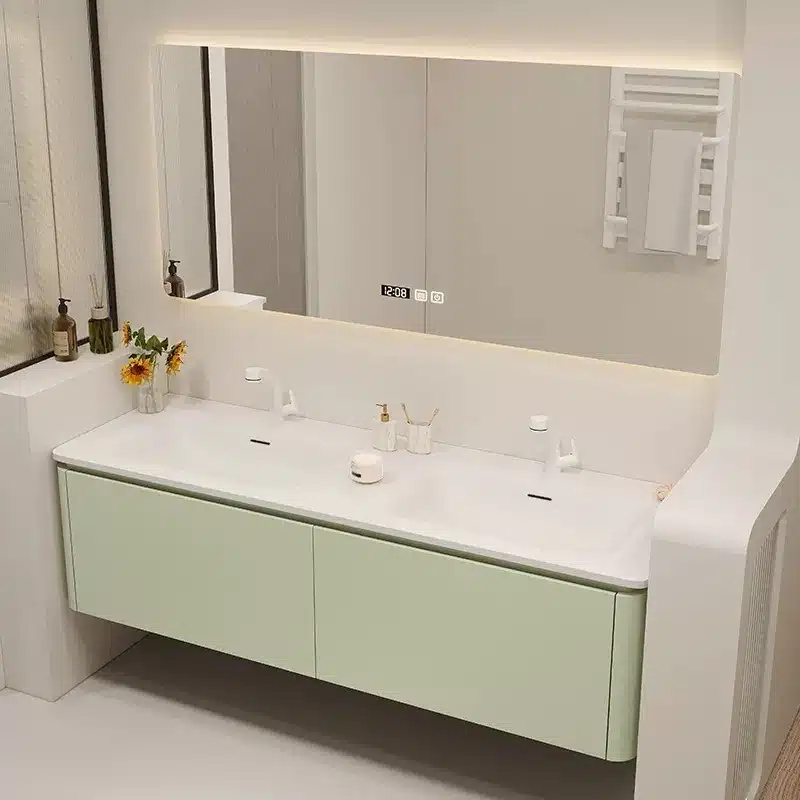
ADA Mirror Height Rules Explained
ADA §603.3 mandates a 35-40 inch mounting range for the reflective surface to ensure commercial restroom compliance.
Most commercial ADA inspection failures stem from a single measurement error: contractors measuring the bottom of the mirror frame rather than the bottom of the reflective glass. The Americans with Disabilities Act (ADA) §603.3 strictly mandates that the bottom edge of the reflective surface must be no higher than 40 inches (1015 mm) from the finished floor. This is a hard limit. If your mirror has a thick, decorative wooden casing, that frame height does not count toward the measurement.
-
- The 40-Inch Hard Cap: The maximum height for the bottom edge of the reflective surface is 40 inches. Exceeding this by even half an inch will cause a final building inspection to fail, requiring costly drywall repair and rewiring.
- The 74-Inch Max Reach: The top edge of the mirror cannot exceed 74 inches from the floor. This ensures the mirror is usable by individuals in wheelchairs who have limited forward reach and lower eye levels.
- The 35-Inch Sink Rule: If the mirror is mounted directly above a vanity sink, the bottom edge can be lowered to 35 inches. This flexibility allows designers to maintain a more standard aesthetic while remaining strictly within ADA clearance requirements.
- Reflective Surface vs. Frame: Standard mirrors often list frame-to-frame dimensions. For ADA compliance, you must verify the exact distance from the floor to the glass. Many cheaper imports have offset glass, making compliance impossible without custom drilling or frame removal.
To guarantee compliance, manufacturers must use CNC precision to center the reflective surface perfectly within the frame. Direct manufacturers with automated production lines ensure that the glass-to-frame ratio is consistent across all units. This eliminates the risk of receiving a batch where the glass is shifted, which would force your installation crew to manually adjust every single mirror to hit the 40-inch mark.
Real Cost of Non-Compliance in 2026
Non-compliance triggers $500–$2,000 per-unit replacement costs and total project delays.
Failing a final building inspection is the most expensive mistake a contractor can make in 2026. When an inspector flags a mirror for violating ADA §603.3—specifically regarding the reflective surface height—the entire unit must be removed and replaced. This is not a minor cosmetic fix; it involves tearing out drywall, patching tiles, and reconfiguring plumbing access panels. The cost to replace a single ADA-compliant smart mirror, including labor and materials, typically ranges from $500 to $2,000 per unit.
The financial damage extends far beyond the physical replacement. Retrofitting hardwired LED mirrors requires specialized electrical work. If the existing wiring was not routed to accommodate the specific load and placement of an ADA-compliant unit, you face expensive rewiring to meet UL/CSA standards for wet locations. These unexpected changes trigger change orders, which damage your reputation with developers and lead to liquidated damages for missed deadlines.
Upfront specification is the only way to eliminate this risk. By specifying UL/CSA certified units with verified ADA clearance dimensions before fabrication begins, you lock in the compliance. This approach saves thousands in labor and delay penalties. It ensures that every unit arriving at the site is ready to install, passing inspection on the first try and protecting your profit margins.
-
- Replacement Cost:: $500 to $2,000 per unit, covering removal, new unit procurement, and drywall/tile restoration.
- Electrical Retrofit Risk:: Rewiring hardwired units to meet UL/CSA damp-location standards can cost $150–$300 per fixture in labor.
- Delay Penalty:: Project hold-ups during final walkthroughs can incur daily liquidated damages, often exceeding $1,000 per day.
- Prevention Strategy:: Specify UL/CSA certified mirrors with verified reflective surface heights (≤40 inches) during the bidding phase.
| Risk Category | Financial Impact | Operational Consequence | Root Cause | Mitigation |
|---|---|---|---|---|
| Inspection Failure | $500 – $2,000 per unit | Project delays and rework labor costs | Incorrect reflective surface height (>40 inches) | Pre-certified UL/CSA units with adjustable mounting rails |
| Electrical Hazard | Liability claims and fire damage | Failed wet-location safety checks | Non-compliant LED drivers or lack of UL/CSA certification | Use of listed components meeting NEC standards |
| Material Degradation | High warranty and replacement costs | Premature failure in high-humidity environments | Use of non-tempered glass or lack of anti-fog tech | Mandatory tempered safety glass and heated anti-fog coatings |
| Design Non-Compliance | Client rejection and brand reputation loss | Inability to meet accessibility standards (ANSI A117.1) | Measuring frame height instead of reflective surface | CNC precision manufacturing to center reflective surface |
| Supply Chain Delay | Penalties for late project completion | Missing ship dates and dimension mismatches | Reliance on generic importers with poor QC | Direct manufacturer partnership with 5-stage QC process |
LED Mirror vs Standard Mirror: Compliance Check
Standard mirrors fail commercial inspections for task lighting; UL/CSA LED units provide the required CRI ≥90 for accessible grooming.
In commercial restrooms, the difference between a standard mirror and an LED mirror is not aesthetic—it is a compliance issue. Standard mirrors lack integrated task lighting, creating shadows that fail ADA §603.3 requirements for accessible grooming. Contractors often assume any mirror works, but the Americans with Disabilities Act mandates specific lighting quality and mounting heights that standard glass cannot provide.
-
- Lighting Quality (CRI): Standard mirrors reflect ambient light, which is often insufficient for detailed grooming. LED mirrors provide uniform, shadow-free illumination with a Color Rendering Index (CRI) of ≥90. This ensures accurate color perception for tasks like makeup application or shaving, directly addressing the accessibility gap.
- Installation Complexity: A standard mirror requires no power, simplifying installation. An LED mirror requires a hardwired connection to a wet/damp location circuit. This demands UL/CSA certified power supplies and proper grounding. Contractors must account for electrical rough-in during the framing phase to avoid costly drywall rework.
- Aesthetic vs. Safety: LED mirrors offer a modern, seamless look that enhances commercial project value without sacrificing safety. Unlike bulky sconces that create glare, integrated LED strips provide even illumination. This allows designers to maintain clean lines while meeting strict commercial bathroom mirror accessibility standards.
- Mounting Precision: LED mirrors are heavier due to internal components and wiring. Standard mounting hardware may fail under the weight. Premium units utilize adjustable mounting rails that ensure the reflective surface is centered and secure, guaranteeing the bottom edge stays within the critical 35-40 inch ADA tolerance band.
How to Source ADA Mirrors Without Delays
Avoid $2,000 per-unit rework by verifying UL/CSA certification and requesting mounting templates before ordering.
Sourcing ADA-compliant mirrors without delays requires shifting your procurement focus from general aesthetics to strict regulatory compliance. Most commercial projects stall during final inspections because contractors specify standard LED mirrors that lack the necessary electrical certifications for wet environments. A UL/CSA certified unit is not a luxury; it is the baseline requirement for electrical safety in commercial restrooms. Without this certification, your installation fails code, triggering immediate rework and liability exposure.
-
- Electrical Certification: Mandate UL/CSA listing for wet/damp locations. Standard mirrors often lack the GFCI protection required for North American commercial builds, risking immediate project rejection.
- CNC Precision Sourcing: Source from manufacturers with in-house CNC machining. Direct factories center the reflective surface within the frame to guarantee the 35-40 inch ADA height tolerance, whereas cheaper imports often have offset glass that makes compliance impossible.
- Mounting Templates: Request detailed mounting templates and load-bearing test reports before placing orders. Verify that the hardware supports adjustable rails, allowing for exact placement within the 35-40 inch ADA tolerance band to prevent costly on-site drilling errors.
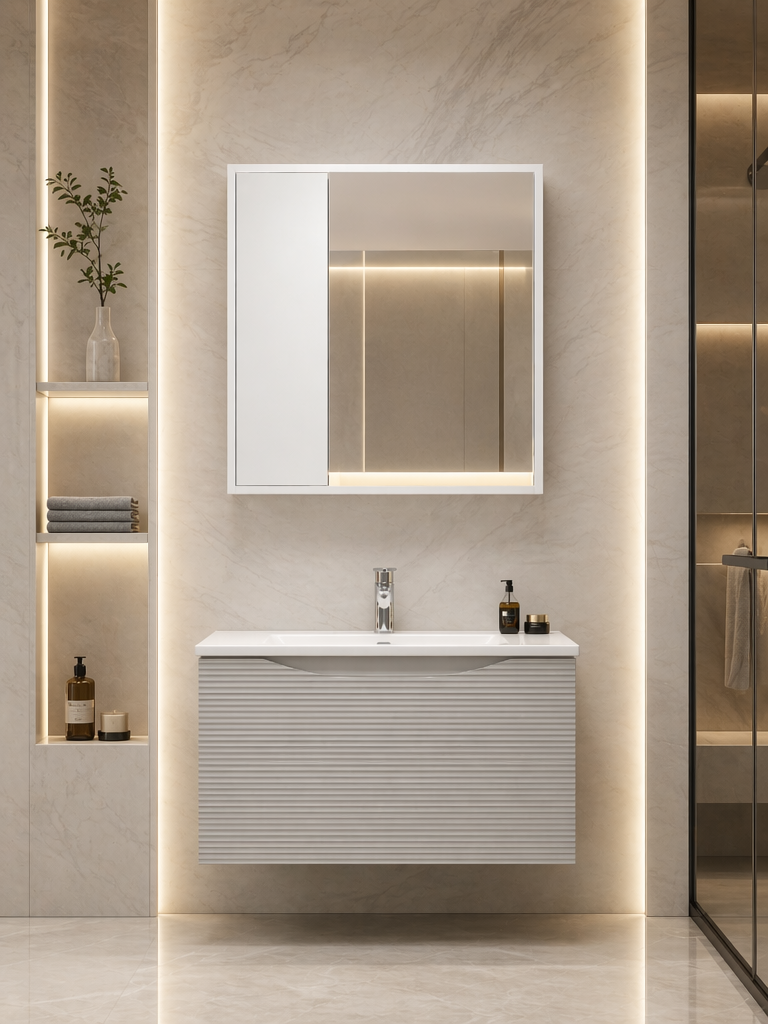
ADA ANSI Specification 27: What Contractors Miss
Contractors often confuse ADA height limits with ANSI glare standards, leading to failed lighting inspections.
The ADA Accessibility Guidelines (ADAAG) do not conduct their own physical testing. Instead, they reference ANSI A117.1 as the technical standard for verifying compliance. For contractors, this distinction is critical because the ADA sets the legal mandate, while ANSI defines the exact measurement protocols.
The most common failure point in commercial restroom specifications is confusing ADA height requirements with ANSI glare requirements. ADA §603.3 strictly governs the vertical placement of the mirror. ANSI, however, dictates the lighting quality and reflectivity limits to prevent visual discomfort.
A mirror can be perfectly mounted at the correct ADA height but still fail if it creates harsh glare. To pass a commercial building inspection, the LED mirror must integrate proper diffusers. This ensures the light is uniform and shadow-free without violating ANSI reflectivity thresholds.
-
- Height Standard: ADA §603.3 mandates the reflective surface bottom edge be ≤40 inches from the finished floor.
- Testing Reference: ANSI A117.1 provides the technical methodology for verifying clearance and mounting stability.
- Glare Control: Use LED mirrors with frosted diffusers or high CRI (≥90) LEDs to meet ANSI visual comfort standards.
- Inspection Risk: Ignoring ANSI glare standards can cause a project to fail final acceptance, even if ADA height is correct.
| Feature | Specification | Advantage |
|---|---|---|
| Measurement Standard | Reflective Surface Only (Not Frame) | Prevents installation errors; ensures compliance with ADA §603.3 bottom edge ≤40 inches. |
| Mounting Tolerance | Adjustable Rails (35″-40″ Range) | Guarantees exact placement for sink vs. adjacent wall configurations, avoiding rework. |
| Electrical Certification | UL/CSA Listed for Wet Locations | Eliminates fire hazard risks and ensures immediate passing of commercial building inspections. |
| Glass Safety | Tempered Safety Glass | Meets impact resistance standards for high-traffic public restrooms and ADA durability requirements. |
| Manufacturing Precision | CNC-Centered Reflective Surface | Ensures optical centering within the frame, unlike offset imports that fail accessibility clearance checks. |
Conclusion
Meeting ADA §603.3 height requirements and UL/CSA safety standards is non-negotiable for commercial projects. Choosing pre-certified units with CNC-precision mounting rails eliminates inspection failures and prevents costly rework during final builds.
Frequently Asked Questions
What is the ADA standard 4.1 6 3 A?
ADA Section 4.1.6(3)(a) specifies that the bottom edge of the reflective surface must be no higher than 40 inches above the finished floor. This ensures the mirror remains usable for. Verify the exact mounting height relative to the sink location during installation.
What are the common problems with LED mirrors?
Common issues include flickering lights, fogging failures, and electrical hazards from poor moisture sealing. These defects often stem from substandard drivers or lack of proper regional certification like UL or CE. Select mirrors with certified electrical components and robust anti-fog technology.
Are ADA mirrors required?
Yes, ADA-compliant mirrors are mandatory for all new commercial construction and alterations in the United States. They are also required for public accommodations to ensure equal access for individuals with disabilities. Ensure all commercial projects specify ADA-compliant fixtures to pass inspections.
What to look for in a LED mirror?
Look for UL or CSA certification for safety, CRI ratings of 90+ for accurate color rendering, and adjustable mounting rails for precise height placement. These features ensure both legal compliance and functional. Prioritize certified electrical safety and adjustable mounting for commercial installations.
Is LED flickering a fire hazard?
Flickering typically indicates a failing driver or poor electrical connection, which can lead to overheating and potential fire risks. Using certified, high-quality drivers significantly reduces this danger. Replace flickering units immediately to maintain electrical safety standards.





0 Comments