
Every vanity distributor hits the same fork: stack inventory in your own warehouse, or let the factory ship direct to your dealers. The vanity warehouse stocking vs dropship decision sets your cash flow, your freight bill, and the delivery promise you can honestly make. Pick wrong and you are either renting space for cabinets that will not move, or quoting lead times that cost you orders.
This guide breaks down what each model changes in dollars and days, where each model breaks, and the hybrid most distributors actually run. It closes with the factory terms that make either model work. The numbers come from a supplier that has shipped vanities to 1,000+ distributors across 20+ countries since 2015.
Key Takeaways
- Warehouse stocking ties up full-container cash; direct ship ties up only the 30% deposit until your dealers confirm their orders.
- Direct ship turns the 20–30 day production window and the 4–6 week total lead time to the US, Canada, and Mexico into your customer-facing promise.
- The 15-unit minimum order quantity (MOQ) per model, color, and size keeps the entry point low enough to test a channel before you fund a stocking position.
- Mixed containers let you combine different models and sizes in one shipment, which is the mechanism that makes the hybrid model practical.
- Freight is your contract under FOB (free on board) Qingdao Port terms either way, so container math decides which model wins on cost.
- The 2-year full-cabinet warranty and a return rate below 1% hold under both models, which keeps returns handling on your side of the border.
Table of Contents
- What Each Inventory Model Actually Changes
- Stocking vs Direct Ship Side by Side
- When Direct Ship Works and Fails
- The Mixed Model Most Distributors Run
- How to Structure the Factory Relationship
- A Decision Checklist for Your Vanity Line
- Frequently Asked Questions
- The Bottom Line
What Each Inventory Model Actually Changes
Start with cash, because that is the change dealers feel first. A stocked warehouse converts your cash into pallets the day the container lands. Direct ship keeps that same cash in your account until your dealers place orders, which means the factory carries the goods, not you.
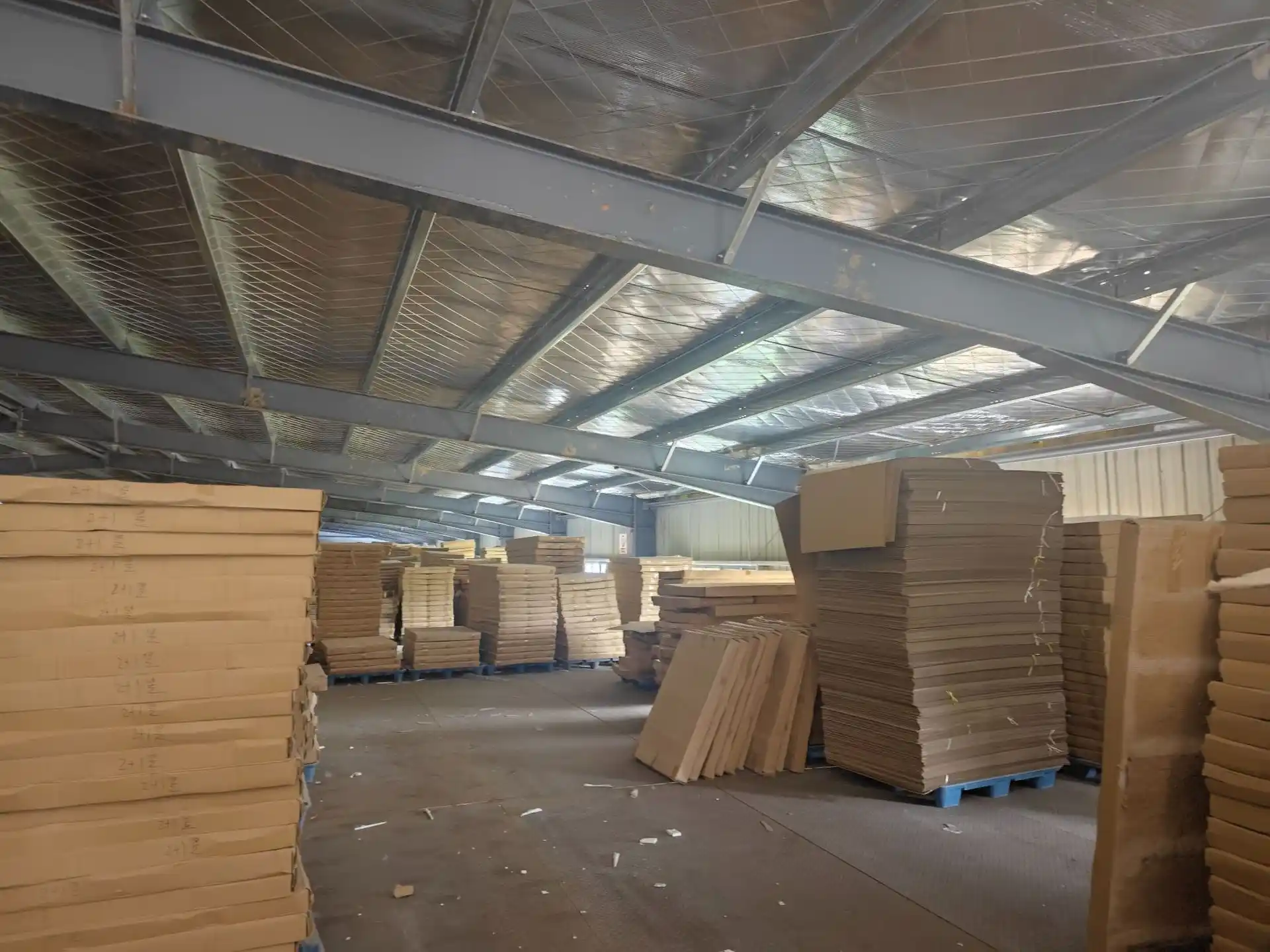
Lead time moves second. Stocking lets you promise delivery in days because the cabinet already sits in your market. Direct ship runs on the factory clock. Production takes 20–30 days; logistics and the 4–6 week total window for the US, Canada, and Mexico follow, with real-time tracking along the way. One number becomes your customer-facing promise, so pick the model before you quote.
Freight structure is the third shift. Every container leaves FOB Qingdao Port, so you own the cargo and the freight bill from the moment it clears the factory gate. A stocked container is one freight decision per SKU family; direct ship multiplies freight decisions across every order. That is why less-than-container-load (LCL) versus full-container-load (FCL) math often decides the winner — our FCL vs LCL freight breakdown walks through when each loading mode pays.
Payment timing sits underneath all of it. You place an order with a 30% deposit, and the balance is due within one week after the draft bill of lading (draft BL) is issued. Stocking stretches that payment into a long hold on your cash; direct ship shortens the gap between payment and sell-through.
The fourth change is less visible and hits harder: what the model buys you at the factory. A stocker orders in container quantities and holds the supplier’s attention; a direct shipper orders in 15-unit increments and still gets the same terms. Main Focus Cabinet, the manufacturer behind the MFBATH brand, has run this way since 2015. The plant in Changge, Henan, spans 10,000 square meters, employs 95 people, and builds 5,000 sets a month — the MOQ is an entry ticket, not a penalty.
The product mix changes the math too. A PVC vanity line in 24–60 inch standard widths sells on repeat and earns a shelf position. Solid wood cabinets in oak, walnut, maple, or ash move on project orders and fit direct ship — stock the commodity, direct ship the specialty.
Stocking vs Direct Ship Side by Side
One table does more work than a hundred paragraphs here. It compares the two models across the decisions that actually move money: cash, freight, time, stockout risk, returns, and SKU fit. Read it with your product list in front of you.

Vanity Warehouse Stocking vs Dropship at a Glance
| Decision Point | Warehouse Stocking | Direct Ship |
|---|---|---|
| Cash tied up | Full container value from the 30% deposit through final sell-through | 30% deposit only; the balance follows once the draft BL is issued |
| Time to customer | Days, from local stock | 4–6 weeks total to the US, Canada, and Mexico, including 20–30 days of production |
| Stockout risk | You own it; slow SKUs sit in your warehouse and eat margin | The factory carries it; you reorder in 15-unit increments |
| Freight profile | One full-container freight decision per stocking cycle, FOB Qingdao | Per-order freight; LCL charges accumulate when orders stay small |
| Returns and warranty | 2-year full-cabinet warranty; return rate below 1%; you process locally | Same 2-year warranty and sub-1% return rate; returns still route through you |
| SKU breadth | Needs steady reorder demand to justify the shelf position | Fits trial lines and custom runs at the 15-unit per-model minimum |
| Typical fit | Proven SKUs with repeat dealer orders | New lines, pre-sell programs, project orders with fixed install dates |
Stocking wins when the SKU has proven demand. Paying freight once on a full container beats paying freight repeatedly on small orders, and a factory running 5,000 sets of monthly capacity keeps your restock window short. Direct ship wins when the SKU is unproven or the customer needs a fixed delivery date, because a 15-unit order tests demand without funding a warehouse position.
Watch the returns row, because that is where importers get surprised. The warranty is a 2-year full-cabinet warranty and the return rate sits below 1%, but those figures describe factory performance, not your handling cost. Under either model you are the returns desk your dealers call, so budget the labor before you pick a side.
The 15-unit MOQ decides how much breadth each model can carry. At 15 units per model, color, and size, one stocked container holds fewer distinct models than a direct-ship program can offer across a year. Breadth is the quiet advantage of direct ship; cash is the quiet advantage of stocking.
Seasonality flips the call every year. A 4–6 week total window looks comfortable in spring. It turns punishing in the fall rush, so importers typically stock into the busy quarter and direct ship the rest of the year. Plan the flip in advance, because the factory clock runs the same in every month.
When Direct Ship Works and Fails
Direct ship earns its keep in three situations. Unproven SKUs: a 15-unit order per model, color, and size checks demand before you commit shelf space. Pre-sold projects: an install date inside the 4–6 week window turns the factory clock into your delivery schedule. Custom runs — Pantone colors, logo printing or laser engraving, custom packaging — are commitments you do not want sitting in inventory at all.
It fails in one predictable spot: the dealer who needs product faster than the factory clock. If your channel expects delivery in two weeks and your direct-ship window is 4–6 weeks, the order walks. No inventory theory recovers a lost sale, and a string of missed windows teaches dealers to call someone else first.
Run the failure mode once and the pattern sticks. A dealer approves a 15-unit custom run with logo engraving; the cabinets arrive in week five while the install crew is booked for week six. The order survives; the relationship does not.
Remember the math of a missed window: a backorder is just a refund that has not happened yet. Treat every direct-ship quote as a promise with a date on it, and keep a short stocking list for the SKUs your dealers demand on repeat.
Watch the freight line before you commit. Direct ship works on paper until per-order charges grow larger than the margin on the cabinet, and that is the moment the model flips back to consolidation. Run the landed cost math for trial orders before you choose, because the freight line, not the cabinet price, decides the winner.
The middle ground is what most buyers miss. Direct ship does not force you into small-freight economics; you can consolidate several orders into a mixed container once the total reaches the 15-unit MOQ. Our sourcing guide built around the 15-unit MOQ shows how trial orders scale into a full model without a second factory relationship.
Bathroom Vanity Sourcing with a 15-Unit MOQ
Browse this product, solution, or service page to explore relevant offerings.

The Mixed Model Most Distributors Run
After two or three seasons, most distributors land on the same answer: stock the SKUs that reorder, direct ship the ones that do not. The stock list carries the volume; the direct-ship list carries the breadth. What makes the split viable is the mixed container — different models and sizes consolidated into one containerized shipment, as long as the total reaches the 15-unit MOQ.

Start the hybrid with your first container. Order a mix: a few high-confidence SKUs for stocking, a few test SKUs to run through direct ship, all in one shipment. A first container strategy built on the 15-unit MOQ lets you learn sell-through rates before the second container. The 4–6 week total lead time then gives you a restock rhythm instead of a scramble.
Sample discipline keeps the model honest. Free samples ship in 10 working days with freight at your cost, so every SKU gets inspected and measured before it earns a container slot. A week of sample review costs less than a season of dead stock, and the 40,000+ customization combinations only matter once the base cabinet passes.
Set dealer-facing rules once, and the hybrid runs itself. Stocked SKUs quote from local inventory; direct-ship SKUs quote at 4–6 weeks with real-time tracking attached. Your sales team stops improvising lead times, which is where distributor margin leaks start.
The 4–6 week window does double duty in a hybrid. It sets the restock rhythm for your stocking list and the promise you quote for your direct-ship list, so one number drives both halves of the business. Real-time tracking keeps the arrival-date calls from your dealers to a minimum.
Freight planning belongs in the model too. For the US, Canada, and Mexico, the factory’s logistics program trims roughly 15% off freight compared with typical routing. The hybrid lets you apply that saving to both stock containers and direct-ship orders. You can also stagger the model across the quarter with a three-box shipment approach, so inventory lands in waves instead of one lump.
How to Structure the Factory Relationship
The factory conversation decides whether either model works, so the terms below are the levers. Every number here is a quotable condition from a working supplier relationship, not a wish list. Take them into the negotiation as written.
Start with Samples
Free samples arrive in 10 working days, with freight at your cost. Use them to verify dimensions, finish, and hardware before you commit a container slot. If the base cabinet passes inspection, customization — Pantone colors, logo printing or laser engraving, custom packaging — becomes a bonus, not a gamble.
Lock the Commercial Terms
Ask for the terms that match the model you picked. The working baseline is FOB Qingdao Port under the ICC Incoterms rules. Expect a 30% deposit to place the order, with the balance due within one week after the draft bill of lading is issued. FOB means the freight contract is yours, so book capacity in advance — pre-booking freight keeps direct-ship windows from slipping into peak season.
Confirm the MOQ structure in writing: 15 units per model, color, and size, with mixed models and sizes allowed in one container. Different models and sizes can share a single shipment, and the combined total only needs to reach the 15-unit minimum. If a factory insists on per-model minimums above 15 units, go back to samples before you sign anything.
Inspect and Verify
Every cabinet passes five inspection checkpoints before it ships, and third-party inspections with SGS or TÜV can be arranged with advance notice. The certifications worth quoting to your dealers: ISO 9001 and ISO 14001, held since 2017 and confirmed in 2025, plus CE and UL listings. For North America, products are designed to meet CSA, NOM, and ADA requirements, and plywood options carry E1 (≤0.1ppm), CARB Phase 2, TSCA Title VI, and FSC on request.
Timing matters as much as the checks. Third-party inspections need advance notice, and sample approval at 10 working days gives you a natural gate before production starts. Line up the inspection with the production slot so the 20–30 day window is not eaten by waiting.
Run the relationship on a calendar. Sample approval inside 10 working days, production inside 20–30 days, and the balance due within a week of the draft BL — each milestone is a checkpoint for both sides. When a milestone slips, you learn it in the conversation, not on the dock.
Pin the Warranty and Returns Path
The standard is a 2-year full-cabinet warranty with a return rate below 1%. Decide in advance who processes returns under each model: stocked units you handle locally, direct-ship units route back to you before they go anywhere. Put the volume question in the same meeting. Price breaks beyond the MOQ change your stocking math faster than any freight saving, so lock the tier structure while the 15-unit entry point is still fresh.
A Decision Checklist for Your Vanity Line
You can argue either model until the container arrives; the checklist below settles it in five minutes. Whichever way you lean on vanity warehouse stocking vs dropship, work it top to bottom before you email a factory.
- Reorder history strong and predictable? Stock it — you are paying freight once on a proven SKU.
- SKU unproven? Run a 15-unit trial through direct ship before it earns a pallet.
- Dealers need delivery inside 4 weeks? You need local stock.
- Order pre-sold with a 4–6 week window? Direct ship it and consolidate small orders into mixed containers.
- Custom colors, logos, or packaging in the mix? Direct ship the custom runs; stock only standard SKUs.
- Small LCL orders driving the freight bill up? Consolidate volume or shift to FCL.
- Either way, put these four terms in the purchase order: free samples first (10 working days), FOB Qingdao, 30% deposit with the balance on the draft BL, and the 2-year warranty.
The play is simple: prove demand with the 15-unit minimum, consolidate where freight allows, and let the 2-year warranty cover the rest. Your first decision is not the container size — it is the SKU list.
Frequently Asked Questions
What is the minimum order for a mixed container of vanities?
The MOQ is 15 units per model, color, and size. Different models and sizes can share one container, and the combined total satisfies the minimum.
How long does a direct-ship vanity order take to reach the US?
Production runs 20–30 days, and total delivery to the US, Canada, or Mexico lands in 4–6 weeks including logistics, with real-time tracking available.
What payment terms should I expect when ordering vanities from China?
A 30% deposit places the order, and the balance is due within one week after the draft bill of lading. Shipments move FOB from Qingdao Port.
The Bottom Line
Stocking and direct ship are cash decisions dressed up as logistics choices. Prove a SKU with the 15-unit MOQ and free 10-working-day samples, consolidate what moves, and direct ship what does not. The factory terms — FOB Qingdao, 30% deposit, balance on the draft BL, 2-year warranty — stay the same either way. Run the checklist, then start the conversation.




0 Comments