

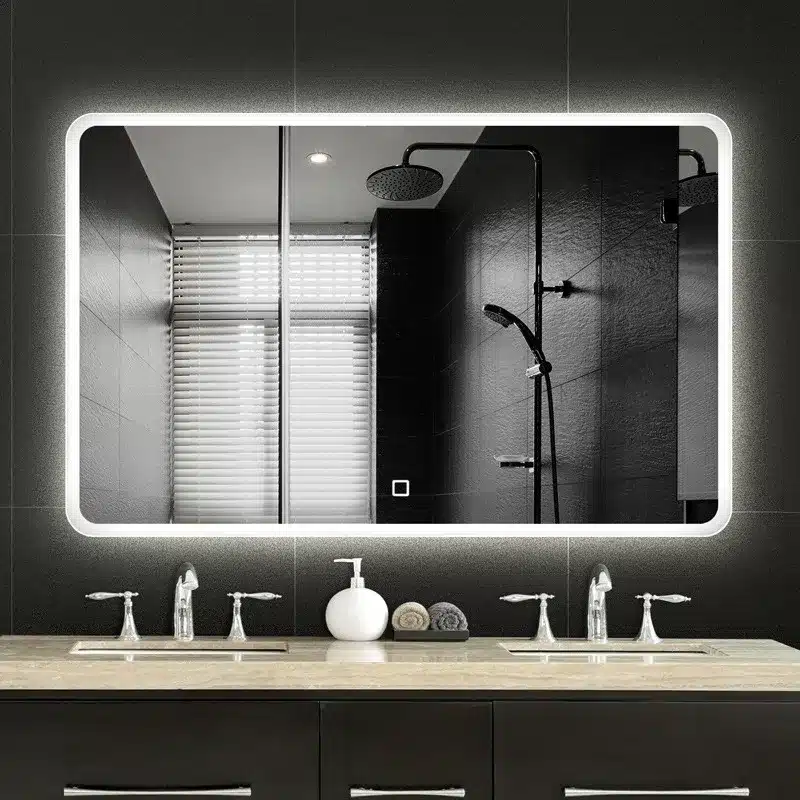
Manufacturing a UL listed bathroom vanity is the definitive step that separates a compliant, market-ready product from a major liability risk. Integrating electrical components into furniture designed for wet environments introduces serious fire and electrocution hazards if not executed to code. For B2B manufacturers, failing to meet these standards can lead to costly product recalls, voided liability insurance, and significant damage to your brand’s reputation.
This guide provides a technical breakdown of the essential safety requirements. We will clarify the differences between the UL 962 and UL 962A standards, explain why safety cut-off switches are mandatory for in-drawer outlets, and review GFCI protection for wet locations. We also cover design specifics like cord management systems, certification costs per model, and the direct impact of compliance on your business insurance.
The Risks of Non-Certified Furniture: What Are the Dangers of Non-Compliance?
Selling non-certified electrified furniture isn’t just a quality issue; it’s a direct route to fire hazards, voided insurance, and severe legal liabilities.
Fire and Electrical Shock Hazards
Non-certified furniture with electrical components presents serious safety dangers. Without proper testing, these products may have inadequate insulation or faulty wiring, leading to overheating that can cause fires. Exposed or poorly installed electrical parts also create a direct risk of electrical shock to users, turning everyday furniture into a latent hazard.
- Inadequate insulation and poor-quality components can cause overheating, posing a significant fire risk.
- Faulty wiring exposes users to potential electrical shocks during everyday use.
- Uncertified products often lack the safety mechanisms needed to prevent property damage from electrical malfunctions.
Legal and Financial Liabilities
Selling or using non-compliant furniture opens a business to major legal and financial penalties. Regulatory bodies can issue fines, while insurance companies might refuse to cover damages caused by uncertified equipment. This leaves the business responsible for costly lawsuits and property loss, a financial risk that far outweighs any initial savings on certification.
- Regulatory agencies like OSHA can impose fines for non-compliance in commercial spaces.
- Insurance policies may be voided if a fire or injury is traced back to an uncertified product.
- Businesses face direct liability for damages, leading to expensive legal battles and settlements.
Brand Damage and Market Access Issues
A single incident involving an unsafe product can result in recalls and permanently damage a brand’s reputation. As global markets enforce stricter standards, lacking certifications from recognized bodies like UL or CSA can get products blocked from sale. This severely limits business growth and access to lucrative channels.
- Product recalls can erode customer trust and lead to long-term harm to the brand’s image.
- Increasing regulatory demands make third-party certification essential for entering major international markets.
- A reputation for non-compliance can drive away distributors and large-scale commercial clients.
UL 962 vs. UL 962A: Which Standard Should You Apply?
Choosing the right standard is simple: UL 962 covers the entire electrified furniture piece for structural and electrical safety, while the more specific UL 962A applies only to the add-on power distribution unit itself.
Understanding the distinction between these two UL standards is critical for compliance and liability. Applying the wrong one can lead to failed inspections and unsafe products. The choice depends entirely on whether you are certifying the entire furniture system or just a component designed to supply power.
UL 962: The Standard for General Electrified Furniture
UL 962 is the comprehensive safety standard for any household or commercial furniture with integrated electrical features. It doesn’t just evaluate the wiring; it assesses the entire product as a complete system. This includes testing for structural integrity, load-bearing capacity, and fire resistance alongside electrical safety. You apply this standard when the electrical components are an integral part of the furniture’s function, like an electrified bathroom vanity or a conference table with built-in outlets, but the furniture is not solely a power distribution device.
| Evaluation Criteria | UL 962 (General Furniture) | UL 962A (Power Distribution Unit) |
|---|---|---|
| Scope | The entire furniture piece as a system | Only the cord-connected power unit |
| Primary Focus | Holistic safety (electrical, fire, structural) | Electrical safety of the power component |
| Typical Application | Electrified vanities, powered desks, smart beds | In-drawer outlets, furniture-mounted power strips |
UL 962A: The Standard for Furniture Power Distribution Units (FPDUs)
UL 962A is a highly specialized standard that applies only to cord-connected power units made to be mounted in or on furniture. These devices, known as FPDUs, are essentially purpose-built power strips for furniture integration. This standard is the correct choice if your product is a self-contained unit that provides power outlets for other equipment.
- This standard covers devices rated at 250V AC or less and 20 Amperes or less.
- It is the correct standard for products like in-drawer outlets or power modules designed for desks and cabinets.
- FPDUs certified under UL 962A can incorporate other components like switches, EMI filters, or even uninterruptible power supplies (UPS).
Source Custom Vanities Built for Your Market

The “In-Drawer Outlet”: Why Is the Safety Cut-off Switch Essential?
Certified in-drawer outlets use interlocking thermostatic and mechanical switches to automatically de-energize appliances, preventing overheating and fire hazards in enclosed spaces.
Any powered vanity drawer that lacks an automatic safety cut-off switch is a significant liability. The risk of fire or electrical damage from an appliance left running inside an enclosed, unventilated box is simply too high. Compliant in-drawer power units integrate two primary safety systems to eliminate this danger, making them a mandatory feature for any certified electrical furniture.
Preventing Overheating with Thermostatic Switches
The first line of defense is an interlocking thermostat built into the outlet assembly. This device constantly monitors the ambient temperature inside the drawer. If the temperature exceeds a preset safety limit, typically 120°F (49°C), the thermostat automatically cuts all power to the outlet. This is critical for preventing heat-generating tools like hair dryers or curling irons, which might be stored while still warm, from causing heat buildup that could damage the vanity or ignite surrounding materials.
Reducing Fire Risk with Drawer-Action Switches
The second safety mechanism is a mechanical limit switch integrated with the drawer slides. This switch de-energizes the outlet the moment the drawer begins to close. This design ensures that any plugged-in device is immediately powered off, eliminating the chance that an appliance is left running by mistake. This feature directly addresses the common cause of electrical fires in furniture: unattended operation within a confined space. Meeting this requirement is a key benchmark for obtaining ETL or CE certifications for electrical safety.
| Safety Mechanism | Triggering Action | Primary Risk Mitigation |
|---|---|---|
| Interlocking Thermostat | Cuts power when internal drawer temperature exceeds 120°F (49°C). | Prevents fire from heat-generating appliances (e.g., hair dryers) left on or stored while hot. |
| Mechanical Limit Switch | Cuts power when the drawer is physically closed. | Eliminates risk of unattended operation in an enclosed, unventilated space. |
| Durability Cycle Testing | System must withstand 500,000+ open/close cycles without failure. | Ensures long-term reliability of safety cut-off mechanisms, preventing wear-related failures. |
Demonstrating Reliability Through Cycle Testing and Certification
For an in-drawer outlet to be commercially viable and legally compliant, its safety mechanisms must prove durable. Certification bodies require these systems to undergo rigorous durability tests. The drawer and its electrical components are opened and closed repeatedly to simulate years of use. Industry standards often mandate passing 500,000 cycle tests to confirm the long-term reliability of the switches and wiring. Certifications from Nationally Recognized Testing Laboratories like ETL or UL verify that the product has been independently tested and meets established electrical safety codes, giving buyers confidence in its performance.
GFCI Requirements: What Is Mandatory for Wet Areas?
Ground-Fault Circuit Interrupter (GFCI) protection is not optional in wet areas; the National Electrical Code (NEC) mandates it for bathrooms and kitchens, with standard Class A devices required to trip at a current imbalance of just 4–6 milliamperes to prevent electrocution.
Mandatory Coverage Zones in Residential and Commercial Buildings
The National Electrical Code (NEC) establishes clear mandates for GFCI protection in any location where water or moisture introduces a risk of electrical shock. These rules apply to all new constructions and renovations, leaving no ambiguity for contractors and inspectors. The goal is to prevent injury by instantly cutting power when a ground fault is detected.
In residential buildings, GFCI outlets are required for all bathroom and kitchen countertop receptacles. This coverage also extends to garages, unfinished basements, crawl spaces, laundry areas, and all outdoor outlets. Commercial properties must adhere to the same principles, with specific requirements for areas like utility sinks, wet-environment workstations, and other zones where personnel might come into contact with both water and electricity.
Technical Specifications and Device Classes
GFCI devices are not one-size-fits-all. They are classified based on their sensitivity and intended electrical system, as defined by UL 943 safety standards. The device class dictates its proper application, ensuring the right level of protection for everything from a standard home to a heavy industrial facility.
| GFCI Class | Typical Application | Trip Threshold & Voltage |
|---|---|---|
| Class A | Standard residential and commercial use (bathrooms, kitchens, outdoor) | Trips at 4–6 mA imbalance on 125V to 250V systems |
| Class C & D | Specialized industrial settings with three-phase power systems | Designed for higher voltages, from 208V up to 600V |
Class A GFCIs are the industry standard for personnel protection in homes and commercial spaces. They are integrated directly into outlets or circuit breakers and are engineered to trip when they sense a current leak between 4 and 6 milliamperes. For industrial environments that use powerful three-phase systems, specialized Class C and D GFCIs are required. These devices are built to handle higher voltages, providing essential protection for equipment and workers in more demanding electrical settings.
Managing Cords: How Do Cable Management Chains Ensure Safety?
Cable management chains are a foundational safety component in dynamic environments, systematically eliminating physical, electrical, and trip hazards by enclosing and guiding operational wiring.
In any industrial or automated setting, moving machinery relies on a constant supply of power, data, and fluids through cables and hoses. When left unmanaged, these lines become a primary source of operational failure and workplace accidents. Cable management chains, also known as drag chains or cable carriers, provide an engineered solution to contain and protect these critical components, ensuring both equipment reliability and personnel safety.
Protection Against Physical Damage
Cable management chains enclose and guide wires to prevent them from getting tangled, pinched, or crushed during machinery operation. This structural support preserves the integrity of the cables, shielding them from the constant stress of movement and abrasion. By preventing physical damage, these systems extend the service life of electrical wiring and hydraulic hoses, reducing downtime and frequent replacement costs in dynamic industrial settings.
- Encloses cables within a sturdy structure to prevent tangling and pinching.
- Shields wires from damage caused by constant movement and operational stress.
- Extends the service life of power cords, data cables, and hydraulic hoses.
Mitigating Trip and Fall Hazards
By containing loose cables and keeping them off the floor, cable management chains eliminate dangerous tripping hazards for workers. This level of organization is crucial in high-traffic industrial environments where people and machinery are in constant motion. A well-managed system creates a safer, more efficient workspace by ensuring clear paths for both personnel and moving equipment, directly reducing the risk of workplace accidents.
- Keeps cables and hoses neatly organized and away from walkways.
- Reduces the risk of accidents in busy industrial areas with frequent foot traffic.
- Ensures a clear and safe path for both personnel and moving equipment.
Reducing Electrical and Fire Risks
Properly managed cables are less likely to be stepped on or crushed, which prevents insulation damage that can lead to exposed wires, short circuits, and electrical shocks. The chain’s structure prevents wires from bending beyond their minimum bend radius, preserving the insulation’s integrity. By maintaining clear routing, these systems also improve airflow around the cables, helping to dissipate heat and prevent overheating that could otherwise create a fire hazard.
- Prevents cable insulation from being compromised by physical force or abrasion.
- Minimizes the danger of exposed wires, short circuits, and electrical shocks.
- Improves ventilation around cables to reduce the risk of overheating and fire.

Cost of Certification: How Does Pricing Differ Per Model vs. Series?
Certifying a product series is a strategic move to reduce long-term costs by grouping similar models under a single file, avoiding the repetitive expense of individual evaluations.
Understanding the cost structure of safety certification is critical for managing budgets and go-to-market timelines. The two primary paths—certifying individual models or an entire product series—have distinct financial implications that affect both upfront investment and long-term expenses.
Pricing Structure for Individual Product Models
Certifying a single product model involves a focused evaluation of one unique design. This approach is best for standalone products that don’t share a common platform, as each unique model requires its own complete testing and evaluation process from the ground up. The fees are directly tied to the complexity of the item—a smart mirror with integrated electronics will cost more to certify than a simple vanity cabinet. A critical financial consideration is that any future modification to the model often requires an entirely new and separate certification process, which adds significantly to long-term costs.
Pricing Structure for a Product Series
Certifying a product series, or a family of related items, is a more cost-effective and efficient strategy. This approach allows a manufacturer to group similar products under a single certification file, provided they share critical components, construction methods, and core design principles. The process certifies a “base” model, and variations like different sizes, materials, or finishes can then be added for a much smaller, incremental fee. This method is ideal for product lines with extensive customization options built on a standardized platform, as it streamlines the certification of an entire product family and reduces both time and administrative expenses compared to certifying each item individually.
Variables That Determine Final Certification Fees
The final cost for any certification is not a flat rate. It depends on several key variables that certification bodies assess during the application, whether you are certifying a single model or an entire series.
- The number and type of tests required by the specific standard (e.g., UL 962) are the primary cost drivers.
- Initial fees cover product testing, a thorough documentation review, and the first factory inspection.
- Ongoing costs include annual maintenance fees and periodic follow-up inspections, which are mandatory to keep the certification active for the product line.
Liability Insurance: What Are the Implications for Your Business?
Liability insurance has shifted from a discretionary expense to a non-negotiable cost of doing business, driven by client requirements and the severe financial impact of a single product failure or injury claim.
Operational and Legal Risks Without Coverage
Without adequate liability insurance, businesses are directly exposed to operational, legal, and reputational damage from lawsuits and third-party injury claims. A single incident can trigger massive financial instability. This risk is amplified as both client contracts and government regulations increasingly mandate proof of coverage before signing any deals.
- A steady rise in liability-incident lawsuits across U.S. businesses is driving the demand for comprehensive coverage.
- Elevated medical costs associated with third-party injuries significantly increase the financial risk of non-compliance.
- Reputational damage following a liability incident can cripple long-term business viability and customer trust.
Specialized Coverage for Evolving Business Needs
The insurance market now provides specialized policies that go far beyond general liability to address modern business risks. These policies are designed to cover product failures, professional negligence, cyber attacks, and employer responsibilities, acknowledging the complex challenges that companies face today.
- Product liability insurance is essential for any manufacturer to cover risks tied directly to the goods they produce and sell.
- Professional liability protects service-based businesses from claims of negligence or failure to perform.
- Cyber and employers liability policies offer targeted protection for specific operational vulnerabilities that general policies do not cover.
Impact of Safety Practices on Premiums
Insurance premiums are a direct reflection of a company’s risk profile. Businesses that can provide documented safety practices and a strong compliance record—such as adherence to UL standards for electrified furniture—often qualify for lower rates. This turns proactive risk management into a direct cost-saving strategy.
- Insurers analyze individual business risk profiles, including safety records and certifications, to determine final premium costs.
- Demonstrating strict adherence to established safety protocols can lead to more favorable insurance terms and lower payments.
- Integrating general liability with other relevant policies like product liability is a best practice for building a comprehensive risk management shield.
Conclusion
Adhering to electrical safety standards like UL and ETL is more than a technical step; it protects your customers, your brand, and your business from liability. Proper certification for features like in-drawer outlets and GFCI integration ensures product safety and market compliance. These details are critical for building a trusted product line that endures.
Review your current product specifications to confirm they meet regional requirements. If you need a partner to manufacture fully compliant electrical vanities, our team is ready to build a certified sample for your evaluation.
Frequently Asked Questions
Do bathroom vanities need UL listing?
A standard, non-electric vanity does not require a UL listing. However, if a vanity includes any electrical components—such as integrated lighting, outlets, or mirror defoggers—it is considered “electrified furniture.” For safety and to comply with electrical codes, these vanities must be tested and certified by a Nationally Recognized Testing Laboratory (NRTL) like UL or ETL. This certification ensures the product has been properly engineered to prevent fire and electrical shock hazards, which is a growing focus for regulatory bodies.
Is it safe to have outlet in vanity drawer?
Yes, it is safe only if the outlet is part of a system specifically designed and certified for in-drawer use. These systems are engineered with a flexible, armored cable and strain relief mechanisms to withstand the repeated motion of the drawer without fraying wires. The entire vanity unit must be certified by an NRTL (like UL or ETL) to ensure it meets strict safety standards. Installing a standard, off-the-shelf outlet into a drawer yourself is extremely dangerous, violates electrical codes, and creates a major fire hazard.
What is ETL certification for furniture?
The ETL Listed Mark is a certification provided by Intertek, a Nationally Recognized Testing Laboratory (NRTL). For furniture, it signifies that the product’s electrical systems have been independently tested and meet the minimum requirements of North American product safety standards (such as those published by UL and CSA). Functionally, ETL certification is the legal equivalent of a UL listing. It provides proof of compliance to safety standards for inspectors, insurers, and consumers, helping protect brands from the risks associated with uncertified products.
Requirements for electrical vanity drawer?
A safe and compliant electrical vanity drawer must meet several key requirements. First, the entire unit must be certified by an NRTL like UL or ETL. Second, it must use purpose-built components, including a durable, flexible wiring harness designed for movement. Third, the electrical circuit powering the vanity must have GFCI (Ground Fault Circuit Interrupter) protection, as required for all bathroom outlets. Finally, the design must manage heat safely, often incorporating an automatic power cut-off switch that deactivates the outlet when the drawer is closed.
Cost of UL testing for furniture?
The cost for UL or ETL testing for a piece of electrified furniture is highly variable, typically ranging from $5,000 to over $50,000 per product model. The final price depends on the product’s complexity, the number of individual electrical components that need evaluation, the specific safety standards being applied (e.g., UL 962), and whether the product requires re-engineering and re-testing after an initial failure. This investment is crucial for legal compliance, insurance purposes, and brand protection.
Can I install my own outlet in a vanity?
No, you should never install your own outlet in a vanity. This type of modification is a serious fire and electrical shock hazard. It violates the National Electrical Code (NEC), would cause a failed electrical inspection, and could void your homeowner’s insurance policy. The financial and legal consequences of property damage or injury from such an uncertified installation can be severe. Always purchase a vanity with pre-installed, factory-certified electrical components to ensure safety and compliance.



0 Comments