
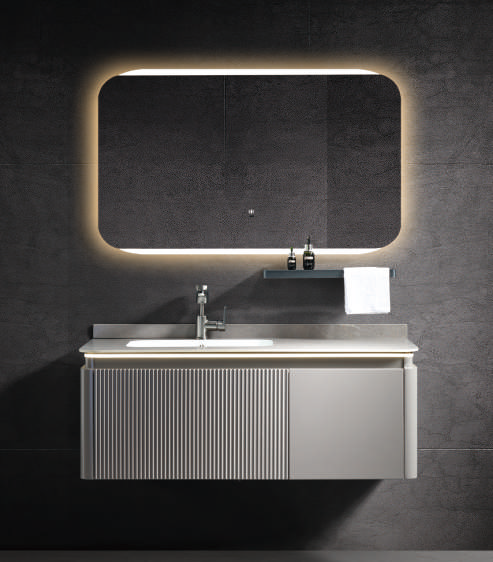
A shaker bathroom vanity with hairline paint cracks at the joints is not just a cosmetic flaw; it’s a direct threat to your project’s profitability and brand reputation. These finish failures trigger costly warranty call-backs, material waste, and client dissatisfaction, turning a classic design into a significant production risk. The fundamental choice between traditional 5-piece wood construction and modern 1-piece CNC routing directly impacts long-term durability and your bottom line.
This guide serves as a manufacturing SOP, breaking down the technical differences between vanity door profiles. We will compare 5-piece wood shaker doors against their 1-piece CNC-routed MDF counterparts, analyzing the root causes of joint separation and paint failure. We will also detail the machining specifications for J-pull and 45-degree bevel handleless designs, explaining how each choice affects cycle times, tooling costs, and final assembly efficiency.
The Dominance of the Shaker Style
The Shaker style dominates the bathroom vanity market because its simple frame-and-panel design works in nearly any interior, from traditional to modern, making it a reliable industry standard.
Timeless Versatility for Any Interior
Shaker style has achieved market dominance through its timeless versatility and functional minimalism. The design, defined by a recessed center panel within a simple frame, effectively bridges traditional and contemporary aesthetics. This adaptability makes it a safe and effective choice for almost any bathroom project. Its clean, unadorned look provides a neutral foundation that blends seamlessly into various decor schemes without clashing, a quality rooted in its 18th-century origins of prioritizing function and simple beauty.
A Blank Canvas for Customization
The straightforward aesthetic of a Shaker vanity acts as a blank canvas for designers and homeowners. It allows for extensive customization that keeps the style fresh and relevant. The unadorned frame is an ideal backdrop for showcasing unique knobs, pulls, and faucets. You can finish it in classic neutrals for a traditional feel or paint it in bold, modern shades to create a focal point. This simple design also supports easy integration with modern technology, such as LED lighting and touchless faucets.
Practical Craftsmanship and Durability
Beyond its visual appeal, the Shaker style is based on practical craftsmanship. The signature frame-and-panel construction isn’t just for looks; it ensures structural durability and stability. This construction method is a hallmark of quality woodworking, and many Shaker vanities reinforce this with details like dovetail joinery to enhance longevity. The design also inherently prioritizes ample and accessible storage, a critical requirement for any functional bathroom vanity.
Widespread Availability and Trend Resilience
The style’s enduring popularity means it is widely available from a vast number of manufacturers across all price points. Unlike niche styles, Shaker vanities are offered in a diverse range of materials, sizes, and finishes, making them an accessible option for almost any project budget. This combination of availability and resistance to passing trends has solidified its position as an industry standard. Its lasting appeal reflects a broad consumer preference for designs that successfully balance classic aesthetics with everyday utility.
5-Piece Wood Shaker: Authentic but Risky (Joint Cracks)
The classic 5-piece solid wood shaker door offers an authentic look, but its construction creates natural weak points at the frame joints, which are prone to paint cracking as the wood expands and contracts with environmental changes.
Traditional Construction and Its Inherent Flaw
A classic 5-piece shaker door is built with a four-piece solid wood frame and a separate central panel. While this method delivers an authentic, high-quality appearance, the joints where the frame pieces connect are natural weak points that can fail over time. The construction process joins four individual pieces of wood—two vertical stiles and two horizontal rails—to create the door’s outer frame. The cope-and-stick joinery used to connect them creates seams that are vulnerable to stress from environmental changes and daily use. The central panel is designed to “float” within the frame to allow for wood movement, but the frame itself remains a rigid structure with stress points at each corner joint.
How Temperature and Humidity Cause Cracks
Solid wood naturally expands and contracts with fluctuations in temperature and humidity. This constant, subtle movement puts strain on the rigid joints of the door frame. The paint finish, being less flexible than the wood, cannot stretch to accommodate this movement and eventually fractures along the seam lines, creating visible hairline cracks. In humid conditions, the wood swells; in dry conditions, it shrinks. This issue is most common in environments with significant seasonal changes, like bathrooms, where steam and temperature shifts are a daily occurrence.
- Wood swells in high humidity and shrinks in low humidity.
- The rigid paint layer cannot expand and contract with the wood, causing it to crack at the seams.
- Bathrooms and kitchens experience the most extreme environmental shifts, accelerating this type of failure.
Market Shift Toward Hybrid Materials
To solve the cracking issue, many manufacturers now use a hybrid approach. They combine a solid wood frame with a more stable, engineered center panel made from Medium-Density Fiberboard (MDF). This preserves the classic look while minimizing the risk of joint failure. Since MDF does not expand or contract with climate changes, it provides a stable surface that is ideal for a smooth, durable paint finish. This method maintains the authentic appearance of a solid wood frame but eliminates the primary cause of cracks on the largest surface area. It offers a practical balance between the timeless appeal of the shaker style and the need for long-term durability in real-world conditions.
Unlock Higher Profits with Factory-Direct Vanities

1-Piece CNC MDF Shaker: Seamless Paint Solution
The primary value of a one-piece MDF shaker door is its seamless surface, which completely eliminates the joint cracking that plagues traditional 5-piece wood doors after painting.
Manufacturing Advantages with CNC Technology
Computer Numerical Control (CNC) routing has fundamentally changed shaker door production. Instead of assembling five separate pieces, we machine the entire door profile—stiles, rails, and center panel—from a single sheet of High Moisture Resistant (HMR) MDF. This automated process guarantees perfect design consistency across every unit, removing the manual labor and potential for error associated with traditional joinery. The precision of CNC technology also minimizes material waste and operational bottlenecks.
| Manufacturing Aspect | 5-Piece Wood Shaker (The Old Way) | 1-Piece CNC MDF Shaker (The Modern Solution) |
|---|---|---|
| Joints & Seams | Four frame joints are failure points. High risk of hairline paint cracks over time. | No joints. A single, monolithic piece guarantees no cracking. |
| Material Stability | Solid wood naturally expands and contracts with humidity, stressing the joints. | HMR MDF is engineered for stability, providing a uniform and non-reactive substrate. |
| Production Process | Labor-intensive: requires cutting, joining, gluing, clamping, and extensive sanding. | Automated: CNC machine routes the entire door with minimal post-processing needed. |
Creating a Flawless, Paint-Ready Surface
The biggest weakness of a 5-piece door is its performance after painting. Wood expands and contracts, causing paint to fracture along the join lines. A one-piece MDF door has no joints, creating a perfectly stable and uniform substrate. This seamless construction is the ideal canvas for a high-gloss lacquer or polyurethane finish, ensuring the final product has a smooth, durable surface that maintains its integrity for years without chipping or cracking.
- The seamless design means there are no visible join lines after painting.
- Minimal post-machining sanding is required, getting the doors ready for finishing faster.
- The final product is a durable and smooth finish that resists environmental changes.
Impact on Production Cost and Speed
The industry-wide shift to one-piece MDF construction is driven by pure efficiency. By eliminating multiple assembly steps, material handling, and clamping time, manufacturers can produce high-quality shaker doors much faster and more cost-effectively. This is not about cutting corners; it’s about leveraging automation to deliver a superior painted product with shorter lead times and more competitive pricing.
- Production time is significantly reduced compared to multi-component assembly.
- It provides a cost-effective solution without sacrificing the popular shaker aesthetic.
- Faster production allows for quicker project turnarounds for cabinet makers and contractors.
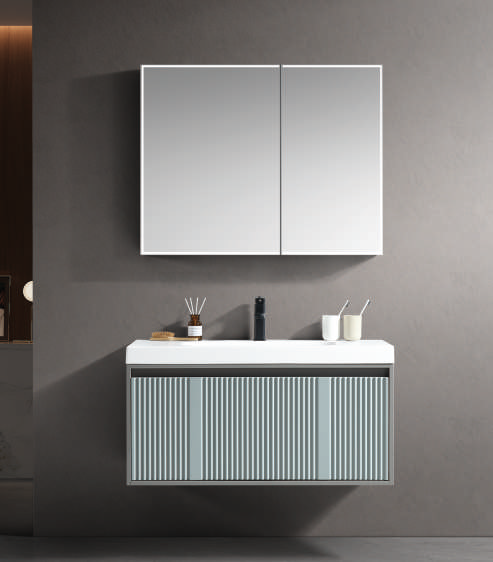
Modern Handleless: J-Pull vs. 45-Degree Bevel
The choice between J-pull and a 45-degree bevel comes down to a clear manufacturing trade-off: scalable affordability versus precision-driven premium aesthetics.
Handleless designs dominate the minimalist vanity market by eliminating external hardware. The two primary methods for creating an integrated finger pull are the J-pull and the 45-degree bevel. Each profile offers a distinct look and has different implications for manufacturing complexity and final cost, making the decision critical for targeting specific market segments.
J-Pull Design: Integrated and Affordable
The J-pull profile is created by routing a ‘J’ shaped groove directly into the top edge of a door or drawer front. This method produces a built-in grip that is both functional and cost-effective, making it the go-to solution for large-scale production and budget-conscious projects. Its manufacturing process is straightforward and maintains a clean aesthetic without requiring additional hardware components. While the grip is adequate for most uses, the recessed channel can be a collection point for dust and debris over time.
45-Degree Bevel: A Sleek, Angled Profile
A 45-degree bevel cuts the top edge of the door at a precise angle, creating a sharp, subtle finger pull. This technique delivers a true handleless look defined by crisp shadow lines, often specified for high-end architectural projects. The angled cut provides just enough space for fingertips to operate the door, enhancing the seamless, monolithic appearance of a bank of cabinets. This premium look requires greater CNC machining precision, which directly translates to higher production costs.
Aesthetic and Functional Comparison
Both styles achieve a handleless look, but their visual and tactile results differ significantly. A J-pull’s rounded groove creates a softer, more approachable feel, while the 45-degree bevel produces a sharp, linear aesthetic that emphasizes horizontal lines. The deeper channel of a J-pull might feel more secure to some users, but the clean, uninterrupted surface of a beveled edge is often preferred for premium minimalist designs where every detail matters.
| Attribute | J-Pull Profile | 45-Degree Bevel |
|---|---|---|
| Manufacturing Method | Standard CNC routing with a bullnose or custom bit. | Precision CNC angled cutting; requires more careful calibration. |
| Visual Aesthetic | Softer, curved recess with a visible channel. | Sharp, clean, architectural look with a distinct shadow line. |
| Relative Cost | Lower. Less machine time and simpler setup. | Higher. More precise machining adds to labor and tooling costs. |
| Best Application | Volume production, rental properties, budget-conscious projects. | Premium residential projects, architectural designs, high-end lines. |
Push-to-Open Hardware Drawbacks
While appealing for its clean aesthetic, push-to-open hardware introduces significant long-term reliability issues and practical annoyances that often outweigh the visual benefits.
Increased Costs and Installation Complexity
Push-to-open systems carry higher upfront material costs than standard handles or pulls. The installation process also demands a higher degree of precision from installers, which directly translates to more labor hours and increased project expenses.
- The hardware itself is measurably more expensive than traditional knobs or pulls.
- Proper function hinges on exact alignment, making the installation process unforgiving and time-consuming for any crew.
Accelerated Wear on Mechanical Parts
The internal spring and latch mechanisms are constant-use components subject to mechanical fatigue. Over thousands of cycles, they lose tension or fail completely, requiring replacement long before the cabinet’s structure degrades.
- Repetitive compression and release cycles wear down the spring-loaded parts.
- Unlike inert metal handles, these moving mechanisms represent a built-in failure point in the vanity’s design.
Unintentional Opening in High-Traffic Areas
In any busy space, like a main bathroom or a narrow hallway, accidentally triggering the push-to-open mechanism is a common problem. Simply leaning against a vanity or brushing past a cabinet can cause a door or drawer to pop open.
- Accidental contact creates an immediate obstruction and a constant source of frustration.
- This is a major practical drawback for families with children or in compact bathrooms where space is limited.
Design and Material Limitations
This hardware is purpose-built for a minimalist aesthetic and does not integrate well with traditional designs that rely on decorative hardware as a key visual element. Compatibility with all materials is also not guaranteed.
- The stark, handleless look can clash with ornate or classic shaker cabinet styles.
- Some finishes, especially certain types of melamine or laminates, may not hold up to the concentrated pressure from the mechanism’s plunger over time.
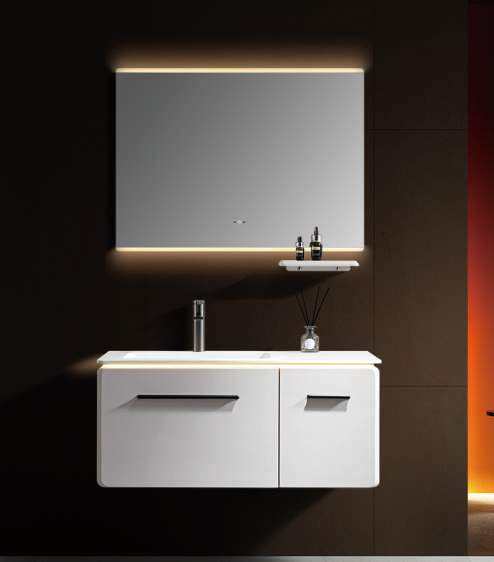
Impact on Manufacturing Cost & Lead Time
The choice between frame-and-panel doors, core material selection, and the assembly model (RTA vs. pre-assembled) are the three primary levers controlling both the final cost and production timeline of a bathroom vanity.
Effect of Door Construction Style
The construction method directly dictates production complexity. A five-piece Shaker door, for example, requires precise cutting, joinery, and assembly of five separate components. This adds multiple steps to the manufacturing process compared to a simple flat-panel (or slab) door, which can be cut from a single sheet. The additional labor and machine time for Shaker styles translate directly into higher unit costs and longer lead times.
Material Selection and Production Complexity
Material choice is a primary determinant of both cost and the manufacturing timeline. Premium substrates like multi-layer plywood with a Full Eucalyptus Core require more specialized handling and finishing processes than standard HMR MDF or particleboard. While higher-grade materials increase upfront production costs, they significantly reduce long-term expenses by minimizing warranty claims related to moisture damage or structural failure.
| Material Substrate | Key Advantage | Cost & Lead Time Impact |
|---|---|---|
| High-Density PVC | Completely waterproof; ideal for humid environments. | Moderate cost. Efficient production for paint-free and painted finishes. |
| Plywood (Full Eucalyptus Core) | Superior strength and water resistance; premium feel. | Higher cost. Can extend lead time due to lamination or multi-layer painting. |
| MDF (High Moisture Resistant) | Ultra-smooth surface, perfect for high-gloss lacquer finishes. | Cost-effective. Standard lead times, highly efficient for CNC machining. |
Assembly Model: RTA vs. Pre-Assembled
The final assembly format creates a clear trade-off. Ready-to-assemble (RTA) vanities reduce factory labor costs and allow for dense, flat-pack shipping, which lowers the upfront product price and freight expenses. This model shifts the assembly burden to the installer or end-user. In contrast, factory pre-assembly increases labor and packaging costs but delivers a structurally sound, quality-controlled unit that is ready for immediate installation. This saves significant time on-site, a critical factor in large-scale commercial projects where labor efficiency is paramount.
Conclusion
Manufacturing choices for Shaker and handleless vanities directly influence your product’s market position. A 1-piece MDF Shaker door provides a flawless painted finish without joint cracks, while handleless options like J-pull offer a different cost structure than beveled edges. Understanding these nuances helps you balance aesthetics, durability, and cost for your target customer.
If you are developing a new vanity line, our team can help you select the right materials and construction methods to meet your quality and price targets. Contact us to discuss your project or request a sample to see the difference for yourself.
Frequently Asked Questions
How is a shaker door made?
A Shaker door is constructed using a five-piece frame-and-panel method. It consists of two vertical pieces (stiles) and two horizontal pieces (rails) that form the outer frame. The stiles and rails are joined with durable woodworking joints, such as mortise and tenon or cope-and-stick, which interlock for strength. A flat, recessed center panel is then fitted into a groove cut into the inside edge of the frame. This panel is designed to “float” within the frame, allowing the wood to expand and contract with environmental changes without warping the door.
Handleless vanity pros and cons?
Handleless vanities offer a clean, minimalist aesthetic that is easy to clean and safer in tight spaces as there are no protruding handles to catch on. However, they can be more difficult to open, especially for individuals with limited grip strength. Push-to-open mechanisms may require maintenance over time, and the recessed channels of finger-pull designs can collect dust and debris. Depending on the finish, they can also show fingerprints more readily than vanities with hardware.
J pull vs finger pull cabinets?
A J-pull is an integrated handle where a J-shaped channel is routed directly into the edge of the door or drawer front, creating a seamless, single-piece look. A finger pull is a separate piece of hardware—typically an aluminum extrusion—that is installed on the top of the cabinet carcass, creating a gap between drawers for your fingers. Aesthetically, J-pulls are more minimalist, while finger pulls create a distinct shadow line. Functionally, finger pulls often provide a deeper and more defined grip, while J-pull channels can be shallower and may collect dust.




0 Comments