
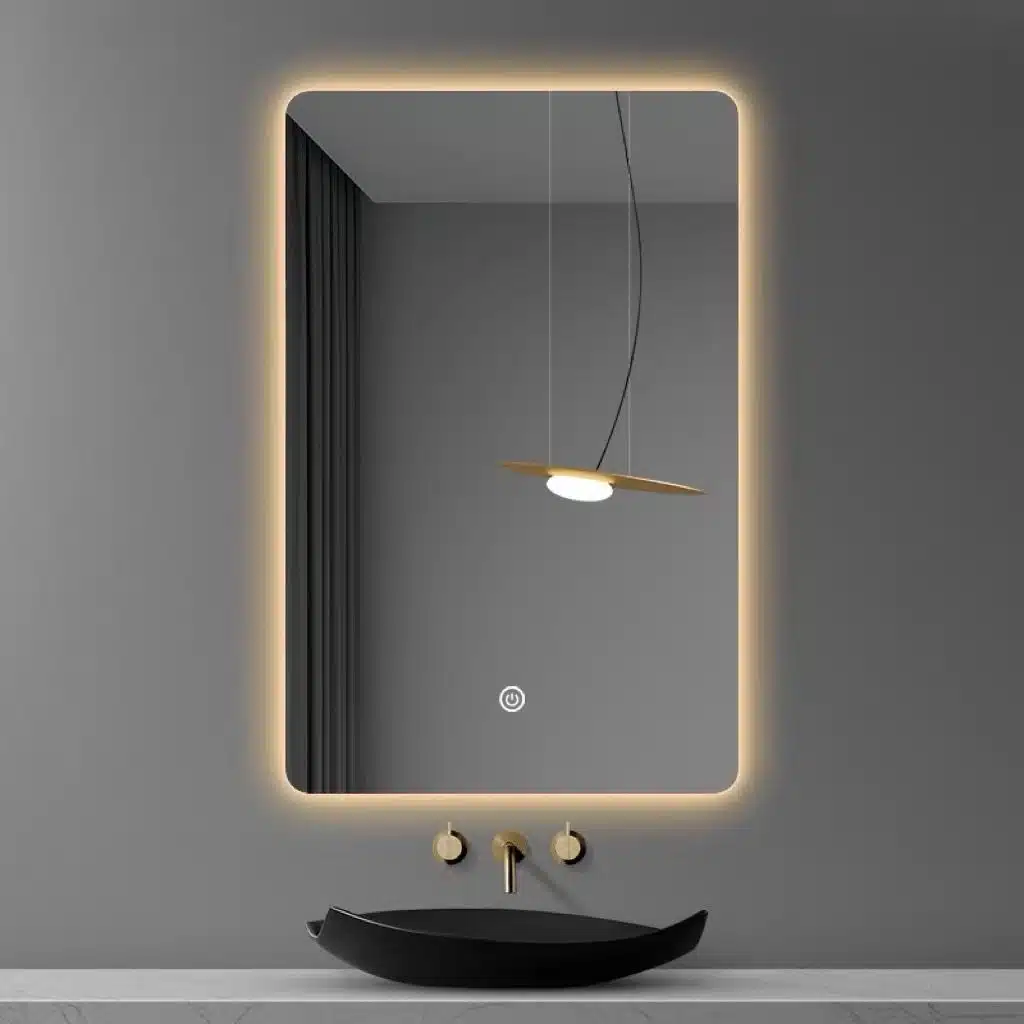
A 48-inch vanity, a mirror that reads too small, and a 6000K light bar that turns every face gray. That is what happens when a bathroom set is assembled from three suppliers who never talked to each other. The room fails visually, and the sourcing process fails commercially: separate purchase orders, separate freight, separate quality control, and no single party accountable when the mirror’s LED driver dies or the lighting color does not match. This guide explains what a smart bathroom ecosystem actually coordinates, how smart mirror spec layers lock into vanity layout, how to hold one color temperature across every light source, and how distributors and importers can source mirrors, vanities, and lighting as one set from one factory.
What a Smart Bathroom Ecosystem Actually Coordinates
A smart bathroom ecosystem is not a single gadget with an app. For a distributor or importer, it is three physical products that have to work as one: the smart mirror, the vanity, and the lighting. The mirror is the interactive layer — it carries the electronics that end buyers see and touch every day. The vanity is the anchor — it sets scale, storage, and finish. The lighting, whether mirror backlight, overhead fixture, or wall sconce, decides how both of them look at 6 a.m. Specced together, each product answers a question the others raise. Specced separately, each one imports a mismatch you will be explaining to your customer later.
The mirror layer
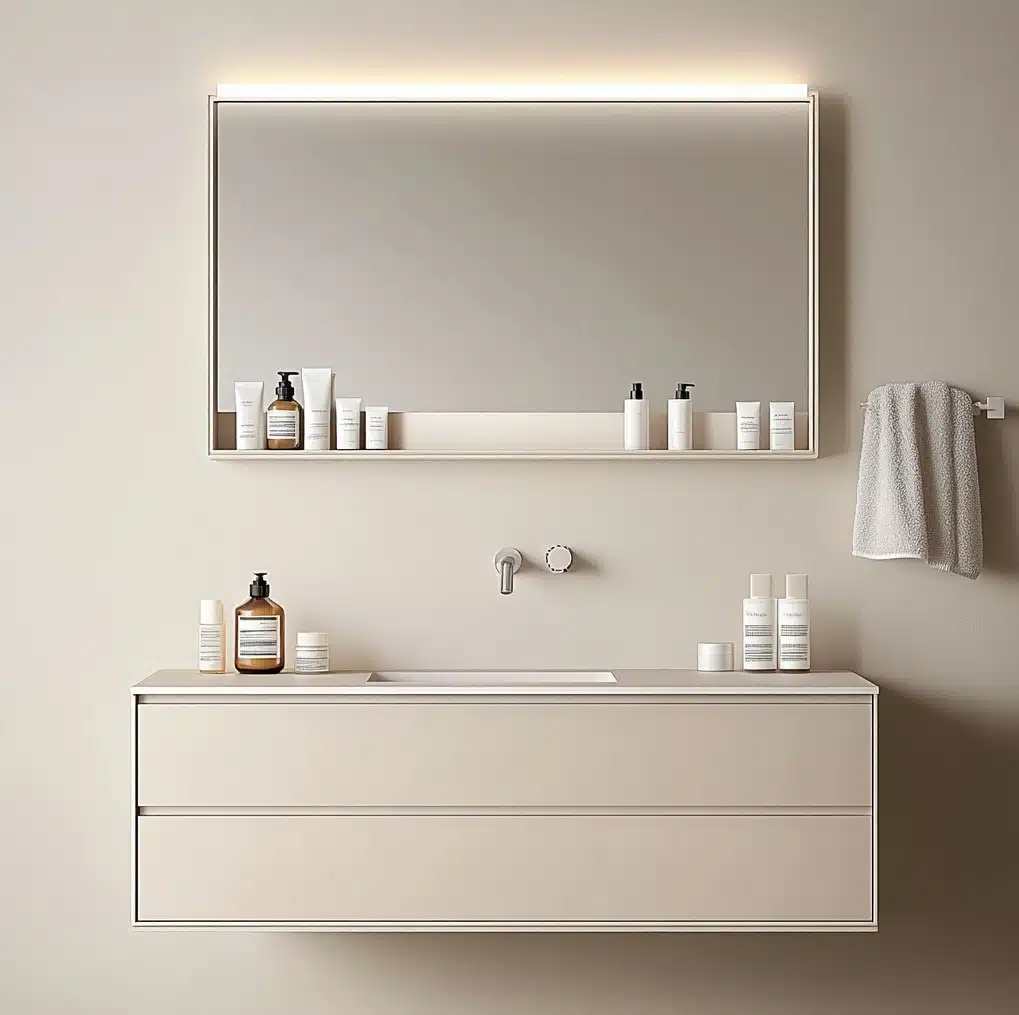
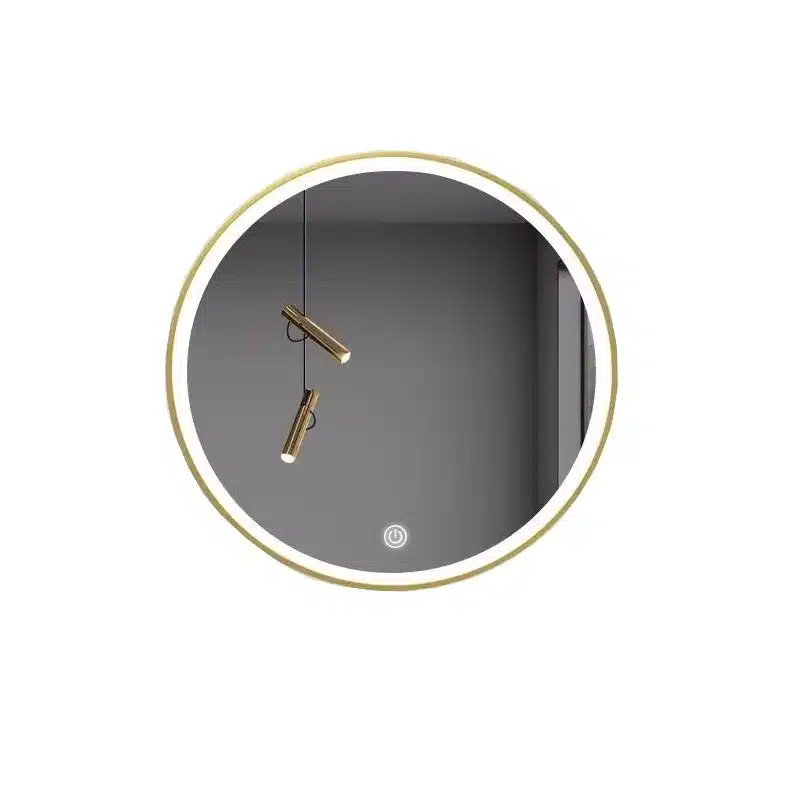
The smart mirror is where the ecosystem becomes visible. Typical smart LED mirror features include adjustable brightness, adjustable color temperature, anti-fog heating, touch control, a digital display, and an auto-sleep mode that cuts power when the mirror is not in use. Optional voice control and Bluetooth turn the mirror into a hands-free station for calls, music, or hotel room controls. Classic mirrors run 24×36 to 48×72 inches in round or rectangular formats, with an anti-fog coating optional. The deeper you go into smart mirror technology, the clearer the reason the mirror — not the vanity — usually carries the longest spec sheet in the set: it is the only component with a driver, a control board, and a power supply that all have to survive a wet environment.
The vanity layer
The vanity anchors the composition. PVC vanities run 24 to 60 inches wide and 18 to 24 inches deep, with more than 1,000 standard finishes, which gives you room to match or contrast the mirror frame. Storage decisions matter as much as width: drawer layout and cabinet volume determine whether the set works for a rental unit, a hotel room, or a master bath. Depth matters for the electronics story, too. A 24-inch-deep cabinet leaves more room behind the basin for the mirror’s driver and power supply, and it changes how a wall-mounted mirror with a digital display reads in the room. If you are pairing a voice-controlled mirror with a vanity in a hotel room, decide the basin configuration first — single basin, double basin, or floating — because the mirror width decision follows the basin layout, not the other way around. Because the vanity is a cabinet, it also carries part of the environmental compliance load — E1 board emissions at or below 0.1 ppm, CARB Phase 2, TSCA Title VI, and low-VOC finishes are the markers distributors check before a container clears customs. In an ecosystem, the vanity finish also becomes the color reference for the mirror frame, so decide the frame finish at the same time you pick the cabinet, not after.
The lighting layer
The lighting layer is the third product hiding inside the set. It includes the mirror’s own backlight, any overhead fixture, and wall sconces or a light bar. Color temperature and placement do the heavy lifting: if the mirror runs cool and the sconces run warm, skin tones shift between the two light sources. Placement matters just as much — light thrown from both sides of the face reads differently from a bar mounted flush above the mirror plane. This is the layer where most mismatches get imported, because lighting is usually the last item ordered and the first one judged. A dedicated vanity lighting guide covers sconces, light bars, and color temperature placement in detail, and it is worth reading before you commit to a fixture family.
Matching Smart Mirror Spec Layers to the Vanity Layout
The mirror has to fit the vanity in four ways: width, mounting height, environmental rating, and interface. Width is the easiest to get wrong. MFBATH builds mirrors from 24×36 to 48×72 inches and vanities from 24 to 60 inches wide, and the pairing rule that works across those ranges is simple — the mirror should not be narrower than the basin area it serves.
| Vanity width | Sensible mirror pairing |
|---|---|
| 24–30 in | 24×36 in rectangular mirror |
| 36 in | 36×48 in mirror |
| 48 in | 48×72 in mirror centered, or two 24×36 in mirrors |
| 60 in | 48×72 in mirror centered, or one 24×36 in mirror per basin |
Mounting height is the second fit point. Decide it with the basin depth and faucet reach in front of you, because the mirror’s touch zone has to stay within comfortable reach of the person using the sink. A mirror mounted for a countertop basin sits at a different height than one mounted for a vessel sink, so confirm the rough-in before you fix the mirror size. Third, the environmental rating: in a residential bathroom, steam exposure is modest; in a commercial or hotel bathroom, the mirror’s IP rating against moisture should be confirmed with the supplier before ordering, and the anti-fog heating element should be verified as isolated from the control board. Fourth, the interface: touch control is standard, while voice control and Bluetooth are options. If your project calls for Bluetooth anti-fog mirrors or voice-activated units for hotel rooms, confirm the pairing behavior and the Bluetooth implementation before you commit, because hands-free features are exactly the kind of spec that gets cut first when a build is priced down.
A digital display and auto-sleep are the two mirror features that change behavior, not just looks. The display shows time, temperature, or date depending on the firmware, which matters if you are branding the mirror for a hotel chain that wants a clock in every bathroom. Auto-sleep cuts the LED backlight when no one is within range, which keeps the mirror from running all night in guest rooms; the energy saving is modest per unit, but across a full property it shows up on the utility line. Both features should be confirmed on the sample, because display brightness and sleep sensitivity are the settings guests actually complain about.
Color quality is the last spec layer: the color rendering index (CRI) and correlated color temperature (CCT) of the mirror’s LED module should match the lighting plan for the room. CRI 90 or higher is the standard working assumption for bathroom mirrors — a number you put on the spec sheet and ask the supplier to confirm, not a number you assume. The smart mirror product page lists the mirror line distributors typically start from; bring the vanity width and the room’s target color temperature to that conversation.
Lighting Coordination: Color Temperature, Life, and Dimming
The mirror, the vanity, and the room lighting have to agree on one color story. Correlated color temperature (CCT) is the single most visible spec in the ecosystem. If the mirror backlight sits at 6500K and the overhead sconces sit at 2700K, the vanity looks like two different rooms, and your customer will notice before you finish the first sentence of the handover call. The practical move is to fix one target CCT for the whole set — 3000K for warm residential schemes, 4000K for commercial and hospitality — and then ask every supplier for the CCT range of their product and the bin tolerance within it. A mirror with adjustable color temperature covers part of this risk, but only if the fixtures can produce the same range.
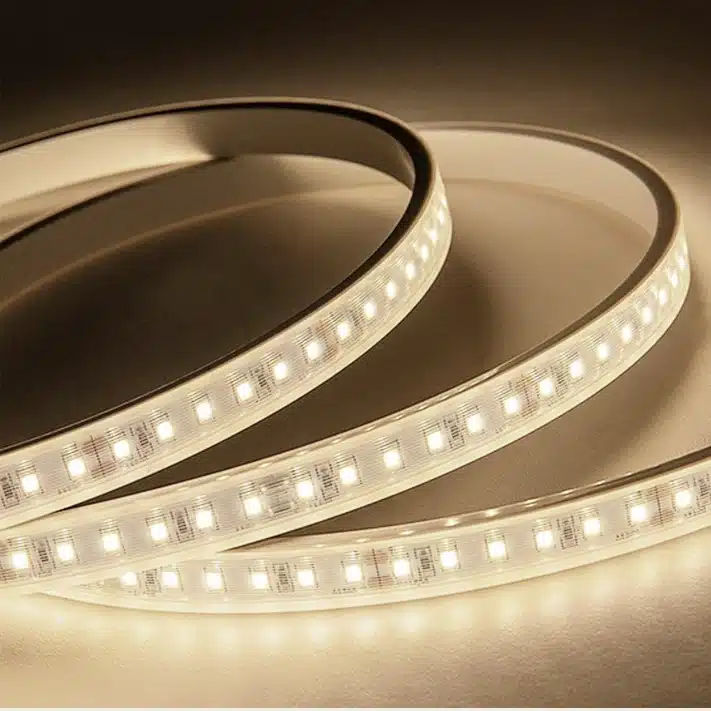
LED life is the second coordination point. LED modules are rated in L70 hours, the point at which light output falls to 70 percent of its initial value. That figure, plus the brand and quality of the LED driver, determines how long the set keeps looking consistent. Drivers fail long before LEDs reach their rated life, and a dead driver inside a sealed mirror is a service event, not a bulb swap. The questions to ask are concrete: what L70 rating does the supplier claim for the module, whose driver is inside, and does the warranty cover the whole mirror or only the electronics? The U.S. Department of Energy’s LED lighting information is a solid background reference on efficiency claims, and the electrical safety of the driver and power supply should be checked against UL requirements for the North American market.
Placement closes the loop. A backlit mirror does double duty as the primary task light in a compact bath, but in a larger room the vanity needs a second source — a light bar above the mirror or sconces at eye level on both sides — to kill shadows under the chin. The mirror’s own output should be treated as ambient fill, not the whole lighting plan. When you write the order, list the mirror’s CCT range, the fixture’s CCT, and the dimming method on the same line of the spec sheet so the installer cannot improvise.
Dimming is the third layer. Smart LED mirrors ship with adjustable brightness, which is not the same thing as working with a wall dimmer. If the plan includes a dimmer switch, confirm the mirror driver is dimmer-compatible before ordering; the mirror backlight, the vanity light bar, and any sconces should dim as one group or the set will flicker at low settings. This is a five-minute question at spec time and a re-order problem if you skip it.
Smart Mirrors, Vanities and Lighting in One Coordinated Order
Browse this product, solution, or service page to explore relevant offerings.
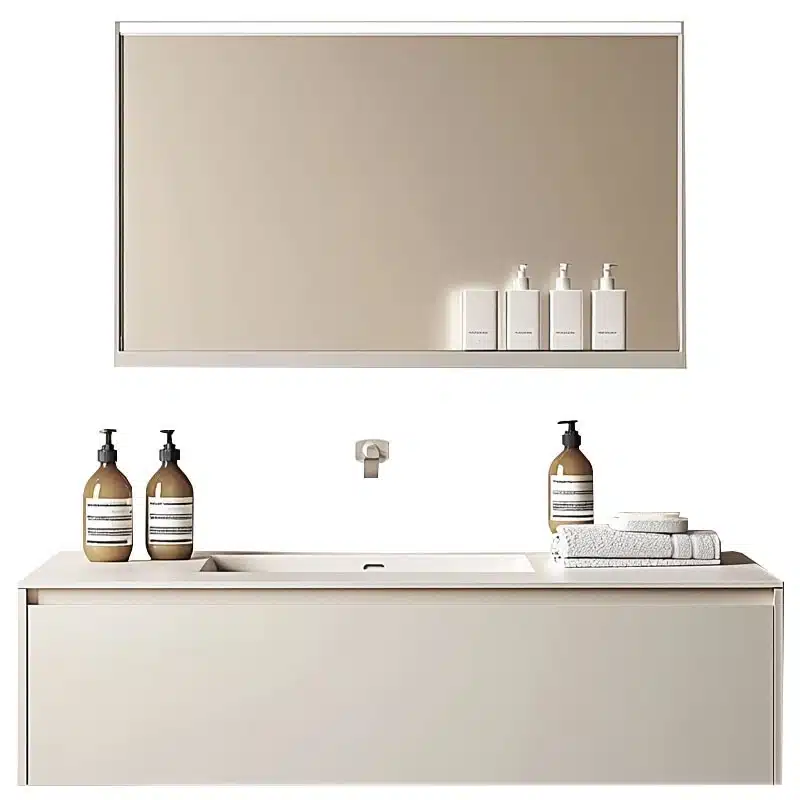
Sourcing the Coordinated Set from One Factory
The cleanest way to keep CCT, finishes, and quality control aligned is to source all three layers from one factory. One factory means one spec sheet, one set of smart mirror certifications to review, one quality control standard, and one warranty to enforce. It also changes your logistics math: mixed container loading is supported, so mirrors, vanities, and lighting ride in the same container instead of three separate shipments from three vendors.
The minimum order quantity (MOQ) is 15 units per model, color, and size, which keeps trial orders realistic for distributors testing a new market. The factory runs 5,000 sets per month across a 10,000-square-meter plant with 95 employees and serves more than 1,000 dealers in over 20 countries. Every product goes through five quality checks, and third-party inspection by SGS or TÜV can be arranged on the order. The two-year whole-cabinet warranty is a selling point you can carry to your own customers, and the return rate on the line sits under 1 percent — the kind of number you can put in front of a retail buyer without flinching.
Sample the set, not just the parts. Free sample support is standard, and because samples ship in 10 working days, you can hold the mirror, the vanity, and the lighting in one room before you commit. Approving all three together is what separates a coordinated product line from three products that happen to share a container.
Lead times and payment terms follow a predictable pattern for North American imports:
| Stage | Timeline or term |
|---|---|
| Free samples | 10 working days |
| Bulk production | 20–30 days |
| Total lead time (US/CA/MX) | 4–6 weeks |
| Trade terms | Free on board (FOB), Qingdao Port |
| Payment | 30% deposit; balance within one week of draft bill of lading (draft BL) |
Compliance lines up in the same place. MFBATH holds ISO 9001 and ISO 14001 certification, certified since 2017 and confirmed current in 2025, and holds CE and UL markings on the relevant electrical products. For CSA, NOM, and ADA, the product lines are designed to meet those requirements — which is the language to use in your own sell sheets as well, “designed to meet,” until you hold documentation for the specific market. If your orders go into public buildings, keep the ADA standards text in the project file. Cabinets carry the environmental stack: E1 at or below 0.1 ppm, CARB Phase 2, TSCA Title VI, low-VOC finishes, and FSC-certified wood available on request.
Because all three layers come from one factory, customization stays coherent. With more than 40,000 custom combinations available — Pantone color matching, branded hardware, logo printing or laser engraving, custom packaging — you can put your brand on the mirror, the vanity, and the lighting in one pass instead of coordinating three vendors’ minimums. The free 2025 catalog runs over 100 pages and is a practical way to shortlist configurations before you talk specs. The design trends and styles library tracks how these coordinated sets are being built and sold, and smart vanities walks through how tech-integrated cabinetry is specified on the engineering side.
Pitfalls When the Set Comes from Multiple Suppliers
- Inconsistent color temperature. Mirrors from one supplier, sconces from another, and a light bar from a third will arrive with three different CCTs, and none of the suppliers will adjust because each one met their own spec. Fix the target CCT and bin tolerance in writing, and check the assembled set before the container leaves the factory.
- Dead driver, no owner. When the LED driver fails inside a mirror bought from vendor A and a vanity from vendor B, neither vendor owns the problem. Ask about driver brand and L70 ratings up front — the LED mirror lifespan guide explains why driver quality matters more than LED count — and make sure the warranty covers the mirror as a whole product, not just the glass.
- IP rating mismatch. A mirror rated for a low-humidity home bathroom will fog and fail in a hotel steam zone. Confirm the IP rating against the actual exposure, and if the project is commercial, treat the rating as a contract term, not a brochure line.
- Finish drift. The mirror frame and the vanity finish are produced in different factories with different batches, and “warm white” never means the same thing twice. Order both from the same production line, or accept that you will be the one explaining the difference.
- Markings you cannot verify. Check that each supplier holds CE and UL markings on the actual model you are ordering, not on a similar product. The model number on the marking is the only version that helps you at customs or in a liability discussion.
- Accessibility assumptions. If the set is headed into a commercial washroom, confirm it is designed to meet ADA reach ranges and clearance rules before you quote the project. Use the same language on your own sell sheet — “designed to meet” — and let the compliance officer verify the details against the regulation text.
Frequently Asked Questions
What is a smart bathroom ecosystem design?
A smart bathroom ecosystem design treats the mirror, vanity, and lighting as one coordinated set. The smart mirror supplies adjustable lighting, display, and controls; the vanity sets scale, storage, and finish; overhead and sconce lighting matches the mirror’s color temperature. For distributors, the term also covers sourcing the three layers from one factory so specs, quality control, and warranty line up under a single accountable supplier.
How do I match a smart mirror to my vanity width?
Use the documented size ranges: mirrors run 24×36 to 48×72 inches, and vanities run 24 to 60 inches wide. A 36×48-inch mirror suits a 36-inch vanity, while a 48×72-inch mirror works over 48- or 60-inch doubles. Then confirm mounting height against basin depth and faucet reach so the touch zone stays reachable, and match the mirror’s color temperature to the room lighting plan.
What is the minimum order for a coordinated mirror and vanity set?
The minimum order quantity is 15 units per model, color, and size, with mixed container loading supported — so mirrors, vanities, and lighting can combine in one container. Samples are free with a 10-working-day lead time, bulk production runs 20–30 days, and the total lead time to the US, Canada, and Mexico is 4–6 weeks.
The Bottom Line
Plan the mirror, the vanity, and the lighting as one set before you issue a purchase order. Match mirror width to vanity width, fix one color temperature across every light source, and hold a single factory accountable for specs, quality control, and the two-year warranty. MFBATH has built coordinated smart bathroom sets since 2015 with a 15-unit minimum order quantity per model, color, and size, mixed container loading, and free samples in 10 working days. Start the conversation with the smart mirror product line and a spec sheet that covers all three layers.




0 Comments