
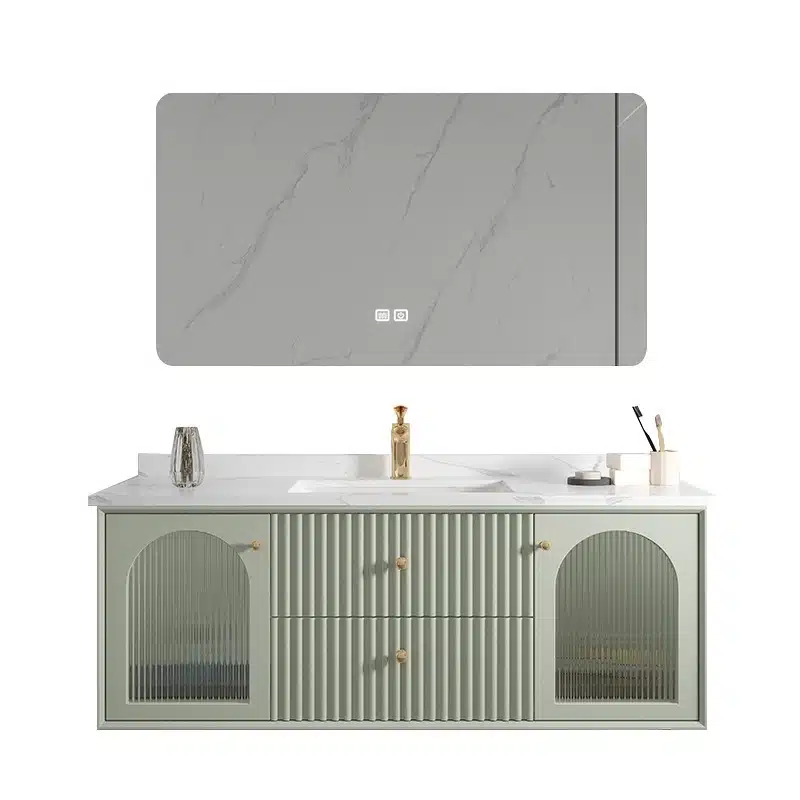
Sourcing a private-label smart mirror goes far beyond choosing the glass and the LED strip. You are also managing regulatory complexity, supply chain stability, and brand consistency across several time zones. MFBATH runs a 10,000㎡ facility in Changge, Henan, and supplies more than 1,000 distributors in over 20 countries. The company positions itself as a regional architect for bathroom solutions, adapting products to the climate and legal framework of each destination market.
The real difference between a standard supplier and a scalable partner shows up in the details that usually fail during transit. MFBATH processes automotive-grade mirror glass for optical clarity and durability that generic processors can’t match. Their five-stage quality control process targets the sensitive electronics responsible for high return rates in the smart mirror category. The team also designs for compliance from day one, building UL or CSA into North American units and CE into European ones. That eliminates the post-launch adaptation costs that eat into distributor margins.optical clarity
Why Most Smart Mirror OEMs Fail
Most smart mirror failures stem from ignoring regional voltage, climate, and compliance nuances.
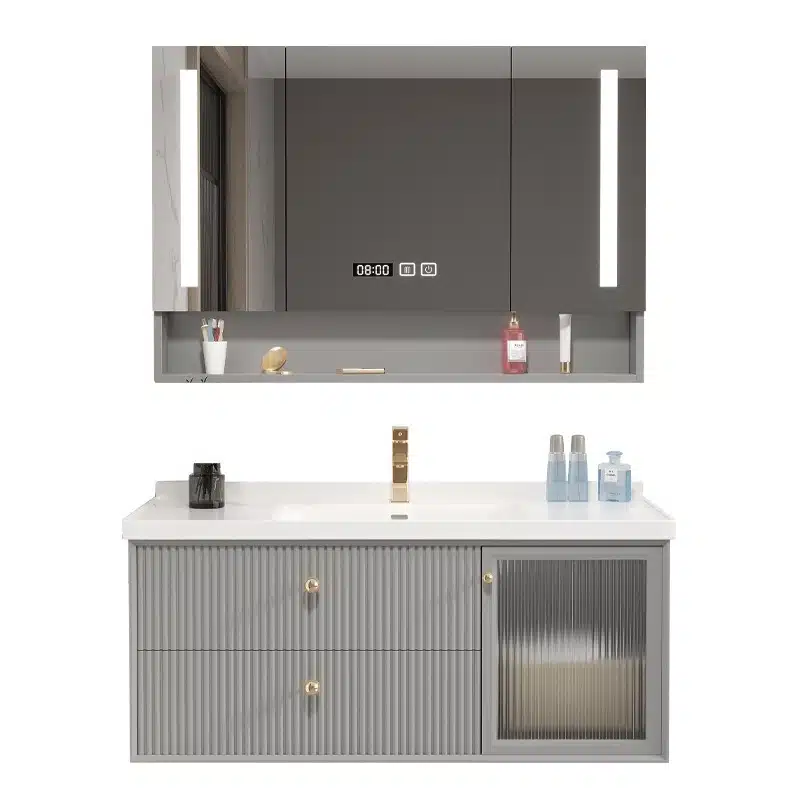
The quickest way to kill a private-label mirror partnership is to treat the product as generic hardware. Merging sensitive electronics with glass takes precise engineering, not assembly-line work. Distributors who skip the regional voltage, humidity, and safety review end up absorbing costly returns and damaging their brand reputation.
Proactive engineering is the only path to product longevity. The region-ready strategy at MFBATH builds climate resilience into the core design, with temperature tolerance from -30°C in North America to 50°C in the Middle East. The product survives local conditions on the first pass, so distributors skip the post-launch rework. That is where the cost-effectiveness comes from.
- Regulatory Compliance: Units are tailored for 20+ countries, carrying UL or CSA for North America, CE for Europe, and AS/NZS for Oceania. Customs clearance stays smooth. Climate Resilience: Mirrors handle extreme environments, with anti-fog technology and materials tested for high humidity and temperature fluctuations.
- Electronic Durability: Automotive-grade processing plus five-stage QC keeps defect rates low on the sensitive parts. That protects LED lifespan and Bluetooth connectivity where it matters most, after the unit ships.
Real Cost Breakdown of Smart Mirror Sourcing
Hidden costs in smart mirror sourcing stem from fragmented logistics and non-compliant electronics.
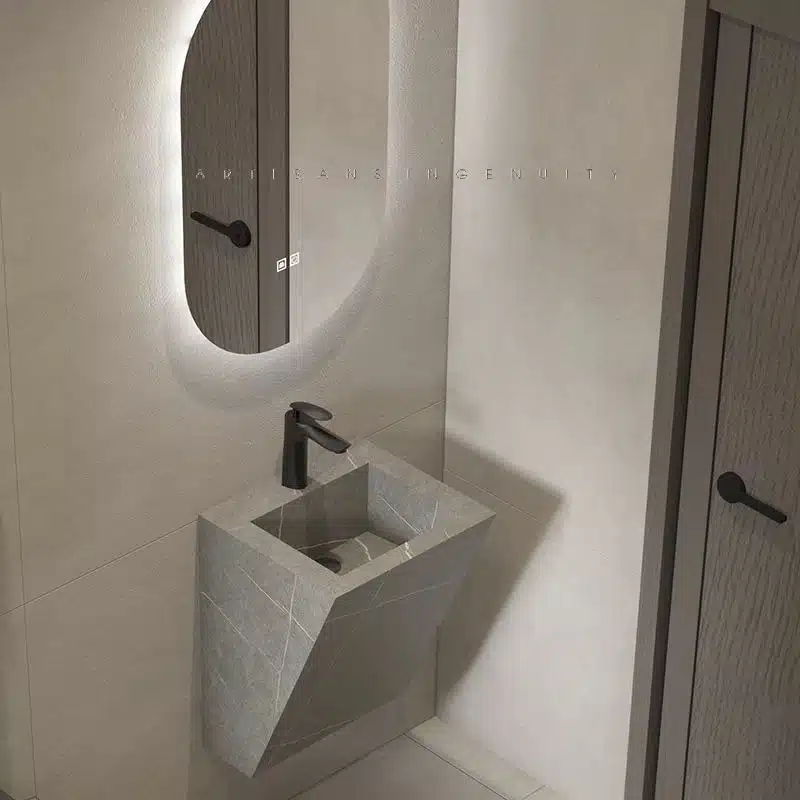
Sourcing smart mirrors means looking past the unit price. The real cost shows up in compliance testing, secure packaging, and how efficiently the container loads. MFBATH bakes UL/CSA and CE compliance into the production line itself, so there are no hidden fees, no customs delays, and no surprises when the shipment reaches its market.secure packaging
- Container Optimization: Filling a 40HQ properly can cut per-unit logistics costs by up to 15%. Strategic nesting and flat-pack designs let distributors move far more volume per shipment than fragmented sourcing allows. Automated Waste Reduction: CNC precision and automated lines keep material scrap low. That keeps FOB pricing competitive and quality consistent across large runs.
- A factory that pushes out 50,000 mirrors a month doesn’t haggle over small-quantity pricing — the volume itself locks in lower unit costs. When raw material prices swing or shipping routes get chaotic, that production scale keeps your price stable. Your margin doesn’t evaporate mid-order.
Smart Mirror vs Alternatives: Compliance & Features
Smart mirrors require region-specific compliance (UL/CE/AS/NZS) to clear customs and ensure electronic safety.
A basic LED mirror just lights up. That won’t close a deal with a hotel chain or a high-end retailer anymore. Voice control, anti-fog heating, Bluetooth, and digital displays have stopped being extras — they’re the entry ticket. The real differentiator is finding a supplier who can pack all of that into a waterproof, durable housing without ruining the mirror’s look. Most factories trip on the engineering-to-design handoff.Standard LED mirrorsBluetooth connectivity
Focuscabinet’s region-ready logic means every smart mirror leaves the floor already matched to where it’s going — UL for North America, CE for Europe, AS/NZS for Oceania. You skip the scramble to retrofit after delivery, you dodge customs delays, and you avoid the quiet cost of tweaking electronics last minute. Compliance gets baked into the initial design, so the mirror handles the local weather, follows the law, and just feels right in the bathroom.
- In North America, the mirrors carry UL/CSA electrical safety certification and mount at heights that meet ADA requirements without extra mods. Materials get validated to keep working at -30°C — no dead electronics, no cracked glass, even in a Winnipeg winter. For Europe, CE compliance covers the safety and environmental side. We stick to ISO 14001-certified materials and E1-grade low-formaldehyde boards, the kind that keeps European contractors and luxury hotel chains inside their green-building targets. Oceania calls for AS/NZS electrical standards and WELS water ratings. Materials here are explicitly selected to beat coastal humidity and UV, so mirrors don’t corrode when installed five miles from the ocean in Sydney or Auckland.CE compliancelow formaldehyde emissions
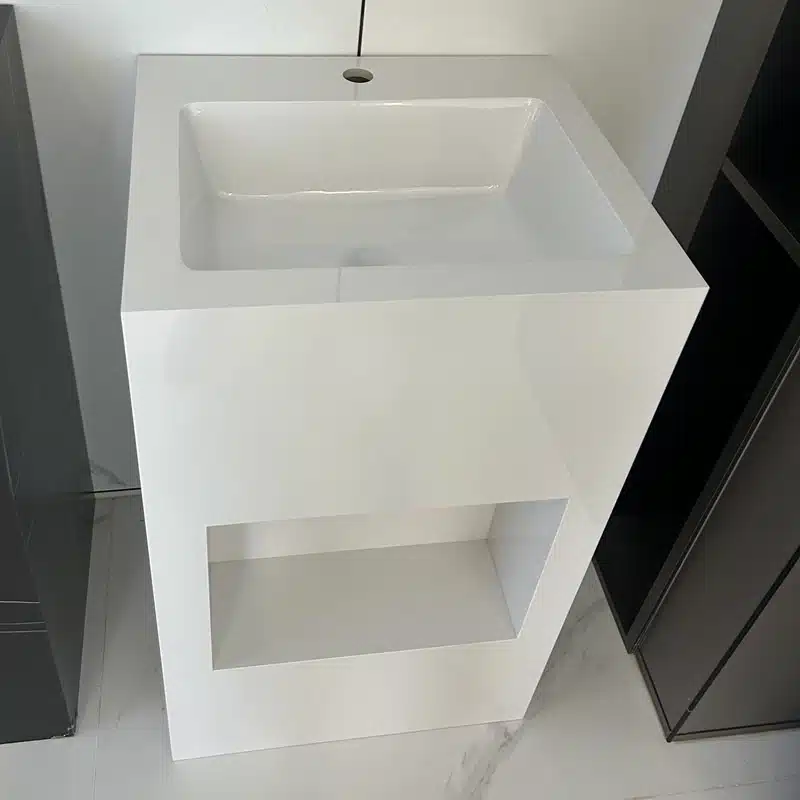
- Asia & Middle East (Heat Resistance):In arid-zone markets, mirror electronics need a rated operating ceiling of at least 50°C. Cheaper LED drivers start flickering or burning out well below that threshold. On the cabinet side, floating vanity dimensions get cut down to fit tight floor plans. A 400mm-deep unit makes sense in a compact Singapore or Hong Kong bathroom where every centimeter counts.
Automotive-grade mirror processing lines deliver optical clarity that a standard glass shop cannot match. There is no distortion or ghosting at the edges. The reflective layer also survives thousands of cleaning cycles without micro-pitting. For a distributor, this means holding a spec that local fabricators rarely offer. The unit stays sharp on display and after years of end-user wipe-downs.
| Feature | Specification | Advantage |
|---|---|---|
| Regulatory Compliance | UL/CSA (NA), CE (EU), AS/NZS (Oceania) | Guaranteed customs clearance and market entry without legal hurdles |
| Electronic Integration | Voice Activation, Anti-Fog, Bluetooth, Digital Display | Enhances user experience and property value compared to basic LED mirrors |
| Durability Testing | -30°C Cold Test (NA) to 50°C Heat Resistance (Middle East) | Eliminates post-launch returns due to climate-related component failure |
| Surface Technology | Automotive-Grade Mirror Processing | Superior optical clarity and scratch resistance vs. generic glass alternatives |
| Production Quality | Five-Stage Rigorous Inspection | Ensures near-zero defect rates for sensitive electronic components |
How to Source Smart Mirrors Without Risk
Verify factory audits and secure photographic proof at every production stage to eliminate sourcing risk.
OEM smart mirror sourcing runs off the rails when buyers treat the unit as a basic hardware item. It is an integrated electronics-and-glass assembly. Each regional market punches a different voltage, a different humidity profile, and a different regulatory checklist. Most small-shop suppliers do not have the engineering bench to reconcile those three variables in a single production batch. That gap causes the bulk of field failures.
—5** You close that gap by checking real production scale, not claimed capacity. One measurable benchmark: a 10,000sqm facility pushing 50,000 mirrors a month. That throughput keeps lead times predictable for large hotel or commercial rollouts. Small workshops fall over when a project needs 2,000 identical units on a tight schedule. Scale decides whether you hit the completion date or eat penalty clauses.
Margin protection starts with supply-chain visibility. A dedicated project manager sends dated photo confirmation at three hold-points: raw material intake, electronic component testing, and final packaging. You see the assembled order, serial numbers and all, before the container seals. No generic “shipped” notice. You reconcile the photos against your PO line items and sign off with the actual shipment in view.
- Factory Verification: Confirm the facility before you quote anything. A legitimate 10,000㎡ plant with 50,000+ mirrors leaving the line each month gives you the buying power to stay cost-effective as volumes climb. Sample Approval: Pre-production samples are non-negotiable, and so is the UL/CE compliance paperwork that must arrive with them. Skip that step and quality problems become your problem, not the factory’s.
- Photographic Proof: Require stage-by-stage photos of assembly and electronics integration. Timezone differences and language barriers cause miscommunication on every overseas order. A timestamped photo trail resolves disputes before they turn into delayed shipments.
Conclusion
Regulatory entry decides whether an OEM smart mirror brand survives across 20+ countries. MFBATH treats compliance as an engineering feature from the first drawing. Automotive-grade mirror processing delivers the durability end-users can feel, while region-specific adaptations let the same product line clear UL, CE, and other local safety reviews without redesigns. Post-launch failures stay off your cost sheet, and that is how you build trust with end-users.
Frequently Asked Questions
What are the pros and cons of smart mirrors?
The exact answer depends on the product specification, quantity, and order setup. The safest approach is to confirm the commercial terms only after the final requirement sheet is locked. Final terms should be confirmed against the exact product specification and order conditions.
What is a smart mirror used for?
The exact answer depends on the product specification, quantity, and order setup. The safest approach is to confirm the commercial terms only after the final requirement sheet is locked. Final terms should be confirmed against the exact product specification and order conditions.




0 Comments