

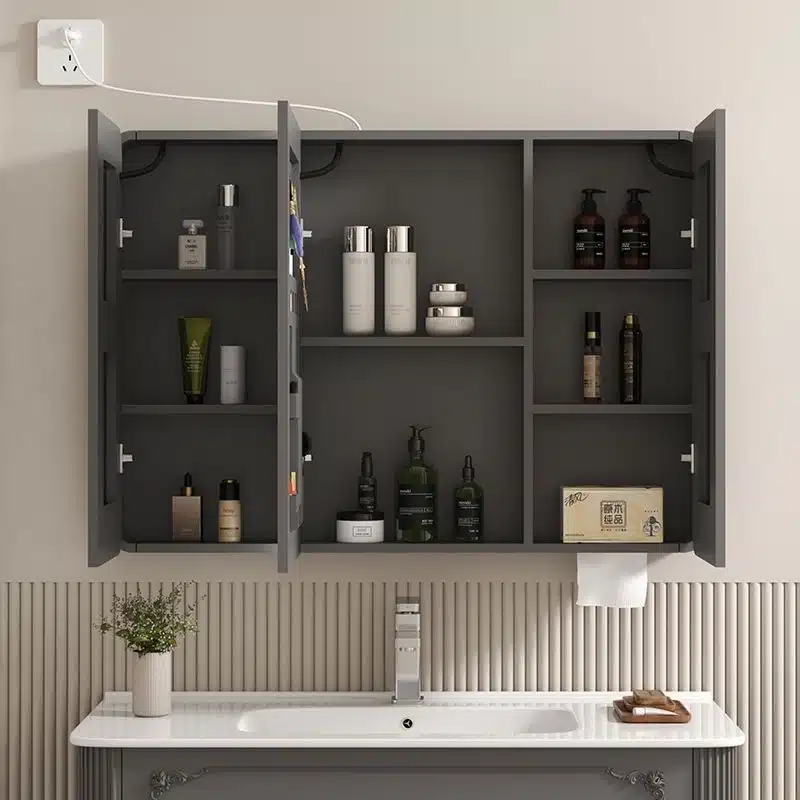
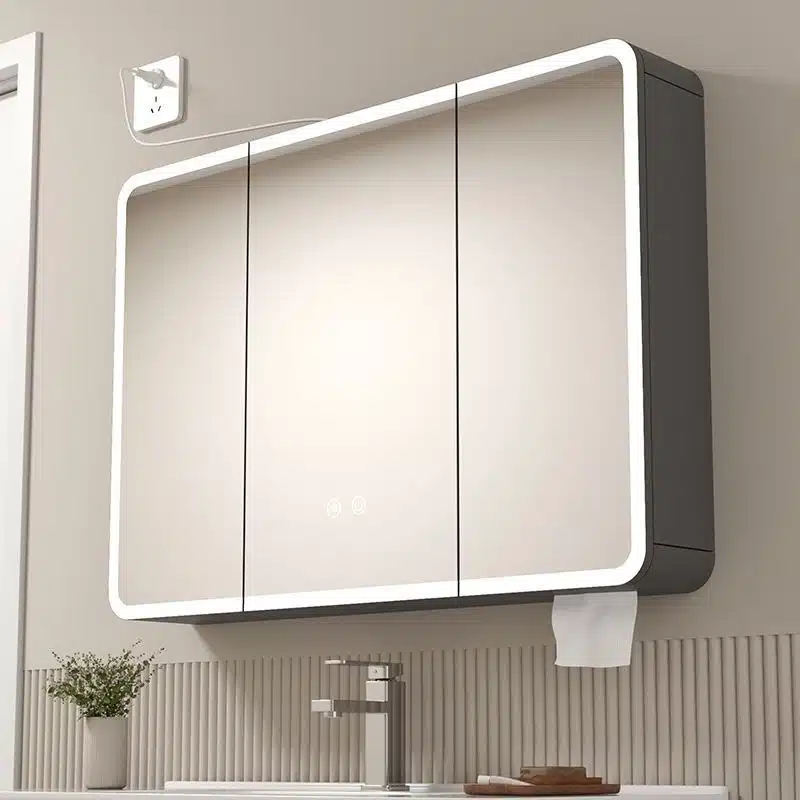
A mirror cabinet carries two lighting systems that do different jobs. Mirror-front light is a grooming instrument, arranged around a face at arm’s length. Interior light is a storage instrument, working inside a shallow, sealed, reflective box with a door in front of it. Buyers specify the first carefully and add the second as a line item, then wonder why the shelf reads a different color than the glass. This guide treats mirror cabinet interior lighting as its own engineering problem, using Main Focus Cabinet (MFBATH) as the running example.
Six sections follow the order in which the decision is made: how interior light differs from mirror-front light, what the light is for, how it is switched and wired, how it must agree with the mirror face, how it survives heat and humidity in a closed cavity, and what the purchase file needs. The commercial frame is typical at MFBATH, a Changge, Henan plant founded in 2015 with 95 employees and capacity of 5,000 sets a month: an MOQ (minimum order quantity) of 15 sets per model, color, and size, free sample support, and samples in 10 working days. Adjacent decisions sit in our product knowledge guides.
Key Takeaways
- Interior light and mirror-front light are separate systems with separate tasks; put both on one specification sheet so a single SKU does not ship two different colors of light.
- The activation method sets the user experience and the wiring route at the same time, and each option carries its own false-trigger risk and service path.
- Layout, cutout, and channel belong on the carcass drawing before tooling, because a hole bored through a finished panel leaves an unsealed edge in a wet cavity.
- Treat the driver as the serviceable part: specify a reachable driver, lock module and driver model numbers in the contract, and ship spare drivers with the container.
- Require the protection rating and warranted installation zone in writing, ask which of the five inspection points covers the powered check, and seal a physical sample before bulk production.
Table of Contents
- Interior Lighting Is Not Mirror-Front Lighting
- What In-Cabinet Light Is Actually For
- Activation, Wiring Route and Driver Access
- Color Consistency Between Cabinet and Mirror
- Heat, Moisture and Electrical Safety in an Enclosed Box
- Ordering Checklist: Sample, MOQ and Documentation
- Frequently Asked Questions
- The Bottom Line
Interior Lighting Is Not Mirror-Front Lighting
Read the two systems by their job. Perimeter light has an audience: it must put honest, usable light on a face at close range, it is visible when the cabinet is switched off, and it competes with every other mirror on a showroom wall. Interior light has no audience and one task, which is to make the contents of a shallow box readable during the few seconds a door stands open, at short distance, at a steep angle, against reflective walls, inside a cavity that is warm and damp. Specifying it as a smaller version of the perimeter system is where the problems start.
Inside a cabinet there are three workable layouts, and each buys something different. A fitting along the front edge of each shelf lights the shelf below evenly and photographs well, but it multiplies the runs, the connections, and the places where a cable can be pinched. A vertical fitting in a side channel covers every shelf from one run and is easy to reach, though deep shelves throw shadows across the space beneath them. A fitting on the top interior surface is the cleanest single point and the simplest to assemble, and it also means that whatever a guest leaves on the top shelf darkens the two shelves below. Ask which layout the factory uses, on which panels, and why; the answer tells you whether lighting is engineered into the carcass or dropped into it.
The cavity finish changes what you bought. In a mirrored box, much of the light reaching a razor arrives by reflection rather than directly, so the interior surfaces re-tint the result: the same module reads cooler against mirror and metal and softer against pale laminate. Name the interior finish and the shelf material in the same paragraph of the specification as the lighting module, rather than treating the two as unrelated options on a quotation.
Add-on is the wrong verb, because the decisions that make interior light work are structural. A cable needs a path from the driver to the fitting, and that path usually crosses a door gap or a panel joint. A strip needs a channel or a profile, which means a recess cut and sealed at assembly rather than a tape pressed onto a finished edge, and a hole bored through a completed panel leaves an unsealed edge in a humid room. Put the lighting layout on the carcass drawing before tooling, and the retrofit conversation never happens.
What In-Cabinet Light Is Actually For
The use case that pays for the fitting first is a hotel room at night. A guest who needs a toothbrush without switching on an overhead lamp is precisely the person judging whether the bathroom helped or hindered, and a lit interior solves it without waking anyone else. It also removes a category of front-desk friction that never reaches a review score: the guest who cannot find the spare towels and concludes the room was not stocked.
For apartment developers and e-commerce brands the same part does a different job, which is to be visible in the sales material. Showroom units sell on the moment the door opens. On a product listing, interior light is the difference between a photo of a mirrored box and a photo of a lit display, and in a walkthrough video it reads as a feature without narration. Distributors use it as a visible step up a price band that a customer can demonstrate in a shop.
That argues for tiering rather than for equipping everything. A workable range has a base cabinet with no interior light, a mid tier with a single lit shelf zone, and a top tier with a full interior system alongside the smart mirror functions of adjustable brightness and color temperature, anti-fog heating, touch control, a clock display, and an energy-saving auto-off. Each tier is a distinct SKU carrying its own MOQ of 15 sets per model, color, and size, and with 40,000+ custom combinations available at MFBATH the easy failure is specifying a different lighting option for every width and calling the result a range. Our companion piece on which smart mirror features earn their cost applies the same arithmetic to the glass.
Be clear about what light cannot fix. It will not rescue a shelf plan that wastes the cabinet depth, and it adds an electrical component to a product whose other failure modes are mechanical and cosmetic. The useful question is not whether interior light is a good idea but whether the tier carrying it can be forecast, stocked, demonstrated, and repaired by someone who has never seen this cabinet before.
Activation, Wiring Route and Driver Access
Two questions define the electrical package: what turns the light on, and where the power enters. A method placed on the door pulls wiring across a moving joint; a method placed on the mirror face or the room wall leaves the cabinet body alone. The table compares the options a buyer is offered on essentially the same cabinet.
| Activation Method | User Experience | False-Trigger Risk | Wiring Requirement | Serviceability |
|---|---|---|---|---|
| Door switch | Light only when the door opens, which matches the task | Minimal; door position is the only input | Switch and actuator split across the door gap, lead through the hinge | Good; the switch is the wearing part at the door edge |
| Motion sensor | Hands-free on approach, door shut or open | Most sensitive: steam, passers-by, and mirrored interiors trip it | Exposed sensor window with a clear line of sight | Adds a visible window on the finished face |
| Touch control | One deliberate press on the glass or a pad | Low; wet hands can miss it or switch it off by mistake | Needs the touch-capable driver; nothing crosses the hinge | No wearing mechanical contact to replace |
| Wall switch | Needs a switch the user finds before the cabinet helps | None originating inside the cabinet | Fed from the room circuit, so outside factory scope | Simplest; only the driver sits inside the box |
Judge the rows against use rather than against a catalog. A door switch is the honest default for storage light and suits project work where users are unpredictable, but it places a wearing part and a crossing lead in the door line, so ask how the switch is mounted and how its lead is dressed through the hinge. Motion sensors read well on a specification and disappoint in a small bathroom, because steam and a mirrored interior are what a proximity detector was not designed to interpret. Touch control is the cleanest compromise where the driver supports it; a wall switch removes the detector question and hands the wiring to the site electrician.
Then trace the route. Three paths exist: a bored hole through the back panel with a finished grommet, a surface channel clipped to the carcass, or a recess built into the cabinet wall at assembly. The bored hole is the easiest to get wrong, because it needs a sealed edge so moisture cannot reach the panel core, clearance so the cable is not crushed between cabinet and wall, and a defined bend radius. Request a wiring diagram with the hole position dimensioned and the cutout reinforcement called out.
Plan around the driver, because it is the part a technician has to reach. An LED is a current-driven device whose output and color depend on the supply feeding it, as how LED light sources behave explains, and in enclosed service the power supply is the part that needs ventilation and a reachable mounting position. A driver sealed behind a mirror turns a minor failure into a demolition job, so specify one reachable from inside the cabinet or through a back access panel, name its model on the sheet, prefer connectorized ends over soldered joints, and order spare drivers with the container.
Fix the responsibility boundary in writing before the deposit: a lead and a plug for a socket, a junction box the site electrician lands conductors into, or a switch someone else supplies. Each option moves labor and liability, so name yours on the document carrying the commercial terms and the port of loading.
Color Consistency Between Cabinet and Mirror
The complaint usually arrives as a photograph. A customer opens the door and the shelves read cooler or greener than the light on the mirror face, and the product looks like two different items bolted together. The mismatch costs more on a listing than in a bathroom, because your photographs put both systems in the same frame.
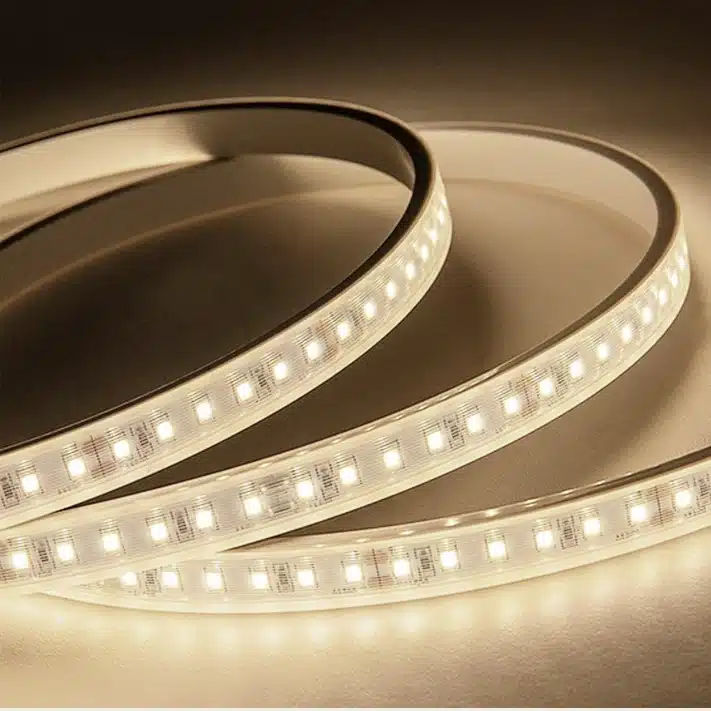
The fix exists on paper before it exists on a shelf. Both systems should appear on one specification sheet with identical fields: activation method, module model, driver model, the color temperature band required, and the CRI (color rendering index) class required. The concept behind that second field is defined plainly at color rendering index; what matters commercially is that you asked for a class in writing instead of accepting whatever module the line happened to stock. The two systems drift apart because they are usually ordered as separate options, with no document tying them together. Our CRI and color temperature spec for LED mirrors walkthrough covers the mirror-face half of the problem.
Batch variation is the harder half. LED packages are sorted into bins at manufacture, so two modules carrying the same part number can look visibly different if they came from different sorting groups. Drivers vary too, because a component shortage is normally resolved by a substitution nobody mentions to the buyer. Two controls close most of that gap: make the approved sample the physical reference standard and require production units to be checked against it in the same room on the same supply, then lock the key components by model in the purchase contract, with written notice and re-approval required before any substitution of module, driver, switch, or diffuser.
Verification takes minutes and is worth doing before the container is booked. In a dim room, cycle the door on the sealed sample and on a production unit side by side, look at a white towel on the shelf and at your own hand under both systems, and photograph the pair under identical camera settings. A disagreement at that point signals binning or substitution, and catching it once here is worth more than any clause you could have written.
Configure Mirror Cabinets With Lighting You Can Specify
Browse this product, solution, or service page to explore relevant offerings.
Heat, Moisture and Electrical Safety in an Enclosed Box
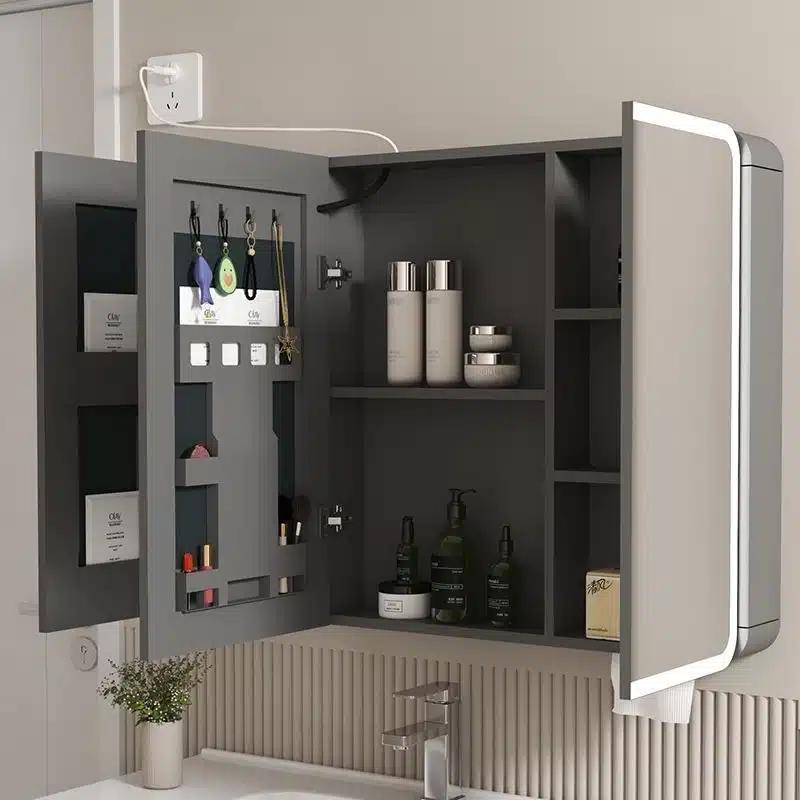
An enclosed cabinet is a difficult environment for electronics by design. It is sealed, reflective, and holds whatever heat its fittings produce with nowhere to go, and the door stays shut for most of every day. Solid-state sources run cooler than the lamps they replaced, but they still need a thermal path, and the driver sharing the cavity converts part of the incoming power into heat continuously. Ask where the driver sits, whether it is mounted against the carcass or suspended in air, how far it stands from the sealant lines, and what the factory does about the compartment as well as the fitting.

Moisture is the second half. The cabinet shares a room with showers, and the wettest air reaches the interior each time the door opens and the glass behind the mirror cools. Gasket choice, sealant type, and the detailing of cable entries decide what the electronics actually see, and silicone stays flexible and water-resistant, which is why it is the usual family for wet-area sealing. The practical request is narrower than a materials debate: ask the factory to state in writing the enclosure protection rating of the lighting components and the installation zone it warrants them for, together with the conditions it excludes. One line of that specification beats a page of marketing sentences.
Then examine the interaction with the rest of the mirror. Smart units in the MFBATH line pair adjustable brightness and color temperature with anti-fog heating, touch control, a digital clock display, an energy-saving auto-off, and optional voice control or Bluetooth links, and in a lit cabinet those functions share a power budget and a warm enclosure. Ask whether the anti-fog element and the interior light run from the same supply or separate outputs, whether standby behavior also cuts interior light, and what the factory says about the cavity with both active. Whether interior lighting makes fogging worse depends on the seal and the heater design, so require a written statement.
The documentation that carries all of this is short. MFBATH holds CE and UL certification on its electrical products and has held ISO 9001 and ISO 14001 since 2017, with both confirmed current in 2025; CSA, NOM, and accessibility requirements for the North American market are treated as standards the design is intended to meet, which is the accurate phrasing until a certificate exists for your configuration. Every cabinet passes a five-point inspection, so ask which station covers the powered check and how that record travels with your shipment. The companion article on mirror edge and coating inspection points shows what a documented station looks like on the glass side.
Ordering Checklist: Sample, MOQ and Documentation
By the ordering stage the lighting question is a paperwork question with a sample attached. The specification built across this article fits on one page; the purchase file around it fits into six items.
The Purchase File for a Lit Cabinet
- Specification sheet: layout (shelf-front, side channel, or top), activation method, module and driver model, wiring route with cutout position and reinforcement, the stated protection rating and warranted installation zone, and the required color temperature band and CRI class for both light systems.
- Sealed sample: approved, dated, photographed, and held at your end as the reference for every shipment. MFBATH provides free sample support with a 10-working-day turnaround, and the sample cycle is the earliest place to catch a color mismatch or an awkward switch.
- MOQ plan: 15 sets per model, color, and size, so each lighting configuration is a commitment of its own. Mixed-container loading covers several tiers in one shipment; it does not reduce the per-SKU minimum.
- Transit protection for the electrical parts: how strips and profiles are shielded from crushing, whether the driver travels secured inside the cavity or boxed separately, and how the lead is held so it cannot abrade at sea.
- Documents that travel with the goods: wiring diagram, driver datasheet, the electrical inspection record from the five-point check, a spare-parts list with model numbers, and warranty terms in the language of the purchase order.
- Service plan: the driver treated as a stocked spare shipped with the container or on request, the labor expectation stated for a wall-hung unit, and the claim route written under the two-year whole-cabinet warranty.
Two commercial notes sit behind the list. Production at MFBATH runs 20-30 days after sample approval, with a 4-6 week total window to the United States, Canada, and Mexico including ocean transit, so the sample and specification must be closed before that clock starts; a lighting change agreed mid-production is a change to a signed sample. With a recorded return rate below 1%, the disputes worth preventing are the ones buyers create.
If your requirement sits close to a standard configuration, sampling runs faster and the tier logic is simpler, which is why the efficient route is to start inside the mirror cabinet product range and modify from a proven carcass rather than invent a lighting system from a blank drawing.
Frequently Asked Questions
Can interior lighting be added to a mirror cabinet later?
Sometimes, and the answer depends on whether the carcass was drawn with a route. A cabinet designed for it has a channel, a sealed cable entry, a reachable driver, and connectorized ends, so a fitting can be swapped without touching the panels. A cabinet without one needs surface trunking and a hole bored through a finished edge, which leaves the panel core open to humid air. Ask the factory to confirm in writing, per model, whether addition is supported.
How do you repair an interior light strip that stops working?
Start at the driver, because it is the component a technician has to reach, and an unreachable supply turns a parts swap into a removal job. That is why the specification should put the driver behind an access panel, name its model, and list it as a stocked spare under the two-year whole-cabinet warranty. Confirm who performs labor on a wall-hung unit.
Does interior lighting make the mirror fog more?
Do not assume a direction. Fogging is a surface-temperature and sealing question, and both the anti-fog element and any interior fitting add energy to the same closed cavity, so the outcome depends on heater sizing, door sealing, and whether the two systems share a supply. Ask for a written statement, then test the sample in a real bathroom through hot showers.
How does MOQ work when I want several lighting configurations?
The count is per model, per color, and per size, at 15 sets, so an unlit cabinet and the same cabinet with an interior system are two separate commitments even when the carcass is identical. Validate each configuration on its own sample, since free sample support and the 10-working-day cycle make that practical.
The Bottom Line
Treat in-cabinet light as four decisions rather than one accessory: layout, activation, drive electronics, and documentation. Put the wiring path on the carcass drawing, choose the switch against real door cycles, keep the driver somewhere a technician can reach, and state the protection rating, installation zone, and color requirements for both light systems on a single sheet. Then hold production to a sealed sample, because a signed physical reference settles the arguments no specification closes.


0 Comments