


A vanity mirror is the only component in a bathroom that changes how people see themselves, yet most wholesale specs treat it as glass with a frame. Buyers lock the size, the frame, and the finish, and the lighting gets whatever the factory had on hand. That ordering shows up in returns: makeup that reads wrong under the mirror light, a beard that looks patchy, skin tones that look off. Those are lighting complaints, preventable at the specification stage.
This guide covers the two numbers to write into the RFQ: CRI (Color Rendering Index) and CCT (Correlated Color Temperature). You get the case for specifying 90+ CRI on vanity mirrors, the 2700K to 4000K color temperature choices and where each fits, the features to pair with the light, and a verification routine for the 10 working day sample window. Every term a factory can answer with a spec sheet.
Why 90+ CRI Belongs in Your Mirror Spec
CRI (Color Rendering Index) scores how faithfully a light source reproduces colors against a reference source of the same color temperature, on a scale from 0 to 100. A rating of 90 or higher means colors render with a small, documented error. A rating of 80 leaves a visible gap in reds, skin tones, and subtle color transitions. The Color rendering index reference explains the scale, its component scores, and its known limits in detail.
Vanity lighting is color-critical work. Foundation matching, lipstick selection, and shaving all depend on accurate rendering. At 80 CRI, skin loses warmth and picks up a gray cast, and a missed shaving patch hides in the shadows. At 90+, the difference shows when you hold two mirrors side by side, and it separates a mirror people trust from a mirror people avoid.
The purchasing logic matters more than the optics. CRI is a specification point, not a default. Write CRI 90+ into the RFQ, then ask the factory for the driver and LED spec sheet that documents it. A quotation without a CRI figure on the sheet is a quotation where light quality is unverifiable. In a hotel bathroom, that gap becomes a guest complaint about the mirror; in a retail program, it becomes a return.
What a Single CRI Number Does and Does Not Cover
The headline figure, Ra, averages the rendering of eight standard color samples, R1 through R8. A 90+ average can still fall short on saturated red, R9, which is the color that matters most for skin and cosmetics. The practical fix is simple: ask for the full rendering report rather than the headline number, and keep the R9 figure next to the Ra figure in your file.
The difference between an 80 CRI module and a 90+ module lives in LED selection and driver design, not in the mirror size or the glass. You cannot see it from the outside, which is exactly why it belongs in the written spec instead of in a sales conversation. A line in the RFQ costs nothing; a container of unverifiable mirrors costs real money.
Sample RFQ language: “CRI (Color Rendering Index) Ra 90 or higher, documented on the LED module spec sheet; color temperature range 2700K to 4000K with adjustable selection; full rendering report, including the red score (R9), available with the quotation.”
Color Temperature Choices from 2700K to 4000K
CCT (Correlated Color Temperature) describes the whiteness of light in Kelvin (K). Lower numbers are warm and yellowish; higher numbers are cool and bluish. 2700K sits close to the classic incandescent glow, and 4000K leans toward daylight task light. The Color temperature reference shows how the same room reads differently under each end of the scale.
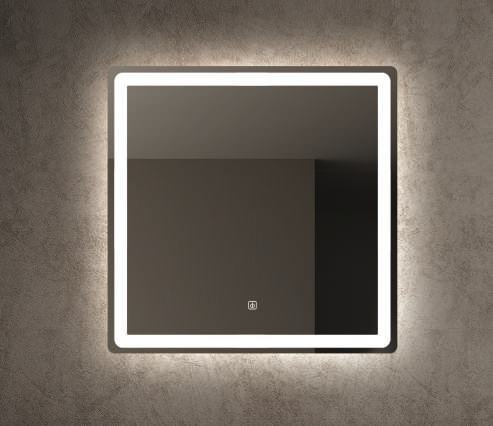
The setting decides the number. 2700K fits residential master baths and evening use, where warm light matches the room’s relaxed mood. 3000K is the neutral workhorse for most vanity programs: warm enough to flatter skin, cool enough for grooming. 3500K sits between the two and suits rental units that serve several users with different expectations. 4000K belongs in commercial and hotel grooming areas, where guests want the clearest view of skin and hair without guesswork.
If the program fixes one temperature, I would standardize on 3000K, because it covers the widest range of skin tones and bathroom finishes. If the program serves residential and commercial channels at the same time, adjustable color temperature removes the decision: one SKU, and the end user selects the band. Spec sheets on adjustable vanity mirrors typically quote a 2700K to 4000K band, so confirm the band on the LED module sheet, because that is where the real limits live.
Color temperature also changes how a mirror reads against the vanity finish. Warm frames and brass hardware pair with 2700K to 3000K. Chrome, marble, and white stone pair with 3500K to 4000K. When the mirror and the vanity ship from different suppliers, the mismatch shows in the first guest photo, so specify the temperature in the same document as the frame color.
Morning and evening users want different light from the same mirror. A morning shave needs the cooler end of the band to catch every detail; an evening routine prefers warm light that does not fight the room. Adjustable color temperature covers both, which is why hotel programs increasingly spec it instead of committing to one fixed number.
CRI and Color Temperature Quick Reference
The table below is the sheet we use in buyer conversations. It maps each color temperature point to its feel and its typical setting, with the 90+ CRI requirement applying at every temperature. Fill it in before you compare quotes, so every factory prices the same light.
LED Mirror CRI and Color Temperature Quick Reference
| Color Temperature | Look and Feel | Typical Setting | Spec Note |
|---|---|---|---|
| 2700K | Warm, amber evening glow | Residential master baths, spa-style bathrooms | Pairs with brass hardware and warm wood |
| 3000K | Soft white, neutral on skin | Standard vanity programs, most hotel rooms | The widest single-temperature default |
| 3500K | Cool-neutral, crisp | Rental units, mixed-use bathrooms | A compromise band for shared spaces |
| 4000K | Cool, daylight-leaning | Hotel grooming areas, commercial washrooms | Highest contrast for makeup and shaving |
The sourcing terms do not change with the temperature. The mirror line carries the same MOQ (Minimum Order Quantity) as the rest of the factory: 15 sets per model, per color, and per size, with mixed container loading once the total clears the minimum. Samples ship free in 10 working days, and bulk production runs 20 to 30 days. Mirrors move FOB (Free On Board) from Qingdao Port, with a 30% deposit at order and the balance paid within one week of the draft bill of lading (draft BL). Orders carry a 2-year warranty, and the return rate sits below 1%. For the US, Canada, and Mexico markets, the total window runs 4 to 6 weeks with live logistics tracking.
When mirrors share a container with basins and cabinets, packing order matters as much as the light spec. The vanity mirror and basin set shipment guide covers the packing sequence and the checks buyers run at the port.
Line Items to Copy Into Your RFQ
- CRI: Ra 90 or higher, documented on the LED module spec sheet, with the R9 score listed separately.
- Color temperature: adjustable 2700K to 4000K, or one fixed point if the program standardizes; state the tolerance in Kelvin.
- Brightness: adjustable, with the maximum output quoted on the spec sheet.
- Features: anti-fog heating, touch control, digital display, and auto shut-off; mark each as required or optional.
- Compliance: CE and UL documentation held by the factory; request copies with the quotation.
Features to Specify Alongside the Light
CRI and color temperature decide how the mirror lights a face. The features below decide whether the mirror works in a steam-filled bathroom, on a hotel schedule, and for users who do not read instructions. Each one is a line item on the spec sheet, so price them individually.
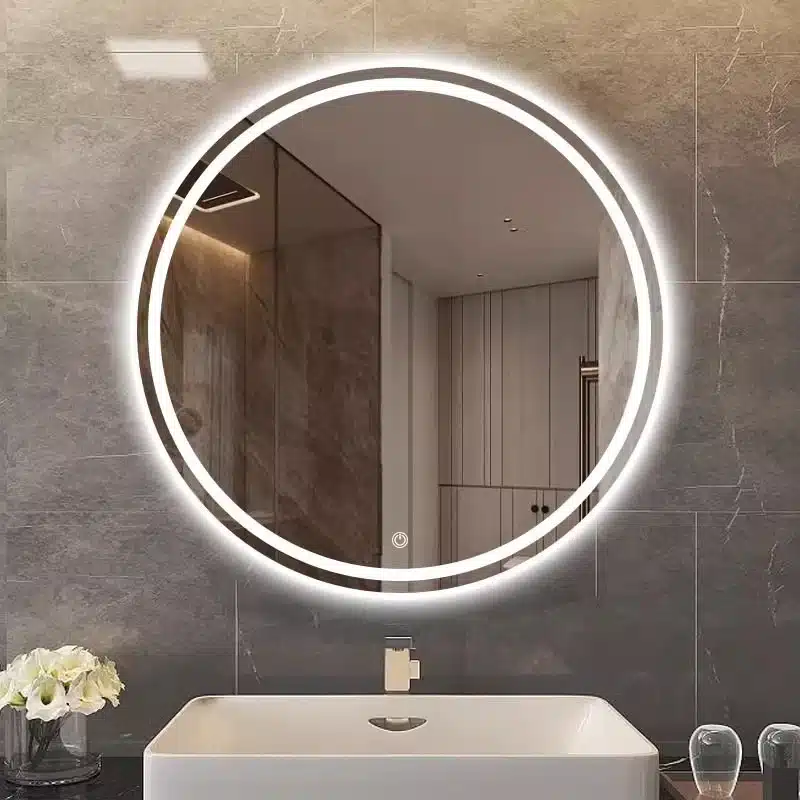
Anti-fog heating is the first feature to lock. A hot shower fogs a cold mirror in seconds, and a fogged mirror kills the CRI argument entirely, because accurate color on a blurred surface helps nobody. A heated mirror clears within seconds and stays dry while the bathroom steams. Hotel properties treat this as a requirement, not an option.
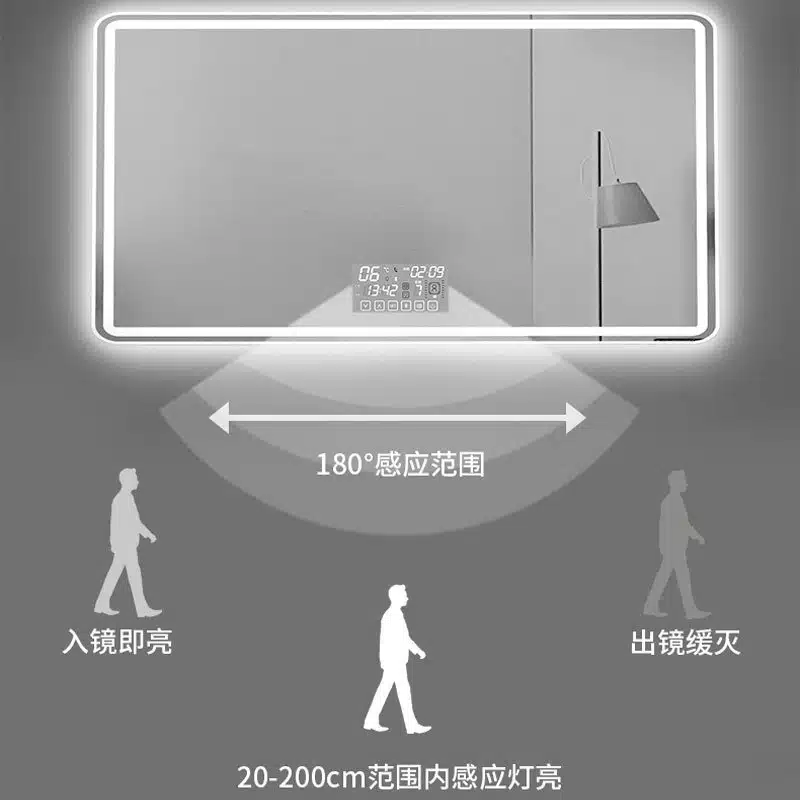
Touch control and digital display handle the daily interaction. Touch control moves the switch to the mirror edge, which simplifies installation and clears the vanity wall. Digital displays show time, date, and weather, a differentiator in hotel rooms and a small daily convenience in residential use. Energy-saving auto shut-off turns the display and light off after a set idle period, which matters when mirrors run in unoccupied rooms.
Bluetooth and voice control stay optional in our program because they change the quality burden. Bluetooth pairs a speaker into the mirror. Voice control adds a microphone and wake-word logic to a bathroom device. For a hotel program, I would add Bluetooth after the first container validates the basics and treat voice as a separate pilot, because every added input becomes a support surface.
Which Features Carry a Hotel Program
- Anti-fog heating: every guest bathroom, because shower steam arrives within minutes of check-in.
- Touch control: no wall switch to wire, which shortens install time per room.
- Auto shut-off: unoccupied rooms do not burn light or display hours.
- Digital display: time and weather read as a guest convenience, not a gimmick.
Sizes and Frames That Pair with the Light
The smart mirror line runs from 24×36 to 48×72 inches (61×91 to 122×183 cm), which covers single-vanity and double-vanity layouts. Classic mirrors come round, rectangular, or oval, with wood, metal, or PVC frames and an optional anti-fog coating. Glass thickness is a separate spec, so review the bathroom mirror glass thickness guide before you sign, and browse the smart LED mirror product page for the current line.
Frame and finish complete the spec. Custom frame colors match the Pantone code of the vanity line, which matters when the mirror and cabinet must look like one product. Custom sizes, frame colors, functions, and logo treatment start at 15 sets, the same threshold as the rest of the factory, so a test line does not require a container.
Anti-fog coating is the classic-mirror alternative to heating. The coating reduces condensation on standard mirrors, while heated models actively clear steam, and the two serve different price points. A heated mirror costs more to build, so price both options in the RFQ and let the end market decide.
Smart LED Mirrors for Wholesale and Hotel Programs
Browse this product, solution, or service page to explore relevant offerings.
Verify CRI and Color Temperature at the Factory
Verification starts at the quotation stage, not at the container. Ask for the LED (light emitting diode) module spec sheet and the driver spec sheet with the quote: the module sheet carries the CRI and CCT figures, and the driver sheet carries the input voltage, output, and protection data. A factory that cannot produce both sheets in the first email will not produce them later.
Then test the sample. Samples ship in 10 working days, free, and that window is your verification budget. Run the mirror in a real bathroom: compare skin tone under the mirror against daylight, check the warmth of the light against the vanity finish, and switch every feature, because a dead feature on a sample will be a dead feature in production.
The Five-Minute Sample Check
- Confirm the CRI and CCT figures are printed on the LED module and driver spec sheets, not quoted verbally.
- Place two samples of the same model side by side and compare the color temperature; mismatched units mean inconsistent modules.
- Run the mirror for 30 minutes and feel the driver housing; heat at idle is the first sign of an undersized driver.
- Toggle every feature in sequence, including the auto shut-off timer, and confirm the display and light reset correctly.
- Book third-party inspection, such as SGS or TÜV, in advance for large orders; the factory’s five QC checks cover every unit.
Compliance documents belong in the same file. CE and UL certifications are held by the factory and available on request, and the CE vs UKCA compliance guide explains what those documents cover and what buyers should ask for. Long-term brightness decay is a separate spec from CRI, so keep it in its own conversation: the LED mirror lifespan and L70 rating guide covers the numbers.
The driver deserves its own review. Check the input range and output ratings on the driver sheet, and confirm the driver carries overcurrent and short-circuit protection, because the driver is the component most likely to fail in a bathroom environment. A stable driver is what keeps the CRI and color temperature figures true for years, not for the first month.
Color temperature consistency across a production run matters as much as the headline CRI. LED modules shift as batches change, and a 3000K mirror from March can ship at 3500K in June. Ask how the factory matches modules within an order and whether the QC record notes the measured color temperature per unit. The QC record should include the lighting checks, not just the glass and the frame.
What This Means for Your Mirror Order
CRI and color temperature are the two numbers that decide whether a vanity mirror flatters or fails its user, and both fit into one line of the RFQ. Write 90+ CRI with a documented color temperature range and you have set a verifiable expectation. Skip them and you have bought a claim that cannot be checked.
- CRI: specify 90+ on every vanity mirror RFQ and verify it on the LED module spec sheet; skin, makeup, and shaving are color-critical tasks.
- Color temperature: 2700K for warm residential evenings, 4000K for commercial grooming; 3000K is the single-temperature default, and an adjustable 2700K to 4000K band covers both channels.
- Features: anti-fog heating, touch control, and auto shut-off carry the daily load; Bluetooth and voice control stay optional.
- Terms: MOQ 15 sets per model, color, and size; samples in 10 working days; bulk in 20 to 30 days; FOB Qingdao Port with 30% deposit and the balance after the draft BL; 2-year warranty.
Start with samples: free, in 10 working days, and enough to run the five-minute check above. Browse the smart LED mirror product page for the current line, and the full product range when the program grows beyond mirrors.
Main Focus Cabinet (MFBATH) has supplied 1,000+ dealers across 20+ countries since 2015, and the 2025 catalog, 100+ pages, is free on request. Put the CRI and color temperature lines in the RFQ first, then let the sample confirm them.
Frequently Asked Questions
What CRI should a vanity mirror specification require?
Write 90+ CRI (Ra) into the RFQ. At 80 CRI, skin tones dull and makeup reads wrong under the mirror light. Ask for the LED module spec sheet that documents the number, and check the red rendering score, because skin and cosmetics lean on it.
Is 2700K or 4000K the right color temperature for a bathroom mirror?
2700K warms a residential master bath; 4000K suits hotel grooming areas and commercial washrooms. 3000K works as a single fixed default, and adjustable color temperature across a 2700K to 4000K band lets one SKU serve both channels.
How do I check a CRI claim before a container ships?
Request the LED module and driver spec sheets with the quotation, then test samples in the 10 working day window. Compare two samples side by side for color temperature match, and book third-party inspection such as SGS or TÜV in advance for large orders.



0 Comments