

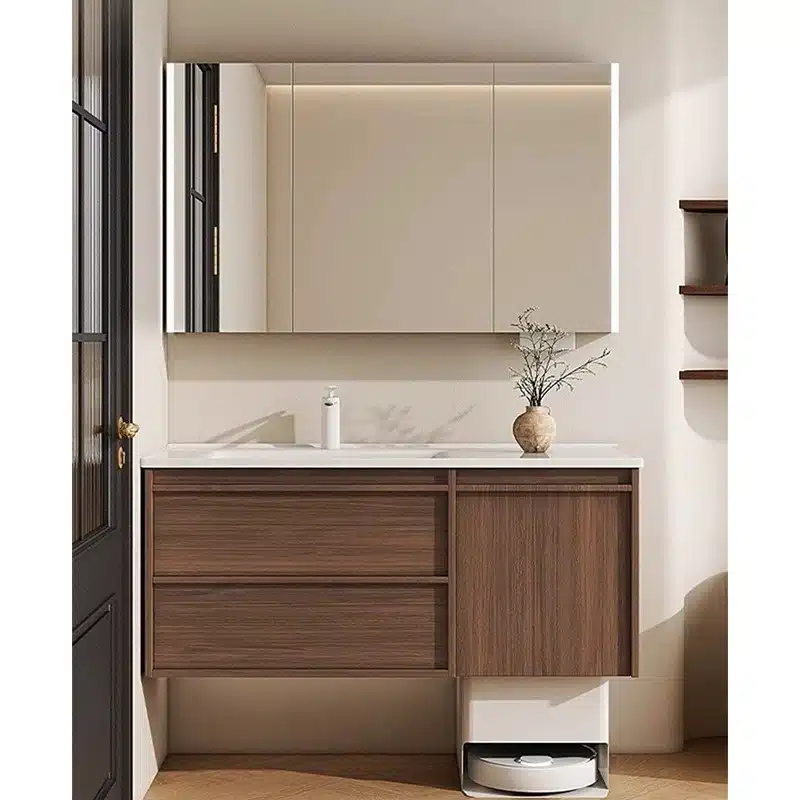
The engineering behind a Knock-Down (KD)rta bathroom vanity is the primary factor dictating whether a project’s logistics costs will protect or completely erode its profit margins. Shipping fully assembled vanities means paying to transport air, a costly inefficiency that dramatically inflates per-unit freight expenses and limits how many units can fit in a container or trailer. For distributors and large-scale builders, this logistical bottleneck directly impacts inventory turn, project scheduling, and the ability to compete on price in a crowded market.
This analysis provides a technical breakdown of the KD structural design, moving beyond simple comparisons to flat-pack furniture. We will examine the specific mechanics that can triple loading capacity, evaluate the structural integrity of metal-to-metal dovetail connections, and provide a clear framework for weighing freight savings against the on-site labor costs of assembly. The objective is to give procurement managers and project engineers the data needed to calculate the true cost of acquisition for cabinetry supply chains.
The Freight Advantage: How Does KD Construction Triple Loading Capacity?
Shipping components flat-packed instead of fully assembled is the single most effective way to reduce cubic volume, allowing up to three times more product to fit into a single container and directly cutting per-unit freight costs.
Maximizing Container Space with Flat-Pack Design
Knock-down (KD) construction fundamentally changes shipping logistics by packing all components flat instead of sending a fully built, air-filled cabinet. This simple shift drastically cuts down the cubic volume of each unit, with some industry analyses showing volume reductions of up to 40% compared to assembled counterparts. By stacking doors, side panels, and hardware densely, we eliminate wasted space inside the cabinet and around it. This optimization means a standard shipping container can hold a significantly higher quantity of product, transforming freight from a major cost center into a competitive advantage.
| Parameter | Assembled Vanity Shipping | Knock-Down (KD) Flat-Pack Shipping |
|---|---|---|
| Shipping Volume | High (Ships as a large, mostly empty box) | Low (Reduced by up to 40%; components are stacked flat) |
| Container Capacity (40HQ) | ~50-80 sets | ~150-200+ sets |
| Per-Unit Freight Cost | High (Inefficient use of paid container space) | Low (Maximized container density drives down cost) |
Lowering Per-Unit Freight and Storage Costs
The increased loading efficiency directly lowers the transportation cost for each item, making the final product more cost-competitive in any market. This benefit extends beyond the sea voyage. Once the goods arrive, distributors and retailers see secondary savings from reduced warehouse storage requirements. Flat-packed boxes are far easier to stack, inventory, and manage than bulky, assembled units. This compact, efficient packaging makes KD vanities the default choice for e-commerce retailers and contractors who depend on lean, fast-moving supply chains to remain profitable.
KD Construction: Why Is It More Than Just “IKEA Style”?
Professional-grade KD construction moves beyond consumer flat-pack by pairing climate-specific materials with high-precision CNC manufacturing, resulting in a durable, custom-feel product.
The term “knock-down” often gets unfairly grouped with mass-market, particleboard furniture. But for B2B applications, the reality is a sophisticated system engineered for durability and performance. Unlike standard flat-pack solutions, professional KD construction focuses on material resilience and manufacturing precision to deliver a product that rivals pre-assembled cabinetry in strength and finish.
Premium Materials Engineered for Specific Climates
The foundation of a durable cabinet is its core material. Our knock-down solutions use materials specifically selected for environmental resilience, ensuring longevity in demanding conditions from the humid coasts of Australia to the arid regions of the Middle East. This strategic material selection provides a clear durability advantage over generic RTA furniture.
- Material Flexibility: We build to your market’s needs with four distinct material paths: 100% waterproof PVC (with custom density), moisture-resistant plywood (from Poplar to full Eucalyptus core), premium solid woods, and non-porous sintered stone.
- Climate-Specific Adaptation: Products are engineered for regional climates. For example, we use high-density, humidity-resistant PVC for projects in Oceania and Southeast Asia, while our HMR MDF is optimized for the smooth lacquer finishes popular in Europe.
- Proven Durability: Using high-grade, climate-appropriate materials like water-resistant plywood or solid wood frames ensures the final product withstands real-world use far longer than typical consumer-grade options.
Manufacturing Precision and Robust Assembly
The quality of a KD cabinet is directly tied to its manufacturing tolerances. We use advanced production techniques to ensure every component fits together perfectly. The outcome is a sturdy, professional-grade installation that feels custom-built, not temporarily assembled.
- CNC Machining: High-precision CNC machines produce exact cuts and drill holes, guaranteeing seamless panel alignment and structural stability during assembly.
- Rigorous Quality Control: A multi-stage quality control process verifies the integrity, dimensions, and finish of each component before it gets packaged, minimizing on-site assembly issues.
- Upgraded Hardware Options: Distributors can elevate the final product by specifying hardware from top brands like DTC or Blum, moving the finished cabinet far beyond a generic flat-pack offering.
Create Standout Bathroom Cabinets For Your Market

Metal-to-Metal Connections: Why Are Dovetail Clips Superior?
Dovetail clips provide a superior mechanical lock that outperforms common cam locks by distributing stress and resisting vibrational loosening, ensuring long-term structural integrity in KD furniture.
Inherent Mechanical Strength and Rigidity
Dovetail clips establish a mechanically interlocking joint that spreads stress over a wide surface area. Unlike a simple screw that relies on tension, a dovetail physically locks components together. This design inherently resists both pulling forces and rotational torque, creating a far more stable cabinet structure from the start.
- The angled shape forms a physical trap, preventing panels from separating under load.
- The metal-to-metal contact maintains its integrity even after repeated assembly and disassembly, a common failure point for screws that can strip wood or MDF.
- This system delivers a precise, repeatable fit, guaranteeing cabinet squareness and panel alignment every time.
| Feature | Dovetail Clip System | Standard Cam Lock System |
|---|---|---|
| Connection Type | Mechanical Interlock | Frictional / Tension Lock |
| Vibration Resistance | High (Maintains tightness) | Low (Can loosen over time) |
| Reusability | Excellent (No material degradation) | Fair (Risk of material stripping) |
| Structural Integrity | Distributes load across the joint | Concentrates stress at the fastener point |
Performance vs. Common Fasteners Like Cam Locks
When compared to standard RTA fasteners like cam locks, dovetail clips offer a clear durability advantage. Cam lock systems rely on tension and can loosen over time due to cabinet vibrations and the natural compression of wood-based materials. Dovetail clips, however, maintain a tight, secure fit that does not degrade with years of opening and closing doors and drawers.
- Dovetail connections are highly resistant to loosening from vibrations—a critical factor in high-use bathroom environments.
- The assembly process is faster and less prone to error, as it eliminates the risk of over-tightening or misaligning cam locks.
- The final connection is often cleaner and fully concealed, avoiding the need for visible screw heads or plastic cover caps.
Assembly Experience: Is the “15-Minute” Rule Realistic?
The “15-minute” assembly is a marketing benchmark for constructing the cabinet box itself; a complete, professional installation is a multi-hour job requiring plumbing and mounting.
The “15-Minute” Claim: What It Actually Covers
The 15-minute assembly claim is largely aspirational and applies only to the structural assembly of the knock-down cabinet. This timeframe intentionally isolates the core construction from the real-world complexities of a full installation. It sets a misleading expectation by focusing on a single, controlled step in a much larger process.
- The timeframe typically refers to the basic visual assembly of the cabinet box after all parts are unpacked and organized.
- It explicitly excludes critical pre-assembly tasks like unboxing, inventorying parts, reading instructions, or site preparation.
- Post-assembly work such as wall mounting, plumbing hookups, and caulking are never factored into this figure.
Realistic Timelines: From Box to Fully Installed
A complete vanity installation is a skilled task measured in hours, not minutes. Industry data confirms that a professional installer requires significant time to ensure the unit is secure, level, and compliant with building codes. This process involves far more than just connecting panels.
- A standard single vanity installation requires 3 to 5 hours from start to finish.
- Larger double vanities take between 5 and 8 hours due to added complexity in leveling and plumbing.
- A full installation includes connecting hot and cold water supply lines, installing the drain, securing the vanity to wall studs for stability, and applying caulk to seal gaps.
Packaging KD Units: How Do We Ensure Safe and Dense Transport?
Effective KD packaging combines multi-layered internal bracing to prevent transit damage with modular, high-density packing to maximize container space and reduce freight costs.
Internal Bracing and Cushioning Strategy
We use a multi-layered approach to prevent components from shifting during transit. Every package is engineered with high-density foam, corrugated reinforcement, and isolated hardware compartments to protect against impacts and abrasions. For e-commerce sellers requiring maximum protection, we offer an upgraded solution with 6-sided molded foam and hard cardboard reinforcement, specifically designed to pass the ISTA 3A drop test required by major platforms like Amazon and Wayfair.
- Layered cushioning and corrugated pads absorb shock and prevent scratches between finished surfaces.
- Sealed compartments keep all hardware secure and organized, stopping loss or damage to other parts.
- High-density foam reinforcement prevents components from ‘bottoming out’ under the pressure of stacked pallets.
Volume Optimization for Shipping Efficiency
Our packaging is engineered around the vanity’s modular design to minimize wasted space and shipping volume. By maximizing the density of each pallet and container, we directly reduce freight costs for our distribution partners. This systematic approach to packing lowers the per-unit cost for both LTL and full container shipments.
- Modular designs allow for flat, compact packing, which increases the number of units that fit into a single container.
- Moisture-control measures are integrated into the packaging to protect goods during long sea voyages and ensure international compliance.
- Optimized packing significantly reduces empty space, lowering the billable dimensional weight and overall LTL or container shipping costs.

Glue & Dowel Option: How Does It Facilitate Local Assembly?
Glue and dowel construction provides a strategic advantage for decentralized manufacturing, enabling partners to use local materials and reduce assembly complexity without relying on specialized adhesive supply chains.
Local Material Sourcing and Supply Chain Independence
This assembly method is ideal for creating resilient, localized production networks. It allows regional manufacturers to source standard components like panels and dowels directly from local sawmills or suppliers. This approach removes the dependency on specialized, often proprietary, adhesive products that may have limited availability or long lead times in certain markets. By empowering partners to use nearby material sources, you can significantly reduce inbound freight costs and shorten production timelines, creating a more agile supply chain that is less vulnerable to global disruptions.
Simplified and Accelerated Assembly
Dowel-based connections are fundamentally mechanical, which simplifies the assembly process compared to methods requiring precise adhesive application or complex joinery. The straightforward nature of drilling and inserting dowels lowers the barrier for labor, reducing the need for highly specialized technicians and extensive training. This streamlined workflow directly accelerates manufacturing timelines, allowing distributed production hubs to assemble finished goods and fulfill local orders much faster. For partners operating closer to end-consumer markets, this speed is a critical competitive advantage.
Structural and Standardization Trade-offs
While glue and dowel systems enhance local flexibility, they come with specific engineering considerations. To achieve the same structural integrity as adhesive-bonded alternatives, these designs often require thicker or denser panel materials to compensate for the mechanical joints. Additionally, the frameworks for dowel construction can be less standardized than those used in massive, centralized production lines. This creates a clear trade-off: you gain local adaptability and supply chain independence but may sacrifice some of the cost efficiencies that come with large-scale, highly uniform manufacturing.
Cost Savings Analysis: How Do Freight Savings Compare to Labor Costs?
B2B buyers often view freight savings and local assembly labor as a direct trade-off, but they are fundamentally separate operational costs that should be optimized independently for a robust supply chain.
When evaluating the total cost of knock-down (KD) cabinetry, it’s critical to separate the logistics numbers from the assembly numbers. Freight savings come from maximizing container space and reducing dimensional weight, which directly lowers your cost per unit landed. Labor cost, on the other hand, is an on-site operational expense. One is a function of global logistics; the other is a function of local workforce efficiency. Treating them as a simple one-for-one exchange overlooks the larger financial picture.
Optimizing Freight Costs: A Focus on Transportation
Freight cost optimization centers on cutting transportation expenses by shipping smarter. For KD bathroom vanities, this is achieved by flat-packing, which can reduce shipping volume by 40% or more compared to pre-assembled units. This density allows for tripling the number of units in a single container, drastically lowering the per-piece shipping cost. A detailed analysis of your freight spending, including route planning and shipment consolidation, can typically uncover savings between 5-7% by eliminating logistics inefficiencies.
| Cost Metric | KD (Knock-Down) Shipment | Assembled Unit Shipment |
|---|---|---|
| Freight Cost Per Unit | 30-50% Lower (Reduced Dimensional Weight) | Standard Rate (High Volume) |
| Container Load Capacity | Up to 3x Higher | Standard (Lower Density) |
| On-Site Labor Requirement | Assembly Required | Ready for Installation |
| Transit Damage Risk | Lower (E-commerce Ready; ISTA 3A Certified) | Higher (Bulky, Prone to Handling Damage) |
Addressing Labor Costs: A Focus on Workforce Efficiency
Labor cost reduction operates in a completely different domain: workforce efficiency. This isn’t about shipping; it’s about how quickly and accurately your team can assemble the product on-site. While the freight savings from KD are clear and quantifiable, the assembly labor cost is variable. It depends on the skill of the installer, the complexity of the cabinet design, and the tools available. The two costs are not in competition. A smart business model maximizes freight savings to get the product landed cheaply, then develops an efficient assembly process to manage the final-stage labor costs effectively.
Conclusion
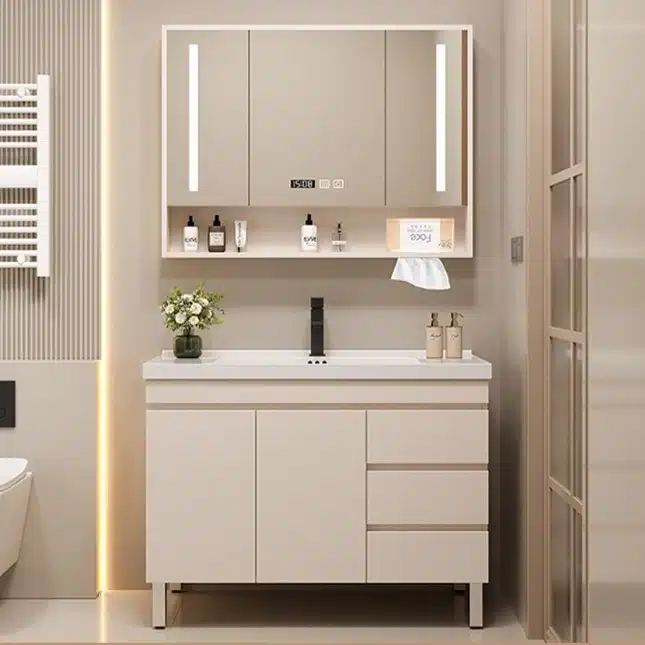
Knock-down construction is a strategic logistics solution, not a compromise on quality. Engineering choices like metal-to-metal dovetail clips ensure structural integrity while tripling container loading capacity. Ultimately, this approach provides substantial freight savings that directly impact your bottom line.
To see how these savings apply to your product line, our team can prepare a detailed freight vs. labor cost analysis. Reach out to request a refundable sample and test our build quality firsthand.
Frequently Asked Questions
Difference between KD and RTA?
KD (Knock-Down) and RTA (Ready-to-Assemble) are often used interchangeably, but there’s a key distinction. KD is the broader industrial term for any product shipped disassembled to save on freight and storage, common in B2B supply chains. RTA is a specific category of KD product designed for the end consumer, featuring user-friendly instructions and simple assembly that typically requires minimal tools. In short, all RTA furniture is KD, but not all KD furniture is designed to be RTA.
Are KD cabinets strong?
Yes, high-quality KD cabinets are engineered for strength and durability, often rivaling pre-assembled units. Their structural integrity comes from precision CNC manufacturing and robust joinery systems, such as steel cam locks and wooden dowels, which create tight and secure connections. The overall strength depends on the core materials (e.g., plywood vs. particleboard) and the quality of the hardware, but modern KD cabinets are built to withstand the demands of daily use.
How much do I save with KD shipping?
Shipping products in a knock-down or flat-pack format generates significant savings by maximizing container space. This efficiency allows manufacturers to reduce shipping volume by up to 40% compared to shipping fully assembled units. The direct result is a lower freight cost per item, which also translates into reduced warehousing and storage expenses.
Best connectors for RTA furniture?
The industry standard for reliable RTA furniture is a combination of cam lock fasteners and wooden dowels. Dowels provide precise alignment and resistance to shear forces, while cam locks (or cam bolts) create a strong mechanical lock that pulls the components together tightly. This system is highly effective, easy for consumers to use, and allows for disassembly if needed. For higher-end applications, more integrated systems like dovetail joints or specialized locking fasteners may be used.
Can I glue RTA cabinets?
Yes, applying wood glue is a highly recommended best practice for a permanent installation. Adding a small amount of PVA (polyvinyl acetate) wood glue into the dowel holes and along panel edges before assembly creates a bond that is stronger than the wood itself. This dramatically increases the cabinet’s long-term rigidity and prevents joints from loosening over time. However, be aware that this makes disassembly impossible, and it’s wise to check if using adhesives affects the manufacturer’s warranty.
Knock down vanity assembly instructions?
While specific steps vary by model, the general assembly process for a knock-down vanity follows a logical sequence. First, lay out and identify all parts on a protected surface. Begin by inserting cam lock screws and wooden dowels into the main panels. Next, construct the main cabinet box by connecting the side panels to the bottom panel and any support rails. After that, slide or secure the back panel to square up the frame. Finally, assemble and install any drawers, attach the doors to the hinges, and mount the hardware like handles and legs.





0 Comments