
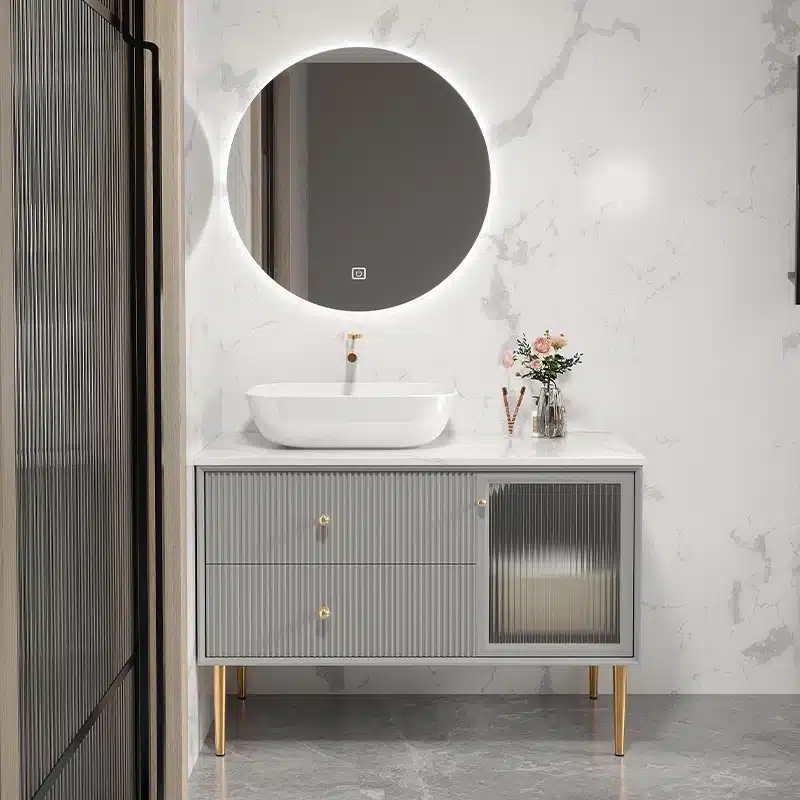
A fast assembly vanity is the primary defense against the unpredictable labor costs that can derail a multi-unit construction project. For contractors and developers, standard RTA cabinets introduce a significant variable; each hour a crew spends deciphering vague instructions and sorting through loose hardware directly inflates the project’s bottom line. This cumulative downtime, often dismissed as typical installation friction, represents a major operational risk that erodes profit margins across an entire property.
This technical brief deconstructs the engineering behind a repeatable, 15-minute installation. We will analyze the core mechanisms enabling this speed, from pre-mounted drawer slides and fold-out box construction to the impact of minimized hardware. The analysis also covers how QR code-based instructions and sequential parts packaging work together to eliminate guesswork and create a standardized procedure for your installation teams.
What Is “IKEA Fatigue”?
“IKEA fatigue” describes the consumer exhaustion that stems directly from a retail model combining a physically draining, multi-hour store experience with a mentally demanding self-assembly process.
The Overwhelming Store Experience
The fatigue begins long before assembly. IKEA’s retail layout is engineered to guide shoppers through the entire product catalog, extending a typical visit to 2.5 or 3 hours. This is significantly longer than the 45-60 minutes spent at a traditional furniture retailer. The store design prioritizes maximum product exposure over a quick, efficient shopping trip, leaving many customers feeling drained before they even get home.
The Challenge of Flat-Pack Assembly
The second component of this fatigue is the do-it-yourself assembly. While cost-effective, building flat-pack furniture is a laborious project that demands significant cognitive and physical effort. The consumer must interpret visual instructions, sort and manage dozens of small hardware parts, and perform the manual labor. For complex items, this turns a simple purchase into a multi-hour project, compounding the exhaustion from the store visit.
A Conflict with the “IKEA Effect”
This phenomenon exists in direct tension with the “IKEA effect,” a psychological principle where people assign a higher value to products they helped create. The very effort that causes fatigue is also what builds this sense of ownership and value. This creates a complicated consumer experience where the physical and mental drain of assembly is at odds with the increased personal attachment to the finished product.
Why Pre-Mount Drawer Slides?
Factory-mounted drawer slides shift the most error-prone step of cabinet assembly from the job site to a controlled manufacturing environment, directly reducing labor costs and post-install callbacks.
Reduces On-Site Assembly Time
By installing drawer slides at the factory, we complete the most precise and time-consuming steps before the product ever arrives on-site. This front-loading of technical work means installers can focus on cabinet placement and final assembly rather than complex hardware alignment. It directly translates to lower labor costs and compressed project timelines, especially in multi-unit residential or commercial developments where efficiency gains are multiplied across dozens or hundreds of vanities.
| Assembly Attribute | Traditional On-Site Installation | Factory Pre-Mounted Method |
|---|---|---|
| Alignment & Precision | Manual measurement; high risk of user error. | Automated jig placement; guaranteed parallel alignment. |
| Labor Time per Drawer | 10-20 mins (measure, mark, drill, mount). | <1 minute (slide drawer box into place). |
| Callback & Repair Risk | High; sticking, skewed drawers, hardware failure. | Minimal; function is validated before shipping. |
Ensures Perfect Alignment and Function
We use industrial jigs and automated machinery to pre-mount every slide, ensuring they are perfectly parallel and positioned to the millimeter. This manufacturing precision eliminates the common installation errors that lead to sticking, skewed, or malfunctioning drawers. The result is a flawless user experience from day one, which is critical for features like soft-close and push-to-open mechanisms that depend on exact tolerances.
- Guarantees smooth, silent operation for all drawer functions.
- Drastically reduces expensive callbacks and repairs caused by improperly installed hardware.
Lowers Skill Requirement for Installers
With the drawer hardware pre-mounted, the most technical part of the job is already done. Final assembly no longer requires specialized carpentry skills to ensure proper drawer function. This simplification makes the installation process more accessible and foolproof, ensuring a consistent, high-quality result regardless of the installer’s individual experience level. Your teams can work faster and with greater confidence.
- Makes the final assembly steps straightforward and less prone to human error.
- Broadens the pool of contractors or DIY users who can successfully and efficiently install the cabinetry.
Unlock Your Market with Custom Vanities

What Is the “Fold-Out” Box?
The fold-out box is an engineered RTA cabinet design that ships flat like traditional models but assembles in minutes by simply unfolding pre-hinged walls and locking them into a rigid structure.
A Pre-Assembled, Collapsible Cabinet Structure
The “fold-out” box is a modern approach to ready-to-assemble (RTA) vanities. Its main cabinet body is already constructed with hinged, collapsible side panels. Unlike traditional RTA furniture that arrives as a collection of separate panels, this design ships flat but requires almost no structural assembly. The most complex part of cabinet building—aligning and joining the main walls—is already done at the factory.
- The core frame is pre-built, eliminating the complex task of aligning and joining main cabinet walls.
- Users simply unfold the side panels and lock them into place, creating a rigid structure in minutes.
- This method blends the shipping efficiency of flat-packs with the structural integrity of a pre-assembled unit.
Reduced Installation Time and Labor
The primary benefit of a fold-out design is its speed and simplicity. It significantly cuts down on the time and skill needed for assembly, making it a practical solution for large-scale projects and DIY installations alike. For contractors, reducing on-site labor from an hour per unit to just a few minutes translates directly into higher project margins. The intuitive unfolding process also removes the common errors and frustrations tied to traditional RTA instructions.
| Metric | Traditional RTA Cabinet | Fold-Out Box Design |
|---|---|---|
| Assembly Time | 30-60+ minutes per cabinet | Under 15 minutes per cabinet |
| Key Assembly Task | Aligning and joining separate wall panels with cam-locks or screws | Unfolding pre-hinged walls and locking them into place |
| Labor Cost Impact | Higher due to extended on-site assembly time and skill requirement | Lower due to minimal time and skill needed for structural assembly |
Improved Portability and Storage Efficiency
By collapsing into a compact form, fold-out vanities are easier to transport, handle, and store than their fully assembled counterparts. This logistical advantage is especially useful for projects with tight site access or for consumers in multi-story apartments. The flattened profile maximizes shipping density, which directly reduces freight costs—a critical factor for importers and distributors aiming for a competitive price point.
- The flattened profile allows for more units to be shipped in a single container, lowering freight costs.
- Its compact size makes it easier to carry through narrow hallways and doorways.
- Distributors can store more inventory in less warehouse space compared to fully assembled cabinets.
Why Is Less Hardware Better?
Shifting from heavy capital equipment to flexible systems cuts operational costs and allows a business to scale production without massive upfront investment.
Reduced Capital Investment and Operational Costs
In 2026, manufacturers prioritize minimizing large, upfront investments in fixed equipment. By relying less on dedicated in-house hardware, a business lowers capital lock-up and reduces the ongoing costs tied to maintenance, factory space, and idle machinery.
- Modular automation platforms allow production to scale incrementally, avoiding a single, large capital outlay.
- Outsourcing assembly services bypasses the need for costly in-house equipment and facility expansions.
Greater Production Agility and Scalability
A lean hardware approach gives companies the flexibility to adapt quickly to market demands. Production can be scaled more efficiently by using modular systems and augmenting human labor with robotics rather than being constrained by fixed infrastructure.
- Collaborative robots supplement the existing workforce without requiring extensive or permanent facility modifications.
- This model shortens the time-to-market by reducing dependencies on rigid, single-purpose production lines.
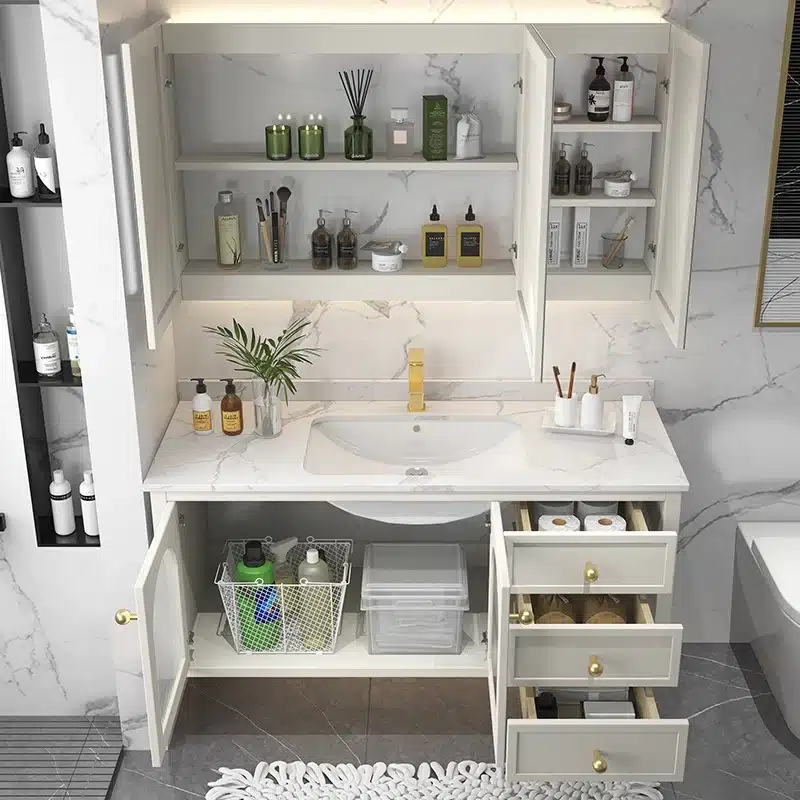
QR Codes vs. Paper: Which Is Better?
The choice between QR codes and paper for assembly instructions mirrors the split in customer-facing industries, balancing the operational efficiency of digital access against the universal reliability of a physical guide.
The Case for QR Codes: Efficiency and Cost
For manufacturers, QR codes are a clear path to reducing operational costs and increasing flexibility. Linking to a digital manual eliminates the recurring expense of printing, collating, and packaging heavy instruction booklets. It also allows for real-time updates; if a step in the assembly process is improved or a part is changed, the digital instructions can be updated instantly without rendering thousands of printed copies obsolete. This is especially valuable in fast-moving production environments where product iterations are common.
- Reduces ongoing costs associated with printing and global shipping.
- Allows for dynamic instruction changes and links to video tutorials.
- Streamlines the packaging process by removing a bulky paper component.
The Value of Paper Menus: Experience and Accessibility
A printed manual provides a tangible, fail-safe guide that works for everyone, everywhere. It doesn’t rely on the customer having a charged smartphone, a stable internet connection in a new construction site, or the patience to navigate a web interface. For complex assemblies, a large-format paper diagram can be easier to reference than a small phone screen. This high-touch, reliable approach removes potential technical frustrations and ensures that any end-user can complete the assembly without technological barriers.
- Enhances the user experience by providing a universally accessible guide.
- Ensures assembly is possible regardless of smartphone ownership or connectivity.
- Removes potential technical frustrations for installers or DIY customers.
The Hybrid Approach: A Practical Middle Ground
The most practical solution for B2B suppliers is a hybrid model. This involves providing a concise, single-page printed guide that covers the critical first steps and safety warnings. This guide features a large, clearly visible QR code that links to the full, detailed digital manual, complete with 3D models and step-by-step videos. This approach captures the best of both worlds: it offers the cost and flexibility benefits of digital while providing the reliability and accessibility of paper as a fallback.
- Accommodates the preferences and technical abilities of all end-users.
- Provides a reliable backup in case of technical issues with digital access.
- Positions a brand as both modern and considerate of the customer experience.
Why Pack Parts in Order?
Packing components in their assembly sequence is a core lean manufacturing tactic that directly cuts labor costs, minimizes errors, and compresses project timelines.
Faster Assembly Cycles
Organizing parts sequentially for assembly directly reduces the time workers spend searching for components. This method turns complex assembly operations into a streamlined process, allowing teams to complete installations faster and more efficiently. It’s a just-in-time workflow delivered right to the assembly station.
- Eliminates time wasted hunting for and sequencing individual parts.
- Aligns with lean manufacturing principles to create an efficient workflow.
- Our ordered packaging is designed to get installers from unboxing to completion with minimal delay.
Fewer Assembly Errors
When components are packed in the order they are needed, the packaging itself becomes a guide. This logical flow minimizes the chance of using the wrong part or installing components out of sequence, which improves the final build quality and reduces the need for costly rework.
- Reduces the cognitive load on the assembler, allowing them to focus on the task rather than logistics.
- Significantly lowers the risk of incorrect installations that could lead to product failure.
- Provides a clear, step-by-step physical path that complements instruction manuals.
Streamlined Logistics and Inventory
Combining kitting with ordered assembly packaging simplifies the entire supply chain. It reduces the need for large, disorganized storage areas and allows for a more compact and manageable inventory system, from the central warehouse all the way to the final workstation.
- Minimizes the amount of warehouse space required for storing individual components.
- Allows us to optimize our supply chain and focus resources on manufacturing, not just parts management.
- Lowers overall labor costs associated with parts handling and internal logistics.
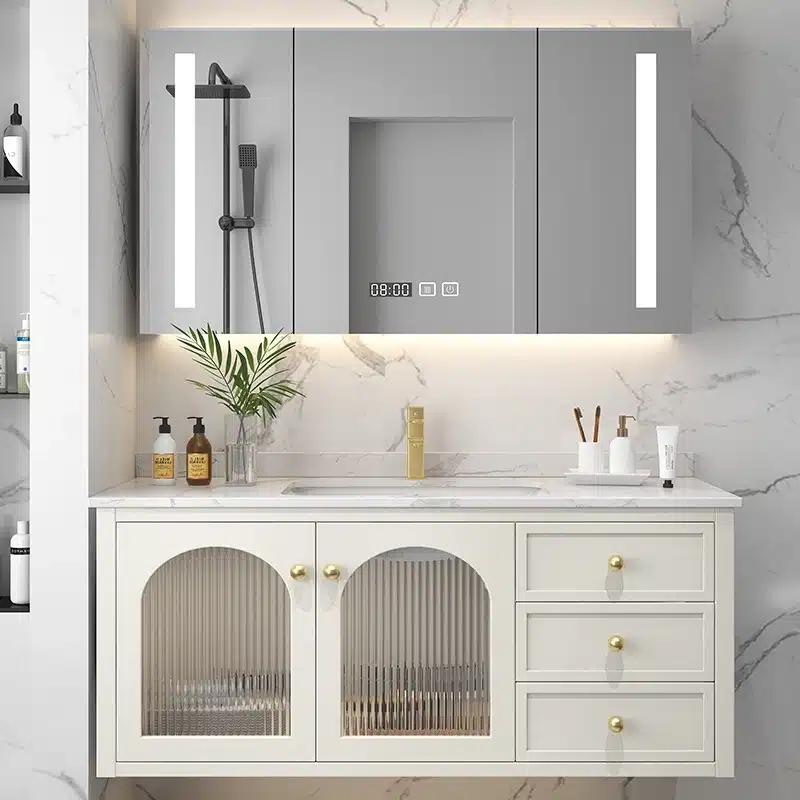
Can You Assemble in 15 Minutes?
A 15-minute assembly is achievable for simple, tool-free designs but remains an optimistic benchmark for standard RTA vanities, which typically require 30-45 minutes for an experienced hand.
Data Mismatch on Assembly Topics
When evaluating assembly claims, it’s critical to distinguish between digital product setup and physical product construction. Much of the available market research focuses on AI-powered business tools or software platforms promising a “15-minute setup,” which has no bearing on the mechanical realities of the furniture and vanity sector. This data gap often leads to unrealistic expectations, as there is little public information detailing actual assembly time standards for physical goods in our industry.
Information Needed for Industry Analysis
An accurate assessment of rapid assembly promises requires hard data from the factory floor and supply chain, not just marketing headlines. We need benchmarks on manufacturing assembly times, analysis of modular and flat-pack design efficiencies, and metrics on supply chain logistics. These factors—not just the final product design—determine whether a fast assembly is a repeatable reality or a controlled, best-case scenario. Without this data, any claim remains purely promotional.
| Assembly Benchmark | On-Site Reality (Time & Effort) | Key Influencing Factors |
|---|---|---|
| Tool-Free / Foldable Models | 10-15 minutes. This claim is generally credible for products specifically engineered with snap-fit or hinged mechanisms. | Product design (no tools required), minimal parts, clear visual instructions, and user familiarity with similar systems. |
| Standard RTA Vanity Cabinet | 30-45 minutes per cabinet for someone with experience. The first unit almost always takes longer. | Cam-lock hardware, pre-drilled holes, quality of instructions, number of drawers and doors, and part organization. |
| Professional Multi-Unit Installation | 1 to 2 days for complex projects like double-sink vanities, which includes plumbing and site adjustments. | Job site conditions, plumbing modifications, custom fitting to walls, and the installer’s skill level and tools. |
Conclusion
Engineering a cabinet for fast assembly means focusing on the details that cause delays and frustration. Pre-mounting drawer slides, simplifying hardware, and designing an intuitive fold-out structure directly reduces on-site labor time. This approach helps crews finish jobs faster and gives the end user a better experience.
The best way to evaluate the 15-minute assembly is to test it yourself. Contact us to arrange a refundable sample and see how our design can streamline your projects.
Frequently Asked Questions
Easiest RTA vanity to assemble?
The easiest Ready-To-Assemble (RTA) vanities are those featuring modern, tool-free assembly systems. Look for models that use click-lock or interlocking bracket technology, which allows cabinet panels to be securely joined without screws or cam locks. Additionally, vanities with pre-assembled and pre-installed drawer boxes and slides significantly reduce complexity and assembly time, as this is often the most difficult step.
How long to put together bathroom vanity?
For a novice or average DIYer, assembling the vanity cabinet itself typically takes between 2 to 4 hours. An experienced individual can often complete it in 1 to 2 hours. This does not include installation time for securing the vanity to the wall, installing the countertop, and connecting plumbing, which can add another 1 to 3 hours depending on the complexity and your skill level.
Fast assembly cabinet technology?
The leading fast-assembly technology revolves around tool-free connector systems. These include click-lock mechanisms (like those from Lockdowel or Unilin) and integrated locking dowels that secure panels with a simple click. Another key innovation is the foldable cabinet carcass, where the main box is shipped as a single flat piece that unfolds and locks into place, drastically reducing the number of individual components to manage.
Pre-assembled drawer slides RTA?
Yes, pre-installed drawer slides are a standard and highly sought-after feature in high-quality RTA vanities and cabinets. Manufacturers pre-mount the slides onto the cabinet side panels and the corresponding drawer box components. This practice eliminates the most error-prone step of the assembly process, ensuring perfect drawer alignment and smooth operation while saving the customer significant time and frustration.
Tool free assembly furniture?
Tool-free assembly furniture is a major and growing category in the industry. It leverages innovative hardware and construction methods such as click-lock joinery, tension-based connectors, and pre-installed locking mechanisms. These systems allow components to be securely connected by hand or with a simple tap from a soft mallet. This technology is widely used in bookcases, storage units, bed frames, and increasingly in more complex case goods like cabinets and vanities.
RTA vanity assembly video?
Most reputable manufacturers provide detailed assembly videos for their RTA vanities to supplement the printed instructions. These videos can typically be found on the product page where you purchased the item, on the manufacturer’s official website, or on their YouTube channel. Often, a QR code is printed directly in the assembly manual, which you can scan with your phone to access the video instantly.




0 Comments