
Mirror assortments turn over faster than vanity cabinets in most wholesale programs. A shape that sells for two seasons can stall in the third. Distributors planning 2027 orders are weighing round and arched silhouettes, wood and metal frames, and smart mirrors with features end users actually switch on. Shape and frame choices now move alongside cabinet trends instead of trailing them.
This guide maps 2027 bathroom mirror trends from the factory order desk outward. It covers the shapes buyers increasingly ask for, the frame materials that hold their place in a line, and the smart functions worth stocking. It closes with the numbers that run a mirror program: the 15-set minimum order quantity (MOQ), 10-working-day samples, and 20–30 days of production. You finish with a stocking plan, not a wish list.
Key Takeaways
- Round mirrors lead the current shape mix in residential programs, with arched tops close behind in remodel requests. Extra-long rectangles carry double-vanity and hotel orders.
- Stock the 24×36 to 48×72-inch range. That span covers classic round, rectangular, and oval mirrors plus most smart models.
- Frame demand splits four ways: wood, metal, PVC (polyvinyl chloride), and frameless. Backlit panels form a fifth option that doubles as task lighting.
- Smart features buyers actually use include adjustable light-emitting diode (LED) brightness and color temperature, anti-fog heating, touch control, digital display, and energy-saving auto power-off. Voice control and Bluetooth are optional extras.
- The minimum order quantity (MOQ) is 15 sets per model, color, and size. Mixed containers combine mirror models and sizes in one shipment.
- Custom mirrors start at 15 sets, including frame colors matched to the Pantone color matching system, custom sizes, functions, and logos. Samples ship in 10 working days.
- Production runs 20–30 days, with 4–6 weeks total delivery to the United States, Canada, and Mexico. A 2-year warranty covers the full shipment.
Table of Contents
- Shape Trends: Round, Arched and Extra-Long Rectangles
- Frame Trends: Wood, Metal and PVC
- Frameless and Backlit: Two Finishes That Keep Selling
- Smart Features Buyers Actually Use
- Matching Smart Features to Your Customer Tiers
- Stocking Math for 2027
- Frequently Asked Questions
- The Bottom Line
Shape Trends: Round, Arched and Extra-Long Rectangles
Shape is the first filter in mirror buying, and 2027 requests split into three lanes. Buyers increasingly ask for round mirrors in powder rooms and primary baths. Arched tops follow the curve already moving through vanity doors and tile niches. Extra-long rectangles anchor double-vanity and hotel orders. The three lanes share one size band: 24×36 to 48×72 inches.
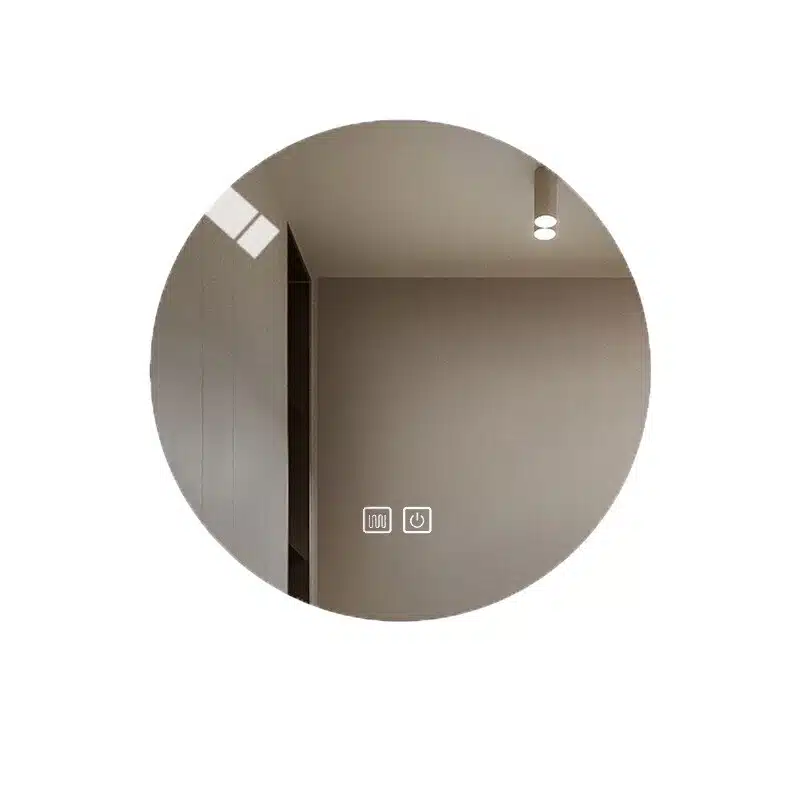
Round Mirrors: Soft Contrast to Boxier Vanities
Round panels soften the hard edges of a rectangular vanity. The circle reads calm against linear cabinets and tile grids, which is why it keeps appearing in residential requests. Round mirrors also work in narrow baths where a wide rectangle crowds the wall. The standard program covers the full 24×36 to 48×72-inch range, so round stock is not limited to small panels.
The shape pairs naturally with soft basin lines. A round mirror above an oval or round basin completes the design. The same mirror above a square basin creates a contrast most buyers avoid. Keep that pairing in mind when you load mirrors and vanities into one container. The match drives add-on sales without extra freight.
Arched Mirrors: The Arch Comes Back
Arched mirrors follow the arch revival moving through bathroom design. The curved top echoes arched vanity doors, tile niches, and shower enclosures. Buyers increasingly ask for arch profiles in both framed and frameless versions. The arch reads classic in period homes and current in modern ones, which widens its market.
Arch height changes the product’s personality. A gentle curve keeps the mirror practical for grooming; a deep arch pushes it toward decoration. Most arch requests in the current order book land inside the 24×36 to 48×72-inch span. Offer the profile in at least two arch depths so the line covers both customers.
Extra-Long Rectangles for Double Vanities
Double vanities drive the demand for extra-long rectangles. A 60-inch vanity wants a mirror that spans most of the top without overrunning the edges. The 48×72-inch ceiling of the standard range covers most master suites. Hotel buyers order these in matched pairs for room rollouts.
The extra-long panel also solves a lighting problem. A mirror that nearly matches the vanity width spreads light evenly across both basins. Narrower mirrors leave dark corners at each end of a double vanity. That practical argument wins more specs than the look alone.
Oval and Soft-Corner Rectangles
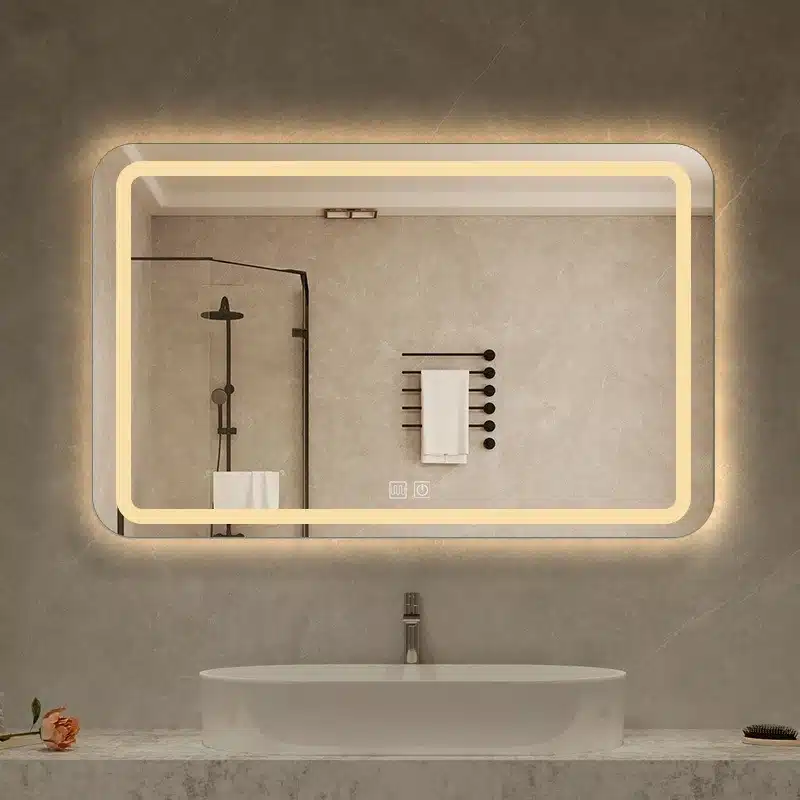
Oval mirrors keep selling as the middle ground between round and rectangular. Soft-corner rectangles deliver the same calm feel with more usable width. Both shapes sit inside the 24×36 to 48×72-inch range. They are dependable stock for transitional bathrooms that avoid strong statements.
Hotel programs run long on extra-long rectangles and frameless rounds. The shape mix in a guest bath mirrors the room tier: economy rooms get rectangles, premium suites get rounds and arches. A distributor can cover both with two shapes per size band. That keeps the assortment small and the sell-through steady.
Shape trends rarely move alone. The same curves showing up in mirrors appear across the broader bathroom vanity trends that drive cabinet orders. A distributor can read one trend sheet and plan both categories in a single order cycle.
Frame Trends: Wood, Metal and PVC
Frame material decides how a mirror reads in a room and how long it survives a steamy bathroom. Buyers increasingly ask for wood, metal, and PVC (polyvinyl chloride) frames, with frameless panels running alongside. The mirror line covers all four, so one factory can fill a mixed frame assortment. Frame choice also drives price points, which matters when you build a tiered catalog.
Wood Frames: Warmth That Matches Wood Vanities
Wood frames pair naturally with oak and walnut vanities. The frame borrows the cabinet grain, and the bathroom reads as one design. Walnut, oak, maple, and ash are the species the factory already runs in its vanity line, so the mirror frame can match the cabinet wood. Moisture protection comes from the same multi-layer polyurethane coating used on the cabinet line.
Wood carries the warm end of the frame market. A walnut-framed mirror above a walnut vanity closes the sale before the price discussion starts. The frame reads richer in photos, which helps e-commerce listings and showroom walls alike. Keep wood frames matched to the cabinet species list so reorders stay simple.
Metal Frames: Black, Brass, and Brushed Nickel
Metal frames carry the strongest style signal in the category. Matte black reads modern-industrial, brass reads warm and upscale, and brushed nickel sits safely between. Commercial projects spec metal frames because they clean fast and hold up in high humidity. Metal frames also photograph well, which gives e-commerce listings an edge.
Metal finishes pair with the hardware story in the same bathroom. A black frame over black faucets and hinges creates a coordinated look buyers recognize. Brass and brushed nickel follow the same logic. The frame metal should match the cabinet hardware metal, so keep the finish list aligned across both categories.
PVC Frames: The Moisture-Proof Option
PVC frames answer the moisture question without the maintenance of painted wood. The material does not absorb water, does not warp, and wipes clean with a cloth. That behavior matters in rental and hotel bathrooms where maintenance crews are not on call. PVC frames come from the same 100% waterproof family as the cabinet line, so frame and cabinet behave alike.
PVC sits at the entry price point in the frame lineup. It is the frame to stock for volume programs and price-driven markets. The trade-off is perceived warmth, which is why wood and metal frames carry the premium tiers. A catalog with all three lets a buyer trade up without changing suppliers.
Frameless and Backlit: Two Finishes That Keep Selling
Frameless mirrors dominate commercial spec sheets, and backlit panels keep gaining ground in residential lines. Frameless reads clean against any tile, which is why hotels default to it. Backlit panels add a glow that doubles as task lighting at a vanity. The two finishes cover opposite ends of the market, and both belong in a 2027 assortment.
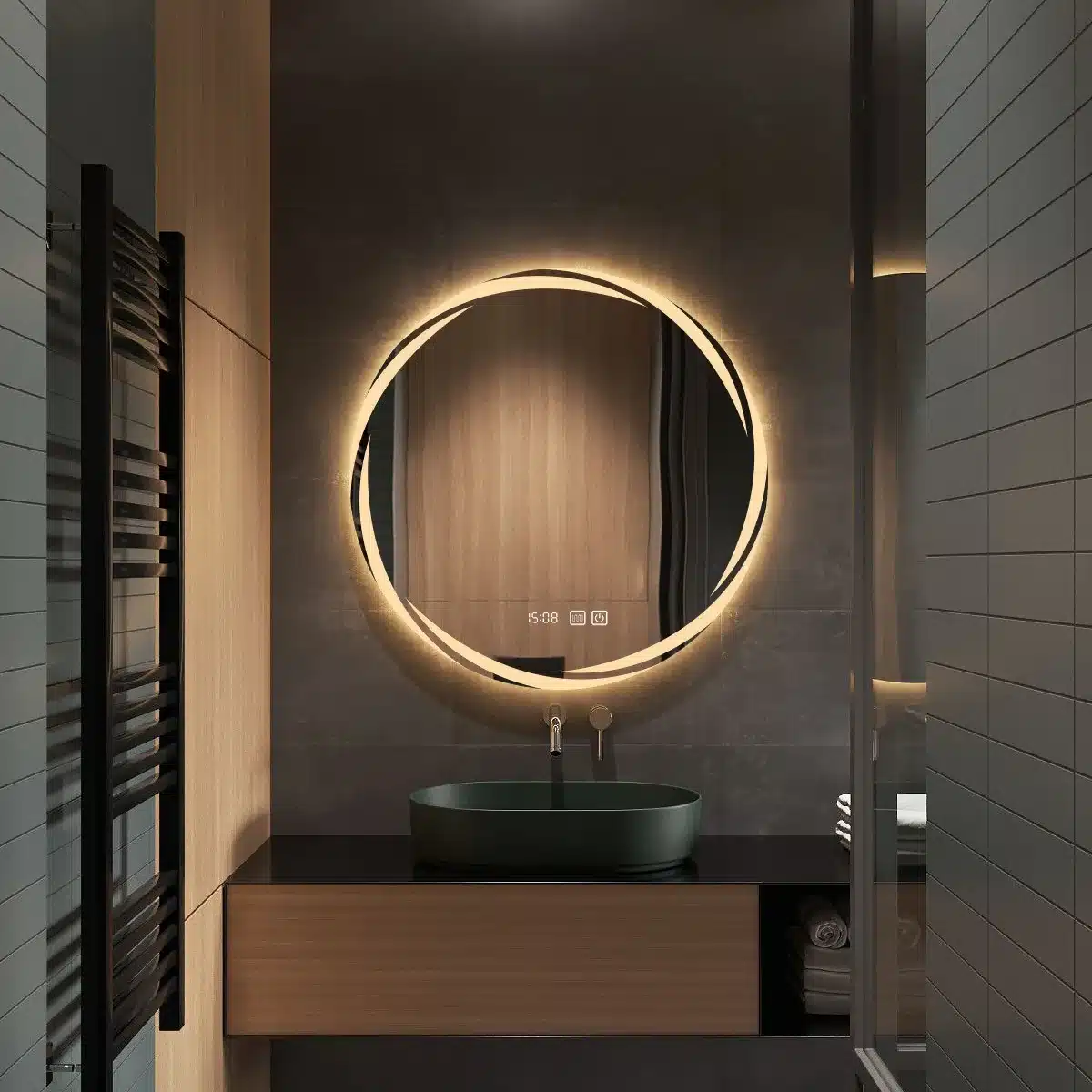
Backlit mirrors place the light behind the panel so the glow wraps the edges. Buyers increasingly ask for this look with adjustable LED output. The soft halo removes face shadows, which matters for makeup and shaving. Light color and placement deserve a close read before you commit to a panel size; the vanity lighting guide covers the setup in detail.
Frameless panels need a mounting system that holds the weight of larger sizes. The 24×36 to 48×72-inch range spans the panels most frameless orders request. Classic mirrors also offer an optional anti-fog coating, a lower-cost alternative to heated smart panels. Stock the coated classic line for price-sensitive accounts and the backlit line for premium ones.
Smart Features Buyers Actually Use
A smart feature earns its place when the end user touches it daily. Buyers increasingly ask for five functions in particular: adjustable LED brightness and color temperature, anti-fog heating, touch control, digital display, and energy-saving auto power-off. Voice control and Bluetooth remain optional extras rather than defaults. Every function below ships on MFBATH smart mirrors, and any combination can be customized from 15 sets.
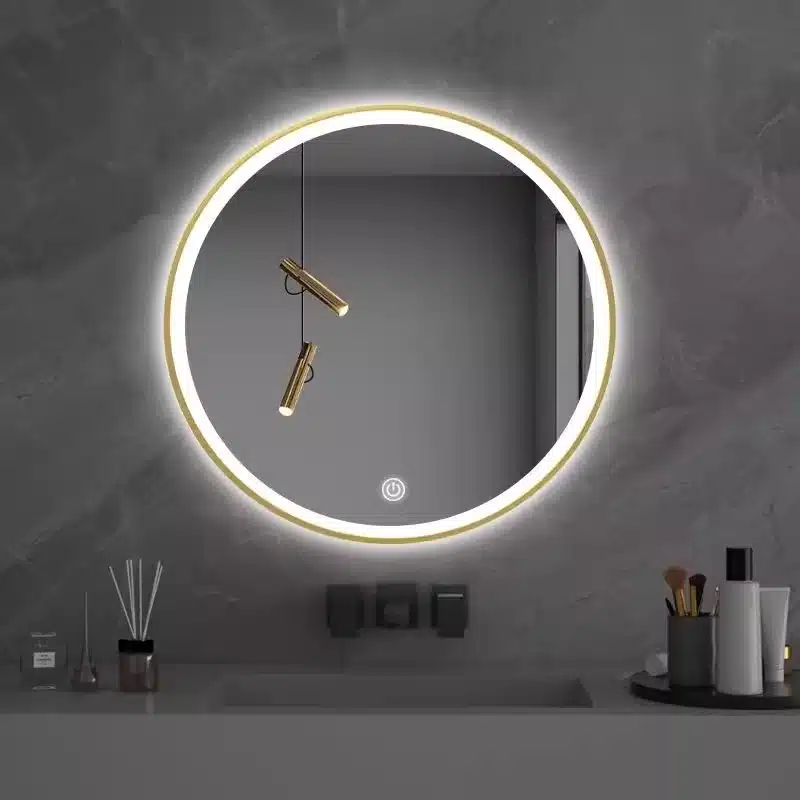
Adjustable LED Brightness and Color Temperature
Light quality matters more than raw output. Adjustable brightness lets a user move from a night light to full task light on the same panel. Adjustable color temperature shifts the light from cool daylight to warm evening tones. One mirror then serves makeup application, shaving, and low-light washing up.
This control pair is the feature buyers list first in smart mirror requests. It replaces the fixed cool-white glow of older mirrors, which flattered no one. It also replaces a separate vanity light in tight bathrooms. The function pair alone supports a higher retail ticket.
Anti-Fog Heating
A fogged mirror is the most common complaint after a hot shower. Anti-fog heating keeps the surface clear through the steam cycle. It outperforms demisting pads, which lose effectiveness as they age. Buyers in cold climates ask for this feature before any other.
Touch Control
Touch control removes buttons and switches from the frame. A tap or slide on the glass adjusts light and power. No visible hardware means nothing for grime to collect on, which housekeeping teams notice. The control sits behind the mirror surface, so the front stays clean.
Digital Display: Time, Date, and Weather
Digital display adds information without adding clutter. Time, date, and weather read through the mirror surface in a corner. Buyers increasingly ask for the display in primary baths, where users dress in front of the mirror. The display dims or turns off to suit the room.
Energy-Saving Auto Power-Off
Auto power-off answers the energy question before anyone asks it. The mirror shuts its light after a set idle period, so it never runs overnight. Property owners want this behavior written into the spec sheet. The logic aligns with the efficiency message behind the ENERGY STAR program and the U.S. Department of Energy guidance on LED lighting.
Voice Control and Bluetooth as Options
Voice control and Bluetooth connectivity are optional on MFBATH smart mirrors. Voice control suits hotel rooms and hands-free homes. Bluetooth pairs the mirror with a phone or speaker for audio. Neither function is forced on buyers; each is added when the channel needs it.
One spec sheet should cover every size. The feature set above applies across the 24×36 to 48×72-inch range, so a buyer can list two sizes of the same mirror. Standard and custom configurations share the same 15-set minimum. That consistency keeps the line easy to quote and easy to reorder.
Matching Smart Features to Your Customer Tiers
The right feature set depends on who buys the mirror. Hotel buyers value durability and energy behavior. Retail and e-commerce customers respond to light quality and looks. Residential remodelers ask for digital display and voice convenience. Let the channel decide the spec, not the other way around.
Hotel and Commercial Buyers
Hotels spec anti-fog heating, touch control, and auto power-off first. Housekeeping teams want no visible buttons and a surface that clears steam fast. Auto power-off keeps energy use low when a guest leaves the light on. Frameless panels match any room design tier.
Retail and E-Commerce Channels
Online buyers cannot touch the mirror, so the spec sheet sells. Adjustable brightness and color temperature lead the product copy. Backlit panels photograph well and justify a higher price. Voice control and Bluetooth add searchable keywords to a listing.
Residential Remodel Programs
Remodel customers choose the mirror last but argue about it first. Round and arched shapes win here, framed in wood or metal. Digital display with weather fits the morning routine. Keep the feature list short so the price stays approachable.
Feature creep is a real cost. Every added function changes the bill of materials and the price point. A mirror with voice control, Bluetooth, and a weather display costs more than one with light and heat. Decide the ceiling before you sample, then hold the line. The factory builds exactly what the spec sheet says.
Supplier structure matters as much as feature selection. A factory that builds the vanity, the basin, and the mirror keeps the whole bathroom on one purchase order. Our rundown of bathroom mirror suppliers covers how factories structure these programs. Use it before you commit a container to a new line.
Stock Mirrors Your Market Will Ask For
Browse this product, solution, or service page to explore relevant offerings.
Stocking Math for 2027
Stocking mirrors for 2027 comes down to numbers the factory can quote today. The MOQ is 15 sets per model, color, and size across the product line. Mixed containers combine different models and sizes in one shipment. Custom mirrors start at the same 15-set threshold. Buyers new to importing mirrors with vanities can start with the vanity mirror wholesale sourcing guide before building the order sheet.
The Stocking Table at a Glance
| Stocking decision | Factory term | Why it matters |
|---|---|---|
| Minimum order per SKU | 15 sets per model, color, and size | Keeps trial orders small |
| Mixed container | Combine models and sizes in one shipment | One container tests a wider line |
| Custom sizes and frame colors | From 15 sets; Pantone color matching system | Brand-matched frames without a big minimum |
| Custom functions and logos | From 15 sets | Smart features and branding scale the same way |
| Sample turnaround | 10 working days | Fast design verification before the container loads |
| Production lead time | 20–30 days | Reliable reorder rhythm |
| US, Canada, Mexico delivery | 4–6 weeks with tracking | Mid-winter orders land early-season |
| Warranty | 2 years on the full shipment | Fewer claims, easier resale |
Read the table as a reorder calendar. Samples clear the 10-working-day window, production runs 20–30 days, and delivery to the United States, Canada, and Mexico takes 4–6 weeks with tracking. An order placed in mid-winter lands in early-season inventory. The rhythm repeats cleanly twice a year.
Mixed Containers Keep Every SKU Small
A wide mirror line does not need a wide inventory commitment. Mixed loading puts round, arched, and extra-long panels in one container. Each model, color, and size clears its own 15-set minimum, and the shipment can carry several models at once. The same logic applies when mirrors ship with vanities and basins.
Custom Mirrors: Pantone Frames, Sizes, and Logos
Custom programs cover frame color, size, function set, and branding. Frame colors match the Pantone color matching system, so a white-label mirror follows the brand book. Sizes and functions layer onto the same 15-set minimum. Logo printing or laser engraving and custom packaging complete the private-label program.
Walk the sample approval process before the first production run. Samples ship in 10 working days, so a custom design is verified before the container loads. The approval step catches color and size errors while changes are still cheap. Skip it, and a Pantone mismatch travels across the ocean.
Lead Times and the 2027 Buying Window
Timing decides whether stock lands before spring installs. Samples take 10 working days, which is fast enough to test two or three designs in one round. Production runs 20–30 days after approval. Delivery to the United States, Canada, and Mexico takes 4–6 weeks with tracking, so mid-winter orders fill early-season inventory.
Sample before you commit a container. Two samples, one standard and one custom, cover the range of what the factory can deliver. The 10-working-day window fits both into a single approval cycle. The cost of two samples is small against a container of the wrong design.
Quality Checks and the 2-Year Warranty
Every mirror passes five quality checks before packing. Third-party inspectors such as SGS and TÜV can audit the goods when arranged in advance. The full shipment carries a 2-year warranty, and the return rate sits below 1%. The factory holds ISO 9001 and ISO 14001 certifications, obtained in 2017 and confirmed current in 2025.
Trade terms are free on board (FOB) from Qingdao Port. Payment runs a 30% deposit at order placement, with the balance due within one week after the draft bill of lading (BL) is issued. The same terms cover mirrors and vanities. Standard and custom runs share the calendar, with an approval step added for custom designs.
Start with the mirror product page to see which shapes and features are already in production. Match your order sheet to the models you can reorder without a custom cycle. The factory’s lead times apply to standard stock; custom runs follow the same calendar with approval added. That distinction keeps the 2027 plan honest.
Frequently Asked Questions
What is the minimum order quantity for bathroom mirrors?
The minimum order quantity (MOQ) is 15 sets per model, color, and size across the product line. Mixed containers combine different mirror models and sizes in one shipment. Custom mirrors start at the same 15-set threshold.
Can mirror frame colors match our brand?
Yes. Frame colors match the Pantone color matching system, so a white-label mirror follows the brand book. Custom sizes, functions, and logos also start at 15 sets. Samples ship in 10 working days so the match is confirmed before production.
Which smart features can be added to a mirror?
Adjustable LED brightness and color temperature, anti-fog heating, touch control, digital display for time, date, and weather, and energy-saving auto power-off. Voice control and Bluetooth are optional. Any combination can be customized from 15 sets.
How long does a mirror order take from order to delivery?
Samples ship in 10 working days. Production runs 20–30 days after approval. Delivery to the United States, Canada, and Mexico takes 4–6 weeks with tracking.
The Bottom Line
Round and arched shapes, wood and metal frames, and backlit smart panels make up the 2027 mirror mix buyers ask about most. The five functions that earn their place are adjustable LED brightness and color temperature, anti-fog heating, touch control, digital display, and auto power-off. Stock the 24×36 to 48×72-inch range, order from 15 sets per model, color, and size, and approve samples before production. Confirm the mix with a sample order and lock the calendar before the spring buying window closes.




0 Comments