


You can’t hedge a quality problem after the shipment lands in your warehouse. Focuscabinet runs a 10,000m² factory in Changge, Henan. The plant has spent over a decade refining a five-stage inspection process that stops defects before units leave the floor. Each stage checks material density, hardware certifications, and dimensional fit. Visual checks alone won’t catch a loose joint or a mismatched sink cutout. Penalty clauses in your contract make vanity quality control a pre-shipment problem, not a post-delivery crisis.five-stage inspection processpenalty clausesVanity quality controlhardware certifications

Hedge the pre-dispatch check, and you’re gambling 15% of your project value on rework and delay penalties. Standard checklists miss the real threats: hidden assembly errors and inconsistent raw materials that show up months after install. Focuscabinet runs borescope checks on ceramic drain holes and tests MDF density against the local climate. Every unit arrives ready to install. Your timeline and your reputation stay intact.pre-dispatch inspectionspre-dispatch inspectionsgeneric checklists


The Hidden Cost of Poor Vanity QC
A 2% defect rate in a 500-unit hotel order triggers massive rework costs and delays.
A single bad batch of vanities triggers more than returns. Construction milestones stall. Penalty clauses activate. Most checklists miss the real culprits: raw material variation and assembly mistakes you can’t see until it’s too late.
A 500-unit hotel project with a 2% defect rate can derail opening day. That’s the real cost of skipping inspections. “Good enough” has no place in commercial development. The penalty is too steep.
- MDF panels below 650 kg/m³ swell in humid climates. Cabinet joints pull apart. Skip borescope checks on ceramic sink drains, and you get odor failures at 18 months. Real durability requires those checks to be part of the process.borescope checks
- A 2% defect rate across 500 units sounds negligible. When you fix that after delivery, replacement parts, installer callbacks, and project delays eat more cash than the pre-dispatch inspection itself.2% defect rate
| Risk Category | Potential Consequence | MFBATH Mitigation | Impact on Project |
|---|---|---|---|
| Regulatory Non-Compliance | Risk fines, delays, and lost sales without water-efficient, luxurious, and compliant products | Region-ready strategy ensuring UL/CSA (NA), CE (EU), AS/NZS (Oceania), and WELS standards adherence | Avoids customs seizures and ensures seamless market entry for Asia, Middle East, and global distributors |
| Structural Failure | Premature warping or mold growth due to incorrect material density | 5-stage QC with mandatory MDF density ≥650 kg/m³ and moisture content verification | Guarantees longevity in humid climates (e.g., Asia/Middle East) and reduces warranty claims |
| Hidden Defects | 18-month odor failures from unglazed ceramic drain holes | Borescope inspection mandated for all sink drain holes; 70% of cheaper imports skip this | Eliminates post-installation complaints and protects brand reputation for contractors |
| Logistical Damage | 15% cost increase in rework/delays due to transit damage | Simulated transit vibration tests and 100% dimensional verification before container loading | Ensures zero-defect delivery to job sites, maintaining strict construction timelines |


5-Stage Inspection Protocol: Beyond Visual Checks
Five-stage inspection prevents structural swelling and hardware failure in commercial bathroom projects.
A single faulty batch of vanities can shut down a hotel project and trigger penalty clauses with the general contractor. Standard factory walkthroughs miss the real problem: material defects hiding below the surface. Every cabinet order runs through a 5-stage quality protocol. That locks in zero-defect delivery for large-scale developments where reordering is not an option.penalty clausespenalty clauses5-stage quality protocol
- The MDF core has to hit 650 kg/m³ density minimum. Below that, the board absorbs humidity and swells within months. Substandard stock gets rejected before it reaches the cutting line. Hinges and slides require DIN 68857 or UL certification. Non-certified hardware buckles under hotel use, so every shipment gets its certification marks checked. Back panels get double-sided edge sealing. A single-sided seal lets moisture creep in, and delamination follows. In high-humidity markets like the Middle East or Southeast Asia, durability comes down to this step. Non-negotiable.650 kg/m³ densityUL certificationMDF core batch
- Every cabinet is measured before shipping. A full dimensional check catches 2mm offsets. That tiny shift turns a 30-minute install into a two-day problem on site. Vibration tests simulate a truck bed on rough roads. Packaging gets proven before the container seals. Skip this step, and rework costs and delay penalties eat 15% of your margin fast.

Raw Material & In-Process Checks: Preventing Defects Early
Defective raw materials cause 80% of post-installation vanity failures in hospitality projects.
A vanity can still fail before installation if the raw stock is wrong. Plywood with a 2% moisture swing warps within six months. Bathroom humidity after occupancy accelerates the damage. Solid wood needs kilning to 8-10% equilibrium moisture content. Anything wetter cracks in transit to dry regions like the Middle East. PVC sheets must prove 100% waterproof integrity at the sheet level. Micro-porosity stays invisible until the laminate bubbles.Plywoodmoisture swingPVC sheets
- The receiving dock is where moisture problems show up first. Plywood and solid wood have to land between 8% and 10% moisture content. Anything above 12% goes back on the truck, no exceptions. Density floor sits at 650 kg/m³. Boards below that number cannot hold a heavy stone top without sagging. In a high-traffic commercial washroom, that sag turns into joint failure fast. PVC sheets get a hydrophobicity check on arrival. A sheet with micro-pores or uneven density is scrapped before it reaches the cutting table. Coastal and tropical projects run zero tolerance on water absorption.
- CNC cutting tolerances sit at ±0.5mm. Anything looser produces misaligned doors and drawers. That creates tough installs and visible gaps, both of which fail hospitality standards. Keep the tolerance tighter, and doors and drawers align the first time. It’s the most cost-effective quality lever in the production line.CNC cutting tolerances
| Inspection Stage | Check Parameter | Standard Requirement | Defect Prevention |
|---|---|---|---|
| Raw Material Intake | Moisture Content & Density | PVC/Solid Wood ≤8%; MDF ≥650 kg/m³ | Eliminates warping, swelling, and structural failure in humid climates |
| In-Process Cutting | CNC Precision Tolerance | ±0.5mm dimensional accuracy on all cut edges | Ensures seamless panel assembly and prevents visible gaps during installation |
| Edge Sealing | Double-Sided Seal Integrity | 100% coverage on back panels and internal joints | Blocks moisture ingress and formaldehyde emission (E1 grade compliance) |
| Hardware Installation | Hinge Certification & Load Test | DIN 68857/UL certified hinges; 100,000+ cycle durability | Prevents drawer/cabinet sagging and ensures long-term commercial reliability |
| Final Assembly | Borescope Drain Glaze Check | Visual confirmation of full glazing inside ceramic sink drains | Prevents 18-month odor failures and bacterial growth in hidden areas |


Pre-Shipment & Container Loading: Ensuring Safe Arrival
Skipping container loading verification costs projects an average of 15% in rework and delay penalties.
A cabinet can pass every inspection and still arrive damaged. That’s why the last check happens at the container door. Dimensional verification runs first, then a vibration simulation that mimics ocean transit. Clients get photos of the stuffed container, so stacking patterns and space use are clear upfront. Everything that leaves our 10,000sqm factory in Changge arrives ready to install.stacking patternssimulated transit vibration test
- Width and height variations are the fastest way to wreck an installation. Dimensional verification catches those before anything gets packed. Separate sample units go through a simulated transit vibration test to confirm the durability of hinges, hardware, and finishes during ocean freight. We photograph every stuffed container, so your team can review stacking patterns and avoid crushing damage before the ship sails.Dimensional verification
- Container space costs real money. We maximize units per cubic meter through optimized stacking. Higher density lowers the per-unit freight charge, and on large projects, this planning alone can offset the cost of a hardware upgrade, making the whole order cost-effective.
Conclusion
Five inspection stages catch quality issues before any unit gets packed. We verify raw material density on delivery, check hardware certifications mid-production, and photograph loaded containers for client sign-off. Each stage prevents problems that turn into on-site rework or penalty delays. Miss a spec on material density, and you are paying for field replacement. Ours don’t get that far.Hardware certificationsRaw material density
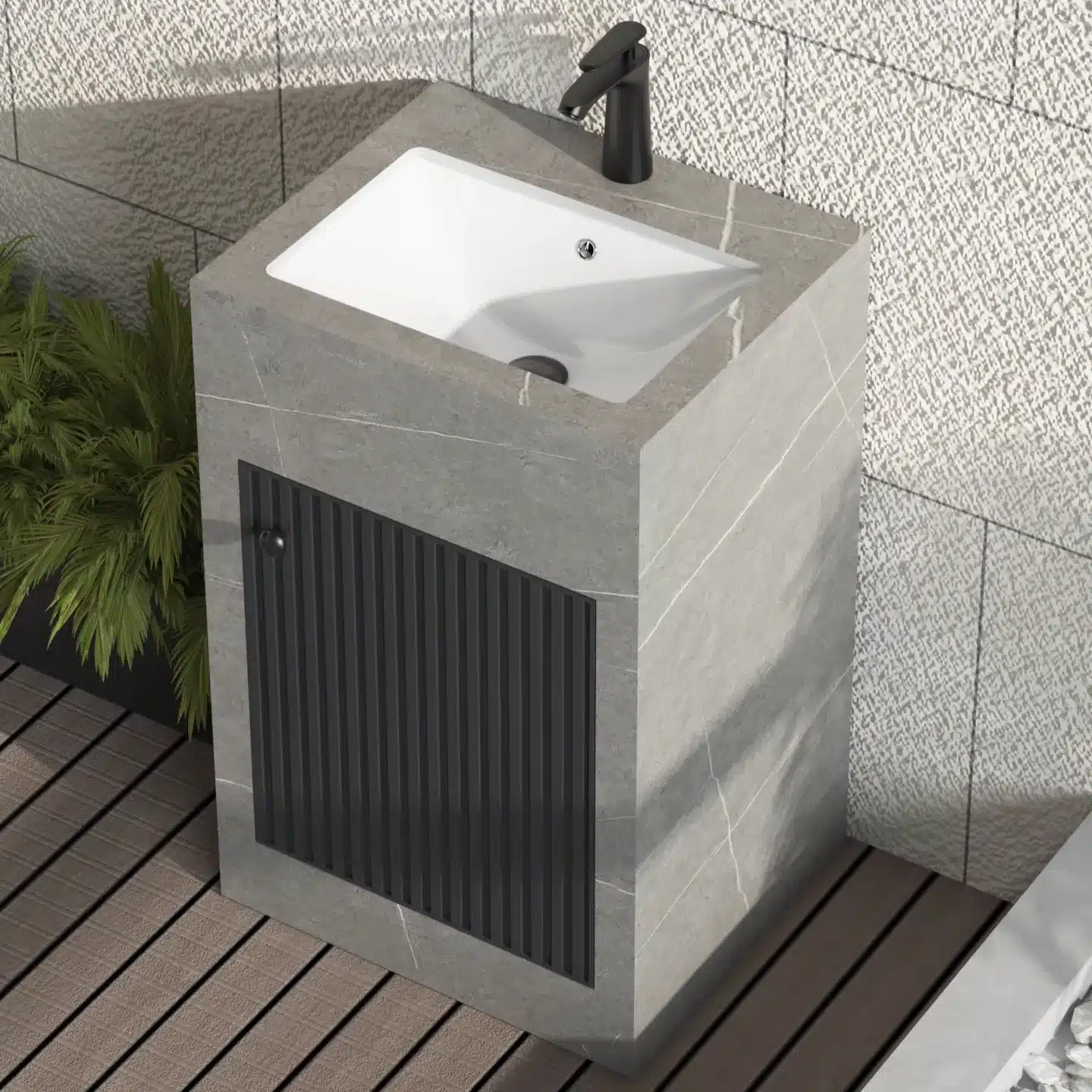
The bathroom vanity and mirror bundle guide lists every spec and compliance document you need for your next project: dimensions, materials, mirror cabinet configuration, certification files. Your next project’s spec sheet lives here.bathroom vanity and mirror bundle guide
Frequently Asked Questions
What should buyers look for when sourcing vanity quality control?
Buyers should verify a multi-stage inspection protocol that includes dimensional verification and raw material density checks. This prevents structural swelling and hardware failure that generic visual checks miss. Prioritize suppliers with documented multi-stage inspection protocols over basic visual checks.
How to verify factory certifications for vanity quality control?
Verify specific regional compliance such as UL/CSA for North America or CE for Europe, alongside ISO manufacturing standards. These certifications ensure materials meet local regulatory and safety requirements. Request specific regional compliance certificates relevant to your target market.
What are typical MOQ requirements for wholesale orders?
MOQs vary significantly between stock items and custom OEM/ODM production runs. Custom orders often require higher thresholds for material setup, though some suppliers support low MOQs for market testing. Confirm MOQ after finalizing specs and customization needs.
How to handle international shipping and customs clearance?
International shipping requires precise dimensional verification and pre-shipment container loading photos to prevent damage and delays. Proper documentation ensures smooth customs clearance and avoids penalty clauses. Ensure precise documentation and container loading verification to prevent delays.
What quality inspection standards apply before shipment?
Pre-shipment inspections typically include final assembly checks, functional testing of hardware, and aesthetic verification against approved samples. These standards ensure zero-defect delivery for commercial projects. Conduct final assembly and functional testing against approved samples before shipment.





0 Comments