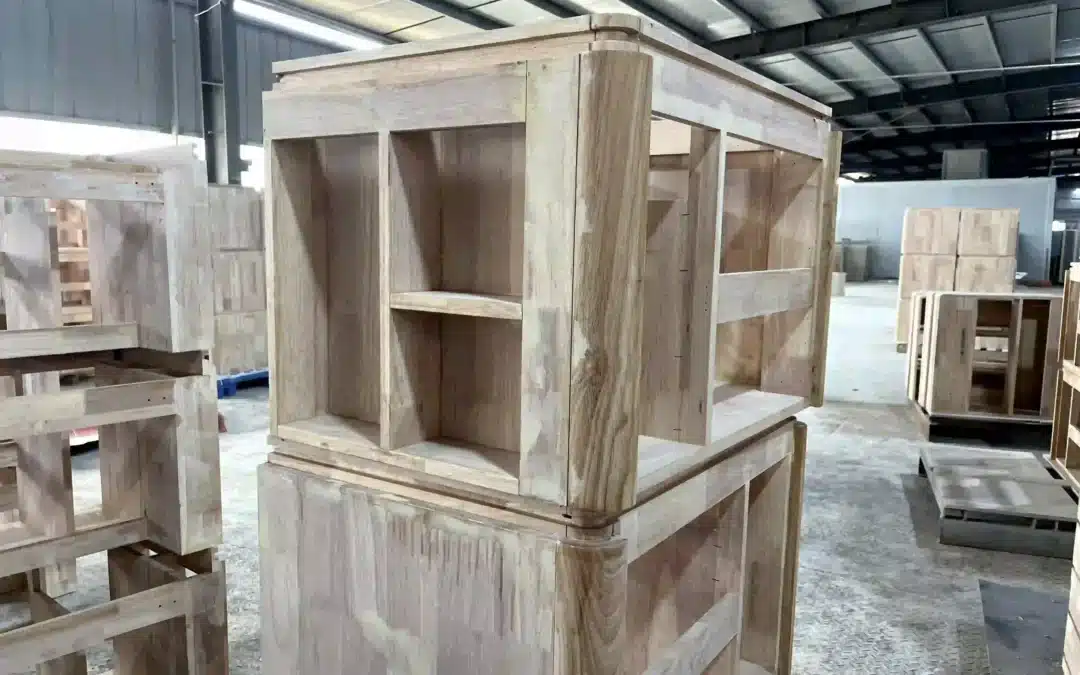
Importing wood bathroom vanities into the United States puts them under the Lacey Act, and the practical obligations are three: the wood in the product must have been harvested legally, the entry must carry a Lacey Act declaration when the product’s tariff...
FSC and PEFC are both legitimate, third-party chain-of-custody systems for wood products, and for most vanity programs the right answer is to accept either — provided the certificate actually covers the factory’s manufacturing operation and the finished goods,...
ASTM D3359 is the tape test that turns “the finish looks well bonded” into a number: the coating is scored, tape is applied and pulled, and the amount that lifts away is rated on a scale from 0B to 5B. For painted vanity finishes it is the most practical...
ANSI/BHMA A156.9 is the performance standard behind the words “cabinet hardware” on a vanity spec sheet — and it proves both more and less than most buyers assume. It tests whether hinges, pulls and drawer slides can operate, survive repeated use, carry...
An ISF 10+2 filing — the Importer Security Filing that U.S. Customs and Border Protection requires for ocean cargo — is the paper your vanity container needs before its first crane move, not after it sails. CBP’s own ISF guidance sets the structure: ten importer...
The EU’s forced labour regulation — Regulation (EU) 2024/3015, published in full on EUR-Lex — prohibits placing products made with forced labour on the EU market, and it does something importers of bathroom vanities should notice: it does not hand you a...