

Failed bulk vanity shipping directly leads to costly holding fees, liquidated damages, and a complete breakdown of your construction schedule. A single container arriving at a job site without a clear unloading plan can trigger a cascade of problems: idle crews, blocked access points, and damaged goods that can’t be replaced quickly. These aren’t just logistical hiccups; they are unbudgeted expenses and timeline failures that directly erode your project’s profitability.
This guide provides a standard operating procedure for job site delivery, breaking down the critical decisions you have to make. We’ll analyze the trade-offs between pallets and floor loading, explain when to use drop trailers versus live unloads, and clarify what accessorial charges actually mean for your invoice. You’ll also get clear steps for avoiding detention fees and navigating the 5-day rule to ensure your freight moves smoothly from the port to the final installation.
What Is the “Just-In-Time” Challenge?
The just-in-time (JIT) model prioritizes efficiency over resilience, creating significant vulnerabilities to supplier delays and market volatility in global supply chains.
Vulnerability to Supply Chain Delays
The core concept of JIT—receiving goods precisely when needed—is also its primary point of failure. The model has almost no buffer to absorb disruptions. When dealing with international maritime shipping, where lead times are long and unpredictable, a single supplier delay can bring production or fulfillment to a complete halt.
- Lacks the resilience to absorb unexpected delays from suppliers or logistics partners.
- Minimal inventory means any hiccup can halt production or fulfillment.
- Especially challenging for international trade where shipping times are inherently longer and less predictable.
Exposure to Market Volatility
JIT operates on a “buy-as-you-need” basis, which directly exposes a business to price fluctuations in raw materials. Without a stockpile of inventory, you can’t hedge against rising costs. This strategy crumbles in unpredictable markets where demand forecasting is unreliable and sudden tariffs or material cost spikes are common.
- Prevents companies from buying materials in bulk to protect against future price increases.
- Depends heavily on precise demand forecasting, making it fragile in unpredictable markets.
- Less effective when facing tariff uncertainty or sudden shifts in material costs.
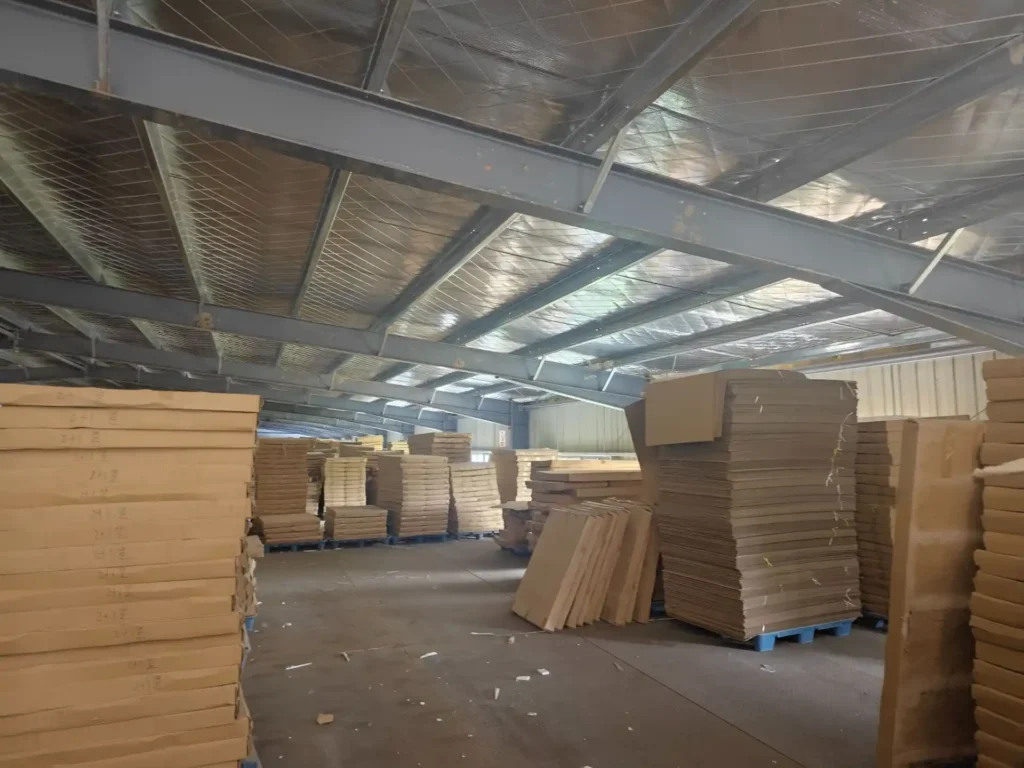
Pallets vs. Floor Loading: Which Is Better?
The choice between pallets and floor loading is a direct trade-off between operational speed and maximum container space, not a question of one method being universally superior.
Deciding how to load a container directly impacts your labor costs, shipping fees, and risk of product damage. The two primary methods, palletization and floor loading (also called hand stacking), serve different strategic goals. Understanding the specific mechanics of each helps you optimize your freight budget and protect your cargo effectively.
The Case for Palletization
Palletization is the standard for a reason: it prioritizes speed, safety, and compatibility with modern logistics infrastructure. By staging bathroom vanities or other goods on pallets, forklifts can load and unload containers in a fraction of the time required for manual handling. This efficiency minimizes labor costs and reduces the chance of damage from excessive handling, which is critical for maintaining product integrity, especially for e-commerce shipments requiring ISTA 3A compliance.
- Significantly faster loading and unloading times at distribution centers.
- Lowers the risk of product damage during transit and handling.
- Compatible with standard forklifts and automated warehouse systems.
The Case for Floor Loading
Floor loading is the preferred method for maximizing every cubic inch of a container. Stacking goods directly onto the container floor eliminates the space consumed by pallets, allowing you to ship more units in a single container. This technique is especially effective for bulky or irregularly shaped items that don’t fit well on standard pallets. For high-volume orders where the per-unit shipping cost is the primary concern, floor loading offers a clear financial advantage by increasing shipment density.
- Maximizes container capacity to lower the per-unit shipping cost.
- Removes the material expense of purchasing and managing pallets.
- Effective for maximizing volume on full container load (FCL) shipments.
| Metric | Palletization (Pallet Load) | Floor Loading (Hand Stack) |
|---|---|---|
| Handling Speed | Fast (Forklift-based) | Slow (Manual, labor-intensive) |
| Container Capacity | Good (Approx. 80-85% utilization) | Maximum (Up to 100% utilization) |
| Product Safety | High (Stable, less handling, protected from floor moisture) | Moderate (Higher risk of shifting and handling damage) |
| Labor Cost | Lower (Less time and personnel required) | Higher (Requires more time and manual effort) |
| Ideal Use Case | E-commerce ready goods, standardized boxes, fragile items. | Durable bulk goods, oversized items, cost-sensitive shipments. |
Source Durable Sintered Stone Vanities Factory-Direct

Drop Trailers vs. Live Unload: Which to Choose?
Choosing between drop trailers and live unloads is a trade-off between driver efficiency and on-site resource management, driven by shipping volume, yard space, and labor availability.
Drop Trailer Operations Explained
In a drop trailer, or “drop and hook,” operation, the driver leaves a full trailer at a facility and immediately picks up an empty one. This model minimizes driver wait time and is becoming more accessible as yard management technology improves. The core benefit is decoupling the driver’s schedule from the facility’s unloading schedule, allowing for much greater flexibility and efficiency for the carrier.
- It dramatically increases driver efficiency by eliminating idle time spent waiting for cargo to be unloaded.
- The operation requires sufficient yard capacity to stage both inbound and outbound trailers without causing congestion.
- Success depends on strong coordination and visibility systems between the carrier and the receiving facility.
Live Unload Operations Explained
A live unload is the traditional method where the driver waits with the truck while facility staff unloads the cargo. This approach demands precise scheduling and labor availability to prevent costly delays and detention fees. While less flexible for the driver, it remains a vital model for specific operational contexts, especially where space is a premium or cargo requires immediate handling.
- This method is best suited for facilities with limited yard space that cannot accommodate parked trailers.
- It is often used for sensitive or high-priority shipments that need immediate processing upon arrival.
- The entire process hinges on having labor and equipment ready at the exact scheduled appointment time.
| Factor | Drop Trailer (Drop & Hook) | Live Unload |
|---|---|---|
| Driver Time | Minimal wait time; driver drops one trailer and hooks another. | Driver waits on-site during the entire unloading process. |
| Yard Space Requirement | Requires significant space to store inbound and outbound trailers. | Ideal for facilities with limited or no extra yard space. |
| Labor Scheduling | Flexible; unloading can happen when labor is available, decoupled from the driver’s schedule. | Requires precise scheduling of labor and equipment to meet the driver’s appointment. |
| Best Use Case | High-volume, consistent freight with ample yard capacity. | Time-sensitive cargo, low-volume freight, or sites with space constraints. |
Key Factors for Deciding
The right choice is not universal; it depends entirely on operational realities. Many high-volume facilities run a hybrid strategy, using drop trailers for their primary carriers and live unloads for less frequent or specialized shipments. The decision is a function of freight volume, physical space, labor resources, and cargo type.
- Shipping Volume: Consistent, high-volume shipping lanes are the best candidates to justify a dedicated drop trailer program.
- Yard Space: The availability of secure, accessible yard space is the single biggest constraint for implementing drop and hook operations.
- Labor Availability: The readiness of facility staff and equipment directly determines if a live unload can be performed efficiently without incurring detention charges.
- Technology: Modern yard management systems (YMS) and appointment scheduling platforms are critical for optimizing either method and are essential for a successful drop program.
What Are Accessorials?
Accessorials are the variable charges that cover any service performed by a freight carrier beyond standard dock-to-dock transportation, ensuring fair compensation for extra work.
Defining Accessorial Charges
Accessorials are fees charged by freight carriers for services that fall outside of the base freight rate. These charges compensate the carrier for any additional time, equipment, or handling required to complete a shipment. By separating these costs from the standard transport fee, carriers can maintain competitive base rates while billing accurately for the specific demands of each job. For any business managing a supply chain, forecasting these potential fees is a critical part of accurate logistics budget planning.
Common Types of Accessorial Services
A wide variety of services can trigger accessorial fees, depending on a shipment’s needs at either the pickup or delivery location. Understanding these common charges helps prevent unexpected costs on your final invoice.
- Liftgate service: Required for locations that lack a loading dock, where a truck with a hydraulic lift is needed to lower freight to the ground.
- Inside delivery: A fee for when the driver is required to bring freight beyond the immediate receiving dock or curbside, such as into a specific room or storage area.
- Detention fees: Charged when a driver is forced to wait an extended period (beyond the allotted free time) to be loaded or unloaded at a facility.
- Special handling: Applies to oversized or non-standard shipments that require specific permits, escorts, or specialized equipment to transport legally and safely.
What Is the 5-Day Rule?
The 5-Day Rule is a U.S. customs mandate requiring importers to file entry documents five working days before a bulk cargo vessel arrives, a critical deadline for preventing costly delays and holds at the port.
For businesses importing bulk cargo into the United States, understanding key federal regulations is essential for smooth operations. The 5-Day Rule is one of the most critical compliance points in maritime shipping, directly impacting clearance times and potential penalties.
Understanding the Advance Notification Requirement
This rule is a formal mandate under U.S. customs law, specifically 19 CFR Part 141. It requires shippers and importers to submit all necessary applications no later than five working days before the first conveyance carrying the bulk cargo is scheduled to arrive. This lead time gives U.S. Customs and Border Protection (CBP) the necessary window to process the paperwork, conduct risk assessments, and prepare for clearance. Adhering to this timeline is the first step in avoiding entry issues and ensuring compliance.
Scope of Application for Bulk Cargo
The regulation’s reach is extensive. It applies broadly across different bulk shipment methods, including both modern consolidated express services and traditional break bulk operations. Any party responsible for filing import documentation for bulk goods must follow this rule. It stands as a foundational compliance point for anyone moving large-scale cargo into the U.S.
Benefits of Compliance
Following the 5-Day Rule directly translates to a more predictable and efficient customs clearance process. By providing the required advance notification, you significantly reduce the chances of your shipment being flagged for holds at the port of entry. It’s a straightforward way to minimize the risk of fines, penalties, and other disruptions that can stall an entire supply chain.
How to Avoid Detention Charges?
Avoiding detention fees has shifted from a reactive task to a strategic operational discipline built on proactive coordination, digital tools, and strong vendor management.
Implement Proactive Planning and Coordination
Strategic planning is the foundation for avoiding costly detention fees. This requires detailed coordination with all supply chain partners and a clear understanding of contractual timeframes long before any cargo moves. Effective operators plan every step, from factory loading to final delivery, to identify and mitigate risks before they materialize into delays and charges.
- Schedule dispatches early to create a buffer for potential traffic, port, or weather delays.
- Map out the entire transit process to anticipate potential bottlenecks and prepare contingency actions.
- Know the exact free time windows allowed in your carrier and terminal contracts to ensure compliance.
Leverage Digital Tools and Pre-Clearance
Modernizing documentation and customs procedures significantly reduces delays at the port. Shifting from slow paper-based workflows to digital systems and completing customs formalities in advance are critical tactics. These actions expedite cargo release and prevent containers from sitting idle while paperwork is processed.
- Use digital shipping documents (e-BOLs) to replace slower paper-based systems.
- Utilize cargo pre-clearance services to get customs approval before the vessel even arrives.
- Employ real-time tracking systems and automated notifications to stay informed of your shipment’s status and any exceptions.
Maintain Strong Vendor Relationships
Building a reliable network of partners provides essential flexibility when unexpected issues like port congestion or equipment shortages arise. A deep bench of carriers, drayage providers, and brokers allows you to adapt quickly when your primary options fail. This network becomes your operational buffer against supply chain volatility.
- Coordinate with vendors well in advance to lock in services and guarantee equipment availability.
- Maintain a vetted network of backup vendors to call upon if your primary option faces delays.
- Ensure all partners comply with evolving regulations, such as the Ocean Shipping Reform Act, to avoid fee-related disputes.
How to Work with Forwarders?
A strong partnership with a freight forwarder is built on strategic vendor selection, documented service agreements, and clearly defined communication channels.
Selecting the Right Forwarding Partner
Choosing an effective freight forwarder requires evaluating their specific expertise, technological capabilities, and performance history. A strong partner aligns with your logistical needs and provides transparent compliance support, especially in your most active trade lanes. Their ability to manage customs and provide real-time tracking is critical for avoiding downstream problems.
- Evaluate a forwarder’s experience with your specific trade lanes and cargo types.
- Assess their shipment tracking technology and communication platforms.
- Review their ability to manage customs clearance and regulatory compliance in your target markets.
Establishing Clear Communication and Agreements
A successful partnership is built on clear communication protocols and well-defined service agreements. This structure ensures both parties understand their responsibilities and prevents misunderstandings during shipments. Documenting the full scope of work, including service levels and performance metrics, is not optional—it’s essential for accountability.
- Designate a single point of contact for both your team and the forwarder’s team to streamline updates.
- Create a documented service agreement that outlines the full scope of work, including service levels and key performance indicators.
- Schedule regular performance reviews to address any issues and adapt to changing logistics needs.
Defining the Service Model
Freight forwarding offers flexible service models, from door-to-door to port-to-port arrangements. Defining the right model allows you to customize the level of involvement based on your company’s internal capabilities and budget. The goal is to pay only for the services you actually need while ensuring there are no gaps in the supply chain.
- Choose a door-to-door service if you need the forwarder to manage the entire logistics chain.
- Opt for a port-to-port model if your team can handle inland transportation on both ends.
- Clarify all responsibilities in the service agreement to avoid gaps in the supply chain.

Conclusion
Managing bulk furniture shipments requires more than just booking a container. Key decisions like choosing between pallets and floor loading, or drop trailers and live unloads, directly influence your final costs. A clear strategy for job site delivery helps you avoid unexpected fees and keeps your project on schedule.
When planning your next container order, consider how these logistics choices apply to your warehouse or job site. Our team can help you build a delivery plan that matches your project’s unique requirements, from packaging to final unload.
Frequently Asked Questions
How many vanities fit in a 40ft container?
A standard 40-foot container can typically hold between 150 to 350 bathroom vanities. The exact quantity depends heavily on the vanity dimensions, packaging design (fully assembled vs. ready-to-assemble), and loading method. For smaller, single-sink vanities (24-36 inches), you can expect to fit closer to 300-350 units when floor-loaded. For larger, double-sink models (60-72 inches), the capacity is typically between 150-200 units.
Cost to ship furniture container from China?
As of 2026, the cost to ship a 40-foot container of furniture from China to the United States typically ranges from $3,500 to $8,000. This price is highly volatile and influenced by factors such as the port of origin and destination (e.g., West Coast is cheaper than East Coast), seasonal demand, carrier availability, and fuel surcharges. Rates can spike significantly during peak seasons or due to global supply chain disruptions. Securing long-term contracts can help mitigate this price volatility compared to using spot market rates.
What is floor loading vs palletizing?
Floor loading is a method where boxes are loaded directly onto the floor of a container and stacked manually up to the ceiling, maximizing every inch of space. It’s labor-intensive but space-efficient. Palletizing involves stacking and securing goods onto standard pallets, which are then loaded into the container with a forklift. While palletizing is faster for loading and unloading and offers better product stability, it is less space-efficient due to the space taken by the pallets themselves and the gaps between them.
How to manage construction site delivery?
Effective management of construction site deliveries requires proactive coordination. First, schedule a precise delivery window with the site superintendent and confirm site access details. Ensure the designated drop-off area is clear, safe, and accessible for the delivery truck. Confirm what unloading equipment is needed (e.g., forklift, pallet jack) and arrange for it to be ready. Upon arrival, a designated person must inspect the shipment for accuracy and damage before signing the proof of delivery, noting any issues directly on the document.
Freight insurance for furniture?
Freight insurance is critical for furniture shipments because a carrier’s standard liability is extremely limited and rarely covers the full value of the goods. For valuable and fragile items like furniture, “All-Risk” cargo insurance is the industry standard. This type of policy covers any physical loss or damage from any external cause, unless specifically excluded. It protects your investment by insuring the full invoice value of the goods plus the cost of freight, providing comprehensive financial protection against potential damage during transit.
Handling shipping damage claims?
To handle a shipping damage claim effectively, you must first inspect the goods upon arrival *before* signing the delivery receipt. If any damage is found, you must note it specifically on the receipt (e.g., “3 cartons crushed, corner damage”). This notation is the most crucial evidence for a successful claim. Next, take detailed photos of both the damaged packaging and the product itself. Retain all original packaging for inspection. Finally, file the formal claim with the carrier or your insurance provider immediately, as strict time limits apply.




0 Comments