
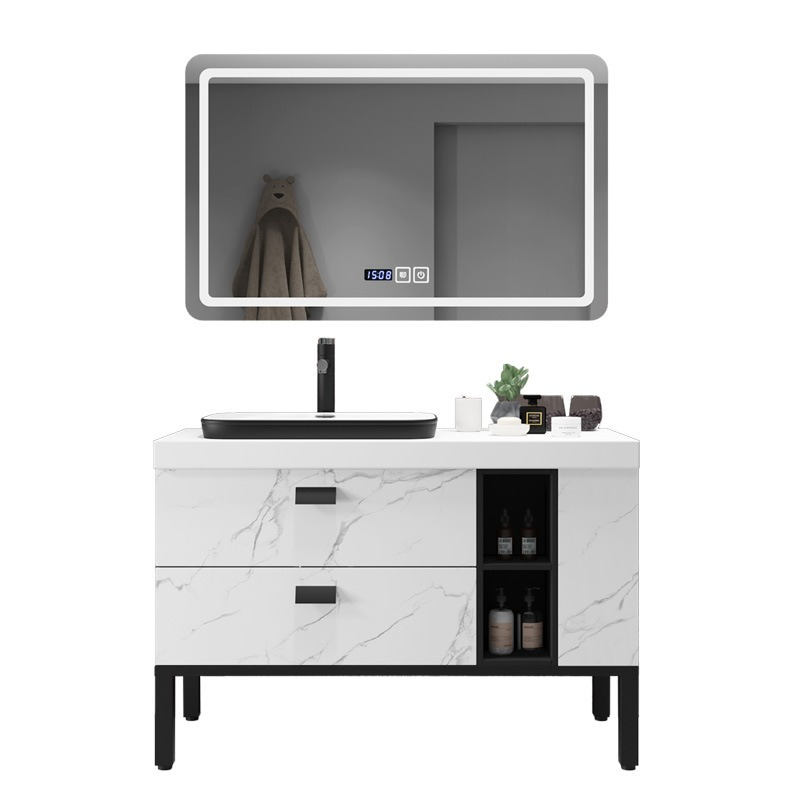
A CE certified vanity is the baseline for entering the European market, but most importers treat it as a simple checkbox rather than a complex regulatory split. MFBATH serves over 1,000 distributors across 20+ countries by engineering region-ready solutions that navigate the specific regulatory, climatic, and aesthetic needs of the EU. The reality is that a standard wooden cabinet and a vanity set with an LED mirror face completely different customs scrutiny, and confusing the two is a fast track to rejected shipments.
EU buyers reject approximately 72% of products lacking valid CE documentation during customs clearance, according to Eurostat 2023 data. This high rejection rate usually stems from a misunderstanding of the “Component Split” risk, where a single electrical component like a mirror triggers a full Low Voltage Directive audit on a product declared simply as furniture. Beyond the CE mark, the real gatekeepers for premium retail are national mandates like France’s A+ VOC labeling or Germany’s Blue Angel certification, which demand rigorous formaldehyde emission tests and material safety compliance that go far beyond basic factory standards.
Why Most CE Vanity Claims Fail Customs
Generic CE stickers trigger 72% customs rejection rates in the EU.
Most importers assume a “CE” sticker validates the entire bathroom vanity set. This is a critical error. EU customs officers classify furniture and electrical appliances under completely different regulatory frameworks. A standard wooden vanity is judged solely on material safety, primarily REACH compliance and formaldehyde emissions (EN 717-1). It does not require CE marking.
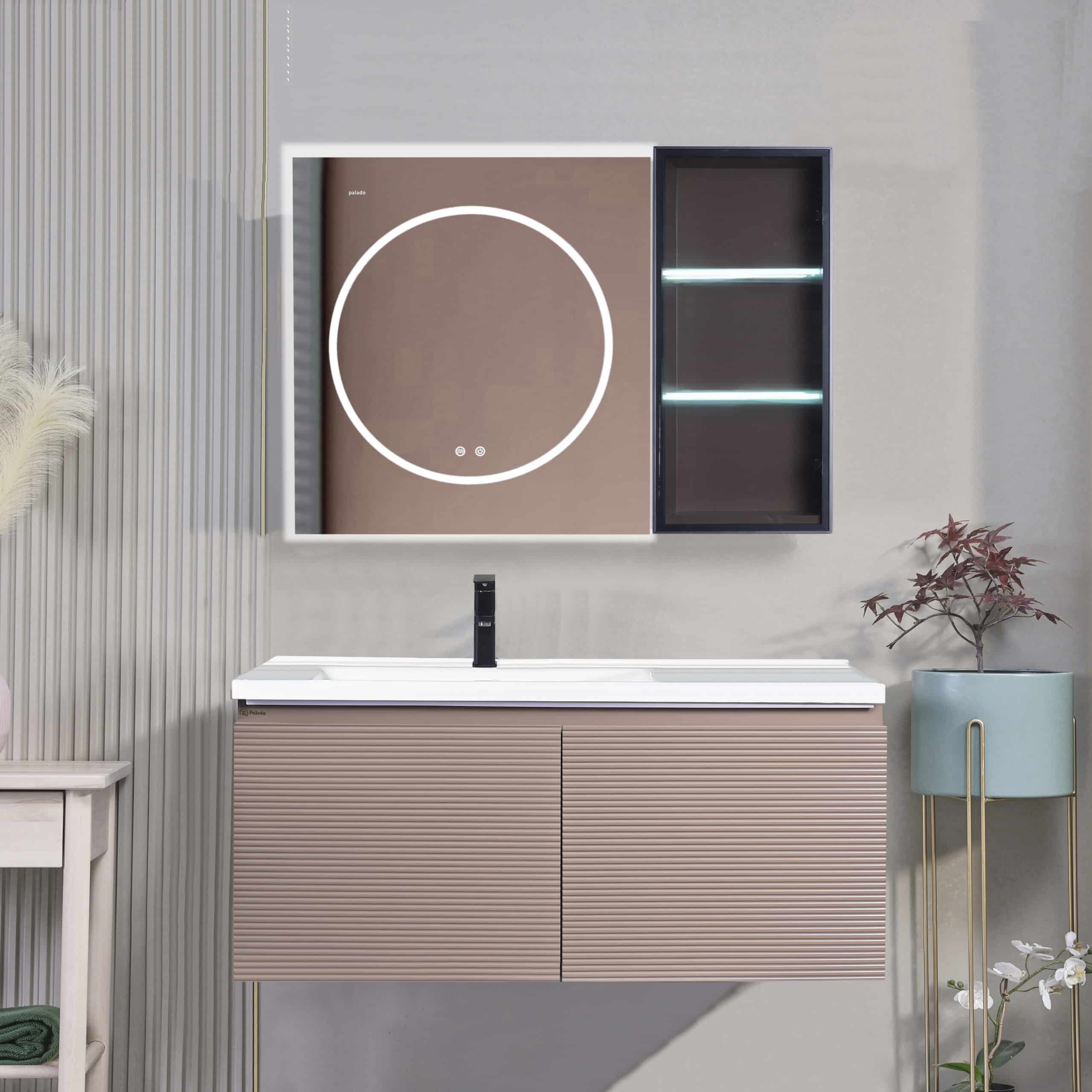
The moment you integrate an LED mirror into the vanity unit, the classification shifts. The LED component is treated as an electrical appliance, triggering strict Low Voltage Directive (LVD) and Electromagnetic Compatibility (EMC) checks. If a supplier declares a vanity-with-mirror as a simple piece of furniture, customs flags it immediately for misdeclaration.
Beyond the physical sticker, the lack of a proper Declaration of Performance (DoP) is a primary cause of seizure. A DoP is a legal document where the manufacturer asserts the product meets all applicable EU directives. Without this paper trail, even a physically compliant product will be rejected at the border, resulting in 15-20% demurrage fees.
-
- Furniture Only: Requires REACH compliance for coatings and EN 717-1 formaldehyde tests. No CE marking needed.
- Vanity with LED Mirror: Triggers LVD and EMC checks. Requires full CE marking and a Declaration of Performance.
- RoHS Compliance: Mandatory for the electronic components within the LED mirror to limit hazardous substances.
- Documentation Risk: Missing DoP or incorrect HS codes lead to automatic 72% rejection rates during clearance.
Real Cost of REACH and Formaldehyde Standards
Non-compliant MDF or adhesives trigger 15-20% demurrage fees and potential EU border rejections.
The financial penalty for ignoring REACH compliance extends far beyond the cost of the goods. When a shipment fails to meet strict material safety thresholds, it triggers immediate customs holds at EU ports. The resulting demurrage and storage fees typically consume 15-20% of the total cargo value, effectively erasing your profit margin before the product ever reaches the shelf.
A critical distinction exists between standard E1 grade formaldehyde emissions and the upcoming REACH Annex XVII limits. While E1 remains the baseline for wood-based panels, the full application of stricter formaldehyde limits is scheduled for August 2026. Importers relying solely on current E1 certificates risk holding obsolete documentation that will be deemed insufficient by customs authorities within the next two years.
Border rejections are frequently caused by hidden non-compliant materials, specifically in MDF cores and industrial adhesives. Even if the visible surface passes inspection, the internal bonding agents may release prohibited volatile organic compounds (VOCs). Eurostat 2023 data indicates that approximately 72% of products lacking valid, verifiable CE documentation are rejected during clearance, highlighting the necessity of rigorous pre-shipment auditing.
-
- Financial Impact: Port storage and demurrage fees average 15-20% of cargo value for non-compliant shipments, directly destroying B2B margins.
- Regulatory Shift: REACH Annex XVII stricter formaldehyde limits take full effect in August 2026, rendering standard E1-only declarations obsolete.
- Rejection Cause: Non-compliant MDF cores and hidden adhesive chemicals are primary triggers for EU border rejections and customs seizures.
| Regulation | Standard | Compliance Method | Risk Mitigation | Cost Impact |
|---|---|---|---|---|
| REACH Annex XVII | Stricter Formaldehyde Limits (Aug 2026) | ISO 14001-certified E1 Grade Materials | Prevents border rejections and 15-20% demurrage fees | Avoids 100% shipment rejection rates |
| Formaldehyde Emissions | EN 717-1 Testing | Rigorous 5-Stage Quality Control | Ensures indoor air safety for EU markets | Protects brand reputation from defective goods |
| National Mandates | France A+ / Germany Blue Angel | Low VOC Coatings & Adhesives | Access to premium retail channels | Preserves margins through efficient sourcing |
| Material Safety | REACH Restricted Substances | PVC Edge-Sealing & Non-Toxic Finishes | Prevents swelling in humid EU bathrooms | Reduces long-term warranty claims |
| Customs Clearance | Valid CE Documentation | Complete Compliance Checklists | Prevents 72% rejection rate for non-compliant goods | Ensures on-time delivery and margin preservation |
LED Mirrors vs. Cabinets: Dual Compliance Path
A single LED mirror transforms a simple furniture declaration into a complex electrical compliance audit.
Most importers treat bathroom vanities and mirrors as a single HS code, but EU customs enforcement treats them differently. A cabinet is classified as furniture, subject to material safety standards like REACH. However, adding an LED mirror triggers the Low Voltage Directive (LVD) and Electromagnetic Compatibility (EMC) regulations. This “Component Split” is where 72% of shipments fail to clear customs because suppliers provide a furniture declaration for the vanity but fail to attach the required CE Declaration of Conformity for the mirror’s electrical components.
-
- EMC & RoHS Verification: LED drivers and wiring must pass strict electromagnetic interference tests. You must verify that the supplier provides a RoHS compliance report proving the wiring and drivers are free of restricted hazardous substances.
- Documentation Requirements: Unlike standard furniture, vanity-mirror sets require a full technical file. This includes specific Test Reports for the lighting, a Declaration of Performance (DoP), and user manuals translated into the local languages of every target EU country.
- WEEE Compliance: Because the mirror contains electrical components, it falls under the WEEE directive. The packaging must feature the crossed-out wheelie bin symbol, and the supplier must be registered for electronic waste recycling in the destination country.
The cost of ignoring this split is severe. Non-compliant shipments face average demurrage and storage fees of 15-20% of the total cargo value. While many competitors offer “one-size-fits-all” compliance, MFBATH utilizes a rigorous five-stage quality control process to ensure every LED component is tested and documented separately from the cabinetry, preventing costly border rejections.

Sourcing Strategy for European Market Access
EU compliance requires FSC, Blue Angel, and A+ labels alongside CE to avoid customs rejection.
Sourcing a CE certified vanity is not just about the CE mark; it is about proving material safety and sustainable forestry. Most importers fail because they ignore the specific national mandates that act as gatekeepers for premium retail channels in Europe.
-
- Vetting for Region-Ready Capabilities: Do not accept generic factory audits. Verify that the manufacturer has a documented process for tracking REACH compliance for every batch of adhesive and PVC edge banding. If they cannot prove moisture resistance in edge sealing, your goods will swell in humid EU bathrooms despite passing formaldehyde tests.
- FSC Certification and Blue Angel/A+ Labeling: CE is the legal minimum, but Blue Angel (Germany) and A+ VOC labeling (France) are the retail gatekeepers. MFBATH utilizes ISO 14001-certified materials to meet these strict sustainability requirements. Without FSC certification, you risk losing access to major European retailers and public tenders.
- Pre-Shipment Audits for Labeling and Marks: A missing recycling symbol or incorrect VOC declaration can trigger a 15-20% demurrage fee at EU ports. We perform rigorous five-stage inspections to ensure every unit carries the correct CE, FSC, and national compliance marks before the container is sealed.
Conclusion
Navigating the split between furniture REACH standards and electrical CE marking prevents costly customs rejections. Prioritizing moisture-resistant edge sealing and local certifications like France’s A+ label ensures your vanities survive both the border and the bathroom.
Frequently Asked Questions
What is the HS code for bathroom vanities?
Bathroom vanities typically fall under HS code 9403.30 for wooden furniture or 9403.60 for other materials. The exact code depends on the primary material composition of the cabinet. Verify the specific HS code with your customs broker based on material mix.
What is the HS Code 9406000090?
HS code 9406.00.00 is designated for prefabricated buildings and structures, not bathroom vanities. Using this code for furniture will likely cause customs delays or rejection. Use the correct furniture code to avoid customs clearance issues.
What is the HS Code 1905906000?
HS code 1905.90 refers to baked goods and pastry, which is unrelated to bathroom furniture. This code is for food products, not vanities. Ensure you use the correct furniture classification for accurate import duties.
Do I need FSC certification for EU imports?
FSC certification is not a mandatory legal requirement for EU imports but is increasingly demanded by retailers and architects for sustainability compliance. MFBATH uses E1-grade materials to meet strict formaldehyde emission. Check with your specific buyers or local regulations regarding FSC requirements.
How does REACH affect vanity materials?
REACH restricts hazardous substances in adhesives, paints, and wood composites, requiring E1-grade formaldehyde emissions for compliance. Non-compliant materials can lead to border rejections and significant demurrage fees. Ensure all material safety data sheets are provided before shipping.


0 Comments