

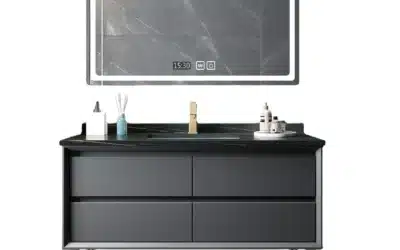
Commercial-grade bluetooth anti fog mirrors have moved from luxury add-ons to standard procurement requirements for hotel contractors, driven by the need to eliminate guest complaints about foggy glass and cluttered bathroom counters. MFBATH addresses this shift by engineering mirrors that solve the specific logistical nightmares of multi-unit builds: signal bleeding between adjacent rooms and the high cost of replacing sealed retail units. By integrating restricted-range Bluetooth chips with modular, hot-swappable driver trays, these fixtures allow maintenance teams to fix a broken LED or Bluetooth module in under ten minutes without stripping the bathroom wall.
This approach directly counters the common failure patterns seen in generic imports, where a single component failure forces the replacement of the entire mirror. Professional buyers demand strict UL/cUL or CE compliance and minimum IP44 ratings to ensure safety in high-steam environments, avoiding the customs delays and safety violations that plague non-certified shipments. Understanding the engineering behind these commercial fixtures—specifically how they handle localized SSIDs and toolless maintenance—is essential for keeping projects on schedule and minimizing long-term ownership costs.
Why Hotels Upgrade to Smart Mirrors
Commercial-grade Bluetooth anti-fog mirrors use demister pads and localized 3-5m Bluetooth to prevent signal bleeding.
Hotels are upgrading to smart mirrors because they solve two critical operational nightmares: guest connectivity expectations and vanity space limitations. Unlike standard retail mirrors that broadcast unrestricted signals up to 15 meters, commercial-grade solutions restrict Bluetooth range to 3 to 5 meters. This isolation prevents cross-room pairing, ensuring a guest in Room 304 never accidentally connects to the audio in Room 305.
The integration of these systems streamlines the bathroom environment by eliminating countertop clutter. By housing wireless audio and digital displays directly within the mirror, contractors can remove the need for separate speakers and dimmer switches. This maximizes valuable counter space while providing the localized media hub that modern guests expect.
-
-
- Signal Isolation: Restricted 3-5 meter Bluetooth range and localized SSIDs prevent signal bleeding between adjacent hotel rooms, ensuring secure, one-to-one connections.
- Vanity Streamlining: Integrated adjustable LED lighting and wireless audio remove the need for separate countertop speakers, maximizing bathroom counter space.
- Non-Invasive Upgrade: Modular chassis design allows component replacement in under 10 minutes without removing the mirror, avoiding invasive structural changes during retrofits.
-
Meeting the expectation for connected rooms requires strict adherence to safety and environmental standards. Commercial mirrors must maintain a minimum IP44 waterproof rating to protect internal electronics from high-humidity and steam. Additionally, they must meet UL, cUL, CE, and RoHS compliance to satisfy commercial building codes in North America and Europe.
-
- Environmental Protection: Strict IP44 or IP54 ratings are mandatory to protect sensitive electronics from high-humidity and steam in commercial bathroom environments.
- Regulatory Compliance: UL, cUL, CE, and RoHS certifications are non-negotiable for commercial building codes, eliminating customs delays and compliance risks.
- Customization: Color temperature controls ranging from 2700K to 6000K allow tailoring to specific interior design schemes without altering the fixture’s structure.
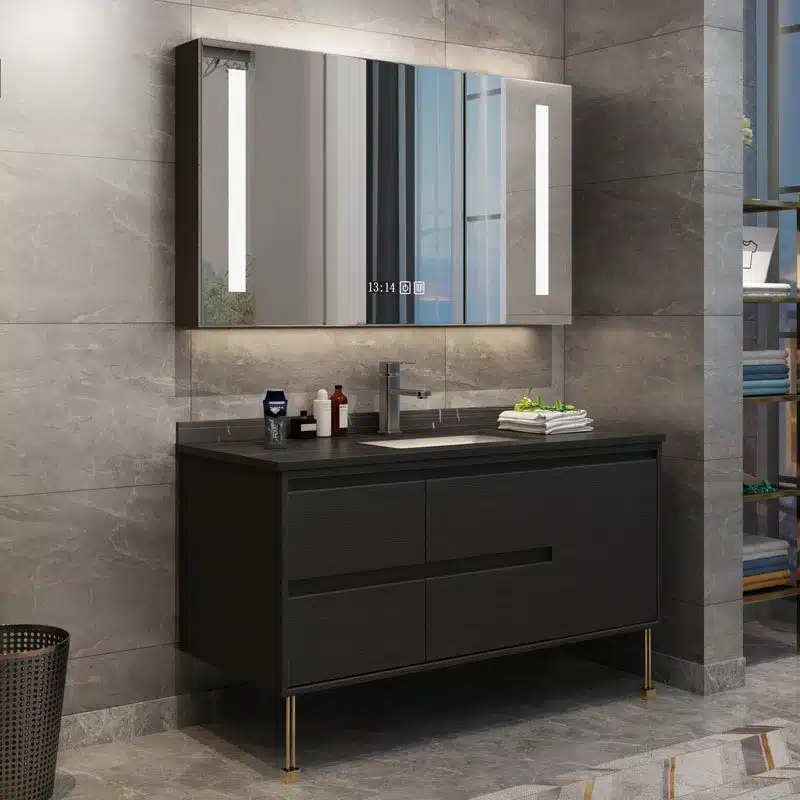
Real Cost of Commercial vs Retail Mirrors
Commercial mirrors with sealed backplanes require full unit replacement upon failure, while modular designs allow component swaps in under 10 minutes.
Standard retail-grade smart mirrors often feature sealed backplanes, meaning a single failed LED strip or blown capacitor requires replacing the entire unit. This is a major source of project delays and wasted budget for contractors. In contrast, commercial-grade options utilize a modular chassis with toolless, hot-swappable driver trays. This design allows maintenance teams to swap out individual electronic components in under ten minutes without removing the mirror glass from the wall.
Operational downtime is a costly issue in the hospitality sector. Commercial-grade mirrors are engineered with independent, accessible compartments for the LED driver, Bluetooth receiver, and anti-fog heating elements. This modularity ensures that if a component fails, it can be fixed immediately, preserving the aesthetic integrity of the room and avoiding the need to strip the bathroom for full unit replacements. This approach can reduce total ownership costs by up to 60% compared to sealed retail units.
-
- Modular Chassis: Allows component replacement in under 10 minutes without removing the mirror, minimizing room downtime.
- Signal Isolation: Restricted Bluetooth range of 3-5 meters prevents cross-room pairing, avoiding guest complaints.
- IP44/IP54 Rating: Strict waterproof certification protects electronics from high-humidity and steam in hotel bathrooms.
- UL/cUL Compliance: Mandatory for commercial building codes in North America and Europe, ensuring safety and code adherence.
- Custom Color Temp: Controls range from 2700K to 6000K, allowing tailoring to specific interior design schemes.
| Feature | Specification | Advantage |
|---|---|---|
| Maintenance Model | Modular chassis with hot-swappable driver trays | Component replacement in under 10 minutes; up to 60% reduction in total ownership cost |
| Signal Isolation | Restricted Bluetooth range (3-5 meters) with localized SSIDs | Prevents cross-room pairing and signal bleeding in dense hotel layouts |
| Safety Certification | UL, cUL, CE, and RoHS compliant | Mandatory for commercial building codes; eliminates customs delays and compliance risks |
| Environmental Resistance | IP44 or IP54 waterproof rating | Protects electronics from high-humidity and steam in commercial bathroom environments |
| LED Lifespan | 50,000-hour lifespan (2835/3528/5050 SMD strips) | Minimizes long-term maintenance downtime and ensures consistent aesthetic quality |
Modular Design and Simplified Maintenance
Modular chassis design cuts maintenance downtime by 60% compared to sealed retail mirrors.
In high-density hotel environments, standard retail mirrors with sealed backplanes create a massive liability for contractors. A single failed LED strip or blown Bluetooth capacitor forces a full unit replacement, requiring bathroom stripping and risking project delays. Commercial-grade smart mirrors utilize a modular chassis that isolates the LED driver, Bluetooth receiver, and heating elements in independent, accessible compartments.
-
- Toolless Hot-Swappable Trays: Maintenance staff can replace broken modules in under 10 minutes without removing the mirror glass from the wall, preserving the room’s aesthetic and minimizing guest disruption.
- Signal Bleeding Control: Standard retail mirrors broadcast unrestricted signals up to 15 meters, causing cross-room pairing. Commercial solutions use localized SSIDs and PIN authentication to restrict range to 3-5 meters, ensuring secure one-to-one connections.
- IP44/IP54 Waterproofing: Independent compartments are sealed to IP44 or IP54 standards, protecting sensitive electronics from high-humidity and steam while allowing easy access for component-level repairs.
- Cost Efficiency: Modular maintenance reduces total ownership costs by up to 60% by eliminating the need to discard functional glass and frames when only internal electronics fail.
This engineering approach directly addresses the contractor’s fear of high maintenance costs and project delays. By specifying UL certified smart mirrors hotel procurement teams can ensure compliance while securing a product that minimizes downtime. The ability to fix components immediately preserves the integrity of the renovation schedule and protects the hotel’s revenue streams during peak occupancy.
Avoiding Bluetooth Signal Bleeding
Retail mirrors broadcast up to 15 meters; commercial units cap at 3-5 meters to prevent cross-room pairing.
In high-density hotel layouts, standard retail-grade Bluetooth mirrors pose a significant operational risk. These units typically broadcast unrestricted signals up to 15 meters, leading to frequent guest complaints when they accidentally pair with speakers in adjacent rooms. For project contractors, this signal bleeding creates unnecessary maintenance overhead and degrades the perceived value of the property.
Commercial-grade smart mirrors utilize specialized, low-emission Bluetooth chips with a restricted signal range of 3 to 5 meters. This localized broadcasting ensures that audio connections remain strictly within the bathroom boundaries, effectively isolating the device from neighboring units and preventing cross-room interference.
-
- Localized SSID: Each mirror is assigned a unique network identifier matching the specific room number, ensuring secure, one-to-one pairing for the guest.
- PIN Authentication: Advanced commercial models require PIN verification, adding a layer of security that prevents unauthorized connections from passing hallways.
- Automatic Reset: The system automatically clears the pairing history upon guest checkout, ensuring the next guest starts with a clean, secure connection state.
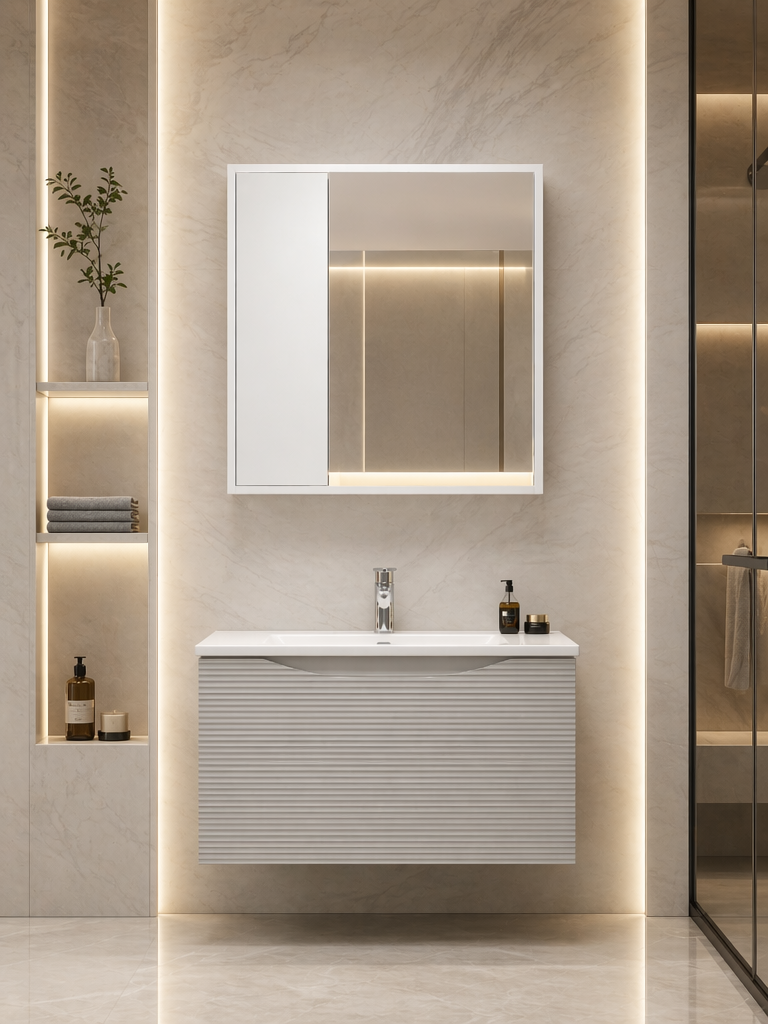
Sourcing Smart Mirrors for Hotel Projects
Commercial-grade smart mirrors require modular maintenance and signal isolation to prevent hotel project failures.
Sourcing smart mirrors for hotel projects demands a shift from retail aesthetics to industrial reliability. The primary challenge is balancing standardization for cost efficiency with customization for regional compliance and brand alignment. Project developers must prioritize fixtures that minimize downtime and eliminate guest complaints caused by technical failures or interference.
Balancing standardization and customization is achieved through a unified chassis with variable configurations. Manufacturers supporting low MOQs allow buyers to order standardized base units customized with specific dimensions, Pantone color matching, and branded hardware. This approach ensures visual consistency across hundreds of rooms while accommodating unique architectural constraints without sacrificing production speed.
-
-
- Dimensional Flexibility: Custom widths and depths accommodate varying wall spaces, ensuring seamless integration with hotel bathroom layouts.
- Color Temperature Tuning: Adjustable ranges from 2700K to 6000K allow designers to match ambient lighting schemes, enhancing the perceived luxury of the space.
- Hardware Branding: OEM services include logo engraving on frames and custom packaging, protecting the hotel’s brand identity throughout the supply chain.
-
Tailored configurations extend beyond physical dimensions to include precise environmental controls. Commercial-grade Bluetooth anti-fog mirrors integrate demister pads and low-range Bluetooth chips that operate independently within a 3 to 5-meter radius. This restricted signal range prevents cross-room pairing, a common issue in dense hotel layouts where guests might accidentally connect to adjacent room devices.
-
-
- Signal Isolation: Localized SSIDs and PIN authentication ensure a one-to-one connection, preventing signal bleeding between adjacent suites.
- Anti-Fog Performance: Integrated heating elements warm the glass surface instantly, eliminating condensation without the mess or ineffectiveness of DIY chemical sprays.
- IP Rating Compliance: Strict IP44 or IP54 certifications protect sensitive electronics from high humidity and steam, ensuring safety in wet environments.
-
Specialized mounting hardware is critical for meeting strict project timelines. Unlike residential installations, commercial projects require rapid deployment to meet milestone payment deadlines. Utilizing toolless, hot-swappable driver trays and standardized mounting brackets allows on-site contractors to install and maintain units in minutes. This modularity reduces total ownership costs by up to 60% by enabling component replacement rather than full unit swaps.
-
- Rapid Installation: Pre-drilled templates and standardized bracket systems reduce on-site labor hours and accelerate room turnover.
- Modular Maintenance: Hot-swappable LED and Bluetooth modules can be replaced in under 10 minutes without removing the mirror glass.
- Regulatory Precision: Pre-certified UL/cUL and CE compliance eliminates customs delays and ensures adherence to local building codes.
Meeting strict project timelines requires a manufacturer with high capacity and predictable lead times. Facilities producing up to 5,000 units monthly and maintaining rigorous five-stage quality control ensure consistent supply for large-scale developments. Understanding these engineering and logistical details allows contractors to secure reliable partners who deliver on time, within budget, and to spec.
Conclusion
Commercial-grade Bluetooth anti-fog mirrors eliminate the hidden costs of retail-grade fixtures by integrating modular maintenance and strict UL/CE compliance into a single unit. The toolless driver trays reduce repair downtime to under ten minutes, while the 3-to-5-meter signal cap prevents cross-room interference that triggers costly guest complaints.
Review the technical specifications for MFBATH’s modular Bluetooth anti-fog mirrors to verify compatibility with your project’s electrical and acoustic requirements.
Frequently Asked Questions
Do anti-fog mirrors really work?
Yes, commercial-grade models use heated demister pads behind the glass to prevent condensation instantly. Ensure the unit has proper IP44/IP54 ratings for safe operation in high-humidity hotel bathrooms. Verify IP rating and heating element quality before purchase.
What is the mirror trick in hotels?
Hotels integrate smart LED mirrors with Bluetooth and anti-fog features to reduce countertop clutter and enhance guest experience. This modular approach allows for easy maintenance and a premium, connected room feel. Focus on modular designs for easier long-term maintenance.
Are Bluetooth mirrors worth it?
They offer significant value by eliminating the need for separate speakers and reducing bathroom counter clutter. For hotels, this connectivity meets modern guest expectations for smart, integrated amenities. Assess guest tech usage trends to justify the investment.
Does Dawn dish soap prevent fogging?
No, dish soap is not a reliable long-term solution for commercial anti-fog needs. Professional demister pads provide consistent, instant clarity without leaving streaks or residue on the glass. Rely on built-in heating elements for consistent results.
Why avoid looking into mirrors at 3am?
This is a cultural superstition rather than a factual concern for hotel operations. From a sourcing perspective, focus on safety certifications and durable materials for commercial reliability. Prioritize safety certifications over folklore for commercial projects.


0 Comments