


Specifying the correct LED mirror IP rating is the first line of defense against electrical liability and premature fixture failure in commercial bathrooms. MFBATH engineers its smart mirror portfolio to meet specific regional codes, ensuring that units deployed in high-humidity zones like Europe and Asia withstand constant steam exposure without compromising safety or performance.
Many specifiers default to basic IP20 units for vanity areas, missing the mark on splash protection and risking costly callbacks. To guarantee guest safety and maintain aesthetic fidelity over years of use, you must match the IP44 or IP65 rating to the exact bathroom zone and demand silicon-encapsulated components that resist humidity-induced corrosion.
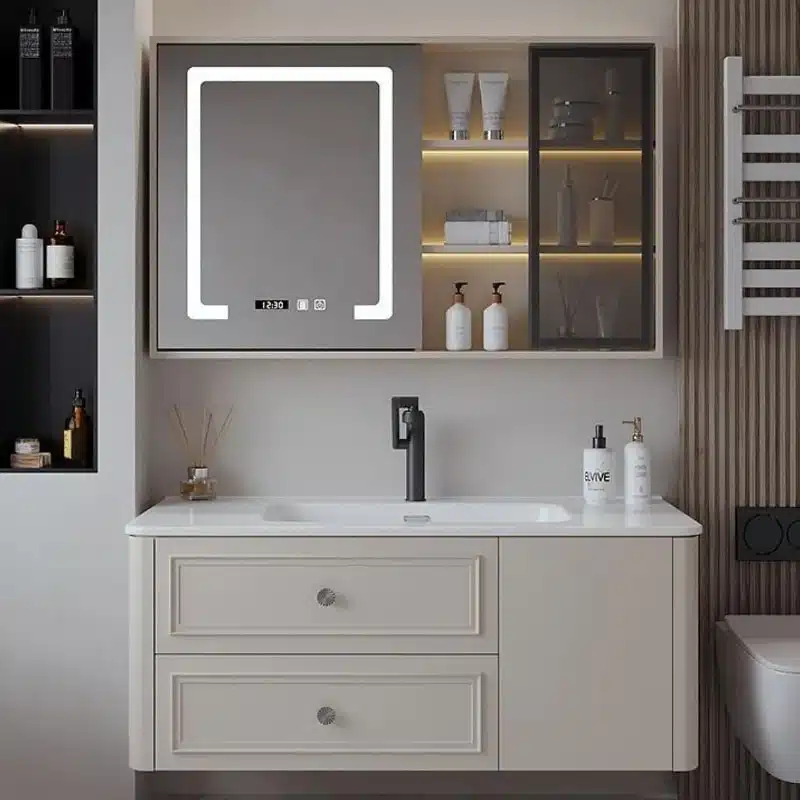
IP Ratings and Bathroom Zones Defined
Zone 2 requires IP44; Zone 1 demands IP65 to prevent electrical failure and ensure guest safety.
Specifying the correct IP rating is not merely a compliance checkbox; it is the primary defense against catastrophic liability in commercial projects. Building codes strictly define bathroom zones based on water exposure, and violating these boundaries exposes architects to severe electrical failure risks. Generic IP20 mirrors are strictly prohibited in wet areas and offer zero protection against the humidity inherent in luxury hospitality environments.
Zone 2 represents the immediate perimeter around the shower or bathtub, extending up to 2.25 meters. Per UK and US electrical safety regulations, this area mandates a minimum IP44 rating. This specification ensures the unit is protected against solid objects larger than 1mm and water splashing from any direction, preventing steam from corroding internal copper traces.
Zone 1 covers the interior of the shower or the basin directly beneath the faucet. This area requires a strict IP65 rating to withstand direct water jets and heavy steam ingress. While Zone 2 protects against splashes, Zone 1 demands total dust tightness and low-pressure jet resistance to maintain electrical isolation for the user.
-
- Zone 2 (IP44): Mandatory for vanity areas and mirrors adjacent to showers; protects against splashing water and solid debris larger than 1mm.
- Zone 1 (IP65): Required for fixtures inside shower enclosures or directly over basins; provides total dust protection and resistance to low-pressure water jets.
- Liability Avoidance: Specifying IP20 in wet zones violates UL/CE standards, creating fire hazards and guaranteeing costly callbacks for project developers.
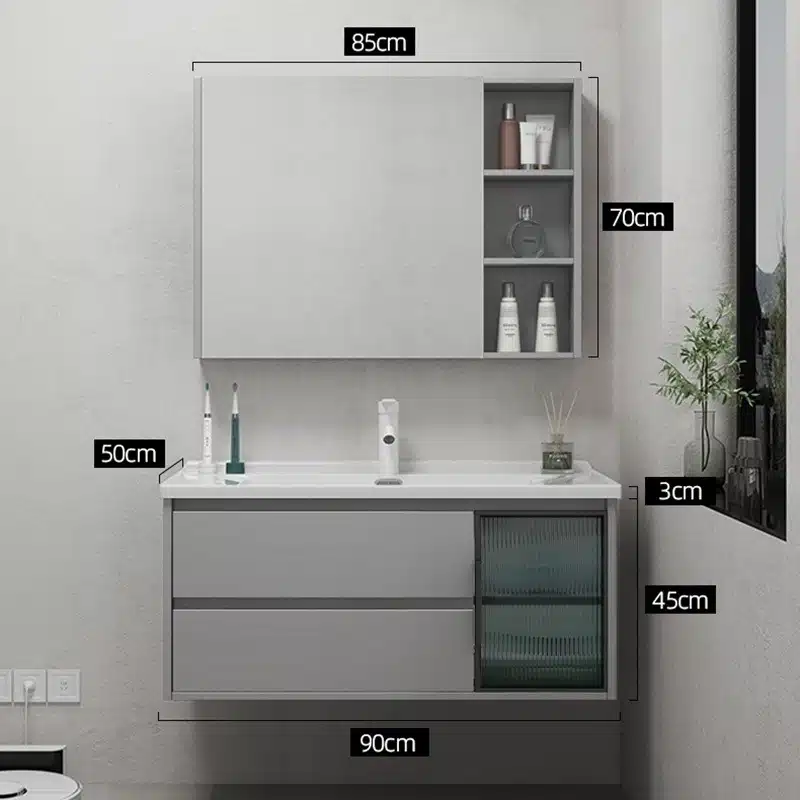
Real CRI and CCT Data for Vanity Lighting
Brightness is useless without color fidelity; specify CRI 90+ and R9 > 50 to prevent liability.
Standard LED mirrors often use CRI 80 sources to cut costs, but this creates a dangerous liability for specifiers. Low CRI distorts skin tones and washes out the natural hues of luxury materials like brass, walnut, and sintered stone. For commercial hospitality or high-end residential projects, accurate color rendering is non-negotiable for meeting design intent.
-
- CRI & R9 Standard: Require a minimum CRI of 90+ with an R9 value greater than 50. This ensures the light spectrum properly renders reds and warm skin tones, which standard LEDs often fail to capture.
- CCT Selection: Select 3000K for warm, luxurious atmospheres that complement wood and brass, or 4000K for crisp, clinical accuracy in modern spaces. The wrong Kelvin temperature will permanently alter the perceived color of your vanity materials.
- Material Interaction: Test light samples against your specific vanity finishes. High CRI reveals the true depth of sintered stone veins and the metallic sheen of hardware, preventing client dissatisfaction upon installation.
Luxury buyers do not purchase mirrors for raw lumens; they purchase them for the quality of the reflection. A high-lumen, low-CRI mirror creates a sterile, distorted environment that feels cheap. By specifying photometric precision, you protect your project from aesthetic failure and ensure the lighting enhances the architectural details rather than flattening them.
Mirror Alternatives: Touch vs. Proximity Sensors
Capacitive touch screens fail in steam; infrared proximity sensors are the only reliable control method for commercial hygiene.
Specifiers often default to capacitive touch sensors for their sleek, button-less aesthetic. However, this interface relies on detecting minute changes in electrical charge. In a high-humidity environment, condensation creates a conductive film across the glass surface. This triggers false inputs, known as ‘ghost touches,’ causing lights to flicker or sensors to activate randomly. For a commercial project, this leads to immediate user frustration and increased maintenance tickets.
Infrared proximity sensors represent a fundamentally different engineering approach. They utilize an emitter and receiver to detect the presence of an object within a specific radius, typically waking the mirror when a user approaches. Because this mechanism does not require physical contact or rely on surface conductivity, it remains completely immune to steam, water droplets, and humidity. This ensures uninterrupted operation in the densest commercial environments.
The operational reliability gap between these two technologies is most pronounced in hospitality and high-traffic public facilities. Residential bathrooms generally maintain lower humidity levels and see less frequent usage, allowing capacitive sensors to function adequately. In contrast, hotel guest rooms and public restrooms generate continuous steam and experience heavy, rapid-fire usage. Here, the infrared sensor eliminates the liability associated with electrical glitches and ensures a consistent, professional user experience.
-
- Capacitive Touch: Detects electrical charge; fails in high humidity due to condensation causing ghost touches; unsuitable for steam-heavy commercial zones.
- Infrared Proximity: Detects physical presence via beam interruption; immune to steam and water; ideal for high-traffic commercial and hospitality applications.
- Maintenance Impact: Capacitive failures drive service calls and user complaints; infrared reliability reduces callback rates and long-term support costs.

How to Source IP65 Mirrors Without Callbacks
Sourcing IP65 mirrors requires verifying third-party test reports, Class 2 SELV drivers, dew-point sensors, and silicon encapsulation.
Procuring IP65-rated LED mirrors for commercial projects without triggering callbacks demands rigorous technical verification beyond standard compliance labels. Architects and specifiers must enforce strict component-level auditing to prevent moisture-induced electrical failures and liability risks in high-humidity environments.
-
- Third-Party Test Reports: Mandate independent verification from TUV or SGS. These reports provide objective, legally defensible proof of the mirror’s ingress protection rating against water jets, ensuring it meets the specific Zone 1 or Zone 2 requirements of local building codes.
- Class 2 SELV External Driver: Require a 24V DC external driver to isolate the user from dangerous mains voltage. This safety standard is non-negotiable for hotel and commercial installations, as it significantly reduces the risk of electrical shock in wet bathroom environments.
- Dew-Point Sensors: Eliminate the fire hazard of ‘dry burning’ associated with manual resistive heating. Premium mirrors utilize dew-point sensors that calculate steam formation and automatically shut off the anti-fog function, preventing overheating and reducing energy consumption.
- Silicon-Co-Extruded LED Strips: Specify silicon-encapsulated strips over cheap PVC alternatives. Silicon maintains flexibility and prevents UV degradation or cracking under steam, protecting internal copper traces from corrosion and preventing the premature yellowing that ruins aesthetic fidelity.
Conclusion
Specifying the correct LED mirror IP rating prevents liability from steam-induced electrical failures and ghost-touch errors. Silicon-encapsulated strips and infrared sensors eliminate the maintenance spikes caused by PVC degradation and capacitive condensation.
Review detailed technical specifications for commercial LED mirrors, including IP ratings, CRI/CCT data, and UL/CE certifications, to verify product safety for your next project.
Frequently Asked Questions
What should I look for when buying an LED bathroom mirror?
Prioritize IP ratings for electrical safety and CRI 90+ for accurate color rendering. Verify that the mirror uses infrared proximity sensors rather than capacitive touch to prevent failure in steam. Verify sensor type and IP rating before purchasing.
Is IP44 or IP65 better for bathrooms?
IP65 is better for Zone 1 areas with direct water jets, while IP44 suffices for Zone 2 splash zones. Selecting the correct rating prevents electrical failure and ensures guest safety. Match the IP rating to the specific bathroom zone.
What IP rating for bathroom mirror?
Zone 2 requires a minimum IP44 rating, while Zone 1 mandates IP65 for jet protection. Generic IP20 mirrors are prohibited in these areas due to severe fire risks. Ensure the mirror meets the specific zone requirement.
What IP rating do I need for bathroom downlights?
Downlights in Zone 1 require IP65 to withstand direct water jets, while Zone 2 needs IP44 for splash protection. Always map the fixture rating to the specific installation zone. Map the fixture rating to the specific installation zone.
What are the common problems with LED mirrors?
Capacitive touch screens often fail in high humidity, causing ‘ghost touches,’ while cheap LEDs suffer from PCB corrosion. Upgrading to silicon-encapsulated strips and infrared sensors prevents these issues. Upgrade to infrared sensors and sealed electronics.


0 Comments