
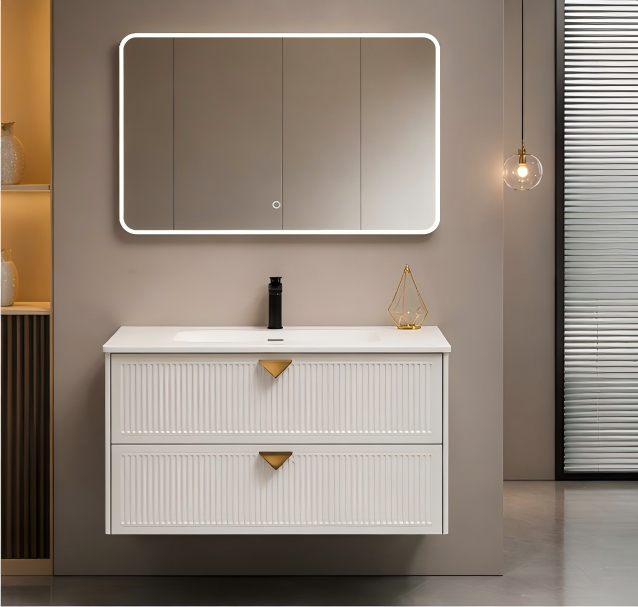
Specifying the wrong metal frame bathroom mirror is a direct path to premature material failure, warranty claims, and costly project rework. As the market shifts from simple frameless panels to bold, structural frames, the material decisions have become more critical. A poor choice in a high-humidity environment like a hotel bathroom or steam room leads to rust and corrosion, damaging not just the product but your reputation for quality and durability.
This guide serves as a technical brief for navigating the dominant mirror frame trends. We will directly compare the performance of stainless steel, aluminum, and iron in humid conditions and detail the essential rust-proofing procedures. We will also cover the technical aspects of matching wood frame finishes to vanities and analyze the construction behind popular styles like deep-frame (shadow box) and capsule (pill-shaped) mirrors.
Why Is the Market Shifting from Frameless Mirrors to Statement Frames?
The 2026 market isn’t abandoning frameless mirrors; it’s diversifying into a bifurcated trend where both minimalist frameless and bold statement frames coexist to meet specific design goals.
Statement Frames as Architectural Focal Points
In 2026, the market increasingly adopts statement frames as a primary design element. These frames function as architectural anchors, elevating a functional mirror into a room’s centerpiece, much like a piece of art. They provide structure and definition that frameless mirrors, by design, cannot. This allows designers to inject distinct character into a space using the mirror itself as a core decorative component.
- Minimalist metal frames in matte black or brushed brass add a sharp, industrial contrast that defines the vanity area.
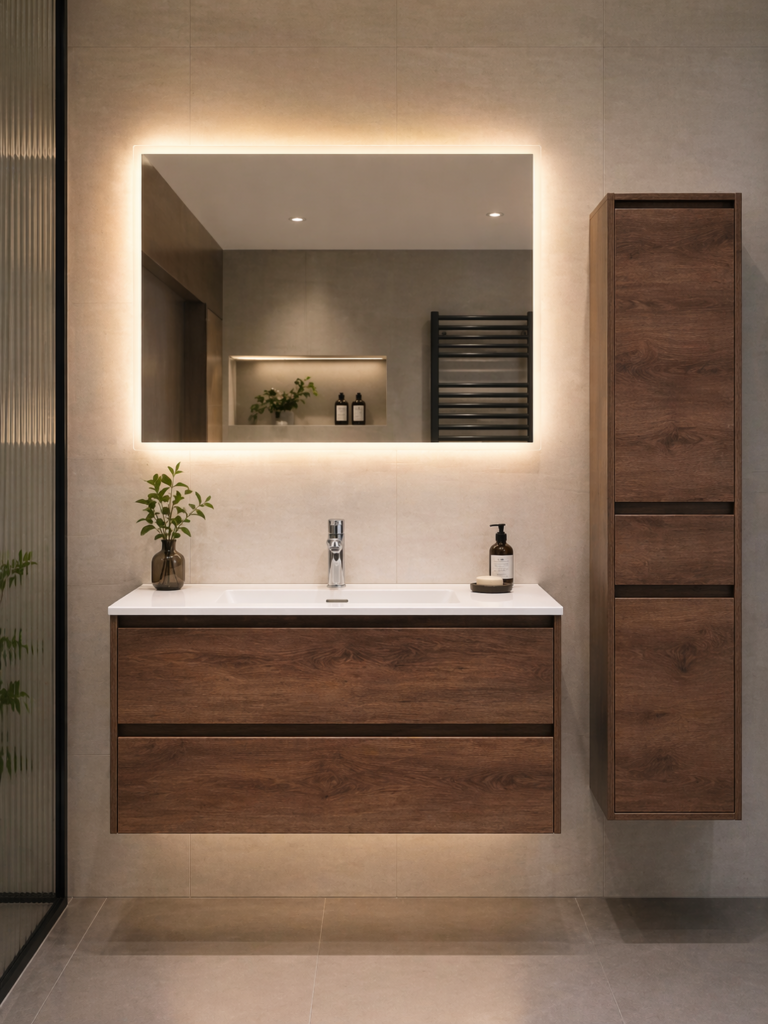
- Bold wooden frames introduce natural texture and warmth, creating visual cohesion by complementing vanity finishes and other organic materials.
The Enduring Appeal of Evolved Frameless Designs
Frameless mirrors are not becoming obsolete. Their clean, space-enhancing aesthetic remains highly valued, particularly in minimalist and smaller bathroom designs. Instead of disappearing, frameless designs are evolving. The core product now incorporates integrated technology and unconventional shapes to satisfy modern functional and aesthetic demands, securing their place in the market.
- Sustained demand for minimalism keeps frameless mirrors relevant, as they blend seamlessly into walls and prevent visual clutter.
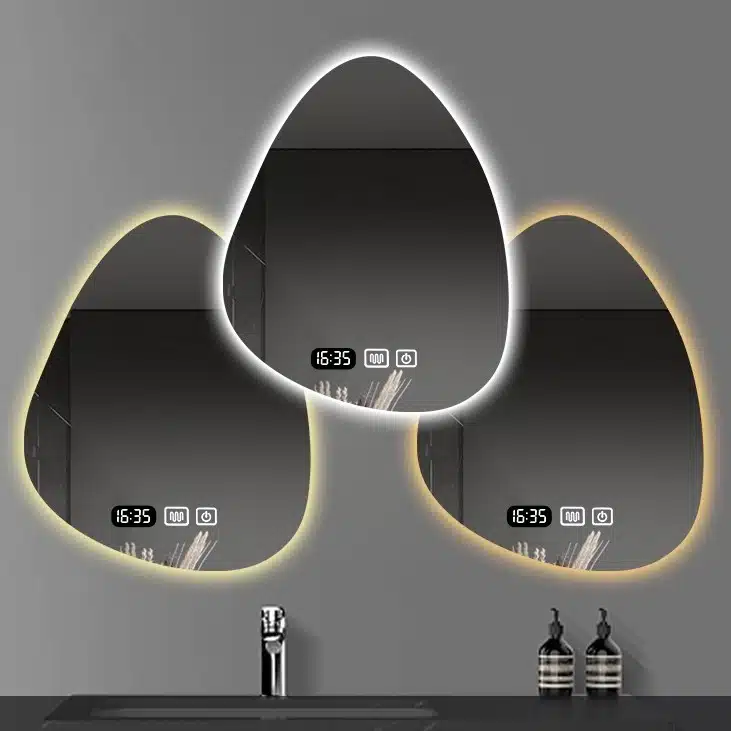
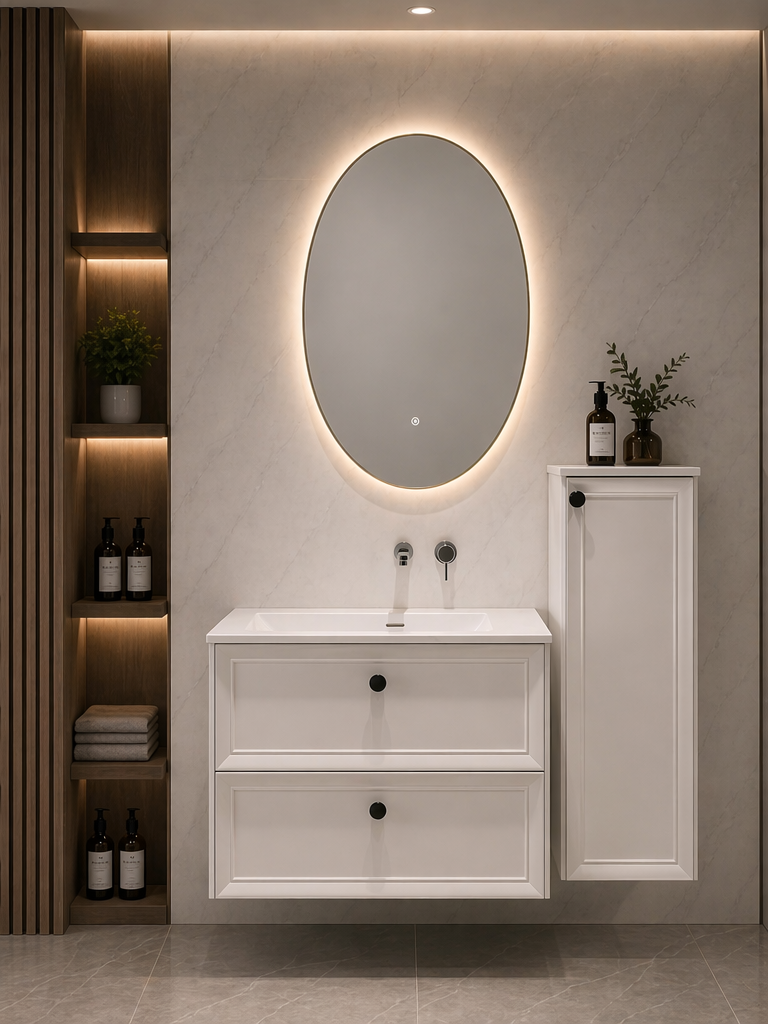
- New models feature irregular organic shapes, integrated smart functions like defoggers, and ambient LED backlighting, making them a high-tech, integrated fixture.
Personalization Driving Market Diversification
The fundamental trend is a move toward personalization, not a complete replacement of one style with another. Customers and project specifiers demand options that align with a specific interior vision. This has created a diversified market where framed and frameless mirrors thrive in different contexts, catering to distinct aesthetic and functional needs.
- With over half of consumers preferring bespoke options, the market now supports deep customization in both frame materials and frameless shapes.
- This lets designers select a mirror based on its intended role—either as a subtle, functional component or a bold, decorative statement piece.
How Do Stainless Steel, Aluminum, and Iron Compare for Metal Mirror Frames?
Material choice for metal mirror frames is a direct trade-off between the premium corrosion resistance of stainless steel, the balanced performance of aluminum, and the niche aesthetic appeal of iron.
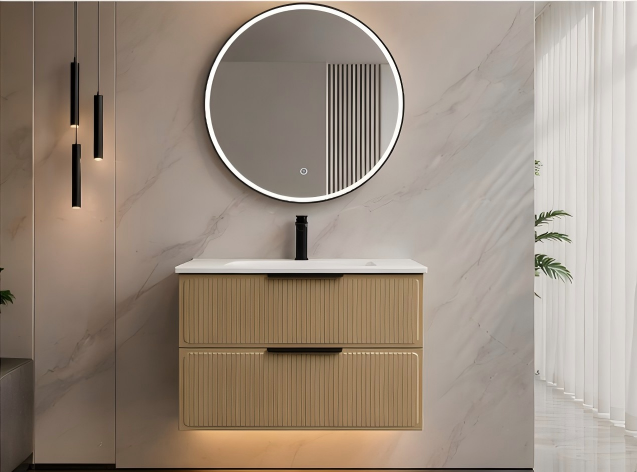
Stainless Steel: The Premium Choice for Durability
Stainless steel, specifically grades 304 and 316, is the leading material for high-end applications where humidity and steam are constant factors. Its inherent alloy composition provides superior corrosion resistance, making it the most reliable choice for luxury bathrooms or commercial wet rooms. This performance comes at a higher price point, and the material requires regular cleaning to remove water spots and maintain its premium finish.
| Material | Ideal Application | Key Advantage |
|---|---|---|
| Stainless Steel (304/316) | High-end hotels, humid bathrooms, steam rooms | Maximum corrosion and rust resistance |
| Aluminum Alloy | Mainstream residential & commercial projects | Best balance of cost, weight, and durability |
| Powder-Coated Iron | Dry areas, specific industrial/rustic decor | Unique aesthetic at a lower material cost |
Aluminum: The Balanced Mainstream Option
Aluminum alloy has secured its position as the industry standard for the mainstream market. It offers a practical mix of durability, affordability, and a low weight that simplifies handling and installation. Aluminum naturally forms a protective oxide layer that shields it from moisture. For enhanced protection in very humid environments, an anodized finish can be applied to harden the surface and boost corrosion resistance even further.
Iron: A Niche Material for Specific Aesthetics
Iron is rarely used for bathroom mirror frames because it rusts easily. Its application is almost exclusively limited to specialty decorative projects aiming for a specific industrial or rustic aesthetic, where the look outweighs long-term performance concerns. In these cases, the frame must have a robust protective powder coating to survive in a bathroom environment. It is not recommended for any application with high humidity or direct water contact.
Elevate Your Catalog with Customizable Smart Mirrors
Why Is the “Capsule” (Pill Shape) Mirror Trend Dominating Bathroom Design?
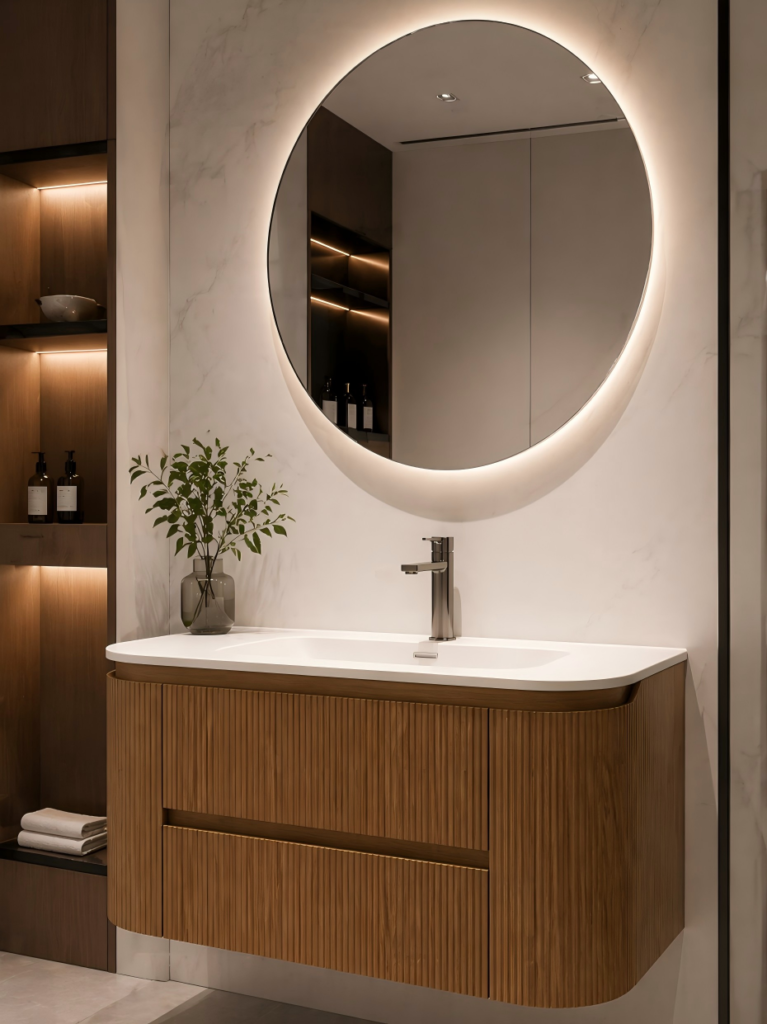
The rise of the capsule mirror isn’t just about aesthetics; it’s a strategic design choice to soften the harsh geometry of modern bathrooms, create functional focal points, and integrate seamlessly with minimalist trends like LED backlighting.
Softening Architectural Lines with Organic Shapes
The pill-shaped mirror is a direct response to the hard, angular lines that define many modern bathrooms. Its curved silhouette counteracts the rigidity of geometric tiles and boxy vanities, creating a calmer, more spa-like atmosphere that aligns with the wellness-focused design principles of 2026. The organic shape introduces a sense of flow and movement into a space that is often dominated by static, straight lines.
- Pill-shaped mirrors contrast with the grid-like patterns of tilework, breaking up visual rigidity.
- The organic curves promote a sense of relaxation and flow, aligning with wellness-focused interior design.
- This shape moves away from rigid rectangles to create a more inviting and gentle environment.
Creating a Focal Point in Minimalist and Small Spaces
Beyond its softening effect, the capsule mirror operates as a functional piece of art. Its sculptural form establishes a natural focal point without overwhelming a room. In smaller bathrooms, the curved edges are particularly effective, creating an illusion of more open space by eliminating sharp corners that can make a compact area feel confined and cluttered.
- In compact bathrooms, the absence of sharp corners creates an illusion of more space.
- The unique silhouette stands out, reducing the need for additional wall decor in minimalist designs.
- It functions as both a reflective surface and a central design element.
Alignment with Backlighting and Frameless Aesthetics
The simple, clean outline of a pill-shaped mirror is perfectly suited for modern technologies like integrated LED backlighting. This pairing elevates its sophisticated appeal without adding unnecessary visual weight. A frameless capsule mirror emphasizes the pure form, while backlit LEDs that trace the curve transform the mirror from a simple object into a source of ambient light.
- Frameless capsule mirrors emphasize the shape itself, creating a clean, floating effect.
- Backlit LEDs trace the curve, turning the mirror into an ambient light source that complements its gentle form.
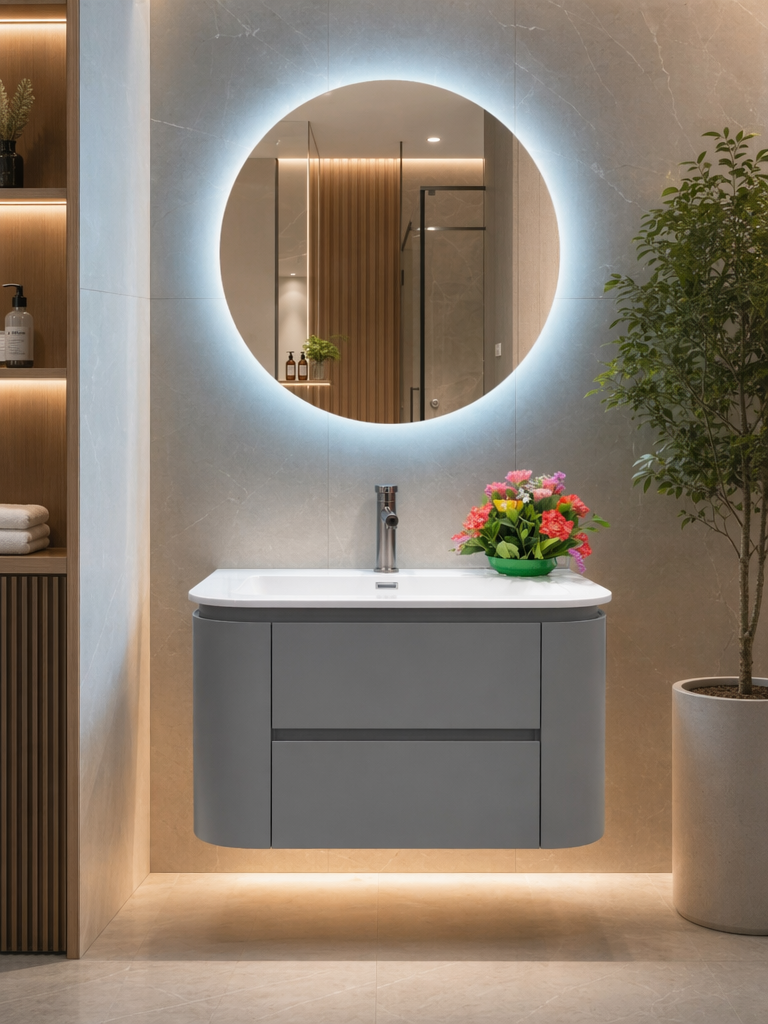
How Do You Exactly Match Wood Mirror Frames to the Bathroom Vanity Finish?
Achieving a cohesive look isn’t just about matching wood species; it’s a technical balance of material repetition, shared color undertones, and consistent moisture-resistant finishes to ensure both pieces age uniformly.
Creating a polished bathroom design hinges on the relationship between the vanity and the mirror. While an exact match provides a clean, built-in look, it’s not the only strategy. The goal is to create an intentional pairing, whether through identical materials or complementary tones, that feels deliberate rather than accidental. Success depends on understanding how to leverage repetition, harmony, and material science for a durable, high-end result.
Use Repetition of Materials and Finishes
Pairing a wood-framed mirror with a vanity made from the same species and stain is the most direct path to visual cohesion. This approach establishes a shared material language that simplifies the bathroom’s aesthetic and reduces visual clutter. When the vanity and mirror frame are identical, they read as a single, intentional unit, which makes the entire space feel more integrated and thoughtfully designed.
- A walnut-stained vanity paired with a walnut-framed mirror produces a continuous flow that looks deliberate and clean.
- Repeating the same material and finish makes the space feel more unified and can make smaller bathrooms appear less busy.
- As a manufacturer, we can produce perfectly matched sets, ensuring the solid wood vanity (Oak, Ash, Rubber Wood) and mirror frame have identical finishes from the same production batch.
| Matching Strategy | Best Application | Key Consideration |
|---|---|---|
| Direct Match (Repetition) | For creating a seamless, uniform, and built-in aesthetic that simplifies the design. | Requires sourcing from a single manufacturer to guarantee finish and grain consistency. |
| Tonal Harmony (Undertones) | For designs that require more flexibility, depth, or a curated, less uniform look. | Match warm tones (e.g., oak, brass) with warm, and cool tones (e.g., gray wash) with cool. |
Align Shared Undertones for Harmony
An exact material match is not always necessary. A more sophisticated method involves aligning the undertones of the wood and other finishes. This allows for more creative pairings while maintaining a coordinated aesthetic. For instance, a vanity with a warm oak finish pairs effectively with a brushed brass mirror frame because both share warm, golden undertones. The key is to correctly identify whether the dominant tones are warm (yellow, red), cool (blue, gray), or neutral. This technique provides greater design freedom and can prevent a room from looking too uniform.
Factor in Durability and Moisture Resistance
Aesthetic alignment is worthless if the components degrade at different rates. In a bathroom’s humid environment, both the vanity and mirror frame must be properly sealed to withstand moisture and prevent warping or mold. Choosing a wood species with natural water resistance, such as teak, is an excellent starting point for a mirror frame. But more importantly, both pieces must be sealed with a high-quality, moisture-resistant finish. This ensures they age consistently and maintain their appearance, avoiding a mismatched look that can develop over time from uneven wear.
- Select wood species known for their natural water resistance for mirror frames intended for high-humidity areas.
- Ensure both the vanity and the mirror frame are sealed with a professional-grade, moisture-resistant finish to prevent water damage.
- Matching durability and finish type is as important as matching color; it guarantees both pieces maintain their integrity and appearance.
What Is the “Deep Frame” (Shadow Box) Aesthetic in Modern Bathroom Mirrors?
The deep frame, or shadow box mirror, elevates a standard fixture into a sculptural element by using significant frame depth to create visual dimension and a functional display ledge.
Creating Visual Depth with Shadow Effects
A deep frame mirror uses its substantial depth—typically between 6 to 8 inches—to cast subtle shadows against the wall. This effect turns a flat surface into a more dynamic focal point, adding a tangible layer of dimension that you don’t get from standard mirrors. It functions as an architectural feature rather than just a reflective surface.
- Frames are engineered with a depth of 6 to 8 inches to create a noticeable inset for the mirror glass.
- This design produces a shadow effect that enhances the visual depth of the bathroom, making the space feel more curated.
- It serves as a sculptural element, contrasting with the flat profile of traditional frameless or thin-framed mirrors.
Balancing Aesthetics with Functional Display Space
Beyond its visual impact, the deep frame provides a practical display ledge. This small, integrated shelf is perfect for holding decorative items or daily essentials, blending a clean, museum-style presentation with practical utility. The design transforms the mirror into a multi-functional fixture that contributes to the room’s overall design language.
- The bottom ledge of the frame provides a built-in shelf for small plants, candles, or toiletries.
- This feature positions the mirror as a multi-functional fixture, not just a reflective surface.
- It fits well in modern farmhouse or industrial designs where functional, statement pieces are valued.
Why Are Brushed Brass and Matte Black the Dominant Finishes for Mirror Frames?
Brushed brass and matte black dominate the market not just for their style flexibility, but because their treated surfaces offer superior durability and low maintenance in high-humidity bathroom environments.
Aesthetic Versatility Across Diverse Interior Styles
Matte black and brushed brass offer broad design flexibility, allowing them to anchor almost any bathroom concept. Matte black delivers a stark, contemporary contrast that grounds modern and minimalist designs, creating a bold graphic statement. Brushed brass provides a warm, luxurious feel suitable for both traditional and industrial-modern spaces. It introduces a soft metallic tone that adds elegance without the high reflectivity or maintenance of polished finishes.
- Matte black’s non-reflective surface complements clean lines and simple color palettes, acting as a strong visual focal point.
- Brushed brass introduces a subtle warmth that prevents a space from feeling cold or clinical, pairing well with natural materials like wood and stone.
- Both finishes possess a timeless quality that aligns with current design trends, ensuring they remain relevant and valuable for years.
Functional Durability for Humid Bathroom Environments
Beyond aesthetics, these finishes are selected for their practical advantages in high-moisture settings. The brushed texture on brass is particularly effective at hiding fingerprints, smudges, and minor water spots, which reduces daily cleaning requirements. Both finishes are typically applied to corrosion-resistant base metals like aluminum alloy or stainless steel and are specifically treated to withstand humidity and prevent rust or degradation.
- Brushed surfaces conceal minor scratches and daily wear far better than polished or glossy alternatives, extending the product’s pristine appearance.
- The underlying materials are chosen for their ability to withstand the temperature fluctuations and constant humidity common in bathrooms.
- Their low-maintenance surfaces retain their appearance over time with simple cleaning, making them a reliable choice for both residential and commercial projects.
How Do You Rust-Proof Metal Mirror Frames for Humid Bathrooms and Steam Rooms?
In 2026, anodizing is the definitive industrial standard for rust-proofing aluminum alloy frames, creating a chemically bonded protective layer that makes the material impervious to moisture in high-condensation environments.
Anodizing Technology for Aluminum Alloy Frames
Protecting a metal frame in a bathroom isn’t about applying a simple layer of paint. The benchmark process is anodizing, an electrochemical treatment that integrates a durable, corrosion-resistant oxide layer directly into the aluminum surface. Unlike powder coating or paint that can chip or peel, this bonded layer is part of the metal itself. This makes anodized aluminum alloy the go-to material for any application with constant humidity, from residential bathrooms to commercial steam rooms, because its inherent rust resistance is permanently enhanced.
| Protection Method | Corrosion Resistance | Primary Application |
|---|---|---|
| Anodized Aluminum | Excellent. The protective oxide layer is fused with the metal and cannot peel or chip. | High-humidity bathrooms, wet rooms, and commercial steam rooms. The industry standard. |
| Powder-Coated Iron/Steel | Good, but vulnerable. Scratches or chips in the coating expose the base metal to rust. | Dry areas or design-focused applications where direct water contact is minimal. |
| 304 Stainless Steel | Very High. The material itself is corrosion-resistant, but can develop water spots. | Premium projects where the budget supports higher material costs and regular maintenance. |
Protective Finishes for Enhanced Water Resistance
Beyond the base anodizing treatment, modern finishes like matte black, brushed gold, and brushed nickel serve a dual purpose. They provide an additional physical barrier against moisture while meeting specific design aesthetics. These finishes are applied directly over the anodized aluminum, creating a multi-layered defense. The texture is also functional; brushed and matte surfaces cause water droplets to bead and run off rather than pooling, reducing mineral deposit buildup and prolonging the frame’s pristine appearance.
Integrated Solutions for High-Condensation Environments
Top-tier manufacturers engineer mirrors as a complete system for humid spaces. A rust-proof anodized frame is just the starting point. These frames are now commonly paired with other purpose-built technologies to ensure both longevity and user experience in steamy conditions.
- Anti-Fog Systems: A PET heating pad is integrated onto the back of the mirror glass. Activated with a touch sensor, it quickly clears condensation from the mirror’s surface, maintaining visibility after a hot shower.
- Safety and Durability: The entire unit is built for wet environments. Combining an anodized frame with tempered glass and a standard shatter-proof safety film ensures the mirror is durable, safe, and can withstand the daily thermal stress of a steam-filled bathroom.
Conclusion
Choosing the right mirror frame, from deep-set wood to rust-proofed metal, goes beyond just aesthetics. The material, finish, and construction directly impact the product’s lifespan and performance, especially in high-humidity bathroom environments. An informed specification ensures the design intent is met without compromising on durability.
Evaluate your project’s specific requirements against these trends and material options. Contact our team to discuss your needs or to request our latest catalog with detailed frame specifications.
Frequently Asked Questions
Trending bathroom mirror shapes?
In 2026, the dominant trend is moving beyond simple rectangles. Irregular and organic shapes, often called pond or pebble mirrors, are at the forefront for creating unique, artistic focal points. Alongside these, pill-shaped and arched mirrors are extremely popular for their soft, modern aesthetic. While classic round and rectangular mirrors (especially with minimalist metal frames) remain staples, the market heavily favors unique silhouettes and customization.
Pill shaped bathroom mirror?
A pill-shaped bathroom mirror is an excellent and highly popular choice in 2026. This shape, which resembles an elongated oval or a rectangle with fully rounded ends, offers a perfect balance between soft curves and linear structure. It’s incredibly versatile, complementing both single and double vanities by adding vertical height and a sense of modern elegance. It is particularly effective in transitional, Scandinavian, and contemporary bathroom designs.
Metal frame mirror rust?
High-quality metal frame mirrors designed for bathrooms will not rust. Manufacturers use rust-resistant base materials like stainless steel or aluminum. These frames are then protected with durable finishes such as powder coating or electroplating, which create a non-porous barrier against moisture and humidity. When selecting a mirror, ensure it is rated for bathroom or damp-location use to guarantee its longevity and resistance to corrosion.
Matching mirror frame to faucet?
While matching the mirror frame to the faucet finish (e.g., brushed brass frame with a brushed brass faucet) creates a clean and cohesive look, it is not a strict requirement in modern design. The current trend also embraces mixing metals. A black metal frame, for instance, can serve as a bold, grounding element that pairs well with chrome, brass, or nickel fixtures. The goal is to be intentional: either commit to a perfectly matched palette for a unified feel or use a contrasting frame as a deliberate design accent.
Deep frame bathroom mirror?
A deep frame bathroom mirror, also known as a shadow box mirror, adds significant architectural depth and character to a space. Its substantial frame (often 1-3 inches deep) creates a three-dimensional effect, turning the mirror into a prominent focal point rather than a flat surface. This style is particularly effective for making a strong design statement and often includes a small, functional ledge. It is an excellent choice for modern, industrial, or minimalist designs where bold, clean lines are emphasized.
Black metal mirror bathroom ideas?
Black metal mirrors are incredibly versatile and serve as a powerful design anchor. For a high-contrast, modern look, place a sleek black frame against a white subway tile or light-colored wall. To achieve an industrial aesthetic, pair it with a concrete vanity, exposed filament bulbs, and matching matte black faucets. In a modern farmhouse design, a simple round or rectangular black mirror can perfectly complement shiplap walls and rustic elements. Using two identical black-framed mirrors over a double vanity creates a strong sense of symmetry and sophistication.




0 Comments