

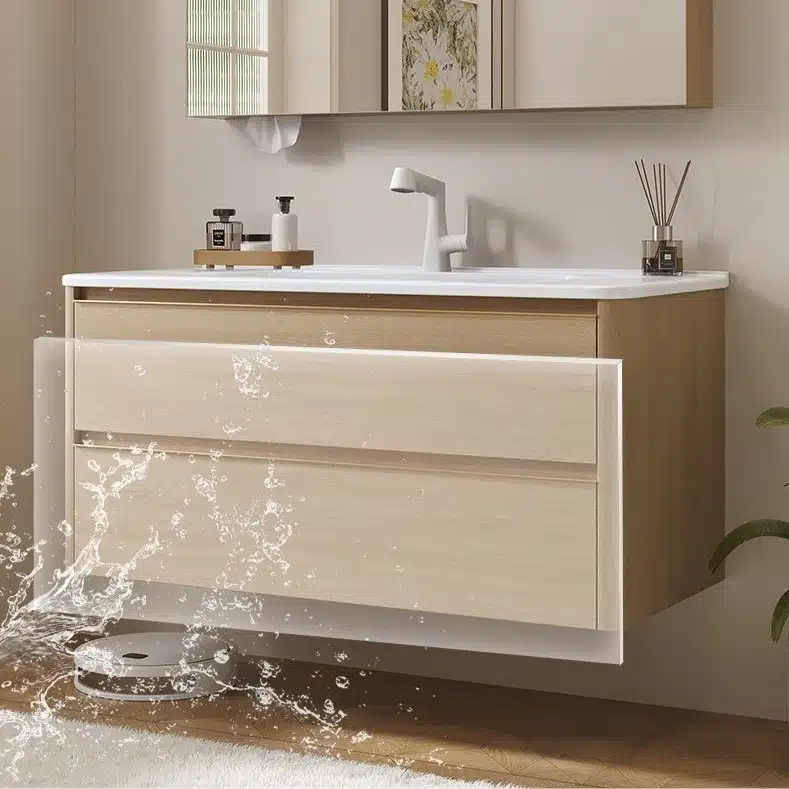
The pvc vs plywood vanity specification is the single line item that can trigger costly project callbacks due to moisture-related failures. Choosing the wrong core material, especially for vanities in high-humidity bathrooms, leads directly to warping, delamination, and expensive warranty claims. This decision doesn’t just impact the bill of materials; it affects your firm’s reputation and profitability long after the project is complete.
This guide serves as a technical breakdown for material specification, analyzing the performance and cost trade-offs between PVC, plywood, and solid wood. We examine the core properties of each material—from 100% waterproof PVC to B2B standard plywood and premium solid wood—to build a clear framework for value engineering your component list. The objective is to align material selection with both environmental demands and project budget constraints.
PVC (100% Waterproof)
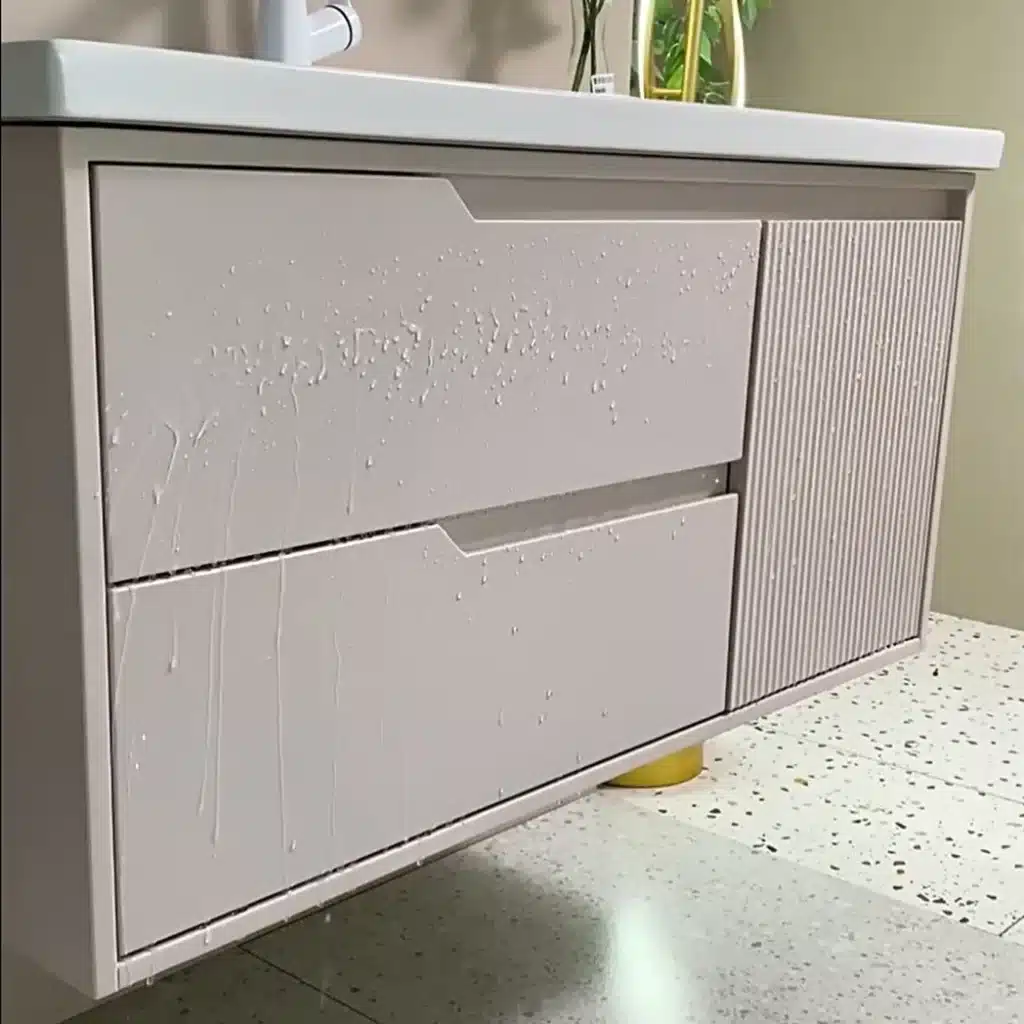
For environments with constant moisture, PVC is the only material that guarantees zero water absorption, preventing the swelling, warping, and delamination common in wood-based alternatives.
Engineered for High-Humidity Environments
Our PVC cabinets are specifically engineered for environments with constant moisture, like bathrooms and coastal homes. Unlike wood-based materials, PVC is completely non-porous. It will not swell, warp, or delaminate when exposed to water and steam, which ensures long-term structural integrity without failure.
- Completely impervious to water, making it suitable for wet rooms and areas with high humidity.
- Prevents the growth of mold and mildew by eliminating moisture absorption within the material.
- Maintains its form and finish without the risk of water damage that affects materials like particleboard or MDF.
| Specification | Technical Detail | B2B Application |
|---|---|---|
| Material Density | Customizable from 0.4 to 0.6+ g/cm³. | Lower density for budget-focused projects; >0.6 g/cm³ for premium lines requiring higher screw retention and impact resistance. |
| Board Thickness | Adjustable from 12mm to 18mm. | 12mm is suitable for doors or panels; 15mm/18mm is standard for robust cabinet carcasses that support heavy countertops. |
| Surface Finish | High-Gloss Lacquer (Painting) or PVC Skin (Membrane). | Lacquer provides a seamless, premium finish. PVC skin offers extreme durability and cost-effectiveness for large-scale developments. |
Material Durability and Chemical Resistance
The inherent durability of PVC makes it resilient to the physical and chemical stresses common in a bathroom. Its solid, non-porous surface stands up to cleaning agents, cosmetics, and daily use, preserving the cabinet’s appearance for years with minimal maintenance. This resilience is critical for hospitality and rental property applications where longevity and low upkeep costs are primary concerns.
- Resists stains and damage from household cleaners, oils, and other common bathroom products.
- The hard-wearing surface withstands scratches, dents, and impacts from daily activity.
- Color is integrated into the material, which means the finish won’t chip or peel like a painted surface might.
Versatility in Design and Application
PVC offers significant design flexibility, allowing for the clean lines and modern aesthetics needed for residential, hotel, and commercial projects. Its lightweight yet strong nature simplifies logistics and installation for both wall-mounted (floating) and freestanding vanities. This combination of consistent quality and cost-effectiveness makes it an efficient material for scaling production.
- Can be fabricated into a wide range of styles, from minimalist flat panels to more traditional designs.
- An ideal choice for large-scale developments due to its consistent quality, durability, and cost-effectiveness.
- The easy-to-clean surface makes it a practical option for high-traffic commercial restrooms and family bathrooms.
Plywood (B2B Standard)
Plywood remains the industry benchmark for vanity construction, offering a highly customizable balance of structural stability, moisture resistance, and cost-effectiveness that solid wood and PVC can’t match.
Plywood’s versatility makes it the preferred material for B2B applications, from large-scale residential projects to customized commercial builds. Its engineered structure, consisting of multiple cross-laminated wood veneers, provides excellent dimensional stability and reduces the risk of warping or cracking common in humid bathroom environments. This stability ensures reliable performance for cabinet doors, drawer fronts, and structural carcasses.
Market Growth and Regional Leadership
The global plywood market is expanding at a steady 4-5% annually, directly fueled by construction and urbanization in emerging economies. The Asia Pacific region commands over 70% of the market, a position secured by its access to raw materials and a highly developed manufacturing infrastructure. This regional dominance allows for efficient, high-volume production that serves global supply chains.
Technological and Sustainable Innovations
Modern plywood manufacturing is shifting toward greater efficiency and sustainability. The integration of automation has cut production costs by an average of 14% while simultaneously boosting output. Buyers are also demanding more specialized and compliant products. This trend has pushed manufacturers to develop formulations that are fire-resistant, have low emissions, and carry eco-certifications to meet stricter market requirements.
| Core Material | Technical Specification | Best Use Case |
|---|---|---|
| Full Eucalyptus Core | Premium grade with superior hardness, density, and excellent water resistance. The strongest and most stable option. | High-end residential projects, premium commercial vanities, and any application requiring maximum longevity. |
| Lumber / Strip Core | A cost-effective option with solid vertical strength due to its blockboard construction. Good stability. | Budget-conscious projects where vertical load-bearing is still a priority. A solid mid-tier choice. |
| Poplar Core | The industry standard. Offers a reliable balance of weight, strength, and cost. | Standard vanity lines, volume production, and projects where a proven, cost-efficient material is required. |
Regulatory Standards and Demand Sectors
Environmental regulations in European and North American markets are heavily influencing procurement standards. Compliance with these rules is no longer optional for market access, forcing suppliers to verify their sourcing and production processes. The largest consumers of plywood remain the residential construction and furniture manufacturing sectors, which together drive the bulk of global demand.
Boost Your Sales with Customizable Vanities.

Solid Wood (Premium)
Solid wood is the benchmark for high-end bathroom vanities, offering unmatched durability, repairability, and a premium aesthetic that defines luxury projects, particularly in markets like North America.
Solid wood commands a significant segment of the premium furniture market, valued between USD 6–15 billion and projected to grow through 2035. This expansion is driven by clear consumer preferences for sustainability and modern design. Buyers are actively seeking products with FSC certification, which guarantees materials are sourced from responsibly managed forests. The demand is not just for eco-consciousness but also for minimalist, customizable designs that align with contemporary aesthetics. This trend confirms that the market for high-quality, sustainably sourced wood furniture is experiencing robust and sustained growth on a global scale.
Market Growth and Consumer Preferences
As a manufacturer, we provide multiple solid wood options to meet specific project requirements, from cost-effective hardwoods to high-end timbers. Each material is selected for its unique properties, allowing clients to balance budget, aesthetics, and performance. Our standard specification is an 18mm thickness finished with a durable multi-layer spray painting process to ensure longevity in bathroom environments.
| Solid Wood Type | Primary Characteristics | Recommended Application |
|---|---|---|
| Rubber Wood | A cost-effective and eco-friendly hardwood with a dense, consistent grain that accepts paint smoothly. | Ideal for painted vanities like the Shaker style popular in North America; provides a premium feel at an accessible price. |
| Ash Wood | Strong yet relatively lightweight with a prominent, straight grain. Excellent for staining and natural finishes. | Mid-to-high-end projects where the natural wood grain is a key design element. Good for both modern and classic looks. |
| Oak | A heavy, extremely durable hardwood with a distinct and classic grain pattern. Known for its strength and longevity. | Top-tier luxury lines, large-format vanities (140cm+), and heritage-style projects requiring maximum durability. |
Global Sourcing and Production Hubs
The Asia-Pacific region is the dominant force in solid wood production, accounting for a 45% market share. Manufacturing hubs in countries like China, Vietnam, India, and Indonesia are critical to the global supply chain. These centers efficiently process raw materials and export finished goods to major consumer markets in North America and Europe. This established network effectively balances production costs with access to timber resources, meeting the high demand for premium wood products in Western markets.
Manufacturing Techniques and Industry Challenges
Modern solid wood manufacturers are improving efficiency by integrating automated woodworking machinery for higher precision and adopting modular design principles. Modular construction gives consumers greater flexibility for customization and simplifies assembly. At the same time, the industry faces persistent challenges. Navigating the volatility of timber prices and complying with evolving international forestry regulations are constant operational hurdles that require strategic procurement and supply chain management.
Value Engineering BOMs
Value engineering a Bill of Materials (BOM) is a systematic process to reduce product costs by optimizing materials and components, increasingly managed through integrated digital platforms that sync engineering with procurement.
Cost Optimization through Material and Component Analysis
Value engineering in manufacturing is a direct approach to cost reduction without compromising the product’s function. The process involves a detailed analysis of every item in the Bill of Materials to find efficiencies. Manufacturers use this analysis to swap specified materials for more cost-effective alternatives that still meet performance standards. It also identifies non-essential components or over-engineered features that can be eliminated from the design entirely. This systematic review refines the supply chain, allowing for better cost control and more efficient use of resources to hit a specific target price point.
Integrated Digital BOM Platforms
Efficient manufacturing now depends on centralized, digital BOM platforms. These cloud-based systems connect engineering, manufacturing, and procurement teams, automating data synchronization across the entire organization. By creating a single source of truth, these platforms nearly eliminate the manual errors common in spreadsheet-based BOM management. This integration streamlines the workflow, significantly accelerating the transition from initial design to final production. All departments work from the most current and accurate product data, which prevents costly mistakes and delays.
Automated Data Translation Across Systems
A critical industry shift is the use of rules-based logic to automatically translate BOM data between different enterprise systems. This creates a seamless information pipeline connecting Product Lifecycle Management (PLM), Enterprise Resource Planning (ERP), and Configure, Price, Quote (CPQ) software. This level of integration allows a manufacturer to react quickly to supply chain disruptions, like a component shortage or price spike. Instead of creating data silos, information flows freely between departments, ensuring data integrity is maintained from the engineering phase all the way through the product’s lifecycle.
Conclusion
Choosing between PVC, plywood, and solid wood is a strategic decision that shapes your product’s performance and market appeal. Each material provides distinct advantages, from PVC’s complete water resistance to plywood’s balanced quality and solid wood’s premium feel. This material flexibility allows you to engineer a vanity collection that meets your exact target price and regional demands.
Our team can help you select the right specifications for your customer base. Contact us to discuss your project requirements or to order a refundable sample and test our manufacturing quality.
Frequently Asked Questions
Best material for humid bathroom? Plywood vs solid wood vanity?
For a humid bathroom environment, high-quality plywood—specifically marine-grade—is superior to solid wood for a vanity. Plywood’s cross-laminated construction provides excellent dimensional stability, making it highly resistant to the warping, swelling, and cracking that often affect solid wood when exposed to moisture and temperature fluctuations. While solid wood can be used if impeccably sealed with a marine-grade varnish, it requires more maintenance to prevent moisture intrusion. For ultimate durability, materials like PVC are an ideal choice as they are completely waterproof, will not rot or delaminate, and offer zero risk of moisture-related damage.





0 Comments