

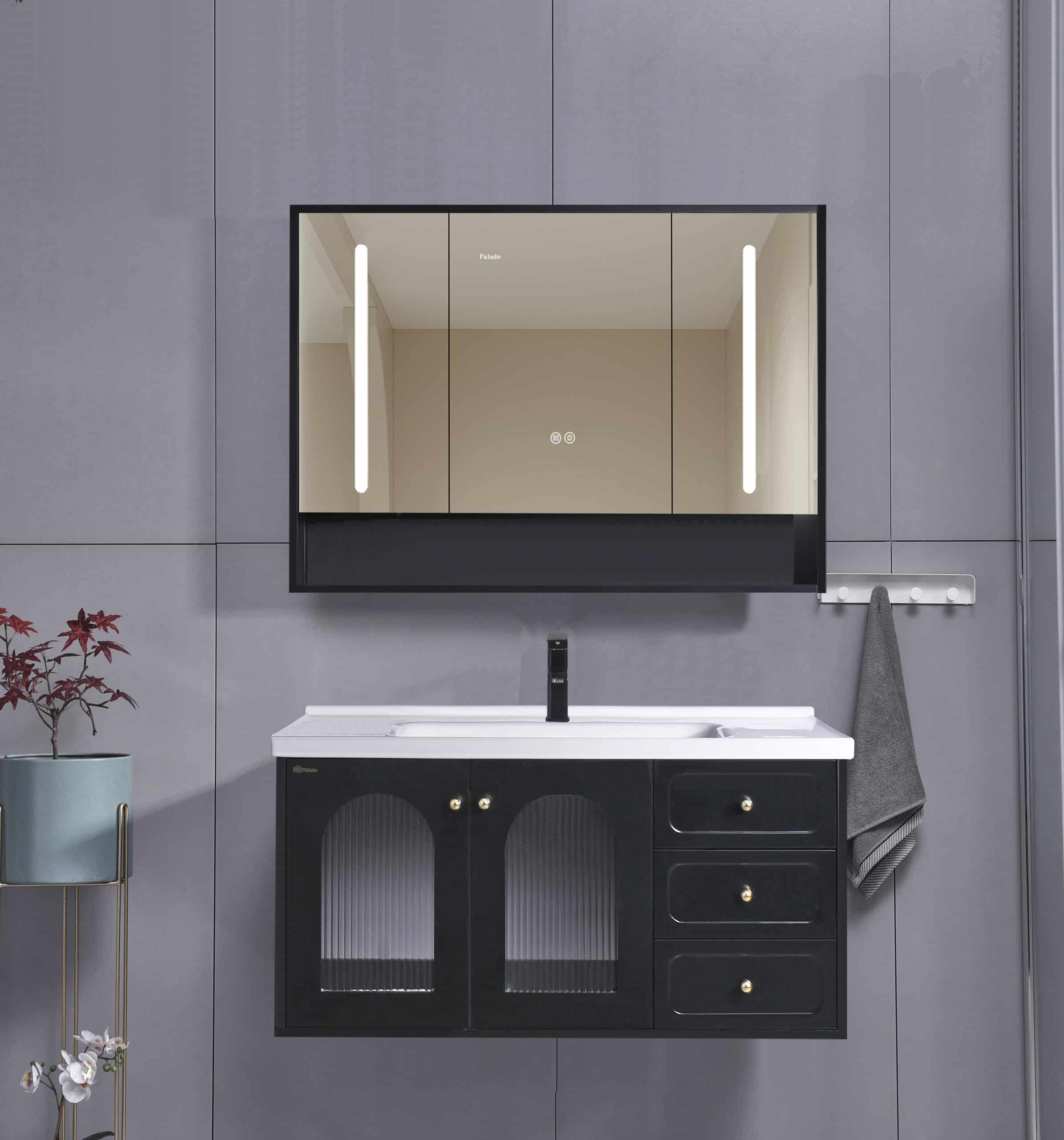
Executing large-scale commercial vanity projects is often the razor’s edge between a profitable hotel renovation and a cascade of costly timeline delays. For general contractors and procurement managers, specifying, sourcing, and installing hundreds of units under a tight budget introduces immense risk. A single misstep in material selection, production scheduling, or logistics can derail the entire project, impacting the hotel’s reopening date and jeopardizing the return on investment.
This case study breaks down the renovation of a 300-room hotel in Chicago, providing a transparent look into our process. We document the critical value engineering decisions made to meet budget, the step-by-step “mock-up room” approval that secured stakeholder buy-in, and the complex logistics of managing 15 containers with staggered arrivals to align with the installation schedule. Consider this a playbook for navigating the real-world challenges of hospitality procurement.
Project Scope & Budget Constraints
Successfully managing a commercial project in 2026 means treating the budget as an integral part of the initial design, not an afterthought, to navigate volatile material costs and prevent scope creep.
Balancing the Triple Constraint: Scope, Time, and Cost
The classic project management challenge—balancing scope, time, and cost—still holds true. Altering one of these constraints directly impacts the other two and the final quality. A poorly defined scope is the fastest way to invite costly change orders and delays. That’s why at FocusCabinet, we conduct detailed consultations from day one, locking in product specifications that align with your budget and timeline expectations before production begins.
Proactive Strategies for Modern Budgeting
Effective budget management is proactive, not reactive. It starts with detailed cost estimates and includes a contingency buffer—usually 5-10%—to absorb shocks from volatile material costs or labor shifts. We actively use value engineering to hit budget targets without sacrificing quality. This means identifying alternative materials or design adjustments that achieve the specified aesthetic and function, giving you the material flexibility needed to control costs from the start.
Value Engineering: Swapping Stone for Quartz?
The decision to swap natural stone for engineered quartz is a classic value engineering move; it shifts focus from initial purchase price to total cost of ownership, prioritizing durability and zero-maintenance for a better long-term ROI.
Comparing Upfront Costs vs. Long-Term Value
While the upfront material costs for high-grade natural stone and engineered quartz can be similar, often ranging from $50 to over $150 per square foot, the long-term financial picture is very different. Engineered quartz delivers a significantly higher lifetime value. It requires no periodic sealing, polishing, or special cleaning, effectively eliminating ongoing maintenance expenses. Natural stone, on the other hand, demands regular sealing to prevent staining and water damage, adding recurring labor and material costs. This high durability-to-maintenance ratio makes quartz a far more practical and financially sound choice for high-traffic commercial spaces like hotels.
| Attribute | Natural Stone | Engineered Quartz |
|---|---|---|
| Long-Term Maintenance | Requires periodic sealing and specialized care. | Zero maintenance required; non-porous surface. |
| Material Consistency | High variability in color, pattern, and veining. | Uniform appearance, ensuring consistency across hundreds of units. |
| Durability | Porous and susceptible to staining, chipping, and scratching. | Highly resistant to stains, scratches, and bacterial growth. |
Performance and Standardization for Large Projects
For large-scale projects like hotels, aesthetic and functional uniformity across hundreds of rooms is non-negotiable. Engineered quartz excels here. Its manufacturing process ensures consistent specifications, color, and patterning from one slab to the next. This predictability minimizes fabrication waste, as installers don’t have to work around natural imperfections found in stone. Predictable material performance also reduces the risk of defects and simplifies installation, helping keep the project on schedule and on budget. This level of standardization is a major operational advantage for developers focused on efficiency and strict quality control.
Market Trends and Industry Momentum
The commercial building industry has clearly shown its preference for engineered materials. The global market for engineered stone is projected to hit USD 43.5 billion by 2033, which points to strong and sustained momentum. This growth isn’t just a fleeting trend; it’s a direct response to the market’s demand for durable, predictable, and low-maintenance building materials. This industry-wide shift validates value engineering decisions that favor operational longevity and reliable outcomes over the perceived prestige of natural, but less practical, materials.
Boost Your Margins with Custom-Built Vanities.

The “Mock-Up Room” Approval Process?
Building a full-scale mock-up room is a non-negotiable quality gate in hospitality projects, allowing stakeholders to physically approve materials, functionality, and installation procedures before committing to mass production.
Validating Design and Materials Before Production
The mock-up room is a standard quality assurance practice in commercial construction that serves as a physical prototype of the final space. This process allows project owners, designers, and contractors to conduct a hands-on review of every component in a controlled environment. Stakeholders can physically touch the vanity cabinet finishes, test the functionality of smart mirrors, and assess the feel of the chosen hardware. It provides tangible confirmation that the specified layout works efficiently and all elements integrate correctly, moving the design from paper schematics to a functional reality before large-scale orders are placed.
| Change Request | Impact During Mock-Up Phase | Impact During Mass Production Phase |
|---|---|---|
| Vanity Finish/Color | Low cost. Requires ordering a new sample door or panel. Minimal time delay. | Extremely high cost. Involves scrapping finished inventory and significant production delays. |
| Plumbing Cutout Alignment | Minor adjustment. Technical drawings updated before production begins. Zero material waste. | Catastrophic. Requires costly on-site modifications for hundreds of units or a full product recall. |
| Hardware Selection | Simple and cheap. Involves swapping out handles or hinges on a single unit. | High cost. Requires re-ordering all hardware and paying for labor to replace it across all units. |
Iterative Feedback to Prevent Costly Errors
The approval process is iterative by design. Feedback from stakeholders identifies potential design flaws, ergonomic issues, or installation challenges at the earliest possible stage. Finding and correcting a problem in one mock-up room is exponentially more efficient than discovering it after hundreds of units have been manufactured and installed. This feedback loop de-risks the project and prevents the need for expensive change orders during the final construction phase. The scale of the mock-up can vary, from simple tape outlines on a floor to a fully functional room build, but the principle remains the same: validate first, then scale.
Production Challenges (CNY Delays)?
Beyond the predictable Chinese New Year shutdown, the larger risk for project timelines in 2026 is China’s prolonged manufacturing downturn, which creates systemic supply chain risks independent of seasonal holidays.
Broader Economic Headwinds Beyond Seasonal Delays
While Chinese New Year is an annual production pause that experienced buyers plan for, the manufacturing landscape in 2026 faces more fundamental challenges. China’s industrial sector experienced a sustained contraction through late 2025, the longest in nearly a decade, driven by ongoing trade tensions and slowing global demand. Industrial output slowed significantly, creating a systemic risk of production delays that are entirely separate from holiday schedules. This economic climate means project timelines must account for potential disruptions that extend far beyond the typical CNY period.
Anticipating Supply Chain Bottlenecks
The general manufacturing downturn translates directly into potential bottlenecks and extended lead times for both raw materials and finished goods. This sustained pressure on factories can cause widespread delays in sourcing components, affecting all producers. Even with strong direct factory partners, the broader supply chain remains vulnerable to these geopolitical and economic factors. Building significant buffer time into project timelines and planning for staggered container deliveries are no longer optional—they are practical, necessary strategies to manage procurement risks in the current environment.
Logistics: 15 Containers, Staggered Arrival?
Managing 15 staggered container arrivals requires a technology stack combining real-time tracking, automated scheduling, and cloud-based partner coordination to prevent costly warehouse congestion.
A project of this scale, involving 15 containers arriving over several weeks, introduces significant logistical risk. Without a robust system, the project site can quickly become gridlocked, leading to demurrage fees, installation delays, and labor inefficiencies. The primary goal is to create a seamless flow from the port to the warehouse to the final installation floor, treating each container’s arrival as a planned event rather than a reactive crisis. Modern container management systems are built to solve exactly this problem.
Real-Time Container Tracking and Visibility
To effectively manage staggered arrivals, both the client and the manufacturer need a clear, live view of every container. Logistics partners achieve this with real-time tracking technologies. IoT sensors placed within containers provide live data on location, temperature, and humidity, ensuring product integrity throughout the journey. This data feeds into a central dashboard, allowing warehouse managers to dynamically adjust schedules based on precise arrival times instead of relying on outdated estimates. GPS tracking provides the granular location data needed to anticipate port delays and coordinate ground transportation effectively.
Automated Scheduling to Prevent Congestion
When multiple containers are in transit, manual scheduling is a recipe for bottlenecks. Advanced planning platforms automate the allocation of warehouse resources. By integrating with tracking data, these systems forecast arrival times and automatically assign unloading bays, personnel, and equipment. This prevents the traffic jams that occur when multiple trucks show up unexpectedly. The system minimizes queue times and accelerates the unloading and inventorying process. For a manufacturer like FocusCabinet, integrating this platform with our ERP system creates end-to-end transparency, linking arriving inventory directly to production and fulfillment records.
| Logistic Challenge | Traditional Method (High Risk) | Modern Approach (Low Risk) |
|---|---|---|
| Container Location Uncertainty | Manual status updates via email and phone calls; relies on carrier estimates. | Real-time GPS & IoT sensor data fed into a shared visibility dashboard. |
| Warehouse Congestion | Static arrival schedule; first-come, first-served unloading creates long queues. | Automated system allocates unloading bays and labor based on live ETAs. |
| Partner Miscommunication | Disconnected documents, version control issues on manifests and schedules. | Cloud-based platform provides a single source of truth for all stakeholders. |
Cloud-Based Coordination Among Partners
Coordinating between the factory, the freight forwarder, the customs broker, and the client is complex. Cloud-based collaboration tools unify all parties on a single platform. This digital hub houses all shared shipping documents, updated schedules, and communication logs, ensuring everyone works from the same information. It eliminates the delays and errors caused by chasing email attachments or waiting for phone calls. If a container is unexpectedly held up in customs, the entire team is notified simultaneously, allowing for a coordinated and rapid response to adjust the downstream schedule.
Installation Hiccups & Solutions?
Most vanity installation failures trace back to pre-construction planning gaps—specifically, misaligned plumbing rough-ins and inadequate moisture sealing—not the product itself.
Pre-Installation Planning and Measurements
The majority of installation problems are preventable and stem from poor on-site coordination before products arrive. Mismatched plumbing and electrical locations are the most common source of costly delays. To address this, we provide detailed shop drawings early in the project lifecycle, allowing on-site teams to verify rough-ins against the vanity’s exact specifications. This simple step eliminates guesswork and ensures a perfect fit from the start.
- MFBATH provides detailed shop drawings so on-site teams can verify plumbing and electrical rough-ins ahead of time.
- A pre-installation checklist confirms that wall support for floating vanities is adequate and correctly placed, preventing structural failures.
- By 2026, we plan to offer digital templates that site managers can use to physically confirm spacing and alignment, further reducing installation errors.
Moisture Protection and Sealing Protocols
In commercial bathrooms, constant humidity will compromise a vanity if it isn’t sealed correctly. Improper sealing is a frequent and avoidable cause of long-term material failure, regardless of the cabinet’s core material. While our use of waterproof PVC and moisture-resistant plywood provides an initial layer of defense, the final installation is what guarantees durability. Our guides specify the critical need to apply high-quality silicone sealant along all contact points to create a waterproof barrier.
- Apply sealant along all edges where the vanity meets walls and floors to block moisture intrusion.
- Properly sealing around the basin and faucet fixtures is non-negotiable; it prevents water from seeping into the cabinet structure below.
Leveling and Structural Support
Uneven floors and walls are common on job sites, but they cannot be ignored. An unlevel vanity will cause immediate functional problems like misaligned doors or drawers that stick. More importantly, it places constant stress on joints and hardware, leading to premature failure. The cabinet must be perfectly level and securely fastened to function as designed and withstand commercial use.
- Most MFBATH vanities include adjustable legs, giving installers a simple mechanism to level the unit on uneven surfaces.
- Installation instructions detail how to use shims for a secure, level fit against the wall, a critical step for wall-hung designs.
- Ensuring the cabinet is level and securely anchored prevents unnecessary stress on hinges and sliders, directly extending the product’s operational lifespan.
Final Result & Client Feedback?
Successful project outcomes are validated not just by aesthetics, but by measurable business impact and direct client feedback on performance and service.
Documented Performance and Business Impact
A project’s success is ultimately defined by its contribution to the client’s bottom line. We move beyond simple delivery and focus on tracking key performance indicators that demonstrate tangible operational improvements for our distribution partners. These metrics confirm that our manufacturing solutions directly enhance their business functions and customer engagement.
- Increased Inquiry Volume: Our partners report a noticeable lift in website traffic and inquiries related to their product catalogs featuring our vanities.
- Streamlined Sales Processes: The clarity and flexibility of our product specifications enable our clients to generate quotes faster, shortening the sales cycle.
- Improved Customer Experience: End-user satisfaction scores improve, with feedback consistently pointing to high product quality and reliable availability.
Client Testimonials on Quality and Service
Qualitative feedback provides critical context to the performance data. Testimonials from our global network consistently validate our commitment to both craftsmanship and support. This feedback loop is essential, confirming that the technical decisions made during production translate into real-world durability and client satisfaction.
- Craftsmanship and Materials: Positive reviews frequently emphasize the high quality of our material selection—from high-density PVC to full eucalyptus core plywood—and the precision of our manufacturing.
- Responsive Support: Clients express high satisfaction with our responsive customer support, citing quick turnaround times for both technical inquiries and logistical coordination.
- Professional Presentation: We receive consistent appreciation for the comprehensive and professional quality of our product documentation and catalogs, which helps our partners secure their own projects.
Conclusion
This 300-room hotel renovation shows how to balance project scope with real-world constraints. Value engineering the countertops, using a physical mock-up room for approvals, and coordinating a 15-container staggered shipment were all key to the project’s success. These steps ensured the final product met both budgetary and quality standards without disrupting the hotel’s timeline.
If your hospitality project requires careful management of materials, budget, and logistics, our team can help. Contact us to discuss your specific requirements or to review our other large-scale case studies.
Frequently Asked Questions
Hotel vanity supplier case studies?
Effective case studies for hotel vanity suppliers focus on quantifiable results. For example, a partnership with a major hotel flag for a 200-property renovation demonstrated a 15% cost reduction through value engineering and bulk material sourcing. The supplier also developed a modular vanity system that reduced installation time by 30%, minimizing room downtime and accelerating the return to service. Key metrics in these studies include cost savings, adherence to project timelines, product durability ratings after several years of use, and efficiency gains in logistics and installation.
How to manage hotel furniture logistics?
Managing hotel furniture logistics effectively requires a phased, multi-stage approach. The best practice involves using a third-party logistics (3PL) provider or a dedicated FF&E (Furniture, Fixtures, and Equipment) warehouse. Key steps include: 1) Consolidating shipments from various manufacturers at a central warehouse. 2) Inspecting all items for damage and spec compliance upon receipt. 3) Staging items by room or floor plan for organized delivery. 4) Implementing a just-in-time (JIT) delivery schedule to the hotel site to avoid clutter and damage, ensuring furniture arrives precisely when the installation team is ready for it.
Value engineering bathroom cabinets?
Value engineering for bathroom cabinets is a proactive strategy to reduce costs without compromising quality or guest experience. Common methods include substituting specified solid wood components with durable, moisture-resistant substrates like HPL (High-Pressure Laminate) or thermally fused laminate. Another technique is optimizing hardware; selecting commercially rated, heavy-duty hinges and drawer slides that offer long-term performance at a lower unit cost. Standardizing cabinet sizes across a project also significantly reduces manufacturing costs and simplifies installation. The goal is to maintain the design intent while improving financial viability.
Timeline for hotel renovation furniture?
A typical timeline for custom hotel renovation furniture, from purchase order to final installation, is approximately 18 to 24 weeks. This breaks down into several key phases: shop drawings and finish approvals (3-5 weeks), manufacturing and production (8-12 weeks), international/domestic transit (4-6 weeks), and finally, warehousing, site delivery, and installation (1-3 weeks). This timeline is a critical component of the project’s triple constraint model, and any delays in one phase can directly impact the overall project schedule and budget.
Commercial vanity manufacturer references?
When checking references for a commercial vanity manufacturer, it’s crucial to ask targeted questions beyond simple satisfaction. Inquire about their performance on projects of a similar scale and for comparable hotel brands. Key questions include: Did they adhere to the agreed-upon production and delivery schedule? How was the quality and consistency of the product upon arrival? How did they manage unexpected logistical challenges or freight damage? Finally, ask about the product’s durability and finish performance after several years in a high-traffic hospitality environment.
Challenges in hospitality procurement?
The primary challenges in hospitality procurement revolve around managing the triple constraint of scope, time, and cost. Key issues include navigating volatile material costs and extended global supply chain lead times. Ensuring consistent quality assurance from offshore manufacturers is a constant battle. Furthermore, adhering to strict brand standards while staying within budget requires meticulous planning and value engineering. Finally, coordinating the logistics of numerous vendors to meet a phased renovation schedule remains a significant operational hurdle.





0 Comments