
 A miscalculation in vanity lead time directly impacts project completion dates, leading to strained client relationships and potential financial penalties. Many importers rely on a single number from their factory, failing to account for the complex sequence of events—from raw material procurement to container loading—that actually dictates the final delivery date. This oversight creates a significant gap between expectation and reality, often resulting in stockouts during peak seasons and eroding profit margins with every unexpected delay.
This guide breaks down the entire production timeline into a clear, manageable Gantt chart. We will walk through each critical phase, from the material procurement bottlenecks and the multi-stage production process to the realities of ocean freight from China. We’ll also cover key variables that affect scheduling, like the annual Chinese New Year shutdown and the timeline differences between RTA and fully assembled units, providing a standard operating procedure for accurately forecasting your delivery schedule.
What Does the Standard Manufacturing Gantt Chart Look Like?
A Gantt chart is the essential visual roadmap for manufacturing, translating complex production schedules into a clear, actionable timeline from material procurement to final shipment.
Core Components and Visual Layout
A manufacturing Gantt chart organizes the entire production schedule into a simple visual format. Tasks are listed vertically on the left, while a timeline runs horizontally across the top, usually broken down by weeks or days. Each task is represented by a horizontal bar, with the length of the bar indicating its duration. This layout shows the start and end dates for every step and clearly illustrates how different tasks depend on each other.
| Production Phase | Key Tasks | Typical Duration (Working Days) |
|---|---|---|
| 1. Pre-Production | Material procurement (PVC, Plywood, Hardware), Technical drawing approval. | 7 – 14 Days |
| 2. Core Production | Material cutting, Edge banding, Drilling, Assembly. | 10 – 15 Days |
| 3. Finishing & QC | Painting/Lamination, Hardware installation, Quality control checks. | 5 – 10 Days |
| 4. Packaging & Shipping | Final cleaning, E-commerce packaging assembly, Container loading. | 2 – 3 Days |
Key elements of the chart include:
- A vertical task list outlining every step from material sourcing to final packaging.
- A horizontal timeline setting the frame of reference in days or weeks.
- Duration bars showing the length and dependencies of each task.
- Milestone markers to flag critical deadlines, like quality control inspections or shipping dates.
Tracking Key Production Phases
The chart maps the entire manufacturing journey, providing a clear view of progress from the initial deposit to final delivery. This visual workflow helps project managers identify potential bottlenecks before they cause major delays. The process starts by tracking raw material procurement and its scheduled arrival. It then flows through the distinct production stages—cutting, assembly, finishing, and quality control. The final phase covers packing and loading, aligning the factory floor’s output with the logistics and shipping schedules.
Modern Integrations and Functionality
Today’s Gantt charts are not static documents. They are dynamic tools integrated into broader factory management systems to automate updates and improve scheduling accuracy. Integration with Enterprise Resource Planning (ERP) systems automatically syncs inventory levels and material data, ensuring the schedule reflects reality. Features like drag-and-drop functionality allow managers to adjust timelines instantly in response to supply chain disruptions or changing client needs. Resource allocation tools also help assign specific machinery or teams to tasks, making sure factory capacity is used efficiently.
Material Procurement: Why Is It Often Considered the Bottleneck?
Material procurement consistently creates production delays because it is exposed to external market shocks and internal operational inefficiencies that are difficult to control.
The first phase of any manufacturing timeline—acquiring raw materials—is also the most unpredictable. Before a single piece of PVC or plywood is cut, the entire production schedule depends on a complex network of global suppliers. This phase introduces significant risk that can stall a project for weeks before it even begins.
Global Supply Chain Volatility
Unpredictable shifts in commodity prices, fluctuating supplier delivery schedules, and geopolitical events create major disruptions. These external factors are often outside a manufacturer’s direct control, making it nearly impossible to guarantee a fixed timeline. A sudden event on the other side of the world can halt your vanity production instantly.
- Sudden spikes in raw material costs can freeze procurement until the company readjusts budgets or finds a new source.
- International trade disputes or shipping lane blockages can add weeks to expected delivery times for critical components like hardware or wood panels.
- An unforeseen event, like a natural disaster disabling a key supplier, causes cascading delays throughout the entire production chain.
Supplier Dependencies and Communication Gaps
Relying on a single source for essential materials creates a high-risk point of failure. At the same time, many factories still use outdated internal systems that prevent procurement and production teams from aligning their schedules. This poor visibility leads to preventable shortages and mismanaged inventory.
- A single supplier’s failure due to financial trouble or quality control issues can bring manufacturing to a complete stop.
- Legacy software without real-time inventory data often leads to misinformed purchasing decisions, causing stockouts or over-ordering.
- Fragmented communication between the purchasing department and the factory floor results in materials arriving too late for the production schedule or too early, consuming valuable space.
Boost Your Brand with Custom Vanities

Production Phase: What Steps Are Involved From Cutting to Packing?
Modern vanity production is an integrated system where digital precision in cutting, continuous quality control, and automated packing work together to ensure consistency from start to finish.
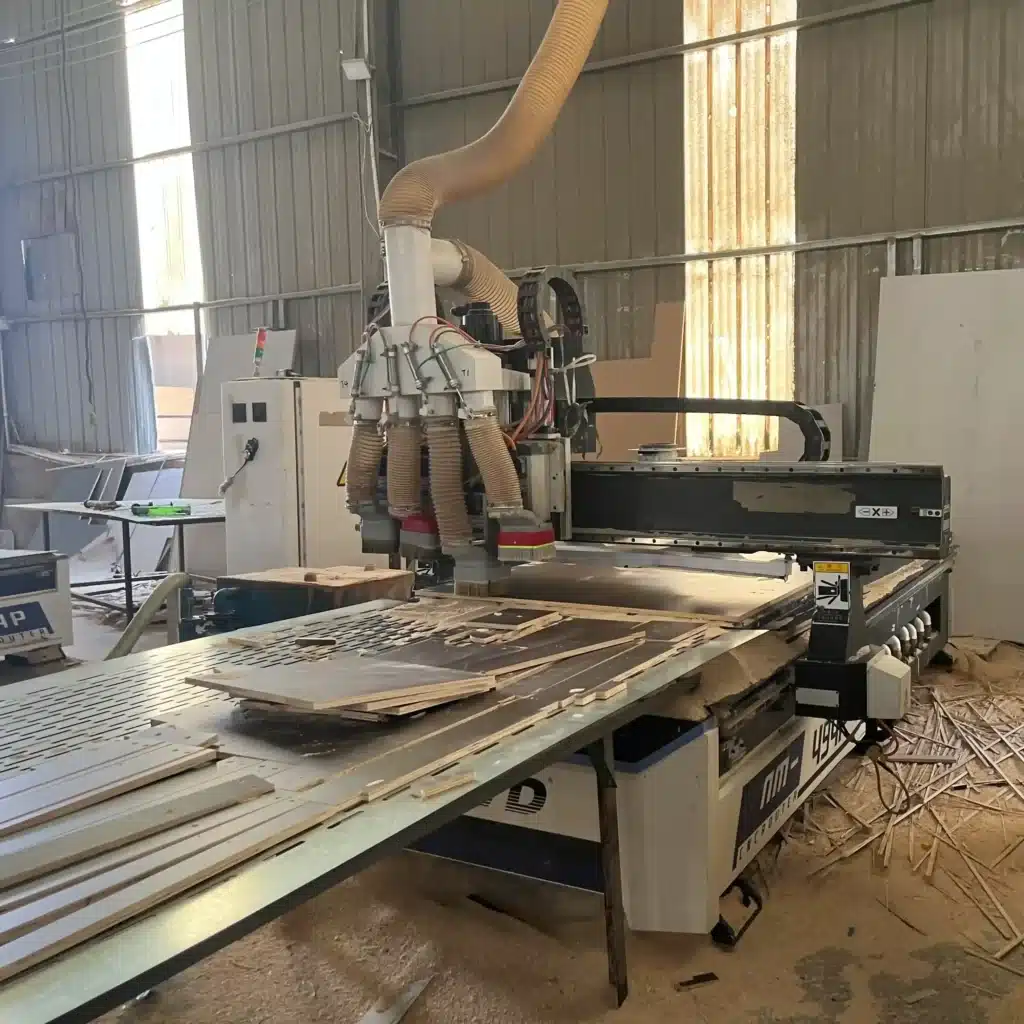
Digital Cutting and Initial Assembly
In 2026, the initial production phase relies on automation to ensure accuracy and minimize material waste. Computer-aided design directs high-precision machinery, translating digital blueprints into perfectly cut components. We use CNC machines for all primary material cutting, which optimizes the use of raw materials like PVC, plywood, and solid wood while virtually eliminating human error. Digital marking and pattern-laying technologies then ensure every piece is correctly identified for the subsequent assembly stages, where automated systems often join the primary structural components with consistent quality.
Integrated Quality Control Checkpoints
Effective manufacturing integrates quality control directly into the production flow instead of waiting until the end. This multi-stage inspection process catches potential issues early, preventing them from affecting the final product. Our facilities inspect products at multiple key stages—from raw material checks to post-assembly verification. Barcode tracking systems monitor each unit’s progress and quality status throughout the production line. This approach ensures that every item, from a cabinet door to a sintered stone basin, meets strict durability and aesthetic standards before moving forward.
| Production Stage | Traditional Method (Common Issues) | FocusCabinet Approach (Key Benefits) |
|---|---|---|
| Material Cutting | Manual measurements and cuts lead to material waste and inconsistent sizing. | CNC-automated cutting ensures sub-millimeter precision, maximizing material yield and guaranteeing perfect component fit. |
| Quality Control | A single inspection at the end of the line results in high rework costs for defects found late. | Multi-stage checkpoints and barcode tracking identify and resolve issues early, reducing waste and ensuring final product integrity. |
| Packaging | Standard packaging fails during rough handling, leading to high rates of transit damage and customer returns. | E-commerce ready packaging with 6-side molded foam passes the ISTA 3A drop test, protecting your investment and reputation. |
Final Assembly, Finishing, and Packing
The final steps combine skilled craftsmanship with streamlined logistics. Technicians perform the final assembly, fitting doors, drawers, and custom hardware like soft-close hinges or premium DTC/Blum sliders according to client specifications. After a final quality assurance review, automated systems handle the folding, wrapping, and packaging. For our OEM/ODM partners, we use custom-designed packaging with brand logos and reinforced construction to ensure products are protected during shipment and ready for market upon arrival.
Ocean Freight: What Are the Typical Timelines from China to the US/EU?
Ocean freight from China requires significant lead time, with door-to-door transit averaging 3-5 weeks to the US West Coast and extending to 6-7 weeks for the East Coast.
Understanding ocean freight timelines is critical for inventory planning. The total transit time is more than just the days a vessel spends at sea; it includes pre-shipment pickup, customs clearance at both origin and destination, and final inland delivery. These components add considerable time to the port-to-port schedule.
Transit Times to the US West Coast
Shipments from major Chinese ports to the US West Coast (e.g., Los Angeles, Long Beach) represent the quickest ocean route. The sea journey itself is relatively straightforward, but importers must account for the full logistics chain to get an accurate delivery estimate. The door-to-door time is a much more realistic metric for planning than the port-to-port duration alone.
- The port-to-port ocean transit averages 14 to 21 days.
- Complete door-to-door delivery usually ranges from 19 to 35 days.
- Factors like port congestion, vessel scheduling, and customs inspections can extend these standard timelines.
Transit Times to the US East Coast
Getting goods to the US East Coast (e.g., New York, Savannah) takes substantially longer. The vessel must travel a much greater distance, which often includes navigating the Panama Canal. This extended journey increases both the base timeline and the risk of encountering delays from weather or operational issues.
- Port-to-port transit times average between 28 and 42 days.
- Total door-to-door timelines can extend to 47 days or more.
- These longer routes are subject to the same potential delays from customs, port operations, and peak season demand.
The “Chinese New Year” Effect: How Does It Impact Production Schedules?
Experienced importers plan for Chinese New Year as a six-to-eight-week disruption, not a one-week holiday, building buffer inventory months in advance to navigate the predictable production halt.

Pre-Holiday Production Crunch
The manufacturing slowdown is not sudden; it begins two to four weeks before the official holiday. In the lead-up to the 2026 break, factories accelerate operations to clear as many orders as possible before their workforce begins to depart. This frantic rush creates a severe production bottleneck, significantly increasing the risk of overlooked quality control issues as speed takes priority over precision.
- Most manufacturers stop taking new orders six to eight weeks before the holiday. For Q1 deliveries, this makes mid-December an effective hard deadline.
- Labor shortages begin to appear weeks ahead of the holiday as workers start the long journey to their distant hometowns.
- Production capacity steadily drops while order volumes spike from importers trying to ship goods before the shutdown, straining the entire system.
The Shutdown Period and Its Ripple Effects
While the official holiday in 2026 is February 17th, factories typically shut down entirely for two to three weeks, not just the mandated seven days. During this period, all production, logistics, and communication come to a complete standstill. This isn’t just a pause; it’s a full stop that sends ripples through the global supply chain.
- The operational halt affects everyone, including the component and raw material suppliers your factory depends on.
- Port congestion worsens and shipping lines announce blank sailings due to reduced capacity and demand, creating further logistics hurdles.
- Information flow ceases. Importers should not expect to receive production updates, order status changes, or any customer service responses.
Post-Holiday Recovery and Staffing Challenges
Factories do not return to full capacity the day they reopen. Operations typically remain disrupted for another one to two weeks. The primary challenge is high staff turnover; a significant percentage of the original workforce often seeks employment closer to home and does not return to their coastal manufacturing jobs.
- It is common for up to one-third of a factory’s workers to not return, forcing managers to hire and train inexperienced replacements on the spot.
- Quality control issues often spike as new staff learn their roles on the assembly lines, leading to a higher defect rate in the first wave of post-holiday production.
- Factories must first clear the backlog of orders from before the holiday, and any inspection or clearance delays only compound the time it takes to normalize lead times.
Delays: What Buffer Strategies Should Importers Adopt?
Effective importers no longer just react to delays; they build resilience directly into their supply chain through calculated time buffers and transparent supplier data sharing.
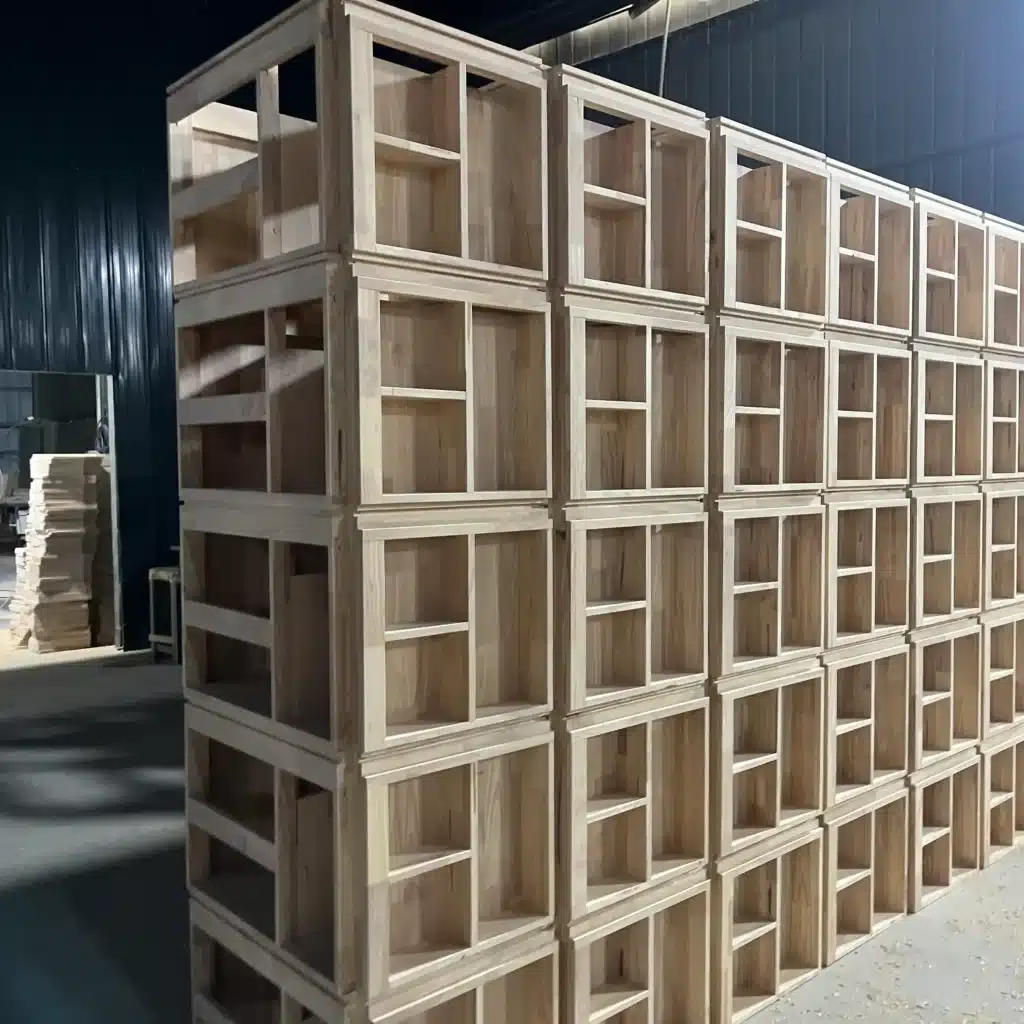
Build Time Buffers into Key Stages
A foundational risk mitigation strategy is adding contingency time directly into your procurement and production schedules. This approach proactively absorbs common delays, such as material sourcing issues or minor production snags, before they escalate and impact the final delivery date. By treating buffers as a standard component of your project timeline, you protect your commitments to customers.
- Add a 20-30% time buffer on top of standard lead times, especially for raw material sourcing and the initial phases of production where uncertainty is highest.
- Implement these buffer strategies within a 4-12 week timeframe to balance risk mitigation with efficient working capital, preventing excessive inventory carrying costs.
Strengthen Supplier Collaboration and Visibility
Moving beyond simple time buffers, sophisticated importers gain a competitive edge by improving data sharing with manufacturing partners. Leveraging technology for real-time insights allows for dynamic adjustments rather than static, one-time planning. This shift from a reactive to a proactive stance is critical in today’s volatile market.
- Develop strong supplier partnerships that prioritize transparent data sharing and continuous performance monitoring, turning your factory into a true partner.
- Use modern supply chain visibility tools to track material procurement and shipment progress in real-time, enabling you to make informed adjustments to safety stock levels.
- Maintain clear and consistent communication with your own customers during any unavoidable disruption to build trust and manage their expectations effectively.
RTA vs. Assembled: How Does the Speed Difference Affect Delivery?
The choice between RTA and assembled vanities is a direct trade-off: RTA offers faster procurement and lower freight costs, while assembled units save significant on-site labor time and complexity.
Flat-Pack Logistics: The RTA Shipping Advantage
Ready-to-assemble (RTA) cabinets dominate the speed-to-market segment, with most providers shipping within 2–3 business days. This rapid fulfillment relies on flat-pack logistics. By shipping components unassembled, we can fit significantly more units into a single container, which optimizes freight space and directly lowers shipping costs for importers. This model is engineered for distributors and e-commerce sellers who need to maintain stocked inventory for quick deployment.
| Parameter | Ready-to-Assemble (RTA) | Pre-Assembled |
|---|---|---|
| Shipping Lead Time | 2–3 business days | 7–14 business days |
| Freight Efficiency | High (optimizes container CBM) | Low (bulky, higher CBM per unit) |
| On-Site Labor Demand | High (requires full assembly) | Low (installation only) |
| Packaging Standard | E-commerce Ready (ISTA 3A Drop Test) | Standard Wholesale (5-Layer Carton) |
Procurement vs. Installation: The On-Site Time Trade-Off
Pre-assembled cabinets have a longer initial lead time but deliver their value by saving time on-site. These units arrive ready for immediate installation, which eliminates assembly and reduces the on-site labor costs and complexity for contractors. The RTA model shifts that time investment from the delivery window to the installation phase. For large-scale projects, some contractors create an efficient middle ground by ordering RTA units and performing batch assembly off-site. This captures the freight savings of RTA while still streamlining the final installation process.
Conclusion
Understanding the full production timeline—from material procurement and manufacturing to shipping logistics—is key to successful importing. This knowledge allows you to manage inventory effectively, set accurate client expectations, and plan around variables like Chinese New Year. Factoring in choices like RTA versus assembled furniture helps create a more precise delivery forecast.
Use this framework to map out your next procurement cycle with greater confidence. If you need a specific timeline for your vanity designs, our team can provide a detailed production and delivery schedule to help you plan.
Frequently Asked Questions
What is the lead time for custom vanities?
Standard lead time for custom vanities is typically 8 to 12 weeks. This schedule accounts for several key phases: design finalization and approval (1-2 weeks), raw material sourcing and procurement (2-3 weeks), manufacturing and finishing (4-6 weeks), and a final week for quality assurance, inspection, and professional crating before shipment.
How long does shipping take from China?
For bulky items like vanities, ocean freight is the standard method. Port-to-port transit from China to North America or Europe typically takes 30 to 45 days. You should also factor in an additional 1 to 2 weeks for customs clearance and inland transportation to the final destination. Air freight is a much faster alternative, taking approximately 5-10 days, but it is significantly more expensive.
Why is my vanity order delayed?
Delays in custom manufacturing can occur for several reasons. The most common factors include raw material shortages or supply chain disruptions for specific wood or hardware, production bottlenecks due to complex finishing requirements, shipping port congestion, or unexpected holds during customs inspections. Additionally, if a component fails our rigorous quality control checks, it must be remanufactured, which can reset that part of the production timeline.
Does CNY affect production time?
Yes, Chinese New Year (CNY) has a major impact on production schedules. Factories typically shut down for 2 to 4 weeks. The effect begins before the holiday with a rush to complete orders and extends after, as production lines take time to ramp back up to full capacity. To avoid significant delays, it is best to place orders well in advance, ideally before December.
Is RTA faster to produce than assembled?
Yes, Ready-to-Assemble (RTA) vanities have a significantly shorter production cycle than fully assembled units. RTA components can be mass-produced and flat-packed in parallel, bypassing the labor-intensive and time-consuming final assembly, finishing, and curing stages. This streamlined, batch-oriented process makes RTA manufacturing a much faster option.
How to expedite a vanity order?
To expedite an order, first ensure all design specifications and material choices are approved immediately to prevent pre-production delays. Selecting from our in-stock materials rather than special-order items can also save weeks. For a fee, you can request prioritized production to move your order to the front of the manufacturing queue. The most effective method for reducing overall time is upgrading from ocean to air freight, which cuts transit time from over a month to just 5-10 days.




0 Comments