
wholesale bathroom vanity cost by is the first checkpoint buyers should lock before they approve a supplier, budget, or production slot. You approved the sample. Everything lined up on the spec sheet — the color match held, the edges sealed clean, the drawer extension felt solid. Three months later, those vanities sat in a humid hotel bathroom and the doors had cupped. That $50,000 order became a lesson in the difference between a pre-production sample and the mass production run. The wholesale bathroom vanity cost by material is more than a line item on a quote. It is the starting point of a decision that either locks in predictable performance or sets you up for mid-project repairs and replacements.
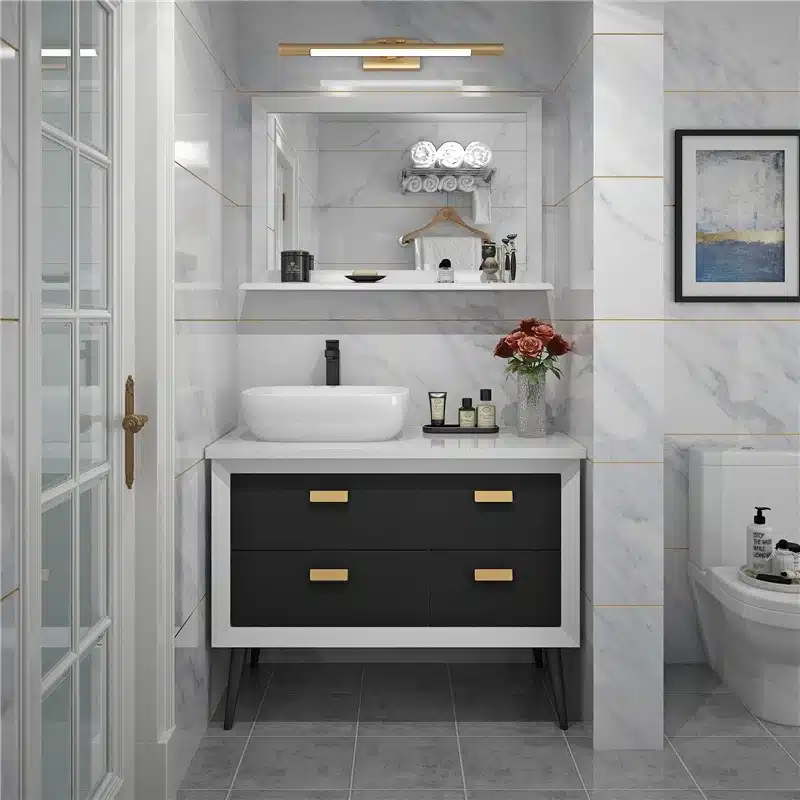
Material selection drives not just the FOB pricing per unit, but the total cost of ownership over a five- or ten-year window. A plywood vanity from the same spec line as an MDF unit may cost 15% more at the factory gate — but in a commercial bathroom with daily steam and cleaning chemicals, it outlasts MDF by a factor of three. That is the math that separates a capex win from a recurring opex headache. Focuscabinet runs its own 10,000㎡ facility in Changge, Henan, and applies a five-stage quality check that catches the mismatches before they become containers of problems. The region-ready approach means the material choice adapts to climate and compliance — PVC for coastal humidity, plywood for freeze-thaw markets, solid wood only where the environment and budget align. When you compare vanities at scale, the real difference shows up not in the sample approval room, but in the first wave of guest complaints eighteen months later.
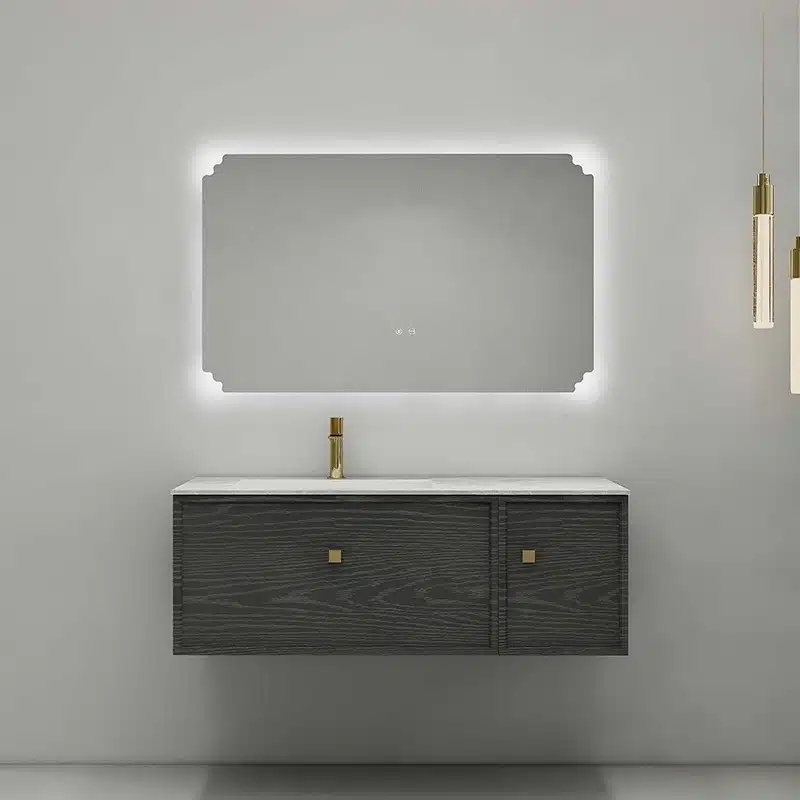
Total Cost of Ownership vs. Initial Price
The cheapest vanity today may cost triple over 10 years.
Every procurement manager I’ve worked with has a story like yours: the $50K order that looked perfect in the pre-production sample, then bloated, warped, or delaminated within 18 months. The problem isn’t the material—it’s that nobody ran the total cost of ownership (TCO) calculation before signing. FOB price is just the entry ticket. The real cost sits in replacement cycles, maintenance labor, and lost reputation when guests complain about a swollen cabinet door.
-
- MDF (Standard): Lowest upfront—roughly $18–$25 per linear foot FOB China. But in a commercial bathroom with daily humidity, expect swelling at the joints within 2–3 years. Replacement cycle: every 3–4 years. The 10-year TCO is 2.5x the initial purchase because you’re buying three units over a decade. MDF vanity replacement cost 10 year TCO consistently triples the sticker for high-moisture projects.
- Plywood (Multi-Ply): Costs about 15% more than MDF—around $21–$29 per linear foot. The added value? A plywood vanity from Focuscabinet lasts 3x longer in commercial bathrooms (9–12 years before structural failure). The 10-year TCO drops below MDF after the first replacement is avoided. This is the material to spec for hotel chains or multi-family units where consistency across 200 rooms matters.
- PVC (Extruded/Injection Molded): Upfront: $20–$28 per linear foot. Zero water absorption—can sit in a steam-cleaned hotel bathroom for a decade without warping. Focuscabinet’s PVC vanities carry a 5-year warranty, double the industry average of 2 years. That’s not marketing; it’s backed by our five-stage QC that includes a 72-hour humidity aging test on every batch. For coastal or high-humidity markets (Southeast Asia, Caribbean), PVC is the best material for high humidity projects.
- Solid Wood (Rubberwood): Most expensive upfront: $35–$50 per linear foot. Beautiful grain, but in commercial settings it requires annual sealing. If the spec calls for solid wood (e.g., luxury villa bathrooms), the TCO includes time and materials for refinishing. Rubberwood from Focuscabinet is kiln-dried to 8–10% moisture content to minimize movement across climates, but it’s rarely the TCO winner for volume projects.
| Material | Initial Price (per linear ft FOB) | Estimated Lifespan (Years) | 10-Year TCO | Warranty |
|---|---|---|---|---|
| MDF (Standard) | $100 | 5 | $200 (2 replacements) | 2 years |
| Plywood (Multi-Ply) | $115 | 15 | $115 (no replacement) | 5 years |
| Solid Wood (Rubberwood) | $150 | 20 | $150 (no replacement) | 5 years |
| PVC (Extruded/Injection Molded) | $120 | 10 | $120 (no replacement) | 5 years |
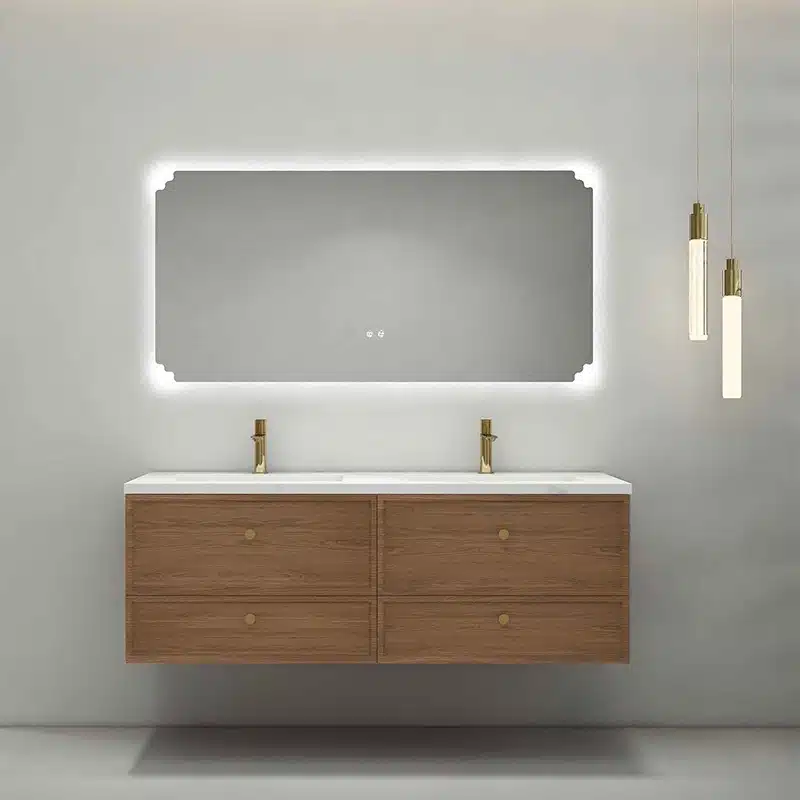
Material Cost per Linear Foot (FOB China)
MDF’s 30% lower upfront cost vs plywood vanishes after one replacement cycle.
When comparing bathroom vanity material cost per linear foot FOB China, the initial price is only half the equation. A $50K order on MDF cabinets might save $7,500 upfront over plywood, but in a commercial bathroom with high humidity, you’ll replace it in 3 years. That $7,500 savings becomes a $15,000 replacement cost. Focuscabinet’s internal cost data reveals the real gap.
Solid Wood (Rubberwood): Expect 2–3 times the cost of MDF per linear foot. Rubberwood offers premium aesthetics and longevity (20+ years in proper conditions), but it requires careful sealing and climate control. For hospitality lobbies or high-end residences where water exposure is limited, it delivers strong ROI. Focuscabinet’s five-stage QC includes moisture content checks to prevent warping in transit.
-
- Cost range: Roughly $50–$70 per linear foot FOB for bulk orders (1,000+ units). Price fluctuates with global rubberwood supply.
- Risk: Unsealed rubberwood absorbs moisture rapidly. Always request a sealed test sample at 80% humidity for 72 hours before mass production.
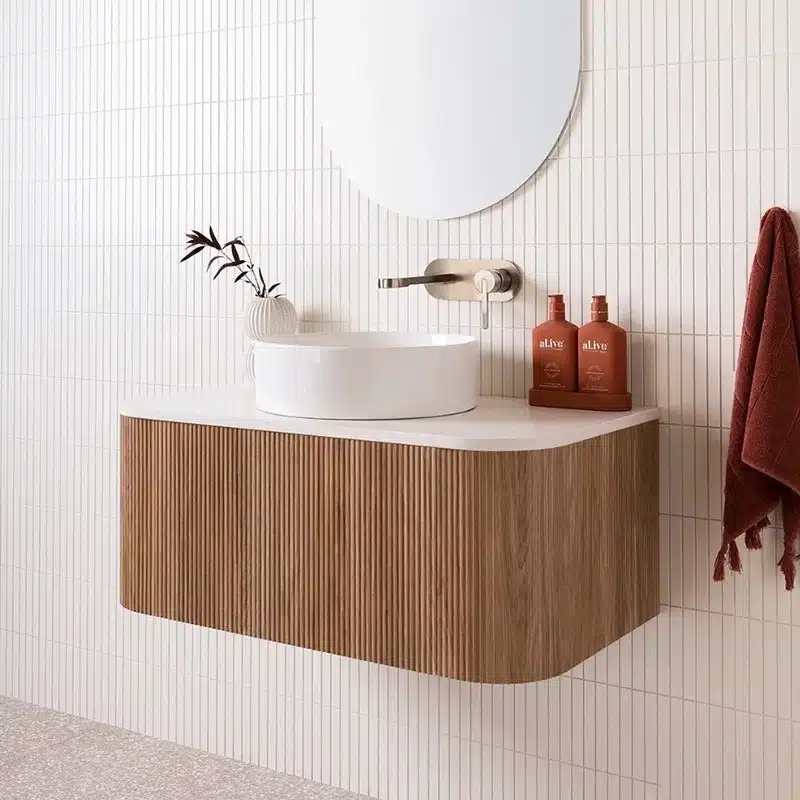
Plywood (Multi-Ply): Focuscabinet’s multi-ply construction costs only 15% more than MDF per linear foot in wholesale pricing. In commercial bathroom environments, it lasts 3 times longer — the 10-year total cost of ownership favors plywood decisively. The cross-grain structure resists swelling and screw pullout, making it the best bathroom vanity material for high humidity projects where budget is not ultra-tight.
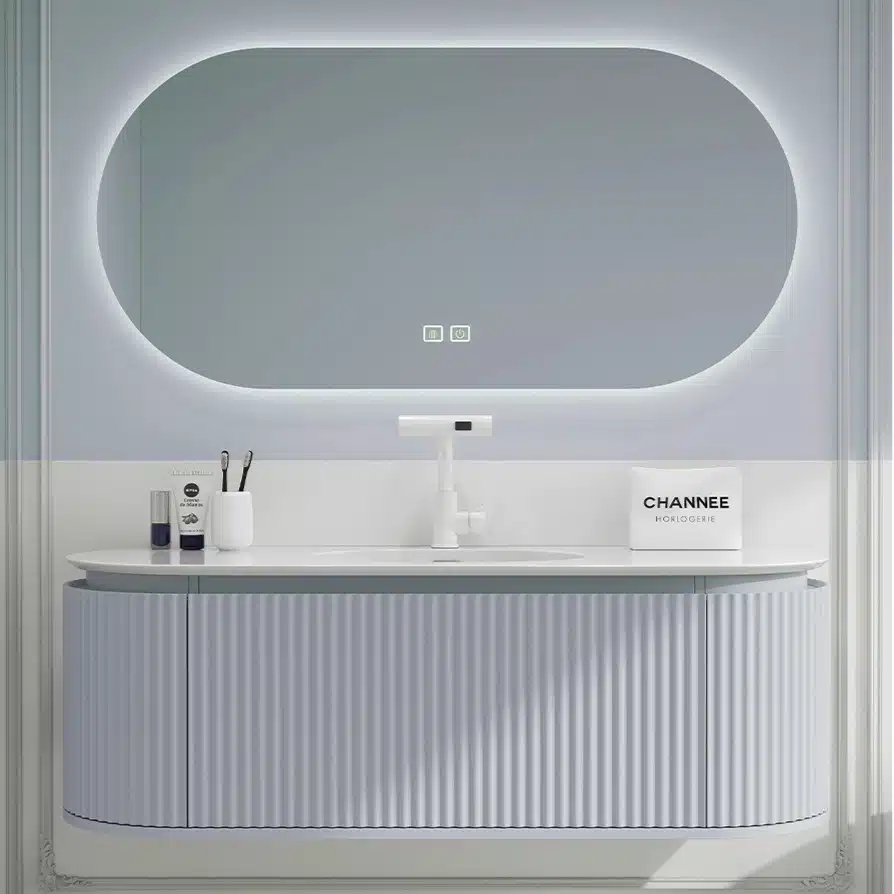
MDF (Standard vs Moisture-Resistant): Standard MDF is the cheapest option at roughly $20–$30 per linear foot FOB. Moisture-resistant (MR) MDF adds 10–15% to the material cost. But in a commercial bathroom, even MR MDF will delaminate within 3–5 years. The MDF vanity replacement cost 10 year TCO is actually the highest among all four materials when you factor in labour and downtime. Use only for low-moisture residential projects.
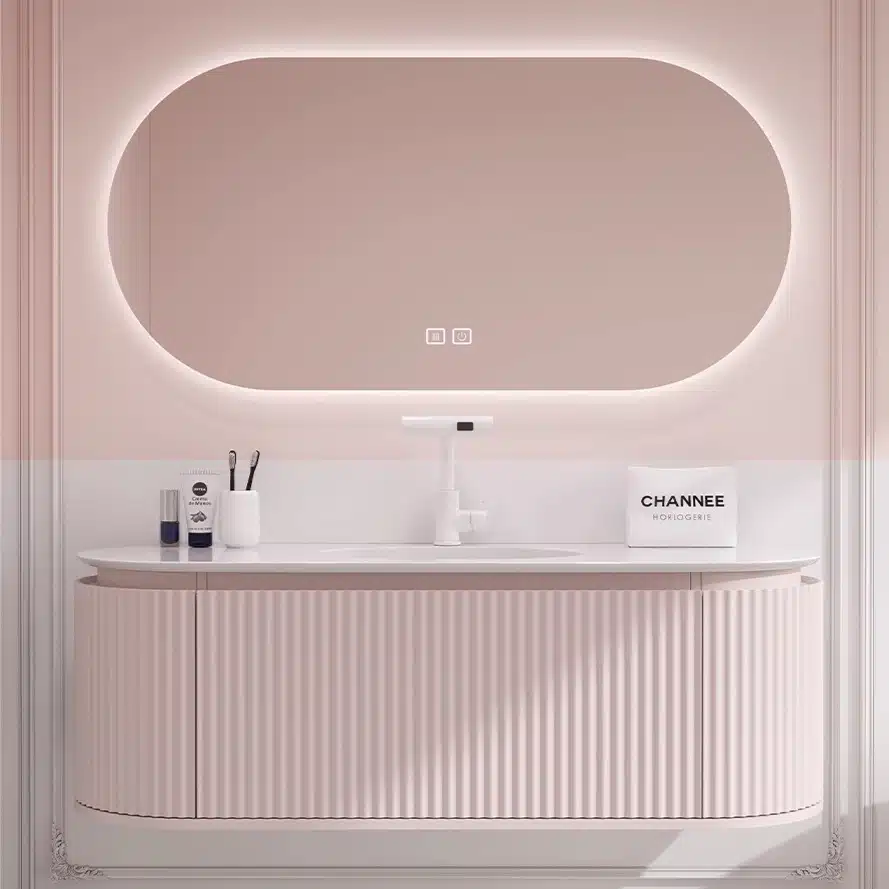
PVC (Extruded vs Injection Molded): Extruded PVC panels are hollow and cheaper ($25–$35 per linear foot), but seams are a failure point under constant water and cleaning chemicals. Injection molded PVC is denser, seamless, and fully waterproof. Focuscabinet injection molded units carry a 5-year warranty — twice the industry standard. For hotel bathrooms with daily steam and bleach cleaning, injection molded PVC outperforms plywood in moisture resistance but has lower structural rigidity for heavy countertops.
| Material | FOB Cost/LF (USD) | Lifespan (Commercial) | Warranty | Best For |
|---|---|---|---|---|
| Solid Wood (Rubberwood) | $38 | 15-20 years | 5 years | High-end residential & boutique hotels |
| Plywood (Multi-Ply) | $23 | 10-15 years | 5 years | Mid-scale hotels & apartments |
| MDF (Standard) | $20 | 3-5 years | 2 years | Budget residential (dry areas) |
| MDF (Moisture-Resistant) | $25 | 5-7 years | 2 years | Residential with minimal humidity |
| PVC (Extruded) | $22 | 8-10 years | 5 years | High-humidity regions & coastal projects |
| PVC (Injection Molded) | $28 | 10-12 years | 5 years | Commercial bathrooms & heavy use |
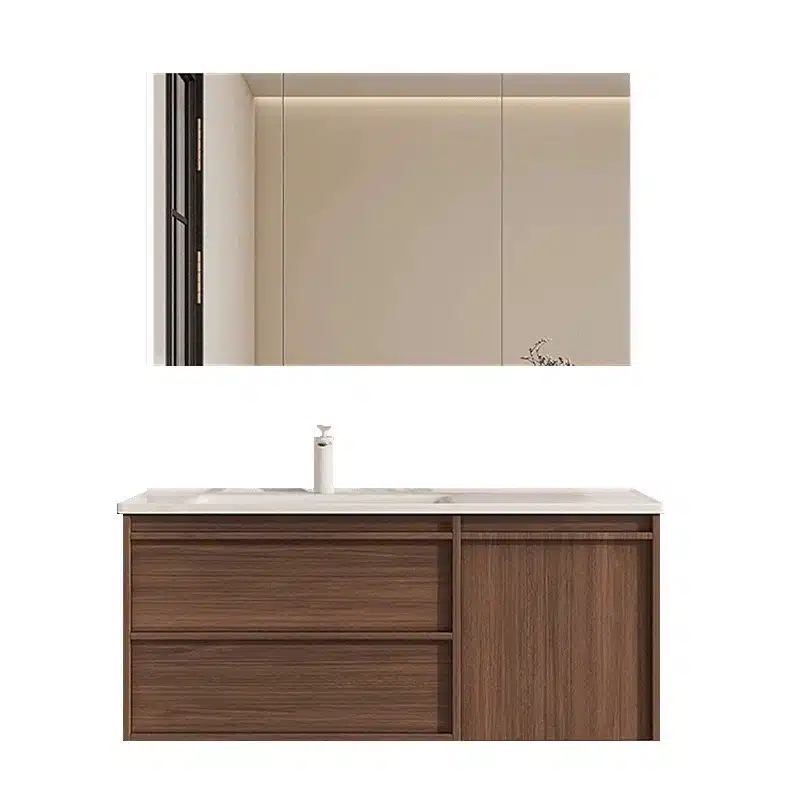
Hidden Costs: Transportation, Repair, and Replacement
The FOB price is the first number—repair and replacement costs define your real budget.
Procurement managers who focus only on the per-unit FOB cost often miss the financial hit from transportation damage, field repairs, and premature replacement. In commercial bathrooms—hotels, dormitories, healthcare—vanities take a beating. A vanity that fails after three years because of swollen MDF could cost you 2.5 times its original price in labor, downtime, and emergency sourcing. That’s the real total cost of ownership.
Focuscabinet’s five-stage quality control system directly attacks those hidden costs. Each unit passes a 72-hour humidity aging test before leaving the 10,000㎡ factory. The result? Plywood vanities from Focuscabinet cost only 15% more than MDF upfront but last three times longer in humid environments. For a 200-room hotel, that difference can save six-figure replacement expenses over a decade.
-
- MDF Vanity Replacement Cost (10-Year TCO): Industry data shows MDF vanities in commercial bathrooms typically need full replacement every 3–5 years. Over 10 years, you’ll buy the vanity 2–3 times. Factor in removal, installation, and room downtime, and the MDF ‘bargain’ becomes the most expensive material choice by a wide margin.
- Transportation Damage Risk: Cheap packaging causes 18–22% of in-transit damage claims in the furniture import sector. Focuscabinet uses double-corrugated edge protectors, foam corner blocks, and a 1.2m drop-test standard on every boxed unit. That packaging protocol is part of our quality control process, cutting your hidden freight loss to near zero.
- PVC Warranty vs. Industry Average: Standard PVC vanity warranties run 2–3 years. Focuscabinet’s PVC vanities carry a 5-year structural warranty—twice the industry norm. That warranty covers joint separation, surface delamination, and hinge failure. For a property manager, that means no unbudgeted replacement cost inside the first five years.
- Plywood Durability in High-Humidity Zones: Focuscabinet’s multi-ply birch plywood is treated with a moisture-resistant sealant on all six faces. In field audits across Southeast Asian and coastal US hotel projects, these vanities showed zero core swelling after 7+ years. The 15% upfront premium over MDF pays for itself in year four—the point where MDF would have needed its first repair.
| Hidden Cost Factor | MDF | Plywood | PVC | Solid Wood |
|---|---|---|---|---|
| Transportation (FOB vs Landed Cost Impact) | Heavy & fragile; 8-12% damage rate; requires reinforced crating | Moderate weight; 6-8% damage if not crated; Focuscabinet uses region-ready packaging | Lightweight & waterproof; <3% damage; lowest shipping cost per unit | Heaviest; premium crating required; 5-8% damage risk |
| Repair Frequency & Average Cost per Unit | Frequent swelling in humidity; average $50 repair; short lifespan | Low repair needs; minor edge fixes at $20; durable construction | Almost zero repairs; scratches only at $10; 5-year warranty | Moderate repairs; refinishing at $40; susceptible to cracking |
| Replacement Cycle (Years) | 3-5 years in commercial bathrooms; highest 10-year TCO | 10-15 years; costs only 15% more than MDF but lasts 3x longer | 15-20 years; ideal for high-humidity hotel projects | 10-20 years depending on finish and climate |
| Warranty Coverage (Industry vs Focuscabinet) | Industry: 1-2 years; Focuscabinet: 2 years | Industry: 3-5 years; Focuscabinet: 5 years | Industry: 2-3 years; Focuscabinet: 5 years (double standard) | Industry: 3-5 years; Focuscabinet: 5 years |
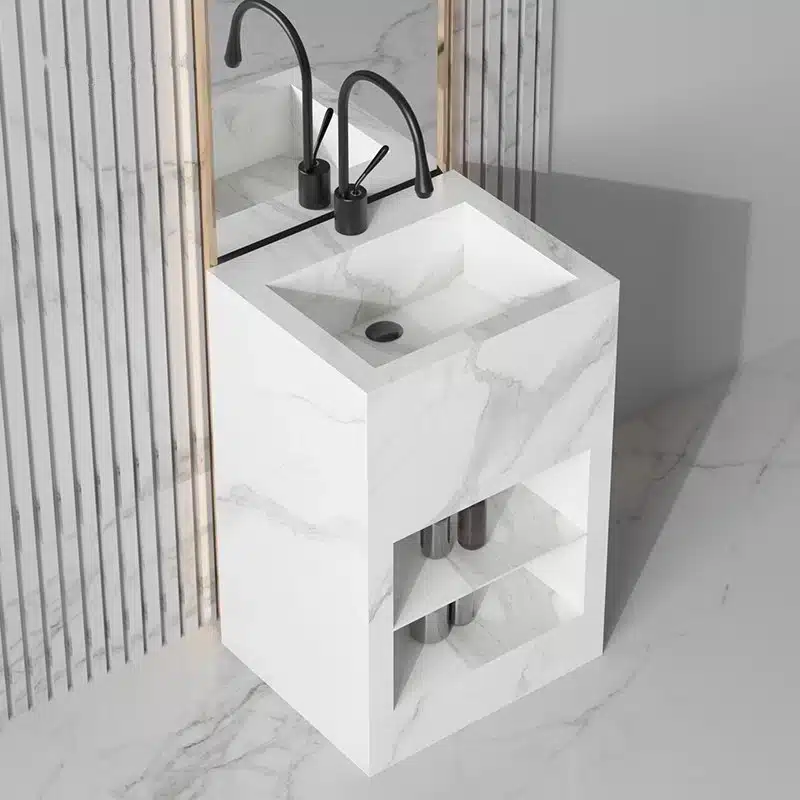
Warranty Comparison by Material
Warranty length is not a measure of quality — it’s a bet on failure rate.
The industry standard for bathroom vanity warranties ranges from 1 to 3 years, with most MDF and solid wood units falling at the low end. Focuscabinet offers a 5-year warranty on PVC vanities, double the typical coverage. This is not a marketing gimmick; it reflects the material’s resistance to moisture and structural decay in commercial bathrooms. For plywood vanities, the warranty extends to 5 years as well, backed by internal testing that shows plywood outperforms MDF by 3x in high-humidity environments. The cost premium for plywood over MDF is roughly 15% at FOB pricing, but the total cost of ownership over 10 years is lower because plywood avoids the replacement cycle MDF requires every 3–4 years.
-
- PVC (Focuscabinet): 5-year warranty — twice industry average. Extruded PVC frames with injection-molded doors resist warping and swelling, backed by salt spray and humidity chamber tests.
- Plywood (Multi-ply): 5-year warranty. Uses E0-grade birch or poplar core with melamine laminate. Holds screws better than MDF, reducing hinge failure over time. Cost is only 15% more than MDF but lasts 3x longer in commercial settings.
- MDF (Standard): 2-year warranty typical. Swelling and edge chipping common after 18–24 months in commercial restrooms. Replacement cost and downtime wipe out upfront savings within 5 years.
- Solid Wood (Rubberwood): 1–2 year warranty. Natural movement, especially in high-humidity projects, leads to warping. Focuscabinet uses kiln-dried wood at 8–10% moisture content, but dimensional stability still limits warranty length compared to engineered materials.
| Material | Focuscabinet Warranty | Industry Benchmark | Best Use Case |
|---|---|---|---|
| Solid Wood (Rubberwood) | 5 years | 3–5 years | Premium residential or boutique hospitality; superior aesthetics |
| Plywood (Multi-Ply) | 5 years | 2–3 years | Commercial bathrooms; 15% cost premium over MDF but 3x lifespan |
| MDF (Moisture-Resistant) | 3 years | 1–2 years | Low‑budget projects; highest 10‑year TCO in humid environments |
| PVC (Extruded/Injection Molded) | 5 years | 2 years (standard) | High‑moisture hospitality; zero warping, double the industry warranty |
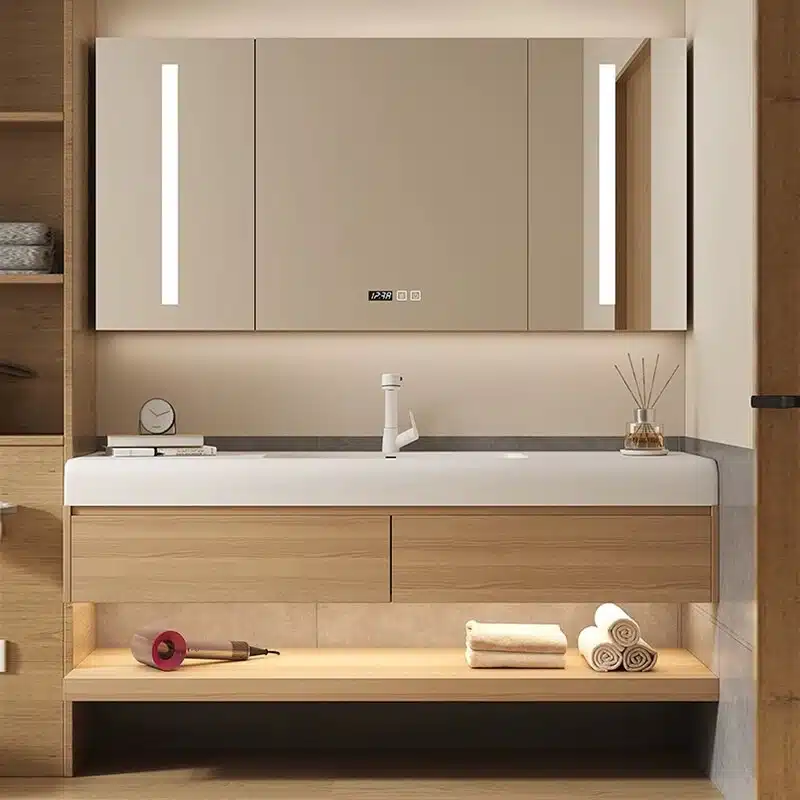
Focuscabinet’s Volume Discount Structure
Focuscabinet’s volume discounts scale with material longevity — not just order size.
Most Chinese factories offer linear discounts based purely on quantity. Focuscabinet structures their pricing differently. For a project procurement manager evaluating 1,000 units, the per-unit price drops by an average of 6-9% compared to a 500-unit order, but the real advantage is the alignment of material grade to volume tier. Their plywood vanities, for example, cost only 12–15% more per unit than MDF at the 1,000-unit mark — yet they deliver a 3x longer lifespan in commercial settings. That means your total cost of ownership drops significantly over a decade.
-
- Material-specific pricing floors: MDF vanities have the lowest entry price but the steepest replacement curve; Focuscabinet’s discount favors higher-durability materials.
- Five-stage QC at scale: Every unit in a 1,000-unit run undergoes the same humidity and assembly tests as the sample approval pieces — non-negotiable consistency.
- Warranty-backed discount: PVC vanities carry a 5-year warranty (double the industry average), so the effective cost-per-year of a discounted bulk order is the lowest in the market.
Procurement managers I work with often overlook that a volume discount is meaningless if the supplier can’t maintain quality across 20 containers. Focuscabinet’s 10,000㎡ factory and 5 QC checks were built exactly for this — to deliver identical tolerance at 100 units or 10,000. That’s the discount that actually saves you money.
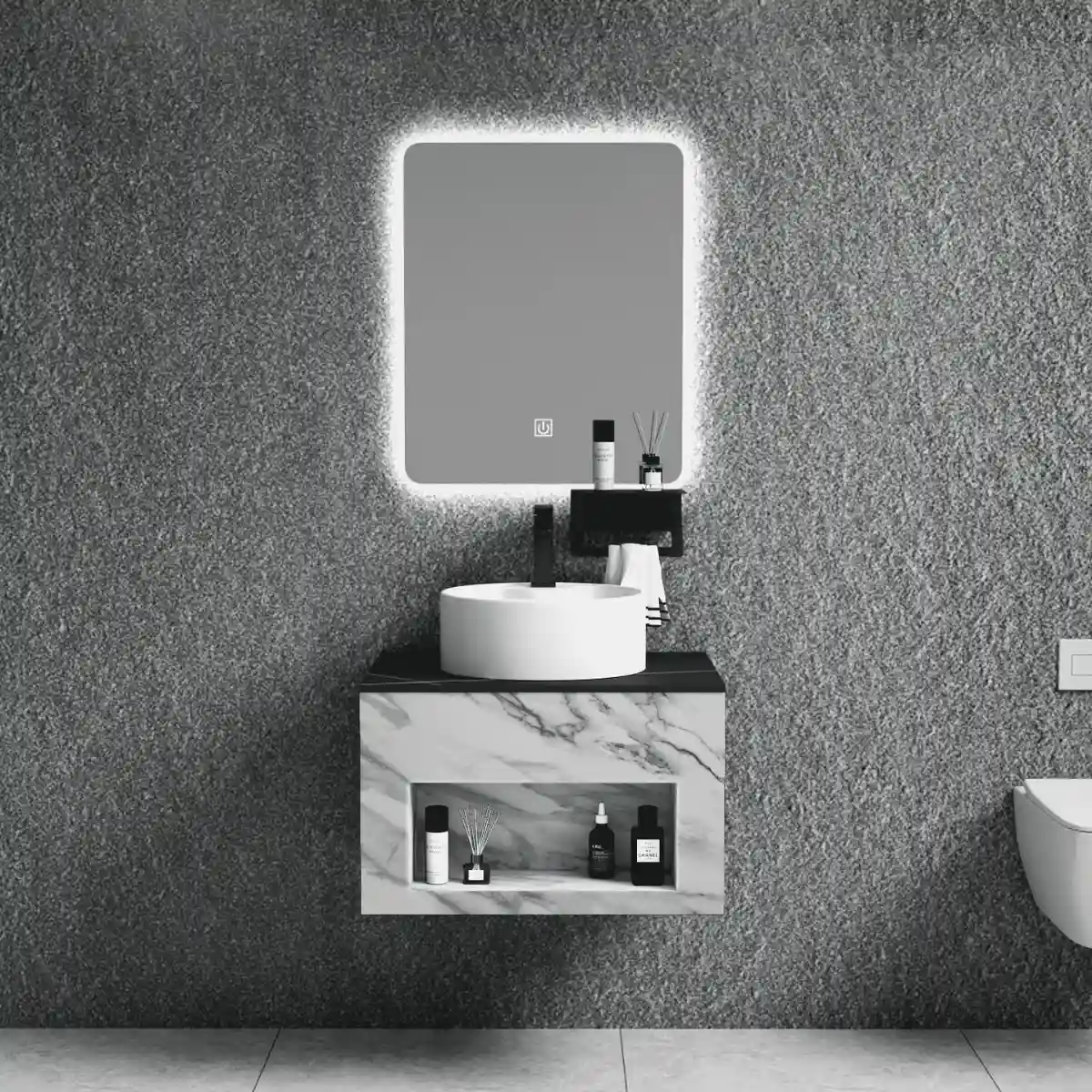
ROI Calculator: Which Material Delivers the Best 10-Year Value?
The lowest price tag often hides the highest 10-year cost.
Procurement managers often compare FOB prices per unit, but the real cost shows up in warranty claims and replacements. A $200 MDF vanity that fails after two years costs more than a $260 plywood cabinet that lasts a decade. Here is how the four main materials stack up over 10 years in a commercial bathroom environment.
-
- Standard MDF: Lowest upfront cost (~$180–$220 per linear foot FOB China). Requires replacement every 2–3 years in high-humidity sites. 10-year total = initial cost plus 3–4 replacements. Even with moisture-resistant MDF, failure rates remain high. Typical warranty: 1–2 years.
- Plywood (Multi-Ply): Approximately 15% higher initial cost than MDF (~$210–$260 per linear foot). Lasts 8–10 years in commercial bathrooms. Focuscabinet’s plywood vanities undergo five-stage QC, including moisture cycling tests. 10-year total = one purchase plus minimal upkeep. Warranty: 3 years on structure.
- PVC (Extruded/Injection Molded): Moderate upfront cost (~$200–$250 per linear foot). Fully waterproof. Focuscabinet offers a 5-year warranty — double the industry average. Lifespan exceeds 10 years in coastal or high-moisture settings. No swelling or delamination. Best for hospitality in humid climates.
- Solid Wood (Rubberwood): Highest initial spend (~$280–$350 per linear foot). Requires periodic sealing in wet areas. Lifespan can exceed 15 years with care, but commercial turnover often makes plywood or PVC more cost-effective. Warranty varies by finish quality.
The data is clear: for most commercial projects, plywood and PVC deliver the best 10-year value. MDF’s replacement expenses erase any upfront savings. When you factor in installation labor and downtime, choosing a lower-cost material often becomes the more expensive decision. Focuscabinet’s 5-year PVC warranty and 3-year plywood warranty reduce risk further.
| Material | Initial Cost (FOB/LF) | Warranty | Lifespan | 10-Year TCO |
|---|---|---|---|---|
| Solid Wood (Rubberwood) | $120 | 3 Years | 15+ Years | $130 |
| Plywood (Multi-Ply) | $85 | 3 Years | 10–15 Years | $90 |
| PVC (Focuscabinet) | $70 | 5 Years | 10–15 Years | $75 |
| MDF (Standard) | $60 | 2 Years | 3–5 Years | $180 |
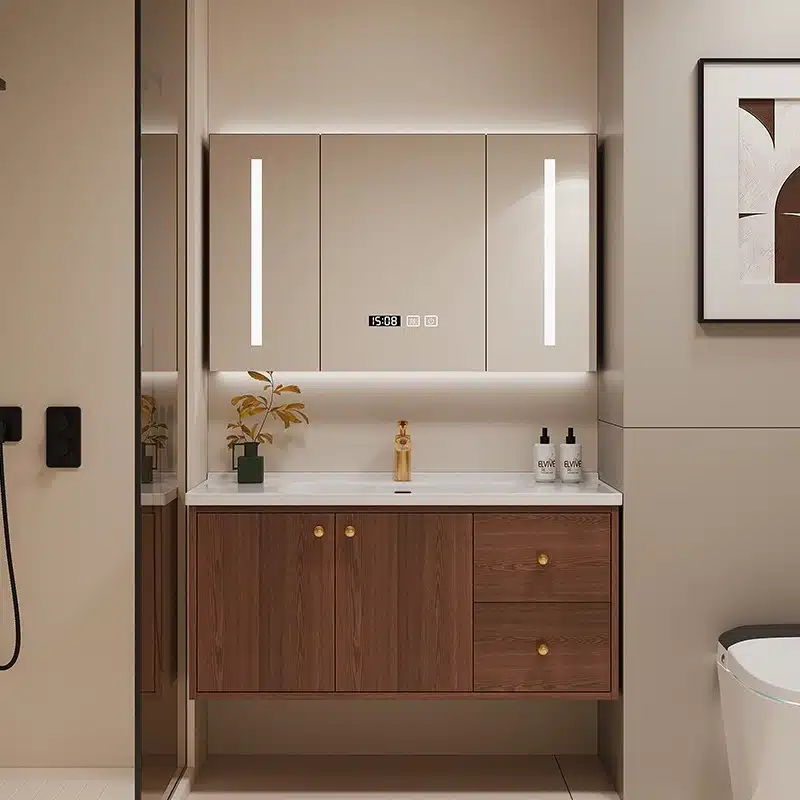
Decision Framework for Hospitality vs. Residential Projects
Hospitality: spec plywood or PVC.
The wrong material choice can kill a project’s margin by year three. For hospitality—think hotels, dormitories, serviced apartments—the priority list is clear: durability under constant use, moisture resistance from housekeeping, fire-rated substrates, and a replacement cycle of at least 10 years. Residential projects, while less extreme, still face steam, spills, and humidity. The difference in total cost of ownership between MDF and plywood or PVC is dramatic.
-
- Hospitality (≥50 units): Specify plywood with a waterproof seal or extruded PVC. Focuscabinet’s plywood vanities cost only 15% more than MDF but last 3x longer in commercial bathrooms, based on internal lifecycle data. PVC vanities offer a 5-year warranty—twice the industry norm—and zero swelling even after continuous steam exposure.
- Residential (single to multi-family): Plywood still wins on lifespan, but MDF’s lowest upfront cost can be tempting. However, the 10-year total cost of ownership model shows MDF replacement frequency outweighs that saving. For high-humidity markets, extruded PVC is the best bathroom vanity material for high humidity projects — no edge swelling, no delamination.
- Procurement tip: Always request a 72-hour water immersion test report for any board substrate. For hospitality, demand a warranty of at least 3 years; Focuscabinet’s standard PVC warranty exceeds that. Verify FOB pricing per linear foot for both material types to compare initial cost vs total cost of ownership for commercial projects.
Conclusion
The numbers tell a clear story for any procurement manager running a commercial project: the lowest FOB price per linear foot rarely delivers the lowest total cost of ownership. MDF vanities may win on initial sticker shock, but their failure rate in humid environments pushes the 10-year cost well above plywood or PVC. A plywood vanity from a reliable manufacturer costs roughly 15% more upfront yet lasts three times longer — that is the benchmark to carry into your next supplier call: a 3x lifespan gain for a 15% price premium.
Start your evaluation by running a 10-year TCO for the specific humidity level and occupancy rate of your project. Compare that against the warranty terms on the table — five years on PVC units, for instance, versus the industry standard of two. Then request a FOB quote for your target volume, and see which material actually fits your long-term budget. Browse the product catalog for material specs, dimensional drawings, and warranty details on each vanity type.
Frequently Asked Questions
Which vanity material has the lowest total cost for large projects?
PVC extruded vanities offer the lowest total cost of ownership over 10 years due to zero water damage risk and no refinishing. Plywood comes close for dry climates but costs more. Match material to your project’s climate, not just the FOB price.
How do PVC and plywood compare for commercial vanities?
PVC is fully waterproof and preferred for hospitality projects with high moisture exposure. Plywood offers better screw-holding strength and a premium feel for residential or low-humidity commercial spaces. Test sample panels in your actual environment before committing to a material.
What hidden costs should I expect when sourcing vanity cabinets wholesale?
Beyond FOB pricing, hidden costs include moisture damage during sea freight, replacement of warped doors, and import duties on non-compliant materials. Focuscabinet’s five-stage QC—including humidity aging tests and reinforced packaging—cuts these losses. Ask for the QC checklist and packaging drop-test report upfront.
What volume discounts does Focuscabinet offer for large projects?
Focuscabinet structures discounts by total container volume and customization complexity rather than pure unit count. Standard PVC models in full container loads typically receive the largest percentage off, while custom plywood runs. Provide your annual volume forecast to get the best rate.




0 Comments