
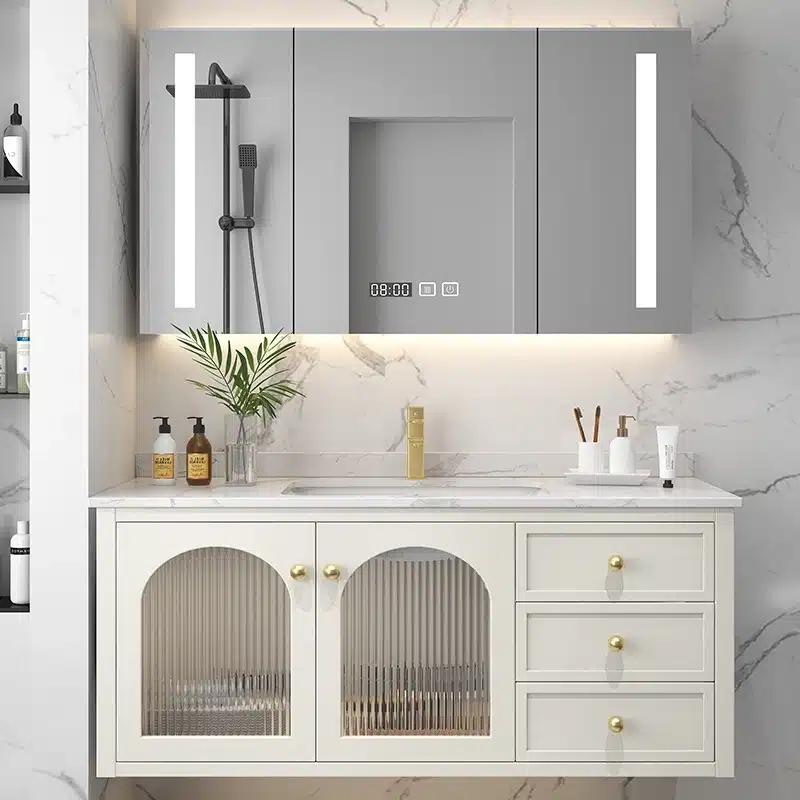
Strategic Vietnam sourcing is now the primary defense against margin erosion caused by shifting tariffs and anti-dumping duties on wood vanities. For years, China was the undisputed manufacturing hub, but the current trade landscape has introduced significant volatility, making a diversified sourcing plan essential for maintaining profitability and supply chain stability.
This guide provides a direct operational comparison between the two manufacturing giants. We will analyze the specific impact of Section 301 and ADD tariffs on landed costs, contrast lead times affected by material import dependencies, and examine the practical differences in minimum order quantities (MOQs). The objective is to give you a clear framework for deciding which country best aligns with your volume, quality, and supply chain requirements.
The “China Plus One” Strategy: Why Is It Critical for Diversification?
The “China Plus One” strategy is a risk management imperative, not a complete exit from China; it’s about building operational flexibility to navigate tariffs and supply chain shocks by diversifying manufacturing hubs.
Reducing Dependency on a Single Source
The core of the “China Plus One” approach is mitigating the risks of single-country manufacturing dependency. The pandemic exposed how lockdowns or port congestion in one region can paralyze an entire global supply chain, making diversification a baseline for operational stability. Constant geopolitical friction and shifting trade tariffs create unpredictable cost swings and market access problems. Establishing parallel capabilities in a second country, like Vietnam, ensures you can maintain production even if your primary hub faces disruptions. This model provides the flexibility to shift manufacturing orders based on changing economic conditions, tariffs, or political instability.
Leveraging Regional Strengths and Incentives
This strategy doesn’t mean abandoning China. It means complementing its massive industrial ecosystem with new manufacturing locations that offer their own unique advantages. Countries in Southeast Asia, such as Vietnam, provide specific benefits like competitive labor costs and favorable trade agreements that can offset other risks. This approach also allows businesses to create a balanced portfolio of manufacturing sites, each optimized for different purposes.
- Companies can regionalize production to get closer to emerging consumer markets, which shortens delivery times and reduces logistics costs.
- Many developing economies offer significant tax breaks and trade incentives to attract foreign investment and build up their industrial capacity.
- A diversified footprint creates a more resilient supply chain, capable of absorbing regional shocks without a complete operational failure.
Tariff Landscape: How Do Section 301 and ADD Impact Your Costs?
Tariffs under Section 301 and anti-dumping duties directly compress margins by adding significant costs to imported goods, forcing businesses into a difficult choice between absorbing losses or raising prices for customers.
Direct Cost Impact of Current Tariff Systems
The current tariff structure fundamentally increases the landed cost of imported goods, especially those originating from China. Most imports face a base tariff of at least 10%. Section 301 duties specifically target Chinese products, and additional tariffs on materials like steel or aluminum can push the total cost increase as high as 50% for downstream products. This environment makes accurate cost forecasting difficult and puts direct pressure on your bottom line.
| Tariff Factor | Impact on China Imports | Impact on Vietnam Imports |
|---|---|---|
| Section 301 Duties | Directly targeted. Adds significant cost layers, making many products uncompetitive in the U.S. market. | Generally exempt, providing a clear cost advantage. Risk exists for circumvention investigations. |
| Anti-Dumping/Countervailing Duties (AD/CVD) | Frequent and severe on specific product categories, including wooden cabinets and vanities. | A growing risk. Active investigations on plywood and other materials signal increased scrutiny from U.S. authorities. |
| Overall Landed Cost Impact | Significantly inflated, requiring higher retail prices or reduced profit margins. | Currently much lower, but requires diligent monitoring of trade regulations to avoid future surprises. |
Business Responses to Margin Compression
With over 90% of manufacturers reporting direct cost increases from tariffs, businesses face unavoidable margin pressure. The immediate decision is whether to absorb these costs, which damages profitability, or pass them to customers, which risks market share. Neither option is sustainable long-term. Competitiveness now depends on reconfiguring supply chains to manage this persistent price volatility, often by diversifying manufacturing away from single-country dependency.
Unlock Your Market with Custom Vanities

Vietnam’s Strength: Why Is It the Leader for Woodworking and Volume?
Vietnam secured its position as a global woodworking leader by strategically shifting from exporting raw timber to producing high-value, finished furniture, backed by a massive skilled workforce.
A Vertically Integrated Value Chain
Vietnam has built a dominant global woodworking hub by focusing on deep processing and exporting finished products instead of raw materials. This strategy propelled its export sector to $17.2 billion in 2026, making it the second-largest high-value furniture exporter after China. This approach moves the country up the value chain, capturing more profit and control over the final product.
- The country’s value chain prioritizes finished goods, which increases profit margins.
- It ranks 5th globally in woodworking exports, serving over 160 countries.
- This focus on finished products distinguishes it from nations that primarily export raw timber.
Skilled Labor and Domestic Sourcing
The industry’s success is supported by a skilled workforce of over 600,000 people and a strategic shift toward using domestically grown plantation timber. This combination creates a self-sufficient and competitive production environment, insulating manufacturers from some of the volatility of international material markets.
- A large and experienced labor pool ensures high-quality craftsmanship for complex assemblies.
- Sourcing wood from domestic plantations reduces reliance on imports and strengthens supply chain stability.
- Sustainable forestry practices help meet growing regulatory demands from EU and US markets.
China’s Strength: Why Is the Component Supply Chain Still Unmatched?
China’s supply chain dominance comes from its sheer scale combined with a deeply integrated, high-tech industrial ecosystem that makes sourcing nearly any component fast and efficient.
Comprehensive Industrial Ecosystem and Scale
China’s manufacturing power is rooted in a vast, self-contained industrial ecosystem. It produces roughly 30% of all global manufactured goods, covering nearly every production category imaginable. This immense scale means the country can produce a massive range of components with high efficiency. The deep integration of suppliers ensures that parts for almost any product, from simple hardware to complex electronics, are readily available within its borders, minimizing cross-border dependencies.
Dominance in High-Tech and Advanced Manufacturing
Beyond raw volume, China has cemented a powerful position in high-tech production. The country has established significant advantages in critical areas like semiconductors, advanced batteries, and robotics. This upward movement is supported by breakthroughs in its own domestic manufacturing equipment, reinforcing its control over the supply chain. Continuous investment in advanced technology secures a competitive edge that is difficult for other nations to quickly replicate.
Robust Infrastructure and Deep Integration
The entire manufacturing base is built on a foundation of modern, robust infrastructure. Highly connected logistics and supplier networks create fast and reliable production cycles. This entrenched position remains a key advantage even as global companies explore “China Plus One” and other multi-center production strategies. While diversification is happening, the speed and completeness of China’s component supply chain keeps it an essential hub for global manufacturing.
Lead Time Comparison: How Do Material Imports Affect Production Speed?
Tariff-driven supply chain disruptions add weeks or months to production schedules, making localized material sourcing a critical, long-term strategy for regaining control over manufacturing speed.
The Impact of Import Delays on Production Schedules
Supply chain disruptions, particularly those driven by tariffs and port backlogs, are a primary cause of extended lead times. These issues are no longer minor inconveniences; they now stretch project timelines by weeks or even months. Manufacturers find themselves constantly reacting, forced to renegotiate supplier agreements or find alternative shipping routes just to keep production lines moving. This volatility makes accurate forecasting nearly impossible and puts significant pressure on inventory management.
| Factor | China (Vertically Integrated) | Vietnam (Import Dependent) |
|---|---|---|
| Typical Production Lead Time | 45–60 days | 55–70+ days (excluding customs delays) |
| Raw Material Sourcing | 95% sourced locally | 70% imported (primarily from China) |
| Primary Risk to Timelines | Production capacity constraints during peak season | Material import delays and port backlogs |
Localized Sourcing as a Strategy to Accelerate Turnaround
To regain control over production speed, companies are increasingly shifting toward localized sourcing and nearshoring. This strategy directly reduces dependence on imported materials from distant suppliers, which can shorten production cycles from weeks down to a matter of days. By bringing material supply closer to the factory, businesses can respond more quickly to market demand and reduce the risk of logistical bottlenecks.
But this is not a quick fix. Implementing a restructured, localized supply chain is a significant undertaking that creates its own near-term operational challenges. The transition to a more resilient sourcing model typically takes between 7 to 12 months to execute effectively. It’s a strategic investment in long-term stability rather than a solution for immediate delays.
Quality Parity: Is Vietnam Truly Up to Speed with China?
By 2026, the quality debate is less about one country surpassing the other and more about specialization; Vietnam has closed the gap in specific industries, but China’s ecosystem for high-precision manufacturing remains unmatched.
Vietnam’s Progress and Lingering Inconsistencies
Vietnam has made significant strides in closing the quality gap, particularly in established sectors like textiles, footwear, and basic woodworking. Heavy investment in modern machinery and a push to align national standards with international norms have paid off—around 60% of its standards now meet global benchmarks. This has improved the baseline quality for many exports. The primary challenge is inconsistency. A large, modern factory with international clients will produce goods on par with top-tier facilities anywhere. Smaller, local suppliers, however, often operate with older equipment and less stringent quality control, creating a noticeable variance in output that buyers must carefully manage.
China’s Enduring Edge in Precision and Supply Chains
China maintains a clear advantage in high-complexity and precision manufacturing. Its deeply integrated vertical supply chains provide immediate access to specialized components, materials, and technical expertise—an ecosystem that took decades to build and is difficult for any single nation to replicate. For products like complex electronics, specialized machinery, or precision-molded parts, China’s manufacturing environment is superior. This mature infrastructure supports faster product development cycles and ensures consistent quality control at massive scale, from raw material sourcing to final assembly.
The Growth of Dual-Sourcing Strategies
Experienced businesses no longer view this as an “either/or” decision. The dominant approach is now a dual-sourcing model that leverages the strengths of both countries. This strategy builds supply chain resilience while managing costs and tariff exposure. A common setup involves using Vietnam for labor-intensive assembly where its competitive costs and skilled workforce are ideal. At the same time, companies rely on China for manufacturing the core, high-precision components required for those assemblies. This hybrid approach optimizes the entire production process by assigning each task to the country best equipped to handle it.

MOQ Differences: Why Are Minimums Usually Higher in Vietnam?
Minimum order quantities in Vietnam are not universally high; they are a function of factory scale, supply chain dependencies, and the specific product being manufactured.
Factory Scale and Production Efficiency
A factory’s size and maturity directly influence its minimum order quantities (MOQs). While there’s a perception that Vietnamese MOQs are high, the market is more nuanced. Many smaller, competitive factories now offer lower minimums to build long-term partnerships and win new business. The assumption of high MOQs often comes from engaging only with the largest, most established suppliers, not the broader market of flexible factories eager to grow.
- By 2026, many smaller Vietnamese factories accept MOQs between 50 and 100 units to remain competitive in the global market.
- Larger, established manufacturers often require higher volumes, typically 300–1,000 units, to optimize their production lines and cover significant overhead costs.
- Engaging only with the largest suppliers creates a skewed perception of high MOQs, overlooking a significant segment of smaller, more flexible partners.
| Order Type | Typical Vietnam Manufacturer MOQ | FocusCabinet MOQ Strategy |
|---|---|---|
| Sample Order | Often difficult to arrange or requires a high, non-refundable fee. | 1 Set (Fee is 100% refundable against the mass production order). |
| Trial / Small Batch Order | 50–100 units for smaller factories; 300+ units for larger ones. | 20 Sets (Mix-and-match from stock OR 20 sets per custom model). |
| Mass Production Order | Typically starts at 1x 20GP or 1x 40HQ container. | 1x 40HQ Container (Approx. 150–200 sets). |
Raw Material Sourcing and Supply Chain Maturity
Vietnam’s supply chain is still developing compared to China’s deeply integrated network. This means factories often need to import specific raw materials or components, making them subject to the MOQs set by their own international suppliers. This pass-through effect is a primary driver of higher minimums, especially for products that require specialized hardware, chemicals, or non-standard materials not readily available in the local market.
- If a factory must import specialized materials, its supplier’s minimum order will directly impact the final MOQ offered to you.
- This is particularly common for products requiring a high degree of customization or components not locally produced in Vietnam.
Product Complexity and Industry Norms
The type of product being manufactured is a fundamental driver of MOQ. Different industries operate with different production standards based on setup costs, material waste, and labor specialization. The tooling, dyeing, and cutting processes in textile production, for instance, are far more volume-dependent than assembling case goods, which allows for more flexible batching.
- Industries like textiles have high MOQs, often around 500–1,000 pieces per style, to make fabric dyeing and cutting processes economically viable.
- In contrast, home goods and furniture can have lower starting points, sometimes between 100 and 200 units, depending on the complexity and materials.
Conclusion
Choosing between China and Vietnam is a strategic decision that goes beyond the sticker price. Vietnam offers a clear advantage for avoiding tariffs on large-volume woodworking orders. But China’s unmatched component supply chain and more accessible MOQs provide critical flexibility for many businesses.
Our team helps you navigate these factors to find the right material and production fit for your budget. Contact us to discuss your project and see how our flexible manufacturing can work for you.
Frequently Asked Questions
Is it cheaper to import from Vietnam or China?
For U.S. importers, Vietnam is frequently the cheaper option for finished goods due to significant U.S. tariffs on Chinese products. While China may have lower raw material costs due to its vast supply chain, Vietnam’s lower labor costs and favorable tariff treatment typically result in a lower total landed cost. This cost advantage is a primary driver of the “China Plus One” strategy, where companies diversify production to mitigate tariff impacts.
Vietnam vanity manufacturers vs China?
China offers unmatched scale, automation, and a deeply integrated supply chain for all components, making it ideal for high-volume, diverse product ranges. Vietnam’s manufacturing sector is rapidly maturing, excelling in solid wood craftsmanship and case goods. While Vietnam may rely on some imported hardware or components, its manufacturers are highly competitive, especially for mid- to high-end wooden vanities, and provide a crucial alternative for supply chain diversification.
Anti-dumping duties on Vietnam cabinets?
While the primary anti-dumping and countervailing duties (AD/CVD) target wooden cabinets from China, products assembled in Vietnam using a high percentage of Chinese components are under strict scrutiny for circumvention. To avoid these duties, importers must ensure their Vietnamese partners can prove “substantial transformation” occurred in Vietnam and provide clear country of origin documentation for all materials. Sourcing from vertically integrated Vietnamese factories minimizes this risk.
Lead time for Vietnam furniture?
The total lead time for sourcing furniture from Vietnam, from order placement to delivery in the U.S., is typically between 90 to 120 days. This includes a production window of 45-75 days, followed by 4-6 weeks for ocean freight, port handling, and customs clearance. Lead times can vary based on factory capacity, order complexity, and global shipping conditions.
Quality of Vietnam wood furniture?
The quality of wood furniture from Vietnam is considered high and meets rigorous international export standards. The country has a long heritage of woodworking, and significant foreign investment has introduced modern technology and advanced quality control systems. Vietnamese factories are particularly strong in solid wood furniture manufacturing. As with any region, quality varies by supplier, so thorough factory vetting is essential.
Best city in Vietnam for furniture sourcing?
The primary hub for furniture sourcing is the greater Ho Chi Minh City (HCMC) region. The highest concentration of export-focused furniture factories is located in the surrounding provinces of Binh Duong and Dong Nai. This area offers a mature ecosystem of suppliers, a skilled labor force, and direct access to major shipping ports like Cat Lai. Quy Nhon is a secondary hub known for outdoor furniture.




0 Comments